




Changing Anti-Retroviral Therapy
Introductory Case: Mikael Mikael is a 28 year-old male diagnosed with AIDS who has been taking his triple drug ART regularly for the past 6 months without difficulties. He began therapy one year ago, during a bout of PCP pneumonia and oral thrush  CD4/TLC and VL monitoring is not available in his region Today Mikael is diagnosed with toxoplasmosis and is hospitalized for treatment with Fansidar
Introductory Case: Mikael (cont.) Which of the following statements about changing therapy are true? ART should not be changed because this patient is not experiencing side effects from his regimen A change in ART should be done for a patient who experiences a new opportunistic infection on ART  ART should be changed as soon as a patient starts to miss doses to avoid treatment failure  ART should only be changed when a patient experiences virologic failure
Unit Learning Objectives Identify reasons for changing ART List factors in ART failure Determine how to change ART due to toxicity, treatment   failure or concomitant disease Describe factors to consider when changing ART Describe appropriate laboratory monitoring procedures for ART
Factors to Consider When  Changing Regimen Ethiopia ARV guidelines Prior antiretroviral history Antiretroviral resistance Side effects Number of drugs needing replacement Barriers to adherence Patient life-style and preferences Ability to follow-up in clinic Drug interactions Cost and sustainability
Reasons for Changing ART ART is not changed unless absolutely necessary! ART may be changed because of:  Treatment Failure Clinical failure Immunologic failure Virologic failure Toxicity  or intolerance Co-morbid conditions  Non-adherence/compromised quality of life
Treatment Failure Treatment failure is defined by Clinical failure New or recurrent OI Onset or recurrent WHO Stage III condition Note: Should not be confused with immune reconstitution inflammatory syndrome Immunologic failure Fall of CD4 count by >50% from the peak  Return of the CD4 count to baseline or below
Introductory Case: Mikael (cont.) ART should not be changed because this patient is not experiencing side effects from his regimen FALSE Where CD4 counts and viral load tests are unavailable, the WHO recommends using clinical evaluation to define treatment failure This patient is experiencing clinical failure defined as the development of a new opportunistic infection (in this case toxoplasmosis) while on ART
Introductory Case: Mikael (cont.) A change in ART should be done for a patient who experiences a new opportunistic infection on ART  TRUE Where CD4 counts and viral load tests are unavailable, the WHO recommends using clinical evaluation to define treatment failure
Treatment Failure (2) Virologic failure: Failure to suppress viral load to undetectable Reappearance of detectable virus after a period of undetectability (loss of virologic control) Less than one log (10-fold) decrease in viral load from baseline after 8-12 weeks of ART
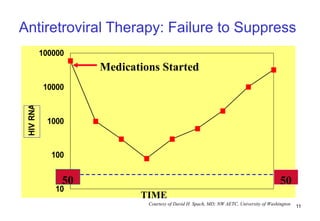
Antiretroviral Therapy: Failure to Suppress   Courtesy of David H. Spach, MD; NW AETC, University of Washington Medications Started 50 50 TIME
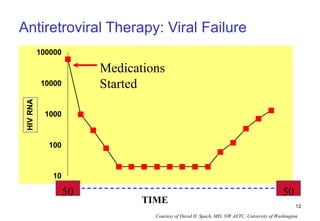
Antiretroviral Therapy: Viral Failure Medications Started 50 50 TIME Courtesy of David H. Spach, MD; NW AETC, University of Washington
Reasons Treatment May Fail Treatment fails if: Drugs are not strong enough to control the virus Patient is too sick (clinical failure) or has serious infections which are not treatable Patient has poor adherence Missing more than three doses/month increases risk of treatment failure Missing additional doses causes drug levels to fall, making HIV resistant
Treatment Failure and IRIS Must differentiate treatment failure from Immune Reconstitution Inflammatory Syndrome (IRIS) Clinical manifestation of a sub-clinical infection present at baseline. Brought on by ART-induced reconstitution of the immune system Typically seen within several weeks of initiating ART
Introductory Case: Mikael (cont.) ART should be changed as soon as a patient starts to miss doses to avoid treatment failure FALSE If it is determined that a patient is missing doses, it is best to try to determine the cause and to identify a solution to assist the patient with adherence Changing ART should only be done when absolutely necessary
Reasons Treatment May Fail (2) Other medicines may stop ART from working Reduce levels of ARVs in the blood  e.g. TB drug rifampicin is a potent liver enzyme inducer Important:  Patients must be warned that herbal medicines could reduce ARV drug levels Traditional healers must be told that their medicines could reduce ARV drug levels
Reasons Treatment May Fail (3) Patient cannot tolerate the available drugs Liver damage, nerve damage and anemia are possible serious side effects Diarrhea, nausea and vomiting caused by the drugs may sometimes be too much to bear Treatment may have to be stopped if these side effects become serious and replacement drugs are not available
Introductory Case: Mikael (cont.) ART should only be changed when a patient experiences virologic failure FALSE Virologic failure is only one possible reason that a change in therapy may be necessary Other reasons to change therapy include: Intolerable toxicities or side effects Treatment failure (clinical failure or immunologic failure) Co-morbidities
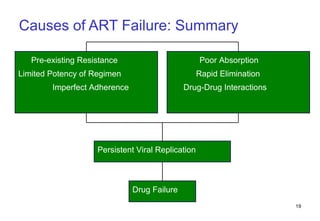
Causes of ART Failure: Summary Pre-existing Resistance Limited Potency of Regimen Imperfect Adherence Poor Absorption Rapid Elimination Drug-Drug Interactions Drug Failure Persistent Viral Replication
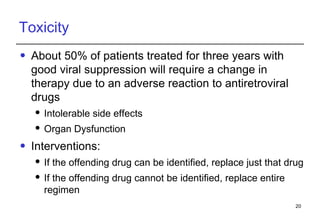
Toxicity About 50% of patients treated for three years with good viral suppression will require a change in therapy due to an adverse reaction to antiretroviral drugs Intolerable side effects Organ Dysfunction Interventions: If the offending drug can be identified, replace just that drug If the offending drug cannot be identified, replace entire regimen
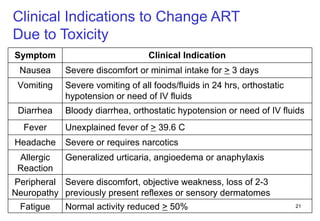
Clinical Indications to Change ART  Due to Toxicity Normal activity reduced  >  50% Fatigue Severe discomfort, objective weakness, loss of 2-3 previously present reflexes or sensory dermatomes Peripheral Neuropathy Generalized urticaria, angioedema or anaphylaxis Allergic Reaction Severe or requires narcotics Headache Unexplained fever of  >  39.6 C Fever Bloody diarrhea, orthostatic hypotension or need of IV fluids Diarrhea Severe vomiting of all foods/fluids in 24 hrs, orthostatic hypotension or need of IV fluids Vomiting Severe discomfort or minimal intake for  >  3 days Nausea Clinical Indication Symptom
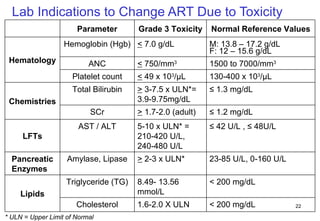
Lab Indications to Change ART Due to Toxicity * ULN = Upper Limit of Normal < 200 mg/dL < 200 mg/dL 23-85 U/L, 0-160 U/L ≤  42 U/L  ,  ≤ 48U/L ≤  1.2 mg/dL   ≤  1.3 mg/dL   130-400 x 10 3 / µ L 1500 to 7000/mm 3 M: 13.8 – 17.2 g/dL F: 12 – 15.6 g/dL  Normal Reference Values 1.6-2.0 X ULN Cholesterol 8.49- 13.56 mmol/L Triglyceride (TG) Lipids >  2-3 x ULN* 5-10 x ULN* = 210-420 U/L, 240-480 U/L >  1.7-2.0 (adult) >  3-7.5 x ULN*= 3.9-9.75mg/dL <  49 x 10 3 / µ L <  750/mm 3 <  7.0 g/dL Grade 3 Toxicity Amylase, Lipase Pancreatic Enzymes AST / ALT LFTs SCr Total Bilirubin Chemistries Platelet count ANC Hemoglobin (Hgb) Hematology Parameter
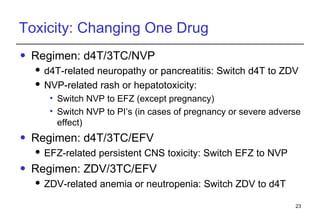
Toxicity: Changing One Drug Regimen:  d4T/3TC/NVP d4T-related neuropathy or pancreatitis: Switch d4T to ZDV NVP-related rash or hepatotoxicity:  Switch NVP to EFZ (except pregnancy) Switch NVP to PI’s (in cases of pregnancy or severe adverse effect) Regimen:  d4T/3TC/EFV EFZ-related persistent CNS toxicity: Switch EFZ to NVP Regimen:  ZDV/3TC/EFV ZDV-related anemia or neutropenia: Switch ZDV to d4T
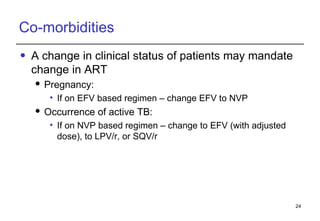
Co-morbidities A change in clinical status of patients may mandate change in ART Pregnancy: If on EFV based regimen – change EFV to NVP Occurrence of active TB: If on NVP based regimen – change to EFV (with adjusted dose), to LPV/r, or SQV/r
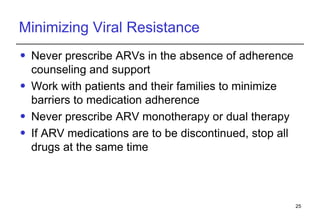
Minimizing Viral Resistance Never prescribe ARVs in the absence of adherence counseling and support Work with patients and their families to minimize barriers to medication adherence Never prescribe ARV monotherapy or dual therapy If ARV medications are to be discontinued, stop all drugs at the same time
Minimizing Viral Resistance (2) Do not prescribe ZDV (zidovudine) and d4T (stavudine) together (antagonistic) Pay meticulous attention to other medications and treatments and their potential to interact with ARV therapies Never add a single drug (alone) to a failing regimen
Improving Adherence and Enhancing QOL Reduce pill burden Changing to fixed dose combinations Replace PIs with NNRTI’s or abacavir Minimize food/water restrictions Revisit co-morbid conditions that might be interfering, e.g. mental health; substance abuse Inquire about side effects that may have contributed to poor adherence
Changing Regimen When changing regimen due to treatment failure: Evaluate for resistance through resistance testing or empiric decision-making based on clinical history Change to an entirely new regimen, with at least one drug from a new class Anticipate some cross-resistance (e.g. ZDV and d4T) Try to determine and correct reasons for failure of the first regimen (e.g. adherence issues)
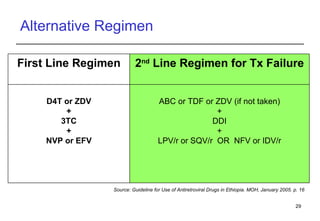
Alternative Regimen Source: Guideline for Use of Antiretroviral Drugs in Ethiopia. MOH, January 2005. p. 16 ABC or TDF or ZDV (if not taken) + DDI + LPV/r or SQV/r  OR  NFV or IDV/r D4T or ZDV + 3TC + NVP or EFV 2 nd  Line Regimen for Tx Failure First Line Regimen
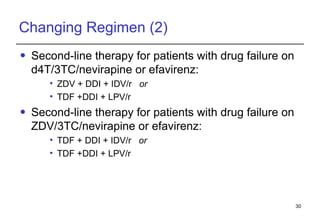
Changing Regimen (2) Second-line therapy for patients with drug failure on d4T/3TC/nevirapine or efavirenz: ZDV + DDI + IDV/r  or TDF +DDI + LPV/r Second-line therapy for patients with drug failure on ZDV/3TC/nevirapine or efavirenz: TDF + DDI + IDV/r  or TDF +DDI + LPV/r
Monitoring Therapy
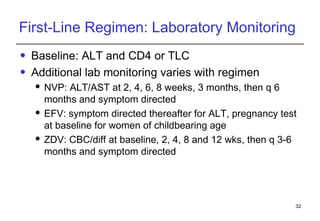
First-Line Regimen: Laboratory Monitoring Baseline: ALT and CD4 or TLC Additional lab monitoring varies with regimen NVP: ALT/AST at 2, 4, 6, 8 weeks, 3 months, then q 6 months and symptom directed EFV: symptom directed thereafter for ALT, pregnancy test at baseline for women of childbearing age ZDV: CBC/diff at baseline, 2, 4, 8 and 12 wks, then q 3-6 months and symptom directed
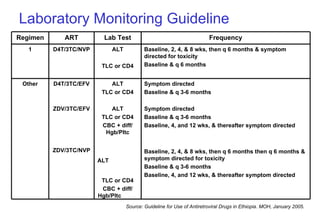
Laboratory Monitoring Guideline Refer to slide at end of handbook. Source: Guideline for Use of Antiretroviral Drugs in Ethiopia. MOH, January 2005. Symptom directed Baseline & q 3-6 months Symptom directed Baseline & q 3-6 months Baseline, 4, and 12 wks, & thereafter symptom directed Baseline, 2, 4, & 8 wks, then q 6 months then q 6 months & symptom directed for toxicity Baseline & q 3-6 months Baseline, 4, and 12 wks, & thereafter symptom directed ALT TLC or CD4 ALT TLC or CD4 CBC + diff/ Hgb/Pltc ALT  TLC or CD4 CBC + diff/ Hgb/Pltc  D4T/3TC/EFV ZDV/3TC/EFV ZDV/3TC/NVP Other Baseline, 2, 4, & 8 wks, then q 6 months & symptom directed for toxicity Baseline & q 6 months ALT TLC or CD4 D4T/3TC/NVP 1 Frequency Lab Test ART Regimen
Second-Line Regimen:  Laboratory Monitoring Baseline: CBC/diff, ALT, SCr and CD4 or TLC  Other lab monitoring varies with regimen ZDV: CBC/diff at baseline, 2, 4, 8, 12 wks, then q 3-6 months and symptom directed DDI: amylase at baseline and symptoms of abdominal pain, CBC with diff and LFTs q 12 months TDF: urine protein dipstick and SCr at baseline, 3 months and q 6 months, CBC/diff and AST/ALT q 12 months PIs: lipids at baseline and q 12 months, AST/ALT at baseline, 3 months then q 6 months, fasting glucose at baseline, then q 12 months Indinavir: urine dipstick for RBCs with symptoms of flank pain, SCr at baseline then q 6 months
Case Studies
Case 1
Case Study: Kasahun Kasahun is a 25 year-old male (CD4 count 56) who presents to clinic for follow-up 2 weeks after starting ZDV, 3TC and NVP. He learned his HIV status two months ago, during a hospitalization with CNS toxoplasmosis.  He is currently receiving treatment for toxoplasmosis and has tolerated his medication over the past two months At diagnosis he had significant lower leg numbness and weakness due to INH therapy for TB Pyridoxine 40 mg was started to replace his B-complex vitamin.  Why would this be necessary?
Case Study: Kasahun (2) He had some nausea the first week on meds, which he has resolved by eating small meals before doses.  He claims to take his medications every day as directed. He has lost weight  and is now 51 kg Today he presents complaining of a mildly itchy red rash over his trunk and arms which began 2 days ago. He says he feels tired all day.  He proudly states that he has taken his NVP twice daily since his first day on medications
Case Study: Kasahun (3) What do you think is occurring with Kasahun? Should his ART regimen be changed?  What additional information would you like to know? What are the laboratory tests that should be done at today’s visit to monitor Kasahun’s therapy?
Case Study: Kasahun Follow-up (4) Laboratory Values WBC: 5.6   H/H: 6.9 / 27  LFTs: 31 / 26  How would you interpret these lab results? He has had only minor headaches over the past 3 weeks.  What does this tell us? He does not have any other areas of the rash, oral blisters, myalgias or fever.  What should you do? Did he take NVP QD x 2 weeks, then increase to BID?
Case Study: Kasahun (5) He has not been having trouble remembering doses He has been taking doses with meals (breakfast and dinner) Peripheral neuropathy symptoms have improved However, he has been missing work due to fatigue
Case Study: Kasahun (6) How would you interpret his results? Would you change his ART? How would you counsel Kasahun?
Case Study: Kasahun (7) Follow up at 3 months shows: CD4 count = 110 (10%) cell/mm3 Hemoglobin/Hematocrat = 13 / 38% WBC = 5.8 55 kg He is tolerating medications except for occasional numbness in lower extremities. His symptoms have somewhat improved over last 3 months.  Occasional nausea after taking meds Claims he is taking all his medications. He takes his morning dose at work during his break and takes his evening dose with dinner
Case Study: Kasahun (8) Therapeutic goals are being met Patient energy increased and he’s feeling better Appetite is good and he has gained 4 Kg CD4 increasing (was 56/5% 2 months ago) H/H normalized However, he reports side effects: If possible, decrease dose of stavudine to 30mg BID for neuropathy Encourage food before doses
Case 2
Case Study: Yared Yared  is a 30 year-old man who has been stable on stavudine, lamivudine and nevirapine for the past four years  History: PCP pneumonia 4 years ago Today his CD4 cell count is 140 cells/mm3, his previous CD4 count was 300 and his viral load has risen from undetectable levels to 50,000 copies/ml He feels well and has no complaints today
Case Study: Yared (2) What do you think is happening to  Yared ? What additional information would you like to know? Does he require a change in his regimen? What possible regimen can you give to  Yared , based on your local situation?
Case Study: Yared Follow-up (3) Yared  had been taking his medication as prescribed but missed doses recently while he was visiting his brother in Jimma What are the factors to consider before starting a new regimen?
Case Study: Yared (4) Side effects Educate Yared on the potential side effects of each potential regimen Patient preference Yared is very fearful of the ABC hypersensitivity syndrome and would prefer to avoid ABC in his next regimen Review drug-drug interactions Cost and sustainability Barriers to adherence Plan ahead for changes in schedule, vacations, etc
Case Study: Yared (5) He will begin TDF 300 mg qd +DDI 250 mg qd +LPV/r 3 caps bid How will you monitor his therapy? Clinical Laboratory Does he have to take his DDI apart from LPV/r and/or tenofovir?
Key Points Treatment failure occurs because of preexisting resistance, limited regimen potency, imperfect adherence, poor absorption, rapid elimination , or drug-drug interactions  Therapy should not be changed unless absolutely necessary The main reasons for changing ART are treatment failure and drug toxicity
Key Points (2) Other reasons for changing ART include problems with adherence or other medical conditions or illnesses  Ongoing laboratory monitoring is necessary to detect all side effects and to monitor success/failure of therapy

Changing Anti-Retroviral Therapy

  • 1.
  • 2.
    Introductory Case: MikaelMikael is a 28 year-old male diagnosed with AIDS who has been taking his triple drug ART regularly for the past 6 months without difficulties. He began therapy one year ago, during a bout of PCP pneumonia and oral thrush CD4/TLC and VL monitoring is not available in his region Today Mikael is diagnosed with toxoplasmosis and is hospitalized for treatment with Fansidar
  • 3.
    Introductory Case: Mikael(cont.) Which of the following statements about changing therapy are true? ART should not be changed because this patient is not experiencing side effects from his regimen A change in ART should be done for a patient who experiences a new opportunistic infection on ART ART should be changed as soon as a patient starts to miss doses to avoid treatment failure ART should only be changed when a patient experiences virologic failure
  • 4.
    Unit Learning ObjectivesIdentify reasons for changing ART List factors in ART failure Determine how to change ART due to toxicity, treatment failure or concomitant disease Describe factors to consider when changing ART Describe appropriate laboratory monitoring procedures for ART
  • 5.
    Factors to ConsiderWhen Changing Regimen Ethiopia ARV guidelines Prior antiretroviral history Antiretroviral resistance Side effects Number of drugs needing replacement Barriers to adherence Patient life-style and preferences Ability to follow-up in clinic Drug interactions Cost and sustainability
  • 6.
    Reasons for ChangingART ART is not changed unless absolutely necessary! ART may be changed because of: Treatment Failure Clinical failure Immunologic failure Virologic failure Toxicity or intolerance Co-morbid conditions Non-adherence/compromised quality of life
  • 7.
    Treatment Failure Treatmentfailure is defined by Clinical failure New or recurrent OI Onset or recurrent WHO Stage III condition Note: Should not be confused with immune reconstitution inflammatory syndrome Immunologic failure Fall of CD4 count by >50% from the peak Return of the CD4 count to baseline or below
  • 8.
    Introductory Case: Mikael(cont.) ART should not be changed because this patient is not experiencing side effects from his regimen FALSE Where CD4 counts and viral load tests are unavailable, the WHO recommends using clinical evaluation to define treatment failure This patient is experiencing clinical failure defined as the development of a new opportunistic infection (in this case toxoplasmosis) while on ART
  • 9.
    Introductory Case: Mikael(cont.) A change in ART should be done for a patient who experiences a new opportunistic infection on ART TRUE Where CD4 counts and viral load tests are unavailable, the WHO recommends using clinical evaluation to define treatment failure
  • 10.
    Treatment Failure (2)Virologic failure: Failure to suppress viral load to undetectable Reappearance of detectable virus after a period of undetectability (loss of virologic control) Less than one log (10-fold) decrease in viral load from baseline after 8-12 weeks of ART
  • 11.
    Antiretroviral Therapy: Failureto Suppress Courtesy of David H. Spach, MD; NW AETC, University of Washington Medications Started 50 50 TIME
  • 12.
    Antiretroviral Therapy: ViralFailure Medications Started 50 50 TIME Courtesy of David H. Spach, MD; NW AETC, University of Washington
  • 13.
    Reasons Treatment MayFail Treatment fails if: Drugs are not strong enough to control the virus Patient is too sick (clinical failure) or has serious infections which are not treatable Patient has poor adherence Missing more than three doses/month increases risk of treatment failure Missing additional doses causes drug levels to fall, making HIV resistant
  • 14.
    Treatment Failure andIRIS Must differentiate treatment failure from Immune Reconstitution Inflammatory Syndrome (IRIS) Clinical manifestation of a sub-clinical infection present at baseline. Brought on by ART-induced reconstitution of the immune system Typically seen within several weeks of initiating ART
  • 15.
    Introductory Case: Mikael(cont.) ART should be changed as soon as a patient starts to miss doses to avoid treatment failure FALSE If it is determined that a patient is missing doses, it is best to try to determine the cause and to identify a solution to assist the patient with adherence Changing ART should only be done when absolutely necessary
  • 16.
    Reasons Treatment MayFail (2) Other medicines may stop ART from working Reduce levels of ARVs in the blood e.g. TB drug rifampicin is a potent liver enzyme inducer Important: Patients must be warned that herbal medicines could reduce ARV drug levels Traditional healers must be told that their medicines could reduce ARV drug levels
  • 17.
    Reasons Treatment MayFail (3) Patient cannot tolerate the available drugs Liver damage, nerve damage and anemia are possible serious side effects Diarrhea, nausea and vomiting caused by the drugs may sometimes be too much to bear Treatment may have to be stopped if these side effects become serious and replacement drugs are not available
  • 18.
    Introductory Case: Mikael(cont.) ART should only be changed when a patient experiences virologic failure FALSE Virologic failure is only one possible reason that a change in therapy may be necessary Other reasons to change therapy include: Intolerable toxicities or side effects Treatment failure (clinical failure or immunologic failure) Co-morbidities
  • 19.
    Causes of ARTFailure: Summary Pre-existing Resistance Limited Potency of Regimen Imperfect Adherence Poor Absorption Rapid Elimination Drug-Drug Interactions Drug Failure Persistent Viral Replication
  • 20.
    Toxicity About 50%of patients treated for three years with good viral suppression will require a change in therapy due to an adverse reaction to antiretroviral drugs Intolerable side effects Organ Dysfunction Interventions: If the offending drug can be identified, replace just that drug If the offending drug cannot be identified, replace entire regimen
  • 21.
    Clinical Indications toChange ART Due to Toxicity Normal activity reduced > 50% Fatigue Severe discomfort, objective weakness, loss of 2-3 previously present reflexes or sensory dermatomes Peripheral Neuropathy Generalized urticaria, angioedema or anaphylaxis Allergic Reaction Severe or requires narcotics Headache Unexplained fever of > 39.6 C Fever Bloody diarrhea, orthostatic hypotension or need of IV fluids Diarrhea Severe vomiting of all foods/fluids in 24 hrs, orthostatic hypotension or need of IV fluids Vomiting Severe discomfort or minimal intake for > 3 days Nausea Clinical Indication Symptom
  • 22.
    Lab Indications toChange ART Due to Toxicity * ULN = Upper Limit of Normal < 200 mg/dL < 200 mg/dL 23-85 U/L, 0-160 U/L ≤ 42 U/L , ≤ 48U/L ≤ 1.2 mg/dL ≤ 1.3 mg/dL 130-400 x 10 3 / µ L 1500 to 7000/mm 3 M: 13.8 – 17.2 g/dL F: 12 – 15.6 g/dL Normal Reference Values 1.6-2.0 X ULN Cholesterol 8.49- 13.56 mmol/L Triglyceride (TG) Lipids > 2-3 x ULN* 5-10 x ULN* = 210-420 U/L, 240-480 U/L > 1.7-2.0 (adult) > 3-7.5 x ULN*= 3.9-9.75mg/dL < 49 x 10 3 / µ L < 750/mm 3 < 7.0 g/dL Grade 3 Toxicity Amylase, Lipase Pancreatic Enzymes AST / ALT LFTs SCr Total Bilirubin Chemistries Platelet count ANC Hemoglobin (Hgb) Hematology Parameter
  • 23.
    Toxicity: Changing OneDrug Regimen: d4T/3TC/NVP d4T-related neuropathy or pancreatitis: Switch d4T to ZDV NVP-related rash or hepatotoxicity: Switch NVP to EFZ (except pregnancy) Switch NVP to PI’s (in cases of pregnancy or severe adverse effect) Regimen: d4T/3TC/EFV EFZ-related persistent CNS toxicity: Switch EFZ to NVP Regimen: ZDV/3TC/EFV ZDV-related anemia or neutropenia: Switch ZDV to d4T
  • 24.
    Co-morbidities A changein clinical status of patients may mandate change in ART Pregnancy: If on EFV based regimen – change EFV to NVP Occurrence of active TB: If on NVP based regimen – change to EFV (with adjusted dose), to LPV/r, or SQV/r
  • 25.
    Minimizing Viral ResistanceNever prescribe ARVs in the absence of adherence counseling and support Work with patients and their families to minimize barriers to medication adherence Never prescribe ARV monotherapy or dual therapy If ARV medications are to be discontinued, stop all drugs at the same time
  • 26.
    Minimizing Viral Resistance(2) Do not prescribe ZDV (zidovudine) and d4T (stavudine) together (antagonistic) Pay meticulous attention to other medications and treatments and their potential to interact with ARV therapies Never add a single drug (alone) to a failing regimen
  • 27.
    Improving Adherence andEnhancing QOL Reduce pill burden Changing to fixed dose combinations Replace PIs with NNRTI’s or abacavir Minimize food/water restrictions Revisit co-morbid conditions that might be interfering, e.g. mental health; substance abuse Inquire about side effects that may have contributed to poor adherence
  • 28.
    Changing Regimen Whenchanging regimen due to treatment failure: Evaluate for resistance through resistance testing or empiric decision-making based on clinical history Change to an entirely new regimen, with at least one drug from a new class Anticipate some cross-resistance (e.g. ZDV and d4T) Try to determine and correct reasons for failure of the first regimen (e.g. adherence issues)
  • 29.
    Alternative Regimen Source:Guideline for Use of Antiretroviral Drugs in Ethiopia. MOH, January 2005. p. 16 ABC or TDF or ZDV (if not taken) + DDI + LPV/r or SQV/r OR NFV or IDV/r D4T or ZDV + 3TC + NVP or EFV 2 nd Line Regimen for Tx Failure First Line Regimen
  • 30.
    Changing Regimen (2)Second-line therapy for patients with drug failure on d4T/3TC/nevirapine or efavirenz: ZDV + DDI + IDV/r or TDF +DDI + LPV/r Second-line therapy for patients with drug failure on ZDV/3TC/nevirapine or efavirenz: TDF + DDI + IDV/r or TDF +DDI + LPV/r
  • 31.
  • 32.
    First-Line Regimen: LaboratoryMonitoring Baseline: ALT and CD4 or TLC Additional lab monitoring varies with regimen NVP: ALT/AST at 2, 4, 6, 8 weeks, 3 months, then q 6 months and symptom directed EFV: symptom directed thereafter for ALT, pregnancy test at baseline for women of childbearing age ZDV: CBC/diff at baseline, 2, 4, 8 and 12 wks, then q 3-6 months and symptom directed
  • 33.
    Laboratory Monitoring GuidelineRefer to slide at end of handbook. Source: Guideline for Use of Antiretroviral Drugs in Ethiopia. MOH, January 2005. Symptom directed Baseline & q 3-6 months Symptom directed Baseline & q 3-6 months Baseline, 4, and 12 wks, & thereafter symptom directed Baseline, 2, 4, & 8 wks, then q 6 months then q 6 months & symptom directed for toxicity Baseline & q 3-6 months Baseline, 4, and 12 wks, & thereafter symptom directed ALT TLC or CD4 ALT TLC or CD4 CBC + diff/ Hgb/Pltc ALT TLC or CD4 CBC + diff/ Hgb/Pltc D4T/3TC/EFV ZDV/3TC/EFV ZDV/3TC/NVP Other Baseline, 2, 4, & 8 wks, then q 6 months & symptom directed for toxicity Baseline & q 6 months ALT TLC or CD4 D4T/3TC/NVP 1 Frequency Lab Test ART Regimen
  • 34.
    Second-Line Regimen: Laboratory Monitoring Baseline: CBC/diff, ALT, SCr and CD4 or TLC Other lab monitoring varies with regimen ZDV: CBC/diff at baseline, 2, 4, 8, 12 wks, then q 3-6 months and symptom directed DDI: amylase at baseline and symptoms of abdominal pain, CBC with diff and LFTs q 12 months TDF: urine protein dipstick and SCr at baseline, 3 months and q 6 months, CBC/diff and AST/ALT q 12 months PIs: lipids at baseline and q 12 months, AST/ALT at baseline, 3 months then q 6 months, fasting glucose at baseline, then q 12 months Indinavir: urine dipstick for RBCs with symptoms of flank pain, SCr at baseline then q 6 months
  • 35.
  • 36.
  • 37.
    Case Study: KasahunKasahun is a 25 year-old male (CD4 count 56) who presents to clinic for follow-up 2 weeks after starting ZDV, 3TC and NVP. He learned his HIV status two months ago, during a hospitalization with CNS toxoplasmosis. He is currently receiving treatment for toxoplasmosis and has tolerated his medication over the past two months At diagnosis he had significant lower leg numbness and weakness due to INH therapy for TB Pyridoxine 40 mg was started to replace his B-complex vitamin. Why would this be necessary?
  • 38.
    Case Study: Kasahun(2) He had some nausea the first week on meds, which he has resolved by eating small meals before doses. He claims to take his medications every day as directed. He has lost weight and is now 51 kg Today he presents complaining of a mildly itchy red rash over his trunk and arms which began 2 days ago. He says he feels tired all day. He proudly states that he has taken his NVP twice daily since his first day on medications
  • 39.
    Case Study: Kasahun(3) What do you think is occurring with Kasahun? Should his ART regimen be changed? What additional information would you like to know? What are the laboratory tests that should be done at today’s visit to monitor Kasahun’s therapy?
  • 40.
    Case Study: KasahunFollow-up (4) Laboratory Values WBC: 5.6 H/H: 6.9 / 27 LFTs: 31 / 26 How would you interpret these lab results? He has had only minor headaches over the past 3 weeks. What does this tell us? He does not have any other areas of the rash, oral blisters, myalgias or fever. What should you do? Did he take NVP QD x 2 weeks, then increase to BID?
  • 41.
    Case Study: Kasahun(5) He has not been having trouble remembering doses He has been taking doses with meals (breakfast and dinner) Peripheral neuropathy symptoms have improved However, he has been missing work due to fatigue
  • 42.
    Case Study: Kasahun(6) How would you interpret his results? Would you change his ART? How would you counsel Kasahun?
  • 43.
    Case Study: Kasahun(7) Follow up at 3 months shows: CD4 count = 110 (10%) cell/mm3 Hemoglobin/Hematocrat = 13 / 38% WBC = 5.8 55 kg He is tolerating medications except for occasional numbness in lower extremities. His symptoms have somewhat improved over last 3 months. Occasional nausea after taking meds Claims he is taking all his medications. He takes his morning dose at work during his break and takes his evening dose with dinner
  • 44.
    Case Study: Kasahun(8) Therapeutic goals are being met Patient energy increased and he’s feeling better Appetite is good and he has gained 4 Kg CD4 increasing (was 56/5% 2 months ago) H/H normalized However, he reports side effects: If possible, decrease dose of stavudine to 30mg BID for neuropathy Encourage food before doses
  • 45.
  • 46.
    Case Study: YaredYared is a 30 year-old man who has been stable on stavudine, lamivudine and nevirapine for the past four years History: PCP pneumonia 4 years ago Today his CD4 cell count is 140 cells/mm3, his previous CD4 count was 300 and his viral load has risen from undetectable levels to 50,000 copies/ml He feels well and has no complaints today
  • 47.
    Case Study: Yared(2) What do you think is happening to Yared ? What additional information would you like to know? Does he require a change in his regimen? What possible regimen can you give to Yared , based on your local situation?
  • 48.
    Case Study: YaredFollow-up (3) Yared had been taking his medication as prescribed but missed doses recently while he was visiting his brother in Jimma What are the factors to consider before starting a new regimen?
  • 49.
    Case Study: Yared(4) Side effects Educate Yared on the potential side effects of each potential regimen Patient preference Yared is very fearful of the ABC hypersensitivity syndrome and would prefer to avoid ABC in his next regimen Review drug-drug interactions Cost and sustainability Barriers to adherence Plan ahead for changes in schedule, vacations, etc
  • 50.
    Case Study: Yared(5) He will begin TDF 300 mg qd +DDI 250 mg qd +LPV/r 3 caps bid How will you monitor his therapy? Clinical Laboratory Does he have to take his DDI apart from LPV/r and/or tenofovir?
  • 51.
    Key Points Treatmentfailure occurs because of preexisting resistance, limited regimen potency, imperfect adherence, poor absorption, rapid elimination , or drug-drug interactions Therapy should not be changed unless absolutely necessary The main reasons for changing ART are treatment failure and drug toxicity
  • 52.
    Key Points (2)Other reasons for changing ART include problems with adherence or other medical conditions or illnesses Ongoing laboratory monitoring is necessary to detect all side effects and to monitor success/failure of therapy

Editor's Notes

  • #2 This unit should take approximately 1 hour and 35 minutes to complete. Step 1: Introductory Case Study and Question (Slides 1-3) – 5 minutes Step 2: Unit Introduction and Learning Objectives (Slide 4) – 2 minutes Step 3: Changing Therapy (Slides 5-34) – 45 minutes Step 4: Changing Therapy-Cases (Slides 35-50) – 40 minutes Step 5: Key Points, Questions (Slides 51-52) – 5 minutes
  • #3 Step 1: Introductory Case Study and Question (Slides 1-3) – 5 minutes
  • #5 Step 2: Unit Introduction and Learning Objectives (Slide 4) – 2 minutes
  • #6 Step 3: Changing Therapy (Slides 5-34) – 45 minutes Always refer to the guidelines when making a change in regimen. Before starting second line therapy, try to determine why first line therapy failed. There are many factors that can have a dramatic impact on the success or failure of therapy. The following must be considered when changing regimens : Obtain prior antiretroviral history to determine previous toxicities and/or response to therapy, Be aware of previous side effects and of the side effect profile of the suggested new regimen Identify barriers to adherence and help the patient to resolve adherence issues, Ascertain their ability to follow-up in clinic for lab monitoring, Identify and avoid potential drug interactions, identify other disease states which may impact success with therapy, cost and sustainability.
  • #7 Once antiretroviral therapy (ART) is initiated, patients generally remain on medications indefinitely. The approach to patients who need to change ART will differ depending on a number of issues, including the reason for change, the amount of prior antiretroviral treatment experience, and the available treatment options. For example, effectively treating patients who develop a side effect to a drug in their first antiretroviral regimen may be easily accomplished by substituting the offending drug in the regimen. At the opposite end of the spectrum are patients with advanced HIV disease who have experienced toxicities, virologic failure, and drug resistance on multiple past treatment regimens and thus require a new treatment regimen. Note: Therapeutic failure is most commonly associated with non-adherence. It is critical to evaluate adherence to ART prior to changing ART for presumed therapeutic failure and to try and make an intervention to improve adherence. If the patient cannot adhere to their regimen, you may need to try to change to an easier regimen.
  • #8 Clinical disease progression should be differentiated from the immune reconstitution syndrome as discussed earlier. WHO Stage III conditions including, but not restricted to: HIV wasting, chronic diarrhea of unknown etiology, prolonged fever of unknown etiology, recurrent bacterial infections, recurrent/persistent mucosal candidiasis Where CD4 counts and viral load tests are unavailable, the WHO recommends using clinical evaluation and, where possible, CD4 count alone to define treatment failure.
  • #11 Measuring viral load is not currently an affordable option in most resource-limited settings and, thus, is not recommended for the routine monitoring of antiretroviral therapies. Although most centers do not have the ability to monitor viral loads, virologic failure will be discussed for future reference.
  • #12 This slide depicts an ART regimen that failed to achieve viral suppression. On the vertical axis, you see the viral load, the horizontal access represents time. The red box indicates the lowest level of detection or undetectable with the current assay (50 copies). The patient&apos;s viral load never became undetectable. This is termed failure to suppress.
  • #13 On the other hand, this graph depicts a regimen that was initially successful (became undetectable, less than 50 copies/mL) and then over time, the viral load rebounded leading to treatment failure or viral failure.
  • #14 Many patients will achieve viral suppression, immune restoration and develop an improvement in their overall well-being, however, these drugs are not a cure. If a person stops taking the drugs, HIV levels will rise again. ART controls HIV by stopping the virus from making new copies of itself. ART cannot kill the virus when it is `hiding` in cells. If treatment is stopped, these `hidden` viruses can quickly restore high levels of the virus throughout the body. HIV can also become resistant to the drugs, particularly if doses are missed or if the medications are not taken properly. Everyone can help to ensure that patients are able to take their medication the right way – doctors, pharmacists, nurses, other community health care workers, family and friends. Resistance not only reduces the benefits of the current combination — it may limit any future treatment options. Furthermore, resistant virus can be transmitted to uninfected people, limiting the effectiveness of available treatments for others and for the prevention of mother-to-child transmission. Side effects of ART limit a patient’s ability to take the medication properly. This may lead to the development of resistance as the levels of the drug in the body are not consistent. This gives the virus a chance to make new copies of itself. Even when patients take their medication properly every day, they are at risk for treatment failure due to drug-drug interactions. Drug-drug interactions will be discussed in more detail later. In some very sick patients, their disease progresses despite taking ART. This may be because they have very high levels of HIV in their blood, and the drugs are not strong enough to control HIV. This may also happen because there was not enough time to help the immune system recover. They may experience clinical failure, which may be seen in the development of a new opportunistic infection, or by the failure of an existing illness to improve. It may be too late to stop some infections or conditions such as cancers.
  • #15 IRIS may also result in an atypical presentation of some opportunistic infections. Although management of IRIS is challenging, switching the antiretroviral regimen in this circumstance is not indicated.
  • #17 Interactions with other drugs can also reduce the effects of ART, by reducing drug levels. Other drugs may stop ARVs from being processed properly in the body. Other drugs may affect the absorption of ART (eg. Antacids and DDI) This problem concerns not only with medicines prescribed by doctors, but any traditional herbal remedies too. The effects of many of the herbal medicines used by traditional healers on levels of antiretrovirals are still unknown, some may either reduce ARV levels or raise ARV levels in such a way that the patient suffers dangerous side effects. Traditional healers need to know about the possible risks of prescribing traditional herbal medicines to people taking ARVs.
  • #18 Side effects of antiretrovirals may necessitate a change in regimen, even if a patient is otherwise responding to treatment. Side effects can vary in frequency and morbidity. Some are potentially fatal (e.g. lactic acidosis, pancreatitis) whereas hyperlipidemia may cause a substantial long-term risk of cardiovascular disease, and some drugs cause almost predictable gastrointestinal intolerance. There are some side effects which occur early on and others that occur later. (e.g. hepatitis -- which appears to be a hypersensitivity reaction -- with nevirapine is greatest within the first 6 weeks of therapy whereas stavudine induced peripheral neuropathy is unlikely to occur until after 2-6 months) It is best to educate patients about the potential side effects of an ART regimen BEFORE they start the medication. They should be aware of when the side effects may occur, whether they should expect it to resolve on its own, or if they need to seek medical attention. If the side effects can be pinned to one drug in the regimen, it may be possible to switch just that offending drug. In situations where the toxicity cannot be pinned to one single drug, it may be necessary to switch the entire regimen. In some patients, antiretroviral drugs can have toxic side effects that can be life threatening. For example, liver damage and nerve damage can be so serious that a patient must stop ART. If suitable replacement ARVs are not available, the patient may no longer benefit from ART.
  • #20 There are many potential causes of ART failure. In order for the patient to be successful with their ART, all variables must be addressed. Some causes may be addressed ahead of time e.g. Be aware of potential drug-drug interactions and avoid the offending drugs. Other causes may not be able to be identified upfront, e.g., pre-existing resistance (if you do not have the ability to get a genotype) Each visit is an opportunity to identify any NEW variables that may cause therapy to fail. When patients come in for follow-up appointments for blood work or to pick up refills of their medication, the pharmacist is able to ask the patient how they are taking their medication, e.g. are they taking their medication with food? Routine laboratory monitoring is important to detect both toxicity and virologic success/failure. Important Note to the Trainer: Due to the long half-lives of the NNRTIS (nevirapine and efavirenz) and their relatively low levels of resistance (i.e., Single mutational changes leading to class-wide resistance), some experts prefer to stop these agents 5 –7 days before discontinuing the other agents in a regimen when possible. It is not yet common practice in the US to continue the nucleoside backbone for several days after discontinuing a NVP or EFV based regimen, to minimize risk of NVP/EFV resistance based on their longer half lives. However, in the absence of published data or formal recommendations, trainers should mention this as an approach under discussion.
  • #21 Intolerable side effects: Patient reported, Physical examination finding Organ Dysfunction: Significant lab abnormalities
  • #22 At what point is it necessary to change ART due to toxicity? There are certain clinical indications to guide you in this decision making process . If a patient experiences side effects from the ART, they must utilize their doctor, pharmacist or nurse to determine how to best handle the particular side effect. Patients must be counseled on the potential side effects of the ART regimen so that they can recognize the difference between severe and less threatening effects. Pharmacists have the opportunity to ask the patient questions about the side effects they are experiencing to determine if the patient should come in to the hospital to be evaluated or if they should continue taking their ART. (e.g. if a patient is experiencing mild diarrhea from their ART, they may be able to change their diet or take another medicine to control the diarrhea). However, if the patient is having bloody diarrhea or if they are becoming severely dehydrated from the diarrhea, it may be necessary to change therapy. The pharmacist must be able to relay the information to the doctor so that the appropriate measures are taken to resolve the side effect, which may include a change in the ART regimen. It is important to tell the patient that if they wish to stop taking their medication, they should stop taking ALL of their ART to avoid the development of resistance.
  • #23 ANC= Absolute neutrophil count Certain laboratory abnormalities signal the need for a change in ART regimen. One should consider changing ART in Grade 3 reactions and treatment should be stopped if there is a Grade 4 adverse event. Grade 4 Toxicity: Hgb &lt; 6.5 g/dL, ANC &lt; 500 mm3, TG 13.56 mmol/L, Cholesterol 2.0 X ULN Therefore, it is crucial that patients get their scheduled follow-up laboratory monitoring tests (blood tests) to make sure that the ART is not causing any harm to organs (e.g., liver, kidneys, pancreas) or the blood. This is important because many times patients may not have symptoms, although the ART is causing damage. For example: a patient may not “feel the side effect” from a medication that may cause an increase in the serum creatinine, indicating kidney toxicity
  • #24 Here are a few examples of when a change in one drug is appropriate . We know that peripheral neuropathy is most likely caused by the “d” drugs including stavudine and therefore, if the neuropathy is moderate to severe, it would be appropriate to change to zidovudine. If the neuropathy is mild, you may consider lowering the dose at the onset of the neuropathy to 20 mg Q12H if weight &gt;60 kg, or 15 mg Q12H if &lt;60 kg. If the provider does not discontinue therapy (or reduce the dose) at the onset, peripheral neuropathy will become permanent and increasingly painful and debilitating. The second example is when rash develops on nevirapine If the reaction is non life threatening and not Grade 4, efavirenz can be substituted with close monitoring, except in the case of a pregnant patient, in which efavirenz is contraindicated. A rash in a patient on nevirapine with mucosal involvement or associated with fever/systemic symptoms/derangement in liver functions should be treated as Grade 4 toxicity. ALL antiretroviral drugs should be stopped immediately. Patients at primary care should be referred to a specialist for advice regarding restarting antiretroviral treatment. If treatment is restarted, NVP should be substituted with a protease inhibitor. The patient should never be re-challenged with nevirapine or swap with efavirenz if Grade 4 or Stevens Johnson syndrome occurs. In the guidelines, a grade 4 toxicity pertaining to rash would involve: exfoliative dermatitis or mucous membrane involvement or erythema multiforme or suspected Stevens-Johnson syndrome or necrosis requiring surgery. The third example is one of laboratory toxicity. A hemoglobin of less than 7 g/dL is a severe laboratory abnormality, indicating severe anemia, which would require a change in therapy. Most likely the patient would be experiencing symptoms of anemia (eg. fatigue, weakness or breathlessness) as well.
  • #25 Efavirenz is teratogenic in animals, was linked to birth defects and should be substituted with nevirapine or a protease inhibitor-based regimen in a pregnant woman. Caution should be used with nevirapine in pregnancy, as it has been associated with an increased risk of fatal hepatitis in pregnant women, especially in women with higher CD4 counts. The oral solution of amprenavir should not be used in pregnant women because of the high content of polyethylene glycol and atazanavir- and indinavir-induced hyperbilirubinemia is a theoretical risk for the newborn. Medications used to treat comorbid illnesses often interact with antiretrovirals. A prime example is the interaction of rifampicin, a first-line drug for treatment of tuberculosis, with both protease inhibitors and NNRTIs. This interaction may be overcome by dose adjustment for efavirenz, or substitution of rifabutin for rifampicin in the case of protease inhibitors. Other examples of important drug interactions include cholesterol-lowering &amp;quot;statins&amp;quot; and protease inhibitors, and ergot derivatives and protease inhibitors. The activity of lamivudine, emtricitabine, and tenofovir against hepatitis B has encouraged many providers to include these medicines in the antiretroviral regimens of patients with chronic hepatitis B.
  • #26 Monotherapy or dual therapy may be used for PMTCT or for post-exposure prophylaxis only but should not be used as HAART. Adherence is the responsibility of the provider. Irresponsible prescriptive practice results in non-adherence and resistance.
  • #27 If a regimen is working, but not completely virally suppressed, enhancement or boosting (addition of ritonavir to certain protease inhibitors) may be done. Seek expert guidance if a provider thinks this may be helpful.
  • #28 Advances in ART regimens are enabling patients to change to regimens that ease adherence and enhance quality of life. The most widely studied approach to simplifying regimens has been replacing a protease inhibitor with nevirapine, efavirenz, or abacavir in patients with full virologic suppression on a protease inhibitor-based regimen. In 2 studies, adherence was shown to improve in subjects randomized to switch from a protease inhibitor to efavirenz (1) or to abacavir (2) compared with those who continued the protease inhibitor-based regimen. In both studies, time to virologic failure was delayed in the switch arms, suggesting that the improvement in adherence was clinically relevant. Clinicians who are contemplating changing an antiretroviral regimen for quality of life considerations should keep in mind the potential for adverse effects of the new regimen. In a large, randomized study that assessed the efficacy of simplifying protease inhibitor-based regimens by substitution with abacavir, efavirenz, or nevirapine, approximately 50% of subjects had new adverse events, though few of those events resulted in discontinuation of the regimen (3). References: Becker S. et al. Fifth International Congress on Drug Therapy in HIV Infection; October 22-26, 2002; Glasgow, Scotland. Clumeck N. et al. Aids 2001; 15:1517-26. Martinez E. et al. N Engl J Med 2003; 349:1036-46.
  • #30 The table above shows the second-line regimens for adults and adolescents. When (D4T or ZDV) + 3TC are used as part of the first-line regimen, nucleoside cross-resistance may compromise the potency of the nucleosides in the 2nd regimen. In this situation it is necessary to make empirical alternative choices with a goal of providing as much antiviral activity as possible. However, from an availability and cost point of view, and because of the high genetic barrier to emergence of resistance in the NRTI category, one can still use ZDV, if not used in the first regimen, as a NRTI backbone in the second line regimen. Because of the diminished potency of almost any second-line nucleoside component, a ritonavir-enhanced (PI/r) PI component (e.g., lopinavir/r, saquinavir/r, or indinavir/r) is preferable to nelfinavir given their potency. For patients without access to a secure cold chain for storing their ritonavir or saquinavir, nelfinavir can be used as an alternative. Indinavir can cause kidney stones if patients are not well hydrated and should be considered an alternative to the other PI-enhanced regimens. When indinavir is taken with ritonavir, both should be taken together with food. The cost and hypersensitivity with ABC is an issue of concern. Furthermore, high level ZDV/3TC core-resistance confers diminished susceptibility to ABC. TDF can be compromised by multiple nucleoside mutations (NAMs) but often retains activity against nucleoside-resistant viral strains. It is attractive in that, like DDI, it is given once daily. If TDF is taken with DDI, both can be taken with or without food once daily. If TDF is given with DDI, the dose of DDI must be reduced from 400 mg to 250 mg qd in order to reduce the chance of DDI-associated toxicity (eg. Neuropathy and pancreatitis).
  • #31 Note: lopinavir/ritonavir (LPV/r) cannot be kept out of a secure cold chain for more than 60 days. It should not be used with rifampicin. If there are no other options, a dose adjustment is required and will be discussed later. Indinavir/ritonavir cannot be used with rifampicin. This combination requires a high fluid intake (1.5 liters per day) due to the potential for indinavir crystals to accumulate in the kidneys. This can result in nephrolithiasis which is an extremely painful condition that causes internal bleeding in the kidneys. Patients may require hospitalization if they develop this condition.
  • #34 These guidelines for laboratory monitoring of ARVs can be found in the “Guidelines for use of Antiretroviral Drugs in Ethiopia, Jan 2005”. Certain hospitals may not have the ability to obtain these labs or be able to obtain labs as frequently as recommended. Pregnancy Test at Baseline when considering EFV Ongoing monitoring is critical in to assess clinical efficacy and to detect drug related toxicity. For the first line regimens: ZDV requires periodic blood counts for Hgb evaluation at 2, 4, 8 and 12 weeks, then every 3-6 months and symptom directed. Therefore, if a patient feels fatigued, or has orthostatic hypotension, they should be evaluated for possible anemia PIs and NNRTIs: ALT/AST requires ongoing monitoring. Nevirapine requires more stringent monitoring due to the potential for the hypersensitivity reaction that may occur in the first 6 weeks.
  • #36 Step 4: Changing Therapy-Cases (Slides 35-50) – 40 minutes Case Study Group Exercise: Divide participants into groups of 4-5 members. Assign each work group one of the two Adult ART Case Studies (Handout 7.1, 7.2). Ask the groups to identify a recorder and a presenter, and then spend thirty minutes discussing the case study together and answering the related questions on flip-chart paper. Ask each work group to share their decisions and answers. Discuss each case thoroughly and use this time to answer questions and clarify misinformation. The case studies, questions, and answers are included in Slides 35-50. Spend 10 minutes discussing each case. If time is limited, discuss each case study as a large group instead of breaking participants into smaller groups.
  • #38 As the cases are discussed as a large group, present this question to participants.
  • #40 ANSWERS: Nevirapine-related rash. It is common for NVP rash to present on the upper body and arms. The time course is what we would expect, within the first month. He has possible anemia from AZT. Kasahun’s options are to discontinue NVP if severe rash or treat mild nevirapine rash symptomatically with diphenhydramine and hydrocortisone cream. He may be experiencing anemia due to ZDV and you will need to see his lab work to determine if this warrants a change. If his lab work does not necessitate a change in therapy, you will need to determine how severe his fatigue is and see if it is affecting his daily life Laboratory values. You want to know this to determine if he has any signs of hepatitis from NVP. Remember that NVP can cause a hypersensitivity reaction during the first 8 weeks of therapy. The reaction may be accompanied by a drug rash, eosinophilia and systemic symptoms. The risk of hepatotoxicity is greatest in the first 6 weeks. You should try to find out if the rash is severe: Does he have any other constitutional symptoms, e.g., oral blisters, conjunctivitis, myalgias or fever, or oral blistering or blistering/peeling skin? Did he take NVP QD x 2 weeks, then increase to BID? In order to reduce the risk of nevirapine –induced rash, the dose should be escalated over the first two weeks. Has he been taking any other medication that may cause a similar drug rash? Or any medication that could cause drug interactions? Is he having any trouble remembering doses? Every visit with a patient is an opportunity to identify any barriers to adherence and to take action to address them. Has his peripheral neuropathy resolved or improved after starting pyridoxine? What are the laboratory tests that should be done at today’s visit to monitor Kasahun’s therapy? CBC, H/H to determine if he has anemia. LFTs to determine if he has drug induced hepatitis. Viral load testing is recommended where available every 6 months along with the CD4 cell count. LFT Baseline, 2, 4, and 8 weeks (for nevirapine) &amp; symptom directed thereafter for toxicity. CD4 or TLC: Baseline &amp; q6 months. CBC + diff/Hgb/Pltc: Baseline, 4 and 12 weeks, thereafter symptom directed (with WBC). All of the nucleoside analogues must be dose adjusted for renal toxicity, except for ABC, although not outlined in the guidelines. SCr should be monitored ongoing and the doses should be adjusted accordingly to avoid drug toxicity.
  • #41 Following are additional questions on Case 1. Open up discussion of these to the entire group. If time is limited, skip these slides and proceed to Case 2, Slide 45. You have asked the patient your follow-up questions and now, look at his lab values. His H/H are low. Hemoglobin range 13.0-18.0, Hematocrit range 38-50. You notice that his Hgb is 6.9. This level indicates a Grade 3 toxicity. This is most likely related to AZT and would necessitate a change in therapy. You remember that the patient indicated that he has been very tired which you would expect as physical symptoms in a patient with anemia. His LFTs and SCr are normal. Minor headaches over the past 3 weeks tells us that he has not had a recurrence of his signs/symptoms of toxoplasmosis. Clinically, his rash would be graded as a Grade 1 toxicity, therefore you would recommend that he continue to take NVP and use hydrocortisone 1% cream or diphenhydramine to treat. The patient should be counseled that if the rash were to progress, or any new symptoms such as arthralgias or fever were to appear he would need to be seen immediately for further evaluation. Taking nevirapine BID from the start put him at greater risk for rash. At this point, as long as his rash is not severe, he should continue to take his nevirapine bid.
  • #43 Yes, change therapy to: Stavudine 30mg BID, Lamivudine 150mg BID, Nevirapine 200mg BID. Consider fixed dose combination tablet. You do not need to change the entire regimen because he is not failing, only experiencing a side effect from one of his medications, zidovudine. An appropriate switch for zidovudine would be stavudine. Note the dose of stavudine, why is his dose 30 mg bid? Remember his weight is &lt; 60 kg; therefore he should receive the lower dose to avoid the risk of developing dose-related side effects of pancreatitis and peripheral neuropathy. You may recall that he had been experiencing peripheral neuropathy from his TB therapy. However, he has been started on B6 (pyridoxine 50 mg) which is the dose used to prevent peripheral neuropathy. His symptoms have improved. Therefore you can recommend that he change to stavudine and monitor him for any signs of neuropathy. At the first sign of neuropathy, he will need to be evaluated to avoid the development of long term nerve damage from stavudine. Once stable on the regimen, could use the fixed dose combination of D4T, 3TC and NVP Counsel on: Food requirements: None. Limit alcohol intake: Stavudine can cause pancreatitis. Side effects and how to cope: The onset of peripheral neuropathy is usually after 2-6 months of therapy. If he were to develop peripheral neuropathy in the future, you would need to decrease his dose to 15 mg q12h if his weight remains &lt;60 kg. If pancreatitis develops, you must discontinue therapy with stavudine. When symptoms resolve, you cannot re-challenge with stavudine. He should be aware that stavudine has been associated with lipodystrophy. These changes in body fat distribution are general and generally not apparent until months after the initiation of therapy. ADHERENCE Return to clinic for F/U in 1 month. Sooner if rash or PN worsen or other side effects
  • #44 You notice that his CD4 count has improved while on ART. His H/H has improved. He is able to go back to work and is remembering to take his doses. He has a plan for adherence. He has occasional nausea after taking meds. This could become a problem as he may not continue to take his medication if he feels nauseous. He is gaining weight, which is good. It seems as though his nausea is not limiting him from getting adequate nutrition. You should clarify and see if this is the case. He has been experiencing some peripheral neuropathy, which is intermittent. This should be monitored to ensure that it does not increase in frequency or get to the point that it never goes away.
  • #45 If his peripheral neuropathy continues, may need to lower the dose, or discontinue to avoid long term nerve damage that will be irreversible.
  • #48 The patient had achieved virologic success, and his viral load was undetectable until this visit. Now it seems as though he is experiencing virologic failure. He has had a &gt;50% fall from therapy CD4 peak level without other concomitant infections to explain the transient cell decrease. If he were asymptomatic and failure was being defined by CD4 count alone, consideration should be given to performing a confirmatory CD4 cell count, if resources permit. Since he has also experienced a rise in viral load, this would be considered treatment failure without a CD4 count. Has he been adherent to his regimen? Is still taking his medication? If he has gone off of his medication on his own, you may be able to help to resolve the issue and get him restarted on meds. The new second line regimen should involve drugs that retain activity against the patient’s virus strain and should ideally include three new drugs, one or more of them from a new class, in order to increase the likelihood of treatment success and minimize the risk of cross-resistance. Before changing to second line regimen, the patient should undergo a thorough assessment, including identification of possible reasons for failure, and then undergo the treatment readiness and education process again. Since this is treatment failure, it is recommended that he change the entire regimen from first line to second line Some possible regimens: ABC or TDF or ZDV + DDI + LPV/r or NFV. Since the possibility of cross resistance between D4T and ZDV is high, you would want to use TDF in the next regimen. The second nucleoside analogue could be either ABC or DDI. The second regimen should contain a drug from a new class (eg. Protease inhibitor, preferably a ritonavir boosted regimen.
  • #49 Identify the reasons for failure Review factors to consider before changing the regimen Following are additional questions on Case 2. Open up discussion of these to the entire group. If time is limited, skip these slides and proceed to Key Points, Slide 51.
  • #51 He should follow-up in 1 month to determine that he has been successful with his new regimen. Monitor for GI distress, diarrhea or nausea with LPV/r, DDI may cause pancreatitis or peripheral neuropathy, Tenofovir is generally well tolerated, may cause slight headache or nausea. Monitor CD4 (or TLC) every 6 months with viral load, if able ALT q 6 month to monitor the protease inhibitor (every 3 months if possible) Periodic SCr, if possible to monitor the need for dose adjustment of DDI or TDF. Monitor him for Clinical or disease progression New or recurrent OI Do not confuse with immune reconstitution syndrome Onset or recurrent WHO Stage III condition Falling CD4 Count Fall of &gt;50% from the peak Return to baseline or below Rising viral load Note that since he is taking tenofovir with didanosine, didanosine (DDI) can be taken together with tenofovir and lopinavir/r and food
  • #52 Step 5: Key Points, Questions (Slides 51-52) – 5 minutes Summarize the presentation, review the Key Points presented in this Unit, and answer final questions.