Acute kidney injury
Yousaf khan
Lecturer Renal dialysis
IPMS- KMU
Acute kidney injury
 Acute renal failure (ARF)
 Abrupt loss of Kidney function that develops within 7
days.
 Increase in serum creatinine
 AKI may lead to a number of complications,
 metabolic acidosis
 high potassium levels
 Uremia
 changes in body fluid balance
 Effects on other organ systems
 including death
 People who have experienced AKI may have an
increased risk of chronic kidney disease in the future.
Diagnostic Approach
 Time of onset – prior serum creatinine
 Careful review of history and physical
exam
◦ Comorbidities
◦ Medications
◦ Current illness (vomiting, diarrhea, blood
loss, etc)
◦ BP, volume status, skin lesions,
flank/abdominal signs
Signs and symptoms
 Accumulation of urea and other nitrogen-
containing substances in the bloodstream
lead to
 Fatigue
 loss of appetite
 Headache
 Nausea
 Vomiting
 Marked increases in the potassium level can
lead to irregularities in the heartbeat, which
can be severe and life-threatening
 Fluid balance is frequently affected, though
blood pressure can be high, low or normal
Stages of acute injury
Consistent Risk Factors
 Age
 Hypovolemia
 Hypotension
 Sepsis
 CKD
 Hepatic dysfunction
 Cardiac dysfunction
 DM
 Exposure to nephrotoxins
Differential Diagnosis of AKI
 Pre-renal
 Renal
 Post-renal
Prerenal
 Decrease effective blood flow to the kidney
 low blood volume
 low blood pressure
 heart failure
 liver cirrhosis
 renal artery stenosis
 renal vein thrombosis
 Renal ischaemia can result in depression of GFR
 inadequate cardiac output
Intrinsic
 Glomerular
◦ Rapidly progressive GN, post-strep GN,
 Interstitial nephritis
◦ Infection-related, inlammation, drug-induced,
infiltrative (lymphoma, leukemia, sarcoidosis)
 Tubular Lesions
◦ Post-ishemia, nephrotoxic (drugs, contrast,
anesthetics, heavy metals), pigment
nephropathy, light chain, hypercalcemia
Postrenal
 Bladder flow obstruction
◦ Urethral, bladder neck (BPH), neurogenic
bladder
 Ureteral obstruction (bilateral or single
kidney)
◦ Stones, clots, tumours, papillary necrosis,
retroperitoneal fibrosis, surgical ligation
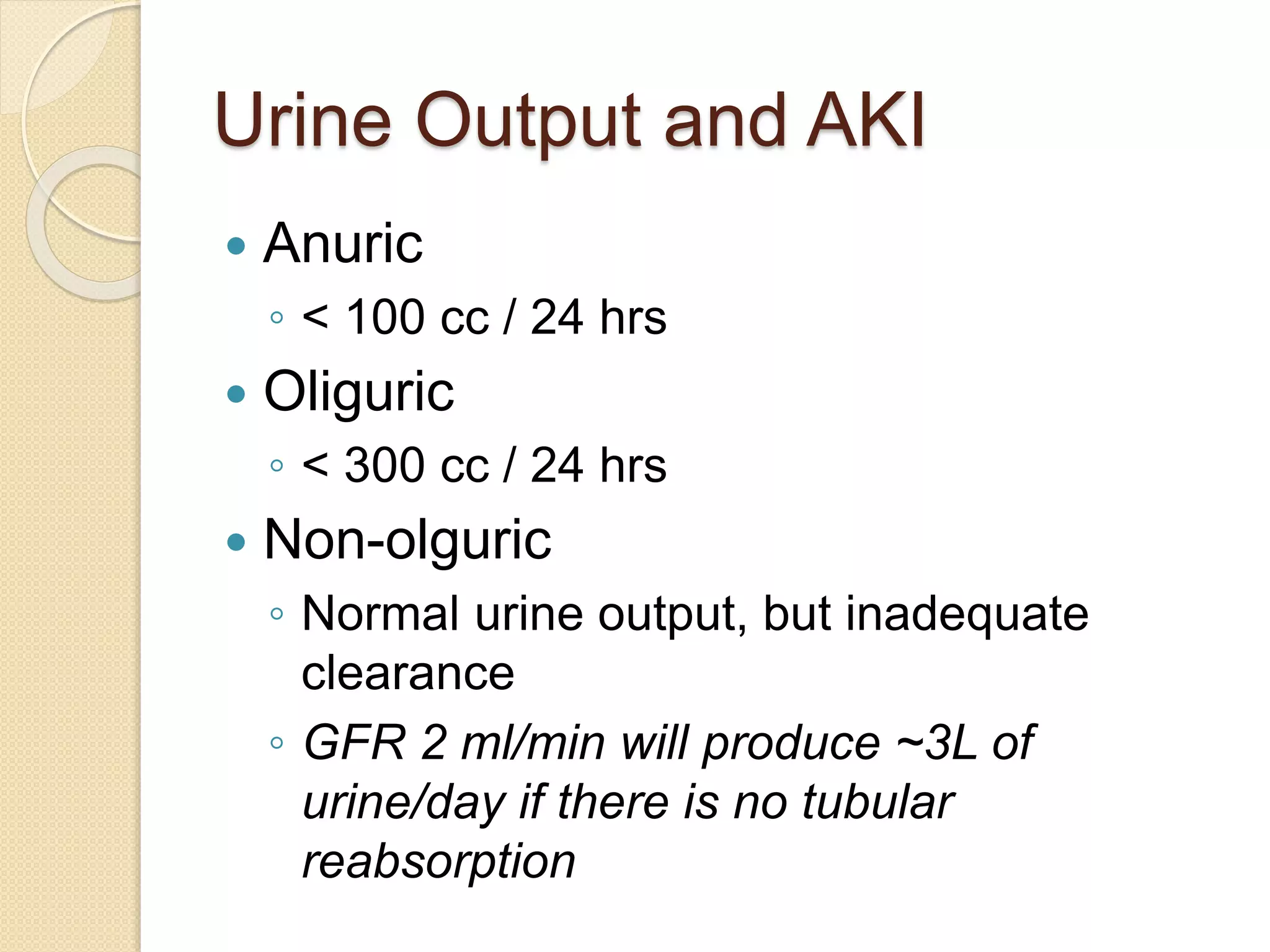
Urine Output and AKI
 Anuric
◦ < 100 cc / 24 hrs
 Oliguric
◦ < 300 cc / 24 hrs
 Non-olguric
◦ Normal urine output, but inadequate
clearance
◦ GFR 2 ml/min will produce ~3L of
urine/day if there is no tubular
reabsorption
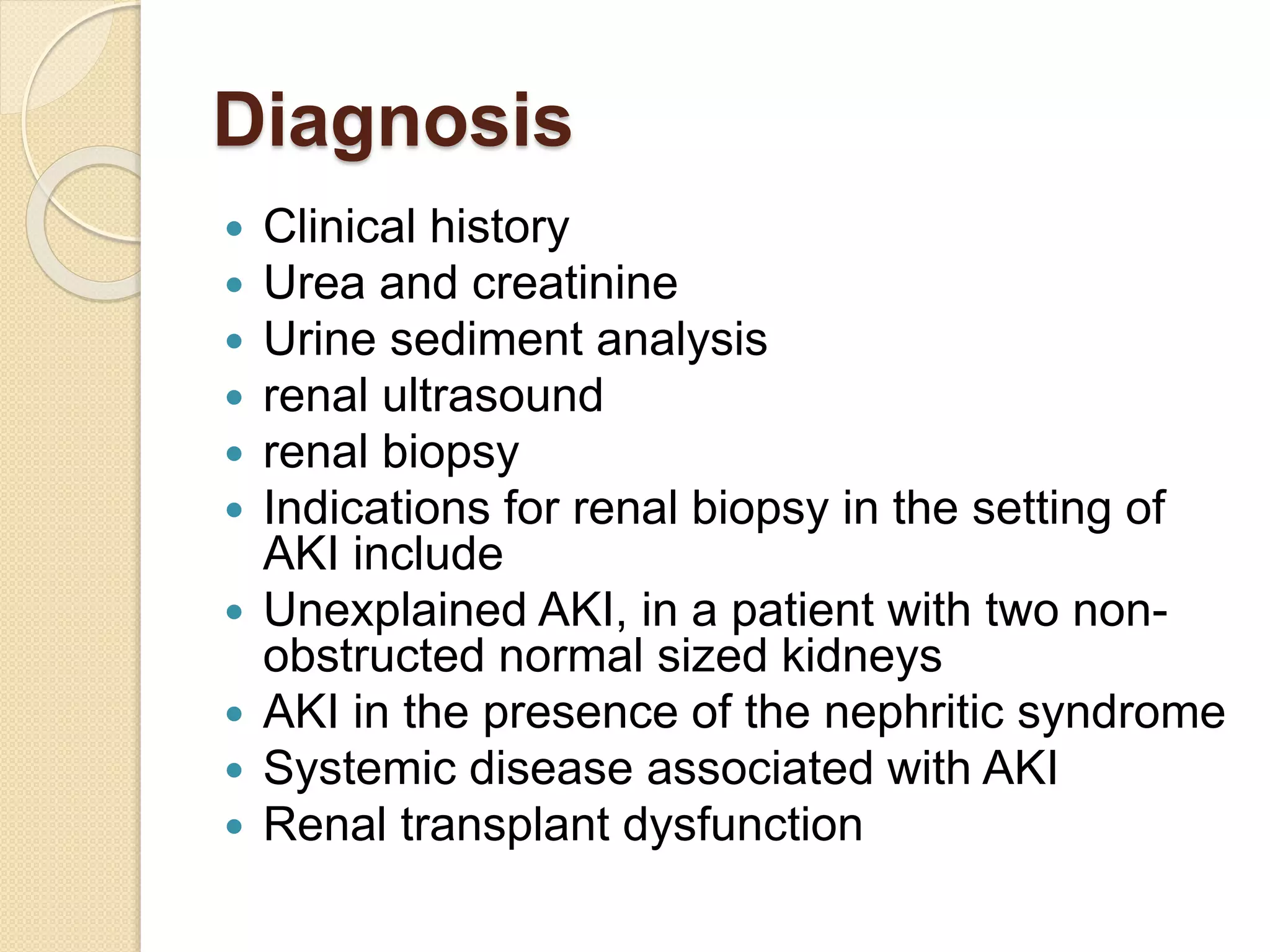
Diagnosis
 Clinical history
 Urea and creatinine
 Urine sediment analysis
 renal ultrasound
 renal biopsy
 Indications for renal biopsy in the setting of
AKI include
 Unexplained AKI, in a patient with two non-
obstructed normal sized kidneys
 AKI in the presence of the nephritic syndrome
 Systemic disease associated with AKI
 Renal transplant dysfunction
Principles of AKI Management
 Identify AKI
 Avoid further nephrotoxic injury
 Optimize renal hemodynamics
 Treat complications
◦ Fluid balance, electrolytes, uremia
 Nutritional support
 Renal Support (RRT)
 Monitoring after AKI
Treatment
 Identification and treatment of the underlying cause.
 (1) to prevent cardiovascular collapse and death
 (2) to call for specialist advice.
 In addition to treatment of the underlying disorder,
management of AKI routinely includes the avoidance of
substances that are toxic to the kidneys, called
nephrotoxins. These include NSAIDs such as ibuprofen,
iodinated contrasts such as those used for CT scans,
many antibiotics such as gentamicin, and a range of
other substances
 Monitoring of renal function, by serial serum creatinine
measurements and monitoring of urine output, is
routinely performed. In the hospital, insertion of a
urinary catheter helps monitor urine output and relieves
possible bladder outlet obstruction, such as with an
enlarged prostate.
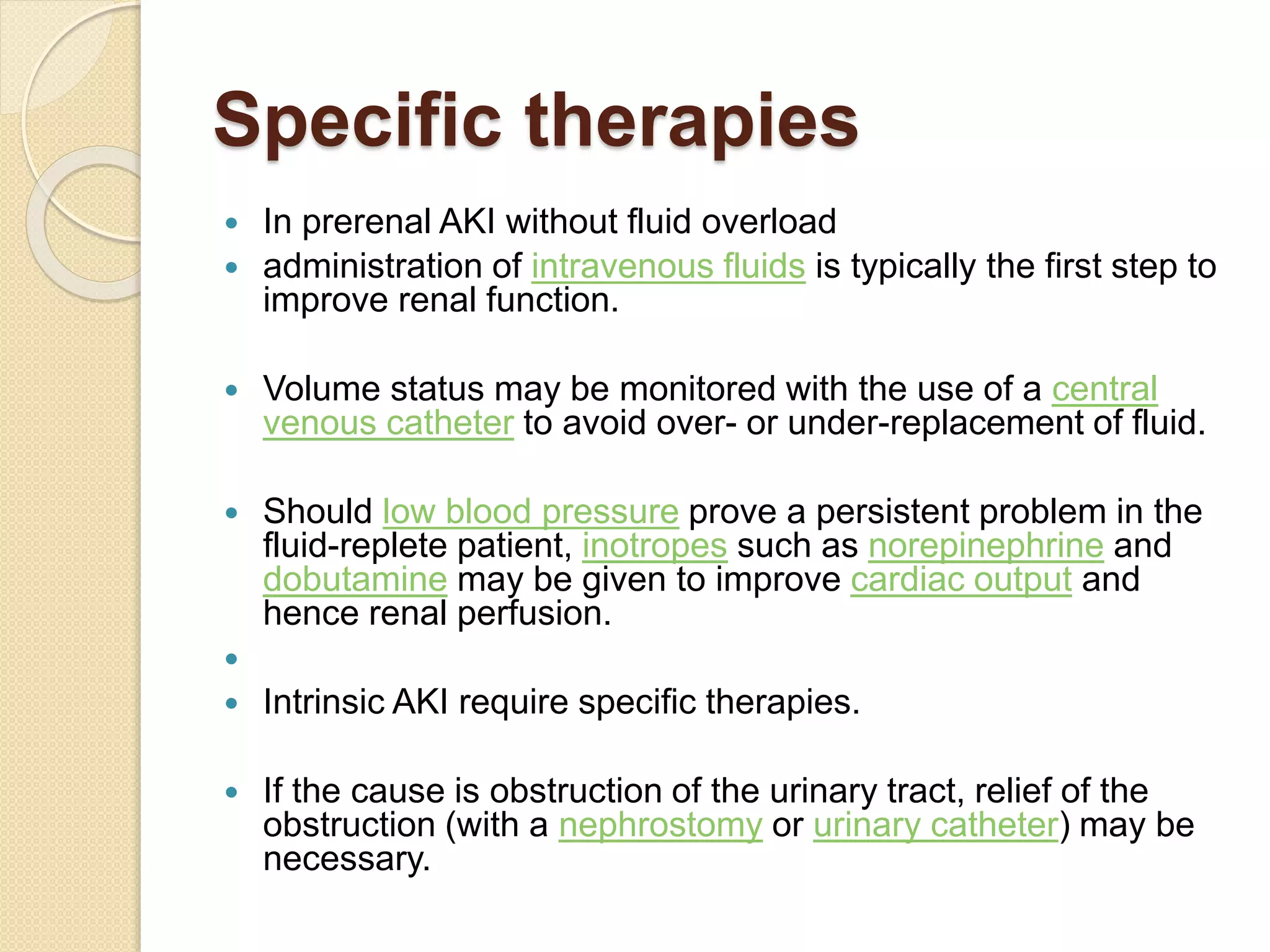
Specific therapies
 In prerenal AKI without fluid overload
 administration of intravenous fluids is typically the first step to
improve renal function.
 Volume status may be monitored with the use of a central
venous catheter to avoid over- or under-replacement of fluid.
 Should low blood pressure prove a persistent problem in the
fluid-replete patient, inotropes such as norepinephrine and
dobutamine may be given to improve cardiac output and
hence renal perfusion.

 Intrinsic AKI require specific therapies.
 If the cause is obstruction of the urinary tract, relief of the
obstruction (with a nephrostomy or urinary catheter) may be
necessary.
Renal replacement therapy
 Renal replacement therapy such as
with
 Hemodialysis
 Peritoneal dialysis
 CRRT
Thank you

Acute kidney injury

  • 1.
    Acute kidney injury Yousafkhan Lecturer Renal dialysis IPMS- KMU
  • 2.
    Acute kidney injury Acute renal failure (ARF)  Abrupt loss of Kidney function that develops within 7 days.  Increase in serum creatinine  AKI may lead to a number of complications,  metabolic acidosis  high potassium levels  Uremia  changes in body fluid balance  Effects on other organ systems  including death  People who have experienced AKI may have an increased risk of chronic kidney disease in the future.
  • 3.
    Diagnostic Approach  Timeof onset – prior serum creatinine  Careful review of history and physical exam ◦ Comorbidities ◦ Medications ◦ Current illness (vomiting, diarrhea, blood loss, etc) ◦ BP, volume status, skin lesions, flank/abdominal signs
  • 4.
    Signs and symptoms Accumulation of urea and other nitrogen- containing substances in the bloodstream lead to  Fatigue  loss of appetite  Headache  Nausea  Vomiting  Marked increases in the potassium level can lead to irregularities in the heartbeat, which can be severe and life-threatening  Fluid balance is frequently affected, though blood pressure can be high, low or normal
  • 5.
  • 6.
    Consistent Risk Factors Age  Hypovolemia  Hypotension  Sepsis  CKD  Hepatic dysfunction  Cardiac dysfunction  DM  Exposure to nephrotoxins
  • 7.
    Differential Diagnosis ofAKI  Pre-renal  Renal  Post-renal
  • 8.
    Prerenal  Decrease effectiveblood flow to the kidney  low blood volume  low blood pressure  heart failure  liver cirrhosis  renal artery stenosis  renal vein thrombosis  Renal ischaemia can result in depression of GFR  inadequate cardiac output
  • 9.
    Intrinsic  Glomerular ◦ Rapidlyprogressive GN, post-strep GN,  Interstitial nephritis ◦ Infection-related, inlammation, drug-induced, infiltrative (lymphoma, leukemia, sarcoidosis)  Tubular Lesions ◦ Post-ishemia, nephrotoxic (drugs, contrast, anesthetics, heavy metals), pigment nephropathy, light chain, hypercalcemia
  • 10.
    Postrenal  Bladder flowobstruction ◦ Urethral, bladder neck (BPH), neurogenic bladder  Ureteral obstruction (bilateral or single kidney) ◦ Stones, clots, tumours, papillary necrosis, retroperitoneal fibrosis, surgical ligation
  • 11.
    Urine Output andAKI  Anuric ◦ < 100 cc / 24 hrs  Oliguric ◦ < 300 cc / 24 hrs  Non-olguric ◦ Normal urine output, but inadequate clearance ◦ GFR 2 ml/min will produce ~3L of urine/day if there is no tubular reabsorption
  • 12.
    Diagnosis  Clinical history Urea and creatinine  Urine sediment analysis  renal ultrasound  renal biopsy  Indications for renal biopsy in the setting of AKI include  Unexplained AKI, in a patient with two non- obstructed normal sized kidneys  AKI in the presence of the nephritic syndrome  Systemic disease associated with AKI  Renal transplant dysfunction
  • 13.
    Principles of AKIManagement  Identify AKI  Avoid further nephrotoxic injury  Optimize renal hemodynamics  Treat complications ◦ Fluid balance, electrolytes, uremia  Nutritional support  Renal Support (RRT)  Monitoring after AKI
  • 14.
    Treatment  Identification andtreatment of the underlying cause.  (1) to prevent cardiovascular collapse and death  (2) to call for specialist advice.  In addition to treatment of the underlying disorder, management of AKI routinely includes the avoidance of substances that are toxic to the kidneys, called nephrotoxins. These include NSAIDs such as ibuprofen, iodinated contrasts such as those used for CT scans, many antibiotics such as gentamicin, and a range of other substances  Monitoring of renal function, by serial serum creatinine measurements and monitoring of urine output, is routinely performed. In the hospital, insertion of a urinary catheter helps monitor urine output and relieves possible bladder outlet obstruction, such as with an enlarged prostate.
  • 15.
    Specific therapies  Inprerenal AKI without fluid overload  administration of intravenous fluids is typically the first step to improve renal function.  Volume status may be monitored with the use of a central venous catheter to avoid over- or under-replacement of fluid.  Should low blood pressure prove a persistent problem in the fluid-replete patient, inotropes such as norepinephrine and dobutamine may be given to improve cardiac output and hence renal perfusion.   Intrinsic AKI require specific therapies.  If the cause is obstruction of the urinary tract, relief of the obstruction (with a nephrostomy or urinary catheter) may be necessary.
  • 16.
    Renal replacement therapy Renal replacement therapy such as with  Hemodialysis  Peritoneal dialysis  CRRT
  • 17.