CANBERRA CHANGE
MANAGEMENT
COMMUNITY OF PRACTICE
Mapping a change management framework to the maturity
of the organisation
Tim Little
@TimDLittle | www.changegeek.org
https://au.linkedin.com/in/timdlittle
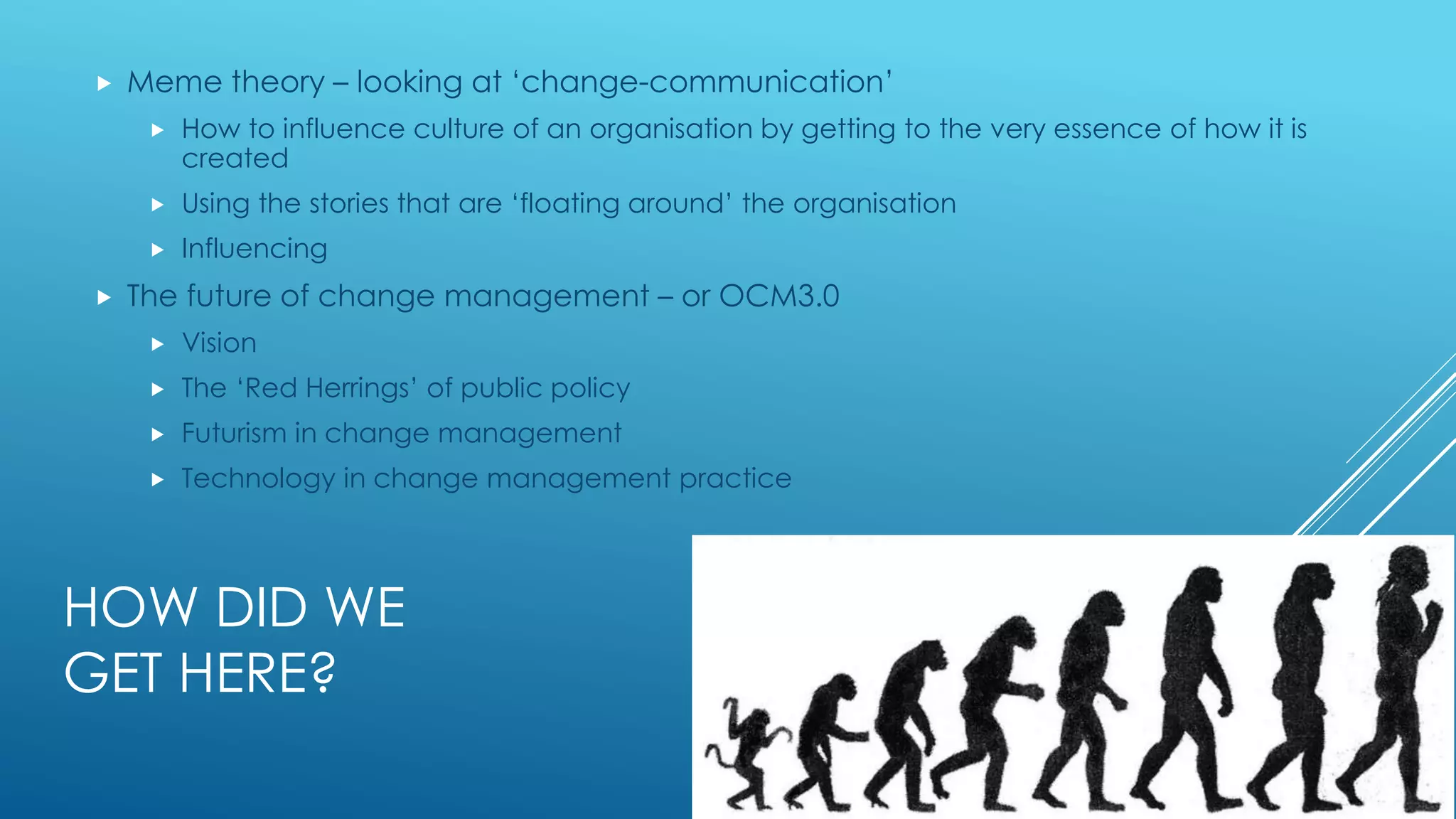
HOW DID WE
GET HERE?
 Meme theory – looking at ‘change-communication’
 How to influence culture of an organisation by getting to the very essence of how it is
created
 Using the stories that are ‘floating around’ the organisation
 Influencing
 The future of change management – or OCM3.0
 Vision
 The ‘Red Herrings’ of public policy
 Futurism in change management
 Technology in change management practice
A QUICK POLL
The following questions were asked of the Community of Practice:
 What change management frameworks have you
implemented?
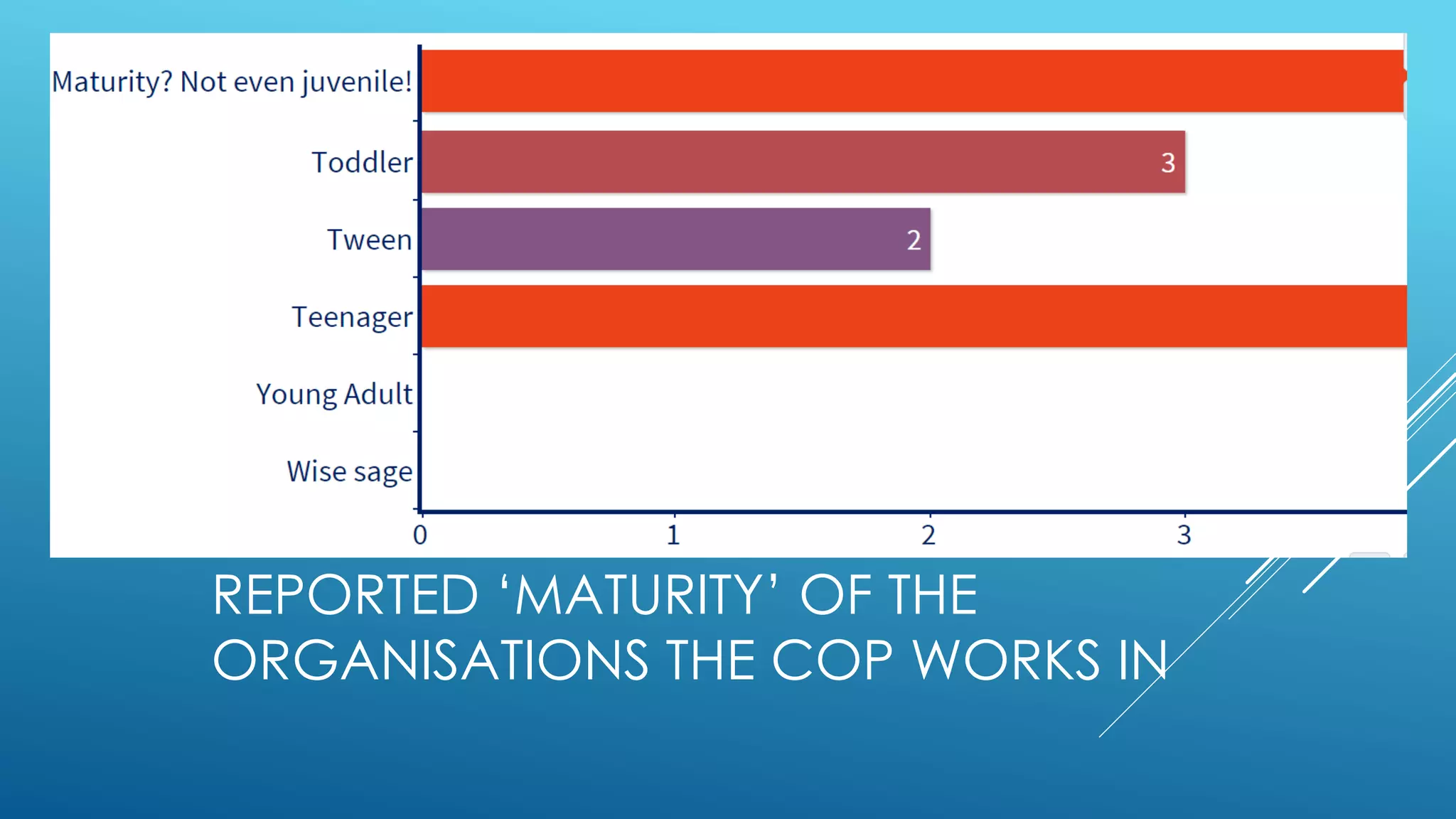
 How ‘Mature’ is your current organisation?
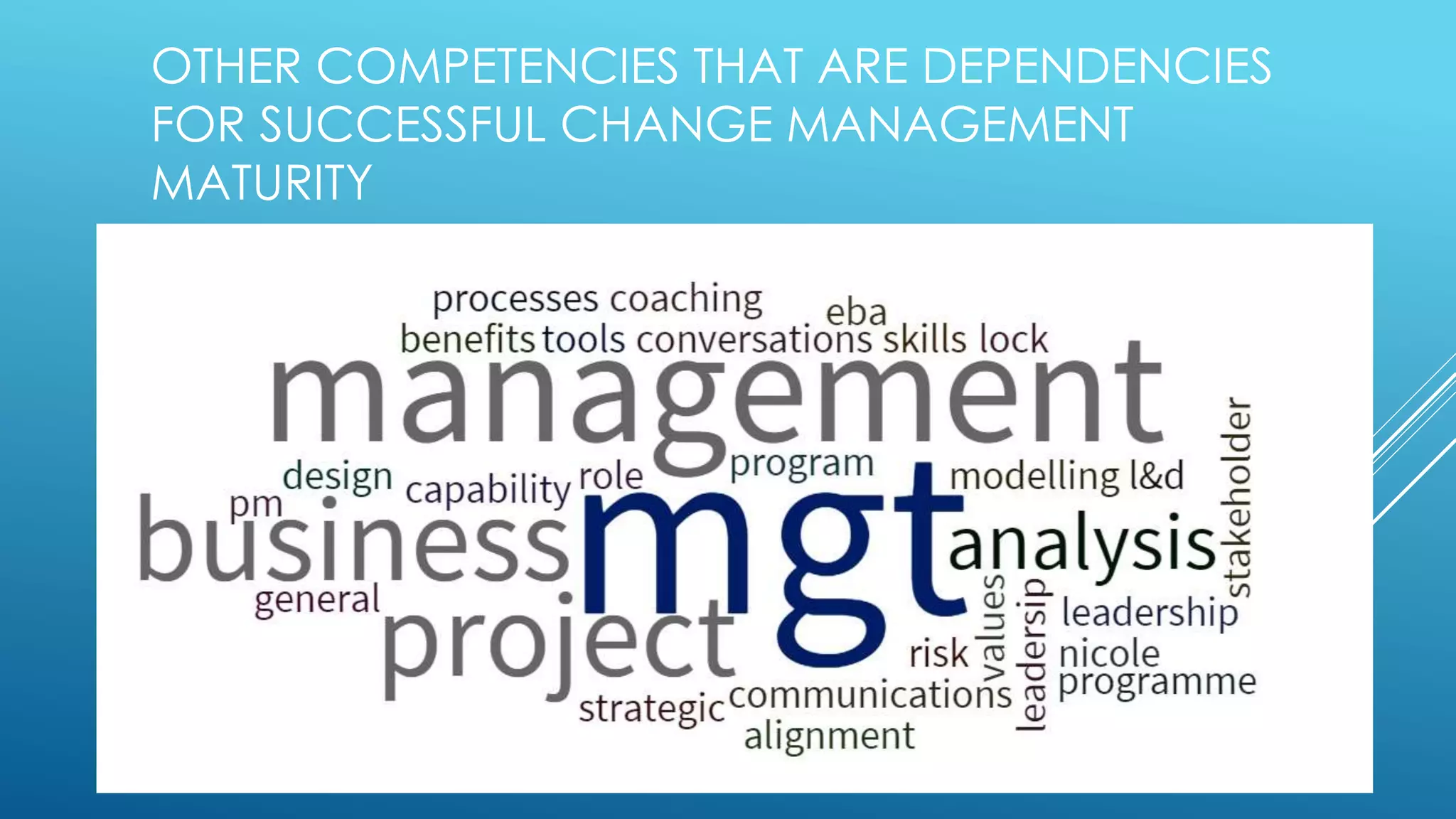
 What are some of the other ‘dependant’ competencies that
have low maturity?
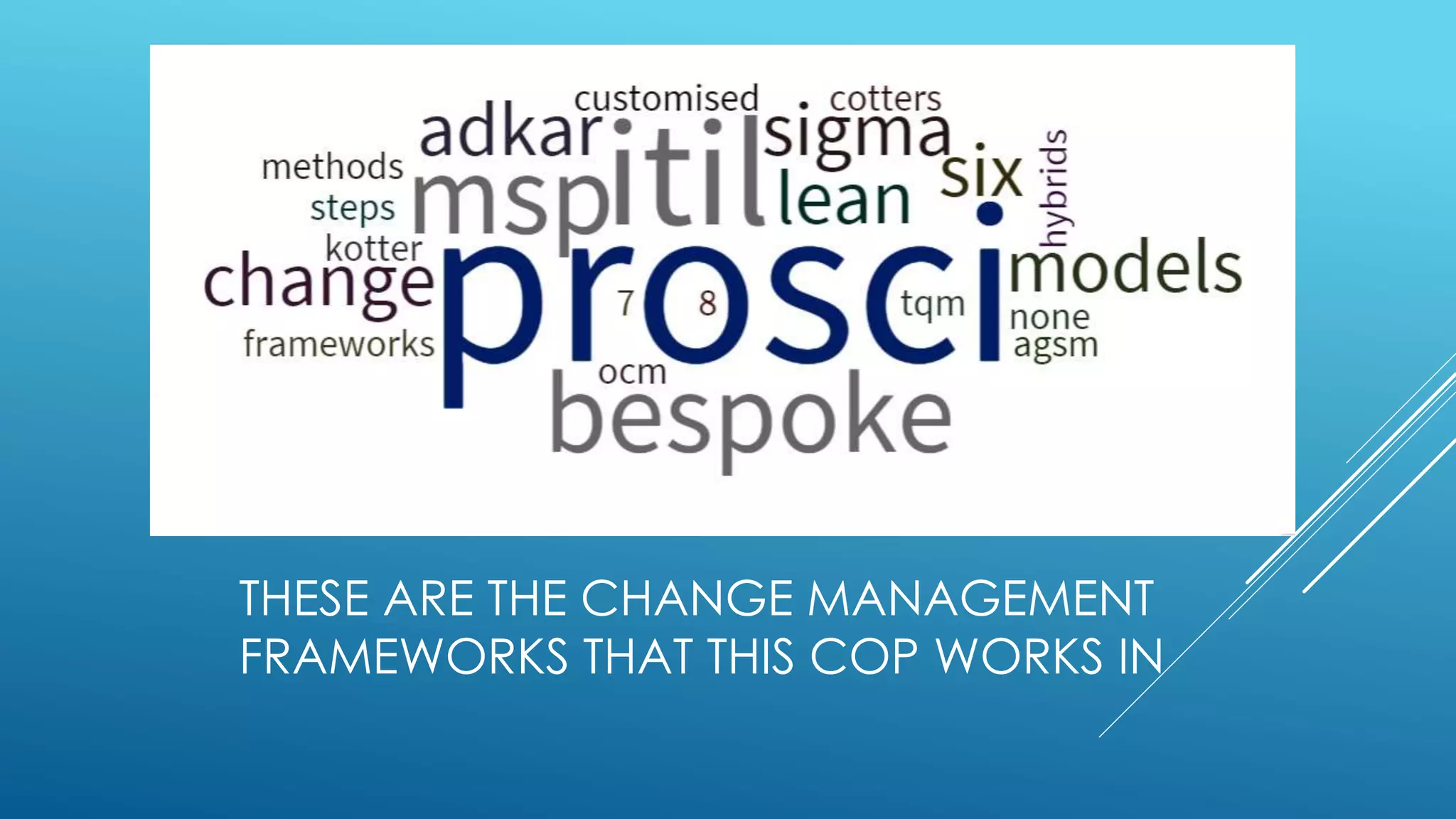
THESE ARE THE CHANGE MANAGEMENT
FRAMEWORKS THAT THIS COP WORKS IN
REPORTED ‘MATURITY’ OF THE
ORGANISATIONS THE COP WORKS IN
OTHER COMPETENCIES THAT ARE DEPENDENCIES
FOR SUCCESSFUL CHANGE MANAGEMENT
MATURITY
MAPPING YOUR ORGANISATIONS'
MATURITY…
 Tools/data
 Visuals aids
 Stories
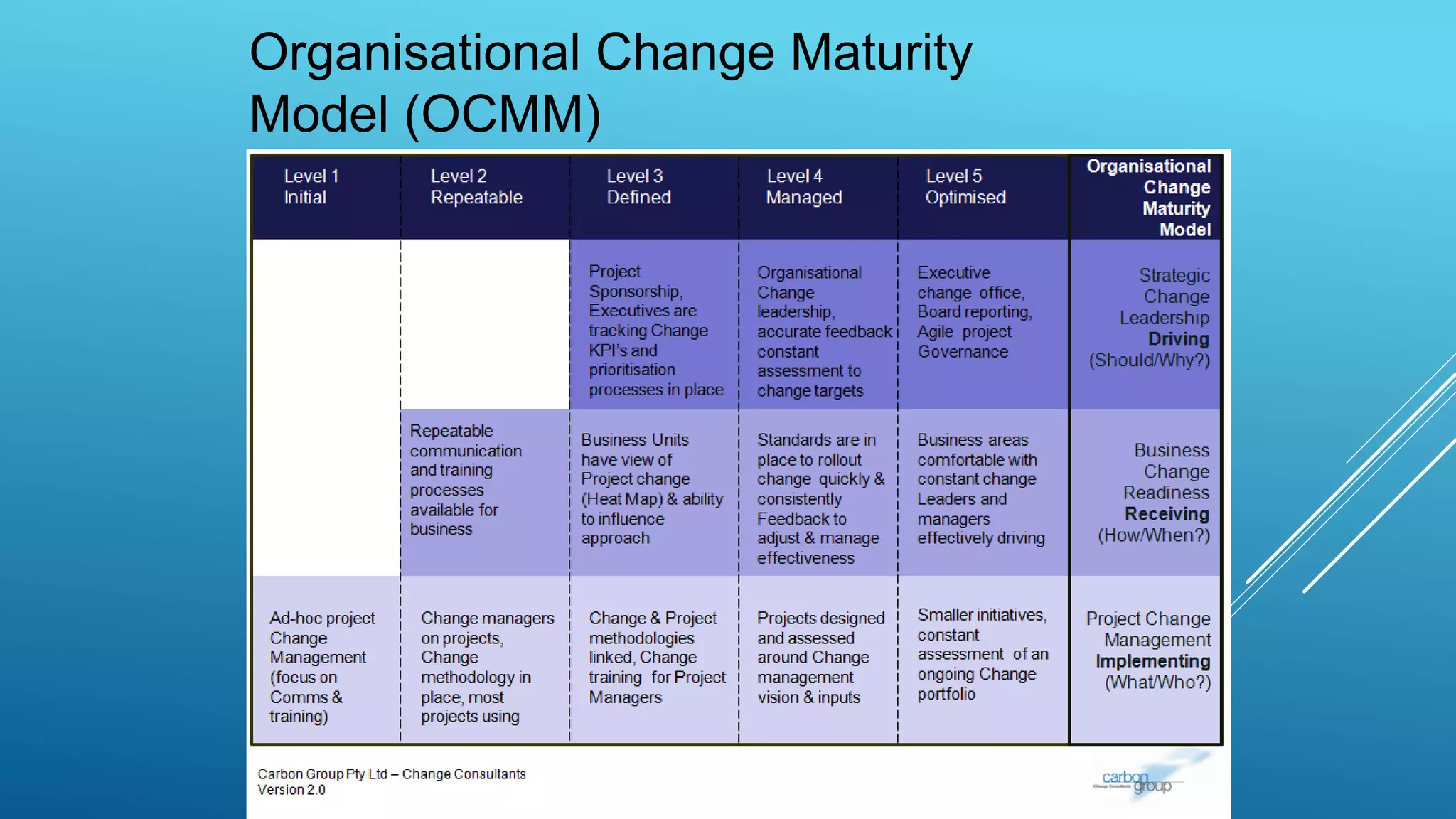
Organisational Change Maturity
Model (OCMM)
A PLACE TO START
 ‘Start with the end in mind’
 Capture EVERY decision not to implement a component
immediately – these will be your ‘goals’ to reach for each stage
 Map each incremental stage against:
 Benchmark
 Develop
 Reach goal
 Implement
 Review
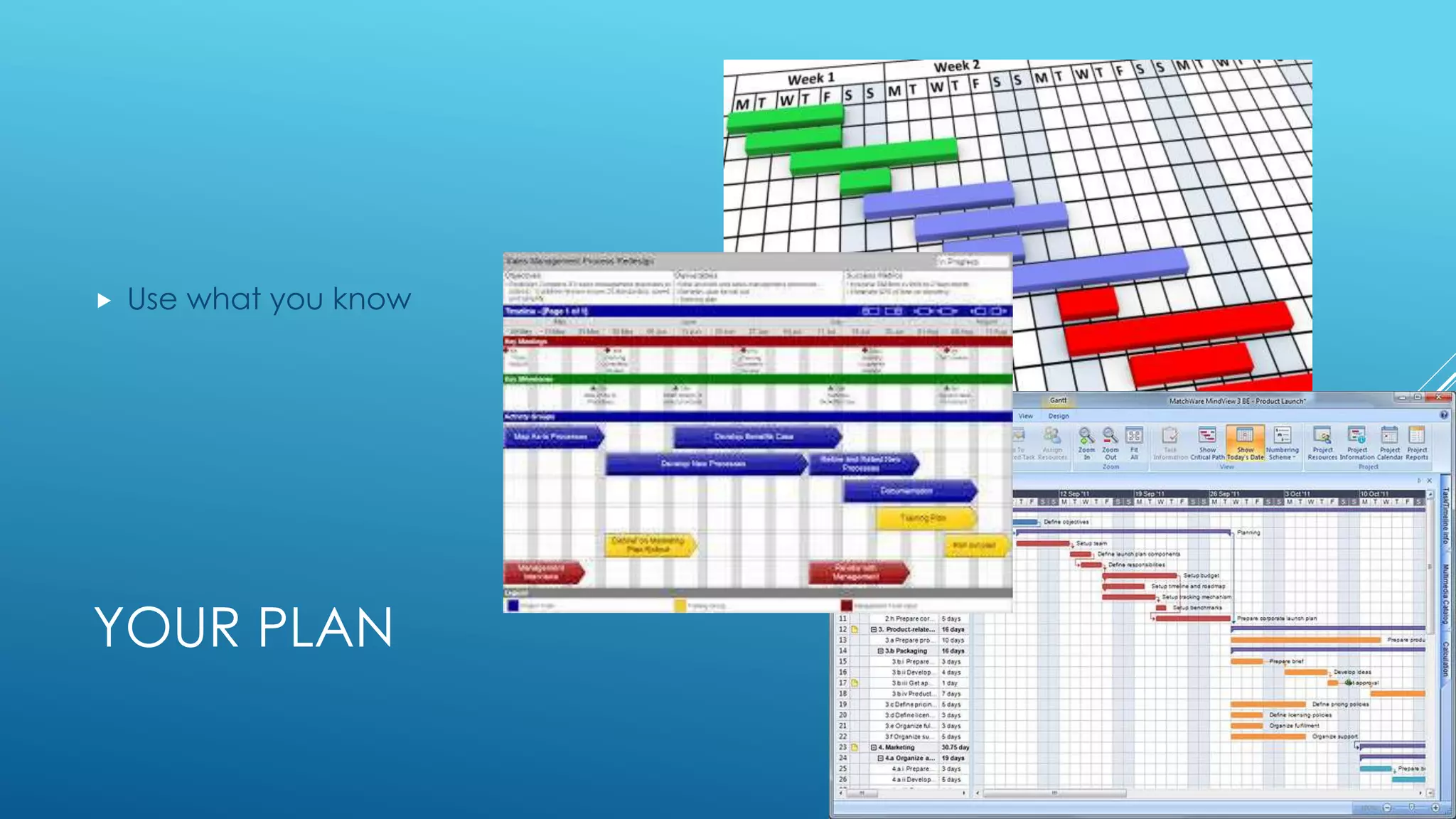
YOUR PLAN
 Use what you know
ITERATE Do it a few times, with different people
 You should have:
 Change Management Framework – steps and final implementation
 Dependencies/risks
 Map of enhancing organisational capability in a range of competency areas
 Specific ‘minimum’ criteria for taking each step – AND evidence of how those criteria have
improved/enhanced
 Stakeholder Management Plan
 Communication Strategy…
LAYER UPON PLAYER UPON LAYER…
LETS HAVE A GO…
WHAT DID WE LEARN?
 Link change products / framework to the
operational ecosystem / core
transformational artefacts
 That exec ownership is pivotal to
embedding
 The power of visual change
 Manage the scale/detail of products to
suit. Better org maturity allows more
valuable products and better outcomes.
 Kiss
 Common experiences with oth CMs
 create ur own model
 Modify framework and document why
 Not scare non changes
 Different labels same effect
 Note the stakeholders' reaction for your
stakeholder management plan
 Use acronyms
 big chunks rather than detail
 Record reactions from stakeholders
 How much I don't know
 Create a feedback loop so you can deal
with change within the change
 Bring people together and create safety
for disclosure and feedback to keep
morale alive
 WIFM
 Go below the line not just above ie don't
just look at systems, structure but artefacts
symbols, values and behaviours

Change Management Maturity

  • 1.
    CANBERRA CHANGE MANAGEMENT COMMUNITY OFPRACTICE Mapping a change management framework to the maturity of the organisation Tim Little @TimDLittle | www.changegeek.org https://au.linkedin.com/in/timdlittle
  • 2.
    HOW DID WE GETHERE?  Meme theory – looking at ‘change-communication’  How to influence culture of an organisation by getting to the very essence of how it is created  Using the stories that are ‘floating around’ the organisation  Influencing  The future of change management – or OCM3.0  Vision  The ‘Red Herrings’ of public policy  Futurism in change management  Technology in change management practice
  • 3.
    A QUICK POLL Thefollowing questions were asked of the Community of Practice:  What change management frameworks have you implemented?  How ‘Mature’ is your current organisation?  What are some of the other ‘dependant’ competencies that have low maturity?
  • 4.
    THESE ARE THECHANGE MANAGEMENT FRAMEWORKS THAT THIS COP WORKS IN
  • 5.
    REPORTED ‘MATURITY’ OFTHE ORGANISATIONS THE COP WORKS IN
  • 6.
    OTHER COMPETENCIES THATARE DEPENDENCIES FOR SUCCESSFUL CHANGE MANAGEMENT MATURITY
  • 7.
    MAPPING YOUR ORGANISATIONS' MATURITY… Tools/data  Visuals aids  Stories
  • 8.
  • 9.
    A PLACE TOSTART  ‘Start with the end in mind’  Capture EVERY decision not to implement a component immediately – these will be your ‘goals’ to reach for each stage  Map each incremental stage against:  Benchmark  Develop  Reach goal  Implement  Review
  • 10.
    YOUR PLAN  Usewhat you know
  • 11.
    ITERATE Do ita few times, with different people
  • 12.
     You shouldhave:  Change Management Framework – steps and final implementation  Dependencies/risks  Map of enhancing organisational capability in a range of competency areas  Specific ‘minimum’ criteria for taking each step – AND evidence of how those criteria have improved/enhanced  Stakeholder Management Plan  Communication Strategy… LAYER UPON PLAYER UPON LAYER…
  • 13.
  • 14.
    WHAT DID WELEARN?  Link change products / framework to the operational ecosystem / core transformational artefacts  That exec ownership is pivotal to embedding  The power of visual change  Manage the scale/detail of products to suit. Better org maturity allows more valuable products and better outcomes.  Kiss  Common experiences with oth CMs  create ur own model  Modify framework and document why  Not scare non changes  Different labels same effect  Note the stakeholders' reaction for your stakeholder management plan  Use acronyms  big chunks rather than detail  Record reactions from stakeholders  How much I don't know  Create a feedback loop so you can deal with change within the change  Bring people together and create safety for disclosure and feedback to keep morale alive  WIFM  Go below the line not just above ie don't just look at systems, structure but artefacts symbols, values and behaviours