Presented by
R.SHAMILI
WHAT IS CHANGE
MANAGEMENT?
 It is a structured approach to shifting/ transitioning
  individuals, teams and organizations from a current state
  to a desired future.
 For helping employees to accept and embrace changes in
  their current business environment.
WHY THERE IS A NEED FOR A
CHANGE?
• Systems                  •   Competition
• Processes                •   Innovation
• Culture                  •   Upgrades
• Things could be better   •   New strategy
• Mergers                  •   Outsourcing
• Acquisitions             •   Off-shoring
• Continuous improvement   •   Economy
• Take over                •   New technology
                           •   Centralization
                           •   Restructuring
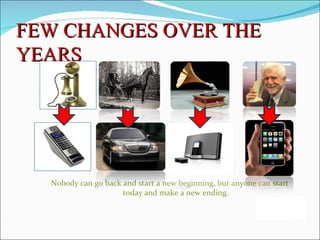
FEW CHANGES OVER THE
YEARS


  Nobody can go back and start a new beginning, but anyone can start
                     today and make a new ending.
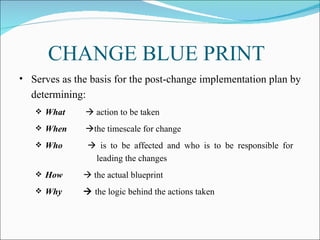
CHANGE BLUE PRINT
• Serves as the basis for the post-change implementation plan by
  determining:
    What       action to be taken
    When      the timescale for change
    Who          is to be affected and who is to be responsible for
                  leading the changes
    How       the actual blueprint
    Why       the logic behind the actions taken
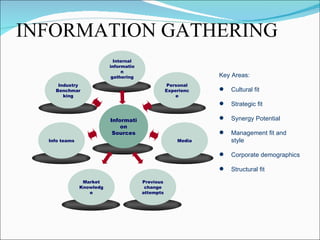
INFORMATION GATHERING
                            Internal
                          informatio
                               n
                           gathering                          Key Areas:
     Industry                                      Personal
    Benchmar                                      Experienc      Cultural fit
       king                                           e
                                                                 Strategic fit

                          Informati                              Synergy Potential
                              on
                           Sources                               Management fit and
  Info teams                                          Media       style

                                                                 Corporate demographics

                                                                 Structural fit
                Market                 Previous
               Knowledg                 change
                  e                    attempts
TRANSITION
 Transition is the process of one state of being to
 another.
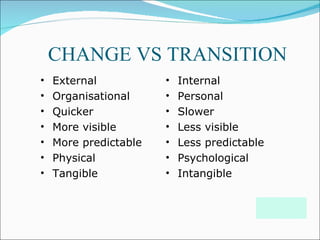
CHANGE VS TRANSITION
•   External           •   Internal
•   Organisational     •   Personal
•   Quicker            •   Slower
•   More visible       •   Less visible
•   More predictable   •   Less predictable
•   Physical           •   Psychological
•   Tangible           •   Intangible
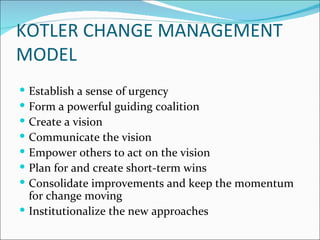
KOTLER CHANGE MANAGEMENT
MODEL
 Establish a sense of urgency
 Form a powerful guiding coalition
 Create a vision
 Communicate the vision
 Empower others to act on the vision
 Plan for and create short-term wins
 Consolidate improvements and keep the momentum
  for change moving
 Institutionalize the new approaches
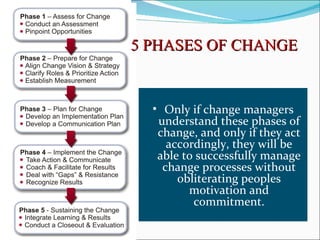
5 PHASES OF CHANGE


  • Only if change managers
   understand these phases of
   change, and only if they act
     accordingly, they will be
   able to successfully manage
    change processes without
       obliterating peoples
         motivation and
          commitment.
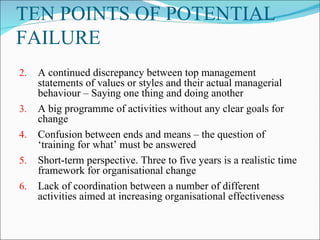
TEN POINTS OF POTENTIAL
FAILURE
2.   A continued discrepancy between top management
     statements of values or styles and their actual managerial
     behaviour – Saying one thing and doing another
3.   A big programme of activities without any clear goals for
     change
4.   Confusion between ends and means – the question of
     ‘training for what’ must be answered
5.   Short-term perspective. Three to five years is a realistic time
     framework for organisational change
6.   Lack of coordination between a number of different
     activities aimed at increasing organisational effectiveness
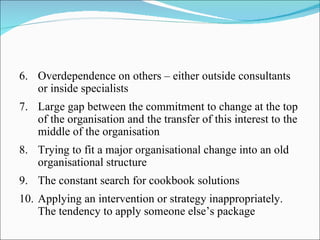
6. Overdependence on others – either outside consultants
   or inside specialists
7. Large gap between the commitment to change at the top
   of the organisation and the transfer of this interest to the
   middle of the organisation
8. Trying to fit a major organisational change into an old
   organisational structure
9. The constant search for cookbook solutions
10. Applying an intervention or strategy inappropriately.
    The tendency to apply someone else’s package
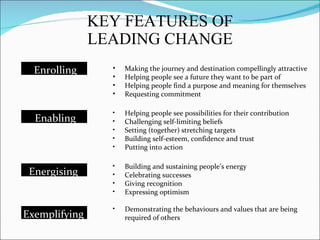
KEY FEATURES OF
               LEADING CHANGE
  Enrolling      •   Making the journey and destination compellingly attractive
                 •   Helping people see a future they want to be part of
                 •   Helping people find a purpose and meaning for themselves
                 •   Requesting commitment

                 •   Helping people see possibilities for their contribution
  Enabling       •   Challenging self-limiting beliefs
                 •   Setting (together) stretching targets
                 •   Building self-esteem, confidence and trust
                 •   Putting into action

                 •   Building and sustaining people’s energy
 Energising      •   Celebrating successes
                 •   Giving recognition
                 •   Expressing optimism

                 •   Demonstrating the behaviours and values that are being
Exemplifying         required of others
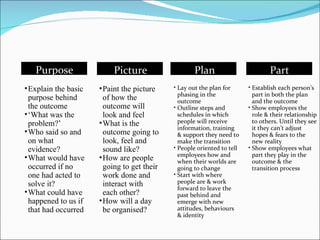
Purpose                Picture                   Plan                         Part
• Explain the basic   • Paint the picture    • Lay out the plan for      • Establish each person’s
                                               phasing in the              part in both the plan
  purpose behind        of how the             outcome                     and the outcome
  the outcome           outcome will         • Outline steps and         • Show employees the
• ‘What was the         look and feel          schedules in which          role & their relationship
  problem?’           • What is the            people will receive         to others. Until they see
                                               information, training       it they can’t adjust
• Who said so and       outcome going to       & support they need to      hopes & fears to the
  on what               look, feel and         make the transition         new reality
  evidence?             sound like?          • People oriented to tell   • Show employees what
                                               employees how and           part they play in the
• What would have     • How are people         when their worlds are       outcome & the
  occurred if no        going to get their     going to change             transition process
  one had acted to      work done and        • Start with where
  solve it?             interact with          people are & work
                                               forward to leave the
• What could have       each other?            past behind and
  happened to us if   • How will a day         emerge with new
  that had occurred     be organised?          attitudes, behaviours
                                               & identity
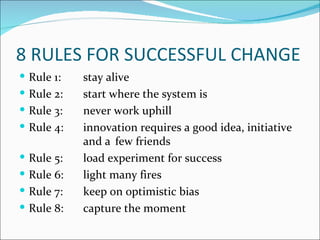
8 RULES FOR SUCCESSFUL CHANGE
 Rule 1:   stay alive
 Rule 2:   start where the system is
 Rule 3:   never work uphill
 Rule 4:   innovation requires a good idea, initiative
            and a few friends
 Rule 5:   load experiment for success
 Rule 6:   light many fires
 Rule 7:   keep on optimistic bias
 Rule 8:   capture the moment
CONCLUSION
 Make your management of the change project
 challenging. Provide the opportunity to develop
 oneself and organization.

Change hrm

  • 1.
  • 2.
    WHAT IS CHANGE MANAGEMENT? It is a structured approach to shifting/ transitioning individuals, teams and organizations from a current state to a desired future.  For helping employees to accept and embrace changes in their current business environment.
  • 3.
    WHY THERE ISA NEED FOR A CHANGE? • Systems • Competition • Processes • Innovation • Culture • Upgrades • Things could be better • New strategy • Mergers • Outsourcing • Acquisitions • Off-shoring • Continuous improvement • Economy • Take over • New technology • Centralization • Restructuring
  • 4.
    FEW CHANGES OVERTHE YEARS Nobody can go back and start a new beginning, but anyone can start today and make a new ending.
  • 5.
    CHANGE BLUE PRINT •Serves as the basis for the post-change implementation plan by determining:  What  action to be taken  When the timescale for change  Who  is to be affected and who is to be responsible for leading the changes  How  the actual blueprint  Why  the logic behind the actions taken
  • 6.
    INFORMATION GATHERING Internal informatio n gathering Key Areas: Industry Personal Benchmar Experienc  Cultural fit king e  Strategic fit Informati  Synergy Potential on Sources  Management fit and Info teams Media style  Corporate demographics  Structural fit Market Previous Knowledg change e attempts
  • 7.
    TRANSITION  Transition isthe process of one state of being to another.
  • 8.
    CHANGE VS TRANSITION • External • Internal • Organisational • Personal • Quicker • Slower • More visible • Less visible • More predictable • Less predictable • Physical • Psychological • Tangible • Intangible
  • 9.
    KOTLER CHANGE MANAGEMENT MODEL Establish a sense of urgency  Form a powerful guiding coalition  Create a vision  Communicate the vision  Empower others to act on the vision  Plan for and create short-term wins  Consolidate improvements and keep the momentum for change moving  Institutionalize the new approaches
  • 10.
    5 PHASES OFCHANGE • Only if change managers understand these phases of change, and only if they act accordingly, they will be able to successfully manage change processes without obliterating peoples motivation and commitment.
  • 11.
    TEN POINTS OFPOTENTIAL FAILURE 2. A continued discrepancy between top management statements of values or styles and their actual managerial behaviour – Saying one thing and doing another 3. A big programme of activities without any clear goals for change 4. Confusion between ends and means – the question of ‘training for what’ must be answered 5. Short-term perspective. Three to five years is a realistic time framework for organisational change 6. Lack of coordination between a number of different activities aimed at increasing organisational effectiveness
  • 12.
    6. Overdependence onothers – either outside consultants or inside specialists 7. Large gap between the commitment to change at the top of the organisation and the transfer of this interest to the middle of the organisation 8. Trying to fit a major organisational change into an old organisational structure 9. The constant search for cookbook solutions 10. Applying an intervention or strategy inappropriately. The tendency to apply someone else’s package
  • 13.
    KEY FEATURES OF LEADING CHANGE Enrolling • Making the journey and destination compellingly attractive • Helping people see a future they want to be part of • Helping people find a purpose and meaning for themselves • Requesting commitment • Helping people see possibilities for their contribution Enabling • Challenging self-limiting beliefs • Setting (together) stretching targets • Building self-esteem, confidence and trust • Putting into action • Building and sustaining people’s energy Energising • Celebrating successes • Giving recognition • Expressing optimism • Demonstrating the behaviours and values that are being Exemplifying required of others
  • 14.
    Purpose Picture Plan Part • Explain the basic • Paint the picture • Lay out the plan for • Establish each person’s phasing in the part in both the plan purpose behind of how the outcome and the outcome the outcome outcome will • Outline steps and • Show employees the • ‘What was the look and feel schedules in which role & their relationship problem?’ • What is the people will receive to others. Until they see information, training it they can’t adjust • Who said so and outcome going to & support they need to hopes & fears to the on what look, feel and make the transition new reality evidence? sound like? • People oriented to tell • Show employees what employees how and part they play in the • What would have • How are people when their worlds are outcome & the occurred if no going to get their going to change transition process one had acted to work done and • Start with where solve it? interact with people are & work forward to leave the • What could have each other? past behind and happened to us if • How will a day emerge with new that had occurred be organised? attitudes, behaviours & identity
  • 15.
    8 RULES FORSUCCESSFUL CHANGE  Rule 1: stay alive  Rule 2: start where the system is  Rule 3: never work uphill  Rule 4: innovation requires a good idea, initiative and a few friends  Rule 5: load experiment for success  Rule 6: light many fires  Rule 7: keep on optimistic bias  Rule 8: capture the moment
  • 16.
    CONCLUSION  Make yourmanagement of the change project challenging. Provide the opportunity to develop oneself and organization.