Richard J. Torraco, Ph.D. University of Nebraska-Lincoln Evaluation and Feedback within the Change Process
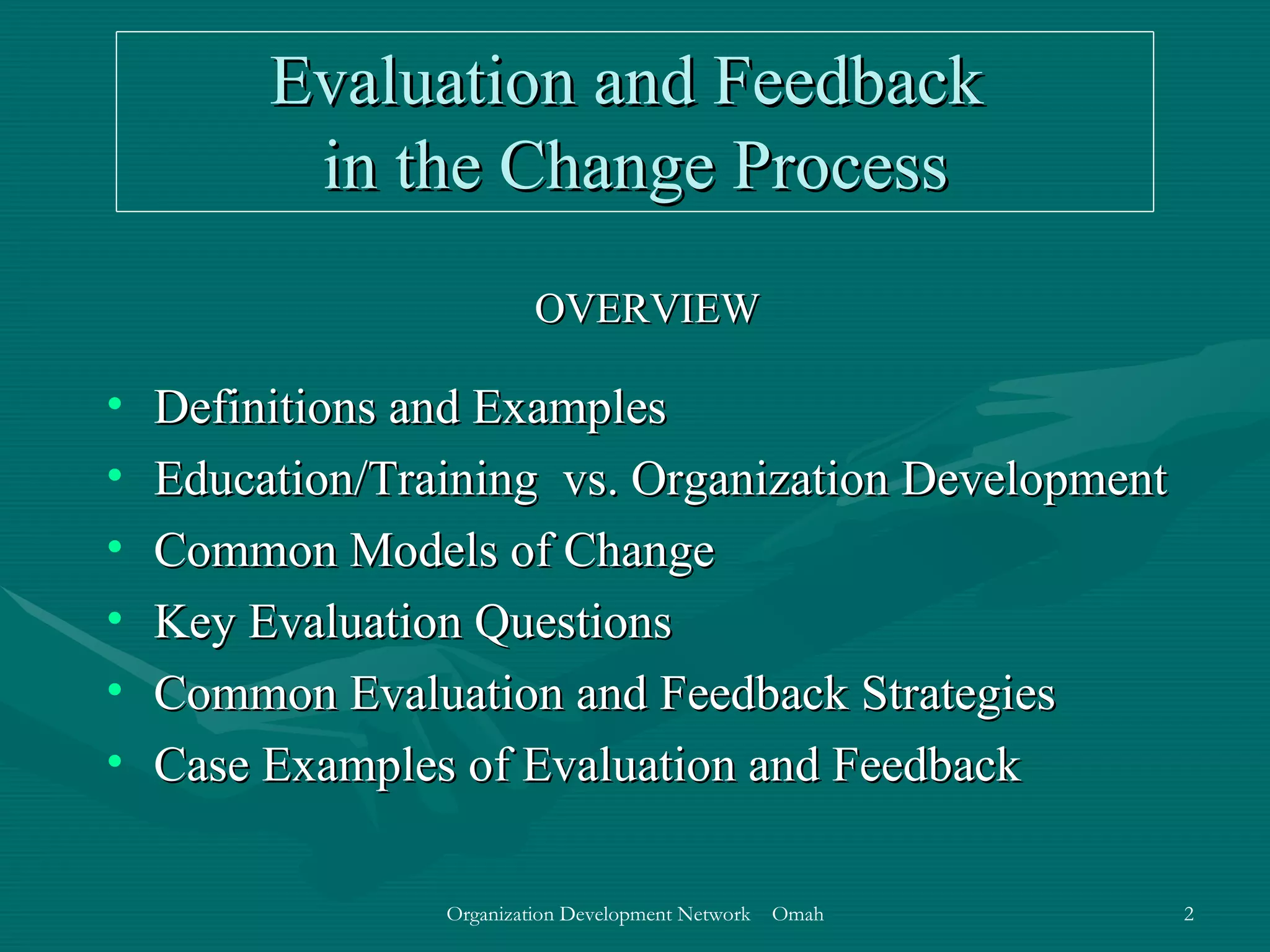
Evaluation and Feedback  in the Change Process OVERVIEW Definitions and Examples Education/Training  vs. Organization Development Common Models of Change Key Evaluation Questions Common Evaluation and Feedback Strategies Case Examples of Evaluation and Feedback
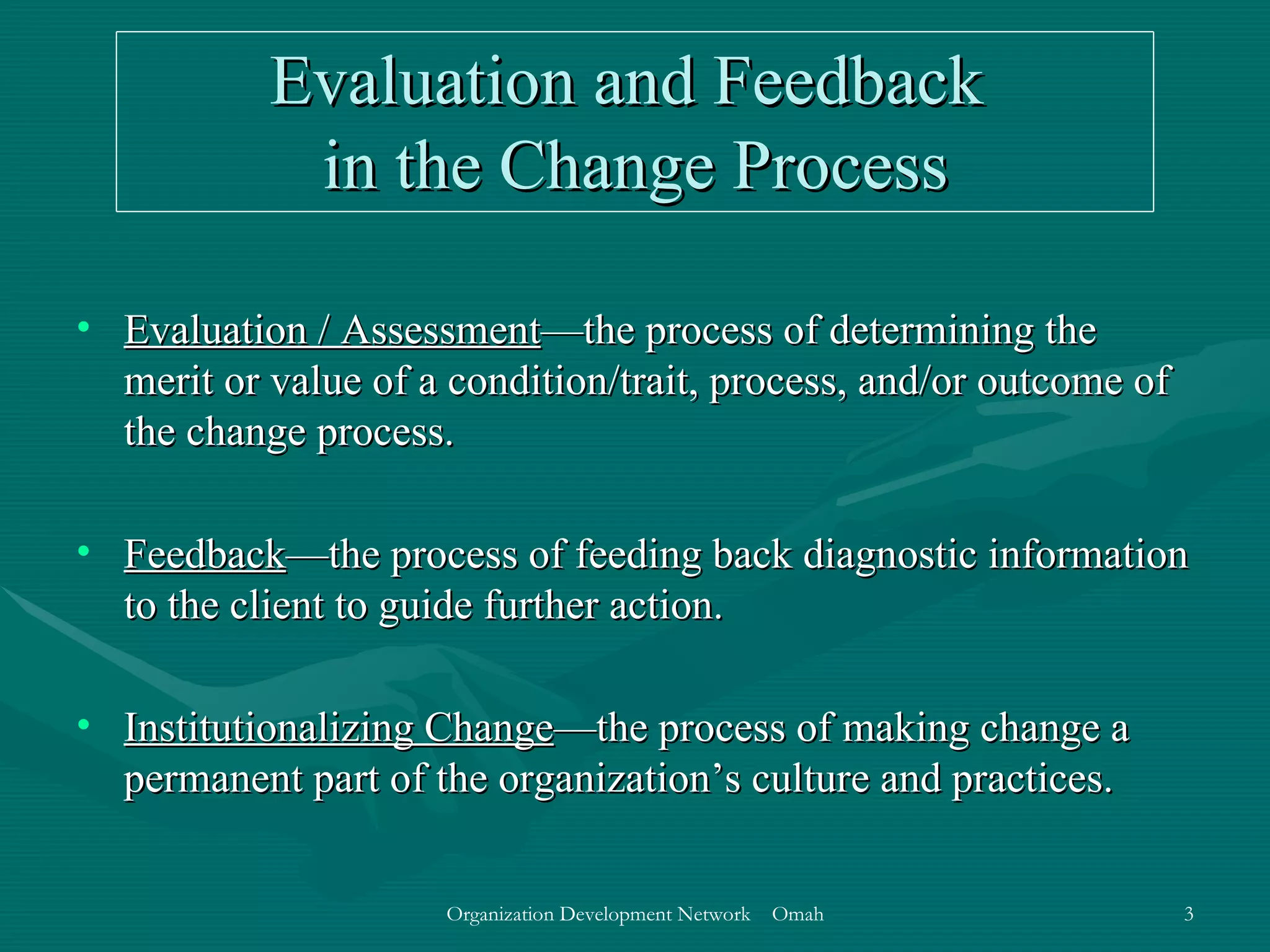
Evaluation and Feedback  in the Change Process Evaluation / Assessment —the process of determining the merit or value of a condition/trait, process, and/or outcome of the change process.  Feedback —the process of feeding back diagnostic information to the client to guide further action. Institutionalizing Change —the process of making change a permanent part of the organization’s culture and practices.
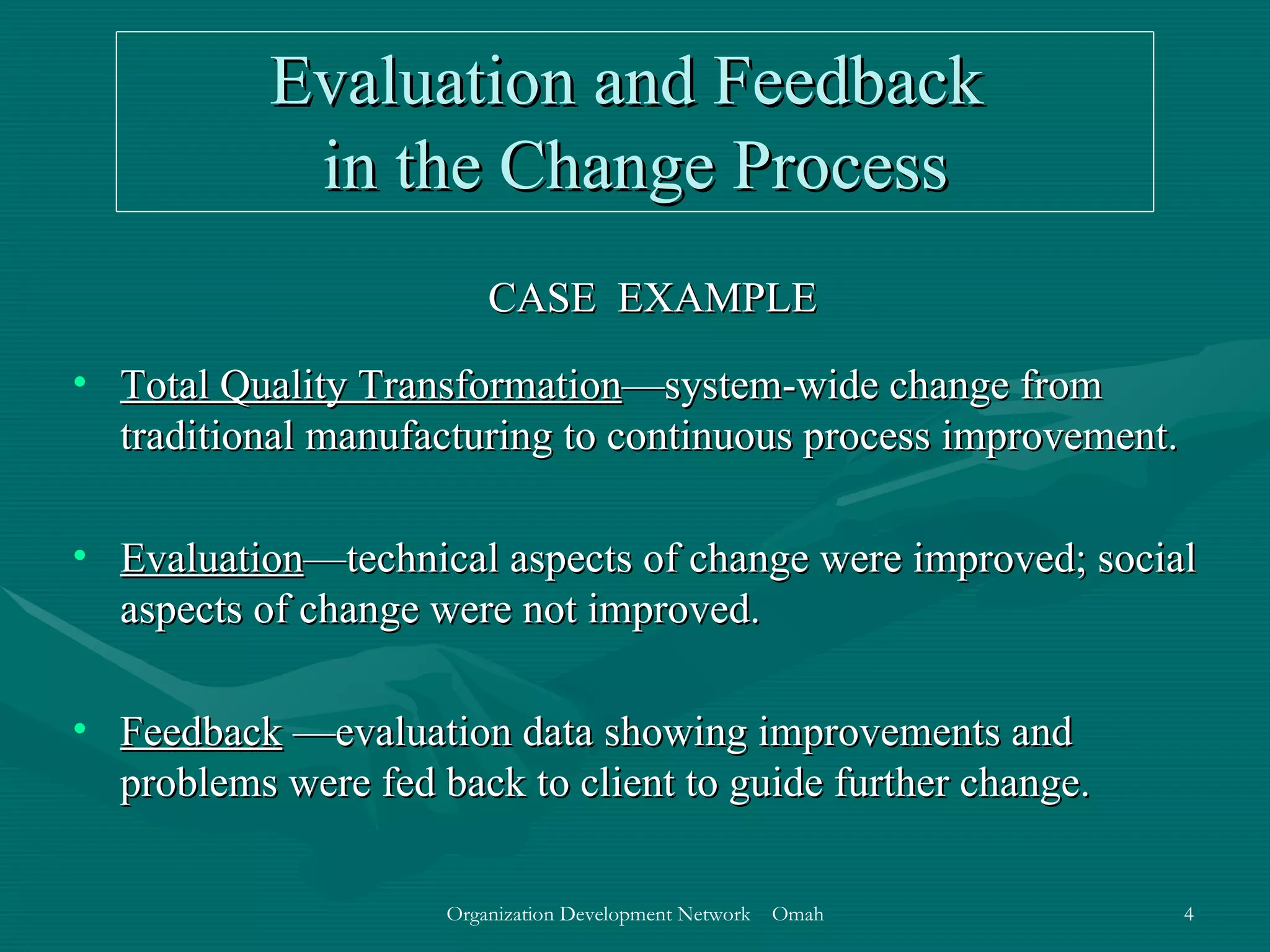
Evaluation and Feedback  in the Change Process CASE  EXAMPLE Total Quality Transformation —system-wide change from traditional manufacturing to continuous process improvement. Evaluation —technical aspects of change were improved; social aspects of change were not improved. Feedback  —evaluation data showing improvements and problems were fed back to client to guide further change.
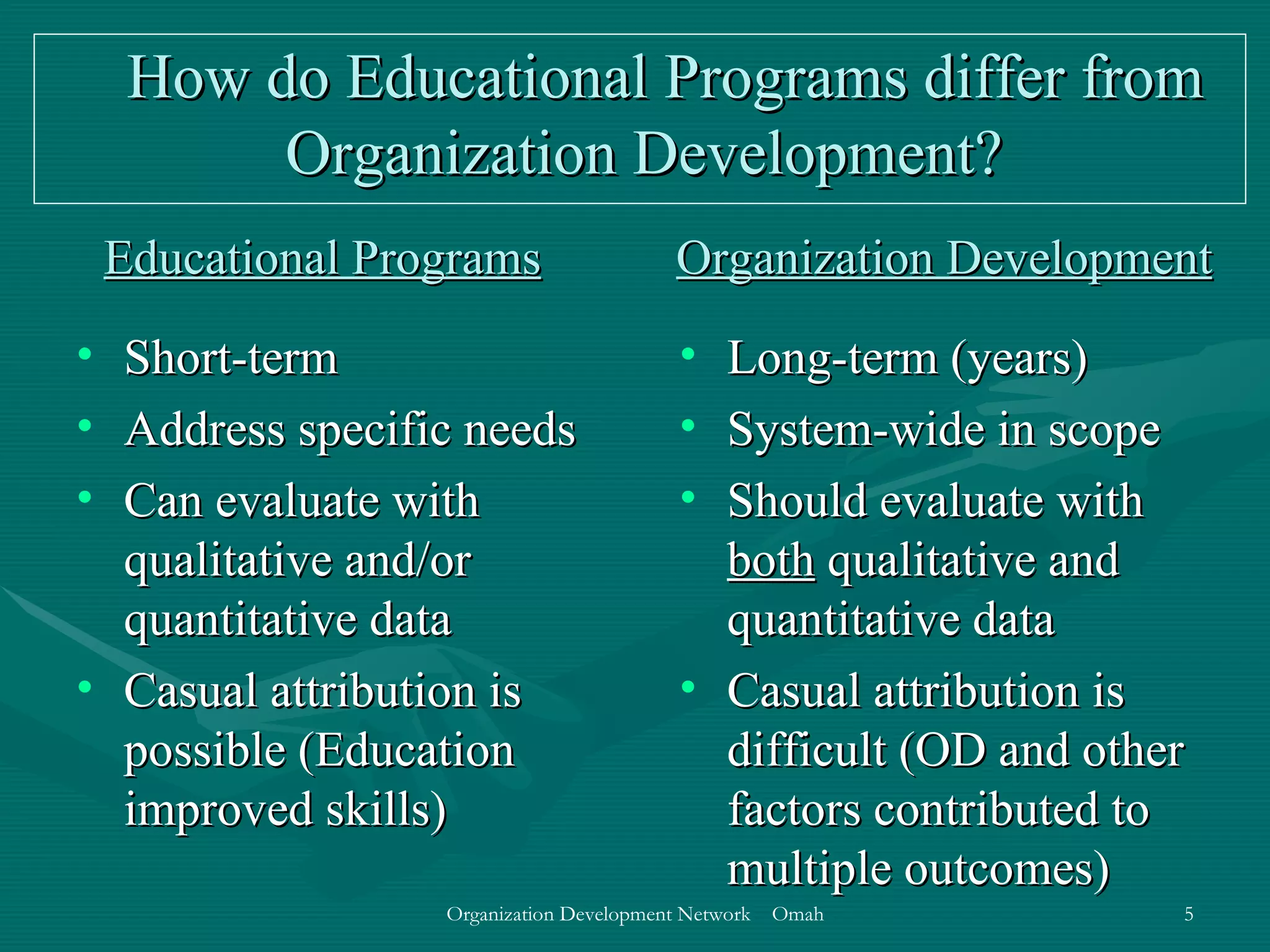
How do Educational Programs differ from   Organization Development?   Educational Programs   Organization Development Short-term Address specific needs Can evaluate with qualitative and/or quantitative data  Casual attribution is possible (Education improved skills) Long-term (years) System-wide in scope Should evaluate with  both  qualitative and quantitative data Casual attribution is difficult (OD and other factors contributed to multiple outcomes)
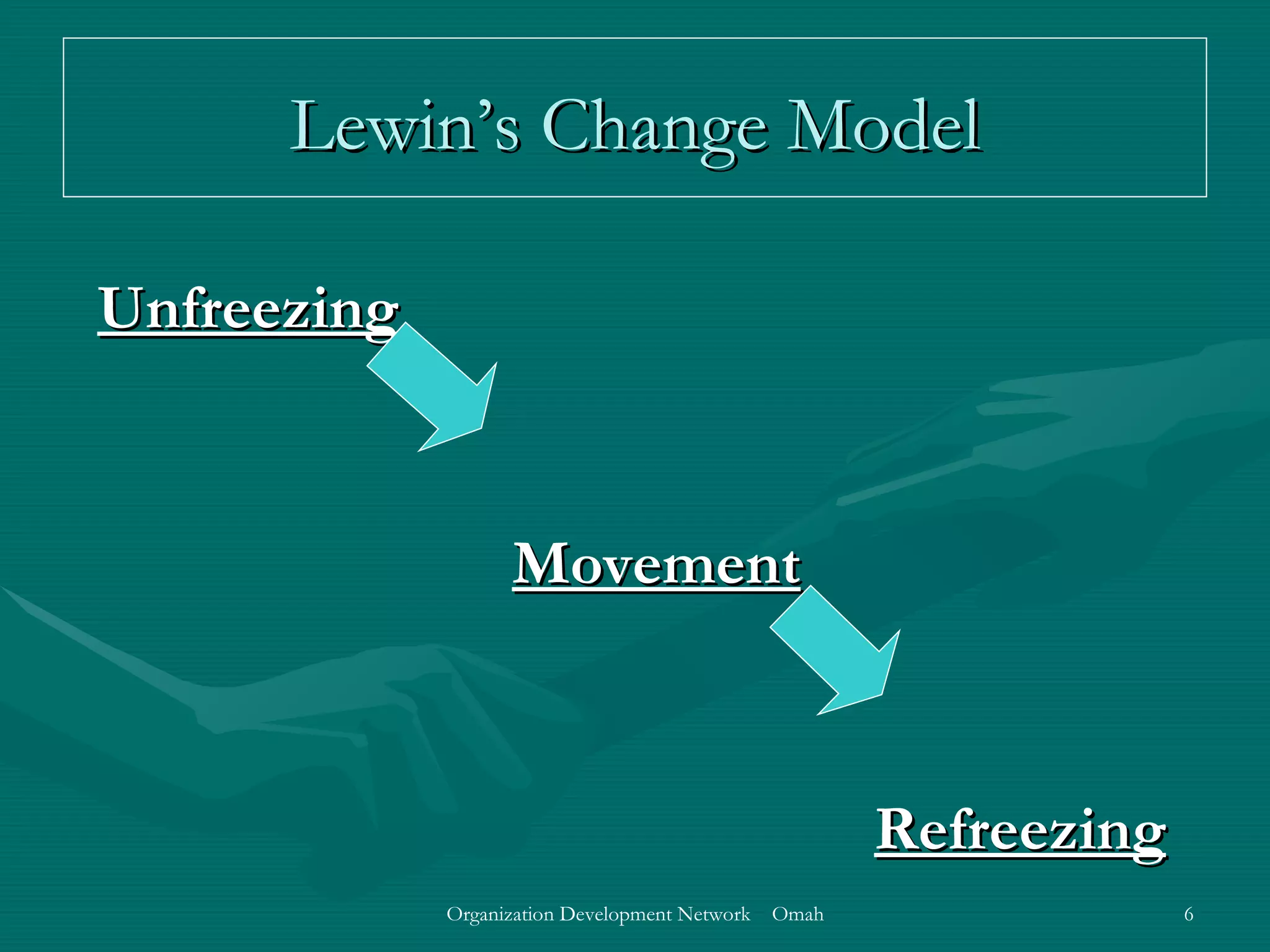
Unfreezing Movement   Refreezing Lewin’s Change Model
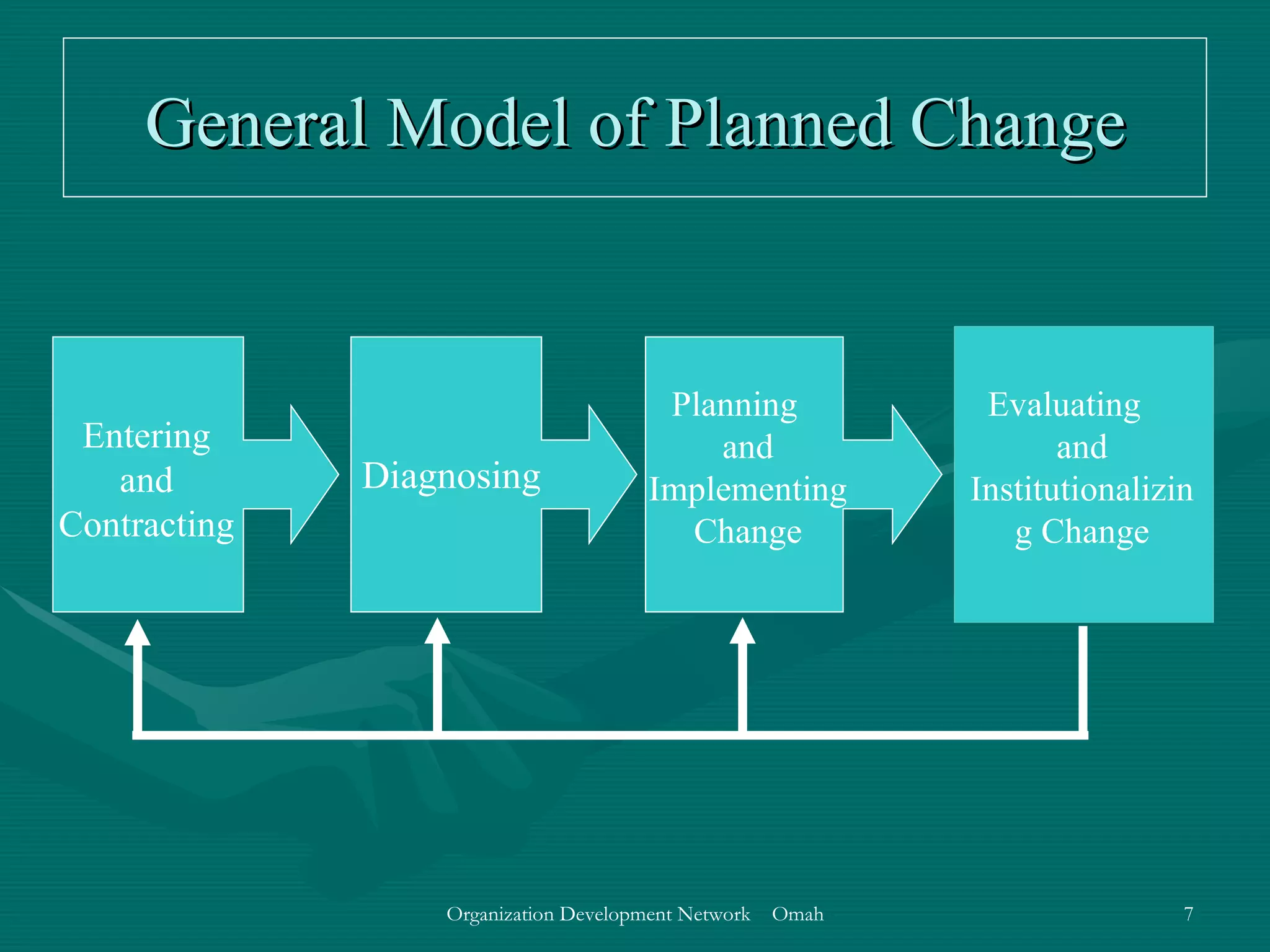
General Model of Planned Change Entering and Contracting Diagnosing Planning  and Implementing Change Evaluating  and Institutionalizing Change
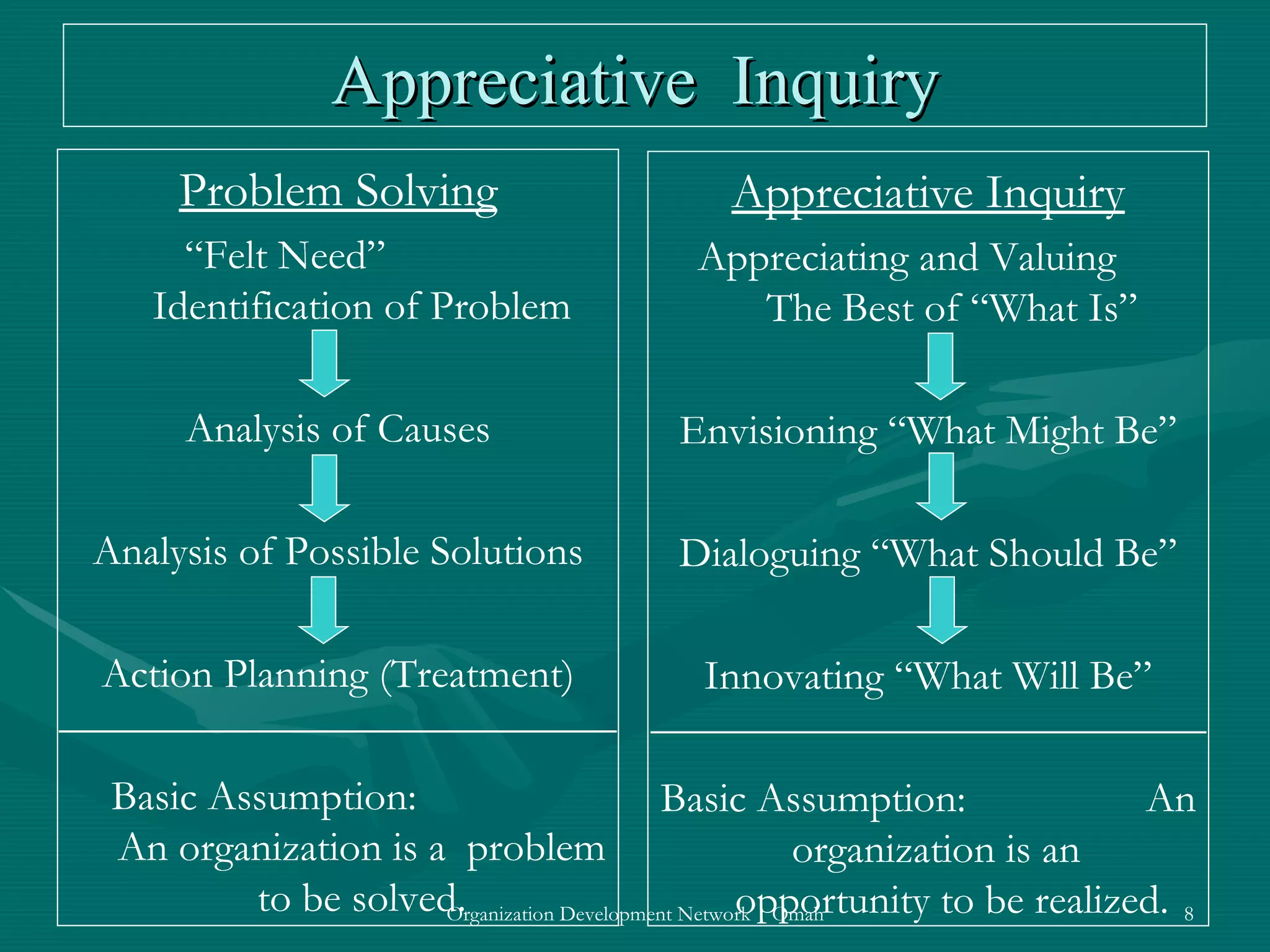
Appreciative  Inquiry Problem Solving “ Felt Need”  Identification of Problem Analysis of Causes Analysis of Possible Solutions Action Planning (Treatment) Basic Assumption:  An organization is a  problem to be solved. Appreciative Inquiry Appreciating and Valuing  The Best of “What Is” Envisioning “What Might Be” Dialoguing “What Should Be” Innovating “What Will Be” Basic Assumption:  An organization is an  opportunity to be realized.
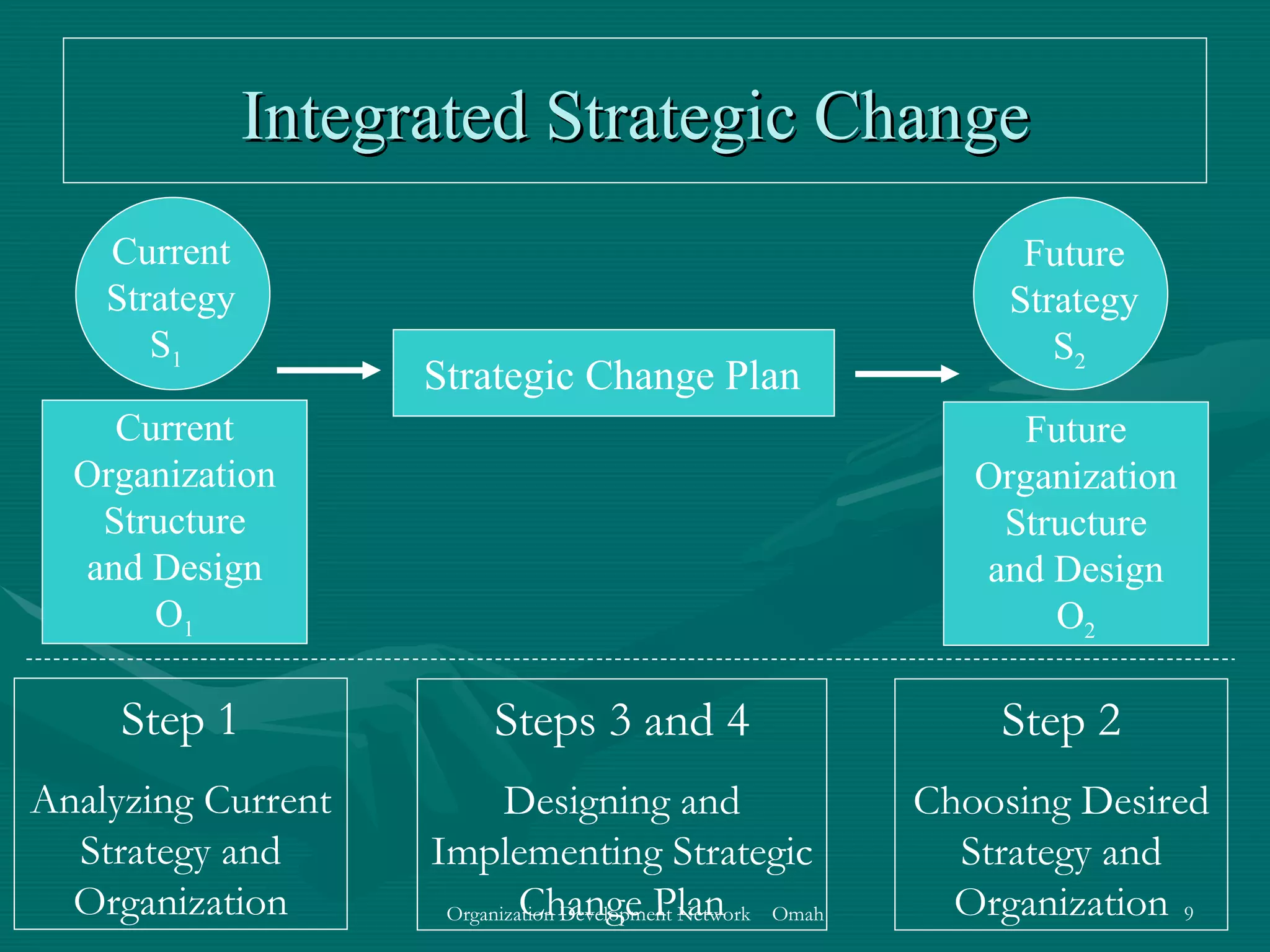
Integrated Strategic Change Step 1 Analyzing Current Strategy and Organization Steps 3 and 4 Designing and Implementing Strategic Change Plan Step 2 Choosing Desired Strategy and Organization Current Strategy S 1   Future Strategy S 2   Strategic Change Plan Current Organization Structure and Design O 1 Future Organization Structure and Design O 2
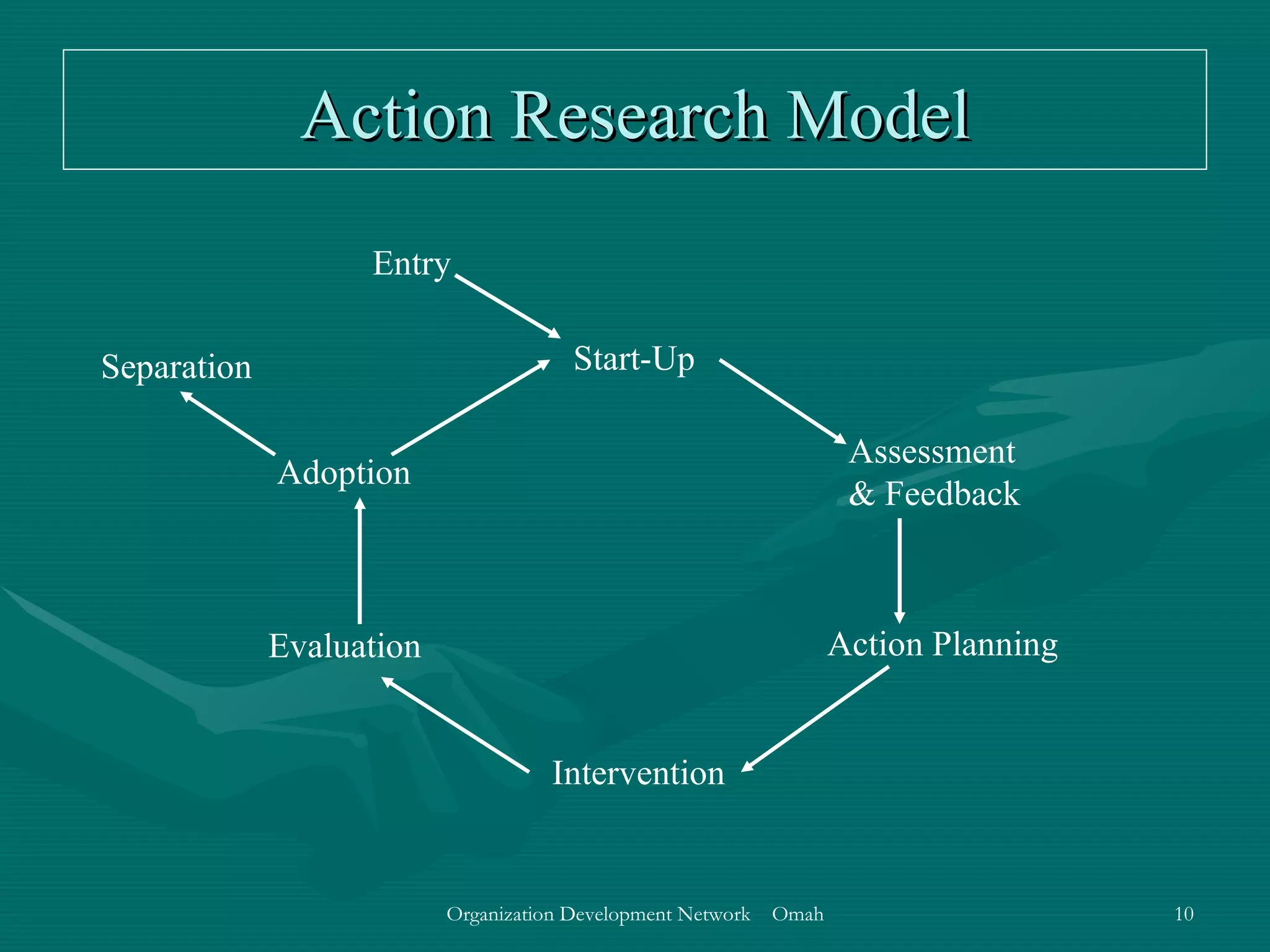
Action Research Model Start-Up Entry Intervention Assessment & Feedback Action Planning Evaluation Adoption Separation
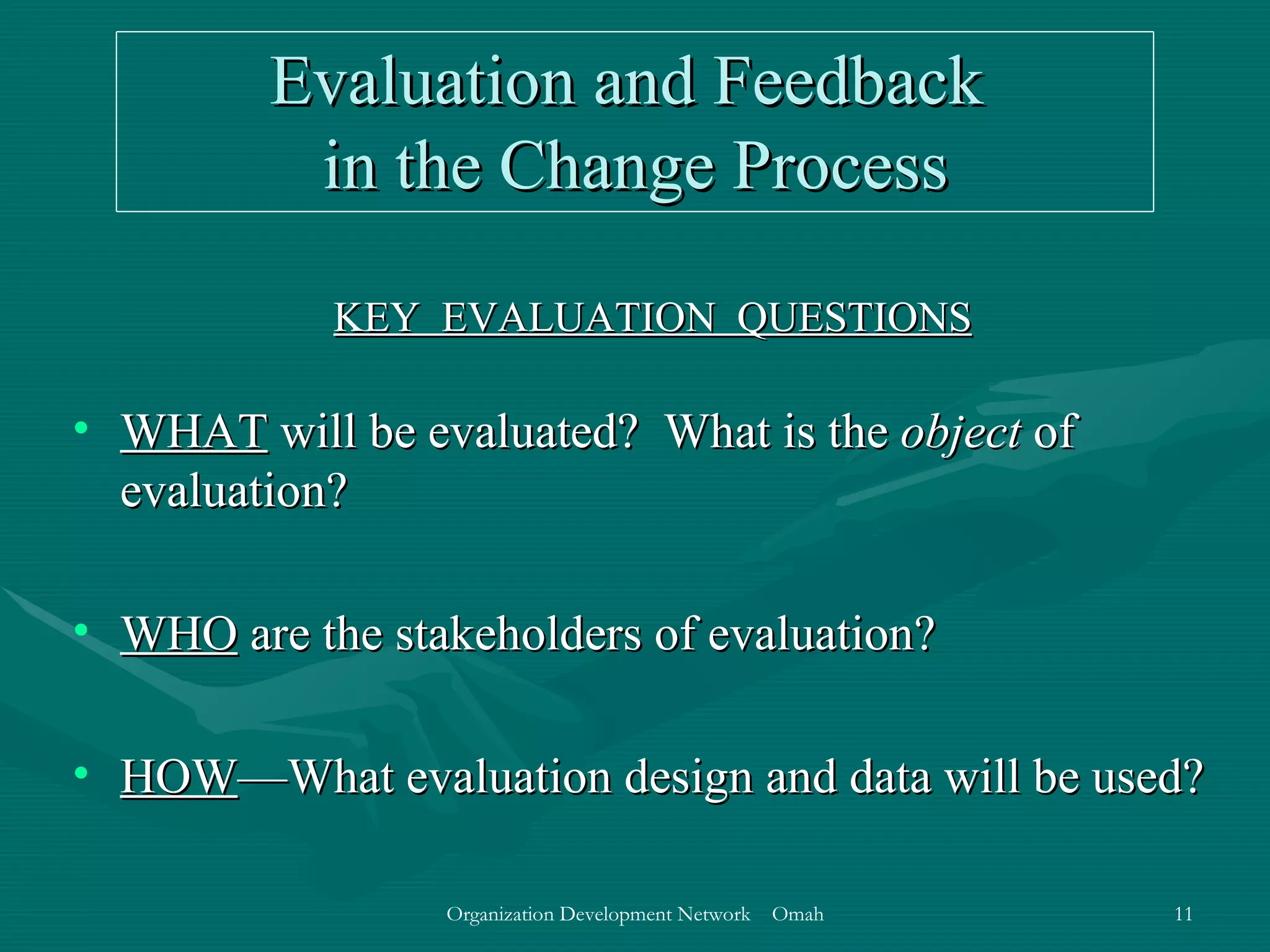
Evaluation and Feedback  in the Change Process KEY  EVALUATION  QUESTIONS WHAT  will be evaluated?  What is the  object  of evaluation? WHO  are the stakeholders of evaluation? HOW —What evaluation design and data will be used?
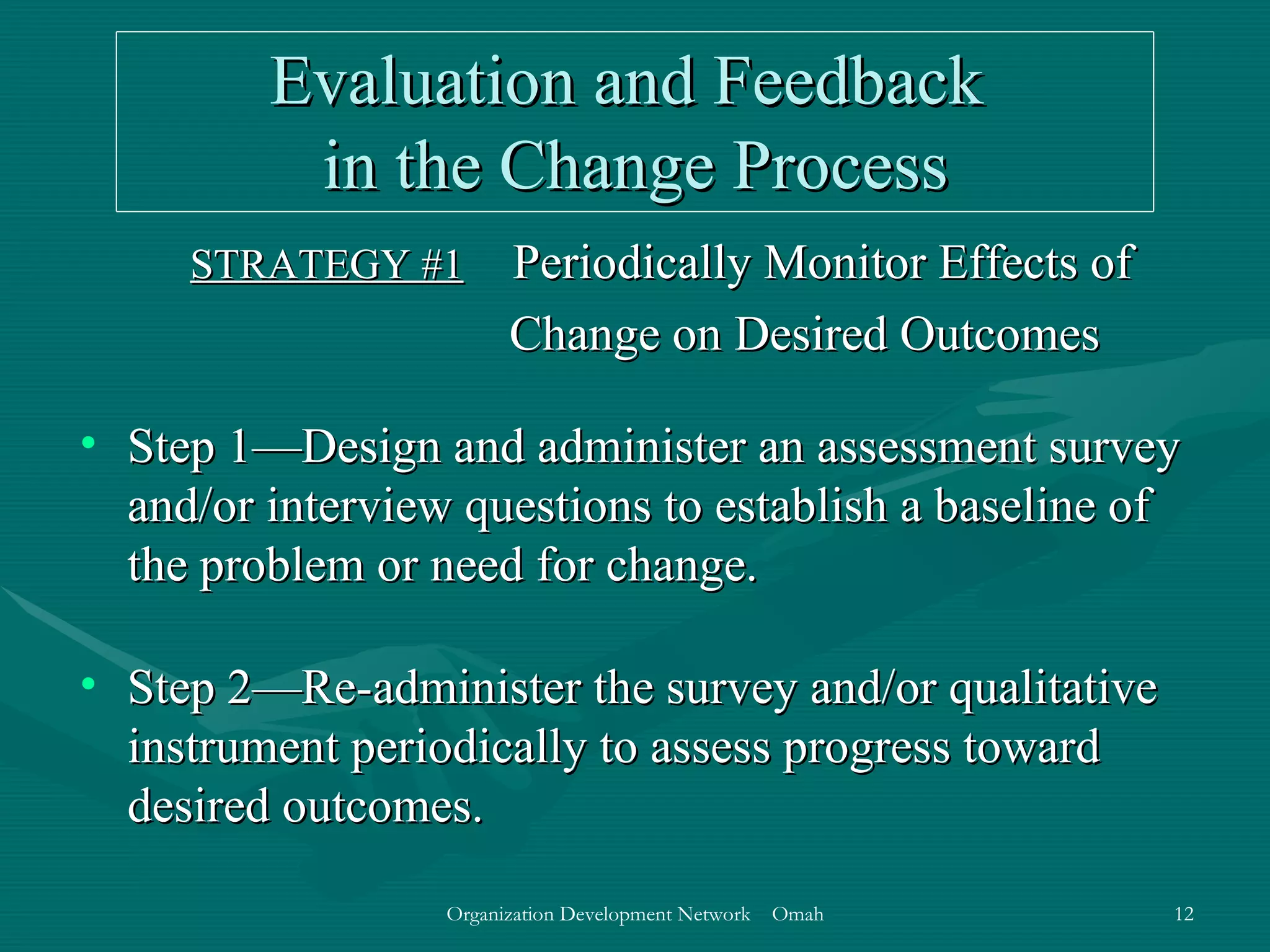
Evaluation and Feedback  in the Change Process STRATEGY #1   Periodically Monitor Effects of Change on Desired Outcomes Step 1—Design and administer an assessment survey and/or interview questions to establish a baseline of the problem or need for change. Step 2—Re-administer the survey and/or qualitative instrument periodically to assess progress toward desired outcomes.
Evaluation and Feedback  in the Change Process STRATEGY #1   Periodically Monitor Effects of Change on Desired Outcomes American Healthways Corp. sought sustainable growth in patient volume and health plan revenues, but needed to transform its organization structure to support growth. During implementation of a new process-based structure, the assessment surveys were re-administered to guide implementation of the new structure and to evaluate progress toward desired outcomes (more patients and revenue).
Evaluation and Feedback  in the Change Process STRATEGY # 2   Use  Implementation Feedback  during  and  after  an intervention. DURING—Implementation should be guided by feedback about whether behaviors and procedures are changing as intended. AFTER—Post-evaluations alone may only show that outcomes were not achieved, not why the interventions that were intended to contribute to the outcomes failed.
Evaluation and Feedback  in the Change Process CASE  EXAMPLES Total Quality Transformation in Fortune 50 company American Healthways Corporation Case Examples
Richard J. Torraco, Ph.D. University of Nebraska-Lincoln Evaluation and Feedback within the Change Process

Evaluation and feedback within the change process

  • 1.
    Richard J. Torraco,Ph.D. University of Nebraska-Lincoln Evaluation and Feedback within the Change Process
  • 2.
    Evaluation and Feedback in the Change Process OVERVIEW Definitions and Examples Education/Training vs. Organization Development Common Models of Change Key Evaluation Questions Common Evaluation and Feedback Strategies Case Examples of Evaluation and Feedback
  • 3.
    Evaluation and Feedback in the Change Process Evaluation / Assessment —the process of determining the merit or value of a condition/trait, process, and/or outcome of the change process. Feedback —the process of feeding back diagnostic information to the client to guide further action. Institutionalizing Change —the process of making change a permanent part of the organization’s culture and practices.
  • 4.
    Evaluation and Feedback in the Change Process CASE EXAMPLE Total Quality Transformation —system-wide change from traditional manufacturing to continuous process improvement. Evaluation —technical aspects of change were improved; social aspects of change were not improved. Feedback —evaluation data showing improvements and problems were fed back to client to guide further change.
  • 5.
    How do EducationalPrograms differ from Organization Development? Educational Programs Organization Development Short-term Address specific needs Can evaluate with qualitative and/or quantitative data Casual attribution is possible (Education improved skills) Long-term (years) System-wide in scope Should evaluate with both qualitative and quantitative data Casual attribution is difficult (OD and other factors contributed to multiple outcomes)
  • 6.
    Unfreezing Movement Refreezing Lewin’s Change Model
  • 7.
    General Model ofPlanned Change Entering and Contracting Diagnosing Planning and Implementing Change Evaluating and Institutionalizing Change
  • 8.
    Appreciative InquiryProblem Solving “ Felt Need” Identification of Problem Analysis of Causes Analysis of Possible Solutions Action Planning (Treatment) Basic Assumption: An organization is a problem to be solved. Appreciative Inquiry Appreciating and Valuing The Best of “What Is” Envisioning “What Might Be” Dialoguing “What Should Be” Innovating “What Will Be” Basic Assumption: An organization is an opportunity to be realized.
  • 9.
    Integrated Strategic ChangeStep 1 Analyzing Current Strategy and Organization Steps 3 and 4 Designing and Implementing Strategic Change Plan Step 2 Choosing Desired Strategy and Organization Current Strategy S 1 Future Strategy S 2 Strategic Change Plan Current Organization Structure and Design O 1 Future Organization Structure and Design O 2
  • 10.
    Action Research ModelStart-Up Entry Intervention Assessment & Feedback Action Planning Evaluation Adoption Separation
  • 11.
    Evaluation and Feedback in the Change Process KEY EVALUATION QUESTIONS WHAT will be evaluated? What is the object of evaluation? WHO are the stakeholders of evaluation? HOW —What evaluation design and data will be used?
  • 12.
    Evaluation and Feedback in the Change Process STRATEGY #1 Periodically Monitor Effects of Change on Desired Outcomes Step 1—Design and administer an assessment survey and/or interview questions to establish a baseline of the problem or need for change. Step 2—Re-administer the survey and/or qualitative instrument periodically to assess progress toward desired outcomes.
  • 13.
    Evaluation and Feedback in the Change Process STRATEGY #1 Periodically Monitor Effects of Change on Desired Outcomes American Healthways Corp. sought sustainable growth in patient volume and health plan revenues, but needed to transform its organization structure to support growth. During implementation of a new process-based structure, the assessment surveys were re-administered to guide implementation of the new structure and to evaluate progress toward desired outcomes (more patients and revenue).
  • 14.
    Evaluation and Feedback in the Change Process STRATEGY # 2 Use Implementation Feedback during and after an intervention. DURING—Implementation should be guided by feedback about whether behaviors and procedures are changing as intended. AFTER—Post-evaluations alone may only show that outcomes were not achieved, not why the interventions that were intended to contribute to the outcomes failed.
  • 15.
    Evaluation and Feedback in the Change Process CASE EXAMPLES Total Quality Transformation in Fortune 50 company American Healthways Corporation Case Examples
  • 16.
    Richard J. Torraco,Ph.D. University of Nebraska-Lincoln Evaluation and Feedback within the Change Process