Thomson Learning
© 2004 11-1
Chapter Eleven
Innovation and Change
Thomson Learning
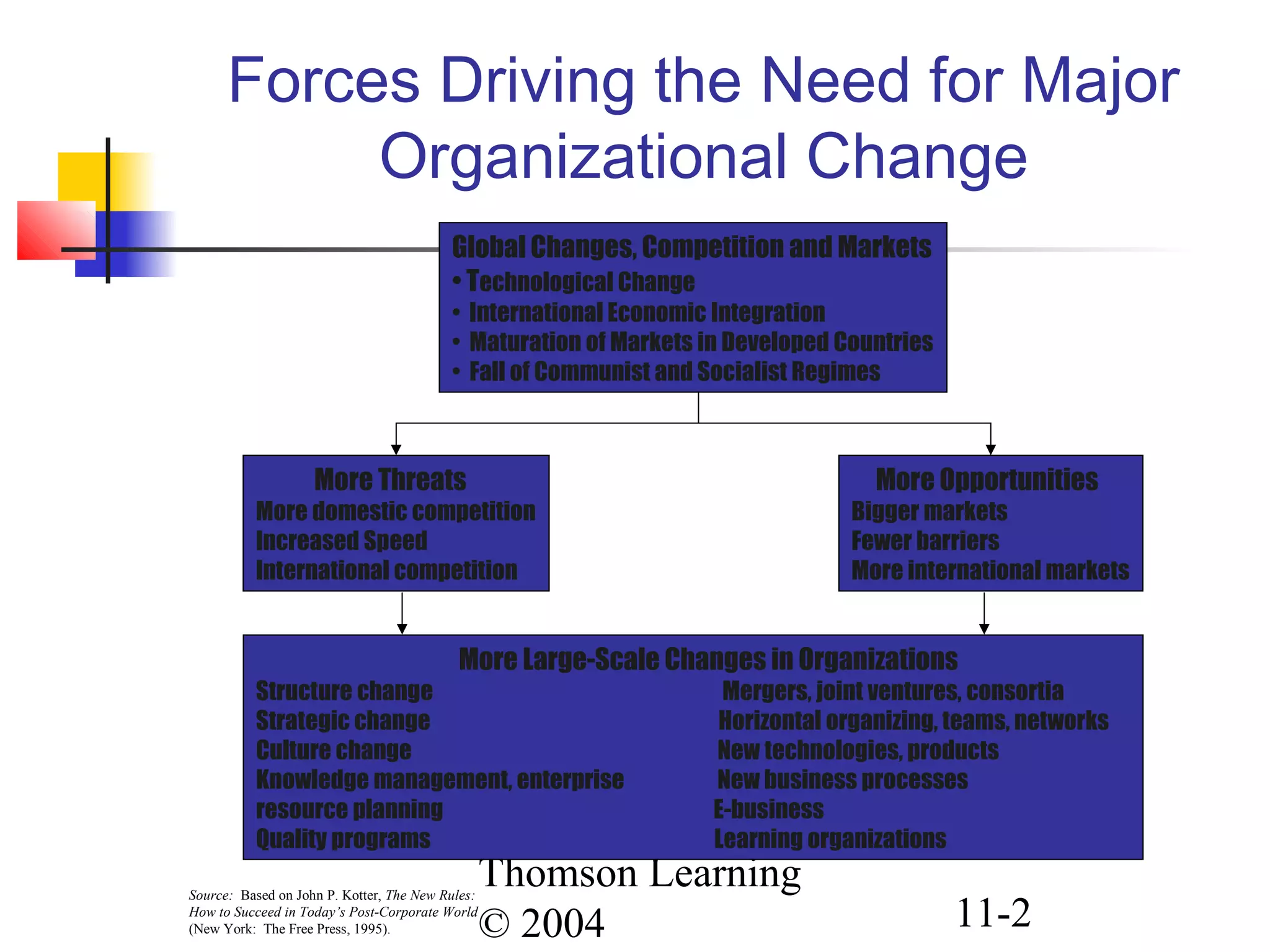
© 2004 11-2
Forces Driving the Need for Major
Organizational Change
More Large-Scale Changes in Organizations
Structure change Mergers, joint ventures, consortia
Strategic change Horizontal organizing, teams, networks
Culture change New technologies, products
Knowledge management, enterprise New business processes
resource planning E-business
Quality programs Learning organizations
More Threats
More domestic competition
Increased Speed
International competition
Global Changes, Competition and Markets
• Technological Change
• International Economic Integration
• Maturation of Markets in Developed Countries
• Fall of Communist and Socialist Regimes
More Opportunities
Bigger markets
Fewer barriers
More international markets
Source: Based on John P. Kotter, The New Rules:
How to Succeed in Today’s Post-Corporate World
(New York: The Free Press, 1995).
Thomson Learning
© 2004 11-3
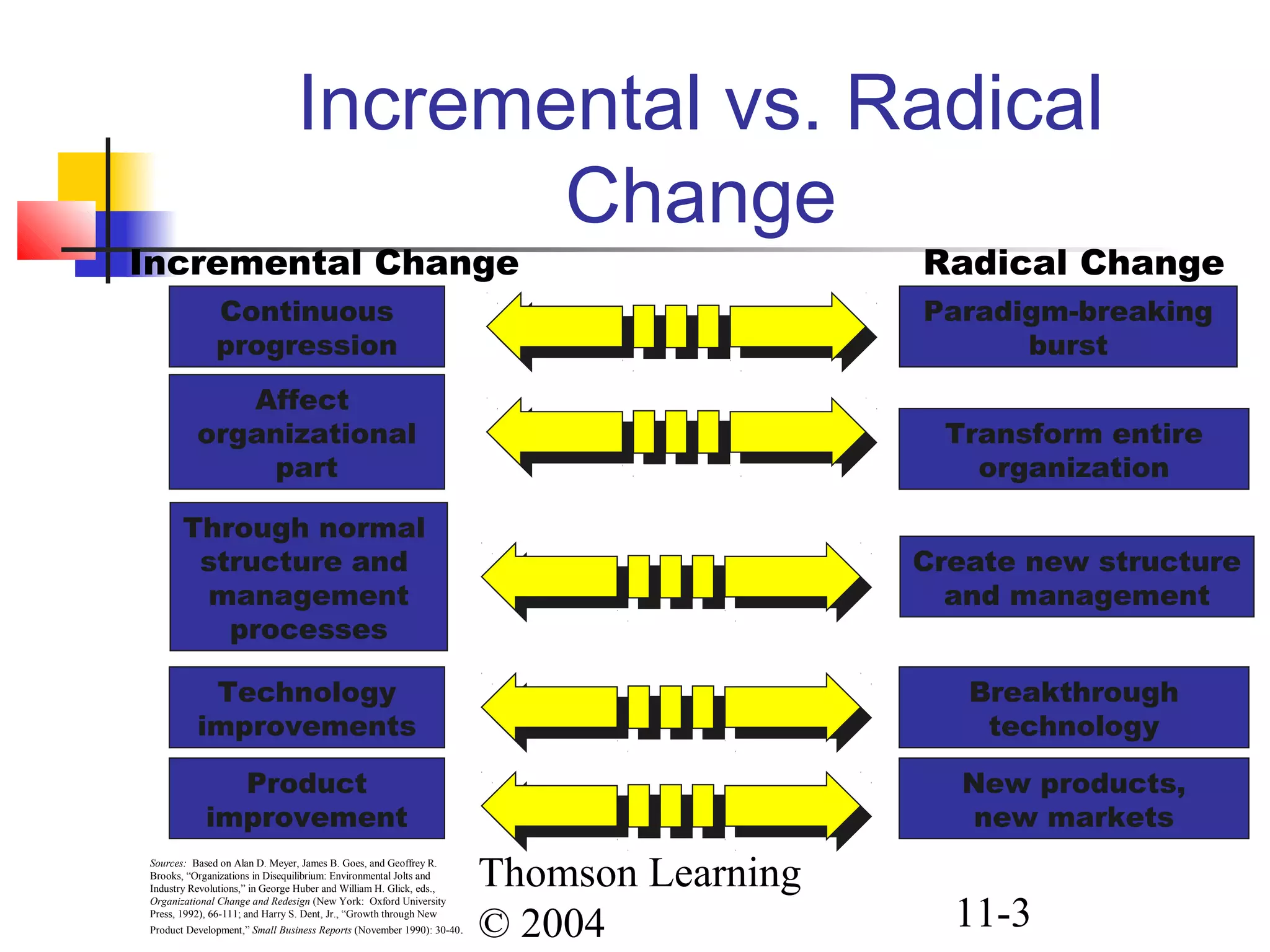
Incremental vs. Radical
Change
Continuous
progression
Paradigm-breaking
burst
Through normal
structure and
management
processes
Transform entire
organization
Affect
organizational
part
Create new structure
and management
Technology
improvements
Breakthrough
technology
Product
improvement
New products,
new markets
Sources: Based on Alan D. Meyer, James B. Goes, and Geoffrey R.
Brooks, “Organizations in Disequilibrium: Environmental Jolts and
Industry Revolutions,” in George Huber and William H. Glick, eds.,
Organizational Change and Redesign (New York: Oxford University
Press, 1992), 66-111; and Harry S. Dent, Jr., “Growth through New
Product Development,” Small Business Reports (November 1990): 30-40.
Incremental Change Radical Change
Thomson Learning
© 2004 11-4
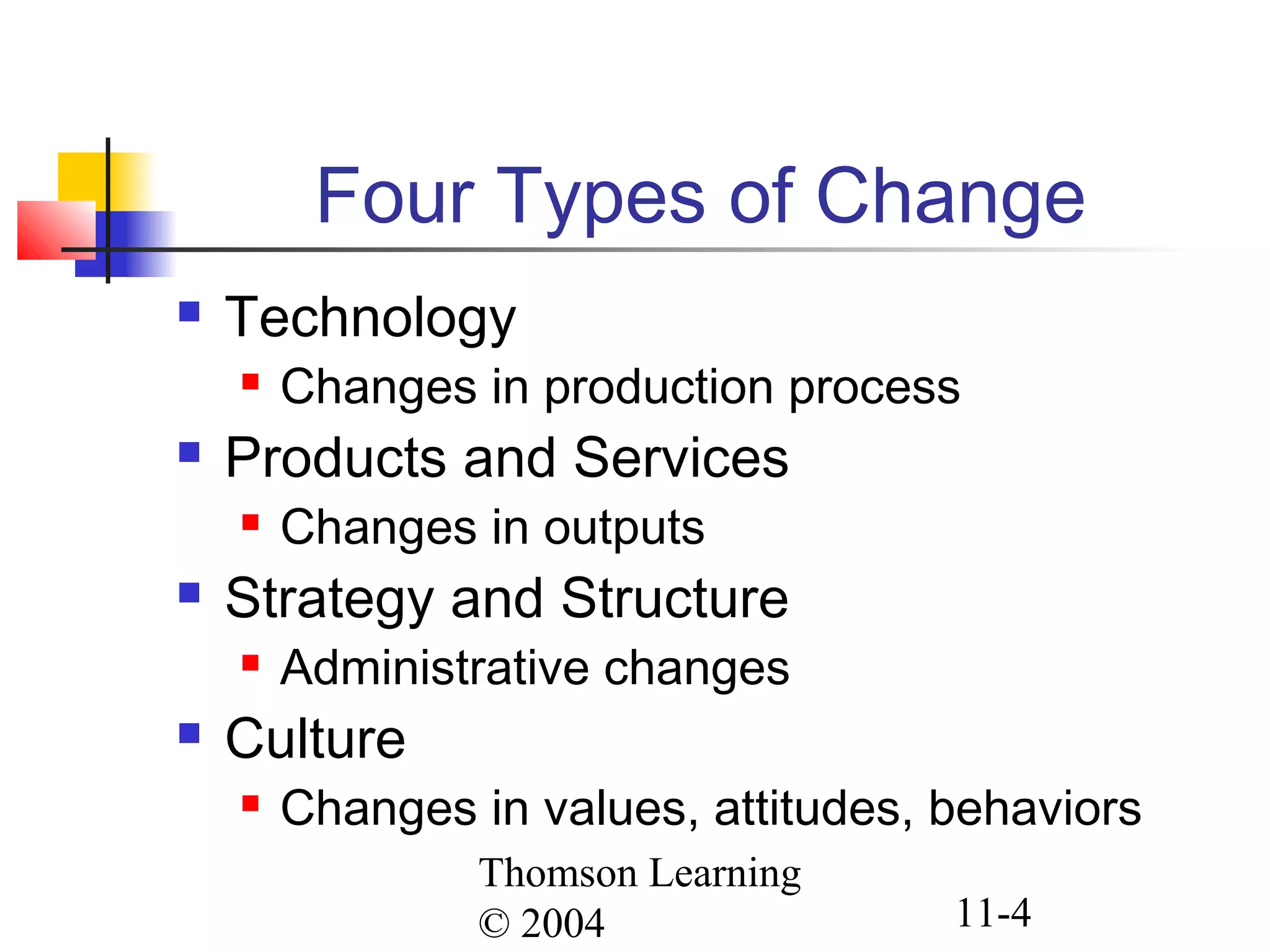
Four Types of Change
 Technology
 Changes in production process
 Products and Services
 Changes in outputs
 Strategy and Structure
 Administrative changes
 Culture
 Changes in values, attitudes, behaviors
Thomson Learning
© 2004 11-5
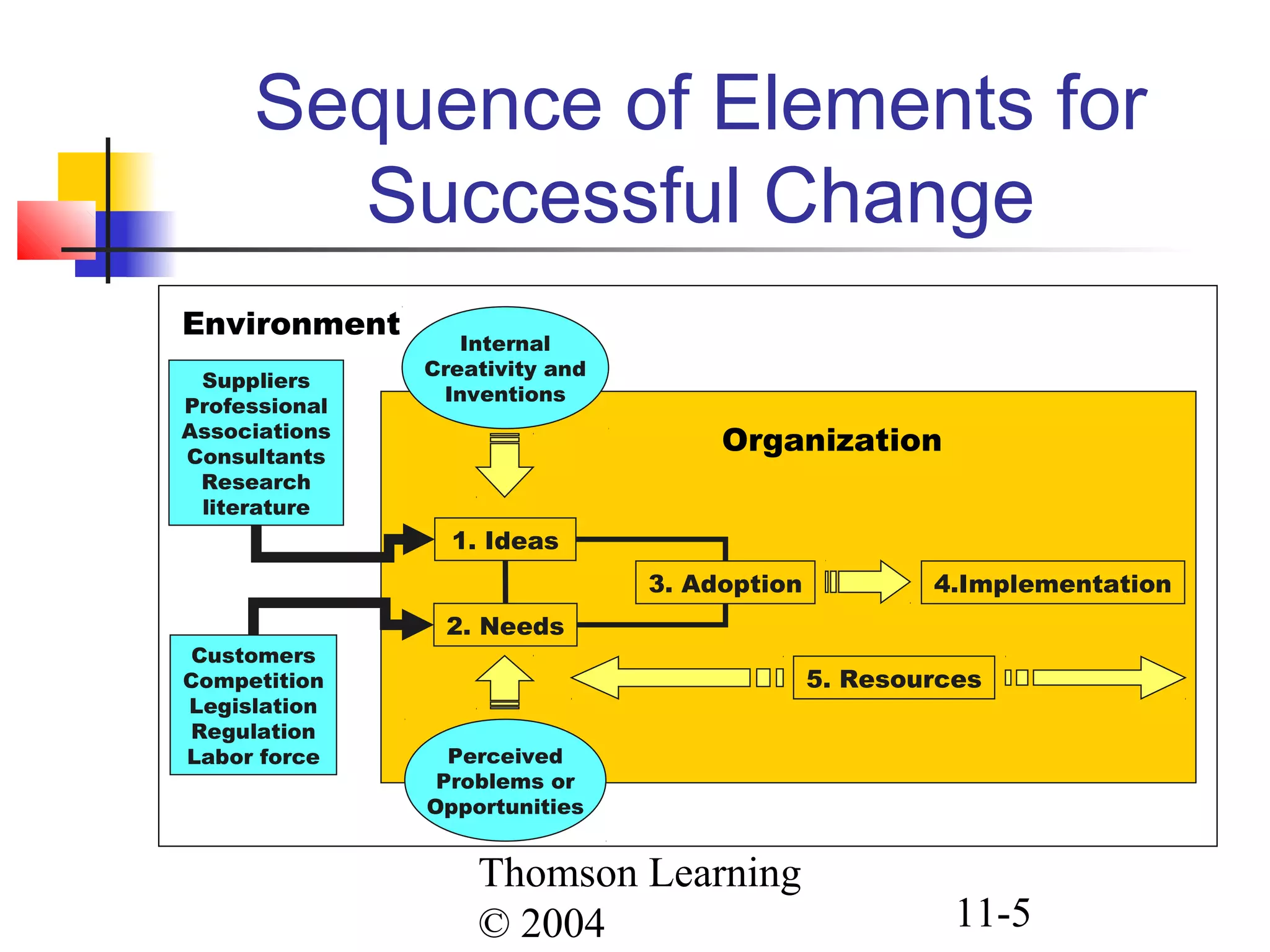
Sequence of Elements for
Successful Change
Environment
Suppliers
Professional
Associations
Consultants
Research
literature
Customers
Competition
Legislation
Regulation
Labor force
1. Ideas
2. Needs
3. Adoption 4.Implementation
5. Resources
Internal
Creativity and
Inventions
Perceived
Problems or
Opportunities
Organization
Thomson Learning
© 2004 11-6
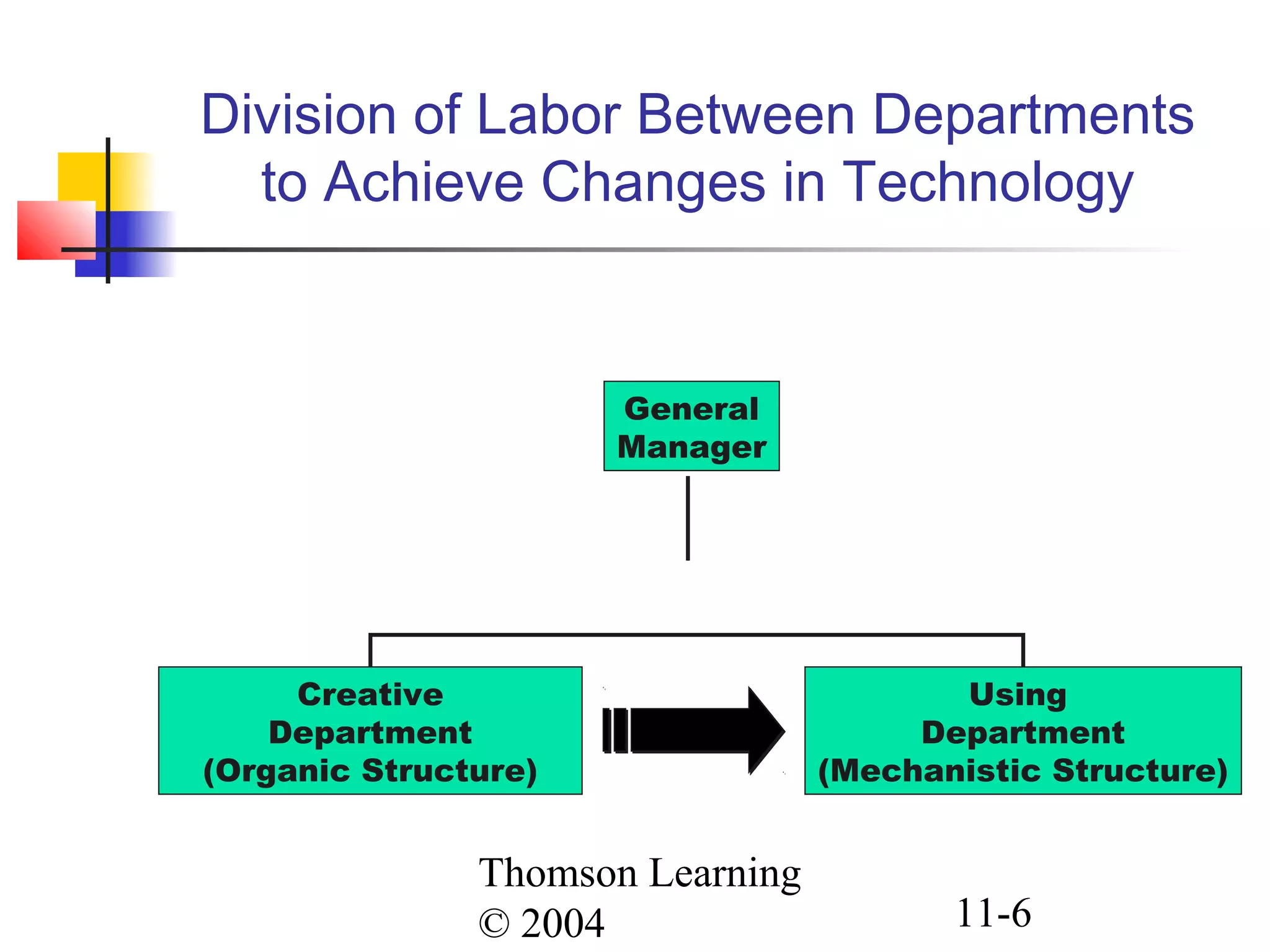
Division of Labor Between Departments
to Achieve Changes in Technology
General
Manager
Creative
Department
(Organic Structure)
Using
Department
(Mechanistic Structure)
Thomson Learning
© 2004 11-7
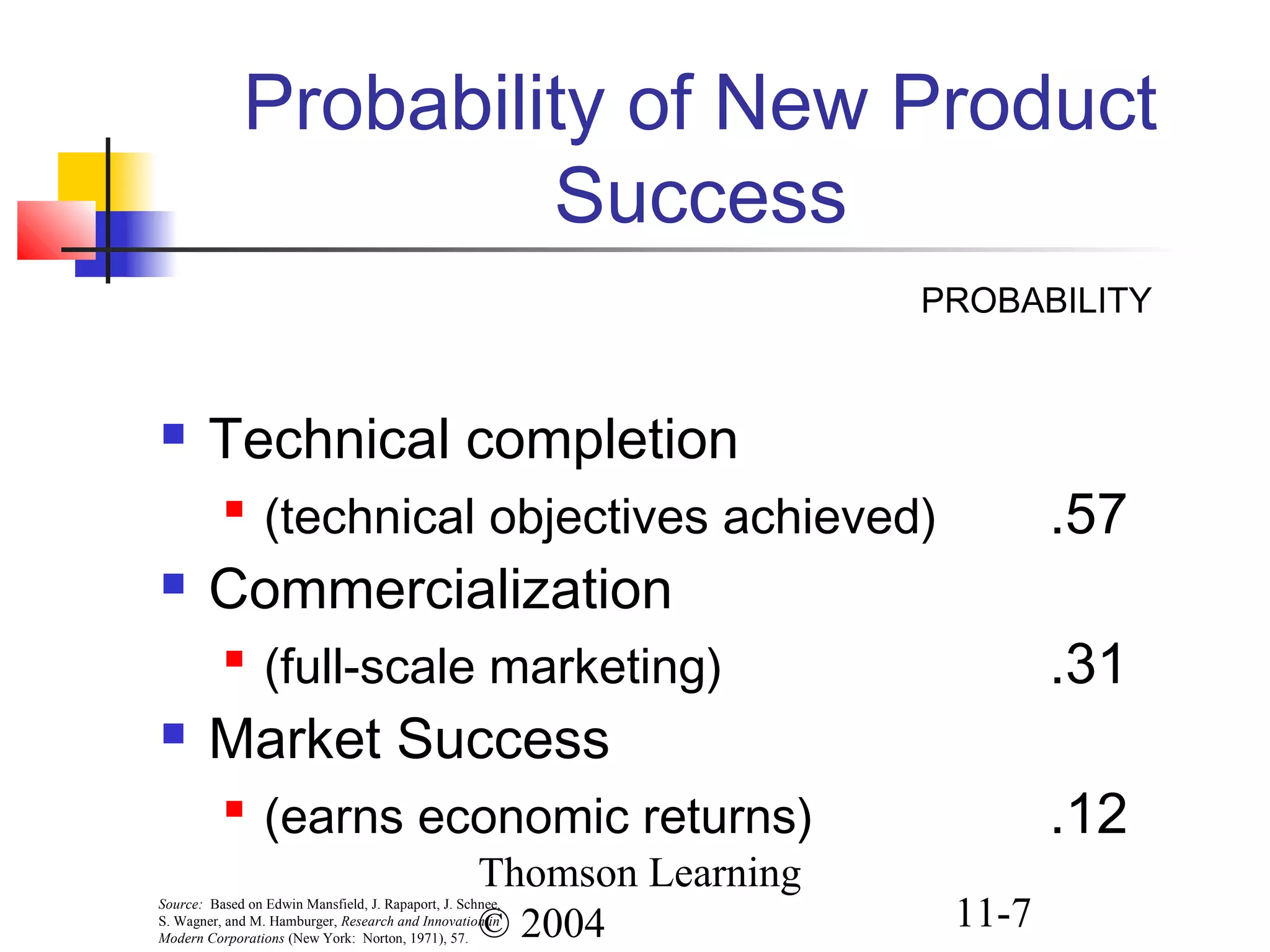
Probability of New Product
Success
PROBABILITY
 Technical completion

(technical objectives achieved) .57
 Commercialization

(full-scale marketing) .31
 Market Success

(earns economic returns) .12
Source: Based on Edwin Mansfield, J. Rapaport, J. Schnee,
S. Wagner, and M. Hamburger, Research and Innovation in
Modern Corporations (New York: Norton, 1971), 57.
Thomson Learning
© 2004 11-8
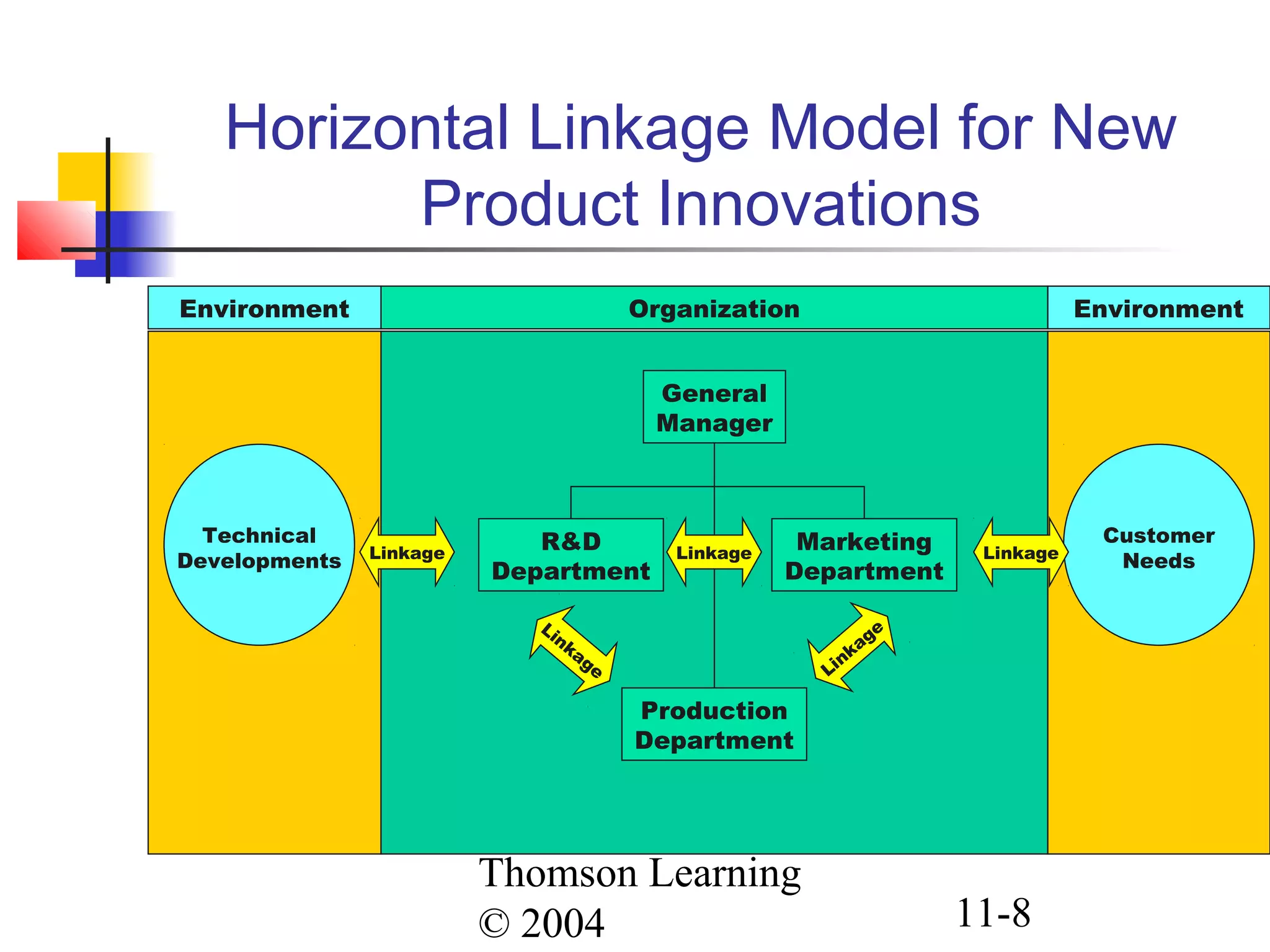
Horizontal Linkage Model for New
Product Innovations
Environment
Technical
Developments
Environment
Customer
Needs
Organization
General
Manager
R&D
Department
Marketing
Department
Production
Department
Linkage
Linkage Linkage
Linkage Linkage
Thomson Learning
© 2004 11-9
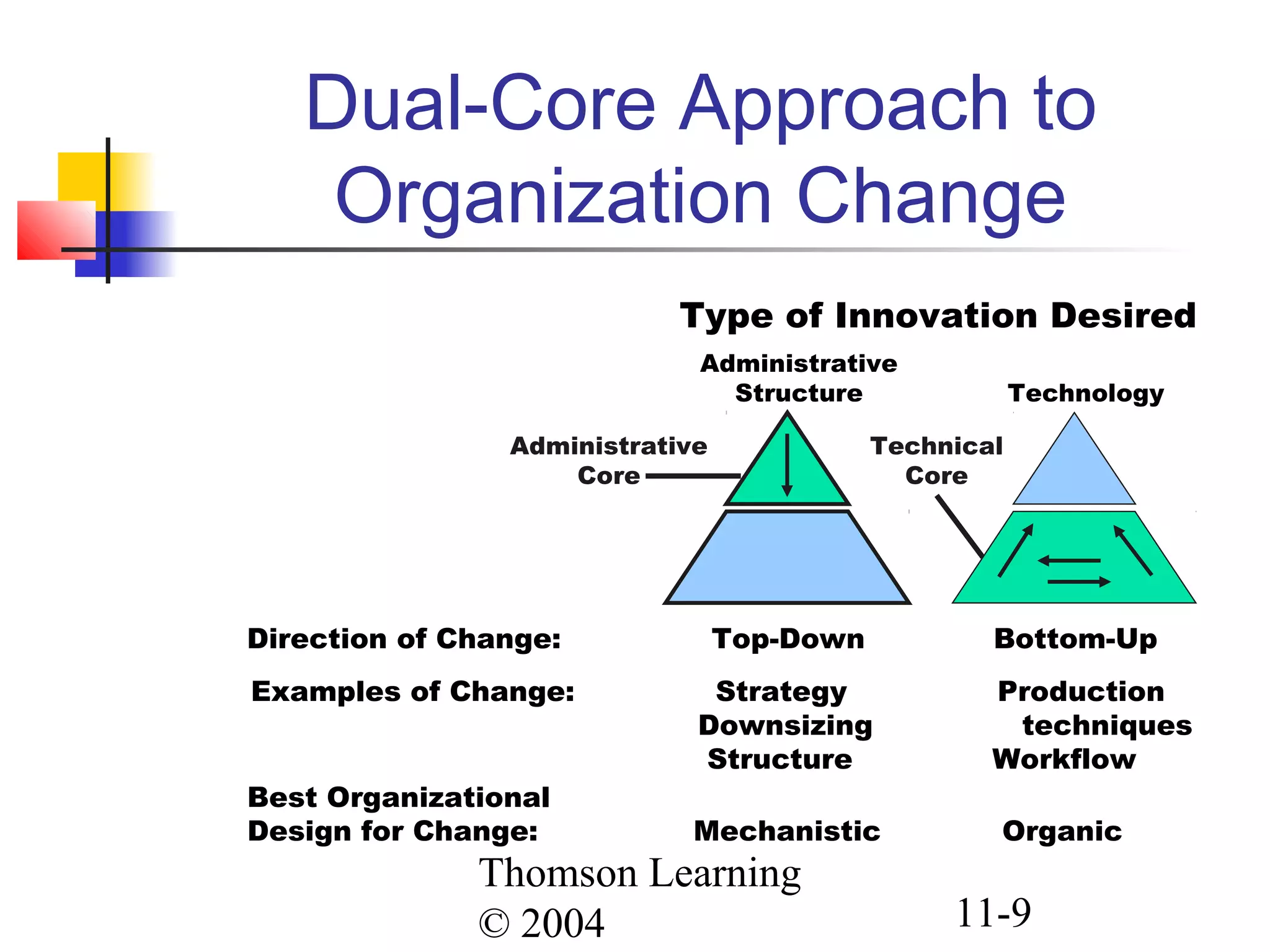
Dual-Core Approach to
Organization Change
Type of Innovation Desired
Administrative
Structure Technology
Direction of Change: Top-Down Bottom-Up
Examples of Change: Strategy Production
Downsizing techniques
Structure Workflow
Best Organizational
Design for Change: Mechanistic Organic
Administrative
Core
Technical
Core
Thomson Learning
© 2004 11-10
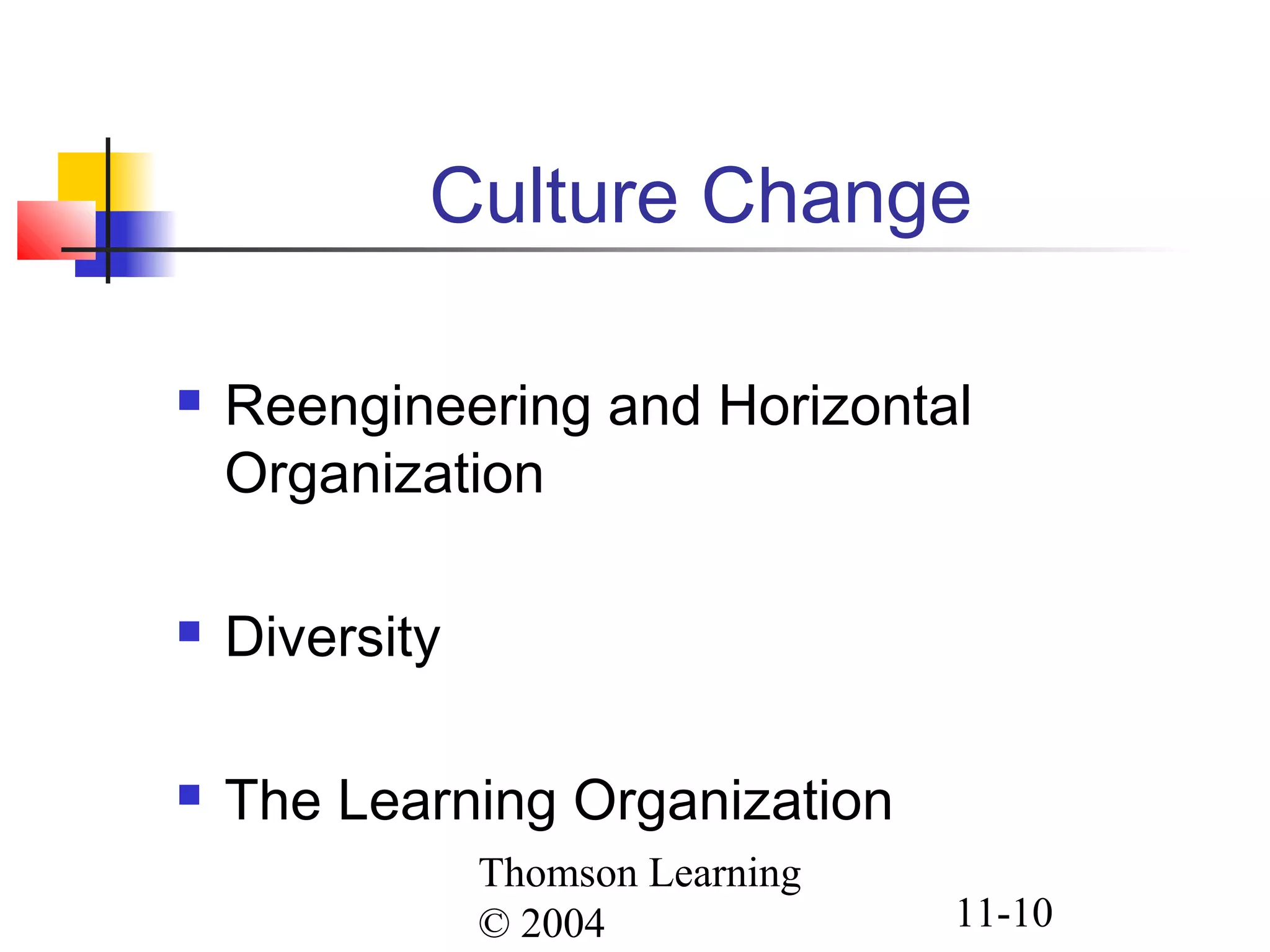
Culture Change
 Reengineering and Horizontal
Organization
 Diversity
 The Learning Organization
Thomson Learning
© 2004 11-11
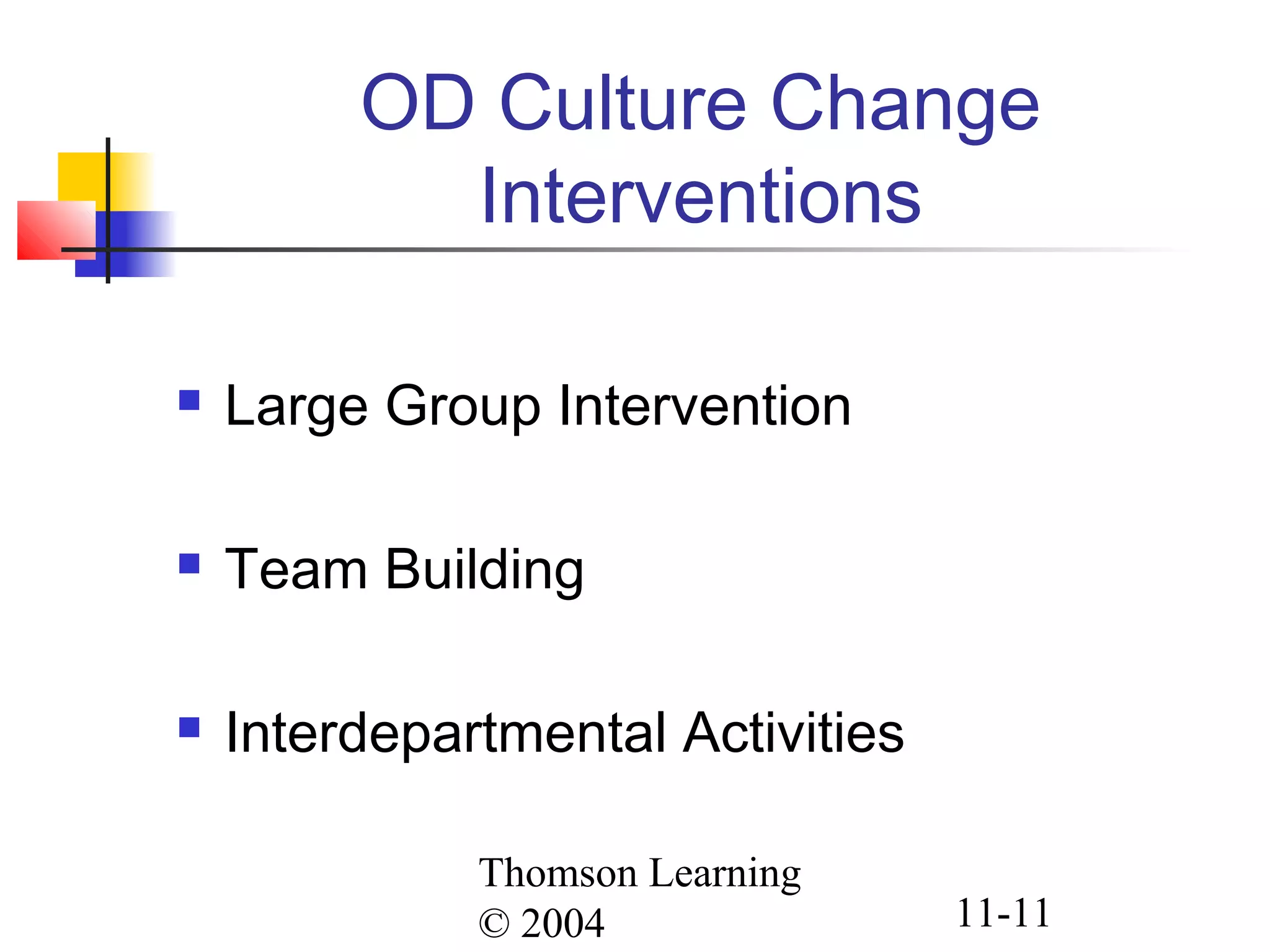
OD Culture Change
Interventions
 Large Group Intervention
 Team Building
 Interdepartmental Activities
Thomson Learning
© 2004 11-12
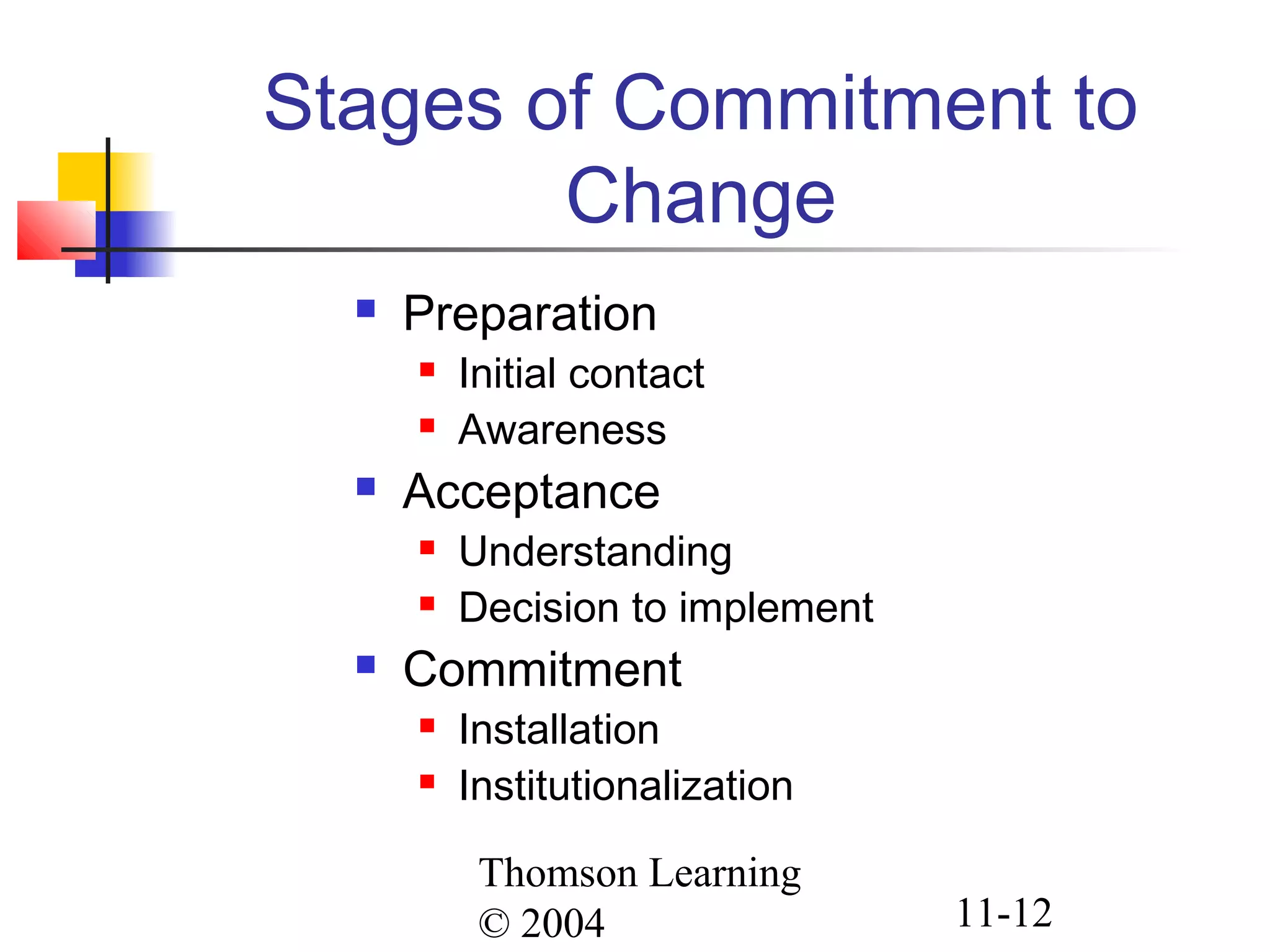
Stages of Commitment to
Change
 Preparation
 Initial contact
 Awareness
 Acceptance
 Understanding
 Decision to implement
 Commitment
 Installation
 Institutionalization
Thomson Learning
© 2004 11-13
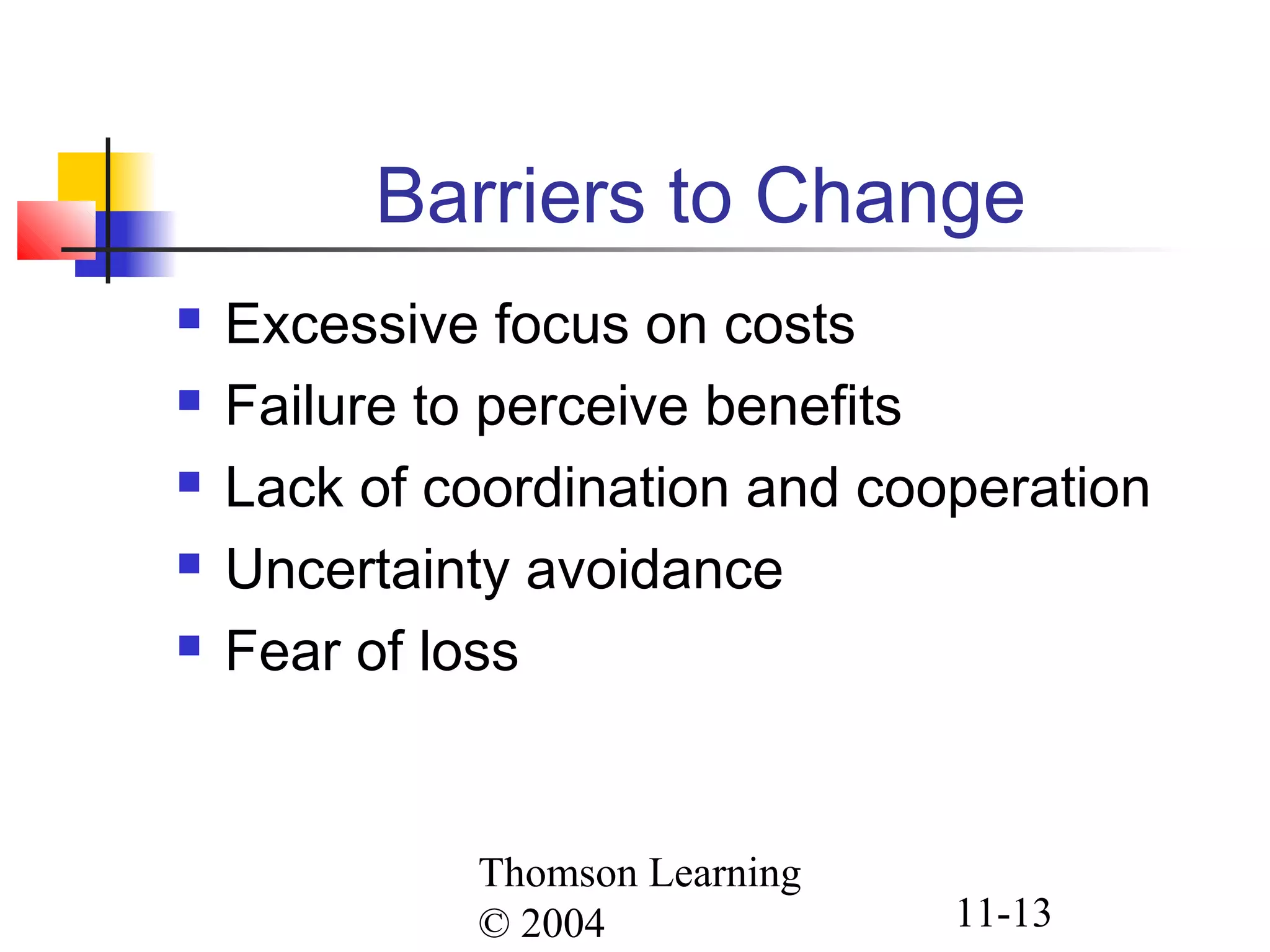
Barriers to Change
 Excessive focus on costs
 Failure to perceive benefits
 Lack of coordination and cooperation
 Uncertainty avoidance
 Fear of loss
Thomson Learning
© 2004 11-14
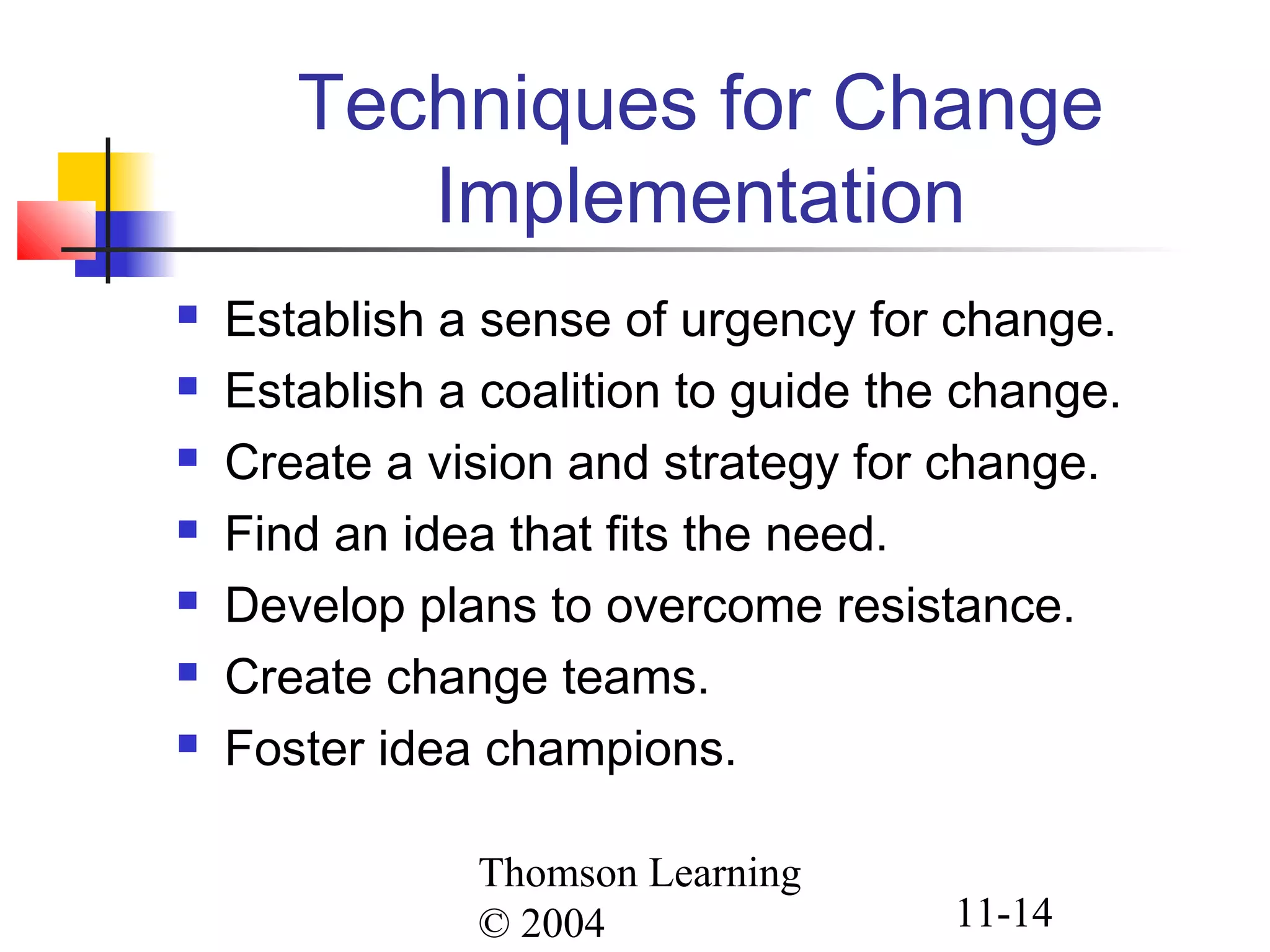
Techniques for Change
Implementation
 Establish a sense of urgency for change.
 Establish a coalition to guide the change.
 Create a vision and strategy for change.
 Find an idea that fits the need.
 Develop plans to overcome resistance.
 Create change teams.
 Foster idea champions.
Thomson Learning
© 2004 11-15
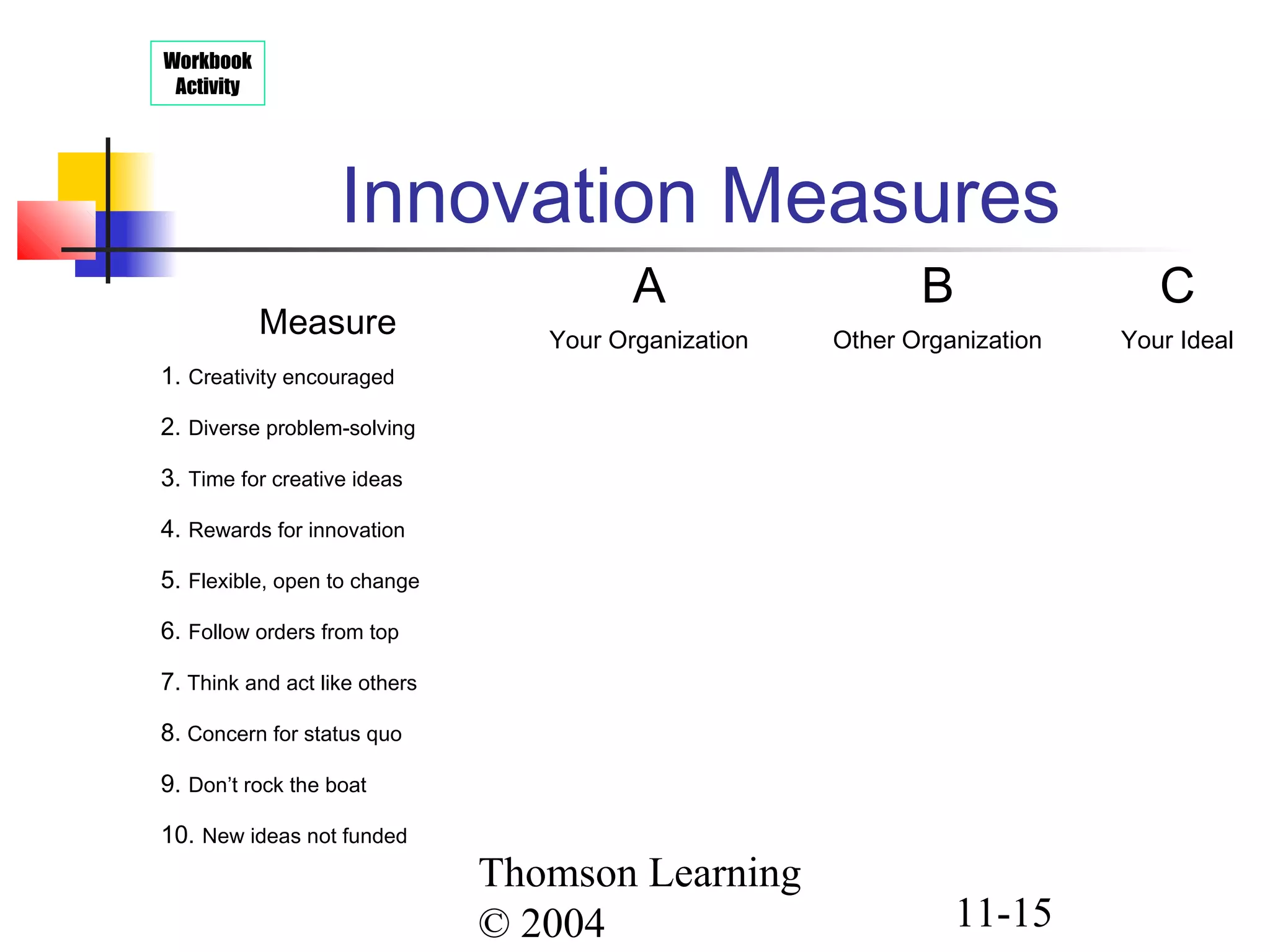
Innovation Measures
Measure
A
Your Organization
B
Other Organization
C
Your Ideal
1. Creativity encouraged
2. Diverse problem-solving
3. Time for creative ideas
4. Rewards for innovation
5. Flexible, open to change
6. Follow orders from top
7. Think and act like others
8. Concern for status quo
9. Don’t rock the boat
10. New ideas not funded
Workbook
Activity

Ch11

  • 1.
    Thomson Learning © 200411-1 Chapter Eleven Innovation and Change
  • 2.
    Thomson Learning © 200411-2 Forces Driving the Need for Major Organizational Change More Large-Scale Changes in Organizations Structure change Mergers, joint ventures, consortia Strategic change Horizontal organizing, teams, networks Culture change New technologies, products Knowledge management, enterprise New business processes resource planning E-business Quality programs Learning organizations More Threats More domestic competition Increased Speed International competition Global Changes, Competition and Markets • Technological Change • International Economic Integration • Maturation of Markets in Developed Countries • Fall of Communist and Socialist Regimes More Opportunities Bigger markets Fewer barriers More international markets Source: Based on John P. Kotter, The New Rules: How to Succeed in Today’s Post-Corporate World (New York: The Free Press, 1995).
  • 3.
    Thomson Learning © 200411-3 Incremental vs. Radical Change Continuous progression Paradigm-breaking burst Through normal structure and management processes Transform entire organization Affect organizational part Create new structure and management Technology improvements Breakthrough technology Product improvement New products, new markets Sources: Based on Alan D. Meyer, James B. Goes, and Geoffrey R. Brooks, “Organizations in Disequilibrium: Environmental Jolts and Industry Revolutions,” in George Huber and William H. Glick, eds., Organizational Change and Redesign (New York: Oxford University Press, 1992), 66-111; and Harry S. Dent, Jr., “Growth through New Product Development,” Small Business Reports (November 1990): 30-40. Incremental Change Radical Change
  • 4.
    Thomson Learning © 200411-4 Four Types of Change  Technology  Changes in production process  Products and Services  Changes in outputs  Strategy and Structure  Administrative changes  Culture  Changes in values, attitudes, behaviors
  • 5.
    Thomson Learning © 200411-5 Sequence of Elements for Successful Change Environment Suppliers Professional Associations Consultants Research literature Customers Competition Legislation Regulation Labor force 1. Ideas 2. Needs 3. Adoption 4.Implementation 5. Resources Internal Creativity and Inventions Perceived Problems or Opportunities Organization
  • 6.
    Thomson Learning © 200411-6 Division of Labor Between Departments to Achieve Changes in Technology General Manager Creative Department (Organic Structure) Using Department (Mechanistic Structure)
  • 7.
    Thomson Learning © 200411-7 Probability of New Product Success PROBABILITY  Technical completion  (technical objectives achieved) .57  Commercialization  (full-scale marketing) .31  Market Success  (earns economic returns) .12 Source: Based on Edwin Mansfield, J. Rapaport, J. Schnee, S. Wagner, and M. Hamburger, Research and Innovation in Modern Corporations (New York: Norton, 1971), 57.
  • 8.
    Thomson Learning © 200411-8 Horizontal Linkage Model for New Product Innovations Environment Technical Developments Environment Customer Needs Organization General Manager R&D Department Marketing Department Production Department Linkage Linkage Linkage Linkage Linkage
  • 9.
    Thomson Learning © 200411-9 Dual-Core Approach to Organization Change Type of Innovation Desired Administrative Structure Technology Direction of Change: Top-Down Bottom-Up Examples of Change: Strategy Production Downsizing techniques Structure Workflow Best Organizational Design for Change: Mechanistic Organic Administrative Core Technical Core
  • 10.
    Thomson Learning © 200411-10 Culture Change  Reengineering and Horizontal Organization  Diversity  The Learning Organization
  • 11.
    Thomson Learning © 200411-11 OD Culture Change Interventions  Large Group Intervention  Team Building  Interdepartmental Activities
  • 12.
    Thomson Learning © 200411-12 Stages of Commitment to Change  Preparation  Initial contact  Awareness  Acceptance  Understanding  Decision to implement  Commitment  Installation  Institutionalization
  • 13.
    Thomson Learning © 200411-13 Barriers to Change  Excessive focus on costs  Failure to perceive benefits  Lack of coordination and cooperation  Uncertainty avoidance  Fear of loss
  • 14.
    Thomson Learning © 200411-14 Techniques for Change Implementation  Establish a sense of urgency for change.  Establish a coalition to guide the change.  Create a vision and strategy for change.  Find an idea that fits the need.  Develop plans to overcome resistance.  Create change teams.  Foster idea champions.
  • 15.
    Thomson Learning © 200411-15 Innovation Measures Measure A Your Organization B Other Organization C Your Ideal 1. Creativity encouraged 2. Diverse problem-solving 3. Time for creative ideas 4. Rewards for innovation 5. Flexible, open to change 6. Follow orders from top 7. Think and act like others 8. Concern for status quo 9. Don’t rock the boat 10. New ideas not funded Workbook Activity