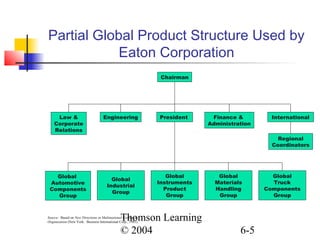
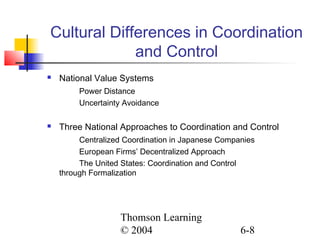
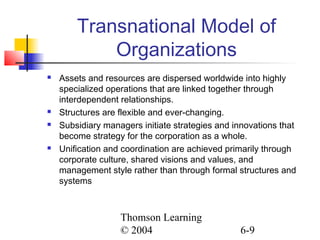
The document discusses four stages of international evolution for companies: domestic, international, multinational, and global. It also examines how organizational structure should match a company's international advantages and forces for global integration versus national responsiveness. Different coordination mechanisms and cultural approaches to coordination are presented for global companies. Finally, the transnational model of organizations is defined as having dispersed yet interdependent worldwide operations coordinated through shared culture rather than formal structures.