Chapter 4: 
Consumers’ Product 
Knowledge & Involvement
Agenda 
O Levels of product knowledge 
O Types of product knowledge 
O Concrete, abstract attributes 
O Functional/psychosocial consequences & 
benefits/risk 
O Instrumental/terminal values 
O Means-ends chains 
O Involvement 
O Intrinsic/situational involvement
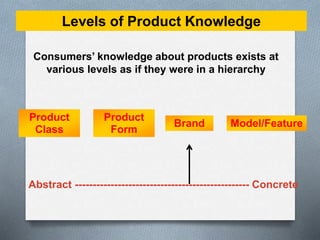
Levels of Product Knowledge 
Consumers’ knowledge about products exists at 
various levels as if they were in a hierarchy 
Product 
Class 
Brand 
Product 
Form 
Model/Feature 
Abstract ------------------------------------------------- Concrete
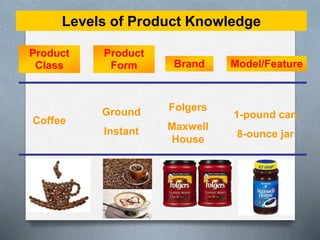
Levels of Product Knowledge 
Product 
Class Brand 
Product 
Form Model/Feature 
Coffee 
Ground 
Instant 
Folgers 
Maxwell 
House 
1-pound can 
8-ounce jar
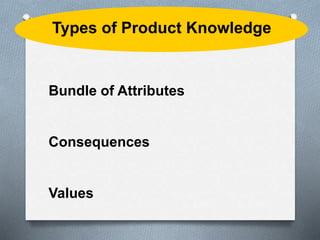
Types of Product Knowledge 
Bundle of Attributes 
Consequences 
Values
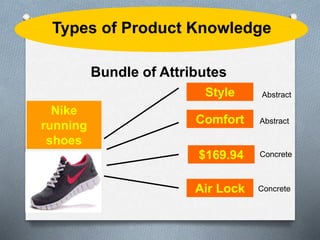
Types of Product Knowledge 
Bundle of Attributes 
Nike 
running 
shoes 
Style 
Comfort 
$169.94 
Abstract 
Abstract 
Concrete 
Air Lock Concrete
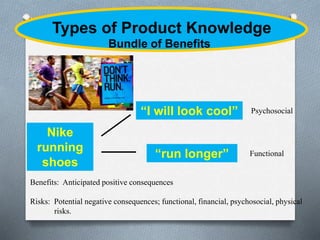
Types of Product Knowledge 
Bundle of Benefits 
Nike 
running 
shoes 
“I will look cool” 
“run longer” 
Benefits: Anticipated positive consequences 
Risks: Potential negative consequences; functional, financial, psychosocial, physical 
risks. 
Psychosocial 
Functional
Types of Product Knowledge 
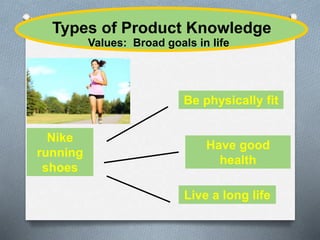
Values: Broad goals in life 
Be physically fit 
Have good 
health 
Live a long life 
Nike 
running 
shoes
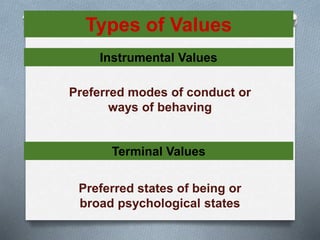
Types of Values 
Instrumental Values 
Preferred modes of conduct or 
ways of behaving 
Terminal Values 
Preferred states of being or 
broad psychological states
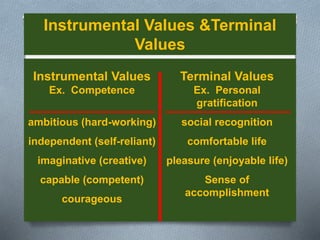
Instrumental Values &Terminal 
Values 
Instrumental Values 
Ex. Competence 
ambitious (hard-working) 
independent (self-reliant) 
imaginative (creative) 
capable (competent) 
courageous 
Terminal Values 
Ex. Personal 
gratification 
social recognition 
comfortable life 
pleasure (enjoyable life) 
Sense of 
accomplishment
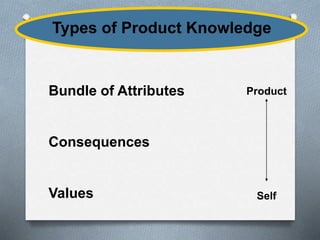
Types of Product Knowledge 
Bundle of Attributes 
Consequences 
Values 
Product 
Self
The Means-End Chain 
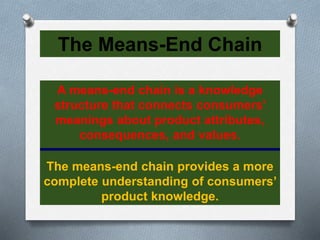
A means-end chain is a knowledge 
structure that connects consumers’ 
meanings about product attributes, 
consequences, and values. 
The means-end chain provides a more 
complete understanding of consumers’ 
product knowledge.
Means-End Chains of 
Product Knowledge 
Attributes
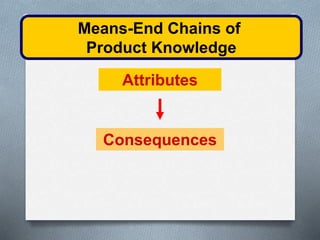
Means-End Chains of 
Product Knowledge 
Attributes 
Consequences
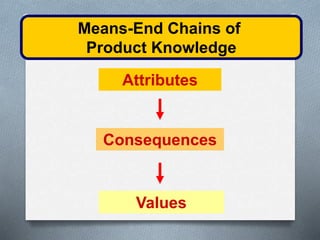
Means-End Chains of 
Product Knowledge 
Attributes 
Consequences 
Values
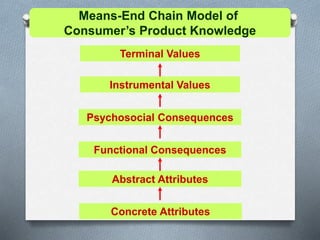
Means-End Chain Model of 
Consumer’s Product Knowledge 
Terminal Values 
Instrumental Values 
Psychosocial Consequences 
Functional Consequences 
Abstract Attributes 
Concrete Attributes
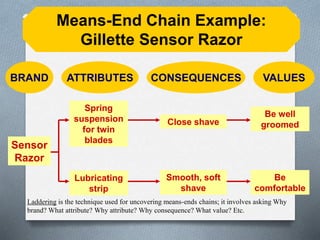
Means-End Chain Example: 
Gillette Sensor Razor 
BRAND ATTRIBUTES CONSEQUENCES VALUES 
Sensor 
Razor 
Spring 
suspension 
for twin 
blades 
Lubricating 
strip 
Close shave 
Smooth, soft 
shave 
Be well 
groomed 
Be 
comfortable 
Laddering is the technique used for uncovering means-ends chains; it involves asking Why 
brand? What attribute? Why attribute? Why consequence? What value? Etc.
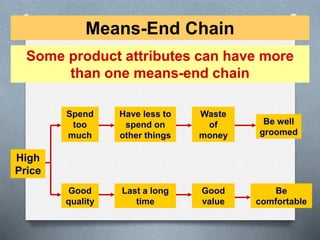
Means-End Chain 
Some product attributes can have more 
than one means-end chain 
High 
Price 
Spend 
too 
much 
Good 
quality 
Have less to 
spend on 
other things 
Last a long 
time 
Waste 
of 
money 
Good 
value 
Be well 
groomed 
Be 
comfortable
Consumers’ Product Involvement 
INVOLVEMENT 
The perceived importance or 
personal relevance of an 
object ore event.
Factors Influencing 
Involvement 
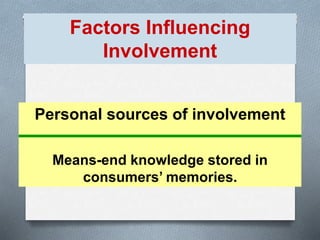
Personal sources of involvement 
Means-end knowledge stored in 
consumers’ memories.
Factors Influencing 
Involvement 
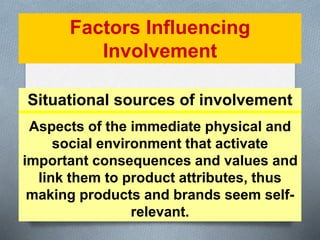
Situational sources of involvement 
Aspects of the immediate physical and 
social environment that activate 
important consequences and values and 
link them to product attributes, thus 
making products and brands seem self-relevant.
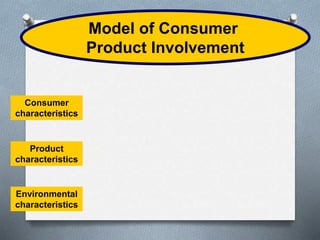
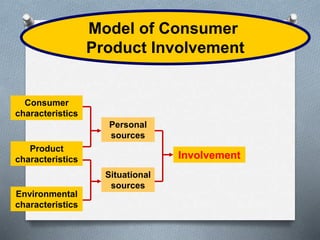
Model of Consumer 
Product Involvement 
Consumer 
characteristics 
Product 
characteristics 
Environmental 
characteristics
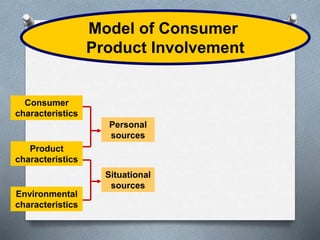
Model of Consumer 
Product Involvement 
Consumer 
characteristics 
Product 
characteristics 
Environmental 
characteristics 
Personal 
sources 
Situational 
sources
Model of Consumer 
Product Involvement 
Consumer 
characteristics 
Product 
characteristics 
Environmental 
characteristics 
Personal 
sources 
Situational 
sources 
Involvement
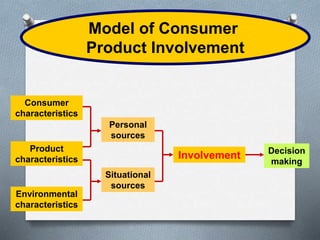
Model of Consumer 
Product Involvement 
Consumer 
characteristics 
Product 
characteristics 
Environmental 
characteristics 
Personal 
sources 
Situational 
sources 
Involvement Decision 
making

Ch 4 product knowledge & involvement

  • 1.
    Chapter 4: Consumers’Product Knowledge & Involvement
  • 2.
    Agenda O Levelsof product knowledge O Types of product knowledge O Concrete, abstract attributes O Functional/psychosocial consequences & benefits/risk O Instrumental/terminal values O Means-ends chains O Involvement O Intrinsic/situational involvement
  • 3.
    Levels of ProductKnowledge Consumers’ knowledge about products exists at various levels as if they were in a hierarchy Product Class Brand Product Form Model/Feature Abstract ------------------------------------------------- Concrete
  • 4.
    Levels of ProductKnowledge Product Class Brand Product Form Model/Feature Coffee Ground Instant Folgers Maxwell House 1-pound can 8-ounce jar
  • 5.
    Types of ProductKnowledge Bundle of Attributes Consequences Values
  • 6.
    Types of ProductKnowledge Bundle of Attributes Nike running shoes Style Comfort $169.94 Abstract Abstract Concrete Air Lock Concrete
  • 7.
    Types of ProductKnowledge Bundle of Benefits Nike running shoes “I will look cool” “run longer” Benefits: Anticipated positive consequences Risks: Potential negative consequences; functional, financial, psychosocial, physical risks. Psychosocial Functional
  • 8.
    Types of ProductKnowledge Values: Broad goals in life Be physically fit Have good health Live a long life Nike running shoes
  • 9.
    Types of Values Instrumental Values Preferred modes of conduct or ways of behaving Terminal Values Preferred states of being or broad psychological states
  • 10.
    Instrumental Values &Terminal Values Instrumental Values Ex. Competence ambitious (hard-working) independent (self-reliant) imaginative (creative) capable (competent) courageous Terminal Values Ex. Personal gratification social recognition comfortable life pleasure (enjoyable life) Sense of accomplishment
  • 11.
    Types of ProductKnowledge Bundle of Attributes Consequences Values Product Self
  • 12.
    The Means-End Chain A means-end chain is a knowledge structure that connects consumers’ meanings about product attributes, consequences, and values. The means-end chain provides a more complete understanding of consumers’ product knowledge.
  • 13.
    Means-End Chains of Product Knowledge Attributes
  • 14.
    Means-End Chains of Product Knowledge Attributes Consequences
  • 15.
    Means-End Chains of Product Knowledge Attributes Consequences Values
  • 16.
    Means-End Chain Modelof Consumer’s Product Knowledge Terminal Values Instrumental Values Psychosocial Consequences Functional Consequences Abstract Attributes Concrete Attributes
  • 17.
    Means-End Chain Example: Gillette Sensor Razor BRAND ATTRIBUTES CONSEQUENCES VALUES Sensor Razor Spring suspension for twin blades Lubricating strip Close shave Smooth, soft shave Be well groomed Be comfortable Laddering is the technique used for uncovering means-ends chains; it involves asking Why brand? What attribute? Why attribute? Why consequence? What value? Etc.
  • 18.
    Means-End Chain Someproduct attributes can have more than one means-end chain High Price Spend too much Good quality Have less to spend on other things Last a long time Waste of money Good value Be well groomed Be comfortable
  • 19.
    Consumers’ Product Involvement INVOLVEMENT The perceived importance or personal relevance of an object ore event.
  • 20.
    Factors Influencing Involvement Personal sources of involvement Means-end knowledge stored in consumers’ memories.
  • 21.
    Factors Influencing Involvement Situational sources of involvement Aspects of the immediate physical and social environment that activate important consequences and values and link them to product attributes, thus making products and brands seem self-relevant.
  • 22.
    Model of Consumer Product Involvement Consumer characteristics Product characteristics Environmental characteristics
  • 23.
    Model of Consumer Product Involvement Consumer characteristics Product characteristics Environmental characteristics Personal sources Situational sources
  • 24.
    Model of Consumer Product Involvement Consumer characteristics Product characteristics Environmental characteristics Personal sources Situational sources Involvement
  • 25.
    Model of Consumer Product Involvement Consumer characteristics Product characteristics Environmental characteristics Personal sources Situational sources Involvement Decision making