CFD ANALYSIS OF DOUBLE
PIPE HEAT
EXCHANGER
S.EZHIL RAJ
M.E –THERMAL( R & AC)
1
CONTENT
 INTRODUCTION
 COMPARISION
 GEOMETRY
 MESHING
 RESULT
 CONCLUSION
2
INTRODUCTION
 Heat exchangers are a device that exchange
the heat between two fluids of different
temperatures that are separated by a solid
wall.
 In a heat exchanger forced convection allows
for the transfer of heat of one moving stream
to another moving stream.
 With convection as heat is transferred through
the pipe wall and transfers heat. This
maintains a temperature gradient between the
two fluids.
3
DOUBLE PIPE HEAT
EXCHANGER
 A double pipe heat exchanger is one of the
simplest form of Heat Exchangers.
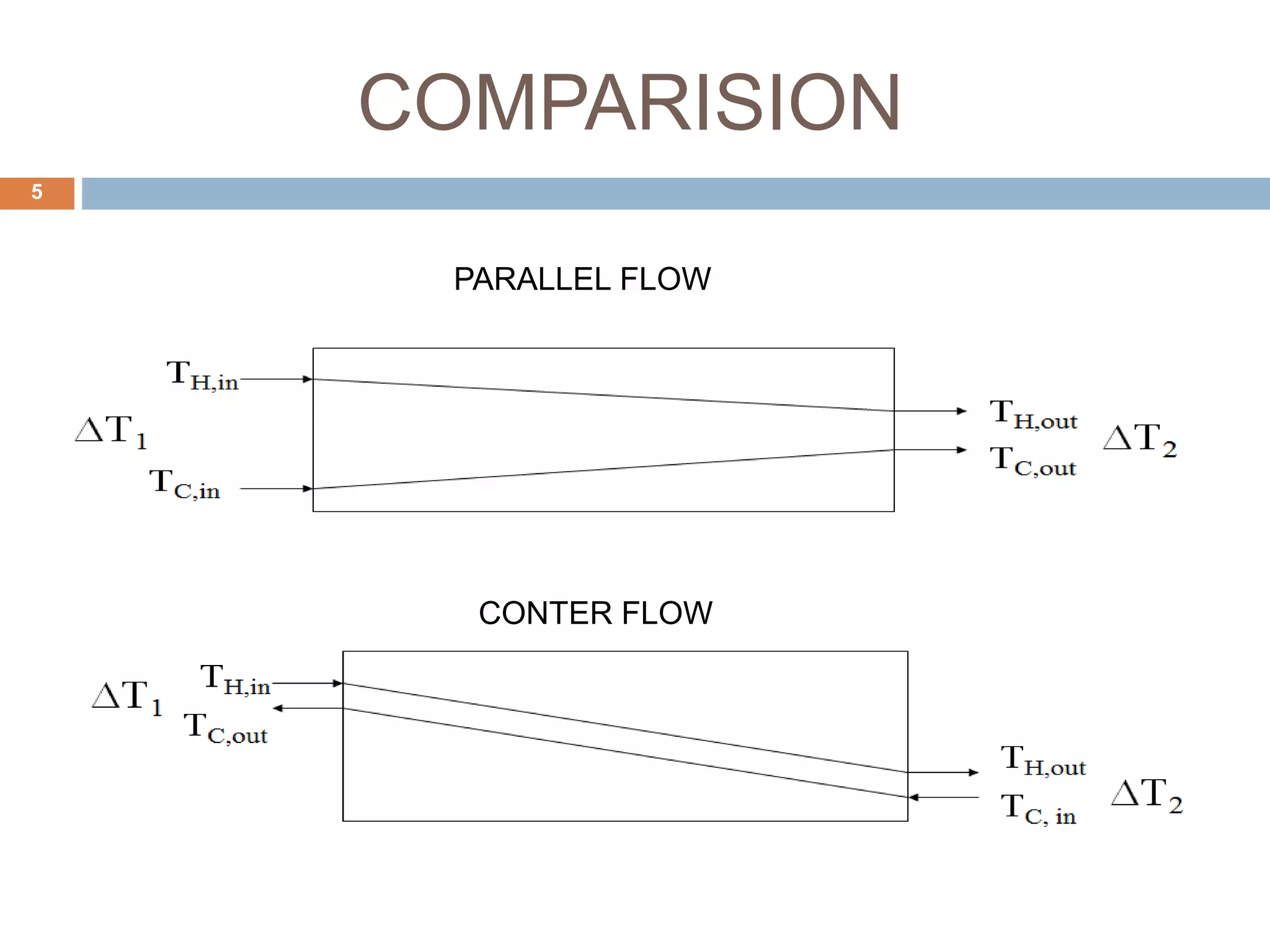
 There are two flow configurations: co-current is
when the flow of the two streams is in the
same direction, counter current is when the
flow of the streams is in opposite directions.
 The major use of these HX is sensible cooling
or heating applications
4
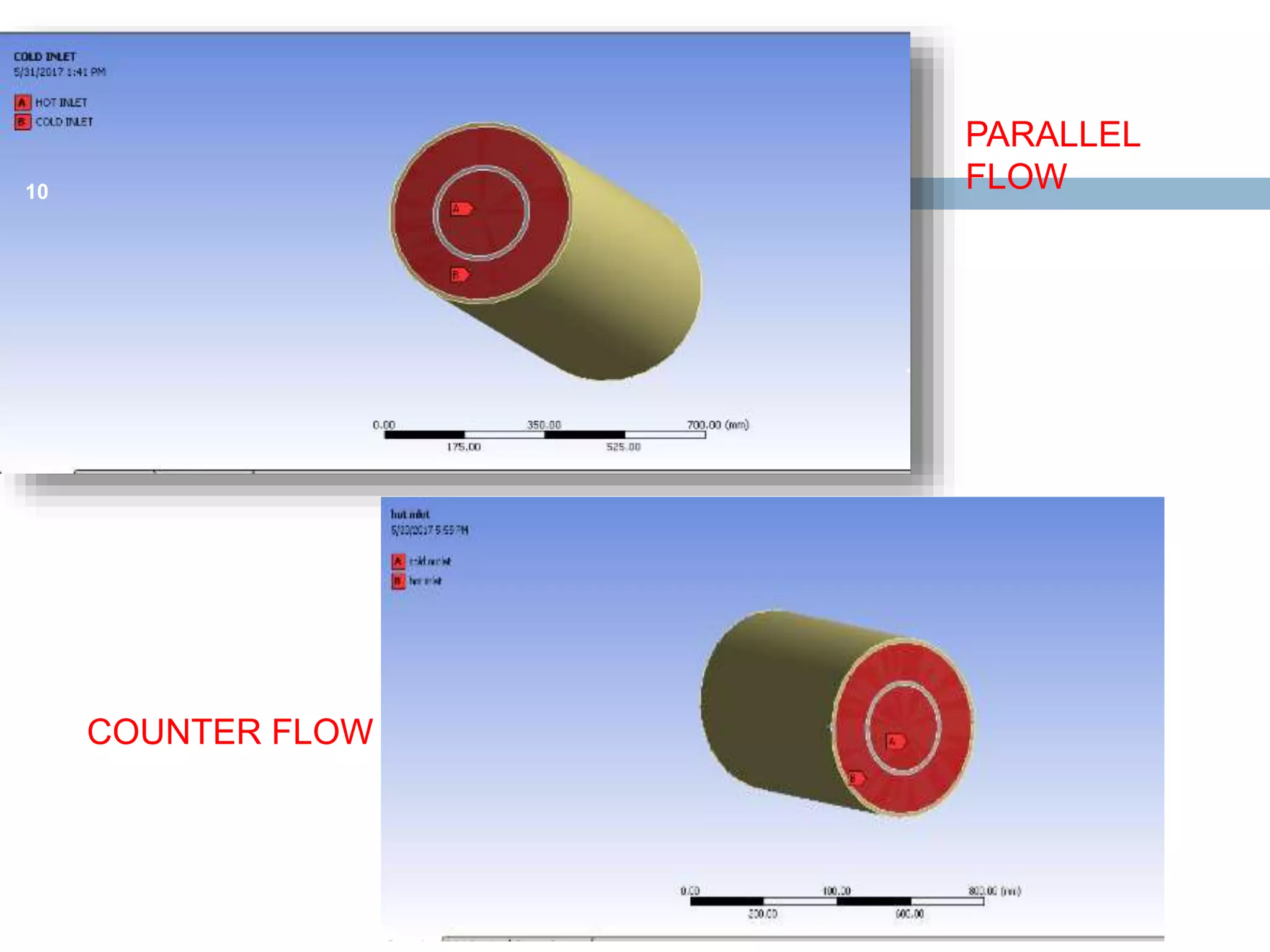
COMPARISION
PARALLEL FLOW
CONTER FLOW
5
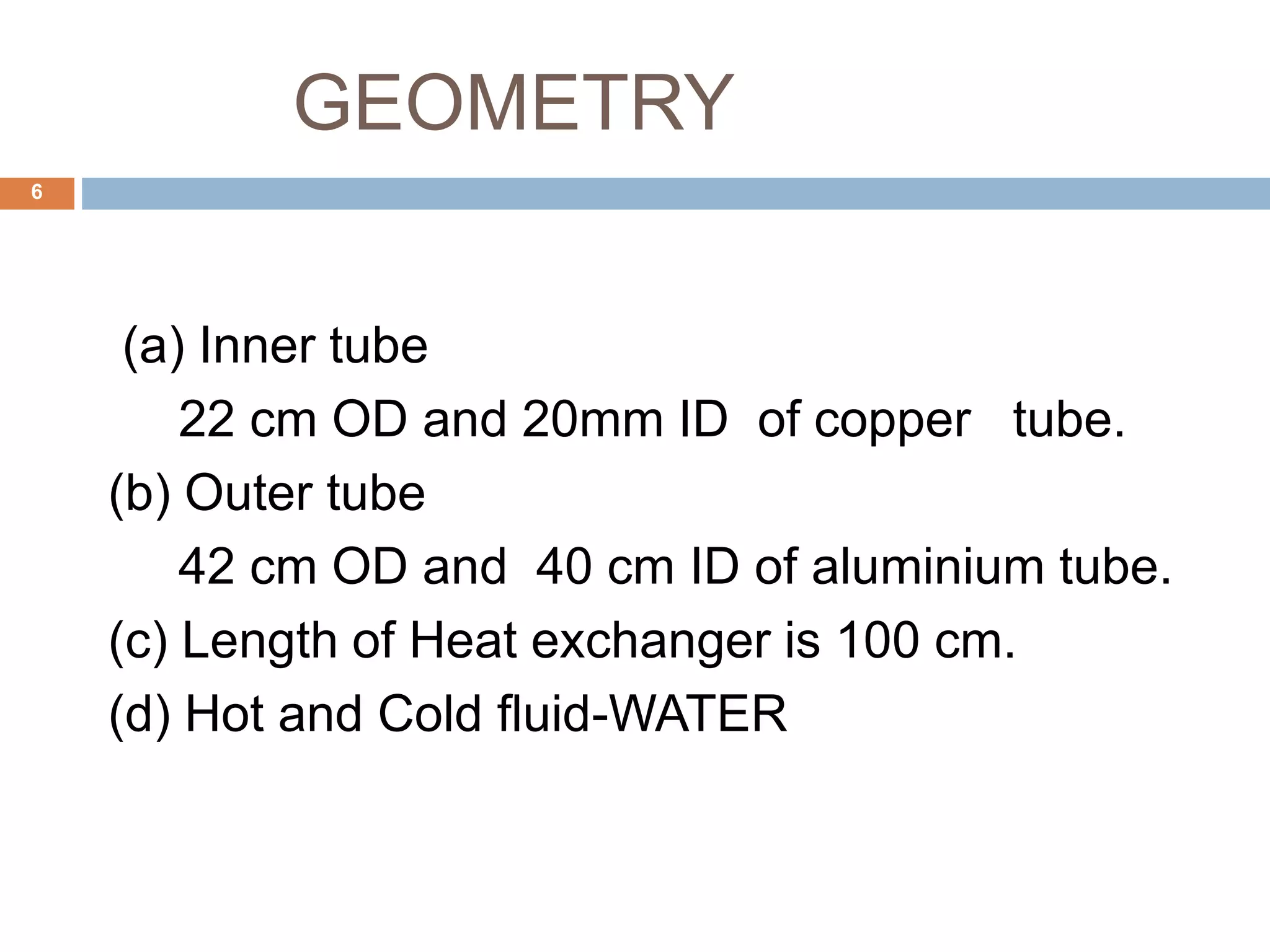
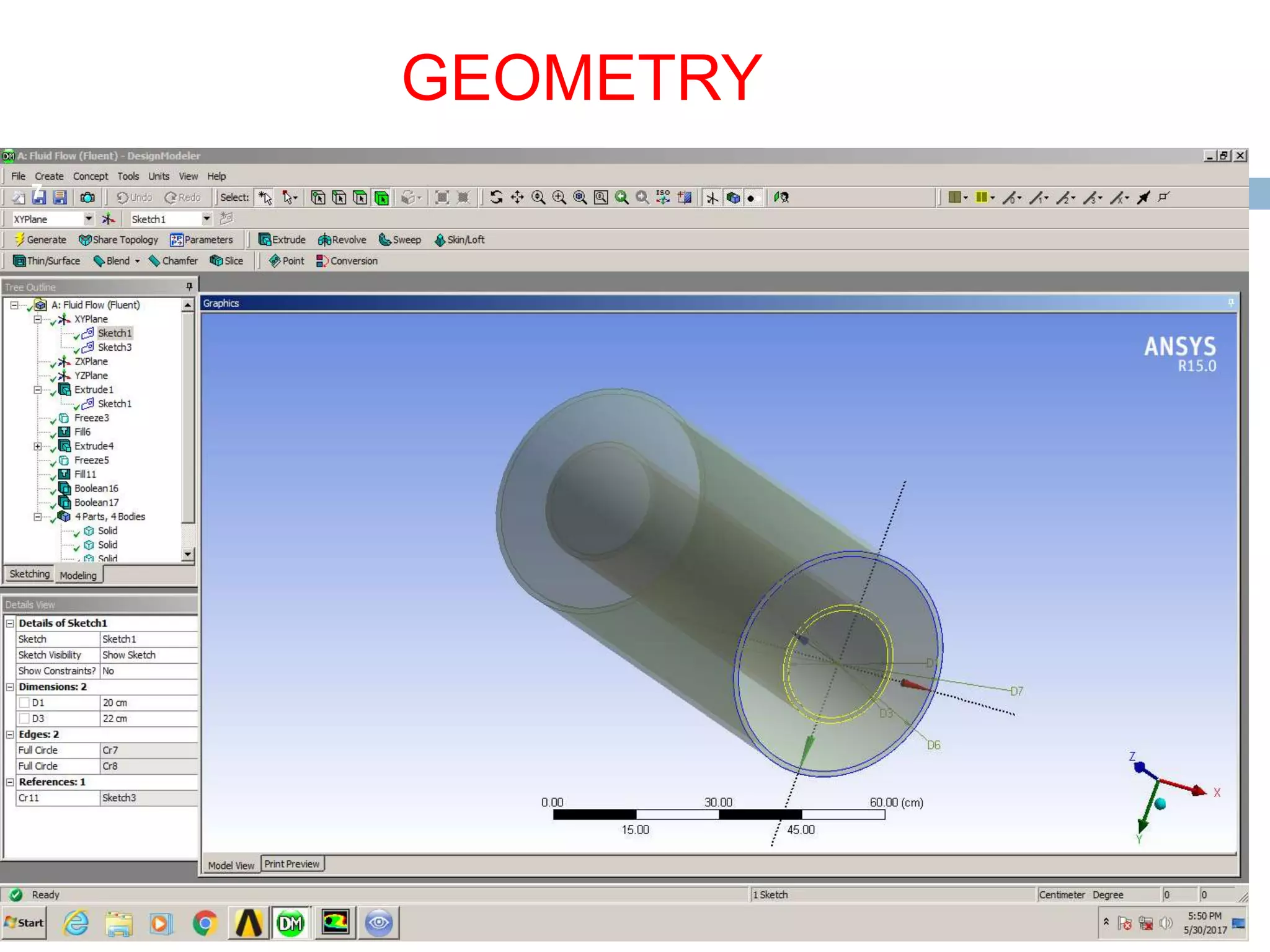
GEOMETRY
(a) Inner tube
22 cm OD and 20mm ID of copper tube.
(b) Outer tube
42 cm OD and 40 cm ID of aluminium tube.
(c) Length of Heat exchanger is 100 cm.
(d) Hot and Cold fluid-WATER
6
GEOMETRY
7
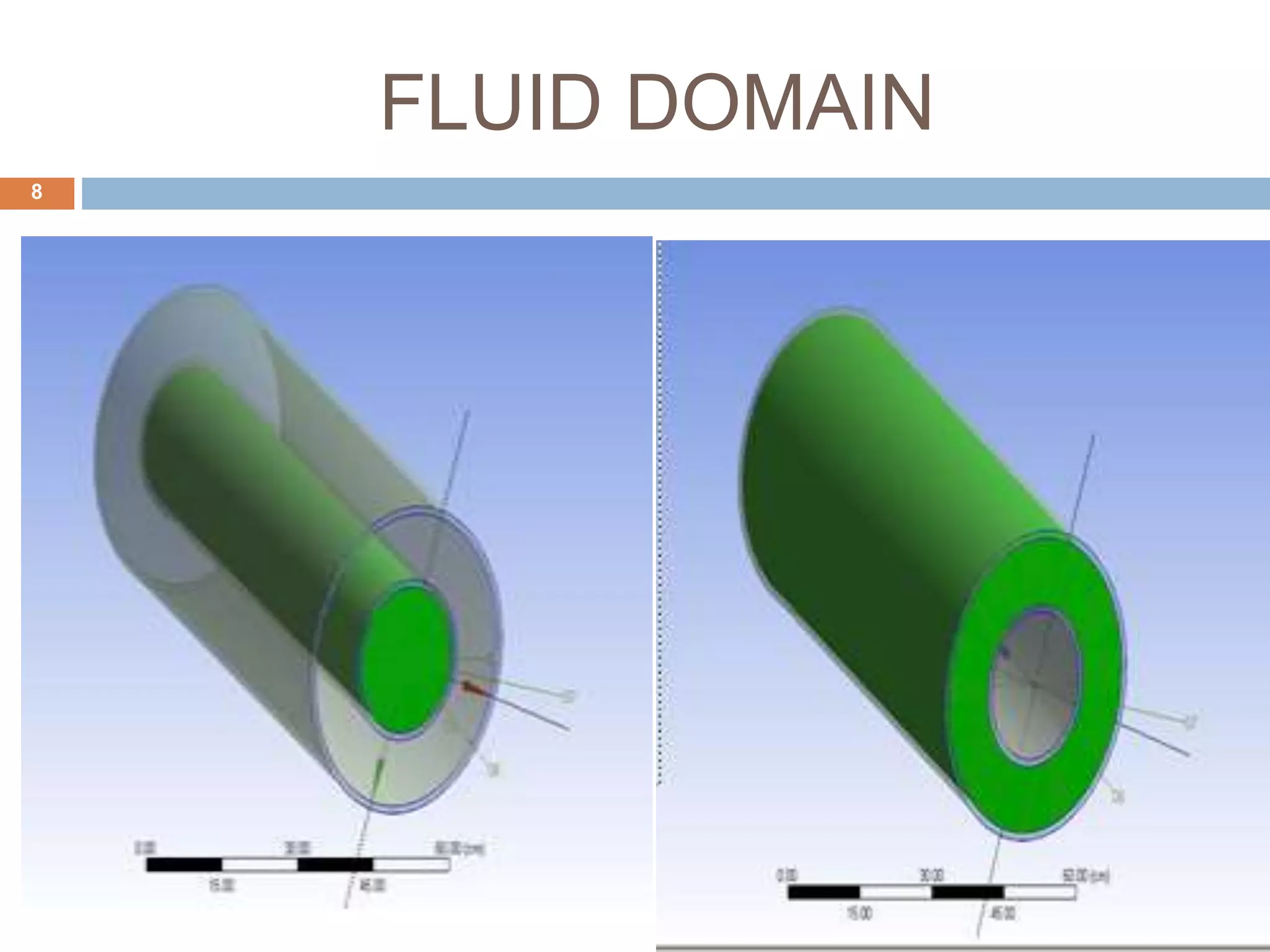
FLUID DOMAIN
8
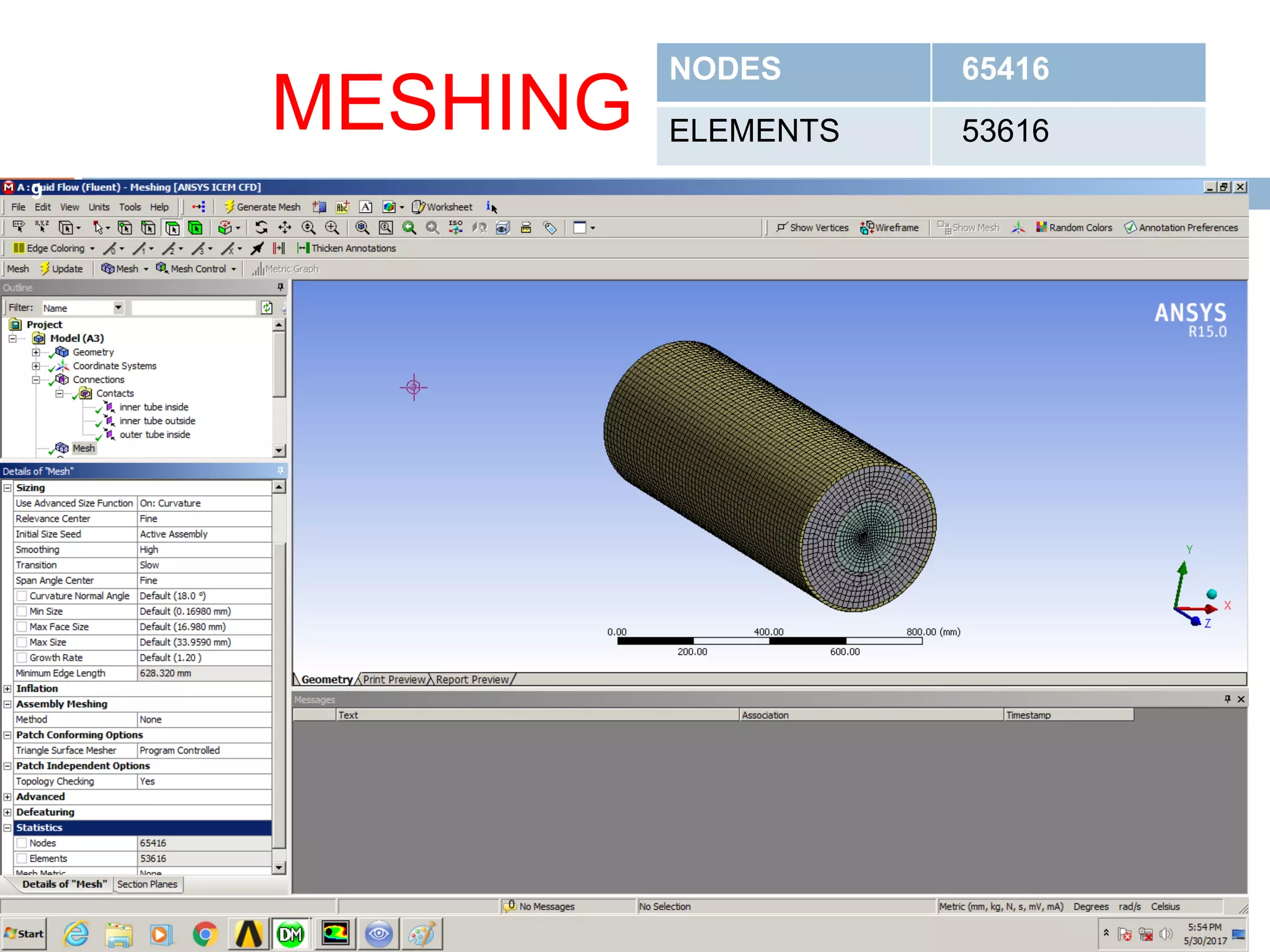
MESHING
NODES 65416
ELEMENTS 53616
9
PARALLEL
FLOW
COUNTER FLOW
10
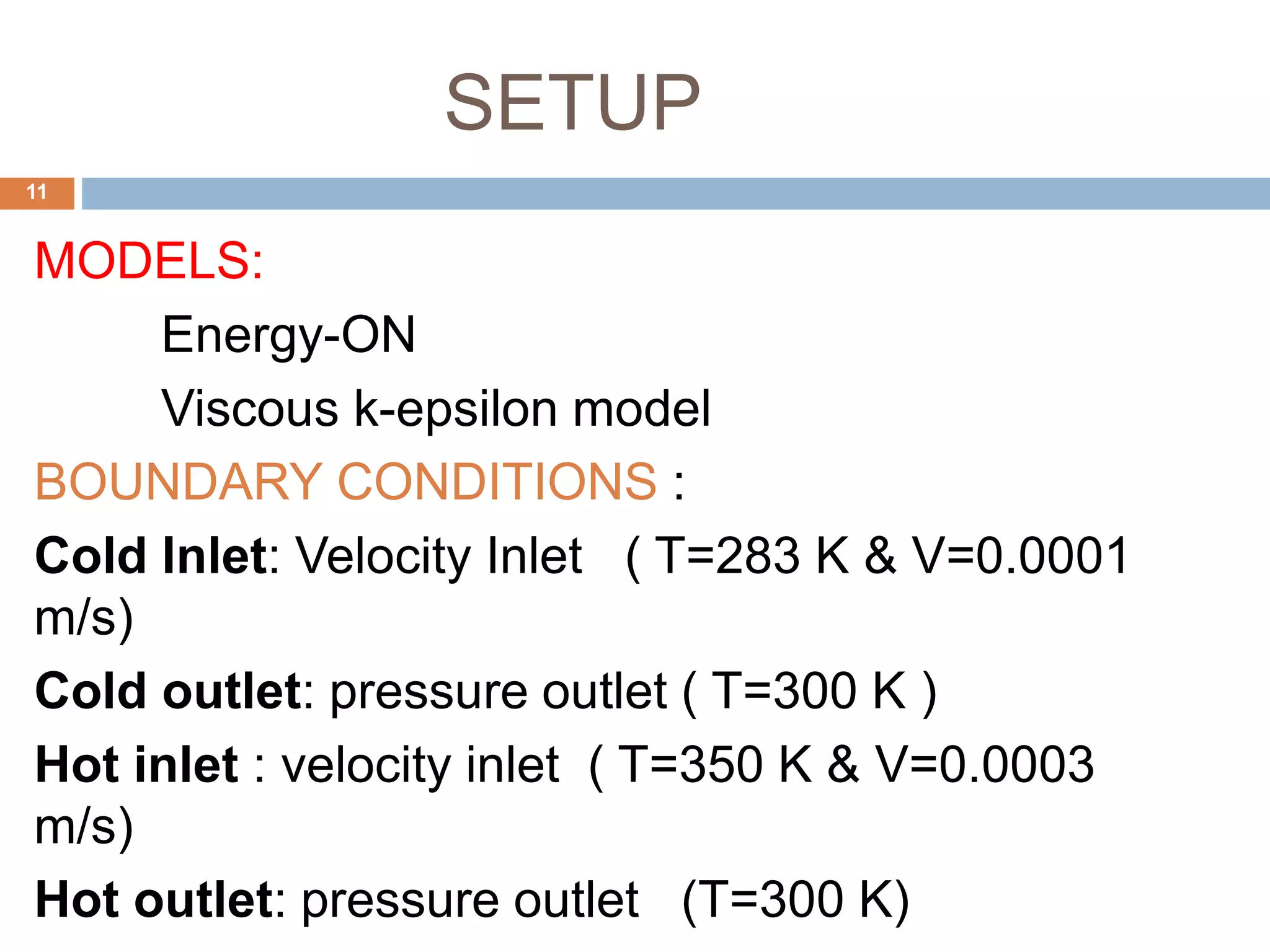
SETUP
MODELS:
Energy-ON
Viscous k-epsilon model
BOUNDARY CONDITIONS :
Cold Inlet: Velocity Inlet ( T=283 K & V=0.0001
m/s)
Cold outlet: pressure outlet ( T=300 K )
Hot inlet : velocity inlet ( T=350 K & V=0.0003
m/s)
Hot outlet: pressure outlet (T=300 K)
11
12
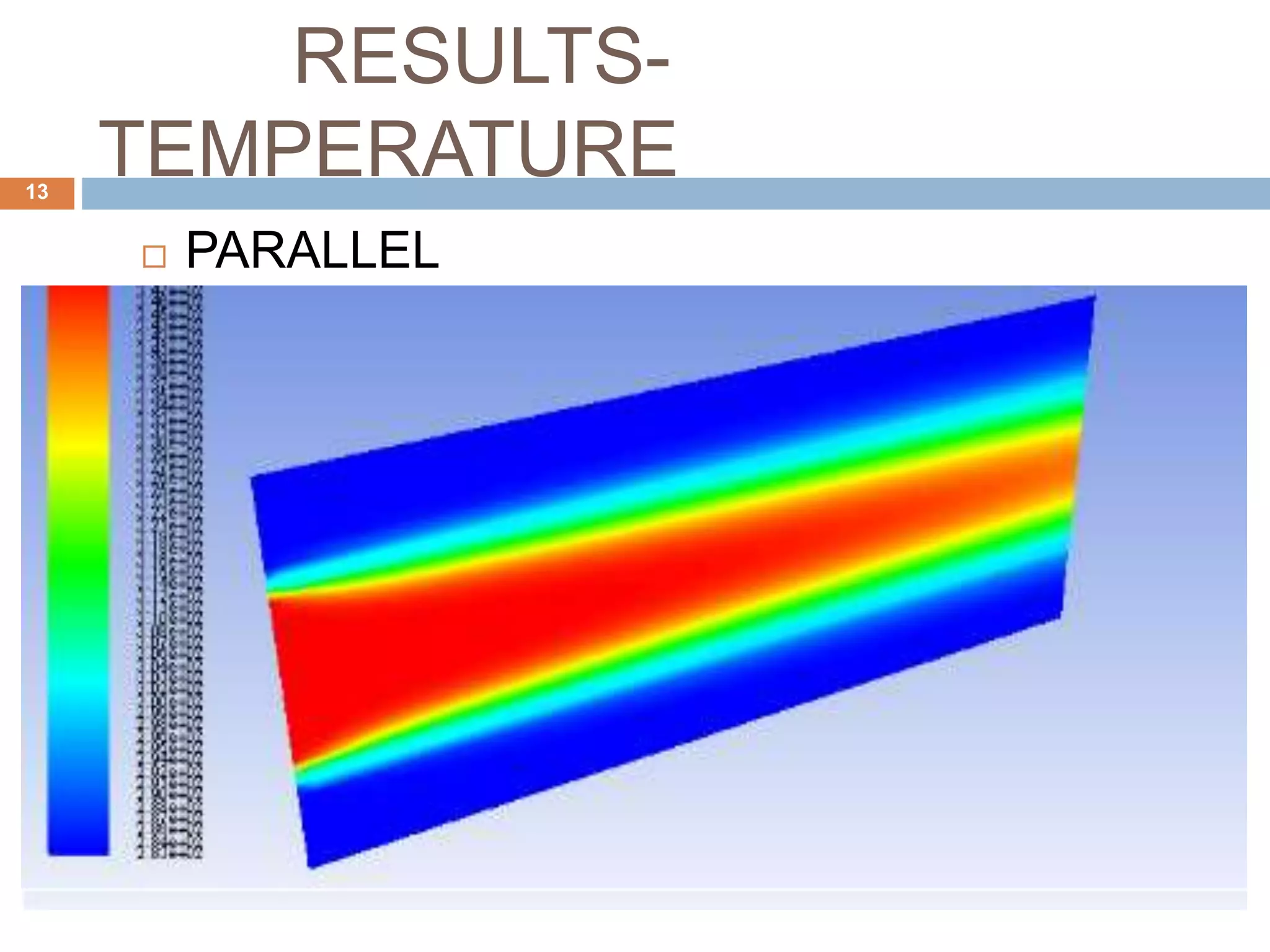
RESULTS-
TEMPERATURE
 PARALLEL
13
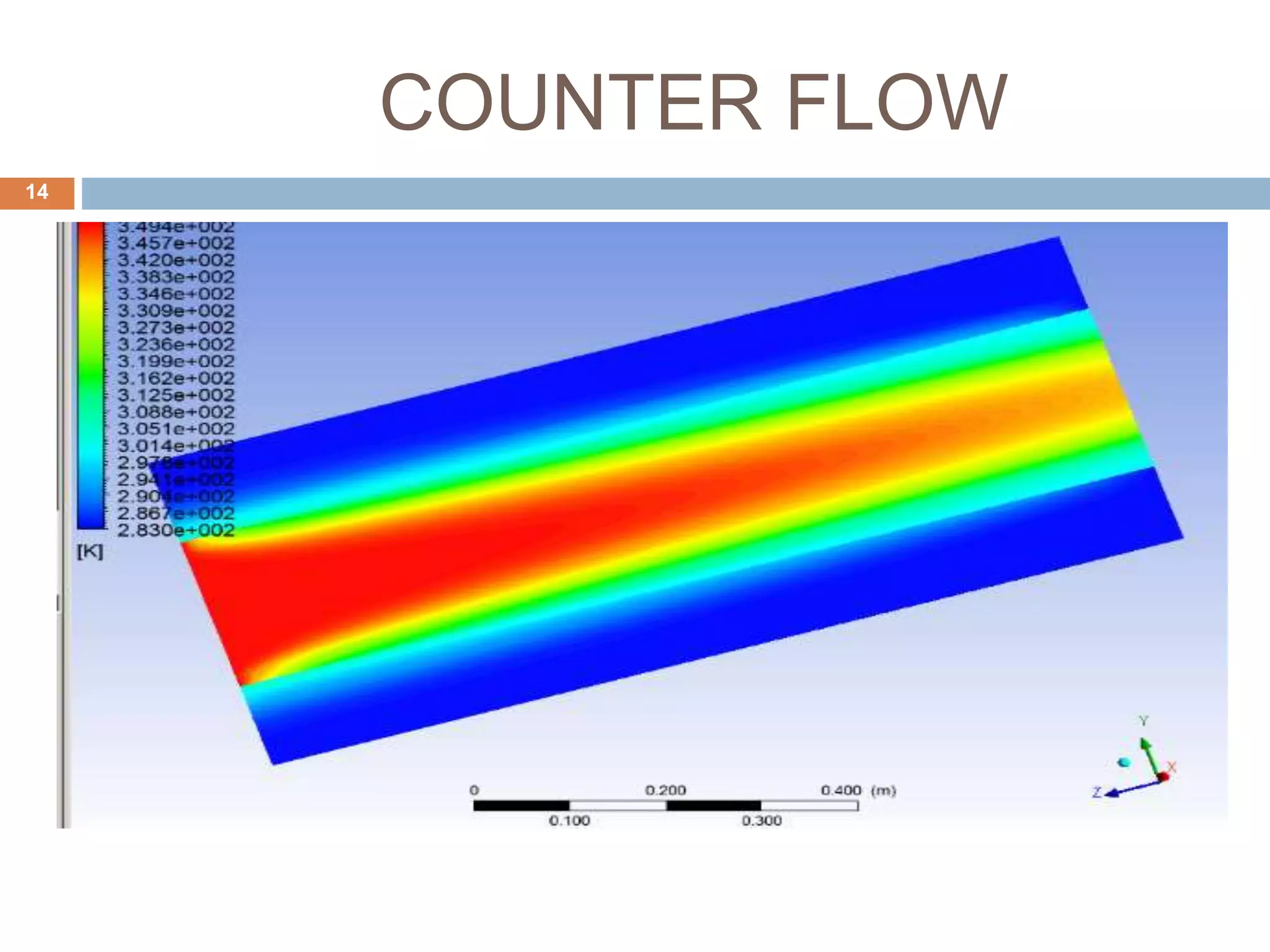
COUNTER FLOW
14
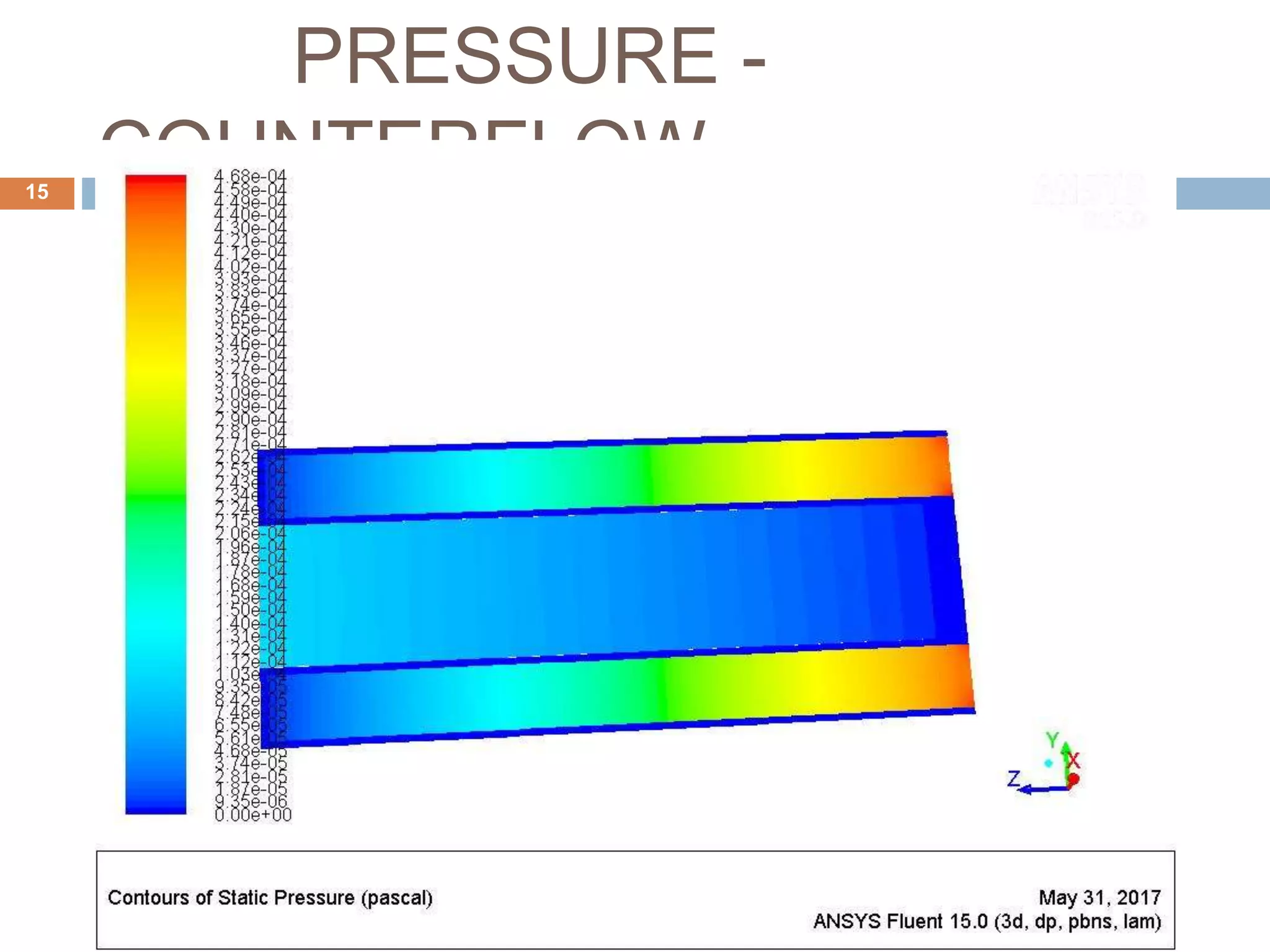
PRESSURE -
COUNTERFLOW15
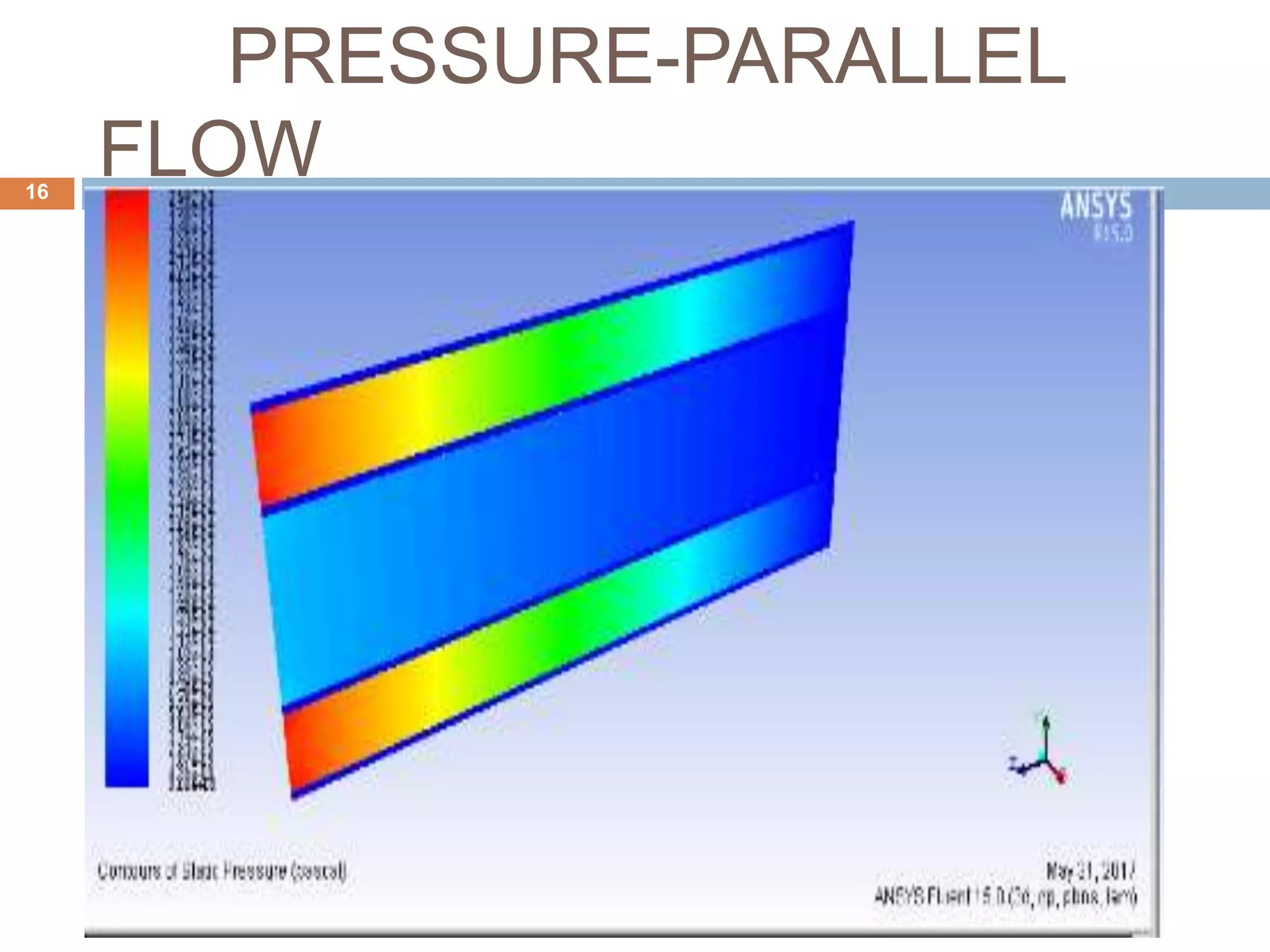
PRESSURE-PARALLEL
FLOW16
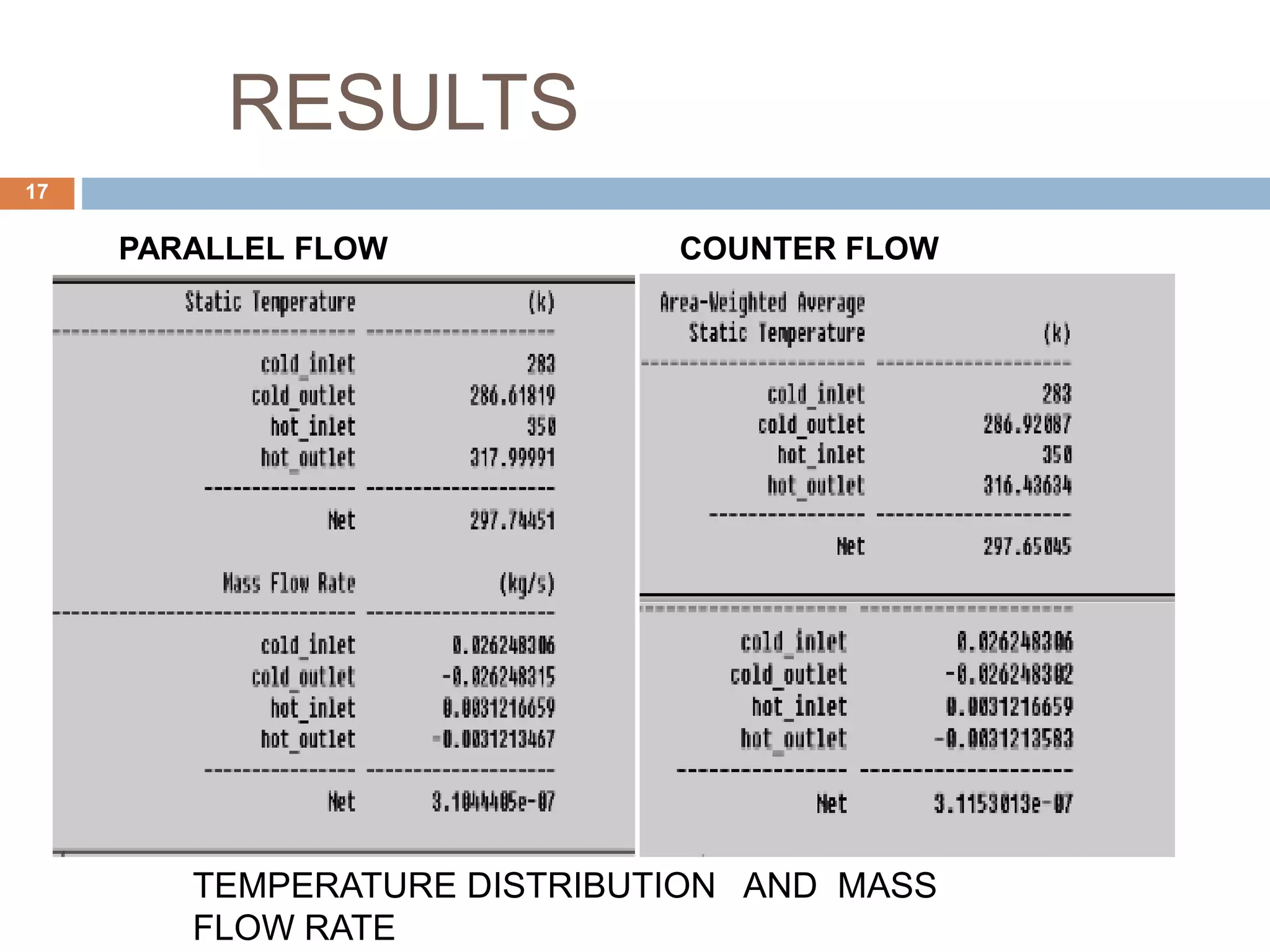
RESULTS
PARALLEL FLOW COUNTER FLOW
TEMPERATURE DISTRIBUTION AND MASS
FLOW RATE
17
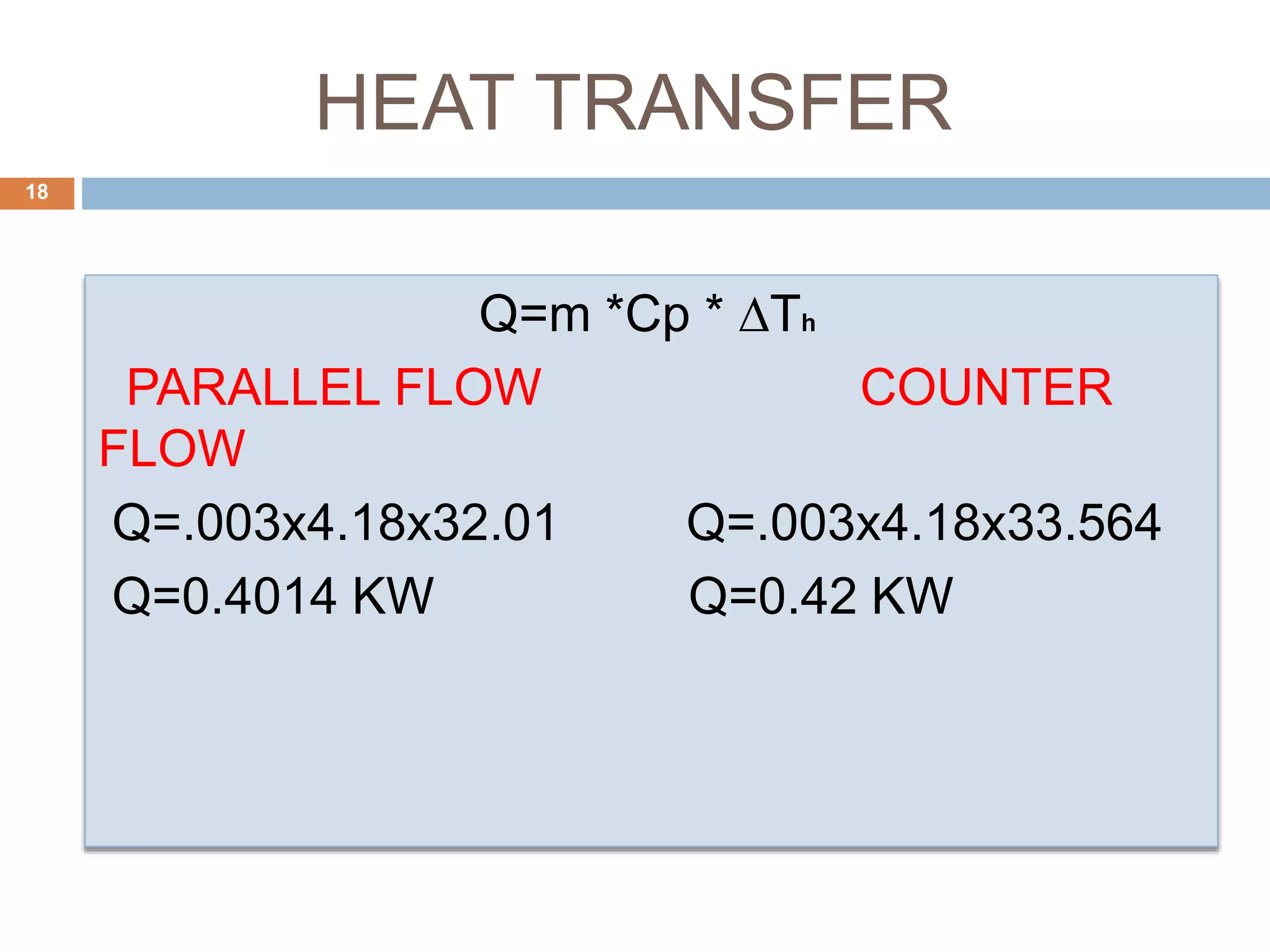
HEAT TRANSFER
Q=m *Cp * ∆Th
PARALLEL FLOW COUNTER
FLOW
Q=.003x4.18x32.01 Q=.003x4.18x33.564
Q=0.4014 KW Q=0.42 KW
18
CONCLUSION
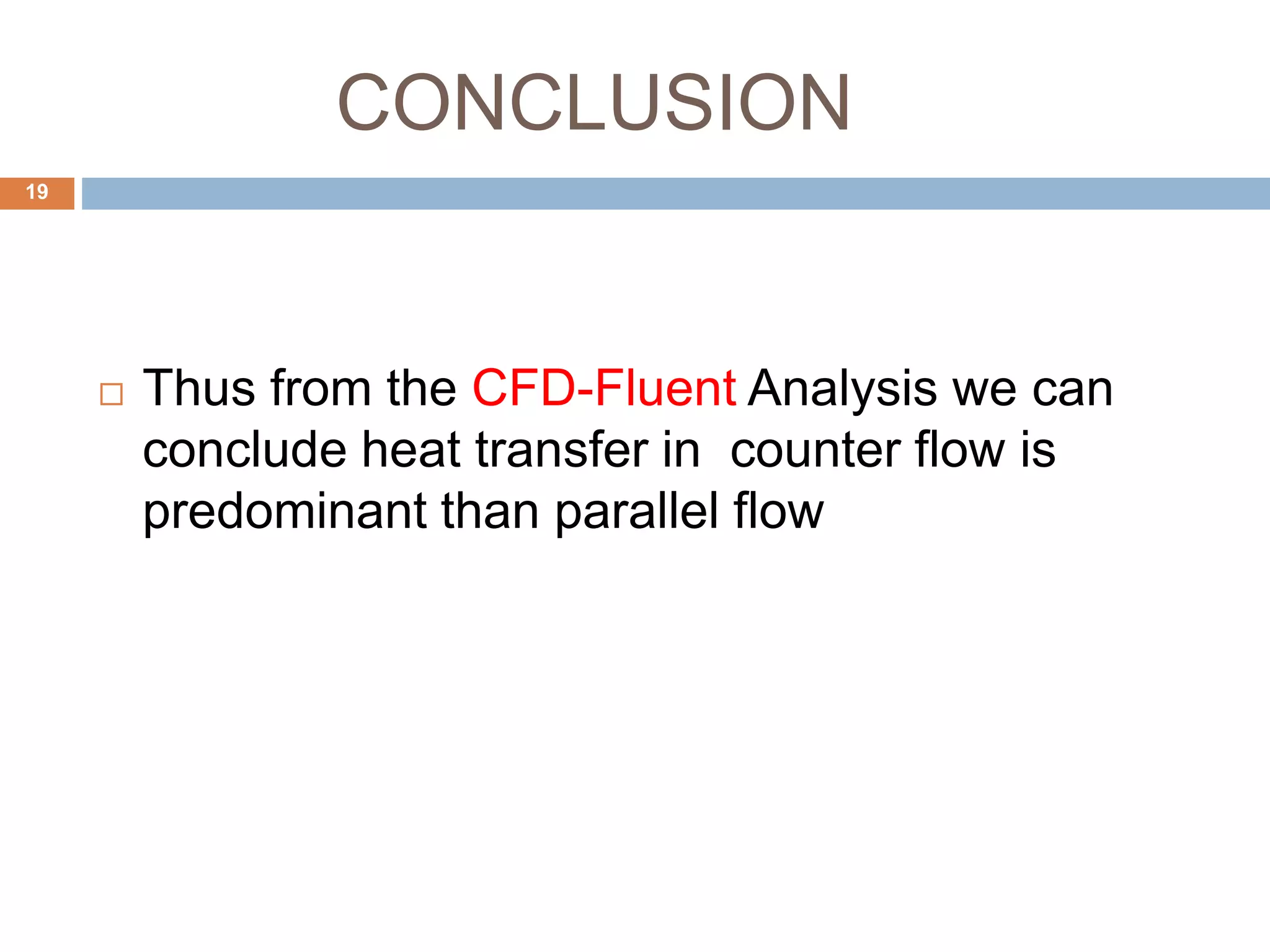
 Thus from the CFD-Fluent Analysis we can
conclude heat transfer in counter flow is
predominant than parallel flow
19

CFD ANALYSIS OF DOUBLE PIPE HEAT EXCHANGER