Ceramics
Creating a ceramic vessel
Clay
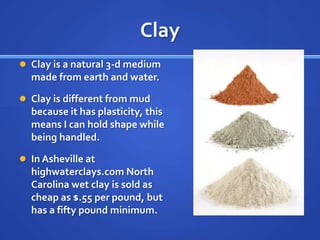
 Clay is a natural 3-d medium

made from earth and water.
 Clay is different from mud

because it has plasticity, this
means I can hold shape while
being handled.
 In Asheville at

highwaterclays.com North
Carolina wet clay is sold as
cheap as $.55 per pound, but
has a fifty pound minimum.
Basic Terms
 Ceramics – objects that

permanently retain their
shape when heated to the
necessary temperature.
 Pottery – Moist clay shaped

into utilitarian objects such as
bowls, cups, plates, etc. then
hardened by heat.
Basic Terms Continued
 Wedge – A way of improving

the workability of the clay by
reforming the mixture to be
homogeneous by evening the
texture and eliminating the
air bubbles.
Basic Terms Continued
 Kiln – may also be pronounced kill, is a specialized oven design

to heat clay to the high temperatures needed to change it’s
chemical make-up.
Basic Terms Continued

 Fire – Heating pottery to a temperature high enough to

change it’s chemical make-up to render it a final product.
Hand Building Methods
 Pinch pot
 Slab Building
 Coil Building
Hand Building Methods
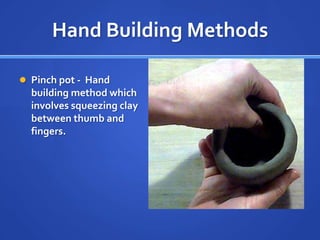
 Pinch pot - Hand

building method which
involves squeezing clay
between thumb and
fingers.
Hand Building Methods
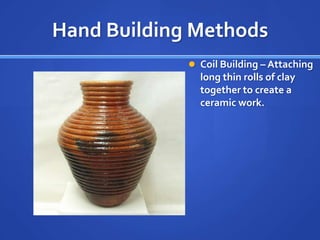
 Coil Building – Attaching

long thin rolls of clay
together to create a
ceramic work.
Hand Building Methods
 Slab Building - Clay

building technique where
thin sheets of clay are
attached together to create
a ceramic work.
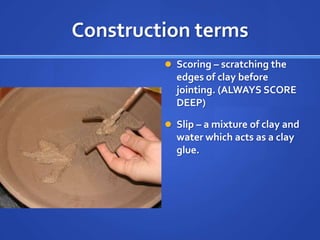
Construction terms
 Scoring – scratching the

edges of clay before
jointing. (ALWAYS SCORE
DEEP)
 Slip – a mixture of clay and

water which acts as a clay
glue.
Clay Stages
 Greenware - moist workable unfired clay.
 Leatherhard - stage of clay where joining should happen, at

this point clay is not moldable but may still be worked with.

 Bone Dry - this is as dry as the clay gets without firing it. It is

now ready for firing.
Clay Stages
 Bisqueware – clay which has

gone through a low fire in a
kiln, this can not be recycled,
will not yet hold water.
 Glazeware - clay which has

been glazed and fired at a
high temperature, now is a
finished product.
 Glaze - a liquid glasslike

substance which when fired
creates a glasslike coating on
a ceramic artwork.

Ceramics

  • 1.
  • 2.
    Clay  Clay isa natural 3-d medium made from earth and water.  Clay is different from mud because it has plasticity, this means I can hold shape while being handled.  In Asheville at highwaterclays.com North Carolina wet clay is sold as cheap as $.55 per pound, but has a fifty pound minimum.
  • 3.
    Basic Terms  Ceramics– objects that permanently retain their shape when heated to the necessary temperature.  Pottery – Moist clay shaped into utilitarian objects such as bowls, cups, plates, etc. then hardened by heat.
  • 4.
    Basic Terms Continued Wedge – A way of improving the workability of the clay by reforming the mixture to be homogeneous by evening the texture and eliminating the air bubbles.
  • 5.
    Basic Terms Continued Kiln – may also be pronounced kill, is a specialized oven design to heat clay to the high temperatures needed to change it’s chemical make-up.
  • 6.
    Basic Terms Continued Fire – Heating pottery to a temperature high enough to change it’s chemical make-up to render it a final product.
  • 7.
    Hand Building Methods Pinch pot  Slab Building  Coil Building
  • 8.
    Hand Building Methods Pinch pot - Hand building method which involves squeezing clay between thumb and fingers.
  • 9.
    Hand Building Methods Coil Building – Attaching long thin rolls of clay together to create a ceramic work.
  • 10.
    Hand Building Methods Slab Building - Clay building technique where thin sheets of clay are attached together to create a ceramic work.
  • 11.
    Construction terms  Scoring– scratching the edges of clay before jointing. (ALWAYS SCORE DEEP)  Slip – a mixture of clay and water which acts as a clay glue.
  • 12.
    Clay Stages  Greenware- moist workable unfired clay.  Leatherhard - stage of clay where joining should happen, at this point clay is not moldable but may still be worked with.  Bone Dry - this is as dry as the clay gets without firing it. It is now ready for firing.
  • 13.
    Clay Stages  Bisqueware– clay which has gone through a low fire in a kiln, this can not be recycled, will not yet hold water.  Glazeware - clay which has been glazed and fired at a high temperature, now is a finished product.  Glaze - a liquid glasslike substance which when fired creates a glasslike coating on a ceramic artwork.