CELL SIGNALING
BY KANCHAN YADAV
MSc Agril. Biotechnology
RPCAU, Pusa, Bihar
Introduction
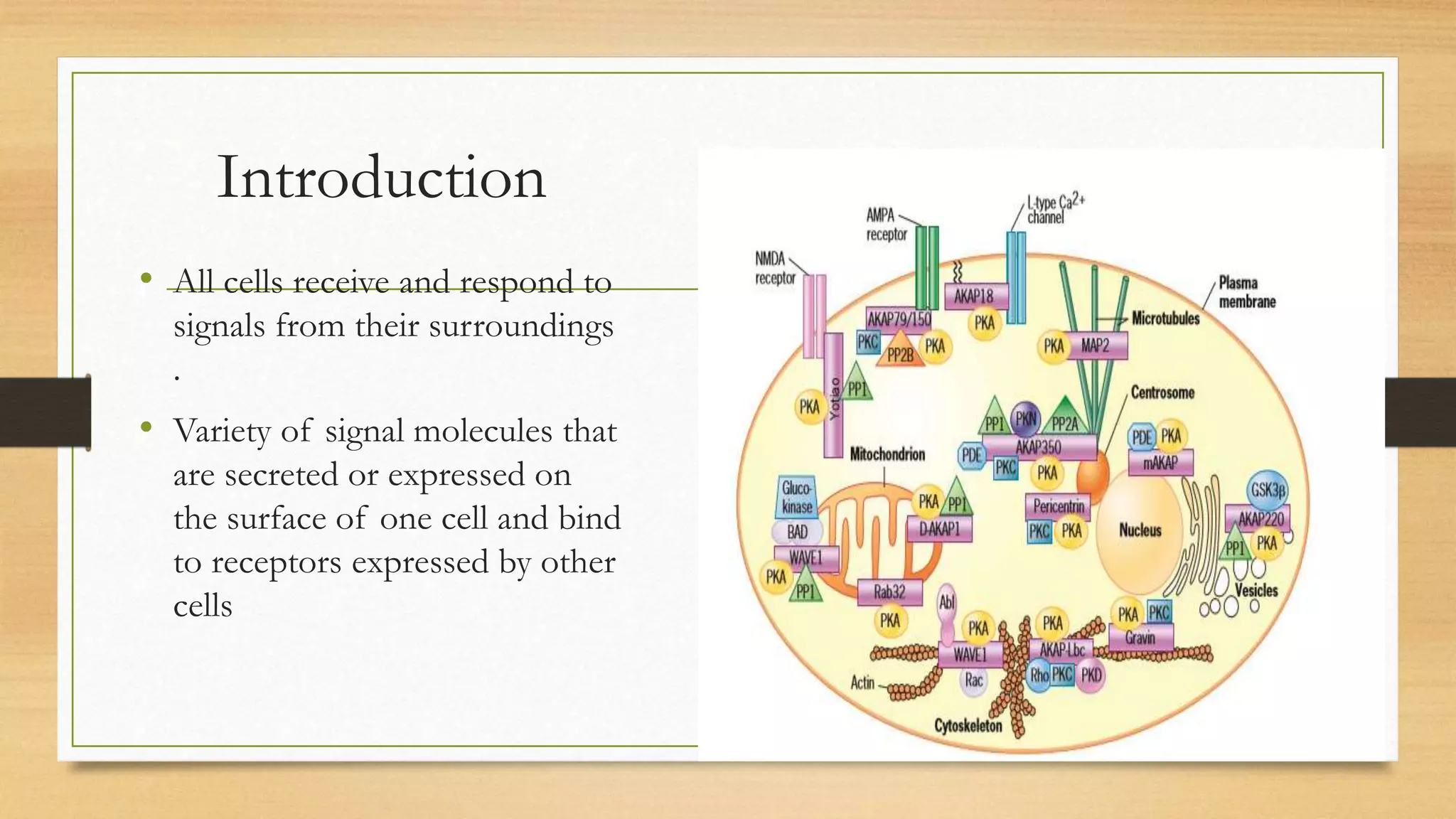
• All cells receive and respond to
signals from their surroundings
.
• Variety of signal molecules that
are secreted or expressed on
the surface of one cell and bind
to receptors expressed by other
cells
Extracellular signaling involves following steps :
Synthesis and release of the signaling molecule by the signaling cell
Transport of the signal to the target cell
Binding of the signal by a specific receptor leading to its activation
Initiation of signal transduction pathways
Extracellular signaling by signal molecules can
be classified into four categories
• Endocrine signaling
• Paracrine signaling
• Autocrine signaling
• Juxtacrine signaling
Endocrine signaling
• Signaling molecules act on target cells distantly located from their site of
synthesis
• It is a long range signaling
• Signal molecule transported by the blood stream
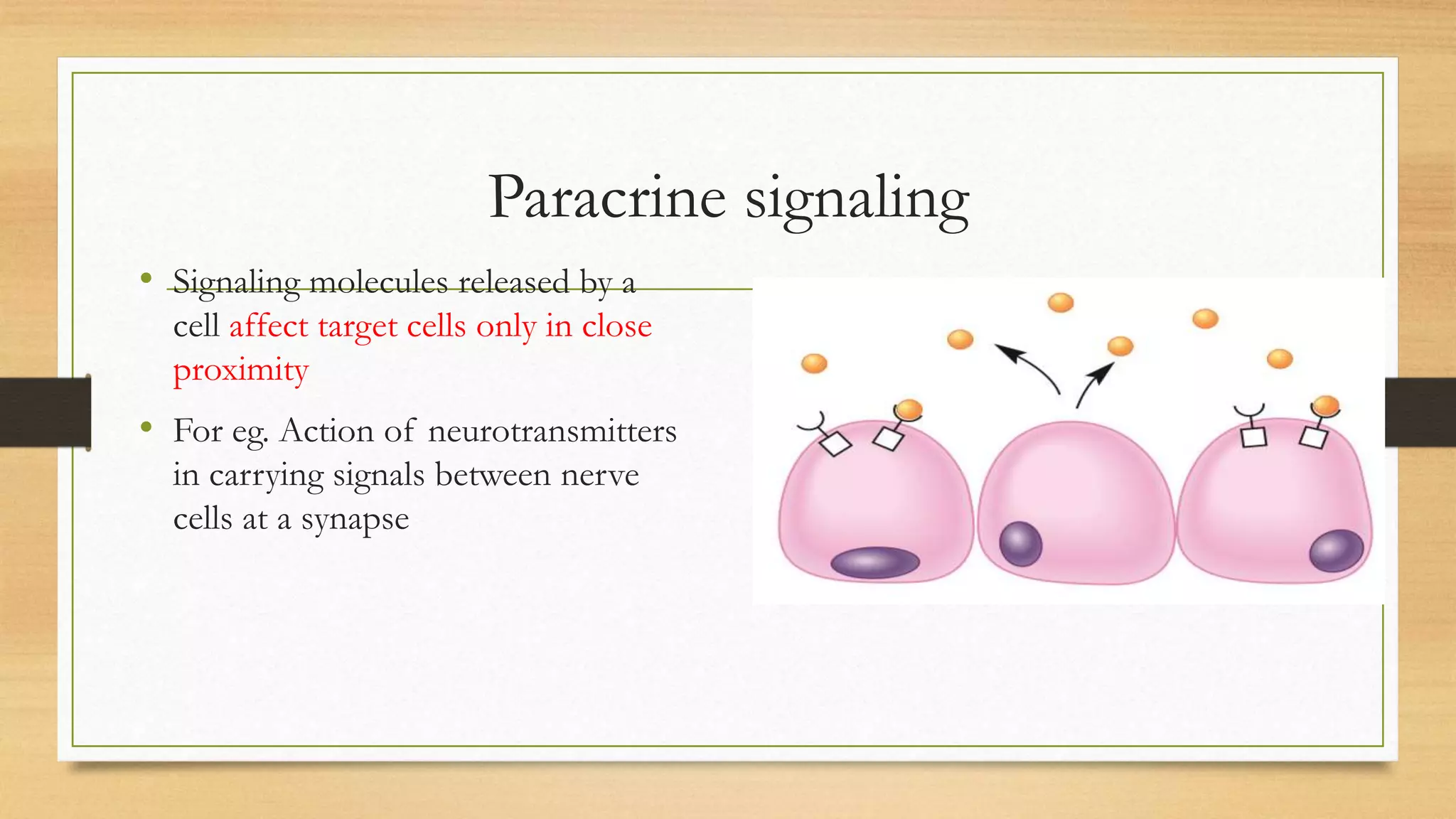
Paracrine signaling
• Signaling molecules released by a
cell affect target cells only in close
proximity
• For eg. Action of neurotransmitters
in carrying signals between nerve
cells at a synapse
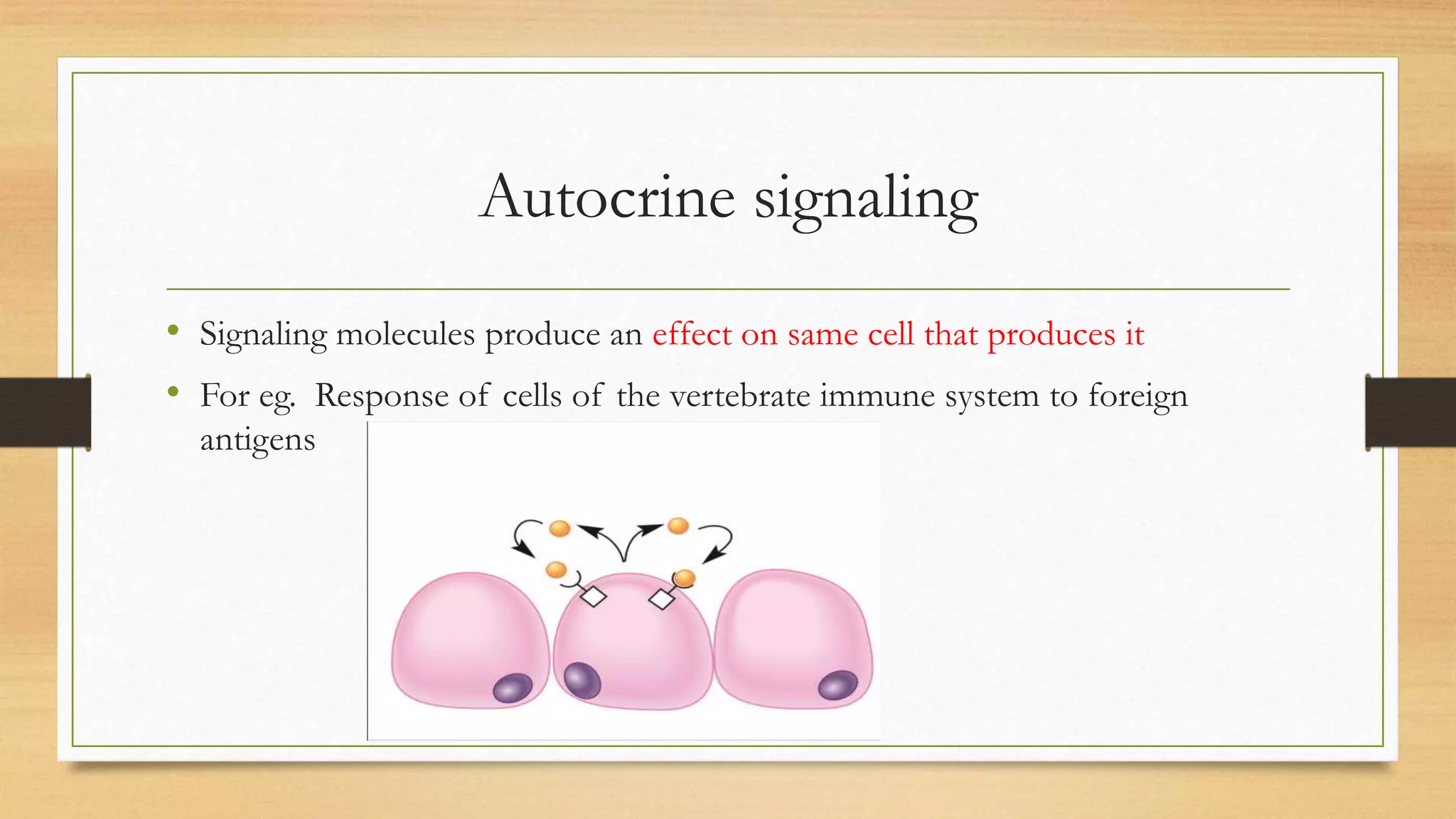
Autocrine signaling
• Signaling molecules produce an effect on same cell that produces it
• For eg. Response of cells of the vertebrate immune system to foreign
antigens
Juxtacrine signaling
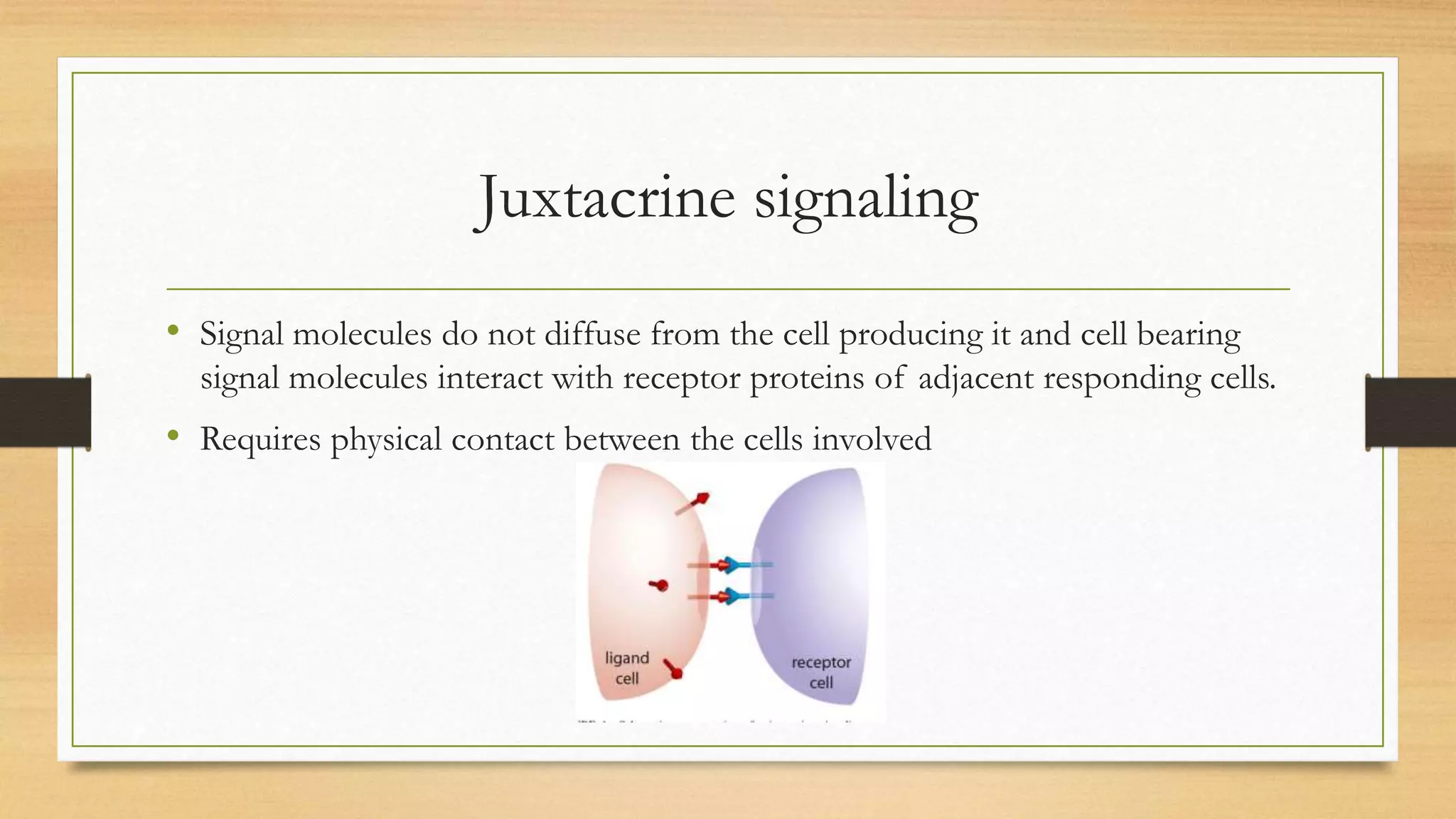
• Signal molecules do not diffuse from the cell producing it and cell bearing
signal molecules interact with receptor proteins of adjacent responding cells.
• Requires physical contact between the cells involved
Signal molecules
Signal molecules are chemically heterogenous compounds
Two categories : membrane bound and secretory signal molecules
ENDOCRINE
SIGNAL
MOLECULES
PARACRINE
SIGNAL
MOLECULES
AUTOCRINE
SIGNAL
MOLECULES
RECEPTOR MOLECULE
• Cellular response to a particular extracellular signal molecule depends on its binding
to a specific receptor located on the surface of a target cell or in its nucleus or
cytosol.
• Receptors are chemically protein or glycoprotein molecules which bind to signaling
molecules(termed ligands)
• Binding of a ligand to its receptor causes a conformational change in the receptor
that initiates a sequence of reactions leading to a specific cellular response
• Based on location, receptors are classified into two broad categories- intracellular
receptors and cell surface receptors.
Cell surface receptors
• All hydrophilic signaling mlecules as well as some lipophilic molecules ,bind
to the cell surface receptor proteins
• These act as signal transducers to produce intracellular messengers
• These messengers stimulate the sensors and effectors responsible for
activating cellular responses
• Most cell surface receptor proteins belong to one of the three classes:
1. G Protein Coupled Receptors (GPCRs)
2. Ion channel receptors
3. Enzyme linked receptors
GPCR and G PROTEIN
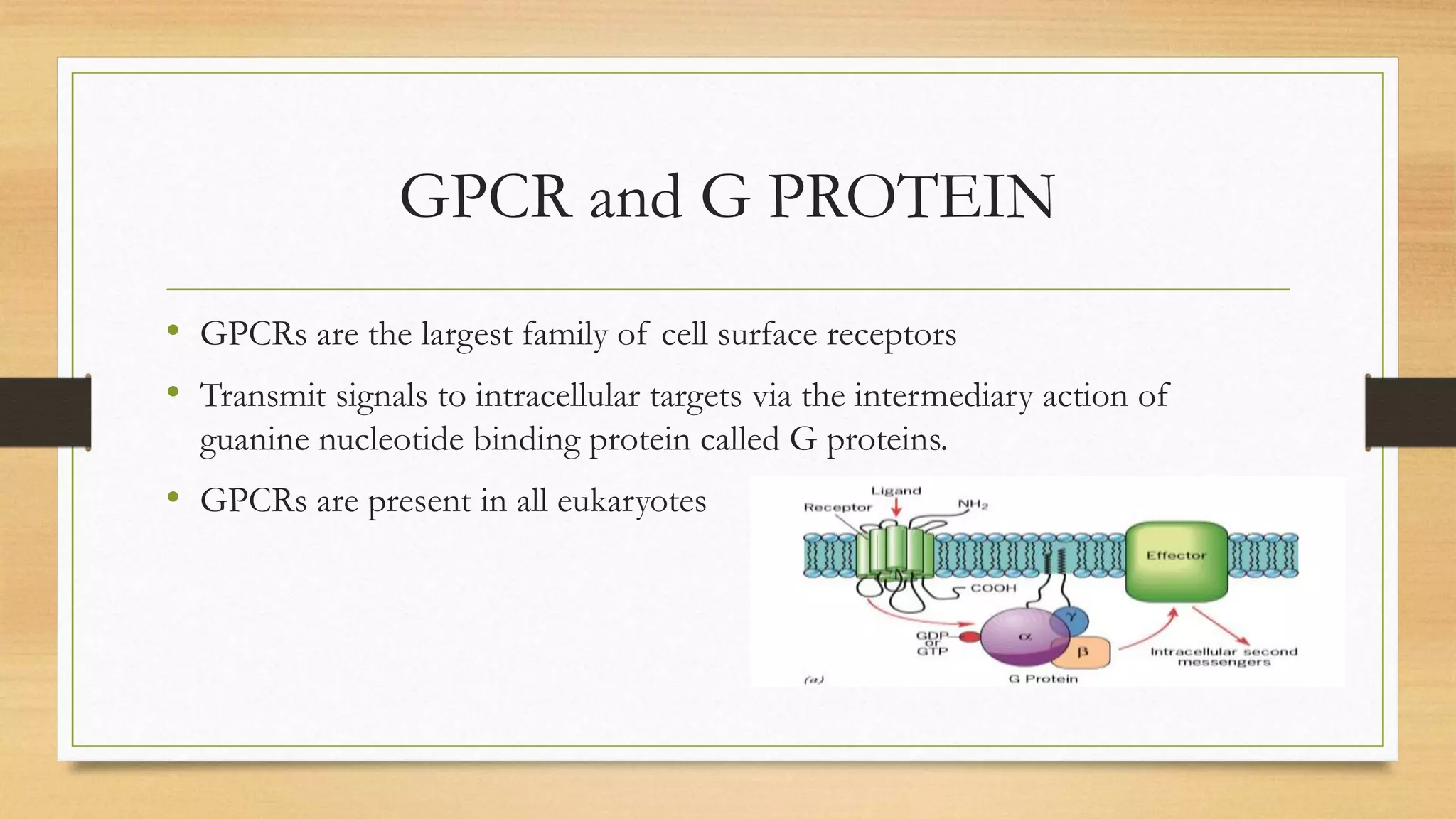
• GPCRs are the largest family of cell surface receptors
• Transmit signals to intracellular targets via the intermediary action of
guanine nucleotide binding protein called G proteins.
• GPCRs are present in all eukaryotes
GPCR adaptation
• Adaptation is defined as the diminution of receptor signaling in the presence
of continued or repeated stimulation
• Target cells usually use two processes to adapt, when they are exposed to a
high concentration of signal molecules for prolonged periods :
• Desensitization
• Internalization
Desensitization
• It is described as the loss of response to
prolonged or repeated stimulation
• It starts with a phosphorylation of several
Ser and Thr residues in the cytoplasmic
domains of the receptor by G Protein
coupled receptor Kinase(GRKs)
• GRK- phosphorylated receptors then binds
with arrestin protein and uncouple the
receptor and G Protein
Internalization
• It involves removal of receptors from the cell surface
• Internalized receptors may be either re exposed through exocytosis or
degraded in lysosomes
• Internalisation of cell surface receptors to intracellular membranous
compartments is termed receptor sequestration
• Destruction of receptors in lysosomes after internalization is termed
receptor down regulation
Ion channel linked receptors
• Also known as transmitter gated ion channels or ionotropic receptors
• They are involved in rapid synaptic signaling between electrically excitable
cells
• Mediated by a small number of neurotransmitters that transiently open or
close an ion channel formed by the protein to which they bind
• Hence changing the ion permeability of the plasma membrane and thereby
the excitability of the postsynaptic cell
ENZYME LINKED RECEPTORS
• Second major type of cell surface receptor
• Their cytosolic domain either has as intrinsic enzyme activity or associates
directly with an enzyme
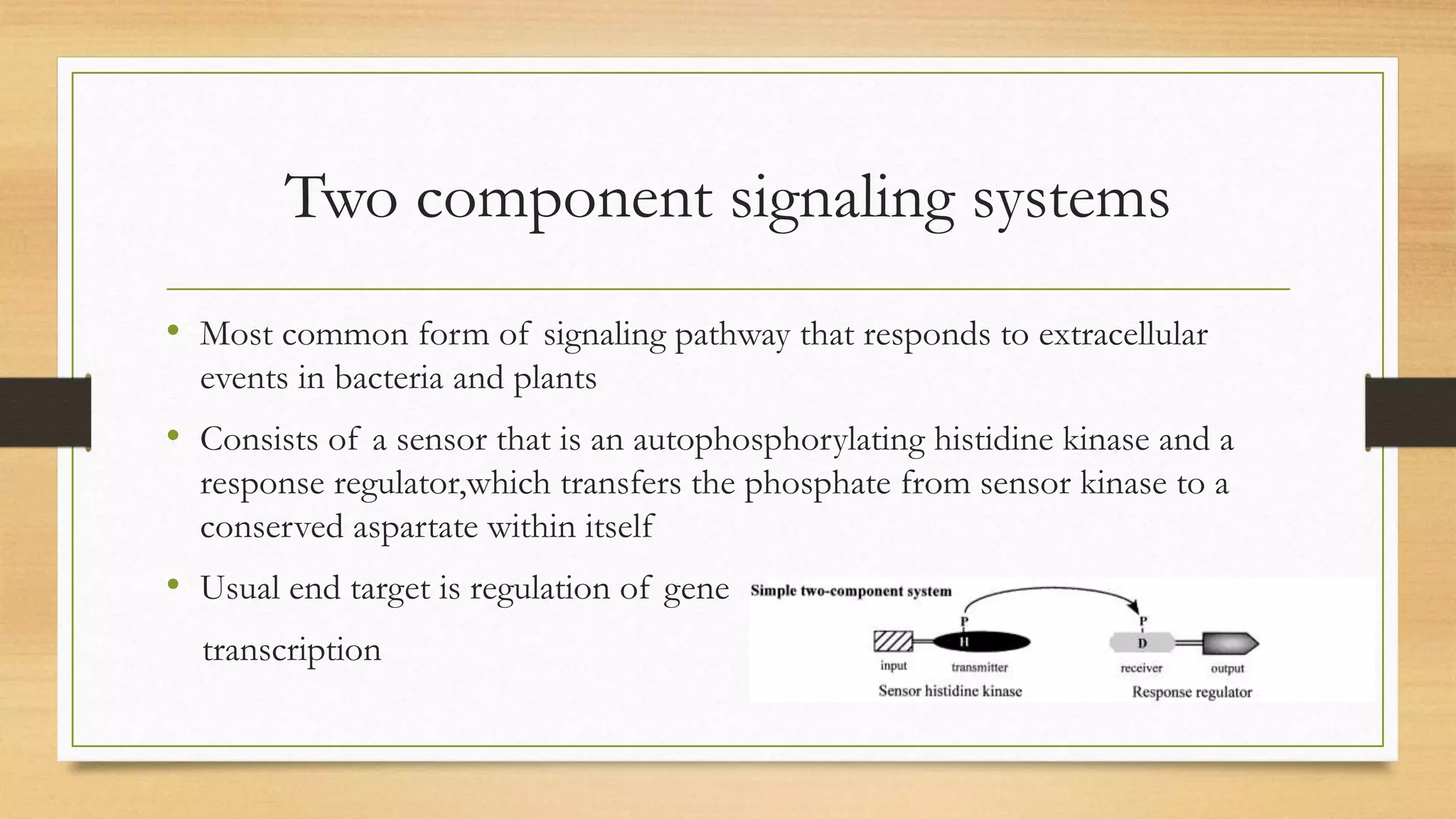
Two component signaling systems
• Most common form of signaling pathway that responds to extracellular
events in bacteria and plants
• Consists of a sensor that is an autophosphorylating histidine kinase and a
response regulator,which transfers the phosphate from sensor kinase to a
conserved aspartate within itself
• Usual end target is regulation of gene
transcription
Quorum sensing
• Bacterial communication phenomenon
• It allows bacteria to communicate using secreted signal molecules to assess their population
density
• It enables a population of bacteria to collectively regulate gene expression
• It detect the concentration of a particular signal molecule termed autoinducer which is correlated
with cell density
• As the bacterial population grows,the concentration of autoinducer in the surroundings increases
• Both gram positive and gram negative bacteria use quorum sensing communication circuits to
regulate physiological activities including symbiosis,virulence,competence,conjugation,antibiotic
production, motility and sporulation
Cell signaling, cell biology

Cell signaling, cell biology

  • 1.
    CELL SIGNALING BY KANCHANYADAV MSc Agril. Biotechnology RPCAU, Pusa, Bihar
  • 2.
    Introduction • All cellsreceive and respond to signals from their surroundings . • Variety of signal molecules that are secreted or expressed on the surface of one cell and bind to receptors expressed by other cells
  • 3.
    Extracellular signaling involvesfollowing steps : Synthesis and release of the signaling molecule by the signaling cell Transport of the signal to the target cell Binding of the signal by a specific receptor leading to its activation Initiation of signal transduction pathways
  • 4.
    Extracellular signaling bysignal molecules can be classified into four categories • Endocrine signaling • Paracrine signaling • Autocrine signaling • Juxtacrine signaling
  • 5.
    Endocrine signaling • Signalingmolecules act on target cells distantly located from their site of synthesis • It is a long range signaling • Signal molecule transported by the blood stream
  • 6.
    Paracrine signaling • Signalingmolecules released by a cell affect target cells only in close proximity • For eg. Action of neurotransmitters in carrying signals between nerve cells at a synapse
  • 7.
    Autocrine signaling • Signalingmolecules produce an effect on same cell that produces it • For eg. Response of cells of the vertebrate immune system to foreign antigens
  • 8.
    Juxtacrine signaling • Signalmolecules do not diffuse from the cell producing it and cell bearing signal molecules interact with receptor proteins of adjacent responding cells. • Requires physical contact between the cells involved
  • 9.
    Signal molecules Signal moleculesare chemically heterogenous compounds Two categories : membrane bound and secretory signal molecules ENDOCRINE SIGNAL MOLECULES PARACRINE SIGNAL MOLECULES AUTOCRINE SIGNAL MOLECULES
  • 10.
    RECEPTOR MOLECULE • Cellularresponse to a particular extracellular signal molecule depends on its binding to a specific receptor located on the surface of a target cell or in its nucleus or cytosol. • Receptors are chemically protein or glycoprotein molecules which bind to signaling molecules(termed ligands) • Binding of a ligand to its receptor causes a conformational change in the receptor that initiates a sequence of reactions leading to a specific cellular response • Based on location, receptors are classified into two broad categories- intracellular receptors and cell surface receptors.
  • 11.
    Cell surface receptors •All hydrophilic signaling mlecules as well as some lipophilic molecules ,bind to the cell surface receptor proteins • These act as signal transducers to produce intracellular messengers • These messengers stimulate the sensors and effectors responsible for activating cellular responses
  • 12.
    • Most cellsurface receptor proteins belong to one of the three classes: 1. G Protein Coupled Receptors (GPCRs) 2. Ion channel receptors 3. Enzyme linked receptors
  • 13.
    GPCR and GPROTEIN • GPCRs are the largest family of cell surface receptors • Transmit signals to intracellular targets via the intermediary action of guanine nucleotide binding protein called G proteins. • GPCRs are present in all eukaryotes
  • 14.
    GPCR adaptation • Adaptationis defined as the diminution of receptor signaling in the presence of continued or repeated stimulation • Target cells usually use two processes to adapt, when they are exposed to a high concentration of signal molecules for prolonged periods : • Desensitization • Internalization
  • 15.
    Desensitization • It isdescribed as the loss of response to prolonged or repeated stimulation • It starts with a phosphorylation of several Ser and Thr residues in the cytoplasmic domains of the receptor by G Protein coupled receptor Kinase(GRKs) • GRK- phosphorylated receptors then binds with arrestin protein and uncouple the receptor and G Protein
  • 16.
    Internalization • It involvesremoval of receptors from the cell surface • Internalized receptors may be either re exposed through exocytosis or degraded in lysosomes • Internalisation of cell surface receptors to intracellular membranous compartments is termed receptor sequestration • Destruction of receptors in lysosomes after internalization is termed receptor down regulation
  • 17.
    Ion channel linkedreceptors • Also known as transmitter gated ion channels or ionotropic receptors • They are involved in rapid synaptic signaling between electrically excitable cells • Mediated by a small number of neurotransmitters that transiently open or close an ion channel formed by the protein to which they bind • Hence changing the ion permeability of the plasma membrane and thereby the excitability of the postsynaptic cell
  • 18.
    ENZYME LINKED RECEPTORS •Second major type of cell surface receptor • Their cytosolic domain either has as intrinsic enzyme activity or associates directly with an enzyme
  • 19.
    Two component signalingsystems • Most common form of signaling pathway that responds to extracellular events in bacteria and plants • Consists of a sensor that is an autophosphorylating histidine kinase and a response regulator,which transfers the phosphate from sensor kinase to a conserved aspartate within itself • Usual end target is regulation of gene transcription
  • 20.
    Quorum sensing • Bacterialcommunication phenomenon • It allows bacteria to communicate using secreted signal molecules to assess their population density • It enables a population of bacteria to collectively regulate gene expression • It detect the concentration of a particular signal molecule termed autoinducer which is correlated with cell density • As the bacterial population grows,the concentration of autoinducer in the surroundings increases • Both gram positive and gram negative bacteria use quorum sensing communication circuits to regulate physiological activities including symbiosis,virulence,competence,conjugation,antibiotic production, motility and sporulation