CELIAC DISEASE: THE
COLLEGE SURVIVAL
GUIDE
Emily, Lindsay, Maddie, and Alyssa
The basics of Celiac Disease, the differences
between Celiac Disease and Gluten
Intolerance, and how to cope with Celiac
while living on a college campus.
LEARNING OBJECTIVES
 Audience will be able to…
 Differentiate between Celiac Disease and Gluten
Intolerance
 Identify signs and symptoms of Celiac Disease
 Formulate a gluten-free diet and put it into
practice on the University of Illinois’ campus
What is Celiac Disease?
 Autoimmune disease where ingestion of gluten
leads to damage in the small intestine
 Hereditary
 Can develop at any age
 Can lead to serious health problems
 Develop other autoimmune disorders
 Long-term conditions and deficiencies
What is Gluten?
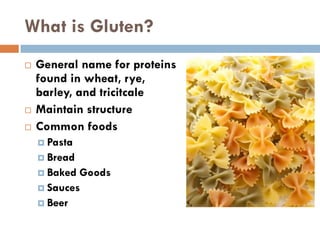
 General name for proteins
found in wheat, rye,
barley, and tricitcale
 Maintain structure
 Common foods
 Pasta
 Bread
 Baked Goods
 Sauces
 Beer
Common Symptoms of Celiac
Disease
 Abdominal bloating
 Chronic Diarrhea/Constipation
 Weight Loss
 Fatigue
 Vomiting
 Missed menstrual periods
 Depression/Anxiety
 Migraines
 Iron deficiency anemia
 Itchy skin rash
 Bone joint Pain
Gluten Sensitivity
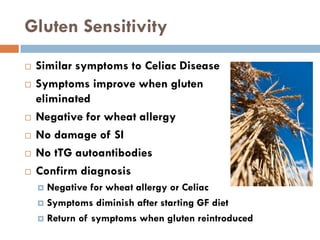
 Similar symptoms to Celiac Disease
 Symptoms improve when gluten
eliminated
 Negative for wheat allergy
 No damage of SI
 No tTG autoantibodies
 Confirm diagnosis
 Negative for wheat allergy or Celiac
 Symptoms diminish after starting GF diet
 Return of symptoms when gluten reintroduced
WIIFM?
 Awareness of
symptoms
 Food Diary
 Refer to physician
 Gain knowledge of
Gluten-Free Diet
Screening
 Must be on a gluten-
containing diet for both
Screening and Diagnosis
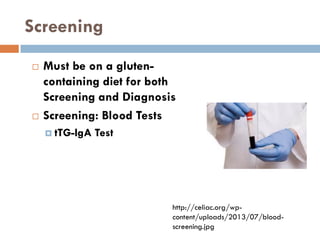
 Screening: Blood Tests
 tTG-IgA Test
http://celiac.org/wp-
content/uploads/2013/07/blood-
screening.jpg
Diagnosis
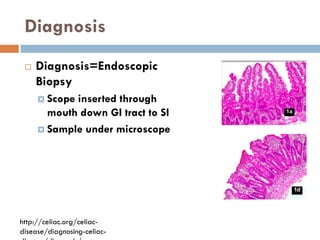
 Diagnosis=Endoscopic
Biopsy
 Scope inserted through
mouth down GI tract to SI
 Sample under microscope
http://celiac.org/celiac-
disease/diagnosing-celiac-
Literature Review
 Without disease - not beneficial
 Wide clinical spectrum
http://celiac.org/celiac-disease/treating-celiac-disease/
Studies
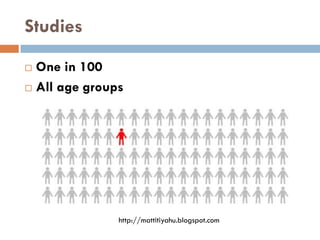
 One in 100
 All age groups
http://mattitiyahu.blogspot.com
Current Research
 Non Celiac gluten sensitivity
 Celiac disease - four times more common
Future Research
 Cause
 Cure
 Spectrum
 Linked to diseases
 Cooking substitution
Practice Recommendations
 Dietary recommendations
 Be tested first
 Foods containing gluten
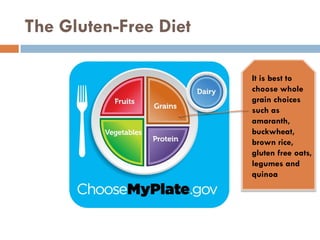
The Gluten-Free Diet
It is best to
choose whole
grain choices
such as
amaranth,
buckwheat,
brown rice,
gluten free oats,
legumes and
quinoa
Eating GF in the Dining Halls
 Meet with Dietitian and chefs individually
 DRES application required
 UI Dining mobile App
 Eat smart
http://www.housing.illinois.edu/~/media/Files/Dining/Dietary_Restrictions_H
andout.ashx
Just Ask!
 Call, email, text the chef- one hour notice
 Minimizes risk of cross-contamination
 Special refrigerators
 Gluten-free dedicated toasters
Summary
 Celiac Disease has harmful health effects
 Celiac Disease vs. Gluten Intolerance
 For Dietitians
 Rising
 ID Symptoms
 Eating GF
 Resources on campus
References
 Garcia-Manzanares, A., & Lucendo, A. J. Nutritional and Dietary
Aspects of Celiac Disease. Nutrition in Clinical Practice. 2011; 26(2),
163-173.
 Sabatino, A. D., & Corazza, G. R. (Nonceliac Gluten Sensitivity:
Sense or Sensibility?. Annals of Internal Medicine. 2012; 156(4),
309.
 Dietary Restrictions at the University of Illinois Dining Services.
University Housing at Illinois.
http://www.housing.illinois.edu/~/media/Files/Dining/Dietary_Restr
ictions_Handout.ashx. Accessed April 25, 2014.
 Celiac Disease Foundation. http://celiac.org/ Accessed April 25,
2014.
 All photos stock free from : freedigitalphotos.net

Celiac Presentation

  • 1.
    CELIAC DISEASE: THE COLLEGESURVIVAL GUIDE Emily, Lindsay, Maddie, and Alyssa The basics of Celiac Disease, the differences between Celiac Disease and Gluten Intolerance, and how to cope with Celiac while living on a college campus.
  • 2.
    LEARNING OBJECTIVES  Audiencewill be able to…  Differentiate between Celiac Disease and Gluten Intolerance  Identify signs and symptoms of Celiac Disease  Formulate a gluten-free diet and put it into practice on the University of Illinois’ campus
  • 3.
    What is CeliacDisease?  Autoimmune disease where ingestion of gluten leads to damage in the small intestine  Hereditary  Can develop at any age  Can lead to serious health problems  Develop other autoimmune disorders  Long-term conditions and deficiencies
  • 4.
    What is Gluten? General name for proteins found in wheat, rye, barley, and tricitcale  Maintain structure  Common foods  Pasta  Bread  Baked Goods  Sauces  Beer
  • 5.
    Common Symptoms ofCeliac Disease  Abdominal bloating  Chronic Diarrhea/Constipation  Weight Loss  Fatigue  Vomiting  Missed menstrual periods  Depression/Anxiety  Migraines  Iron deficiency anemia  Itchy skin rash  Bone joint Pain
  • 6.
    Gluten Sensitivity  Similarsymptoms to Celiac Disease  Symptoms improve when gluten eliminated  Negative for wheat allergy  No damage of SI  No tTG autoantibodies  Confirm diagnosis  Negative for wheat allergy or Celiac  Symptoms diminish after starting GF diet  Return of symptoms when gluten reintroduced
  • 7.
    WIIFM?  Awareness of symptoms Food Diary  Refer to physician  Gain knowledge of Gluten-Free Diet
  • 8.
    Screening  Must beon a gluten- containing diet for both Screening and Diagnosis  Screening: Blood Tests  tTG-IgA Test http://celiac.org/wp- content/uploads/2013/07/blood- screening.jpg
  • 9.
    Diagnosis  Diagnosis=Endoscopic Biopsy  Scopeinserted through mouth down GI tract to SI  Sample under microscope http://celiac.org/celiac- disease/diagnosing-celiac-
  • 10.
    Literature Review  Withoutdisease - not beneficial  Wide clinical spectrum http://celiac.org/celiac-disease/treating-celiac-disease/
  • 11.
    Studies  One in100  All age groups http://mattitiyahu.blogspot.com
  • 12.
    Current Research  NonCeliac gluten sensitivity  Celiac disease - four times more common
  • 14.
    Future Research  Cause Cure  Spectrum  Linked to diseases  Cooking substitution
  • 15.
    Practice Recommendations  Dietaryrecommendations  Be tested first  Foods containing gluten
  • 16.
    The Gluten-Free Diet Itis best to choose whole grain choices such as amaranth, buckwheat, brown rice, gluten free oats, legumes and quinoa
  • 17.
    Eating GF inthe Dining Halls  Meet with Dietitian and chefs individually  DRES application required  UI Dining mobile App  Eat smart http://www.housing.illinois.edu/~/media/Files/Dining/Dietary_Restrictions_H andout.ashx
  • 18.
    Just Ask!  Call,email, text the chef- one hour notice  Minimizes risk of cross-contamination  Special refrigerators  Gluten-free dedicated toasters
  • 19.
    Summary  Celiac Diseasehas harmful health effects  Celiac Disease vs. Gluten Intolerance  For Dietitians  Rising  ID Symptoms  Eating GF  Resources on campus
  • 20.
    References  Garcia-Manzanares, A.,& Lucendo, A. J. Nutritional and Dietary Aspects of Celiac Disease. Nutrition in Clinical Practice. 2011; 26(2), 163-173.  Sabatino, A. D., & Corazza, G. R. (Nonceliac Gluten Sensitivity: Sense or Sensibility?. Annals of Internal Medicine. 2012; 156(4), 309.  Dietary Restrictions at the University of Illinois Dining Services. University Housing at Illinois. http://www.housing.illinois.edu/~/media/Files/Dining/Dietary_Restr ictions_Handout.ashx. Accessed April 25, 2014.  Celiac Disease Foundation. http://celiac.org/ Accessed April 25, 2014.  All photos stock free from : freedigitalphotos.net