CBBE Model: How To Build A Strong Brand
Posted by Brand and Butter on January 26, 2010


Strong brands are important.


The challenge is to build a brand that is strong, unique and favourable – a brand that evokes positive,

emotional feelings. A brand where customers react and experience positively to the brand’s

product/services/ideas/people.


We need to create a brand that evokes the desired positive knowledge structures: thoughts, feelings,

images, perceptions, attitudes.


But how do we build one?


Building a brand isn’t as easy as it sounds, but there is a marketing model providing guidance for

brand building, called the customer-based brand equity model (CBBE model).


The basic premise of the CBBE model is that the power of a brand resides in the minds of its

customers. The CBBE model acts as a branding ladder, orbuilding blocks to guide a firm’s marketing

programs.


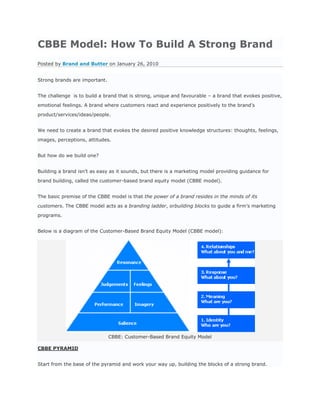
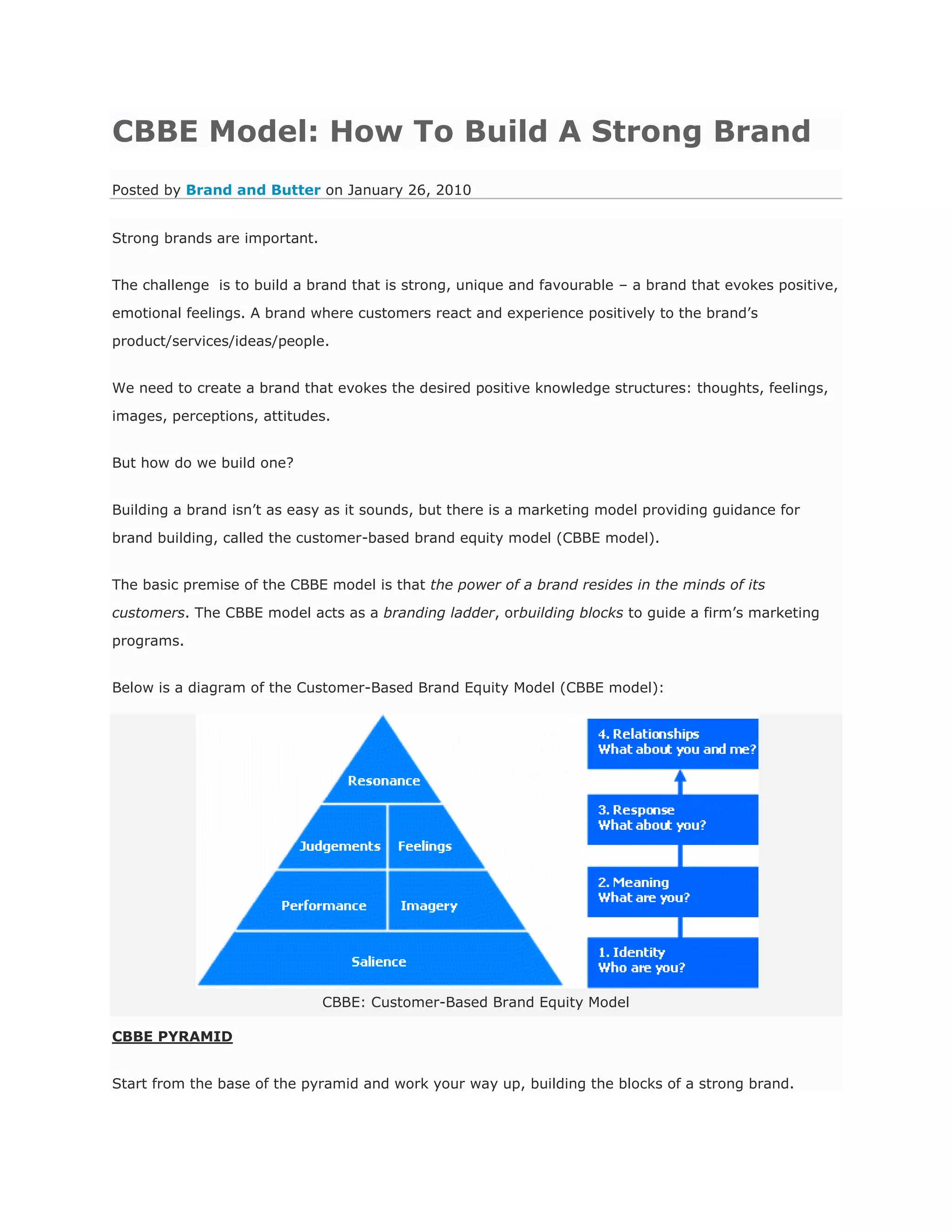
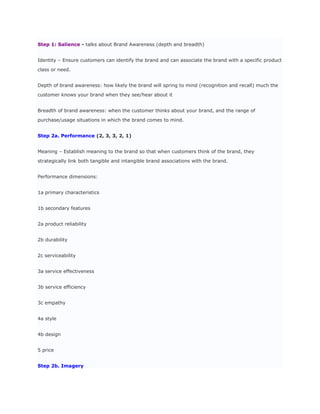
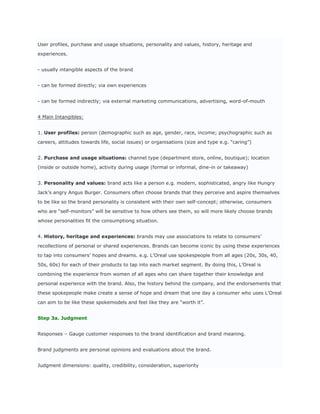
Below is a diagram of the Customer-Based Brand Equity Model (CBBE model):


                               CBBE: Customer-Based Brand Equity Model

CBBE PYRAMID


Start from the base of the pyramid and work your way up, building the blocks of a strong brand.
Step 1: Salience - talks about Brand Awareness (depth and breadth)


Identity – Ensure customers can identify the brand and can associate the brand with a specific product

class or need.


Depth of brand awareness: how likely the brand will spring to mind (recognition and recall) much the

customer knows your brand when they see/hear about it


Breadth of brand awareness: when the customer thinks about your brand, and the range of

purchase/usage situations in which the brand comes to mind.


Step 2a. Performance (2, 3, 3, 2, 1)


Meaning – Establish meaning to the brand so that when customers think of the brand, they

strategically link both tangible and intangible brand associations with the brand.


Performance dimensions:


1a primary characteristics


1b secondary features


2a product reliability


2b durability


2c serviceability


3a service effectiveness


3b service efficiency


3c empathy


4a style


4b design


5 price


Step 2b. Imagery
User profiles, purchase and usage situations, personality and values, history, heritage and

experiences.


- usually intangible aspects of the brand


- can be formed directly; via own experiences


- can be formed indirectly; via external marketing communications, advertising, word-of-mouth


4 Main Intangibles:


1. User profiles: person (demographic such as age, gender, race, income; psychographic such as

careers, attitudes towards life, social issues) or organisations (size and type e.g. “caring”)


2. Purchase and usage situations: channel type (department store, online, boutique); location

(inside or outside home), activity during usage (formal or informal, dine-in or takeaway)


3. Personality and values: brand acts like a person e.g. modern, sophisticated, angry like Hungry

Jack’s angry Angus Burger. Consumers often choose brands that they perceive and aspire themselves

to be like so the brand personality is consistent with their own self-concept; otherwise, consumers

who are “self-monitors” will be sensitive to how others see them, so will more likely choose brands

whose personalities fit the consumptiong situation.


4. History, heritage and experiences: brands may use associations to relate to consumers’

recollections of personal or shared experiences. Brands can become iconic by using these experiences

to tap into consumers’ hopes and dreams. e.g. L’Oreal use spokespeople from all ages (20s, 30s, 40,

50s, 60s) for each of their products to tap into each market segment. By doing this, L’Oreal is

combining the experience from women of all ages who can share together their knowledge and

personal experience with the brand. Also, the history behind the company, and the endorsements that

these spokepeople make create a sense of hope and dream that one day a consumer who uses L’Oreal

can aim to be like these spokemodels and feel like they are “worth it”.


Step 3a. Judgment


Responses – Gauge customer responses to the brand identification and brand meaning.


Brand judgments are personal opinions and evaluations about the brand.


Judgment dimensions: quality, credibility, consideration, superiority
Step 3b. Feelings (strong and favourable)


Feelings dimensions: warmth, fun, excitement, security, social approval, self-respect


Step 4. Resonance (intense and active)


Relationships – Convert the brand response to create intense, active loyalty relationship between the

customer and the brand.


Loyalty, Attachment, Community, Engagement

Cbbe model

  • 1.
    CBBE Model: HowTo Build A Strong Brand Posted by Brand and Butter on January 26, 2010 Strong brands are important. The challenge is to build a brand that is strong, unique and favourable – a brand that evokes positive, emotional feelings. A brand where customers react and experience positively to the brand’s product/services/ideas/people. We need to create a brand that evokes the desired positive knowledge structures: thoughts, feelings, images, perceptions, attitudes. But how do we build one? Building a brand isn’t as easy as it sounds, but there is a marketing model providing guidance for brand building, called the customer-based brand equity model (CBBE model). The basic premise of the CBBE model is that the power of a brand resides in the minds of its customers. The CBBE model acts as a branding ladder, orbuilding blocks to guide a firm’s marketing programs. Below is a diagram of the Customer-Based Brand Equity Model (CBBE model): CBBE: Customer-Based Brand Equity Model CBBE PYRAMID Start from the base of the pyramid and work your way up, building the blocks of a strong brand.
  • 2.
    Step 1: Salience- talks about Brand Awareness (depth and breadth) Identity – Ensure customers can identify the brand and can associate the brand with a specific product class or need. Depth of brand awareness: how likely the brand will spring to mind (recognition and recall) much the customer knows your brand when they see/hear about it Breadth of brand awareness: when the customer thinks about your brand, and the range of purchase/usage situations in which the brand comes to mind. Step 2a. Performance (2, 3, 3, 2, 1) Meaning – Establish meaning to the brand so that when customers think of the brand, they strategically link both tangible and intangible brand associations with the brand. Performance dimensions: 1a primary characteristics 1b secondary features 2a product reliability 2b durability 2c serviceability 3a service effectiveness 3b service efficiency 3c empathy 4a style 4b design 5 price Step 2b. Imagery
  • 3.
    User profiles, purchaseand usage situations, personality and values, history, heritage and experiences. - usually intangible aspects of the brand - can be formed directly; via own experiences - can be formed indirectly; via external marketing communications, advertising, word-of-mouth 4 Main Intangibles: 1. User profiles: person (demographic such as age, gender, race, income; psychographic such as careers, attitudes towards life, social issues) or organisations (size and type e.g. “caring”) 2. Purchase and usage situations: channel type (department store, online, boutique); location (inside or outside home), activity during usage (formal or informal, dine-in or takeaway) 3. Personality and values: brand acts like a person e.g. modern, sophisticated, angry like Hungry Jack’s angry Angus Burger. Consumers often choose brands that they perceive and aspire themselves to be like so the brand personality is consistent with their own self-concept; otherwise, consumers who are “self-monitors” will be sensitive to how others see them, so will more likely choose brands whose personalities fit the consumptiong situation. 4. History, heritage and experiences: brands may use associations to relate to consumers’ recollections of personal or shared experiences. Brands can become iconic by using these experiences to tap into consumers’ hopes and dreams. e.g. L’Oreal use spokespeople from all ages (20s, 30s, 40, 50s, 60s) for each of their products to tap into each market segment. By doing this, L’Oreal is combining the experience from women of all ages who can share together their knowledge and personal experience with the brand. Also, the history behind the company, and the endorsements that these spokepeople make create a sense of hope and dream that one day a consumer who uses L’Oreal can aim to be like these spokemodels and feel like they are “worth it”. Step 3a. Judgment Responses – Gauge customer responses to the brand identification and brand meaning. Brand judgments are personal opinions and evaluations about the brand. Judgment dimensions: quality, credibility, consideration, superiority
  • 4.
    Step 3b. Feelings(strong and favourable) Feelings dimensions: warmth, fun, excitement, security, social approval, self-respect Step 4. Resonance (intense and active) Relationships – Convert the brand response to create intense, active loyalty relationship between the customer and the brand. Loyalty, Attachment, Community, Engagement