

by: Ivy Lontoc Capistrano
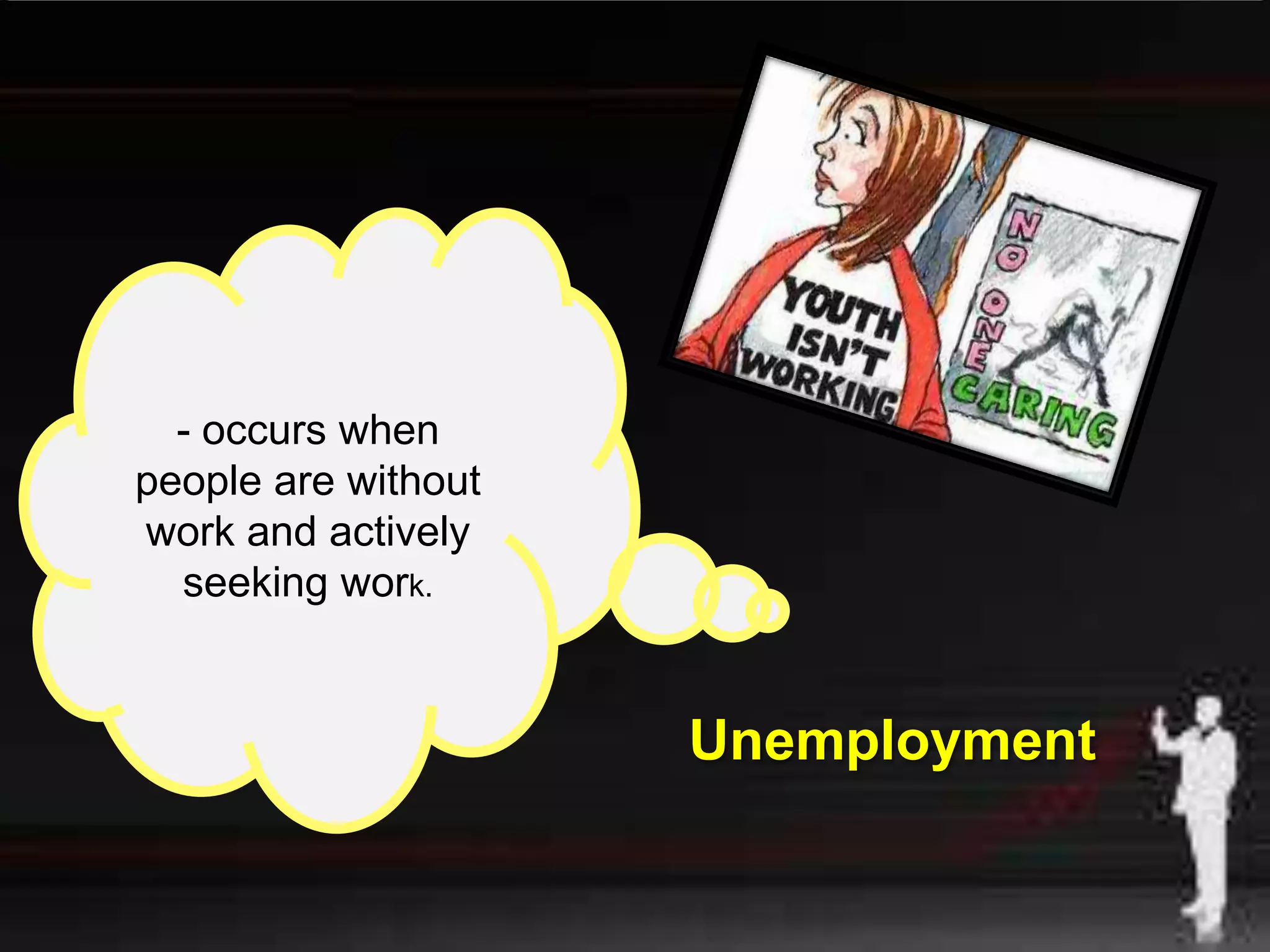
- occurs when
people are without
work and actively
seeking work.
Unemployment
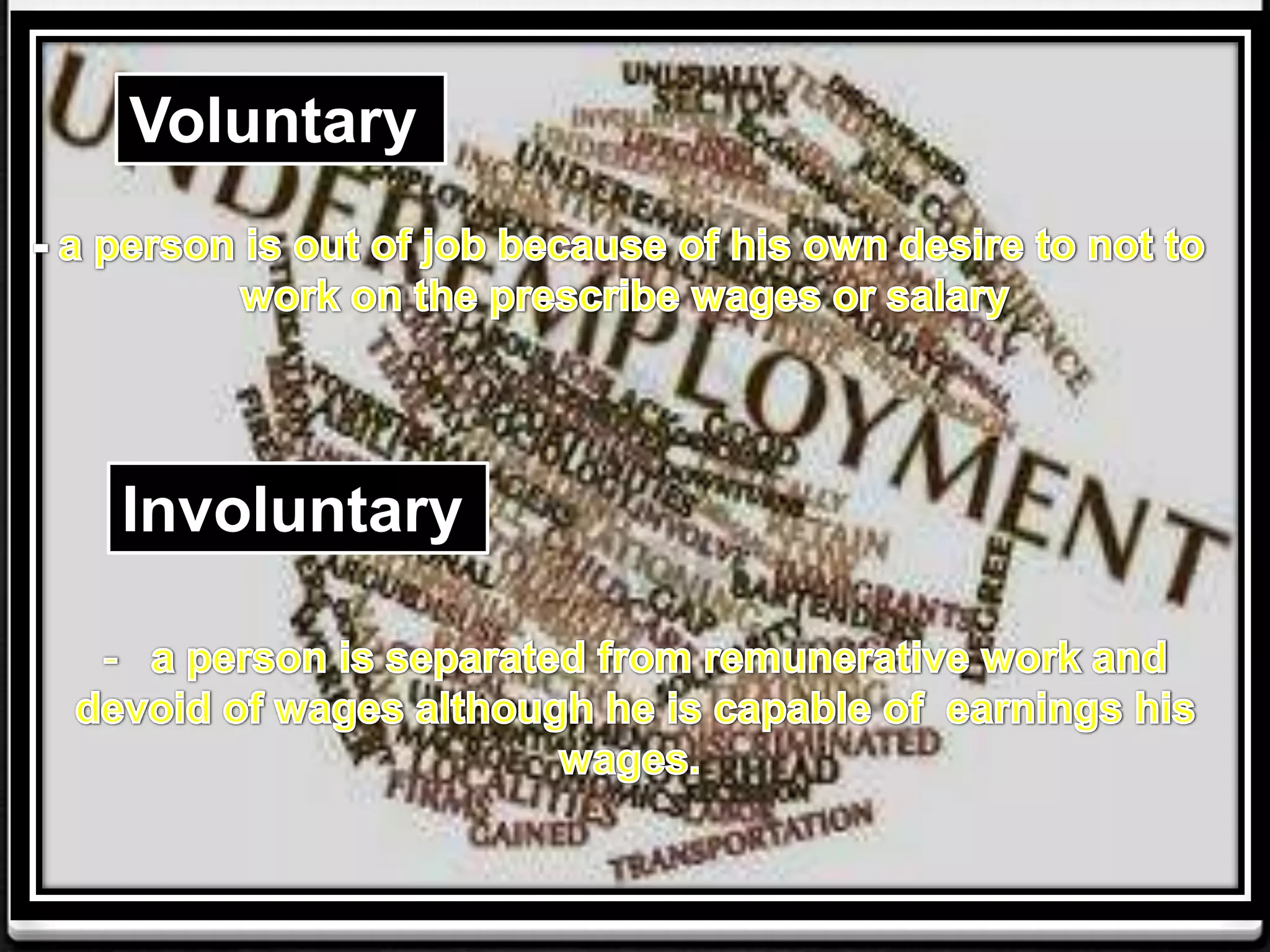
Involuntary
Voluntary
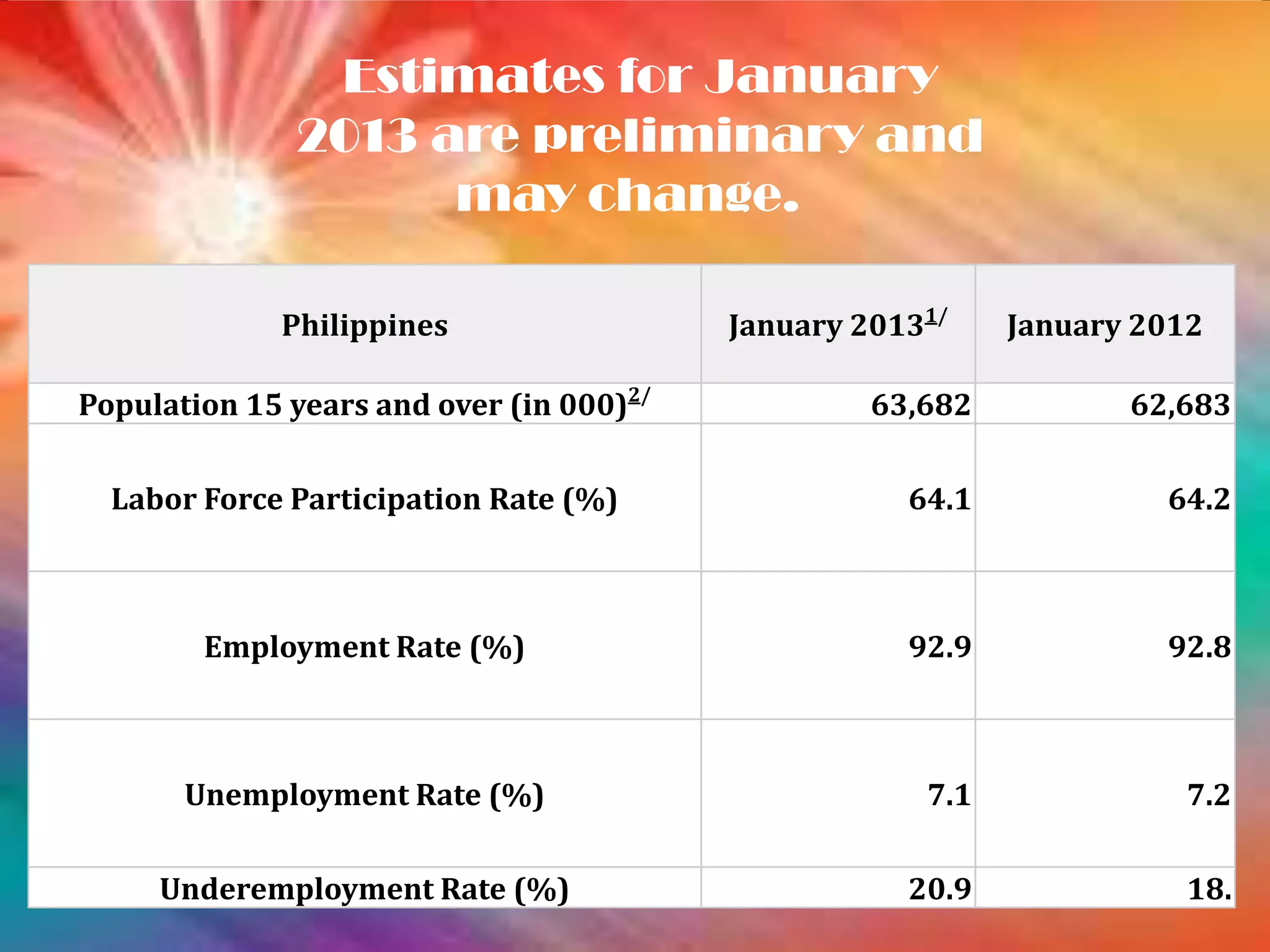
Philippines January 20131/
January 2012
Population 15 years and over (in 000)2/
63,682 62,683
Labor Force Participation Rate (%) 64.1 64.2
Employment Rate (%) 92.9 92.8
Unemployment Rate (%) 7.1 7.2
Underemployment Rate (%) 20.9 18.
Estimates for January
2013 are preliminary and
may change.
The Philippines topped Indonesia,
Malaysia, Singapore, Thailand,
China and South Korea in terms of
the unemployment rate, the BLES
said.
The total number of
unemployed persons in the
country reached 2.9 million in
January 2012 or 7.2% of the
40.3 million Filipinos in the
labor force. This was lower
than the 7.4% unemployment
rate recorded in the same
period last year.
Bureau of Labor and
Employment
Statistics (BLES)
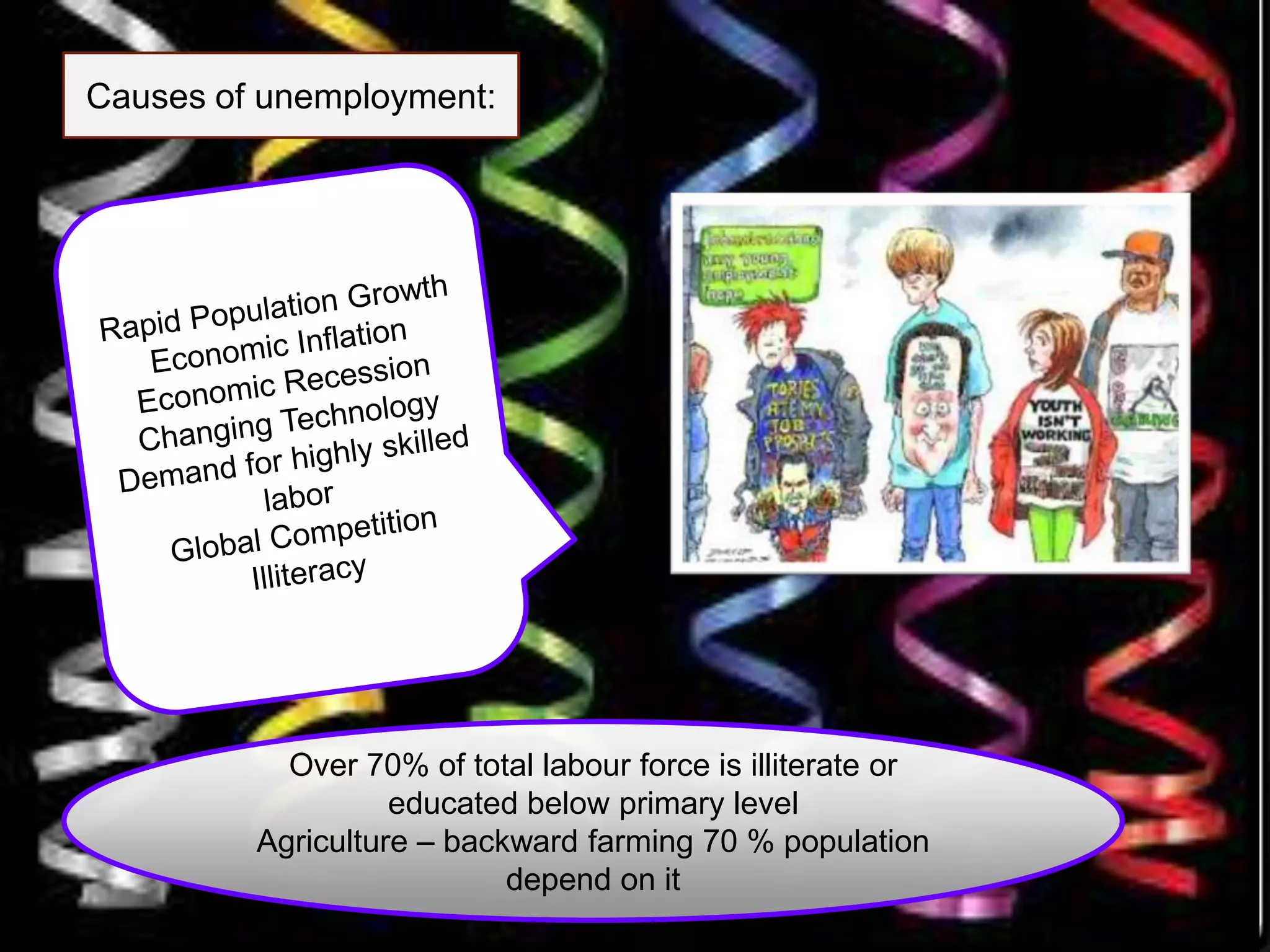
Causes of unemployment:
Over 70% of total labour force is illiterate or
educated below primary level
Agriculture – backward farming 70 % population
depend on it
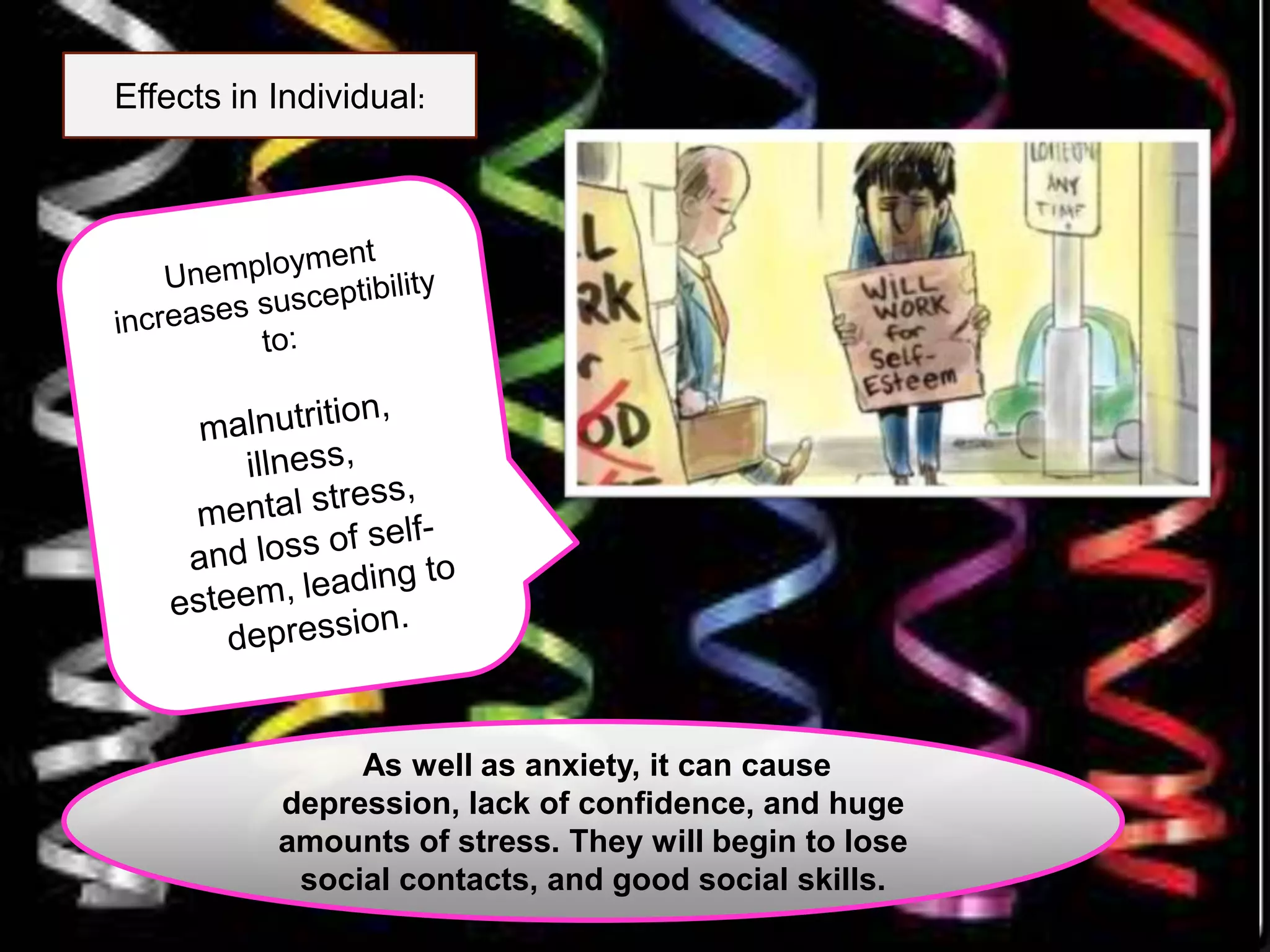
Effects in Individual:
As well as anxiety, it can cause
depression, lack of confidence, and huge
amounts of stress. They will begin to lose
social contacts, and good social skills.
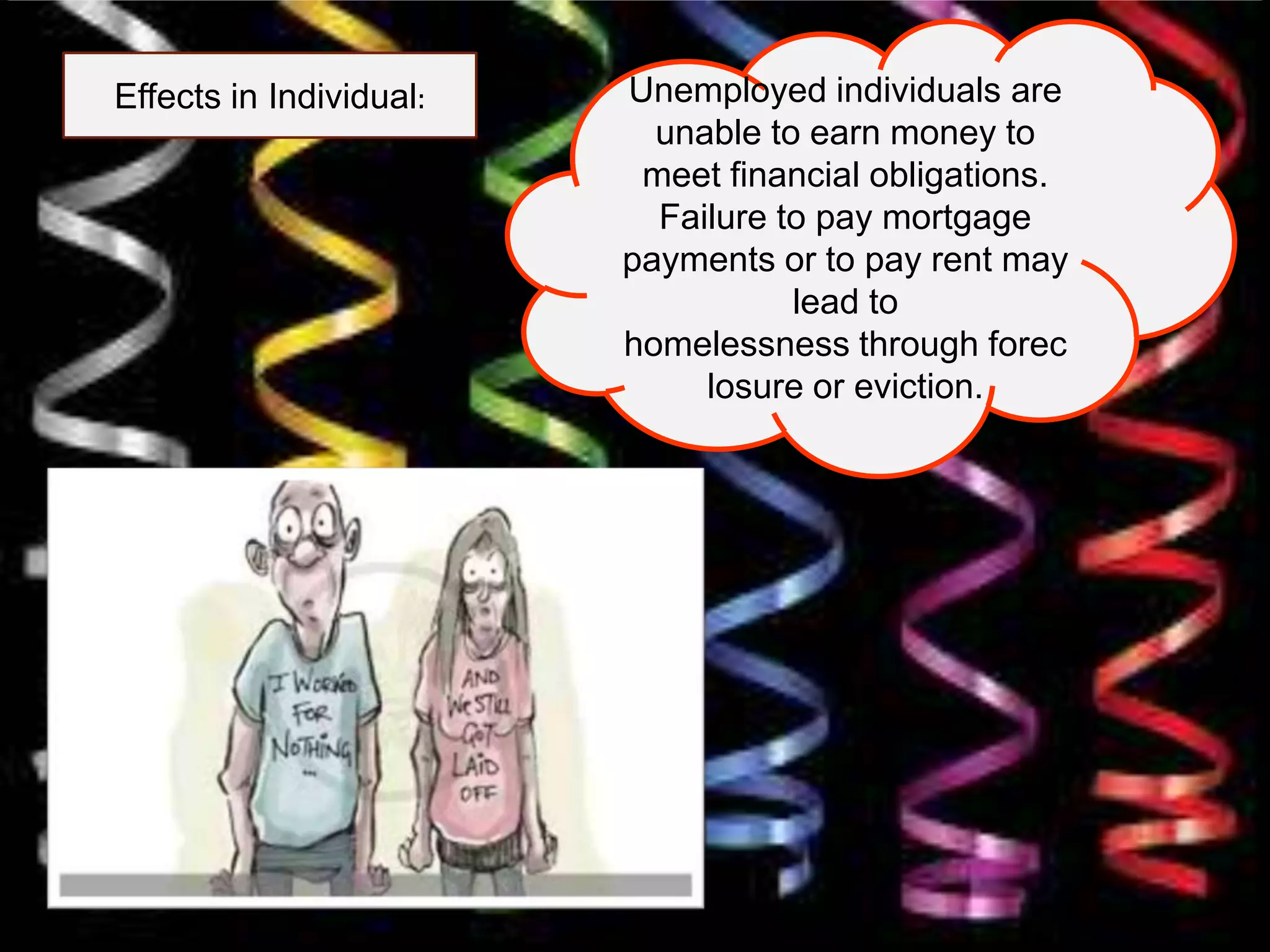
Effects in Individual: Unemployed individuals are
unable to earn money to
meet financial obligations.
Failure to pay mortgage
payments or to pay rent may
lead to
homelessness through forec
losure or eviction.
Effects in Social :
During a long period of
unemployment, workers can
lose their skills, causing a
loss of human capital. Being
unemployed can also
reduce the life expectancy of
workers by about 7 years.
Types of
UNEMPLOYMENT
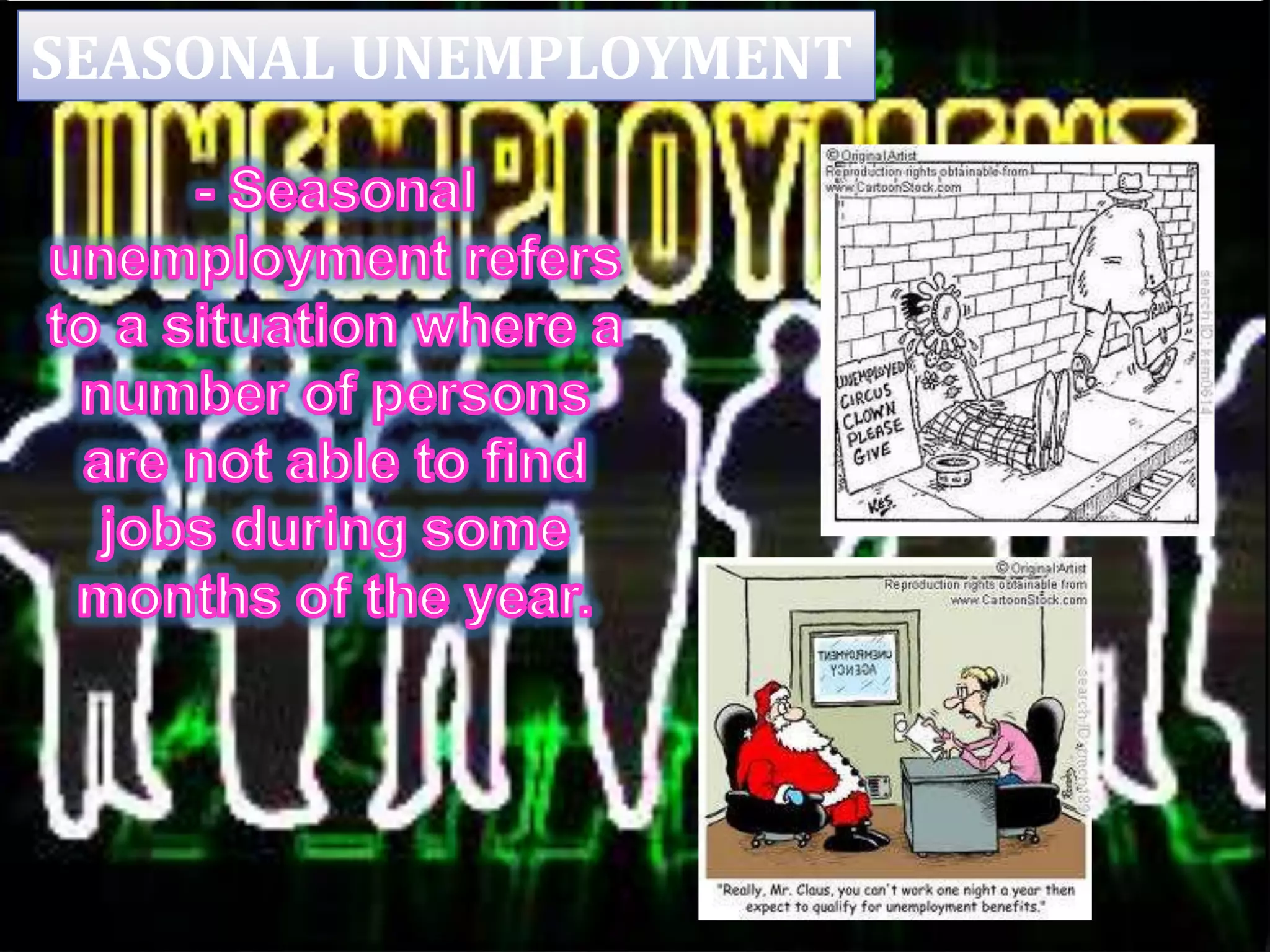
SEASONAL UNEMPLOYMENT
CYCLICAL UNEMPLOYMENT
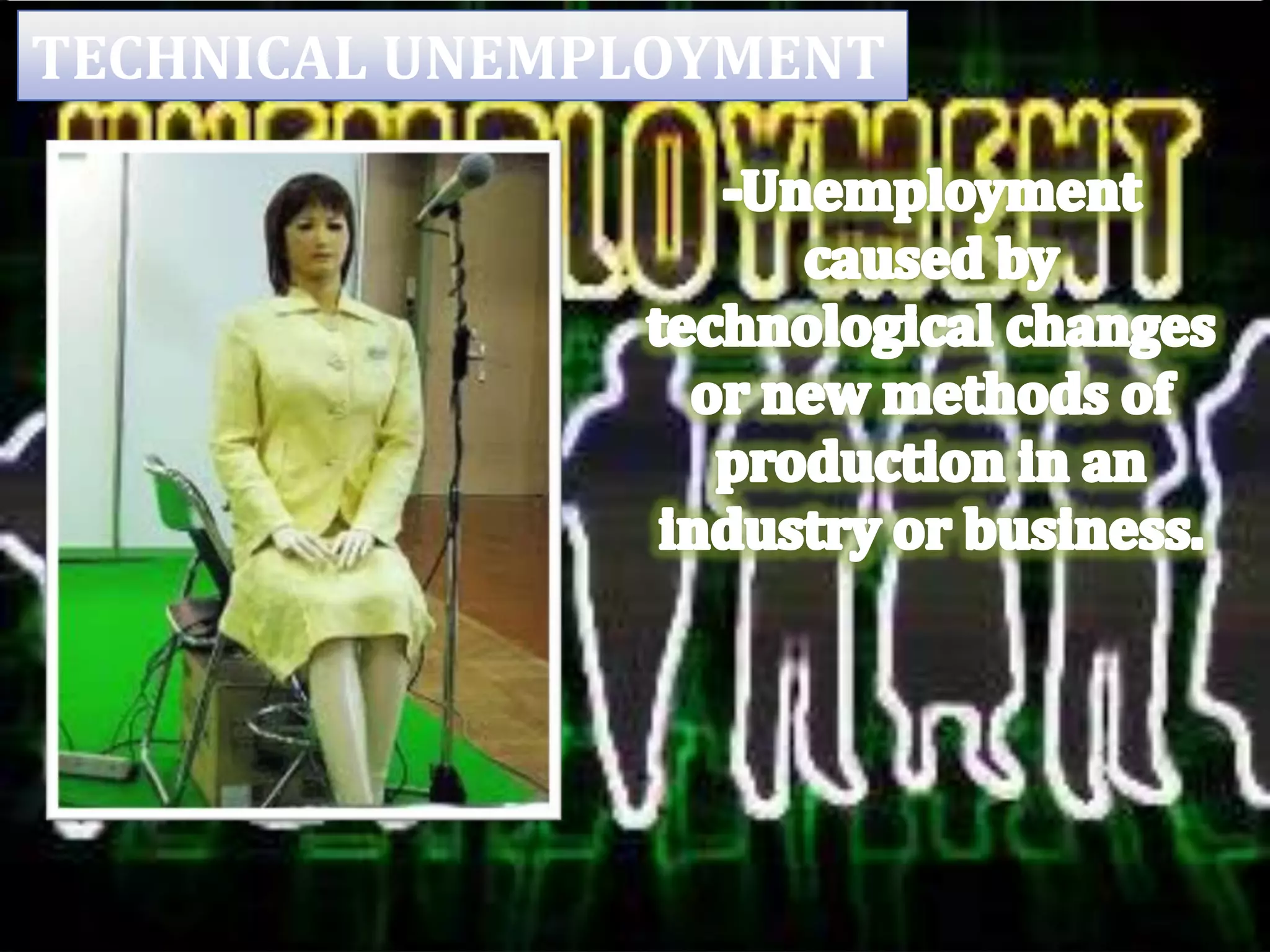
TECHNICAL UNEMPLOYMENT
FRICTIONAL UNEMPLOYMENT
- This is a type of voluntary
unemployment that arises
because of the time needed to
match job seekers with job
openings. Just as friction
always takes place before the
slider comes to its final
position on the
surface, people need time to
find the best job, thus
voluntarily rubbing back and
forth between choices and
staying.
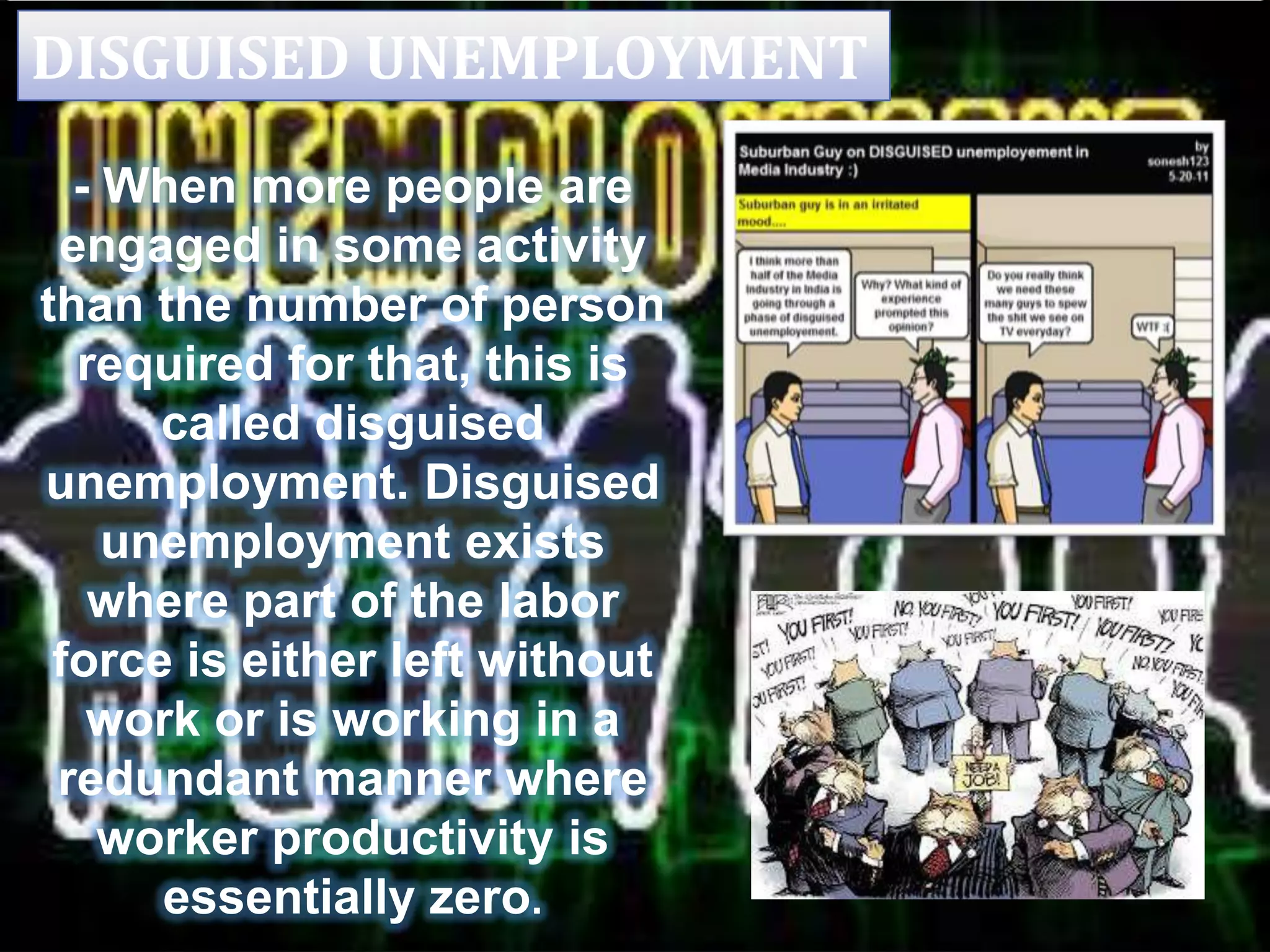
DISGUISED UNEMPLOYMENT
- When more people are
engaged in some activity
than the number of person
required for that, this is
called disguised
unemployment. Disguised
unemployment exists
where part of the labor
force is either left without
work or is working in a
redundant manner where
worker productivity is
essentially zero.
Under employment can also refer to:
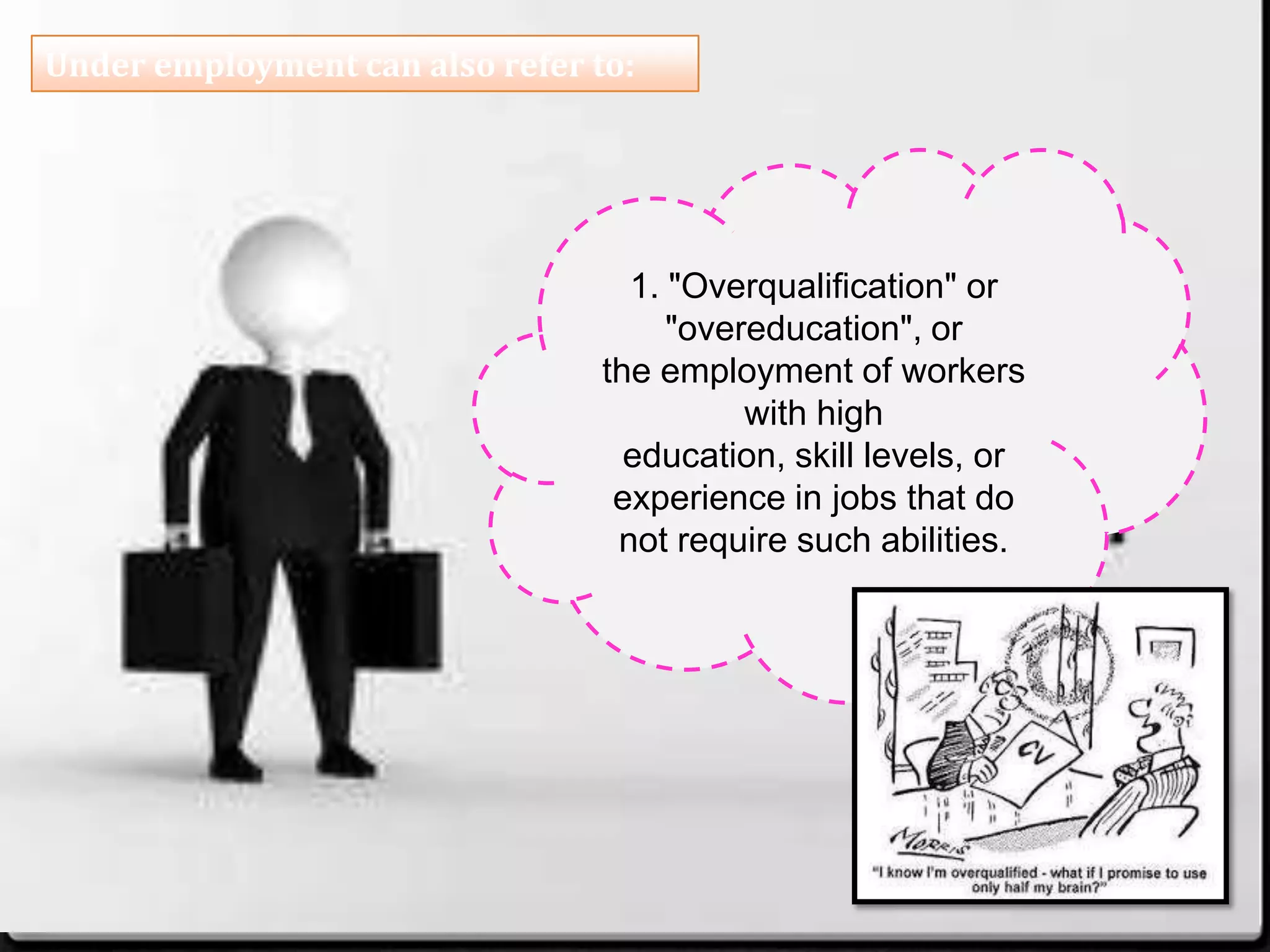
1. "Overqualification" or
"overeducation", or
the employment of workers
with high
education, skill levels, or
experience in jobs that do
not require such abilities.
Under employment can also refer to:
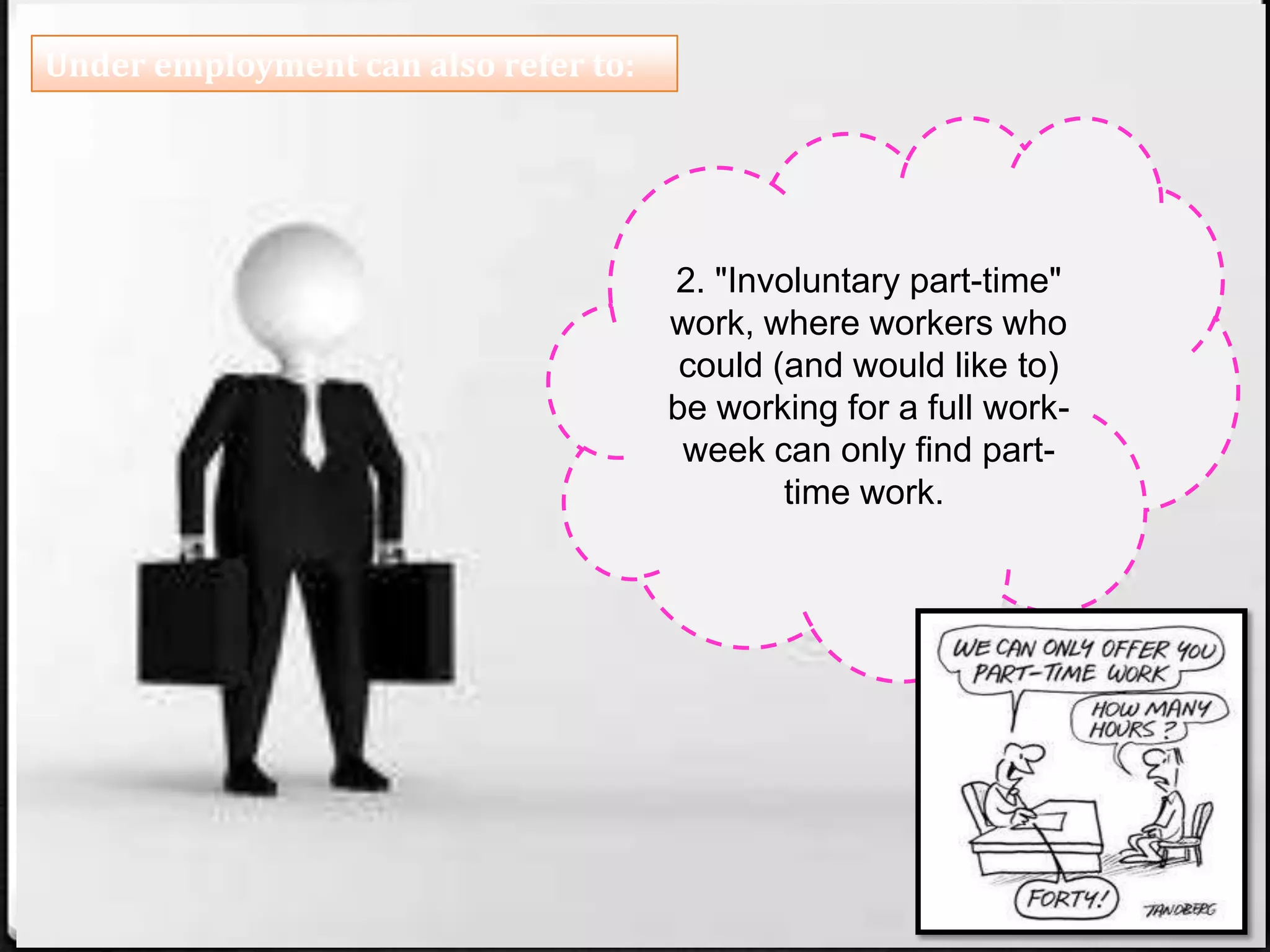
2. "Involuntary part-time"
work, where workers who
could (and would like to)
be working for a full work-
week can only find part-
time work.
Under employment can also refer to:
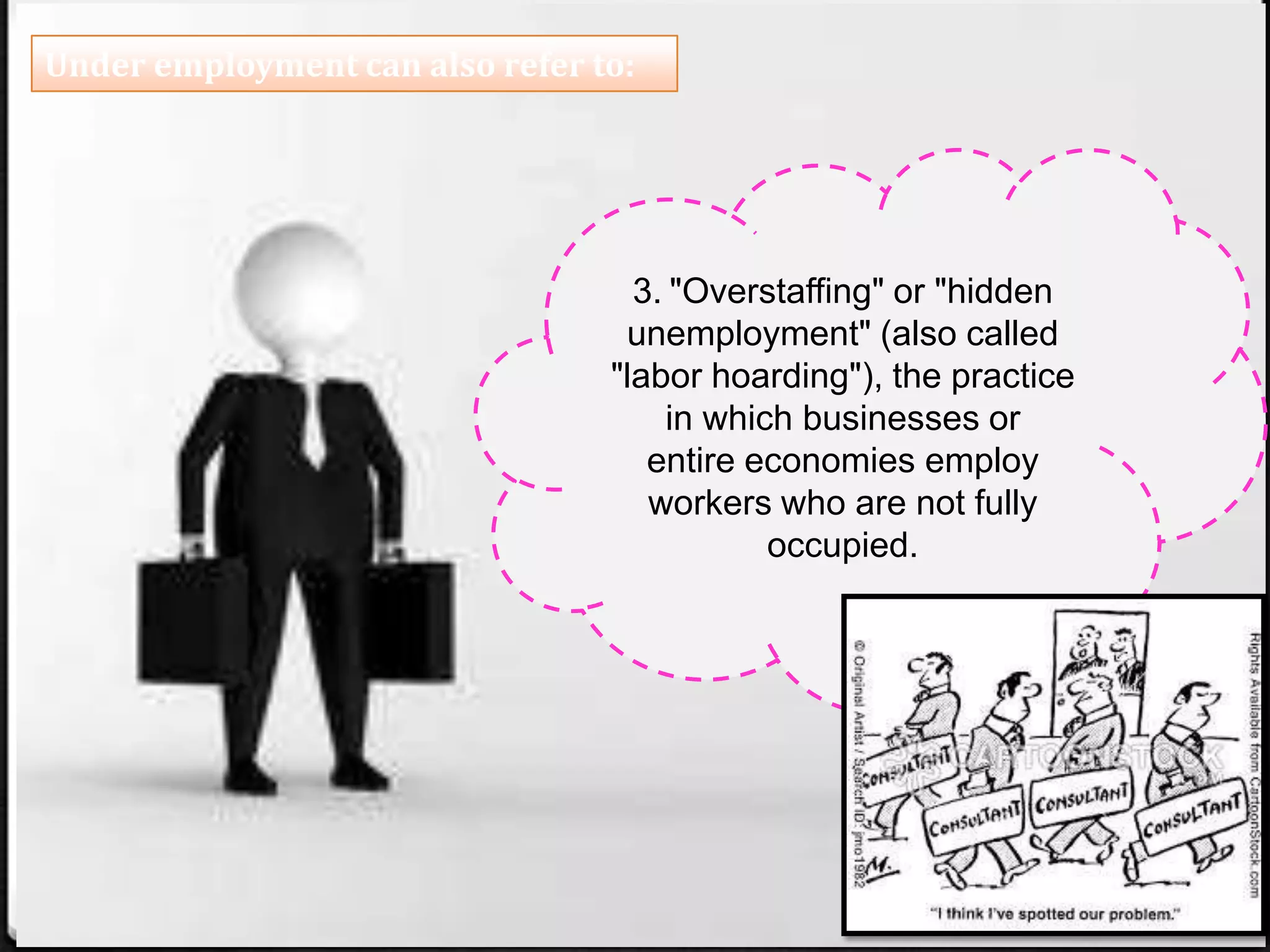
3. "Overstaffing" or "hidden
unemployment" (also called
"labor hoarding"), the practice
in which businesses or
entire economies employ
workers who are not fully
occupied.
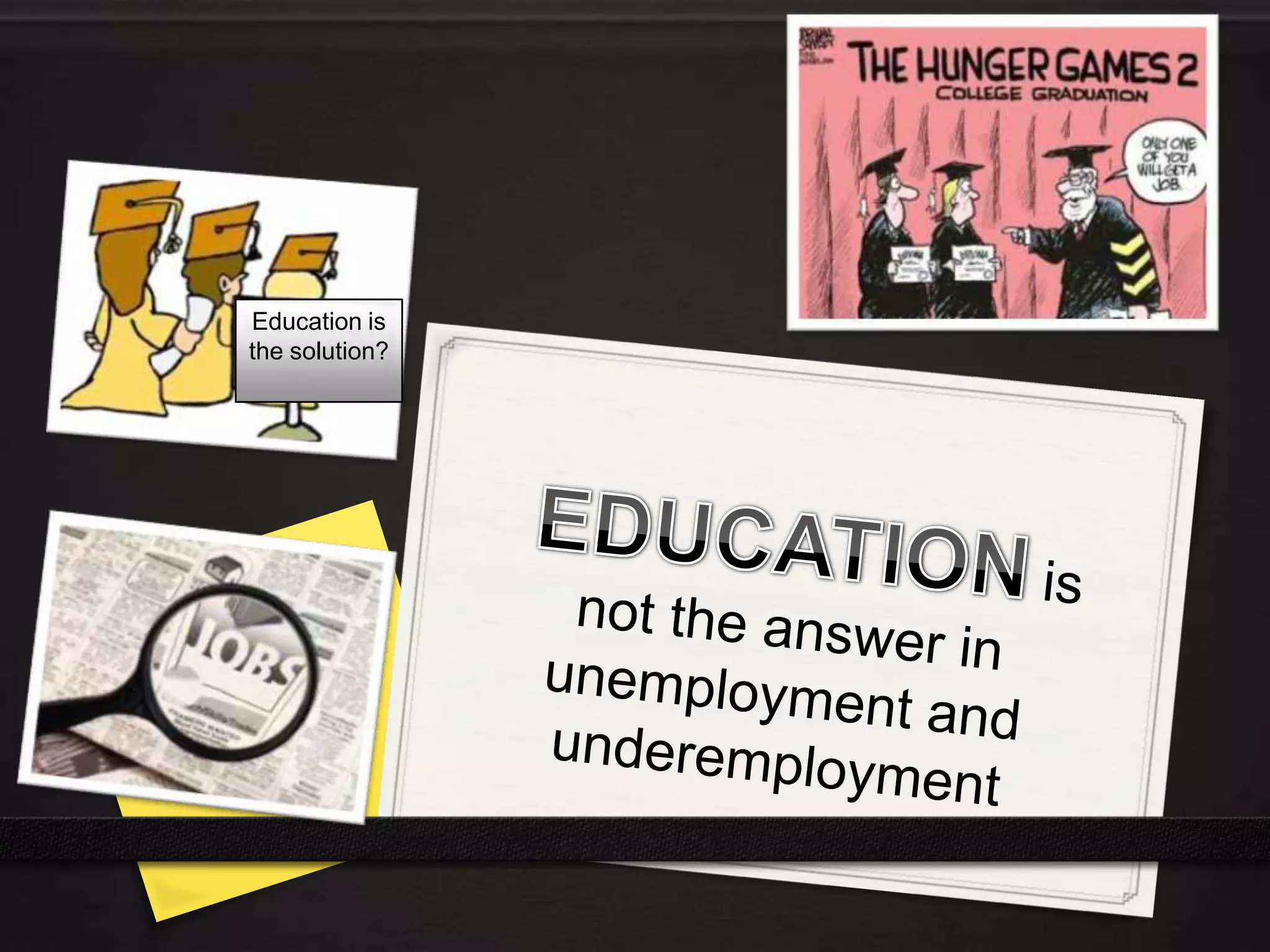
Education is
the solution?
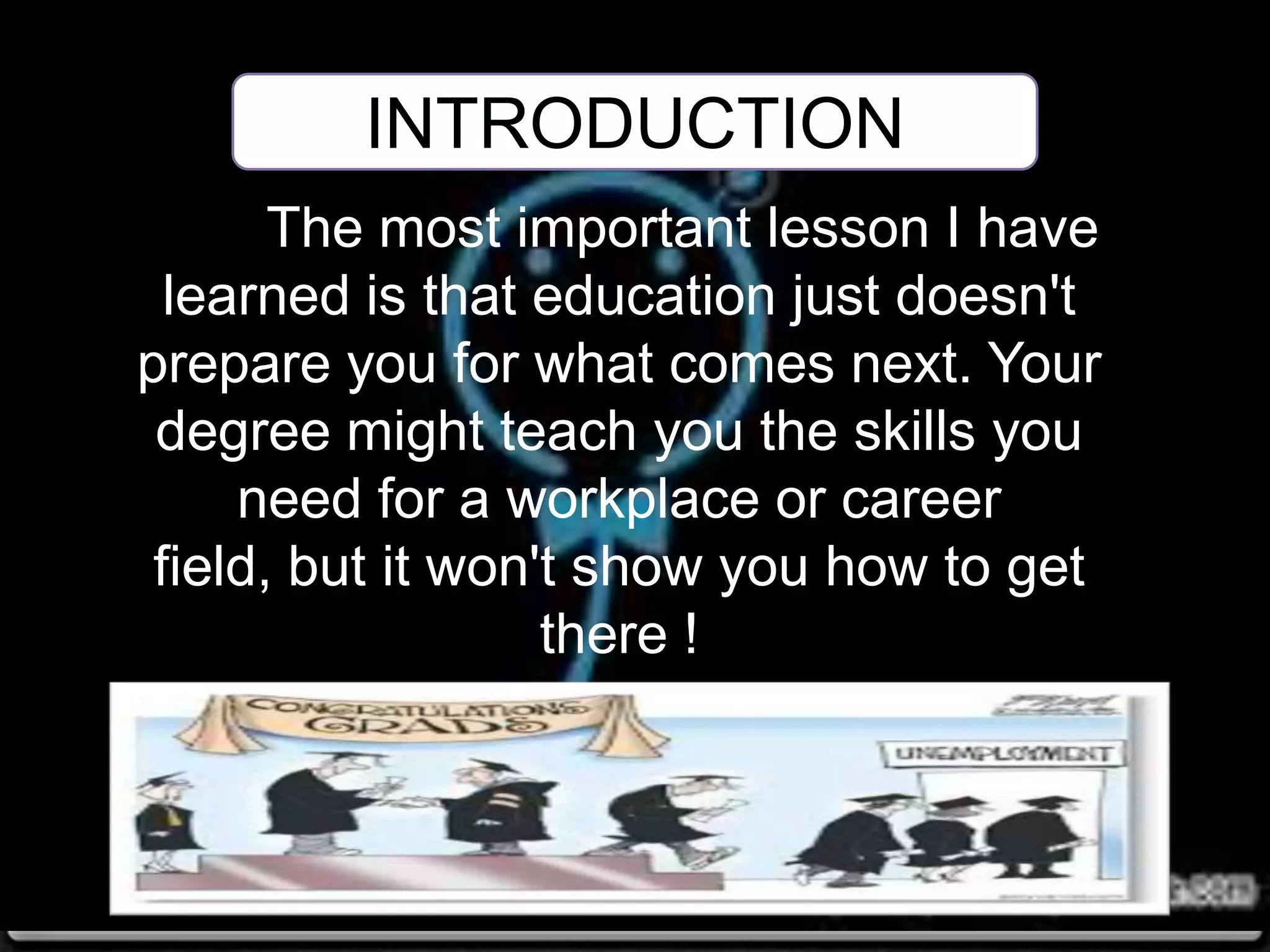
The most important lesson I have
learned is that education just doesn't
prepare you for what comes next. Your
degree might teach you the skills you
need for a workplace or career
field, but it won't show you how to get
there !
INTRODUCTION
Formal education is not always the best way to give people practical
skills. Educational programmes are seldom an initiative of
governments, and are frequently based on generic
recommendations, more than on the specific needs of the economy.
The result is a continuous mismatch between education provided
and labour market requirements.
Wangari Maathai
A solution to this would be the development of
vocational training programmes. They have been
identified as a useful tool to give young people technical
skills that are immediately usable without having the
problems of school fees and related costs.
"The increase in the numbers of youth in secondary
and tertiary education is a positive development;
however, labour markets in many countries are presently
unable to accommodate the expanding pools of skilled
young graduates."
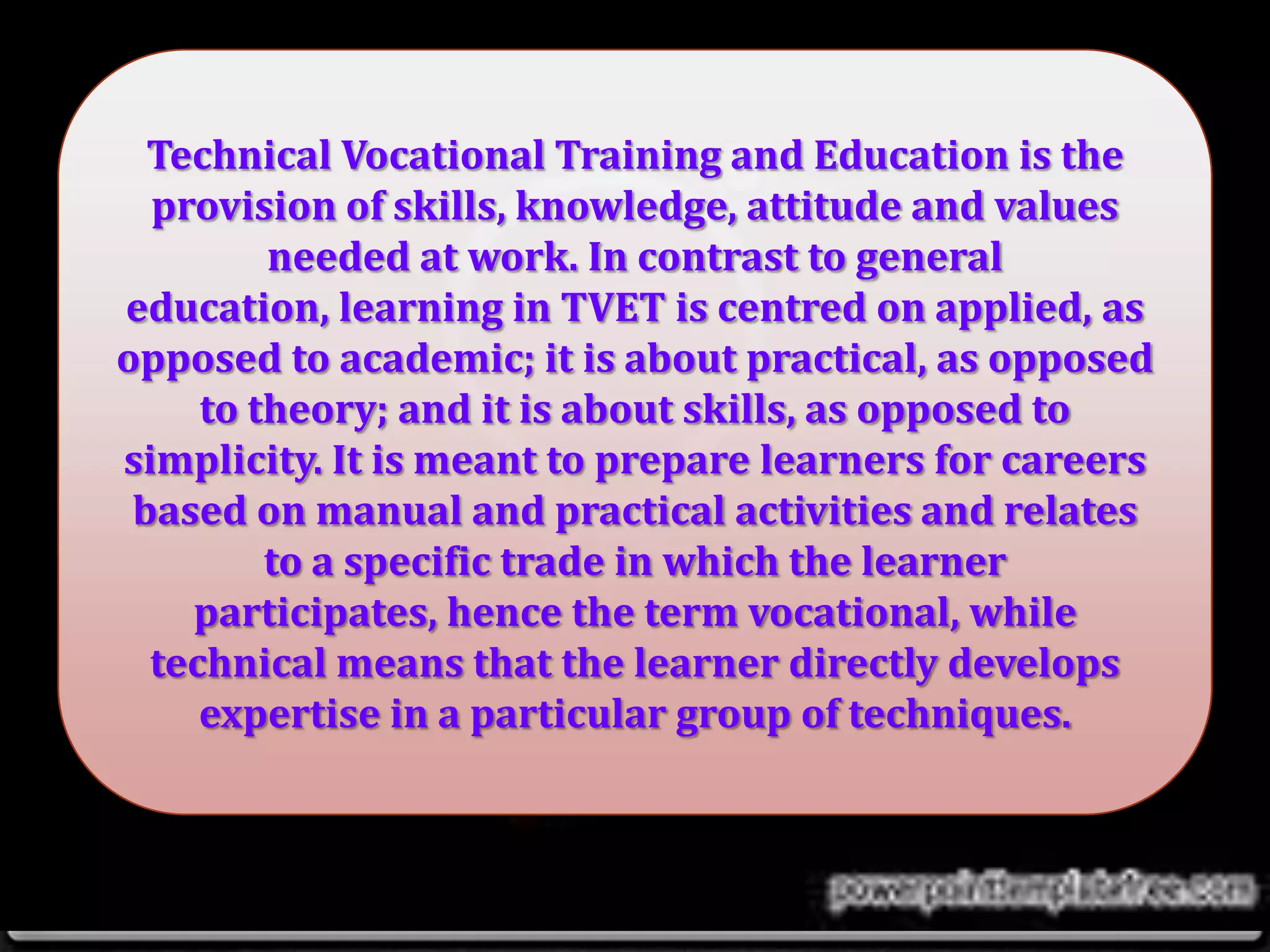
Technical Vocational Training and Education is the
provision of skills, knowledge, attitude and values
needed at work. In contrast to general
education, learning in TVET is centred on applied, as
opposed to academic; it is about practical, as opposed
to theory; and it is about skills, as opposed to
simplicity. It is meant to prepare learners for careers
based on manual and practical activities and relates
to a specific trade in which the learner
participates, hence the term vocational, while
technical means that the learner directly develops
expertise in a particular group of techniques.
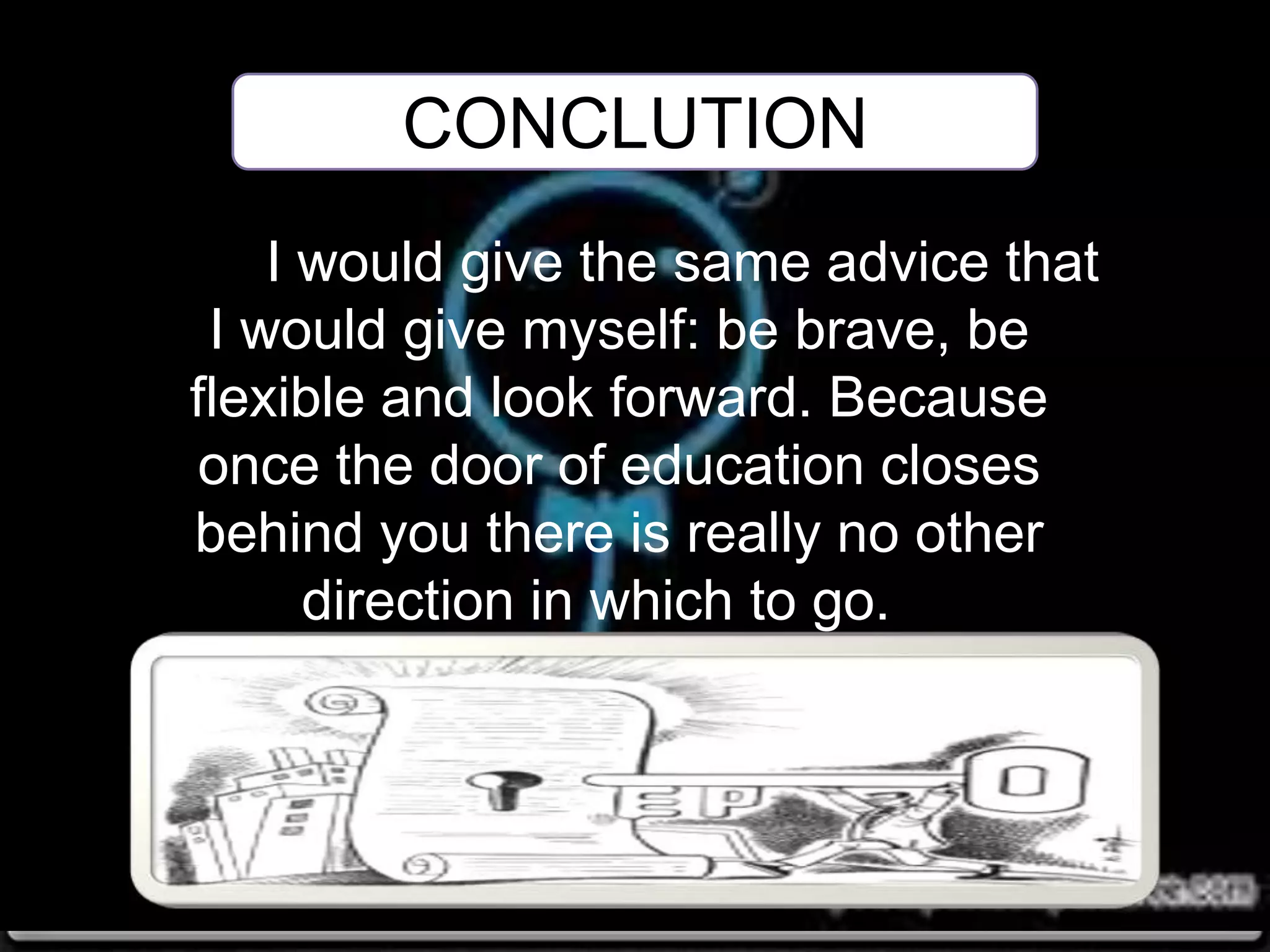
I would give the same advice that
I would give myself: be brave, be
flexible and look forward. Because
once the door of education closes
behind you there is really no other
direction in which to go.
CONCLUTION
Case study (unemployment and underemployment)

Case study (unemployment and underemployment)

  • 1.
    by: Ivy LontocCapistrano
  • 2.
    - occurs when peopleare without work and actively seeking work. Unemployment
  • 3.
  • 4.
    Philippines January 20131/ January2012 Population 15 years and over (in 000)2/ 63,682 62,683 Labor Force Participation Rate (%) 64.1 64.2 Employment Rate (%) 92.9 92.8 Unemployment Rate (%) 7.1 7.2 Underemployment Rate (%) 20.9 18. Estimates for January 2013 are preliminary and may change.
  • 5.
    The Philippines toppedIndonesia, Malaysia, Singapore, Thailand, China and South Korea in terms of the unemployment rate, the BLES said. The total number of unemployed persons in the country reached 2.9 million in January 2012 or 7.2% of the 40.3 million Filipinos in the labor force. This was lower than the 7.4% unemployment rate recorded in the same period last year. Bureau of Labor and Employment Statistics (BLES)
  • 6.
    Causes of unemployment: Over70% of total labour force is illiterate or educated below primary level Agriculture – backward farming 70 % population depend on it
  • 7.
    Effects in Individual: Aswell as anxiety, it can cause depression, lack of confidence, and huge amounts of stress. They will begin to lose social contacts, and good social skills.
  • 8.
    Effects in Individual:Unemployed individuals are unable to earn money to meet financial obligations. Failure to pay mortgage payments or to pay rent may lead to homelessness through forec losure or eviction.
  • 9.
    Effects in Social: During a long period of unemployment, workers can lose their skills, causing a loss of human capital. Being unemployed can also reduce the life expectancy of workers by about 7 years.
  • 10.
  • 11.
  • 12.
  • 13.
  • 14.
    FRICTIONAL UNEMPLOYMENT - Thisis a type of voluntary unemployment that arises because of the time needed to match job seekers with job openings. Just as friction always takes place before the slider comes to its final position on the surface, people need time to find the best job, thus voluntarily rubbing back and forth between choices and staying.
  • 15.
    DISGUISED UNEMPLOYMENT - Whenmore people are engaged in some activity than the number of person required for that, this is called disguised unemployment. Disguised unemployment exists where part of the labor force is either left without work or is working in a redundant manner where worker productivity is essentially zero.
  • 17.
    Under employment canalso refer to: 1. "Overqualification" or "overeducation", or the employment of workers with high education, skill levels, or experience in jobs that do not require such abilities.
  • 18.
    Under employment canalso refer to: 2. "Involuntary part-time" work, where workers who could (and would like to) be working for a full work- week can only find part- time work.
  • 19.
    Under employment canalso refer to: 3. "Overstaffing" or "hidden unemployment" (also called "labor hoarding"), the practice in which businesses or entire economies employ workers who are not fully occupied.
  • 20.
  • 21.
    The most importantlesson I have learned is that education just doesn't prepare you for what comes next. Your degree might teach you the skills you need for a workplace or career field, but it won't show you how to get there ! INTRODUCTION
  • 22.
    Formal education isnot always the best way to give people practical skills. Educational programmes are seldom an initiative of governments, and are frequently based on generic recommendations, more than on the specific needs of the economy. The result is a continuous mismatch between education provided and labour market requirements. Wangari Maathai
  • 23.
    A solution tothis would be the development of vocational training programmes. They have been identified as a useful tool to give young people technical skills that are immediately usable without having the problems of school fees and related costs. "The increase in the numbers of youth in secondary and tertiary education is a positive development; however, labour markets in many countries are presently unable to accommodate the expanding pools of skilled young graduates."
  • 24.
    Technical Vocational Trainingand Education is the provision of skills, knowledge, attitude and values needed at work. In contrast to general education, learning in TVET is centred on applied, as opposed to academic; it is about practical, as opposed to theory; and it is about skills, as opposed to simplicity. It is meant to prepare learners for careers based on manual and practical activities and relates to a specific trade in which the learner participates, hence the term vocational, while technical means that the learner directly develops expertise in a particular group of techniques.
  • 28.
    I would givethe same advice that I would give myself: be brave, be flexible and look forward. Because once the door of education closes behind you there is really no other direction in which to go. CONCLUTION