GOALS AND
SCOPE OF SOCIAL
WORK
OBJECTIVES
Define Social Work
Identify the goals and scope of
social work
WHAT IS SOCIAL
WORK?
is an academic discipline and
profession that concerns itself
with individuals, families,
groups and communities in an
effort to enhance social
functioning and overall well-
being.
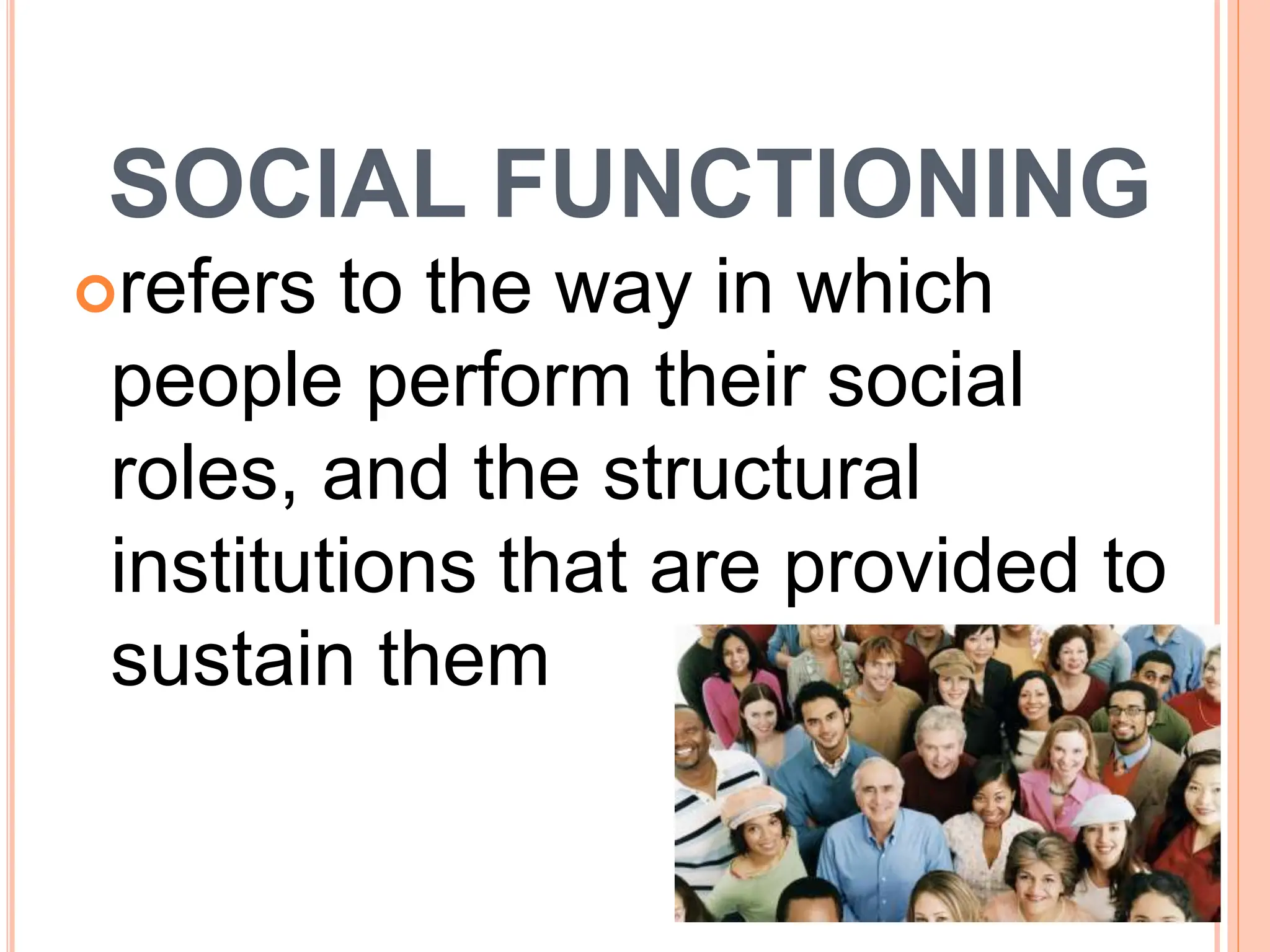
SOCIAL FUNCTIONING
refers to the way in which
people perform their social
roles, and the structural
institutions that are provided to
sustain them
“ Social Work as a practical
profession designed at helping
people address their problems
and matching them with the
resources they need to lead
healthy and productive lives.”
- Australian Association of Social
Workers
PICTURE
ANALYSIS
QUESTIONS:
What can you depict
from the pictures?
What do you think is the
story behind the pictures?
What makes it social
work?
COMMUNITY IMMERSION
TYPHOON VICTIMS
HOME FOR THE AGED
STREET CHILDREN
What would be the
principal goal of social
work based on the
pictures presented?
CARING
CURING
CHANGING
THE GOAL ON CARING
Caring refers to the heart of social
work and it focuses on the well-being
or the welfare and comfort of the
individual and community.
The goal on caring involves the
enhancement of the quality of life
in prisons, the upgrading and
humanizing services in nursing
homes etc.
THE GOAL ON CURING
Curing refers to the aspect of treating
people with problems in social
functioning.
⚫Techniques:
Popular counseling approches
(family therapy, behavior
modification, gestalt therapy
etc.)
THE GOAL ON CHANGING
Changing refers to the active
participation of the social workers in
social reforms.
THE GOAL ON CHANGING
This goal comes from a perspective
that there is a persistence of poverty,
environmental destruction, and social
disintegration.
One of the most significant goals of
social work because it contributes in
the struggle to pursue a lasting social
change.
What Are 5 Major
Goals of Social Work?
Providing One-on-One Support: The most common interpretation of becoming a social
worker, one-on-one support services involve assisting individuals who are dealing with a
myriad of issues, from physical and mental health issues.
Assisting Families: Family support involves a social worker working along with a family,
listening to their specific concerns, from economic issues to mental health problems. They
will then work together to work on a plan, giving the family community resources they can
use to improve their situation.
Advancing Your Education: As a social worker, continuing education is a crucial part of
your professional development. Regardless of your level of experience, education, and
specialty as a social worker, having a continuing education will guarantee your social work
practice stays up-to-date and relevant to the immediate needs of your clients.
Serve the Community: From working in a school to running a substance abuse support
group, what you need to become a social worker is a strong desire to help those around you,
and help to empower the community you serve.
Influence Social Policy: As a social worker, you are considered an expert on societal
issues, and with a rich combination of personal, academic, and professional experience. This
valuable combination can be used to help influence social policy and push policies that help
benefit disenfranchised communities.
GROUP ACTIVITY: THINK AND
SHARE
Group 1: Adoption and Foster Care
Group 2: Residential Care and
Protective Services
Group 3: Family Life and Family
Planning
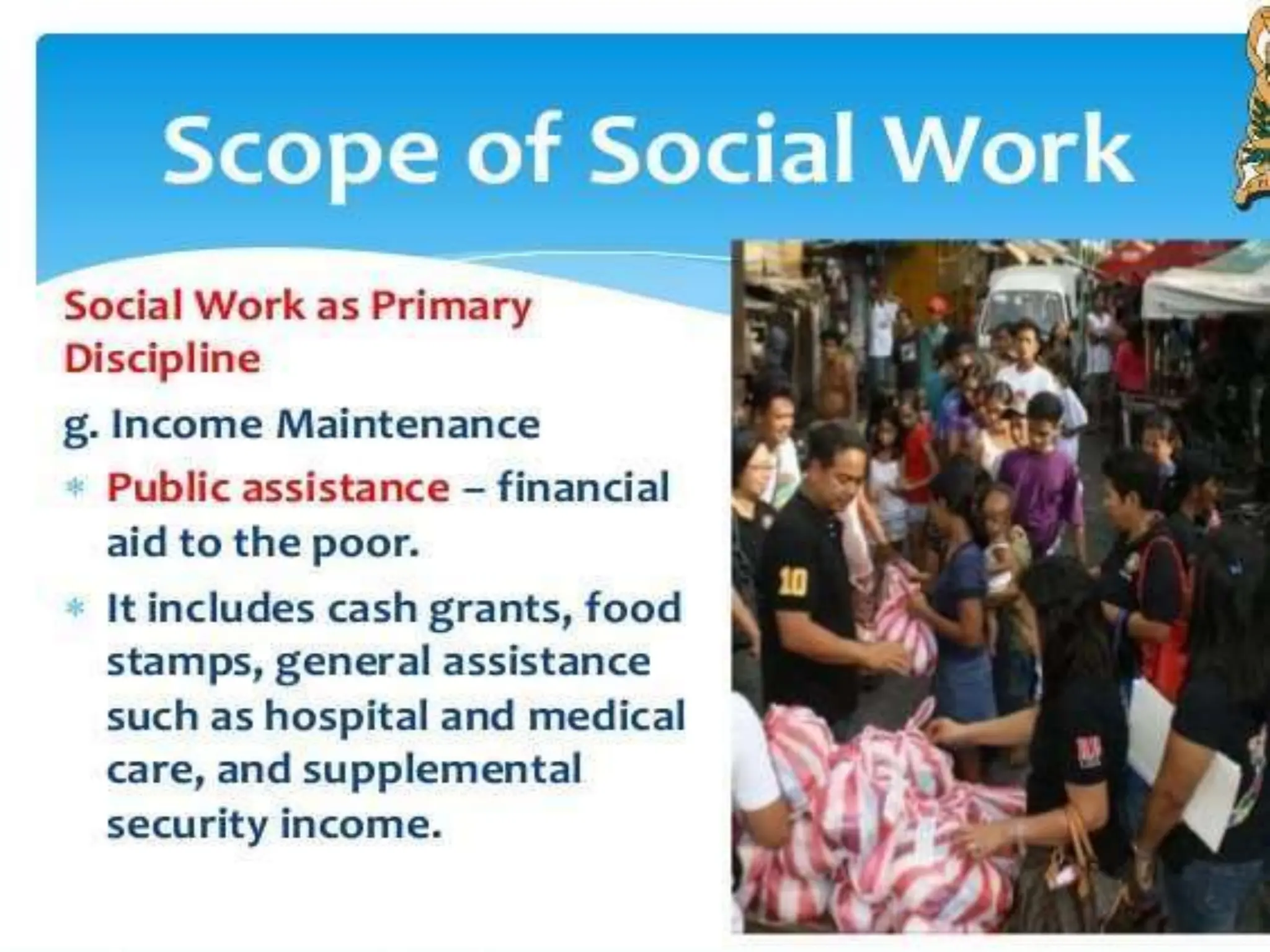
Group 4: Public Assistance and
Social Insurances
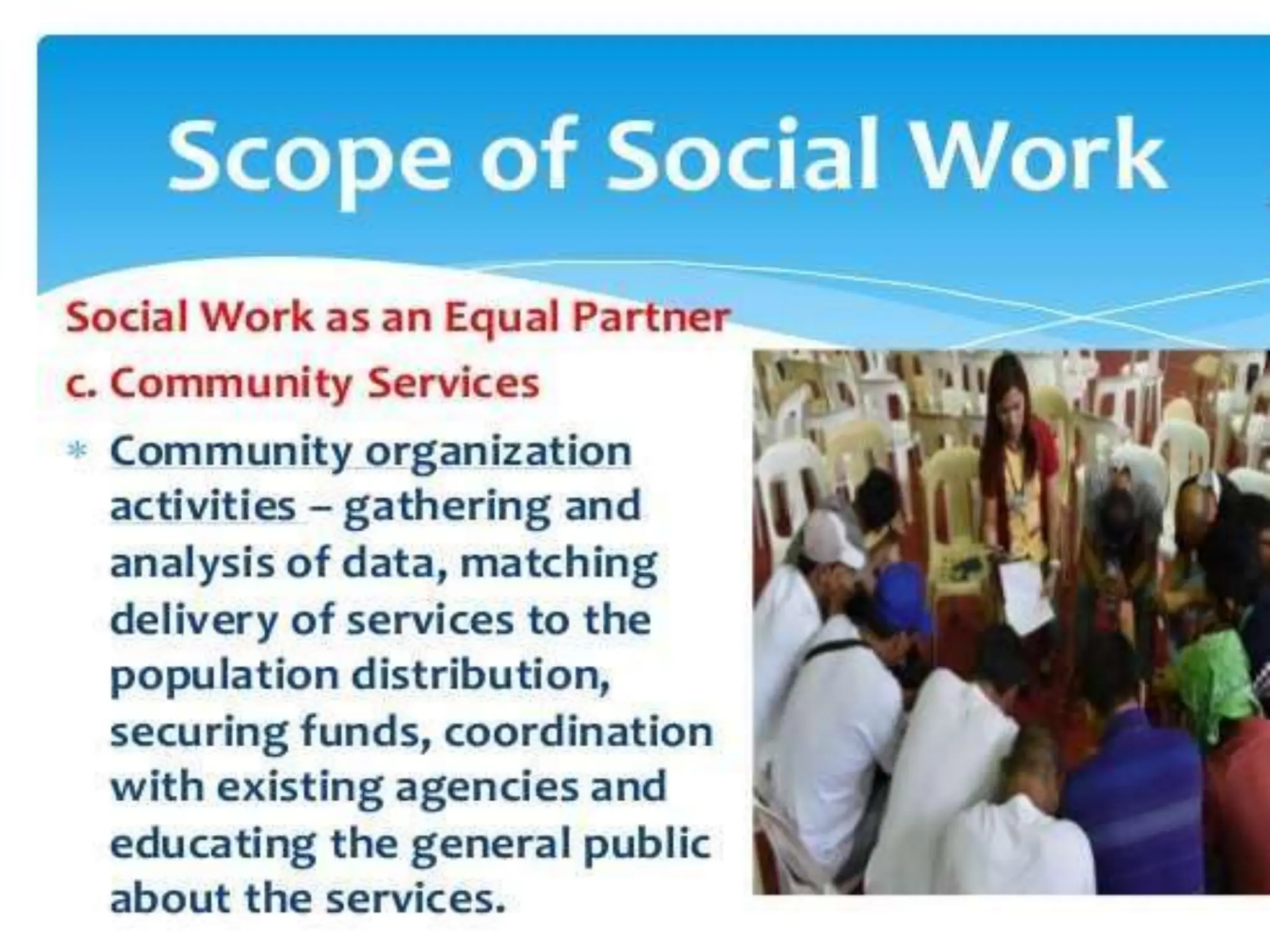
Group 5: Community Planning and
Community Development
RESIDENTIAL CARE
 Group care home or a
residential treatment center.
 These are for children
exhibiting anti-social behaviors
that require intensive treatment.
 Social Workers are involved in
sustaining a helpful connection
between the child and the
family and in preparing plans
for the return of the child to
his/her home.
WHAT IS SOCIAL WORK AND WHAT
DO SOCIAL WORKERS DO?
Social work is a profession in which
trained professionals are devoted to
helping vulnerable people and
communities work through challenges
they face in everyday life. Social
workers practice in a wide variety of
settings, united in their commitment to
advocating for and improving the lives
of individuals, families, groups and
societies.
WHAT IS THE ROLE OF SOCIAL
WORKERS?
While there is a diverse array of settings in
which social workers practice, together social
workers share the commitment to:
Promote social welfare
Help people from all backgrounds overcome
the individual challenges they are facing
Advocate for social and economic justice for
members of diverse communities
Embody the social work code of ethics
Who do social workers help?
Social workers work directly with, and on behalf of, a wide variety of
populations. Some examples are:
Children and adolescents.
Individuals with disabilities.
Individuals who are experiencing poverty or homelessness.
Medical patients.
Individuals suffering from addiction.
Students.
Individuals with mental health concerns.
Refugees and immigrants.
Aging individuals.
Couples and families.
Victims of violence or trauma.
Individuals who are incarcerated or in the criminal justice system.
Veterans. (member of armed forced)
WHERE ARE SOCIAL WORKERS
EMPLOYED?
There are a diverse range of agencies that employ social workers,
and the job descriptions for social workers vary greatly depending
on where they work. Some examples of places that employ social
workers are:
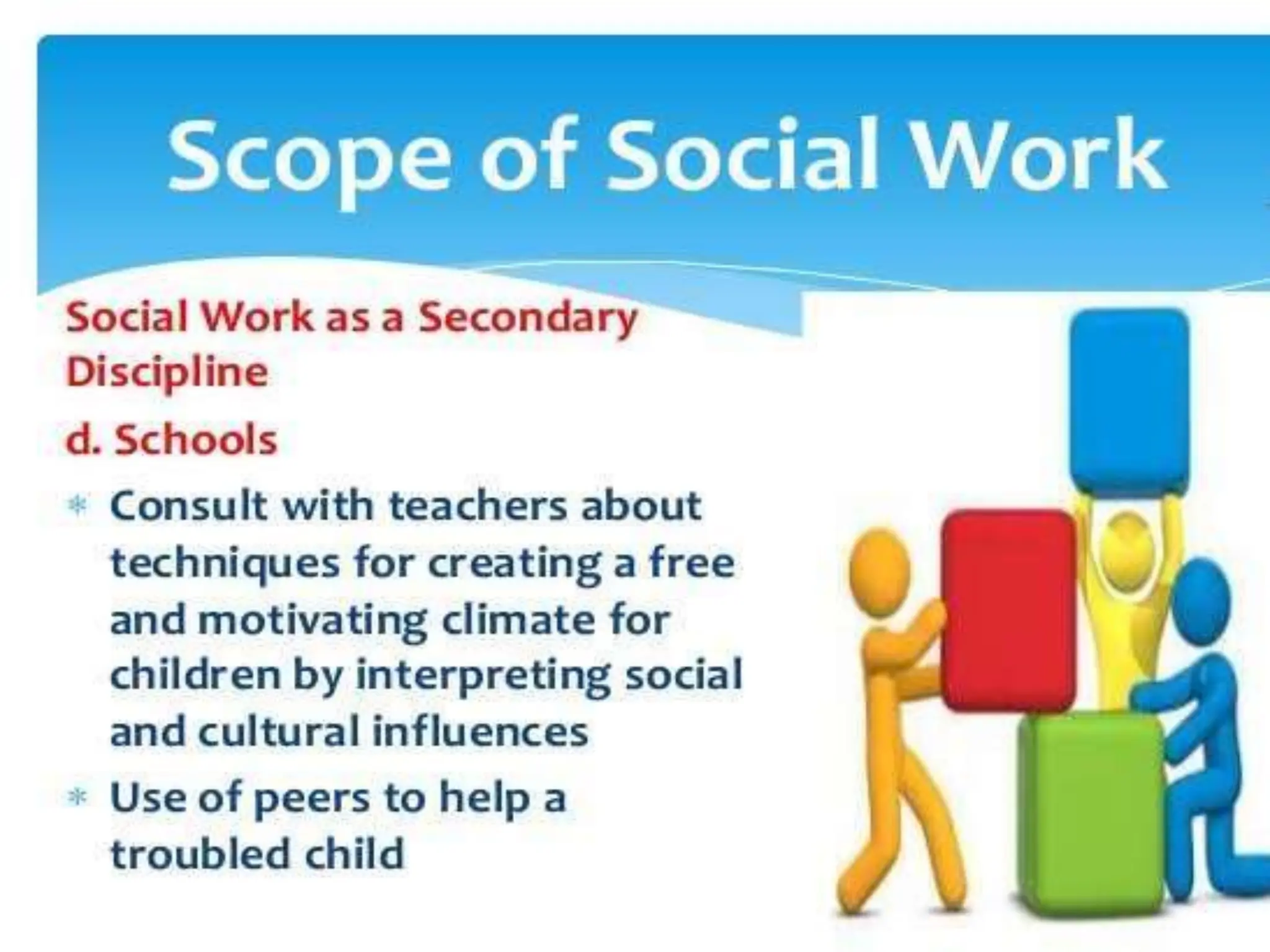
Schools (all levels, including higher education).
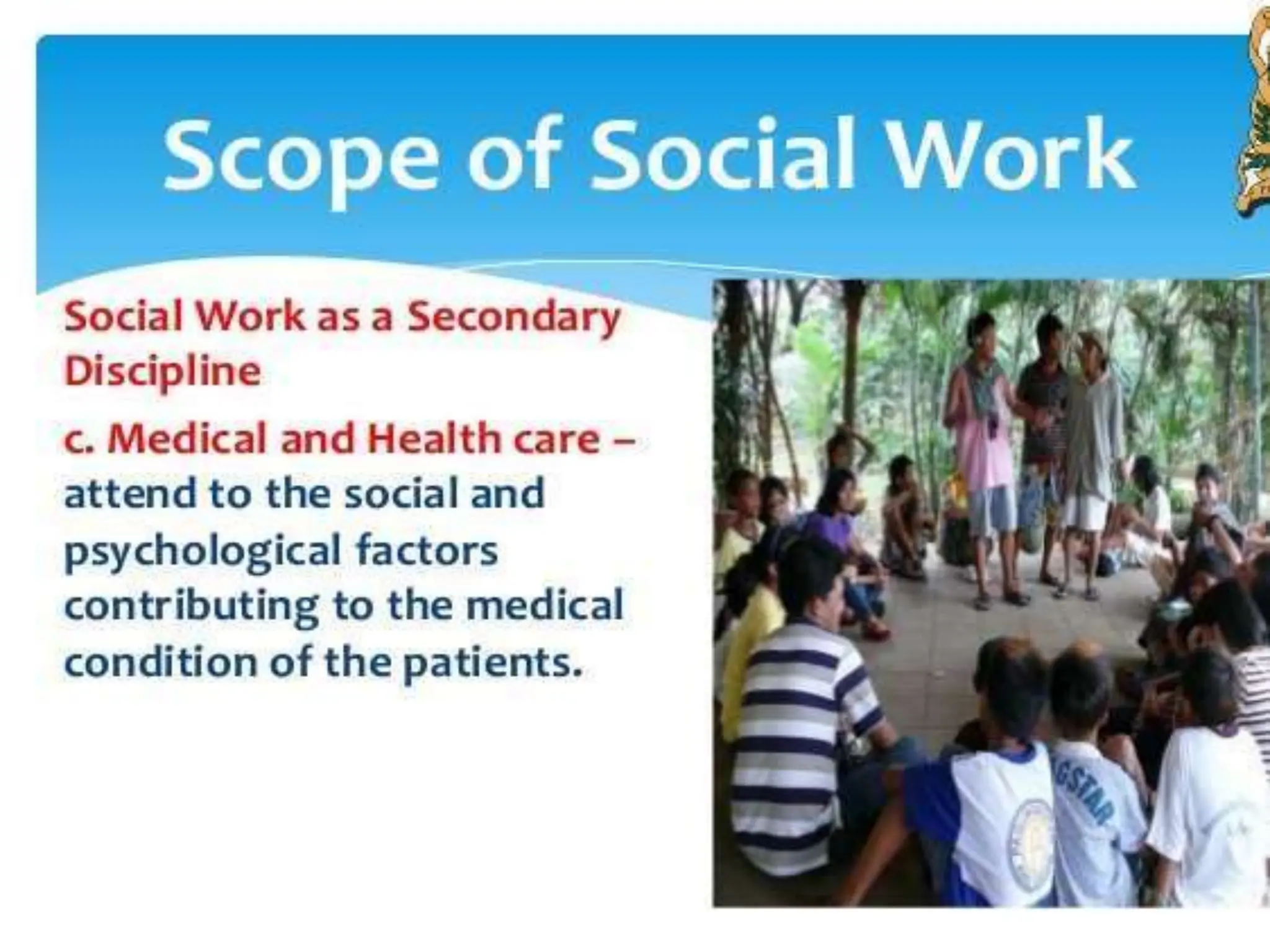
Hospitals and healthcare agencies.
Government Agencies (local, state, federal), including Veteran's
Affairs (VA) agencies and the military.
Community development and outreach agencies.
County, state, and federal legal agencies (courts, prisons, etc.)
Clinics and counseling agencies.
Some social workers are also self-employed in private practice as
licensed clinical social workers (LCSW).
Some people associate social work with
casework and, by analogy, Child Protective
Services. A social worker can indeed make a
career working in this capacity, but social work
as a profession is much broader. Modern social
work grew out of attempts – often by women,
often by volunteers -- to heal social ills.
Poverty was frequently at the root of what they
tackled – and yet not always. Nearly 100 years
ago, social workers were helping veterans who
had been traumatized in World War I. Today’s
social workers are in hospitals, health clinics,
schools, various social service organizations.
They serve the sick as well as the
disadvantaged. Some offer counseling services
REFLECTION PAPER NO. 1:
What will motivate you to
consider engaging in social
work?
What traits must you have to
become an effective social
worker?
SHORT BOND PAPER.

Goal of Social Work and Scope of Social Work.pptx

  • 1.
    GOALS AND SCOPE OFSOCIAL WORK
  • 2.
    OBJECTIVES Define Social Work Identifythe goals and scope of social work
  • 3.
    WHAT IS SOCIAL WORK? isan academic discipline and profession that concerns itself with individuals, families, groups and communities in an effort to enhance social functioning and overall well- being.
  • 4.
    SOCIAL FUNCTIONING refers tothe way in which people perform their social roles, and the structural institutions that are provided to sustain them
  • 5.
    “ Social Workas a practical profession designed at helping people address their problems and matching them with the resources they need to lead healthy and productive lives.” - Australian Association of Social Workers
  • 6.
  • 7.
    QUESTIONS: What can youdepict from the pictures? What do you think is the story behind the pictures? What makes it social work?
  • 8.
  • 9.
  • 10.
  • 11.
  • 12.
    What would bethe principal goal of social work based on the pictures presented?
  • 14.
  • 15.
    THE GOAL ONCARING Caring refers to the heart of social work and it focuses on the well-being or the welfare and comfort of the individual and community. The goal on caring involves the enhancement of the quality of life in prisons, the upgrading and humanizing services in nursing homes etc.
  • 16.
    THE GOAL ONCURING Curing refers to the aspect of treating people with problems in social functioning. ⚫Techniques: Popular counseling approches (family therapy, behavior modification, gestalt therapy etc.)
  • 17.
    THE GOAL ONCHANGING Changing refers to the active participation of the social workers in social reforms.
  • 18.
    THE GOAL ONCHANGING This goal comes from a perspective that there is a persistence of poverty, environmental destruction, and social disintegration. One of the most significant goals of social work because it contributes in the struggle to pursue a lasting social change.
  • 19.
    What Are 5Major Goals of Social Work? Providing One-on-One Support: The most common interpretation of becoming a social worker, one-on-one support services involve assisting individuals who are dealing with a myriad of issues, from physical and mental health issues. Assisting Families: Family support involves a social worker working along with a family, listening to their specific concerns, from economic issues to mental health problems. They will then work together to work on a plan, giving the family community resources they can use to improve their situation. Advancing Your Education: As a social worker, continuing education is a crucial part of your professional development. Regardless of your level of experience, education, and specialty as a social worker, having a continuing education will guarantee your social work practice stays up-to-date and relevant to the immediate needs of your clients. Serve the Community: From working in a school to running a substance abuse support group, what you need to become a social worker is a strong desire to help those around you, and help to empower the community you serve. Influence Social Policy: As a social worker, you are considered an expert on societal issues, and with a rich combination of personal, academic, and professional experience. This valuable combination can be used to help influence social policy and push policies that help benefit disenfranchised communities.
  • 20.
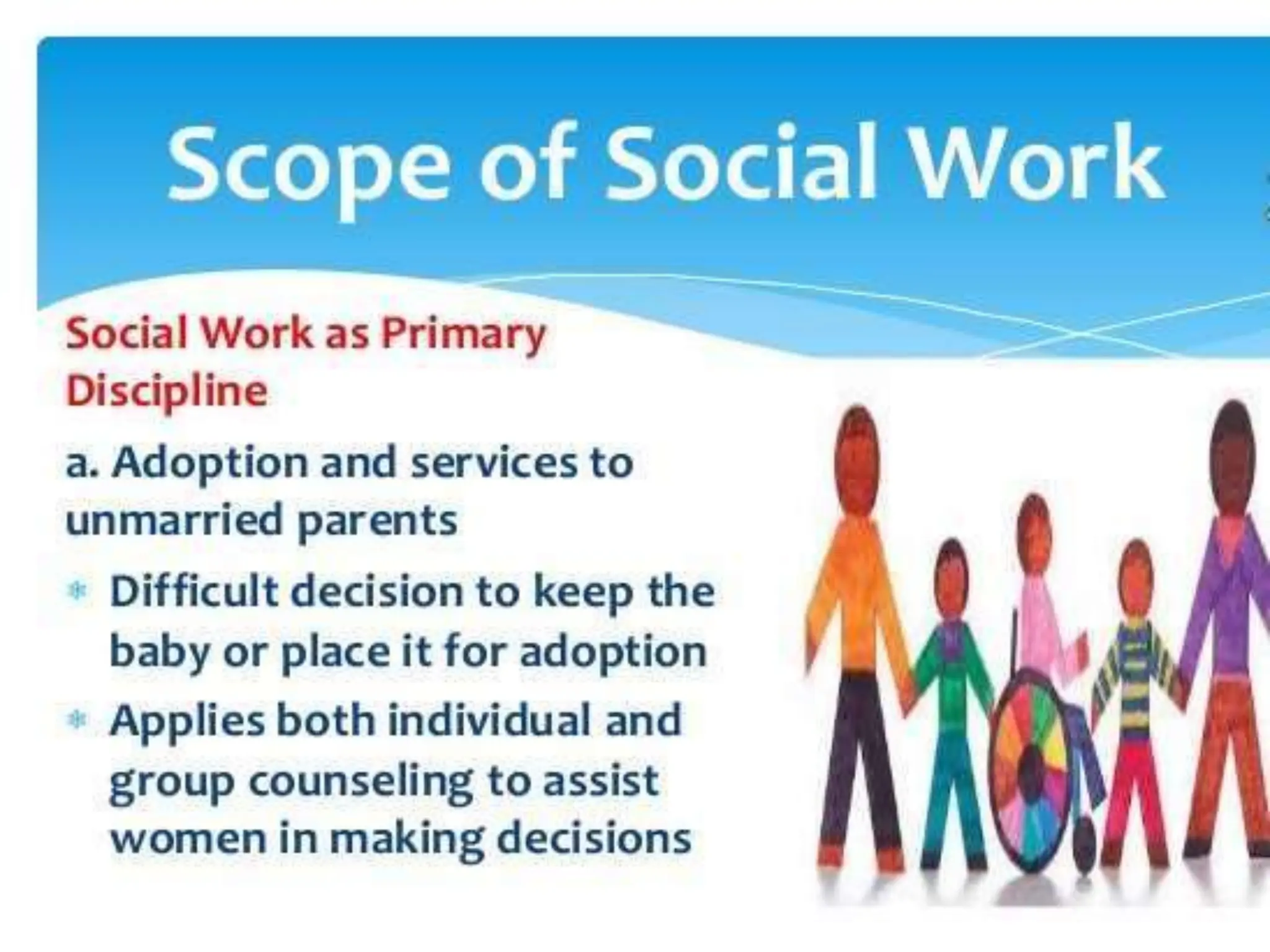
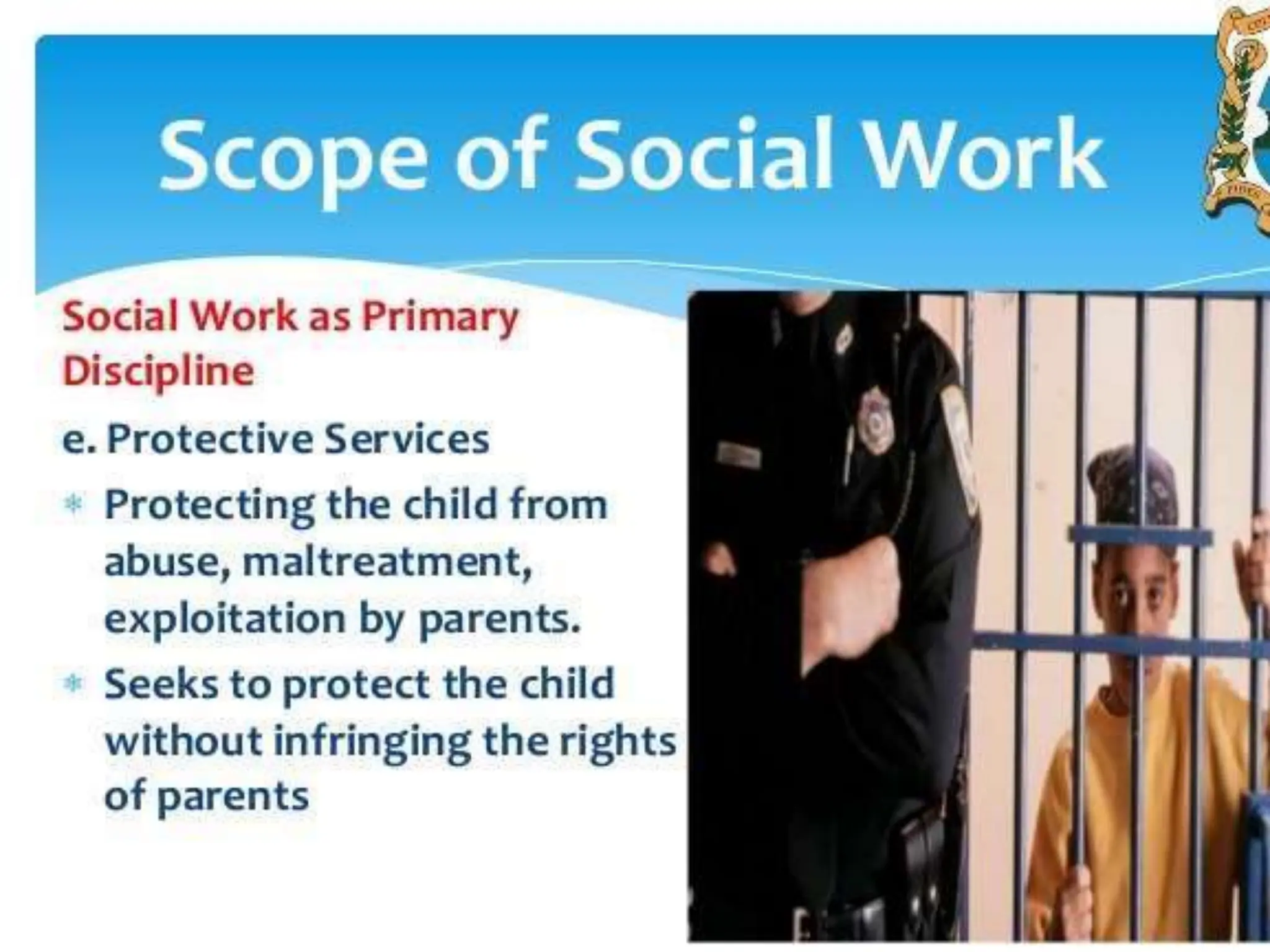
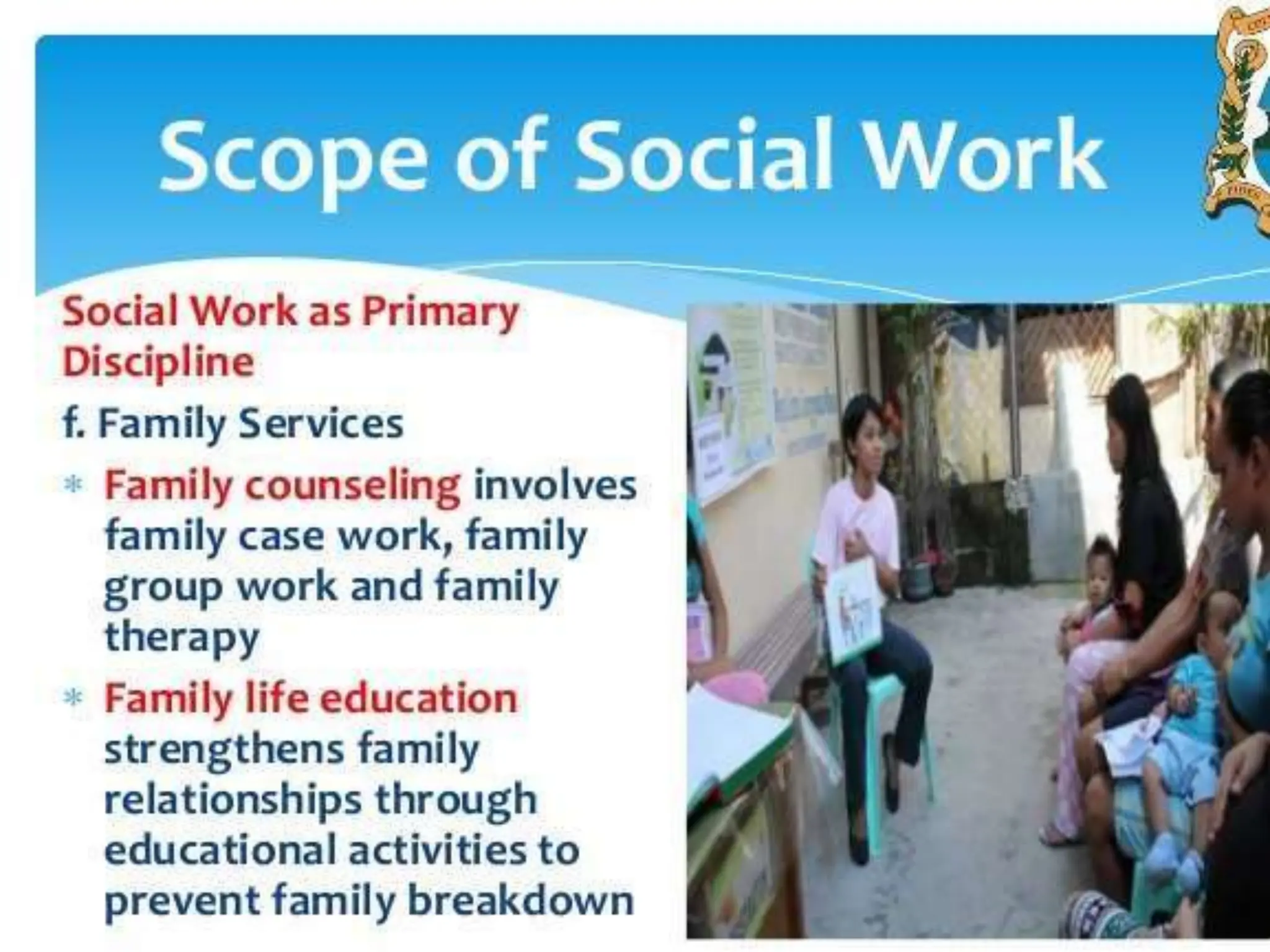
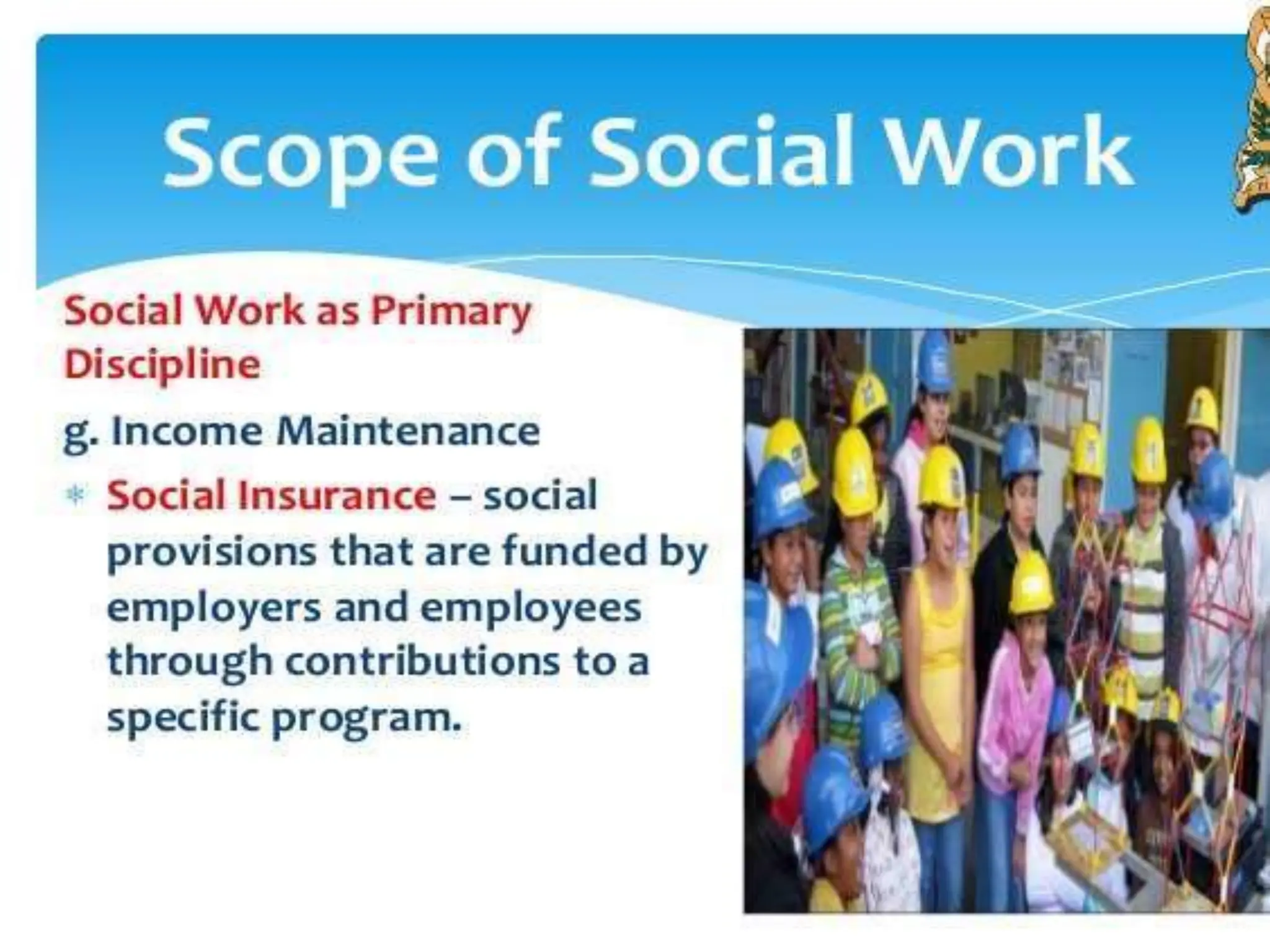
    GROUP ACTIVITY: THINKAND SHARE Group 1: Adoption and Foster Care Group 2: Residential Care and Protective Services Group 3: Family Life and Family Planning Group 4: Public Assistance and Social Insurances Group 5: Community Planning and Community Development
  • 24.
    RESIDENTIAL CARE  Groupcare home or a residential treatment center.  These are for children exhibiting anti-social behaviors that require intensive treatment.  Social Workers are involved in sustaining a helpful connection between the child and the family and in preparing plans for the return of the child to his/her home.
  • 37.
    WHAT IS SOCIALWORK AND WHAT DO SOCIAL WORKERS DO? Social work is a profession in which trained professionals are devoted to helping vulnerable people and communities work through challenges they face in everyday life. Social workers practice in a wide variety of settings, united in their commitment to advocating for and improving the lives of individuals, families, groups and societies.
  • 38.
    WHAT IS THEROLE OF SOCIAL WORKERS? While there is a diverse array of settings in which social workers practice, together social workers share the commitment to: Promote social welfare Help people from all backgrounds overcome the individual challenges they are facing Advocate for social and economic justice for members of diverse communities Embody the social work code of ethics
  • 39.
    Who do socialworkers help? Social workers work directly with, and on behalf of, a wide variety of populations. Some examples are: Children and adolescents. Individuals with disabilities. Individuals who are experiencing poverty or homelessness. Medical patients. Individuals suffering from addiction. Students. Individuals with mental health concerns. Refugees and immigrants. Aging individuals. Couples and families. Victims of violence or trauma. Individuals who are incarcerated or in the criminal justice system. Veterans. (member of armed forced)
  • 40.
    WHERE ARE SOCIALWORKERS EMPLOYED? There are a diverse range of agencies that employ social workers, and the job descriptions for social workers vary greatly depending on where they work. Some examples of places that employ social workers are: Schools (all levels, including higher education). Hospitals and healthcare agencies. Government Agencies (local, state, federal), including Veteran's Affairs (VA) agencies and the military. Community development and outreach agencies. County, state, and federal legal agencies (courts, prisons, etc.) Clinics and counseling agencies. Some social workers are also self-employed in private practice as licensed clinical social workers (LCSW).
  • 41.
    Some people associatesocial work with casework and, by analogy, Child Protective Services. A social worker can indeed make a career working in this capacity, but social work as a profession is much broader. Modern social work grew out of attempts – often by women, often by volunteers -- to heal social ills. Poverty was frequently at the root of what they tackled – and yet not always. Nearly 100 years ago, social workers were helping veterans who had been traumatized in World War I. Today’s social workers are in hospitals, health clinics, schools, various social service organizations. They serve the sick as well as the disadvantaged. Some offer counseling services
  • 42.
    REFLECTION PAPER NO.1: What will motivate you to consider engaging in social work? What traits must you have to become an effective social worker? SHORT BOND PAPER.