WHY CASE STUDIES?
• Many students learn better from examples.
• Most case studies assignments require students to answer an
open-ended question or develop a solution to an open-ended
problem with multiple potential solutions. Requirements can
range from a one-paragraph answer to a fully developed group
action plan, proposal or decision.
• You allow the students to determine what they would do to
solve a realistic or real life problem instead of hypothetical
problems.
WHY CASE STUDIES?
• Case study assignments can be done individually or in teams
so that the students can brainstorm solutions and share the
work load.
• Video: https://youtu.be/NjPnGFFfEkU
ADVANTAGES OF USING CASE STUDIES
• A major advantage of teaching with case studies is that the
students are actively engaged in figuring out the principles by
abstracting from the examples. This develops their skills in:
• Problem solving
• Analytical tools, quantitative and/or qualitative, depending on the case
• Decision making in complex situations
• Coping with ambiguities
Video: https://youtu.be/FuG8AzK9GVQ
GUIDELINES FOR CASE STUDIES IN CLASS
• In the most straightforward application, the presentation of the case
study establishes a framework for analysis.
• It is helpful if the statement of the case provides enough information for
the students to figure out solutions and then to identify how to apply
those solutions in other similar situations.
• Instructors may choose to use several cases so that students can
identify both the similarities and differences among the cases.
GUIDELINES FOR CASE STUDIES IN CLASS
• Depending on the course objectives, the instructor may encourage
students to follow a systematic approach to their analysis. For
example:
What is the issue?
What is the goal of the analysis?
What is the context of the problem?
What key facts should be considered?
What alternatives are available to the decision-maker?
What would you recommend — and why?
GUIDELINES FOR CASE STUDIES IN CLASS
• An innovative approach to case analysis might be to have
students role-play the part of the people involved in the case. This not
only actively engages students, but forces them to really understand
the perspectives of the case characters.
• Videos or even field trips showing the venue in which the case is
situated can help students to visualize the situation that they need to
analyze.
ACCOMPANYING READINGS
• Case studies can be especially effective if they are paired with a reading
assignment that introduces or explains a concept or analytical method
that applies to the case.
• The amount of emphasis placed on the use of the reading during the
case discussion depends on the complexity of the concept or method.
• If it is straightforward, the focus of the discussion can be placed on the
use of the analytical results.
• If the method is more complex, the instructor may need to walk
students through its application and the interpretation of the results.
EXAMPLE CASE STUDY
What's the issue: Safely excavate a trench
What is the goal of the analysis: To determine a save way to excavate a
trench
What is the context of the problem: What’s the safest way?
What key facts should be considered: Types of soil your dealing with?
What alternatives are available to the decision-maker: Trench box or
bench/sloped side or shoring?
EXAMPLE CASE STUDY
Safest way to excavate a trench? Trench Box or Benched/Sloped Sides
Videos:
• https://youtu.be/kFOPDH5NTWY
• https://youtu.be/EIthR6akGtw?list=PLUyWkHwckhS5X5AMTTrM0EBBVD
G6j2HW2
• https://youtu.be/lUgjbIK0r0c
• https://youtu.be/vagy1JPm0kk
• https://youtu.be/USat6LdENzU
• https://youtu.be/1Y5lsem9r4U
• https://youtu.be/fWRYH0Hd9hM
EXAMPLE CASE STUDY
What key facts should be considered: Types of soil your dealing with?
Articles:
• https://www.osha.gov/OshDoc/data_Hurricane_Facts/trench_excavation
_fs.pdf
• http://www.safetyandhealthmagazine.com/articles/safety-in-the-
trenches-4
• http://www.constructionsafetyconsultant.com/articles/excavation.PDF
• http://www.safe-workplace.com/articles/trench-safety.php
• http://www.lhsfna.org/index.cfm/occupational-safety-and-
health/trenches-and-excavations/
• http://www.femoranshs.com/trench-safety-article/
EXAMPLE CASE STUDY
What type of soil are we dealing with?
Soil report:
• http://www.clermontswcd.org/06.pdf
• http://www.clermontswcd.org/SoilSurvey.aspx#Availability
• http://websoilsurvey.nrcs.usda.gov/app/
Review all materials before making a decision
EXAMPLE CASE STUDY
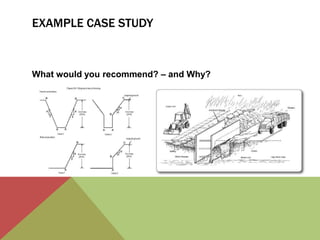
What would you recommend? – and Why?
PROS AND CONS OF CASE STUDIES
Pros:
• Students are engaged more than a lecture.
• Students can relate to the subject matter better because they are real or
realistic examples.
• Your students will get a more in depth look at the topic.
Cons:
• Not as quick to make up as a lecture.
• Could take up more class time but will cover the material in more depth.
• May keep students too engaged.

Case study presentation

  • 2.
    WHY CASE STUDIES? •Many students learn better from examples. • Most case studies assignments require students to answer an open-ended question or develop a solution to an open-ended problem with multiple potential solutions. Requirements can range from a one-paragraph answer to a fully developed group action plan, proposal or decision. • You allow the students to determine what they would do to solve a realistic or real life problem instead of hypothetical problems.
  • 3.
    WHY CASE STUDIES? •Case study assignments can be done individually or in teams so that the students can brainstorm solutions and share the work load. • Video: https://youtu.be/NjPnGFFfEkU
  • 4.
    ADVANTAGES OF USINGCASE STUDIES • A major advantage of teaching with case studies is that the students are actively engaged in figuring out the principles by abstracting from the examples. This develops their skills in: • Problem solving • Analytical tools, quantitative and/or qualitative, depending on the case • Decision making in complex situations • Coping with ambiguities Video: https://youtu.be/FuG8AzK9GVQ
  • 5.
    GUIDELINES FOR CASESTUDIES IN CLASS • In the most straightforward application, the presentation of the case study establishes a framework for analysis. • It is helpful if the statement of the case provides enough information for the students to figure out solutions and then to identify how to apply those solutions in other similar situations. • Instructors may choose to use several cases so that students can identify both the similarities and differences among the cases.
  • 6.
    GUIDELINES FOR CASESTUDIES IN CLASS • Depending on the course objectives, the instructor may encourage students to follow a systematic approach to their analysis. For example: What is the issue? What is the goal of the analysis? What is the context of the problem? What key facts should be considered? What alternatives are available to the decision-maker? What would you recommend — and why?
  • 7.
    GUIDELINES FOR CASESTUDIES IN CLASS • An innovative approach to case analysis might be to have students role-play the part of the people involved in the case. This not only actively engages students, but forces them to really understand the perspectives of the case characters. • Videos or even field trips showing the venue in which the case is situated can help students to visualize the situation that they need to analyze.
  • 8.
    ACCOMPANYING READINGS • Casestudies can be especially effective if they are paired with a reading assignment that introduces or explains a concept or analytical method that applies to the case. • The amount of emphasis placed on the use of the reading during the case discussion depends on the complexity of the concept or method. • If it is straightforward, the focus of the discussion can be placed on the use of the analytical results. • If the method is more complex, the instructor may need to walk students through its application and the interpretation of the results.
  • 9.
    EXAMPLE CASE STUDY What'sthe issue: Safely excavate a trench What is the goal of the analysis: To determine a save way to excavate a trench What is the context of the problem: What’s the safest way? What key facts should be considered: Types of soil your dealing with? What alternatives are available to the decision-maker: Trench box or bench/sloped side or shoring?
  • 10.
    EXAMPLE CASE STUDY Safestway to excavate a trench? Trench Box or Benched/Sloped Sides Videos: • https://youtu.be/kFOPDH5NTWY • https://youtu.be/EIthR6akGtw?list=PLUyWkHwckhS5X5AMTTrM0EBBVD G6j2HW2 • https://youtu.be/lUgjbIK0r0c • https://youtu.be/vagy1JPm0kk • https://youtu.be/USat6LdENzU • https://youtu.be/1Y5lsem9r4U • https://youtu.be/fWRYH0Hd9hM
  • 11.
    EXAMPLE CASE STUDY Whatkey facts should be considered: Types of soil your dealing with? Articles: • https://www.osha.gov/OshDoc/data_Hurricane_Facts/trench_excavation _fs.pdf • http://www.safetyandhealthmagazine.com/articles/safety-in-the- trenches-4 • http://www.constructionsafetyconsultant.com/articles/excavation.PDF • http://www.safe-workplace.com/articles/trench-safety.php • http://www.lhsfna.org/index.cfm/occupational-safety-and- health/trenches-and-excavations/ • http://www.femoranshs.com/trench-safety-article/
  • 12.
    EXAMPLE CASE STUDY Whattype of soil are we dealing with? Soil report: • http://www.clermontswcd.org/06.pdf • http://www.clermontswcd.org/SoilSurvey.aspx#Availability • http://websoilsurvey.nrcs.usda.gov/app/ Review all materials before making a decision
  • 13.
    EXAMPLE CASE STUDY Whatwould you recommend? – and Why?
  • 14.
    PROS AND CONSOF CASE STUDIES Pros: • Students are engaged more than a lecture. • Students can relate to the subject matter better because they are real or realistic examples. • Your students will get a more in depth look at the topic. Cons: • Not as quick to make up as a lecture. • Could take up more class time but will cover the material in more depth. • May keep students too engaged.