Case Study on CAPA for Tablet
Defects
Presented by
Ch. S S N D Balakrishna, M.Pharm
Roll no: 219303
Department of Regulatory Affairs
Shri Vishnu College of Pharmacy (SVCP)
Introduction
Corrective and preventive action consists of improvements to an
organization's processes taken to eliminate causes of non-conformities or other
undesirable situations.
It is usually a set of actions that takes place in manufacturing,
documentation, procedures, or systems to rectify and eliminate recurring non-
conformance.
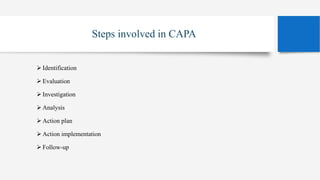
Steps involved in CAPA
 Identification
 Evaluation
 Investigation
 Analysis
 Action plan
 Action implementation
 Follow-up
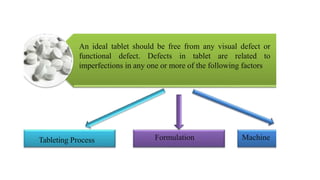
An ideal tablet should be free from any visual defect or
functional defect. Defects in tablet are related to
imperfections in any one or more of the following factors
Tableting Process Formulation Machine
lamination
capping
cracking
sticking
picking
chipping
binding
Double
impression
mottling
Tablet
defects
Case Study
Problem:
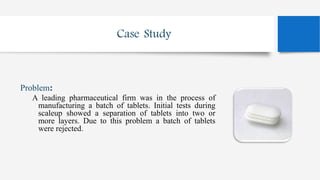
A leading pharmaceutical firm was in the process of
manufacturing a batch of tablets. Initial tests during
scaleup showed a separation of tablets into two or
more layers. Due to this problem a batch of tablets
were rejected.
Identification
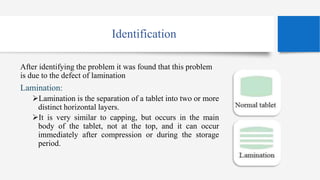
After identifying the problem it was found that this problem
is due to the defect of lamination
Lamination:
Lamination is the separation of a tablet into two or more
distinct horizontal layers.
It is very similar to capping, but occurs in the main
body of the tablet, not at the top, and it can occur
immediately after compression or during the storage
period.
Difference between lamination and Capping
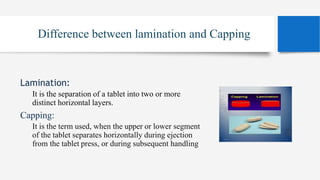
Lamination:
It is the separation of a tablet into two or more
distinct horizontal layers.
Capping:
It is the term used, when the upper or lower segment
of the tablet separates horizontally during ejection
from the tablet press, or during subsequent handling
Root Cause Analysis
After identification of problem, we implemented the root
cause analysis for the problem.
Excessive quantity of dry Granules is an reason of Lamination
which may be due to bad drying. We found that the problem is
occurred because of over dried granules.
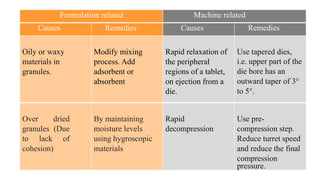
Formulation related Machine related
Causes Remedies Causes Remedies
Oily or waxy
materials in
granules.
Modify mixing
process. Add
adsorbent or
absorbent
Rapid relaxation of
the peripheral
regions of a tablet,
on ejection from a
die.
Use tapered dies,
i.e. upper part of the
die bore has an
outward taper of 3°
to 5°.
Over dried
granules (Due
to lack of
cohesion)
By maintaining
moisture levels
using hygroscopic
materials
Rapid
decompression
Use pre-
compression step.
Reduce turret speed
and reduce the final
compression
pressure.
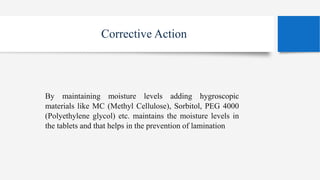
Corrective Action
By maintaining moisture levels adding hygroscopic
materials like MC (Methyl Cellulose), Sorbitol, PEG 4000
(Polyethylene glycol) etc. maintains the moisture levels in
the tablets and that helps in the prevention of lamination
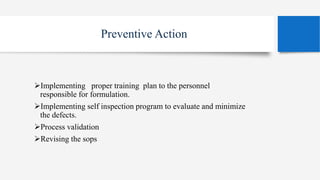
Preventive Action
Implementing proper training plan to the personnel
responsible for formulation.
Implementing self inspection program to evaluate and minimize
the defects.
Process validation
Revising the sops
Thank You

Case Study on CAPA for Tablet Defects in Pharmaceutical Industry

  • 1.
    Case Study onCAPA for Tablet Defects Presented by Ch. S S N D Balakrishna, M.Pharm Roll no: 219303 Department of Regulatory Affairs Shri Vishnu College of Pharmacy (SVCP)
  • 2.
    Introduction Corrective and preventiveaction consists of improvements to an organization's processes taken to eliminate causes of non-conformities or other undesirable situations. It is usually a set of actions that takes place in manufacturing, documentation, procedures, or systems to rectify and eliminate recurring non- conformance.
  • 3.
    Steps involved inCAPA  Identification  Evaluation  Investigation  Analysis  Action plan  Action implementation  Follow-up
  • 4.
    An ideal tabletshould be free from any visual defect or functional defect. Defects in tablet are related to imperfections in any one or more of the following factors Tableting Process Formulation Machine
  • 5.
  • 6.
    Case Study Problem: A leadingpharmaceutical firm was in the process of manufacturing a batch of tablets. Initial tests during scaleup showed a separation of tablets into two or more layers. Due to this problem a batch of tablets were rejected.
  • 7.
    Identification After identifying theproblem it was found that this problem is due to the defect of lamination Lamination: Lamination is the separation of a tablet into two or more distinct horizontal layers. It is very similar to capping, but occurs in the main body of the tablet, not at the top, and it can occur immediately after compression or during the storage period.
  • 8.
    Difference between laminationand Capping Lamination: It is the separation of a tablet into two or more distinct horizontal layers. Capping: It is the term used, when the upper or lower segment of the tablet separates horizontally during ejection from the tablet press, or during subsequent handling
  • 9.
    Root Cause Analysis Afteridentification of problem, we implemented the root cause analysis for the problem. Excessive quantity of dry Granules is an reason of Lamination which may be due to bad drying. We found that the problem is occurred because of over dried granules.
  • 10.
    Formulation related Machinerelated Causes Remedies Causes Remedies Oily or waxy materials in granules. Modify mixing process. Add adsorbent or absorbent Rapid relaxation of the peripheral regions of a tablet, on ejection from a die. Use tapered dies, i.e. upper part of the die bore has an outward taper of 3° to 5°. Over dried granules (Due to lack of cohesion) By maintaining moisture levels using hygroscopic materials Rapid decompression Use pre- compression step. Reduce turret speed and reduce the final compression pressure.
  • 11.
    Corrective Action By maintainingmoisture levels adding hygroscopic materials like MC (Methyl Cellulose), Sorbitol, PEG 4000 (Polyethylene glycol) etc. maintains the moisture levels in the tablets and that helps in the prevention of lamination
  • 12.
    Preventive Action Implementing propertraining plan to the personnel responsible for formulation. Implementing self inspection program to evaluate and minimize the defects. Process validation Revising the sops
  • 13.