Off-The Job Training
Group Members
 RIDA
 ADEEL
 SHARLEEN
 KHUZAIMA
 MEHMOOD
BSBA 5th A BUITEMS QUETTA
Table of content
 Training
 Off-the job training.
 Types/methods of off-the job training.
 Advantages of off-the job training.
 Disadvantages of off-the job training.
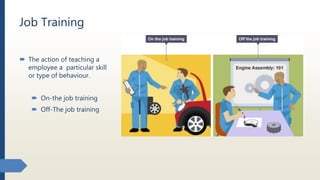
Job Training
 The action of teaching a
employee a particular skill
or type of behaviour.
 On-the job training
 Off-The job training
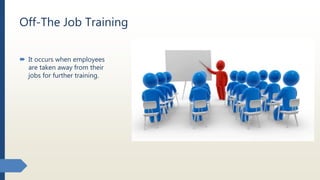
Off-The Job Training
 It occurs when employees
are taken away from their
jobs for further training.
Methods of
Off-The Job
Training
Off-The Job
Training
Case study
Role play
Brainstorming
Vestibule
training
Lectures
Group
discussion
Case Study
 Situation is given to employee.
 Trainee is given an opportunity
to analyse the case.
 Come out with possible
solution.
Benefit of Case
Study
Enhance analytical and critical thinking.
Role Play
 It is simulation in which each
participant is given a role to
play. Trainees are given with
some information related to
description of the role,
concerns, objectives,
responsibilities, and emotion
etc .
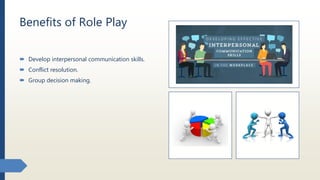
Benefits of Role Play
 Develop interpersonal communication skills.
 Conflict resolution.
 Group decision making.
Types of Role Play
 Multiple role play
 Single role play
 Role rotation
Lectures
 Traditional and direct method.
 Verbal presentation of
information.
 Lecture must motivate and
create interest among trainees
in order to become effective.
 This method is used in
colleges and universities.
Advantages
 Less time required for preparation.
 Provides lots of information quickly.
 Cost per trainee is very low.
Disadvantages
 Does not involve trainees to much.
 Trainees may forget the teaching as it is presented only orally.
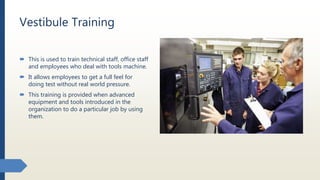
Vestibule Training
 This is used to train technical staff, office staff
and employees who deal with tools machine.
 It allows employees to get a full feel for
doing test without real world pressure.
 This training is provided when advanced
equipment and tools introduced in the
organization to do a particular job by using
them.
Brainstorming
 It is a group creativity
technique by which efforts are
made to find a conclusion for
a specific problem by
gathering a list of ideas
spontaneously contributed by
its members.
Types of Brainstorming
 Speed storming
 Brain writing
 Reverse brainstorming
Group Discussions
 This method is use to support,
explain, expand and interact.
 Improves communication
skills.
 Improves team work.
 Improves confidence level
Off-The Job Training Advantages
A wider range of skills or qualifications can be obtained.
Can learn from outside specialists or experts.
Employees can be more confident when starting job.
Employees are more polished and now work efficiently.
Off-The Job Training
Disadvantages
 More expensive – e.g. transport and
accommodation.
 Lost working time and potential output from
employee.
 New employees may still need some
induction training.
 Employees now have new
skills/qualifications and may leave for better
jobs.
THANK YOU!

Off the job training

  • 1.
  • 2.
    Group Members  RIDA ADEEL  SHARLEEN  KHUZAIMA  MEHMOOD BSBA 5th A BUITEMS QUETTA
  • 3.
    Table of content Training  Off-the job training.  Types/methods of off-the job training.  Advantages of off-the job training.  Disadvantages of off-the job training.
  • 4.
    Job Training  Theaction of teaching a employee a particular skill or type of behaviour.  On-the job training  Off-The job training
  • 5.
    Off-The Job Training It occurs when employees are taken away from their jobs for further training.
  • 6.
    Methods of Off-The Job Training Off-TheJob Training Case study Role play Brainstorming Vestibule training Lectures Group discussion
  • 7.
    Case Study  Situationis given to employee.  Trainee is given an opportunity to analyse the case.  Come out with possible solution.
  • 8.
    Benefit of Case Study Enhanceanalytical and critical thinking.
  • 9.
    Role Play  Itis simulation in which each participant is given a role to play. Trainees are given with some information related to description of the role, concerns, objectives, responsibilities, and emotion etc .
  • 10.
    Benefits of RolePlay  Develop interpersonal communication skills.  Conflict resolution.  Group decision making.
  • 11.
    Types of RolePlay  Multiple role play  Single role play  Role rotation
  • 12.
    Lectures  Traditional anddirect method.  Verbal presentation of information.  Lecture must motivate and create interest among trainees in order to become effective.  This method is used in colleges and universities.
  • 13.
    Advantages  Less timerequired for preparation.  Provides lots of information quickly.  Cost per trainee is very low.
  • 14.
    Disadvantages  Does notinvolve trainees to much.  Trainees may forget the teaching as it is presented only orally.
  • 15.
    Vestibule Training  Thisis used to train technical staff, office staff and employees who deal with tools machine.  It allows employees to get a full feel for doing test without real world pressure.  This training is provided when advanced equipment and tools introduced in the organization to do a particular job by using them.
  • 16.
    Brainstorming  It isa group creativity technique by which efforts are made to find a conclusion for a specific problem by gathering a list of ideas spontaneously contributed by its members.
  • 17.
    Types of Brainstorming Speed storming  Brain writing  Reverse brainstorming
  • 18.
    Group Discussions  Thismethod is use to support, explain, expand and interact.  Improves communication skills.  Improves team work.  Improves confidence level
  • 19.
    Off-The Job TrainingAdvantages A wider range of skills or qualifications can be obtained. Can learn from outside specialists or experts. Employees can be more confident when starting job. Employees are more polished and now work efficiently.
  • 20.
    Off-The Job Training Disadvantages More expensive – e.g. transport and accommodation.  Lost working time and potential output from employee.  New employees may still need some induction training.  Employees now have new skills/qualifications and may leave for better jobs.
  • 21.