AJAY 
Psychiatric c.p
MANIA 
case 
presentation
Presenting complaints 
• A 23 yrs unmarried right handed Marathi speaking , Hindu 
religious male ganesh sankpal, educated B.E ,coming from 
chinchwad pune with the complaints of 
• Irritability 
• Wandering behaviour 
• Muttering to self 
• Suspiciousness 
• Loudly speak 
• Auditory hallucination 
• Grandiosity 
• Loss of memory 
• Increased psychomotor activity 
• Flight of ideas
HISTORY OF ILLNESS 
• According to informant pt is k/c/o/ psychiatric 
illness since 4 years was remain untreated till 
now 
• Patient was shown psychiatric illness in past then 
he was admitted in hospital 3 years ago but 
absconded before treatment start since then 
patient behaviour fluctuatively (having 
unpredictable ups down )and now as behaviour 
become unmanageble so he brought to SGH
HISTORY OF ILLNESS 
• 4 yrs back his symptoms started within duration of B.E 
F Y exam period and he was noticed anxious during 
exam period & he was also noticed to be talking to to 
self with gesturing of hand when asked him ,then he 
said its related to study 
• He was noticed above symptoms with running on road 
without any reason ,sudden stop going temple and said 
ringing bell in my ears 
• All this behaviour increased and told repeatedly about 
his behaviour and parent brought to SGH 
• No family history of psychiatric illness
DEFINATION OF MANIA 
• Mania refers to a syndrome in which the 
central features are over activity, mood 
change (which may be towards elation OR 
irritability ) and self important ideas
Classification of mania (ICD 10) 
• F30 MANIC EPISODE 
• F30.0 HYPOMANIA 
• F30.1 MANIA WITHOUT PSYCHOTIC 
SYMPTOMS 
• F30.2 MANIA WITH PSYCHOTIC SYMPTOMS 
• F30.8 OTHER MANIC EPISODE 
• F30.9 MANIC EPISODE UNSPECIFIED
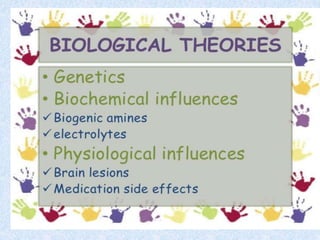
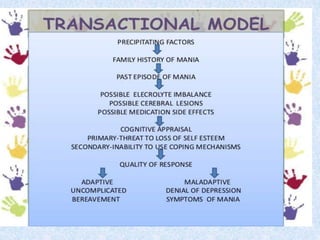
ETIOLOGY 
Neurotransmitter and structural hypothesis 
Excessive level of nor epinephrine and 
dopamine 
Imbalance between cholinergic and nor 
adrenergic system and deficiency of serotonin
Genetic consideration 
• Monozygotic (identical) twines have a higher 
rate of incident than normal siblings and other 
close relatives 
• Common among the family members of 
bipolar patient 
• First degree relatives 5-10 % chance 
• Identical twins with bipolar disorders about 
40-70% chance
Psychodynamic theory 
• Developmental theorists have hypothesized 
that faulty family dynamics during during 
early life are responsible for manic behaviors 
in later life 
Manic episode as a defense against or denial of 
depression
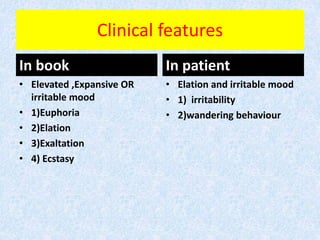
Clinical features 
In book 
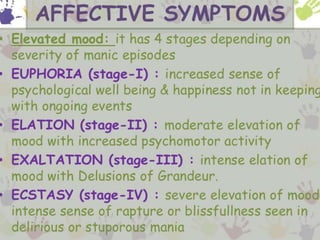
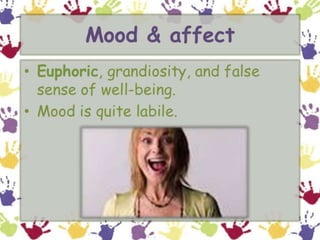
• Elevated ,Expansive OR 
irritable mood 
• 1)Euphoria 
• 2)Elation 
• 3)Exaltation 
• 4) Ecstasy 
In patient 
• Elation and irritable mood 
• 1) irritability 
• 2)wandering behaviour
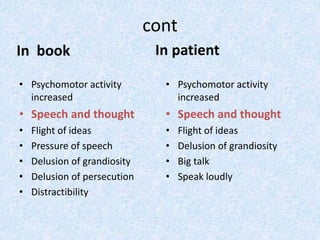
cont 
In book 
• Psychomotor activity 
increased 
• Speech and thought 
• Flight of ideas 
• Pressure of speech 
• Delusion of grandiosity 
• Delusion of persecution 
• Distractibility 
In patient 
• Psychomotor activity 
increased 
• Speech and thought 
• Flight of ideas 
• Delusion of grandiosity 
• Big talk 
• Speak loudly
cont 
In book 
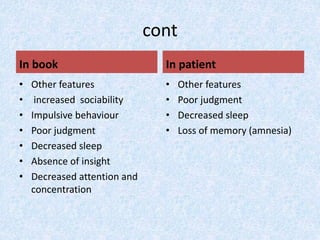
• Other features 
• increased sociability 
• Impulsive behaviour 
• Poor judgment 
• Decreased sleep 
• Absence of insight 
• Decreased attention and 
concentration 
In patient 
• Other features 
• Poor judgment 
• Decreased sleep 
• Loss of memory (amnesia)
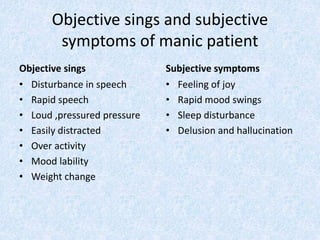
Objective sings and subjective 
symptoms of manic patient 
Objective sings 
• Disturbance in speech 
• Rapid speech 
• Loud ,pressured pressure 
• Easily distracted 
• Over activity 
• Mood lability 
• Weight change 
Subjective symptoms 
• Feeling of joy 
• Rapid mood swings 
• Sleep disturbance 
• Delusion and hallucination
case presentation on mania presented by ajay mor

case presentation on mania presented by ajay mor

  • 1.
  • 2.
  • 3.
    Presenting complaints •A 23 yrs unmarried right handed Marathi speaking , Hindu religious male ganesh sankpal, educated B.E ,coming from chinchwad pune with the complaints of • Irritability • Wandering behaviour • Muttering to self • Suspiciousness • Loudly speak • Auditory hallucination • Grandiosity • Loss of memory • Increased psychomotor activity • Flight of ideas
  • 4.
    HISTORY OF ILLNESS • According to informant pt is k/c/o/ psychiatric illness since 4 years was remain untreated till now • Patient was shown psychiatric illness in past then he was admitted in hospital 3 years ago but absconded before treatment start since then patient behaviour fluctuatively (having unpredictable ups down )and now as behaviour become unmanageble so he brought to SGH
  • 5.
    HISTORY OF ILLNESS • 4 yrs back his symptoms started within duration of B.E F Y exam period and he was noticed anxious during exam period & he was also noticed to be talking to to self with gesturing of hand when asked him ,then he said its related to study • He was noticed above symptoms with running on road without any reason ,sudden stop going temple and said ringing bell in my ears • All this behaviour increased and told repeatedly about his behaviour and parent brought to SGH • No family history of psychiatric illness
  • 6.
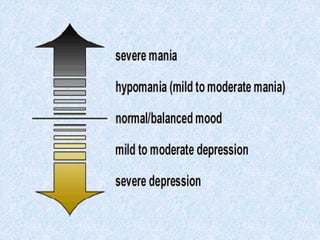
    DEFINATION OF MANIA • Mania refers to a syndrome in which the central features are over activity, mood change (which may be towards elation OR irritability ) and self important ideas
  • 8.
    Classification of mania(ICD 10) • F30 MANIC EPISODE • F30.0 HYPOMANIA • F30.1 MANIA WITHOUT PSYCHOTIC SYMPTOMS • F30.2 MANIA WITH PSYCHOTIC SYMPTOMS • F30.8 OTHER MANIC EPISODE • F30.9 MANIC EPISODE UNSPECIFIED
  • 10.
    ETIOLOGY Neurotransmitter andstructural hypothesis Excessive level of nor epinephrine and dopamine Imbalance between cholinergic and nor adrenergic system and deficiency of serotonin
  • 11.
    Genetic consideration •Monozygotic (identical) twines have a higher rate of incident than normal siblings and other close relatives • Common among the family members of bipolar patient • First degree relatives 5-10 % chance • Identical twins with bipolar disorders about 40-70% chance
  • 12.
    Psychodynamic theory •Developmental theorists have hypothesized that faulty family dynamics during during early life are responsible for manic behaviors in later life Manic episode as a defense against or denial of depression
  • 24.
    Clinical features Inbook • Elevated ,Expansive OR irritable mood • 1)Euphoria • 2)Elation • 3)Exaltation • 4) Ecstasy In patient • Elation and irritable mood • 1) irritability • 2)wandering behaviour
  • 25.
    cont In book • Psychomotor activity increased • Speech and thought • Flight of ideas • Pressure of speech • Delusion of grandiosity • Delusion of persecution • Distractibility In patient • Psychomotor activity increased • Speech and thought • Flight of ideas • Delusion of grandiosity • Big talk • Speak loudly
  • 26.
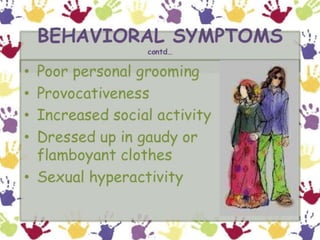
    cont In book • Other features • increased sociability • Impulsive behaviour • Poor judgment • Decreased sleep • Absence of insight • Decreased attention and concentration In patient • Other features • Poor judgment • Decreased sleep • Loss of memory (amnesia)
  • 40.
    Objective sings andsubjective symptoms of manic patient Objective sings • Disturbance in speech • Rapid speech • Loud ,pressured pressure • Easily distracted • Over activity • Mood lability • Weight change Subjective symptoms • Feeling of joy • Rapid mood swings • Sleep disturbance • Delusion and hallucination