
CASE PRESENTATION ON
ACUTE RESPIRATORY
FAILURE (ARF)
SUBMITTED BY
M.BHARATH KUMAR
16DK1T0014
PHARM.D 4TH YEAR
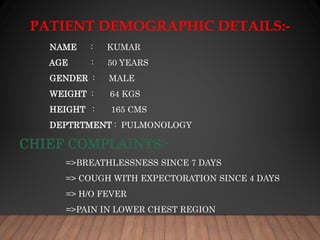
PATIENT DEMOGRAPHIC DETAILS:-
NAME : KUMAR
AGE : 50 YEARS
GENDER : MALE
WEIGHT : 64 KGS
HEIGHT : 165 CMS
DEPTRTMENT : PULMONOLOGY
CHIEF COMPLAINTS:-
=>BREATHLESSNESS SINCE 7 DAYS
=> COUGH WITH EXPECTORATION SINCE 4 DAYS
=> H/O FEVER
=>PAIN IN LOWER CHEST REGION
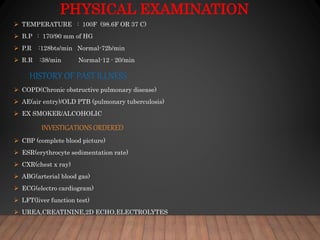
PHYSICAL EXAMINATION
 TEMPERATURE : 100F (98.6F OR 37 C)
 B.P : 170/90 mm of HG
 P.R :128bts/min Normal-72b/min
 R.R :38/min Normal-12 - 20/min
HISTORY OF PAST ILLNESS
 COPD(Chronic obstructive pulmonary disease)
 AE(air entry)/OLD PTB (pulmonary tuberculosis)
 EX SMOKER/ALCOHOLIC
INVESTIGATIONS ORDERED
 CBP (complete blood picture)
 ESR(erythrocyte sedimentation rate)
 CXR(chest x ray)
 ABG(arterial blood gas)
 ECG(electro cardiogram)
 LFT(liver function test)
 UREA,CREATININE,2D ECHO,ELECTROLYTES
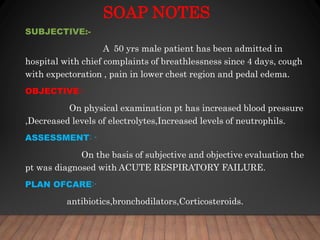
SOAP NOTES
SUBJECTIVE:-
A 50 yrs male patient has been admitted in
hospital with chief complaints of breathlessness since 4 days, cough
with expectoration , pain in lower chest region and pedal edema.
OBJECTIVE:-
On physical examination pt has increased blood pressure
,Decreased levels of electrolytes,Increased levels of neutrophils.
ASSESSMENT: -
On the basis of subjective and objective evaluation the
pt was diagnosed with ACUTE RESPIRATORY FAILURE.
PLAN OFCARE:-
antibiotics,bronchodilators,Corticosteroids.
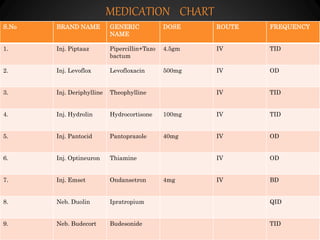
MEDICATION CHART
S.No BRAND NAME GENERIC
NAME
DOSE ROUTE FREQUENCY
1. Inj. Piptaaz Pipercillin+Tazo
bactum
4.5gm IV TID
2. Inj. Levoflox Levofloxacin 500mg IV OD
3. Inj. Deriphylline Theophylline IV TID
4. Inj. Hydrolin Hydrocortisone 100mg IV TID
5. Inj. Pantocid Pantoprazole 40mg IV OD
6. Inj. Optineuron Thiamine IV OD
7. Inj. Emset Ondansetron 4mg IV BD
8. Neb. Duolin Ipratropium QID
9. Neb. Budecort Budesonide TID
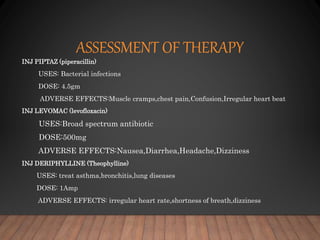
ASSESSMENT OF THERAPY
INJ PIPTAZ (piperacillin)
USES: Bacterial infections
DOSE: 4.5gm
ADVERSE EFFECTS:Muscle cramps,chest pain,Confusion,Irregular heart beat
INJ LEVOMAC (levofloxacin)
USES:Broad spectrum antibiotic
DOSE:500mg
ADVERSE EFFECTS:Nausea,Diarrhea,Headache,Dizziness
INJ DERIPHYLLINE (Theophylline)
USES: treat asthma,bronchitis,lung diseases
DOSE: 1Amp
ADVERSE EFFECTS: irregular heart rate,shortness of breath,dizziness
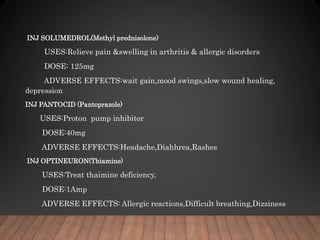
INJ SOLUMEDROL(Methyl prednisolone)
USES:Relieve pain &swelling in arthritis & allergic disorders
DOSE: 125mg
ADVERSE EFFECTS:wait gain,mood swings,slow wound healing,
depression
INJ PANTOCID (Pantoprazole)
USES:Proton pump inhibitor
DOSE:40mg
ADVERSE EFFECTS:Headache,Diahhrea,Rashes
INJ OPTINEURON(Thiamine)
USES:Treat thaimine deficiency,
DOSE:1Amp
ADVERSE EFFECTS: Allergic reactions,Difficult breathing,Dizziness
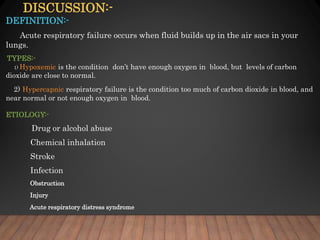
DISCUSSION:-
DEFINITION:-
Acute respiratory failure occurs when fluid builds up in the air sacs in your
lungs.
TYPES:-
1) Hypoxemic is the condition don’t have enough oxygen in blood, but levels of carbon
dioxide are close to normal.
2) Hypercapnic respiratory failure is the condition too much of carbon dioxide in blood, and
near normal or not enough oxygen in blood.
ETIOLOGY:-
Drug or alcohol abuse
Chemical inhalation
Stroke
Infection
Obstruction
Injury
Acute respiratory distress syndrome
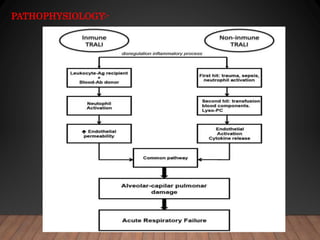
PATHOPHYSIOLOGY:-
Symptoms:-
Symptoms usually develop within 24 to 48 hours of the injury or illness. Often, people with
ARDS are so sick they cannot complain of symptoms. Symptoms can include any of the following:
1) Difficulty breathing
2)Low blood pressure and organ failure
3)Rapid breathing
4) Shortness of breath
DIAGNOSIS:-
• Listening to the chest with a stethoscope (auscultation) reveals abnormal breath sounds, such as crackles, which
may be signs of fluid in the lungs. Often, blood pressure is low. Cyanosis (blue skin, lips, and nails caused by lack
of oxygen to the tissues) is often seen.
• Tests used to diagnose ARDS include:
• Arterial blood gas
• Blood tests, including CBC and blood chemistries
• Blood and urine cultures
• Bronchoscopy
• Chest x-ray
• Sputum cultures and analysis
• Tests for possible infections
• An echocardiogram or Swan-Ganz catheterization may be needed to rule out congestive heart failure, which can
look similar to ARDS on a chest x-ray.
LIFE STYLE MODIFICATIONS:-
*AVOID SMOKING AND ALCOHOL
*CESSATION OF TOBACO
*MONITOR AIR QUALITY
*TAKE HEALTHY NUTRITION FOODS
*EXERCISES TO BREATHE EASIER
*DRINK MORE THEN 5 LITERS OF WATER PER DAY
*MAINTAIN PROTEIN AND ENERGY FOODS
CASE PRESENTATION ON ARF

CASE PRESENTATION ON ARF

  • 1.
    CASE PRESENTATION ON ACUTERESPIRATORY FAILURE (ARF) SUBMITTED BY M.BHARATH KUMAR 16DK1T0014 PHARM.D 4TH YEAR
  • 2.
    PATIENT DEMOGRAPHIC DETAILS:- NAME: KUMAR AGE : 50 YEARS GENDER : MALE WEIGHT : 64 KGS HEIGHT : 165 CMS DEPTRTMENT : PULMONOLOGY CHIEF COMPLAINTS:- =>BREATHLESSNESS SINCE 7 DAYS => COUGH WITH EXPECTORATION SINCE 4 DAYS => H/O FEVER =>PAIN IN LOWER CHEST REGION
  • 3.
    PHYSICAL EXAMINATION  TEMPERATURE: 100F (98.6F OR 37 C)  B.P : 170/90 mm of HG  P.R :128bts/min Normal-72b/min  R.R :38/min Normal-12 - 20/min HISTORY OF PAST ILLNESS  COPD(Chronic obstructive pulmonary disease)  AE(air entry)/OLD PTB (pulmonary tuberculosis)  EX SMOKER/ALCOHOLIC INVESTIGATIONS ORDERED  CBP (complete blood picture)  ESR(erythrocyte sedimentation rate)  CXR(chest x ray)  ABG(arterial blood gas)  ECG(electro cardiogram)  LFT(liver function test)  UREA,CREATININE,2D ECHO,ELECTROLYTES
  • 4.
    SOAP NOTES SUBJECTIVE:- A 50yrs male patient has been admitted in hospital with chief complaints of breathlessness since 4 days, cough with expectoration , pain in lower chest region and pedal edema. OBJECTIVE:- On physical examination pt has increased blood pressure ,Decreased levels of electrolytes,Increased levels of neutrophils. ASSESSMENT: - On the basis of subjective and objective evaluation the pt was diagnosed with ACUTE RESPIRATORY FAILURE. PLAN OFCARE:- antibiotics,bronchodilators,Corticosteroids.
  • 5.
    MEDICATION CHART S.No BRANDNAME GENERIC NAME DOSE ROUTE FREQUENCY 1. Inj. Piptaaz Pipercillin+Tazo bactum 4.5gm IV TID 2. Inj. Levoflox Levofloxacin 500mg IV OD 3. Inj. Deriphylline Theophylline IV TID 4. Inj. Hydrolin Hydrocortisone 100mg IV TID 5. Inj. Pantocid Pantoprazole 40mg IV OD 6. Inj. Optineuron Thiamine IV OD 7. Inj. Emset Ondansetron 4mg IV BD 8. Neb. Duolin Ipratropium QID 9. Neb. Budecort Budesonide TID
  • 6.
    ASSESSMENT OF THERAPY INJPIPTAZ (piperacillin) USES: Bacterial infections DOSE: 4.5gm ADVERSE EFFECTS:Muscle cramps,chest pain,Confusion,Irregular heart beat INJ LEVOMAC (levofloxacin) USES:Broad spectrum antibiotic DOSE:500mg ADVERSE EFFECTS:Nausea,Diarrhea,Headache,Dizziness INJ DERIPHYLLINE (Theophylline) USES: treat asthma,bronchitis,lung diseases DOSE: 1Amp ADVERSE EFFECTS: irregular heart rate,shortness of breath,dizziness
  • 7.
    INJ SOLUMEDROL(Methyl prednisolone) USES:Relievepain &swelling in arthritis & allergic disorders DOSE: 125mg ADVERSE EFFECTS:wait gain,mood swings,slow wound healing, depression INJ PANTOCID (Pantoprazole) USES:Proton pump inhibitor DOSE:40mg ADVERSE EFFECTS:Headache,Diahhrea,Rashes INJ OPTINEURON(Thiamine) USES:Treat thaimine deficiency, DOSE:1Amp ADVERSE EFFECTS: Allergic reactions,Difficult breathing,Dizziness
  • 8.
    DISCUSSION:- DEFINITION:- Acute respiratory failureoccurs when fluid builds up in the air sacs in your lungs. TYPES:- 1) Hypoxemic is the condition don’t have enough oxygen in blood, but levels of carbon dioxide are close to normal. 2) Hypercapnic respiratory failure is the condition too much of carbon dioxide in blood, and near normal or not enough oxygen in blood. ETIOLOGY:- Drug or alcohol abuse Chemical inhalation Stroke Infection Obstruction Injury Acute respiratory distress syndrome
  • 9.
  • 10.
    Symptoms:- Symptoms usually developwithin 24 to 48 hours of the injury or illness. Often, people with ARDS are so sick they cannot complain of symptoms. Symptoms can include any of the following: 1) Difficulty breathing 2)Low blood pressure and organ failure 3)Rapid breathing 4) Shortness of breath DIAGNOSIS:- • Listening to the chest with a stethoscope (auscultation) reveals abnormal breath sounds, such as crackles, which may be signs of fluid in the lungs. Often, blood pressure is low. Cyanosis (blue skin, lips, and nails caused by lack of oxygen to the tissues) is often seen. • Tests used to diagnose ARDS include: • Arterial blood gas • Blood tests, including CBC and blood chemistries • Blood and urine cultures • Bronchoscopy • Chest x-ray • Sputum cultures and analysis • Tests for possible infections • An echocardiogram or Swan-Ganz catheterization may be needed to rule out congestive heart failure, which can look similar to ARDS on a chest x-ray.
  • 11.
    LIFE STYLE MODIFICATIONS:- *AVOIDSMOKING AND ALCOHOL *CESSATION OF TOBACO *MONITOR AIR QUALITY *TAKE HEALTHY NUTRITION FOODS *EXERCISES TO BREATHE EASIER *DRINK MORE THEN 5 LITERS OF WATER PER DAY *MAINTAIN PROTEIN AND ENERGY FOODS