CASE PRESENTATION ON
MYOCARDIAL INFARCTION
PRESENTED BY :
P.VIGNESWARI
Y17PHD0821
II/VI PHARM.D
NIRMALA COLLEGE OF
PHARMACY
• A 45 years of male patient was admitted in the hospital with Chief
complaints of Restrosternal pain and breatheless ness 10 days back
• And his pain is insidious in onset ,while patient is sleeping constricting
pain and radiation of pain to the jaw associated with palpitations was
observed.
• And he has sweating episodes associated with breatheless ness
• And he has a personal history of alcohol and smoking.
BRIEF SUMMARY OF CASE
SUBJECTIVE DATA
A 45 years old male patient was admitted in the
hospital with Chief complaints of Restrosternal pain and breatheless
ness.And his pain was radiating to jaw associated with palpitations.
He has no past history and his bowel and bladder movements were
regular and normal.
OBJECTIVE DATA
• PHYSICAL EXAMINATION
BP : 130/80 mm of hg
Pulse : 80/min
• SYSTEMIC EXAMINATION
CVS : S1S2+
P/A : Soft
CNS : NAD
RS : NAD
• LABORATORY INVESTIGATIONS
S.NO PARAMETER OBSERVED VALUE NORMAL VALUE
1. Serum creatinine 0.80 mg/dl (0.90-1.30)
2. Haemoglobin 13.8g/dl (14.0-18.0)
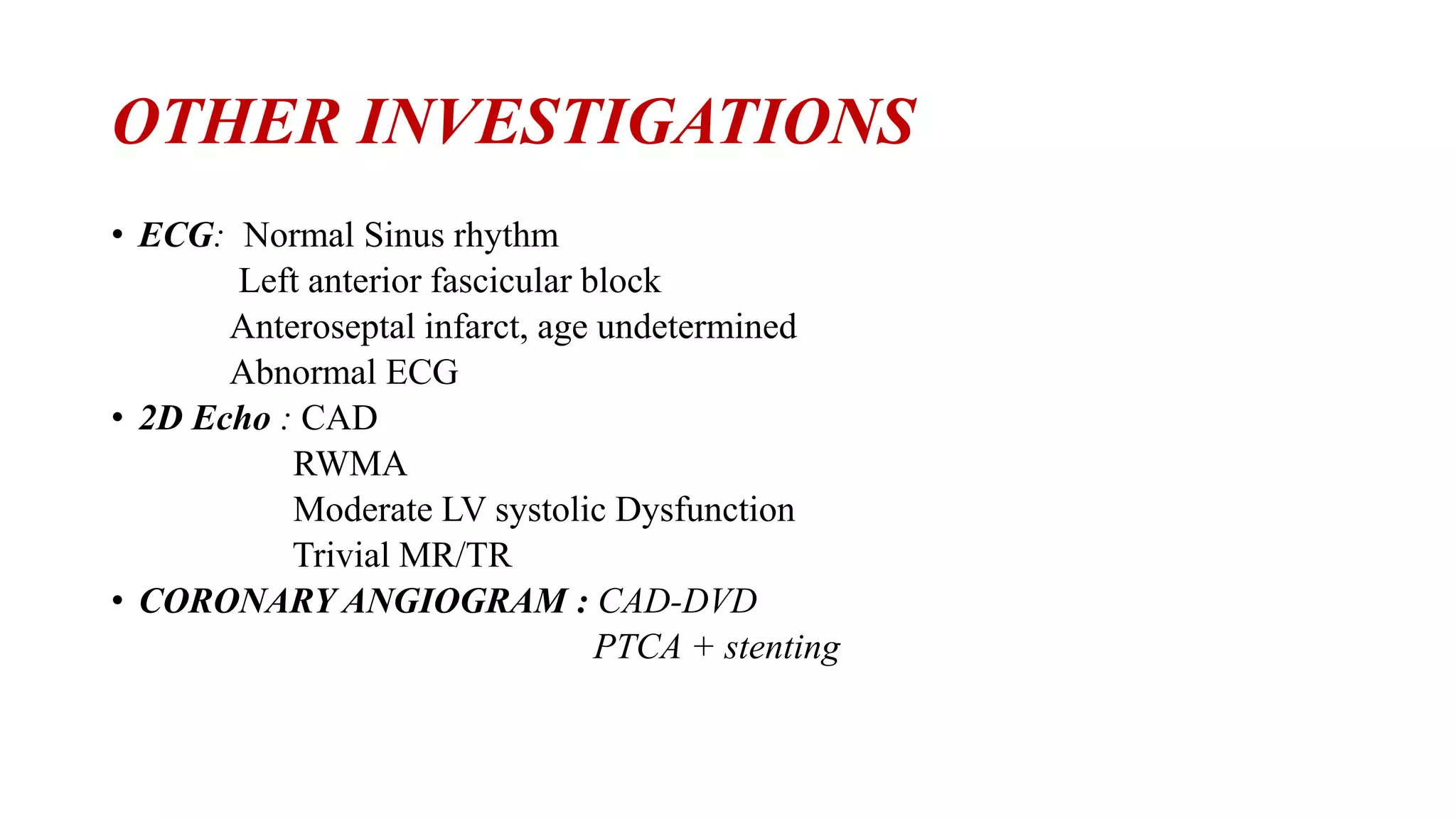
OTHER INVESTIGATIONS
• ECG: Normal Sinus rhythm
Left anterior fascicular block
Anteroseptal infarct, age undetermined
Abnormal ECG
• 2D Echo : CAD
RWMA
Moderate LV systolic Dysfunction
Trivial MR/TR
• CORONARY ANGIOGRAM : CAD-DVD
PTCA + stenting
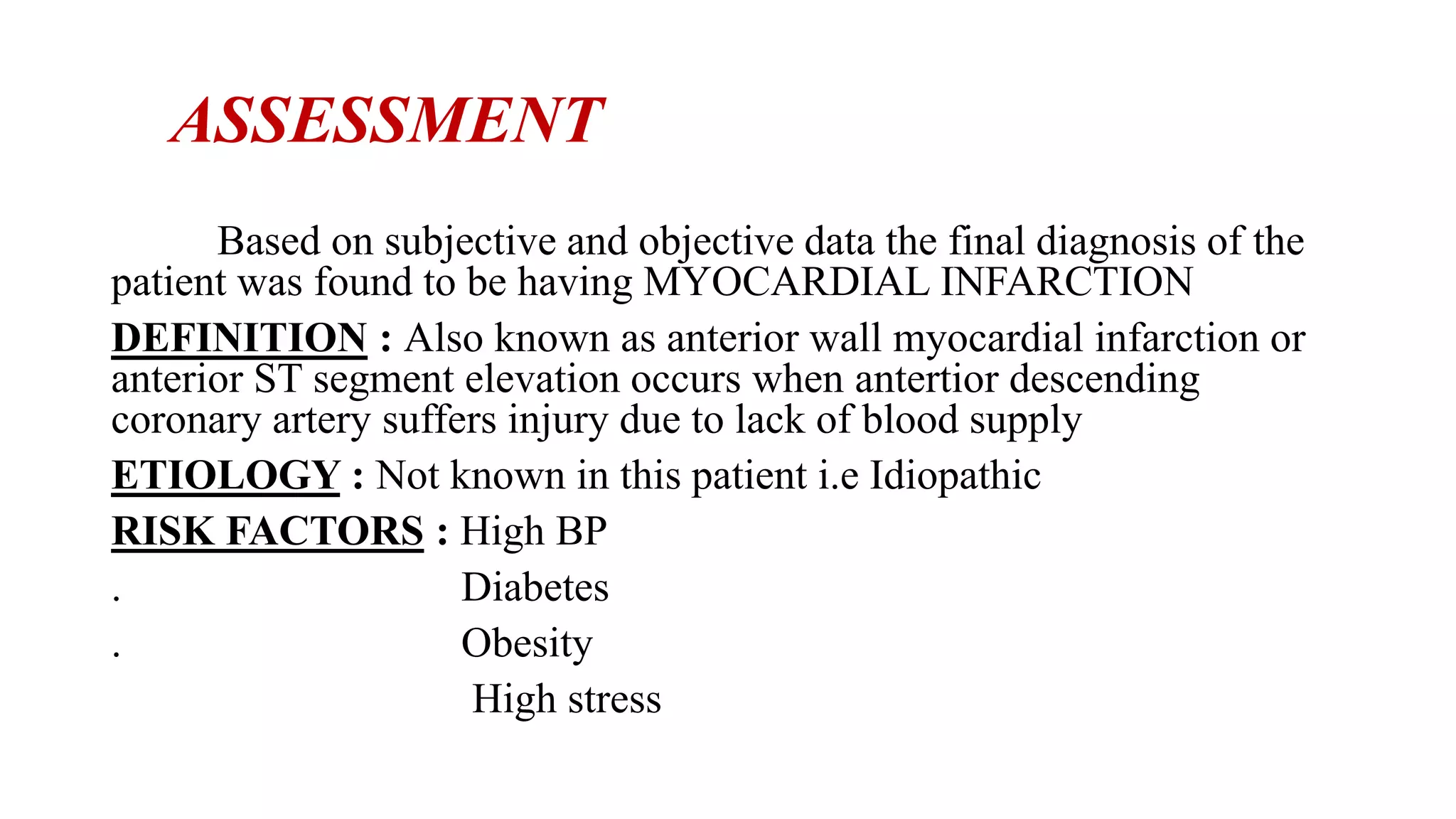
ASSESSMENT
Based on subjective and objective data the final diagnosis of the
patient was found to be having MYOCARDIAL INFARCTION
DEFINITION : Also known as anterior wall myocardial infarction or
anterior ST segment elevation occurs when antertior descending
coronary artery suffers injury due to lack of blood supply
ETIOLOGY : Not known in this patient i.e Idiopathic
RISK FACTORS : High BP
. Diabetes
. Obesity
High stress
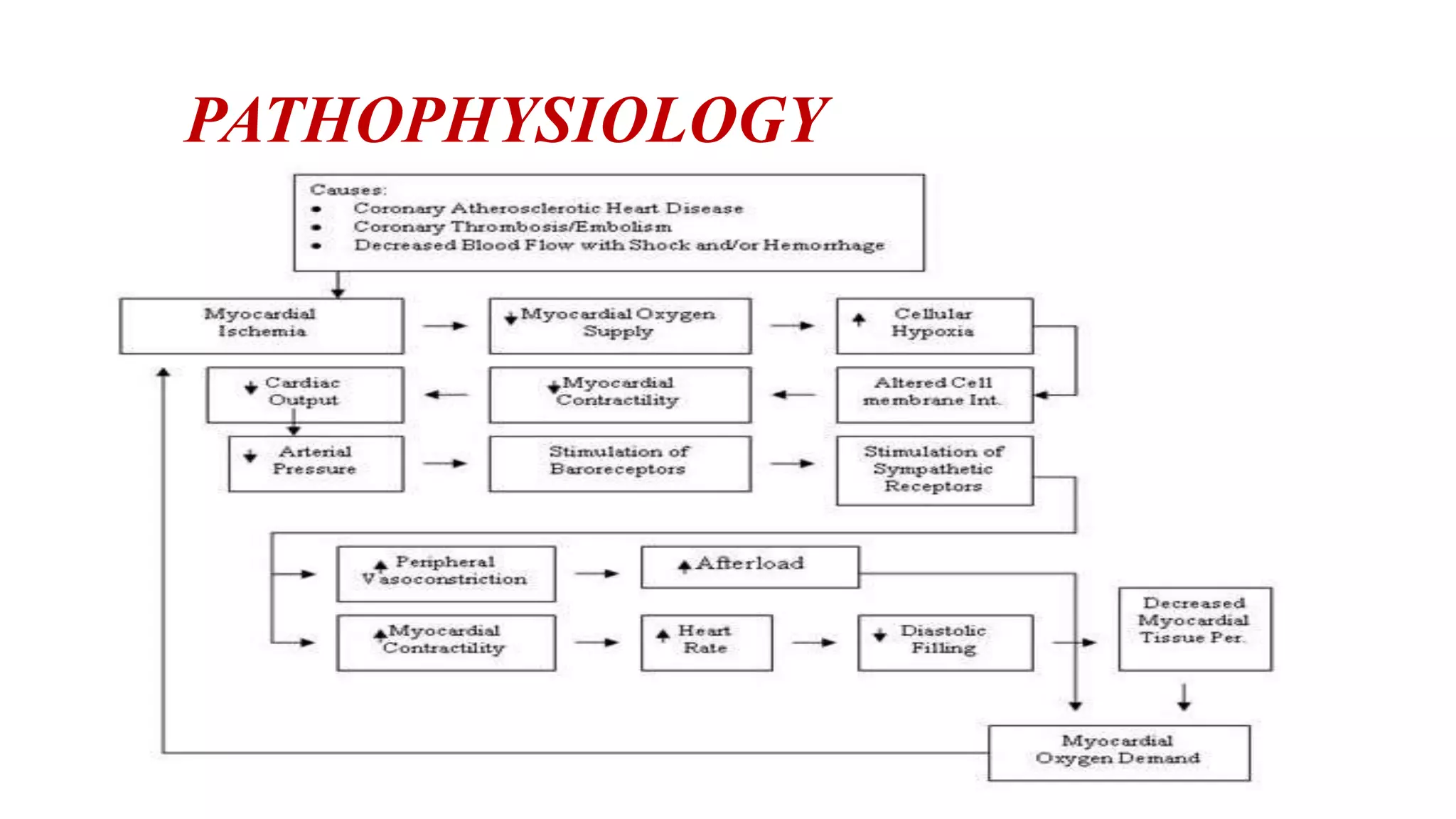
PATHOPHYSIOLOGY
CLINICAL PRESENTATIONS
• Retrosternal chest pain
• Pain radiating to back ,left arm ,neck/jaw
• Breathlessness
• Diaphoresis
• Nausea and vomiting
• Pain – crushing.
PLAN
• A) Goals : To avoid further complications
To decrease signs and symptoms
To decrease the disease progression
• B) Standard treatment :
Medications
1. Anti platelets
2. Anti coagulants
3. Analgesics
4. Fibrinolytic
5. Nitrates
DRUG CHART
S.no Brand
name
Generic
name
Dose R.O.A Freq Category Use
1. Dytor plus Spironolac
tone +
Torsenami
de
50mg
+
10mg
P/o OD K+
sparing
diuretic +
loop
diuretic
To treat HTN
2. Clopilet Clopidogr
el
75mg P/o BD Anti
platelet
Prevents clot
3. Storvas Atorvastat
in
40mg P/O OD HMG-coA
reductase
inhibitor
To decrease
cholesterol
levels
4. Ecospirin Aspirin 150mg P/O OD Anti
platelet
To prevent clot
formation
5. Pantocid Pantopraz
ole
40mg P/O OD Proton
pump
inhibitor
Prophylactic
drug
Drug Name M.O.A ADRs M.O.P
Dytor plus Competes with ald for
recep site in DCT , ing
Nacl & H2O excretion
Confusion,atlaxia,
dizziness
BP ,serum
electrolytes,RFTs
Clopidogrel Irreversibly blocks the
Component of ADP recep
Epistaxis,hematoma,Mino
rhemmorhage
Signs of bleeding,hb and
hematocrit
Atorvastatin Inhibit HMG-COA,+ of
LDL catabolism
Diarrhea,athralgia,
Nasopharyngitis
Lipid panel, hepatic
transaminase,CPK
Ecospirin Irreversibly inhibit cox-
1,2
Hemostasis, bleeding,
skin rash, edema
Signs of bleeding,Hb and
hematocrit
Pantoprazole Suppress gastric acid
secretions
Facialedema,skinrash,vert
igo,vertigo, headche
Serum mg levels
DRUG INTERACTIONS
MODERATE
• Aspirin and clopidogrel : In combination may cause unusual bleeding, severe abdominal pain, weakness
Management : Discontinue if any signs are observed
• Atorvastatin and clopidogrel : Stating may reduce the effect of clopidogrel
Management : Monitoring for altered efficacy of clopidogrel may be advisable if atorvastatin is co-
administered with clopidogrel
• Torsemide and Pantoprazole : Pantocid may cause decrease in mg levels and risk increased with torsemide
lead to palpitations, seizures
Management : Monitor for serum mg levels
• Statin and Pantoprazole : May increase the blood levels and effect of statin can cause liver damage
Management : Therapy should be discontinued if creatinine kinase is markedly elevated or if myopathy is
suspected or diagnosed
• Clopidogrel and Pantoprazole : Combining those may reduce the effectiveness of clopidogrel
Management : An H2 receptor antagonist may be substituted if an interaction is suspected
PATIENT COUNSELING
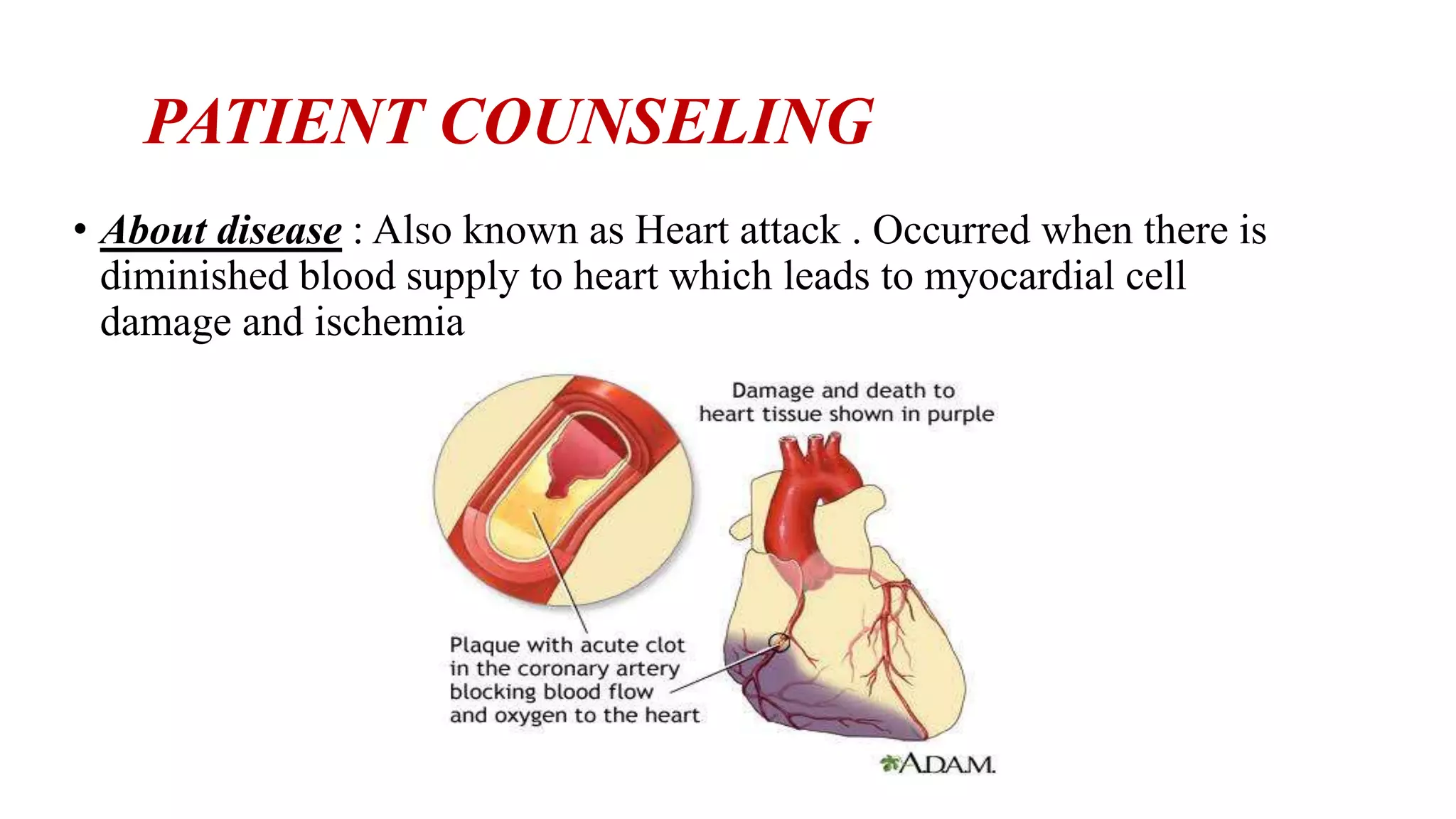
• About disease : Also known as Heart attack . Occurred when there is
diminished blood supply to heart which leads to myocardial cell
damage and ischemia
About Drugs :
1. Clopidogrel : Administer without regards to meals
2. Atorvastatin : Administer with or without food, may take without
regard to time of day
3. Aspirin : Do not crush; administer with food or full glass of water to
minimize GI distress
4. Pantoprazole : Should be taken 30 min before meals
LIFE STYLE MODIFICATIONS
• Avoid smoke.
• Control your blood pressure and cholesterol levels.
• Get regular medical checkups.
• Exercise.
• Maintain a healthy weight.
• Eat a heart-healthy diet.
• Manage diabetes.
• Control stress.
• If you drink alcohol, do so in moderate.

Case presentation on MYOCARDIAL INFARCTION

  • 1.
    CASE PRESENTATION ON MYOCARDIALINFARCTION PRESENTED BY : P.VIGNESWARI Y17PHD0821 II/VI PHARM.D NIRMALA COLLEGE OF PHARMACY
  • 2.
    • A 45years of male patient was admitted in the hospital with Chief complaints of Restrosternal pain and breatheless ness 10 days back • And his pain is insidious in onset ,while patient is sleeping constricting pain and radiation of pain to the jaw associated with palpitations was observed. • And he has sweating episodes associated with breatheless ness • And he has a personal history of alcohol and smoking. BRIEF SUMMARY OF CASE
  • 3.
    SUBJECTIVE DATA A 45years old male patient was admitted in the hospital with Chief complaints of Restrosternal pain and breatheless ness.And his pain was radiating to jaw associated with palpitations. He has no past history and his bowel and bladder movements were regular and normal.
  • 4.
    OBJECTIVE DATA • PHYSICALEXAMINATION BP : 130/80 mm of hg Pulse : 80/min • SYSTEMIC EXAMINATION CVS : S1S2+ P/A : Soft CNS : NAD RS : NAD • LABORATORY INVESTIGATIONS S.NO PARAMETER OBSERVED VALUE NORMAL VALUE 1. Serum creatinine 0.80 mg/dl (0.90-1.30) 2. Haemoglobin 13.8g/dl (14.0-18.0)
  • 5.
    OTHER INVESTIGATIONS • ECG:Normal Sinus rhythm Left anterior fascicular block Anteroseptal infarct, age undetermined Abnormal ECG • 2D Echo : CAD RWMA Moderate LV systolic Dysfunction Trivial MR/TR • CORONARY ANGIOGRAM : CAD-DVD PTCA + stenting
  • 6.
    ASSESSMENT Based on subjectiveand objective data the final diagnosis of the patient was found to be having MYOCARDIAL INFARCTION DEFINITION : Also known as anterior wall myocardial infarction or anterior ST segment elevation occurs when antertior descending coronary artery suffers injury due to lack of blood supply ETIOLOGY : Not known in this patient i.e Idiopathic RISK FACTORS : High BP . Diabetes . Obesity High stress
  • 7.
  • 8.
    CLINICAL PRESENTATIONS • Retrosternalchest pain • Pain radiating to back ,left arm ,neck/jaw • Breathlessness • Diaphoresis • Nausea and vomiting • Pain – crushing.
  • 9.
    PLAN • A) Goals: To avoid further complications To decrease signs and symptoms To decrease the disease progression • B) Standard treatment : Medications 1. Anti platelets 2. Anti coagulants 3. Analgesics 4. Fibrinolytic 5. Nitrates
  • 10.
    DRUG CHART S.no Brand name Generic name DoseR.O.A Freq Category Use 1. Dytor plus Spironolac tone + Torsenami de 50mg + 10mg P/o OD K+ sparing diuretic + loop diuretic To treat HTN 2. Clopilet Clopidogr el 75mg P/o BD Anti platelet Prevents clot 3. Storvas Atorvastat in 40mg P/O OD HMG-coA reductase inhibitor To decrease cholesterol levels 4. Ecospirin Aspirin 150mg P/O OD Anti platelet To prevent clot formation 5. Pantocid Pantopraz ole 40mg P/O OD Proton pump inhibitor Prophylactic drug
  • 11.
    Drug Name M.O.AADRs M.O.P Dytor plus Competes with ald for recep site in DCT , ing Nacl & H2O excretion Confusion,atlaxia, dizziness BP ,serum electrolytes,RFTs Clopidogrel Irreversibly blocks the Component of ADP recep Epistaxis,hematoma,Mino rhemmorhage Signs of bleeding,hb and hematocrit Atorvastatin Inhibit HMG-COA,+ of LDL catabolism Diarrhea,athralgia, Nasopharyngitis Lipid panel, hepatic transaminase,CPK Ecospirin Irreversibly inhibit cox- 1,2 Hemostasis, bleeding, skin rash, edema Signs of bleeding,Hb and hematocrit Pantoprazole Suppress gastric acid secretions Facialedema,skinrash,vert igo,vertigo, headche Serum mg levels
  • 12.
    DRUG INTERACTIONS MODERATE • Aspirinand clopidogrel : In combination may cause unusual bleeding, severe abdominal pain, weakness Management : Discontinue if any signs are observed • Atorvastatin and clopidogrel : Stating may reduce the effect of clopidogrel Management : Monitoring for altered efficacy of clopidogrel may be advisable if atorvastatin is co- administered with clopidogrel • Torsemide and Pantoprazole : Pantocid may cause decrease in mg levels and risk increased with torsemide lead to palpitations, seizures Management : Monitor for serum mg levels • Statin and Pantoprazole : May increase the blood levels and effect of statin can cause liver damage Management : Therapy should be discontinued if creatinine kinase is markedly elevated or if myopathy is suspected or diagnosed • Clopidogrel and Pantoprazole : Combining those may reduce the effectiveness of clopidogrel Management : An H2 receptor antagonist may be substituted if an interaction is suspected
  • 13.
    PATIENT COUNSELING • Aboutdisease : Also known as Heart attack . Occurred when there is diminished blood supply to heart which leads to myocardial cell damage and ischemia
  • 14.
    About Drugs : 1.Clopidogrel : Administer without regards to meals 2. Atorvastatin : Administer with or without food, may take without regard to time of day 3. Aspirin : Do not crush; administer with food or full glass of water to minimize GI distress 4. Pantoprazole : Should be taken 30 min before meals
  • 15.
    LIFE STYLE MODIFICATIONS •Avoid smoke. • Control your blood pressure and cholesterol levels. • Get regular medical checkups. • Exercise. • Maintain a healthy weight. • Eat a heart-healthy diet. • Manage diabetes. • Control stress. • If you drink alcohol, do so in moderate.