CARRER PLANNING IN THE CHANGING
TIME: ISSUES AND CONCERNS
Prof. Ramakanta Mohalik
RIE Bhubaneswar
Email:mohalikrk@gmail.com
Concept of Career
• A career represents ones expertise,
profession, and ultimately identity.
• It defines who we are and what we do. This form
of self-identity makes changing careers
dauntingly difficult:
• A career is something that builds over time
and endures.
• It gives us the opportunity to progress, advance,
and continuously feel proud.
• A career gives us financial and
psychological rewards.
• It makes life meaningful, gives us purpose, and
pays us enough to live well.
Changing Concept of Career
• Expertise has an ever-shorter shelf life
• The idea of a single, long-lasting career is becoming a
thing of the past
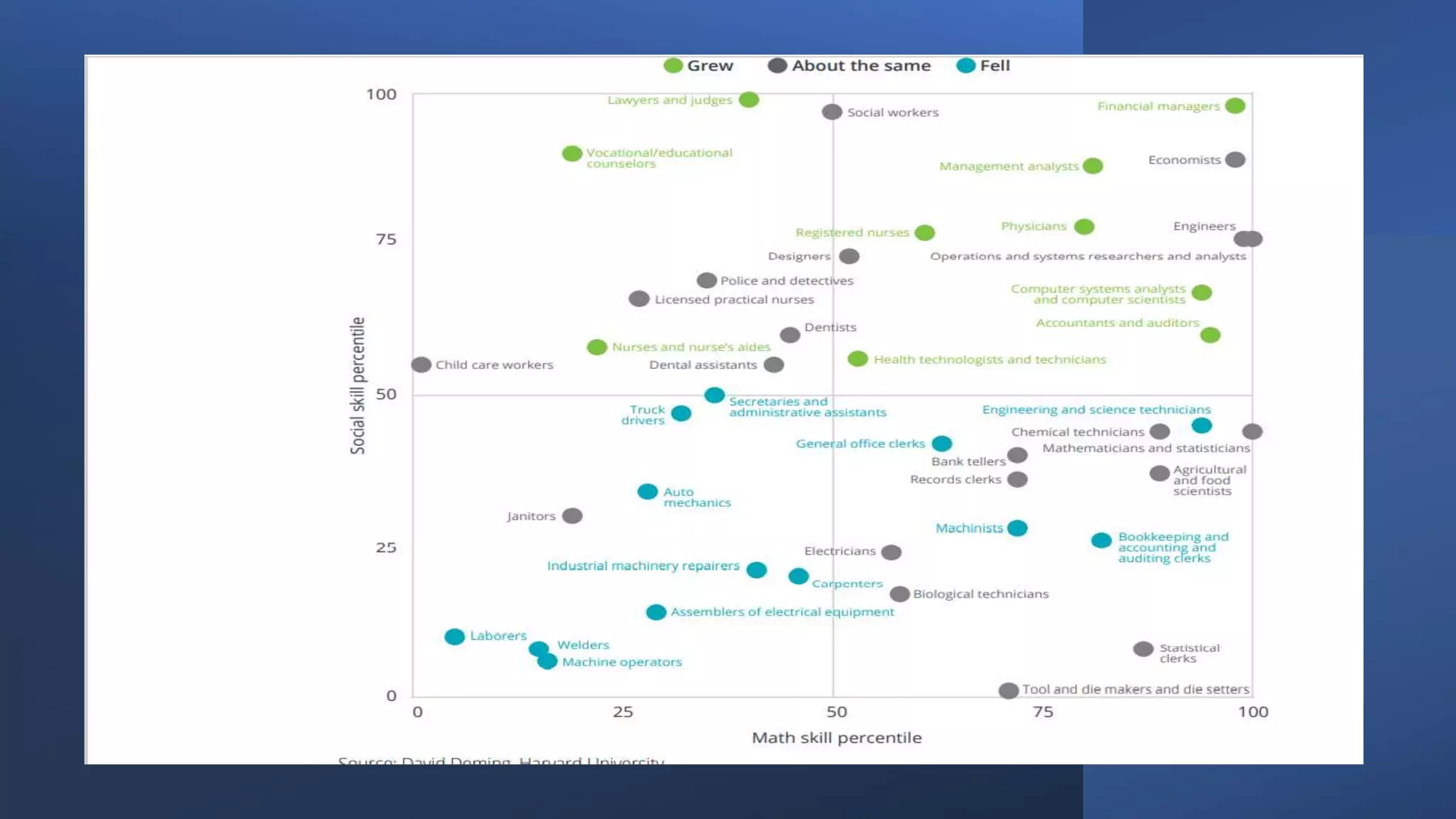
• Soft skills growing in value: From Science Technology
Engineering and Mathematics (STEM) to Science Technology
Engineering Arts and Mathematics (STEAM)
• Skills in communication, critical thinking, visual identity, and
reasoning will likely become even more important in the future
What is Career Planning?
•Career planning is a process of identifying the
professional path that will suit ones personality,
interests and goals.
•It involves exploring different career options,
performing a self-evaluation to test ones
suitability and finding the right ways to get on a
career track.
Career Planning involves;
• Identifying what you are good at
• Knowing how ones skills, talents, values, and interests translate into
possible careers
• Matching ones skills, etc. to existing careers
• Matching career goals to your financial needs
• Matching career goals to your educational needs
• Making good decisions for yourself
• Finding ways to meet your educational and financial needs on your
schedule
Career Planning has three Components
• Self-exploration is the process of examining:
• Skills
• Values
• Experience
• Interests
• Education
• It can be done by self evaluation or visiting to career counsellor
Career Exploration
• Researching career and job profiles (Working conditions, Method of
entry, Earnings, Education & Training, Promotions)
• Conducting informational interviews
• Attending career and job fairs
• Gathering labor-market information
List of Careers
• Teaching
• Banking
• Insurance
• Administration
• Defence/Police
• NGO
• Consultant
• Enterprenuer
• Youtuber
• eContent developer
• Journalist
• Life couch
• Catering
• Librarian
• Scientist
• Mathematician
• Data Analysist
• Statistician
• Builder/developer
• ICT technician
• Mechanics
Educational Planning consists of
• Decision making
• Goal setting
• Problem solving
• Action planning
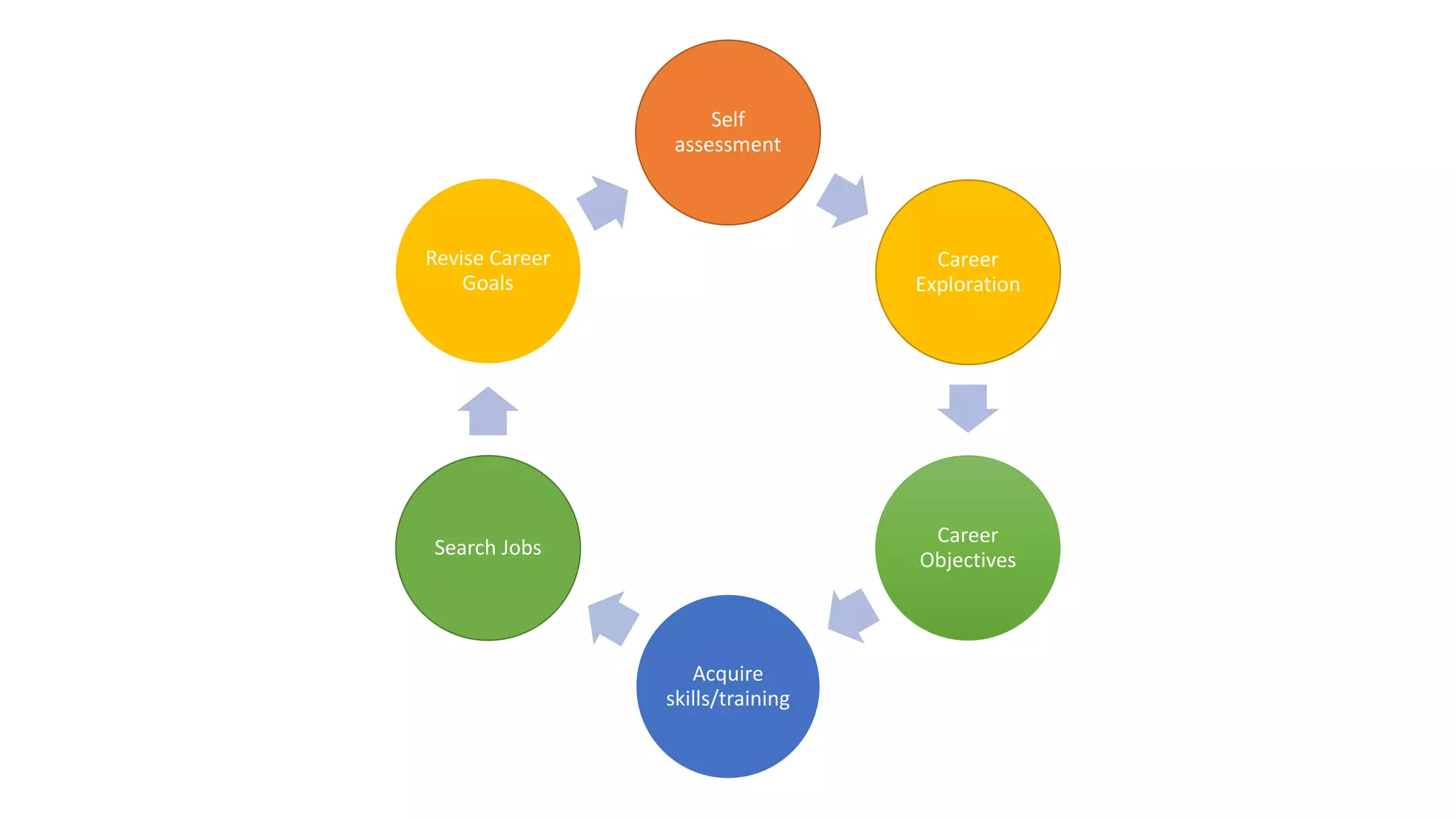
Self
assessment
Career
Exploration
Career
Objectives
Acquire
skills/training
Search Jobs
Revise Career
Goals
Benefits of Career Planning
• Figure out what you want to do in your professional life.
• Avoid wasting time and resources in trying to enter career
options that don't suit you.
• Choose to get specific educational qualifications and
training that will benefit your chosen career.
• Confident about the career choice you have made.
• Focus on your career goals and work to achieve your desired
short-term and long-term results.
Effects of Poor Career Planning
• Career Paths.mp4
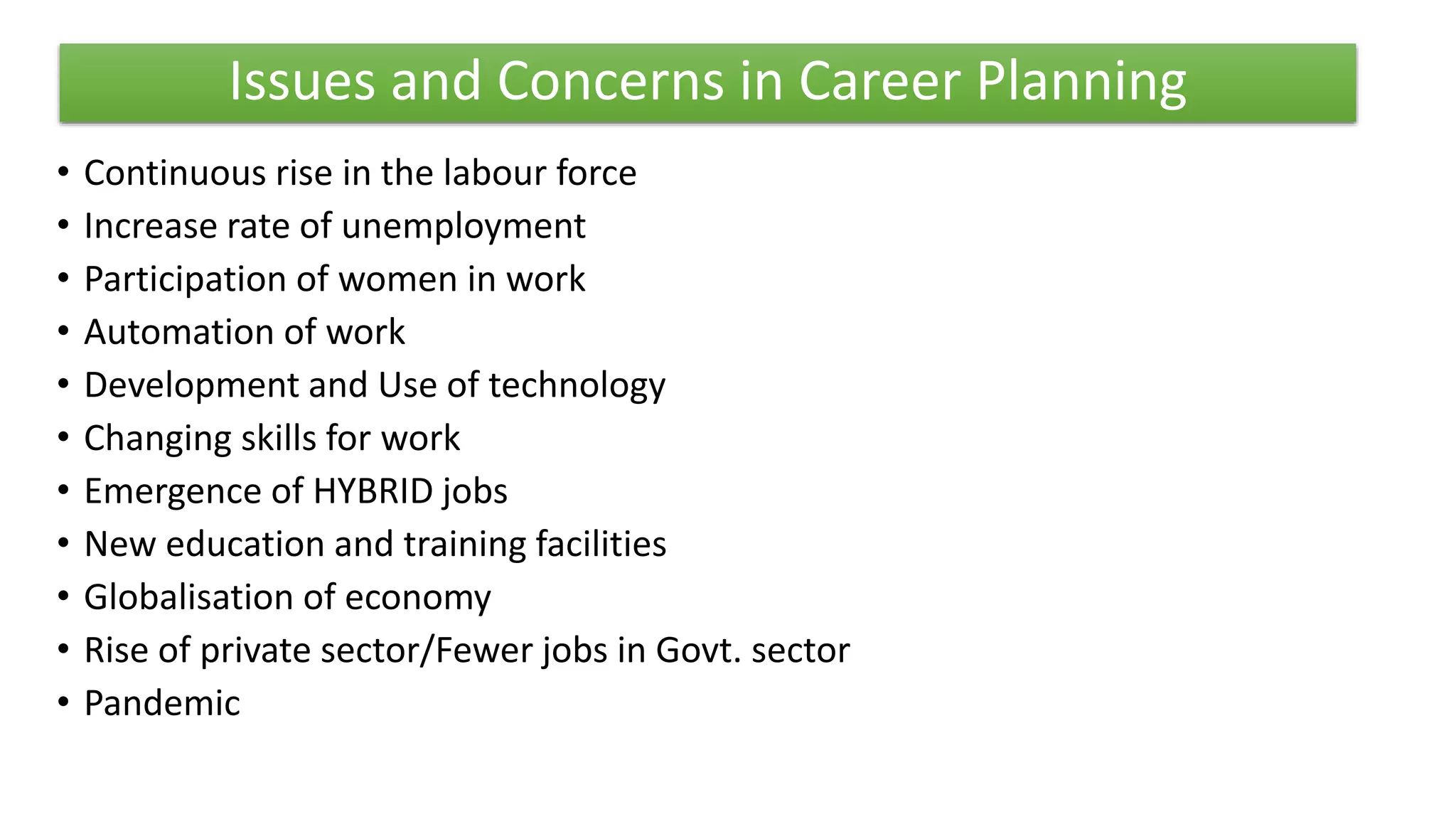
Issues and Concerns in Career Planning
• Continuous rise in the labour force
• Increase rate of unemployment
• Participation of women in work
• Automation of work
• Development and Use of technology
• Changing skills for work
• Emergence of HYBRID jobs
• New education and training facilities
• Globalisation of economy
• Rise of private sector/Fewer jobs in Govt. sector
• Pandemic

Career planning in present times issues and concerns

  • 1.
    CARRER PLANNING INTHE CHANGING TIME: ISSUES AND CONCERNS Prof. Ramakanta Mohalik RIE Bhubaneswar Email:mohalikrk@gmail.com
  • 3.
    Concept of Career •A career represents ones expertise, profession, and ultimately identity. • It defines who we are and what we do. This form of self-identity makes changing careers dauntingly difficult:
  • 4.
    • A careeris something that builds over time and endures. • It gives us the opportunity to progress, advance, and continuously feel proud.
  • 5.
    • A careergives us financial and psychological rewards. • It makes life meaningful, gives us purpose, and pays us enough to live well.
  • 6.
    Changing Concept ofCareer • Expertise has an ever-shorter shelf life • The idea of a single, long-lasting career is becoming a thing of the past • Soft skills growing in value: From Science Technology Engineering and Mathematics (STEM) to Science Technology Engineering Arts and Mathematics (STEAM) • Skills in communication, critical thinking, visual identity, and reasoning will likely become even more important in the future
  • 8.
    What is CareerPlanning? •Career planning is a process of identifying the professional path that will suit ones personality, interests and goals. •It involves exploring different career options, performing a self-evaluation to test ones suitability and finding the right ways to get on a career track.
  • 9.
    Career Planning involves; •Identifying what you are good at • Knowing how ones skills, talents, values, and interests translate into possible careers • Matching ones skills, etc. to existing careers • Matching career goals to your financial needs • Matching career goals to your educational needs • Making good decisions for yourself • Finding ways to meet your educational and financial needs on your schedule
  • 10.
    Career Planning hasthree Components • Self-exploration is the process of examining: • Skills • Values • Experience • Interests • Education • It can be done by self evaluation or visiting to career counsellor
  • 12.
    Career Exploration • Researchingcareer and job profiles (Working conditions, Method of entry, Earnings, Education & Training, Promotions) • Conducting informational interviews • Attending career and job fairs • Gathering labor-market information
  • 13.
    List of Careers •Teaching • Banking • Insurance • Administration • Defence/Police • NGO • Consultant • Enterprenuer • Youtuber • eContent developer • Journalist • Life couch • Catering • Librarian • Scientist • Mathematician • Data Analysist • Statistician • Builder/developer • ICT technician • Mechanics
  • 14.
    Educational Planning consistsof • Decision making • Goal setting • Problem solving • Action planning
  • 15.
  • 16.
    Benefits of CareerPlanning • Figure out what you want to do in your professional life. • Avoid wasting time and resources in trying to enter career options that don't suit you. • Choose to get specific educational qualifications and training that will benefit your chosen career. • Confident about the career choice you have made. • Focus on your career goals and work to achieve your desired short-term and long-term results.
  • 17.
    Effects of PoorCareer Planning • Career Paths.mp4
  • 18.
    Issues and Concernsin Career Planning • Continuous rise in the labour force • Increase rate of unemployment • Participation of women in work • Automation of work • Development and Use of technology • Changing skills for work • Emergence of HYBRID jobs • New education and training facilities • Globalisation of economy • Rise of private sector/Fewer jobs in Govt. sector • Pandemic