Career
Counselling in the
Present Context
By
Dr.@mol Ub@le
Career Counselling
● Career Counselling is a process that focuses on helping one understand one’s own self, as
well as work trends, so that one can take an informed decision about career and education.
● “Career Counseling is a focus on issues such as career exploration, career change, personal
career development and other career related issues.” –Wikipedia
● Careers play a major role in any person’s life and cannot be taken in a lighthearted
manner.
Need of Career Counselling
● Understand the professional career
opportunities and options available.
● Analyze their strengths and weaknesses and
helps in finding the perfect career path
● Provides a detailed execution plan with complete
career clarity.
● Identifying the factors that influence career
development.
● Boosting the confidence and morale of the
student and the professional.
Components In Career Counselling
● Career Planning
● Career Development
● Career Management
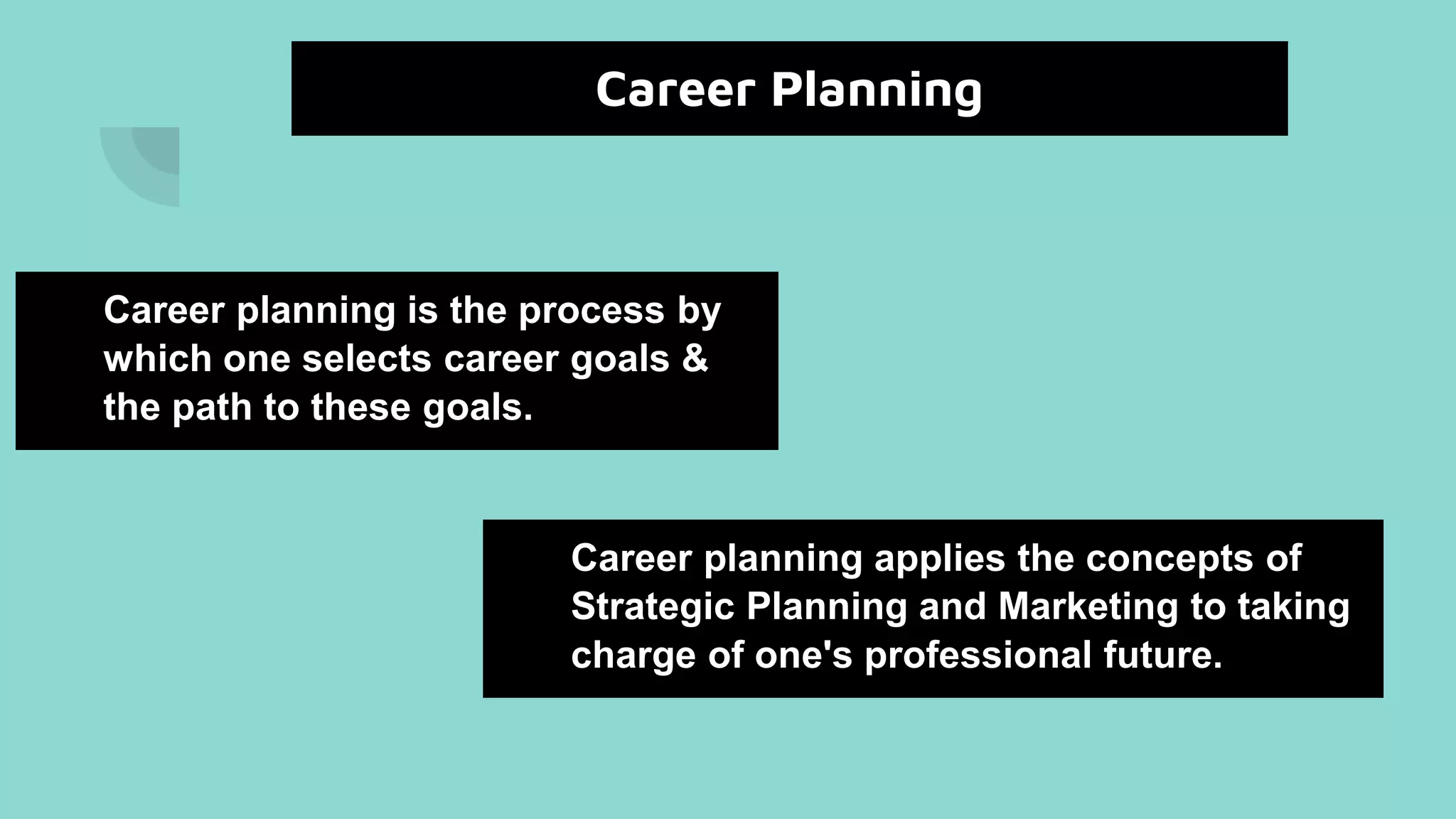
Career Planning
● Career planning applies the concepts of
Strategic Planning and Marketing to taking
charge of one's professional future.
● Career planning is the process by
which one selects career goals &
the path to these goals.
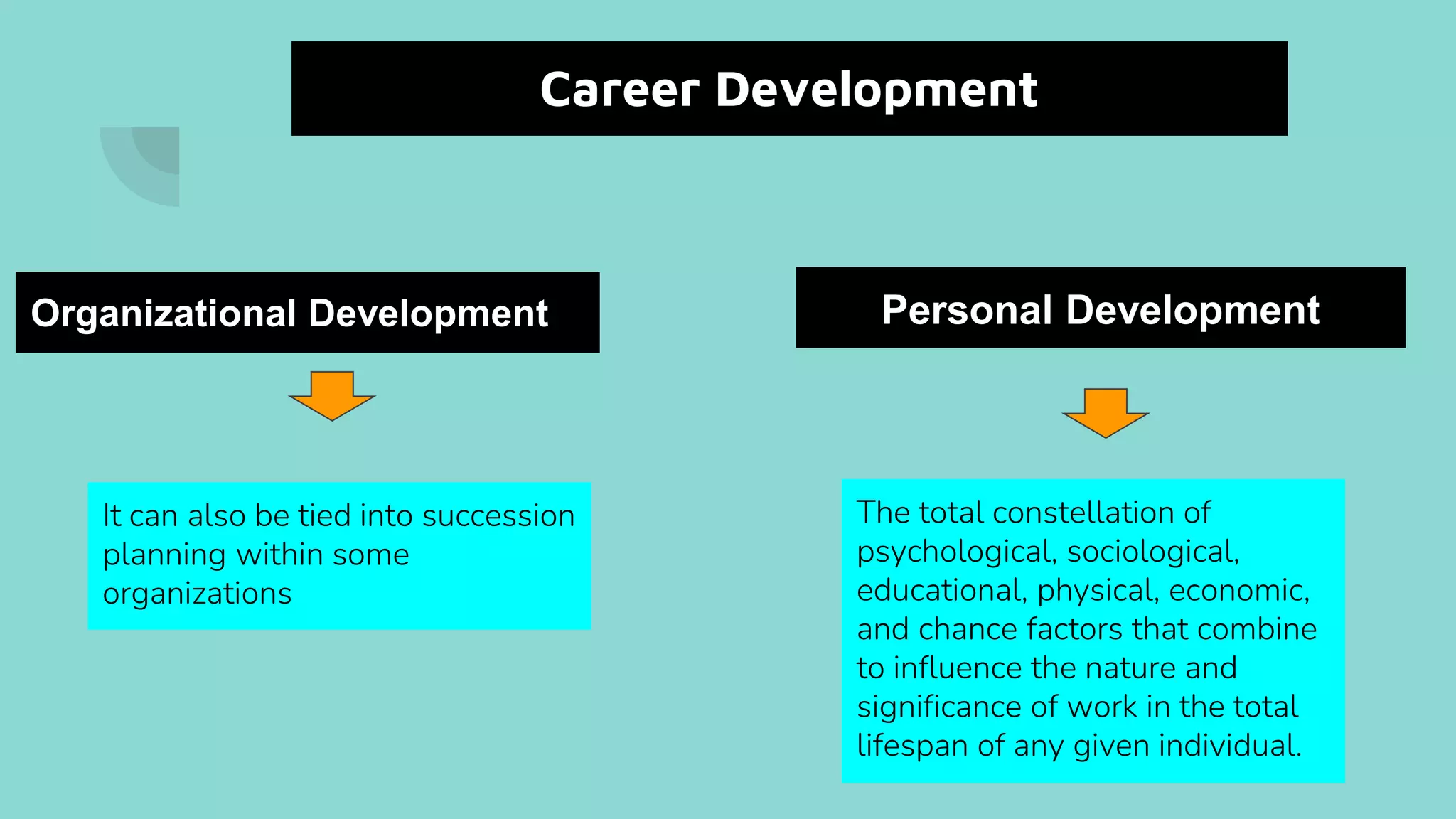
Career Development
Personal Development
Organizational Development
The total constellation of
psychological, sociological,
educational, physical, economic,
and chance factors that combine
to influence the nature and
significance of work in the total
lifespan of any given individual.
It can also be tied into succession
planning within some
organizations
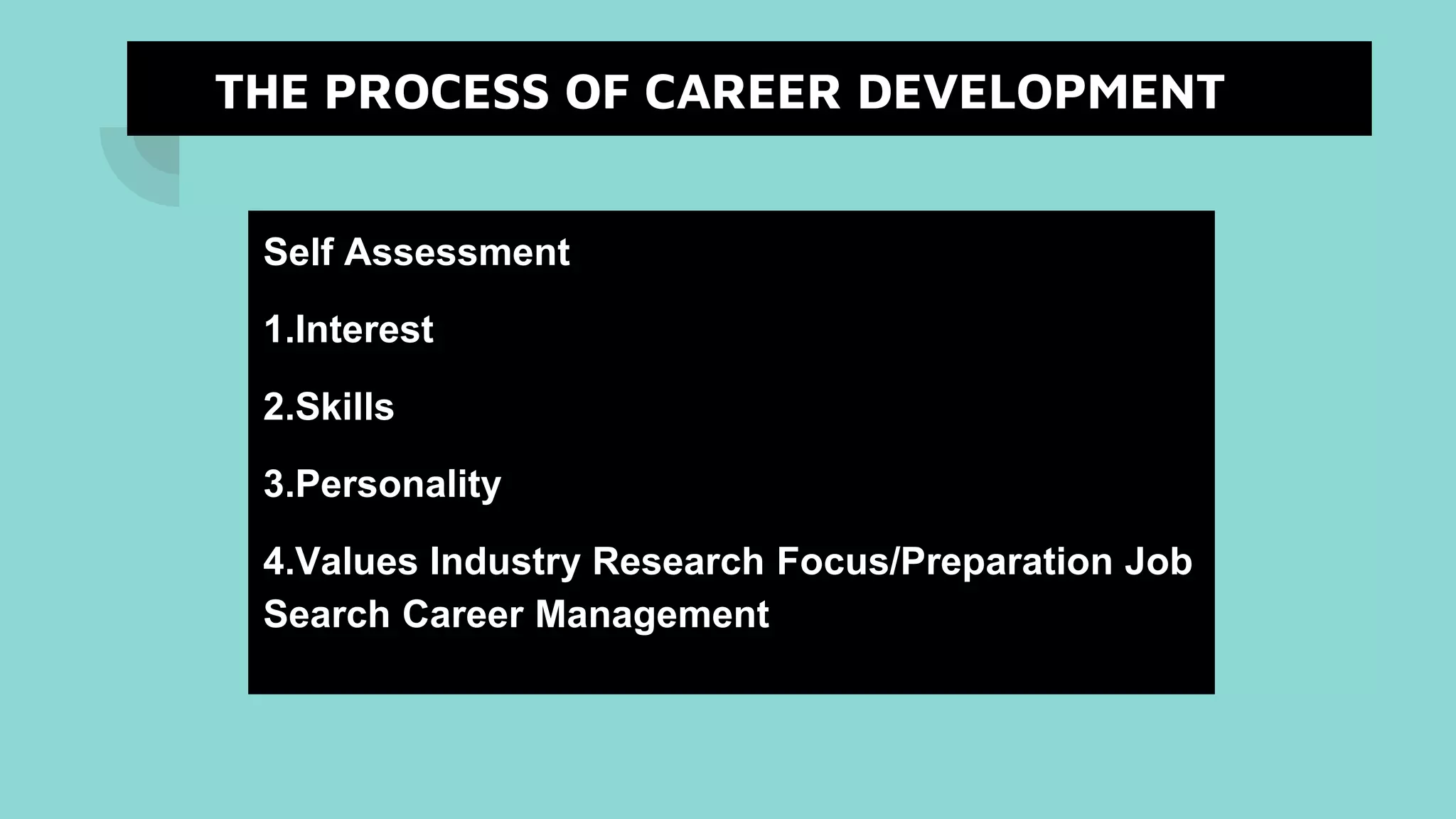
● THE PROCESS OF CAREER DEVELOPMENT
Self Assessment
1.Interest
2.Skills
3.Personality
4.Values Industry Research Focus/Preparation Job
Search Career Management
● CAREER Management
Process of preparing, implementing and monitoring career plans
undertaken by the individual alone or in concert with the
organization’s career systems.
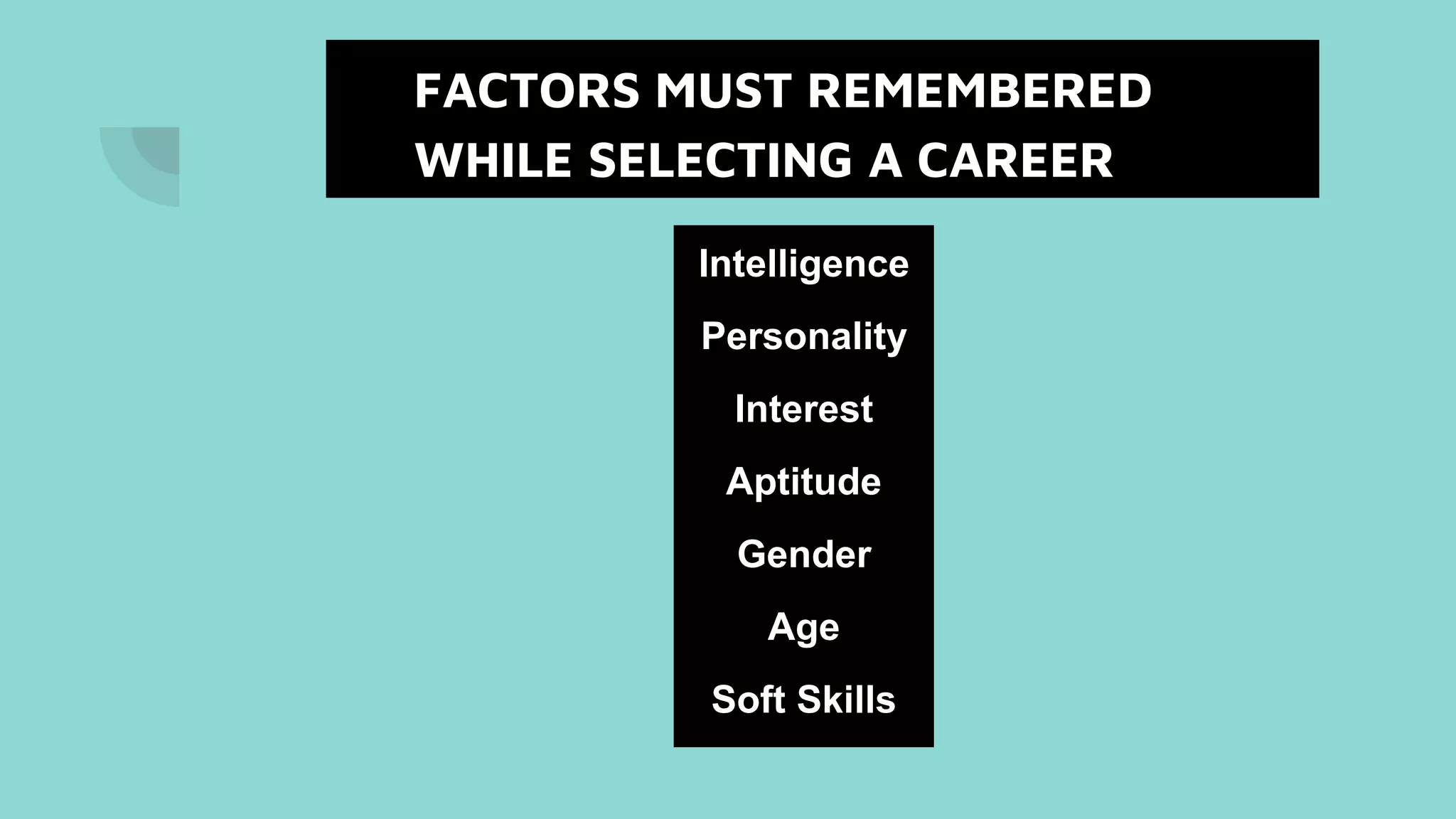
● FACTORS MUST REMEMBERED
WHILE SELECTING A CAREER
Intelligence
Personality
Interest
Aptitude
Gender
Age
Soft Skills
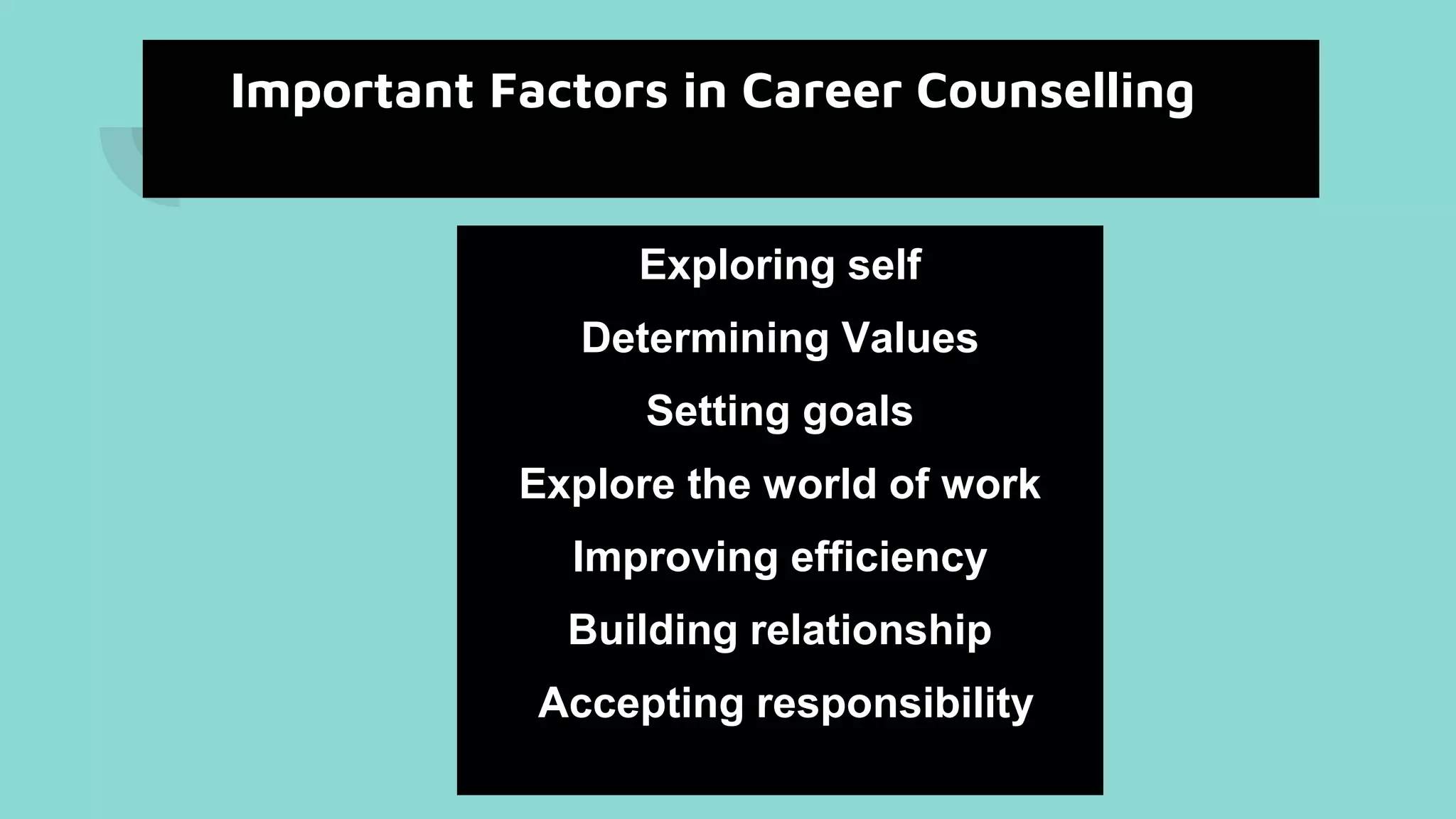
● Important Factors in Career Counselling
Exploring self
Determining Values
Setting goals
Explore the world of work
Improving efficiency
Building relationship
Accepting responsibility
Role of Career Counsellor
● Analyzes the candidate’s strengths and weaknesses
● Administer personality and interest inventories
● Evaluate clients' educational and work backgrounds
● Conduct one-on-one sessions or in groups to evaluate the skills and interests of an
individual
● check the aptitude level towards a specific job.
● Identify the individual’s long and short- term goals.
● Develop career services programs
● Conduct trainings, workshops, lectures, presentations, and other events to develop
career planning and employability skills for students.
Role of Career Counsellor
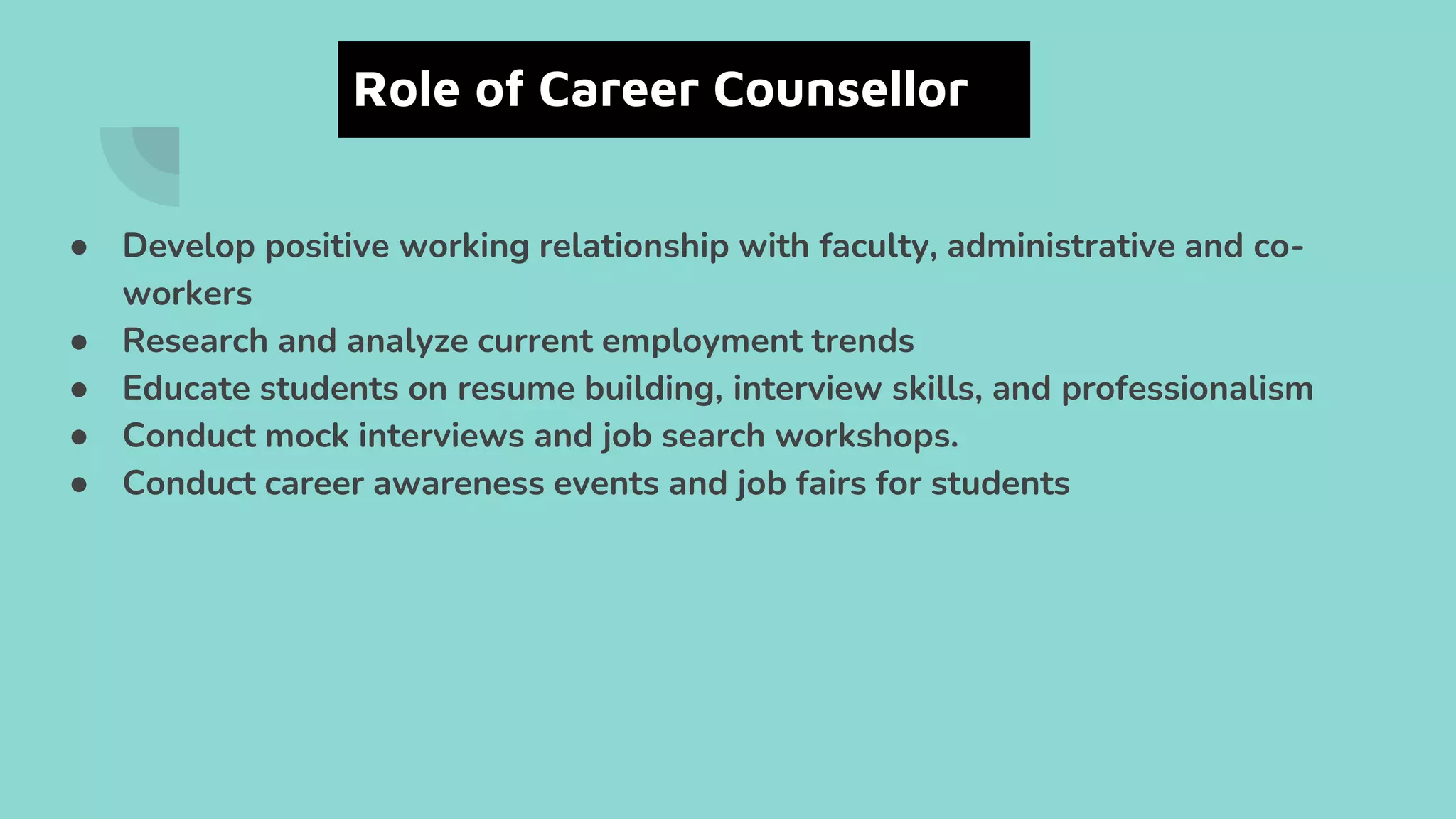
● Develop positive working relationship with faculty, administrative and co-
workers
● Research and analyze current employment trends
● Educate students on resume building, interview skills, and professionalism
● Conduct mock interviews and job search workshops.
● Conduct career awareness events and job fairs for students
Career Counselling in the Present Context

Career Counselling in the Present Context

  • 1.
    Career Counselling in the PresentContext By Dr.@mol Ub@le
  • 2.
    Career Counselling ● CareerCounselling is a process that focuses on helping one understand one’s own self, as well as work trends, so that one can take an informed decision about career and education. ● “Career Counseling is a focus on issues such as career exploration, career change, personal career development and other career related issues.” –Wikipedia ● Careers play a major role in any person’s life and cannot be taken in a lighthearted manner.
  • 3.
    Need of CareerCounselling ● Understand the professional career opportunities and options available. ● Analyze their strengths and weaknesses and helps in finding the perfect career path ● Provides a detailed execution plan with complete career clarity. ● Identifying the factors that influence career development. ● Boosting the confidence and morale of the student and the professional.
  • 4.
    Components In CareerCounselling ● Career Planning ● Career Development ● Career Management
  • 5.
    Career Planning ● Careerplanning applies the concepts of Strategic Planning and Marketing to taking charge of one's professional future. ● Career planning is the process by which one selects career goals & the path to these goals.
  • 6.
    Career Development Personal Development OrganizationalDevelopment The total constellation of psychological, sociological, educational, physical, economic, and chance factors that combine to influence the nature and significance of work in the total lifespan of any given individual. It can also be tied into succession planning within some organizations
  • 7.
    ● THE PROCESSOF CAREER DEVELOPMENT Self Assessment 1.Interest 2.Skills 3.Personality 4.Values Industry Research Focus/Preparation Job Search Career Management
  • 8.
    ● CAREER Management Processof preparing, implementing and monitoring career plans undertaken by the individual alone or in concert with the organization’s career systems.
  • 9.
    ● FACTORS MUSTREMEMBERED WHILE SELECTING A CAREER Intelligence Personality Interest Aptitude Gender Age Soft Skills
  • 10.
    ● Important Factorsin Career Counselling Exploring self Determining Values Setting goals Explore the world of work Improving efficiency Building relationship Accepting responsibility
  • 11.
    Role of CareerCounsellor ● Analyzes the candidate’s strengths and weaknesses ● Administer personality and interest inventories ● Evaluate clients' educational and work backgrounds ● Conduct one-on-one sessions or in groups to evaluate the skills and interests of an individual ● check the aptitude level towards a specific job. ● Identify the individual’s long and short- term goals. ● Develop career services programs ● Conduct trainings, workshops, lectures, presentations, and other events to develop career planning and employability skills for students.
  • 12.
    Role of CareerCounsellor ● Develop positive working relationship with faculty, administrative and co- workers ● Research and analyze current employment trends ● Educate students on resume building, interview skills, and professionalism ● Conduct mock interviews and job search workshops. ● Conduct career awareness events and job fairs for students