Career Counseling
Career
A career has often been considered to be an occupation or
profession, requiring a special training and being usually
followed through one’s lifetime.
Choosing a career is also considered to be more than merely
deciding what one will do to earn a living.
Career is a word which is used in a global manner. It is not just
a specific task or work but is the overall work which one does in
his/her whole life.
It emphasizes the individual’s advancement or achievement in a
particular vocation.
Sears (1982) defines it as “one-to-one or small group relationship between a client
and a counsellor with the goal of helping the client(s) integrate and apply an
understanding of self and the environment to make the most appropriate career
decisions and adjustments”
Career counselling
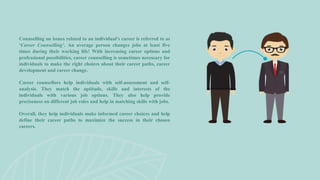
Counselling on issues related to an individual’s career is referred to as
‘Career Counselling’. An average person changes jobs at least five
times during their working life! With increasing career options and
professional possibilities, career counselling is sometimes necessary for
individuals to make the right choices about their career paths, career
development and career change.
Career counsellors help individuals with self-assessment and self-
analysis. They match the aptitude, skills and interests of the
individuals with various job options. They also help provide
preciseness on different job roles and help in matching skills with jobs.
Overall, they help individuals make informed career choices and help
define their career paths to maximize the success in their chosen
careers.
Importance of career counseling
Personalized Guidance
Career counselling provides you with personalized guidance, support, and resources to help you identify your
career interests, skills, and values. This can assist you in making informed career decisions that align with your
unique career aspirations and personal goals.
Clarity on Career Objectives
Career counselling can help you gain clarity on your career objectives and understand the career options
available to you. It can provide you with valuable insights into various career fields, industries, job roles, and
qualifications required for different career paths.
Skill Development
Career counselling can help you identify the skills and competencies required for success in your chosen
career. It can provide you with guidance on skill development and suggest resources that can help you
acquire the high income skills.
Career Planning
Career counselling can help you develop a plan for achieving your career goals. It can assist you in setting
realistic goals, identifying potential roadblocks, and developing strategies to overcome them.
Support during Transitions
Career counselling can provide you with support and guidance during career transitions, such as changing
jobs, industries, or careers. It can help you identify transferable skills and opportunities for professional
growth and development.
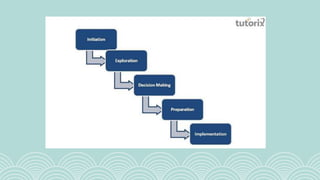
The 5-step process of career counselling
 INITIATION
 EXPLORATION
 DECISION MAKING
 PREPARATION
 IMPLEMENTATION
Steps in career counseling
process
The first counselling stage entails developing a strong
therapeutic bond between the counsellor and the client.
This encourages clients to discuss personal issues with their
counsellor and fosters a sense of trust and confidence in their
ability to act.
In the beginning, the counsellor attempts to comprehend the
client's needs and conduct a thorough assessment of those needs
and career planning. This encourages intervention and wise
guidance in the future.
Counsellors must inspire hope in the clients while building trust,
as many clients show up discouraged or with limited
opportunities.
1.INITIATION
The exploration period involves helping clients to understand the steps
involved. Through exploration, clients can find ways to practice some
of their goals.
Such as through experience, knowledge about the career and its
resources, and networking with people from the same field.
The process of exploration helps a client what is useful and meaningful
to them and validate their uncertainties about it.
2.EXPLORATION
One of the most difficult steps is deciding between several options.
After exploring various options and gaining experience, clients are
encouraged to take further steps for decision-making.
Through strategies and assisting clients in overcoming doubts,
uncertainties, or emotional barriers, the step of decision-making does
not imply determining the career plan but rather confirming it.
With the help of a counsellor, the clients employ various strategies to
clarify their blockage. Counsellor guides them through the
appropriate interpretation to gain confidence to work toward it.
3. DECISION MAKING
Preparation is the 4th stage of career development. The counsellor assists
the client in taking a formal step toward deciding how to proceed toward
a goal—the counsellor assists in career planning.
The counsellor creates a list of specific steps that a client must take to
gather knowledge and resources, such as enrolling in college for a specific
course or learning life skills to deal with uncertainty.
In this situation, the counsellor guides the client through all the
challenges using pre-planned strategies so that the client feels confident
in dealing with them. Clients are also prepared to determine their
resources to achieve their goals.
4.PREPARATION
The implementation process entails finally taking action toward
the goal as the client is ready for it.
Counsellors ensure that clients are self-resilient in the workplace
and learn how to develop nurturing relationships with co-
workers.
Clients at this stage must reflect on their progress via feedback
and achievements. Here, support and feedback assist the client
in standing on their own and not dependent on the counsellor
anymore.
5.IMPLEMENTATION
Reference
Gladding, T.S. (2009) Counseling: A Comprehensive Profession (sixth
edition). Pearsons Education Pvt Ltd.
Galassi, J.P., Crace, R.K., Martin, G.A., James, R.M. & Wallace, R.L.
(1992). Client preferences and anticipations in career counselling:
A preliminary investigation. Journal of Counseling Psychology, 39, 46
-55.
Submitted by,
Unnimaya M S
Shamna T S

career counseling_-1.pptx

  • 1.
  • 2.
    Career A career hasoften been considered to be an occupation or profession, requiring a special training and being usually followed through one’s lifetime. Choosing a career is also considered to be more than merely deciding what one will do to earn a living. Career is a word which is used in a global manner. It is not just a specific task or work but is the overall work which one does in his/her whole life. It emphasizes the individual’s advancement or achievement in a particular vocation.
  • 3.
    Sears (1982) definesit as “one-to-one or small group relationship between a client and a counsellor with the goal of helping the client(s) integrate and apply an understanding of self and the environment to make the most appropriate career decisions and adjustments” Career counselling
  • 4.
    Counselling on issuesrelated to an individual’s career is referred to as ‘Career Counselling’. An average person changes jobs at least five times during their working life! With increasing career options and professional possibilities, career counselling is sometimes necessary for individuals to make the right choices about their career paths, career development and career change. Career counsellors help individuals with self-assessment and self- analysis. They match the aptitude, skills and interests of the individuals with various job options. They also help provide preciseness on different job roles and help in matching skills with jobs. Overall, they help individuals make informed career choices and help define their career paths to maximize the success in their chosen careers.
  • 5.
    Importance of careercounseling Personalized Guidance Career counselling provides you with personalized guidance, support, and resources to help you identify your career interests, skills, and values. This can assist you in making informed career decisions that align with your unique career aspirations and personal goals. Clarity on Career Objectives Career counselling can help you gain clarity on your career objectives and understand the career options available to you. It can provide you with valuable insights into various career fields, industries, job roles, and qualifications required for different career paths.
  • 6.
    Skill Development Career counsellingcan help you identify the skills and competencies required for success in your chosen career. It can provide you with guidance on skill development and suggest resources that can help you acquire the high income skills. Career Planning Career counselling can help you develop a plan for achieving your career goals. It can assist you in setting realistic goals, identifying potential roadblocks, and developing strategies to overcome them. Support during Transitions Career counselling can provide you with support and guidance during career transitions, such as changing jobs, industries, or careers. It can help you identify transferable skills and opportunities for professional growth and development.
  • 7.
    The 5-step processof career counselling  INITIATION  EXPLORATION  DECISION MAKING  PREPARATION  IMPLEMENTATION Steps in career counseling process
  • 8.
    The first counsellingstage entails developing a strong therapeutic bond between the counsellor and the client. This encourages clients to discuss personal issues with their counsellor and fosters a sense of trust and confidence in their ability to act. In the beginning, the counsellor attempts to comprehend the client's needs and conduct a thorough assessment of those needs and career planning. This encourages intervention and wise guidance in the future. Counsellors must inspire hope in the clients while building trust, as many clients show up discouraged or with limited opportunities. 1.INITIATION
  • 9.
    The exploration periodinvolves helping clients to understand the steps involved. Through exploration, clients can find ways to practice some of their goals. Such as through experience, knowledge about the career and its resources, and networking with people from the same field. The process of exploration helps a client what is useful and meaningful to them and validate their uncertainties about it. 2.EXPLORATION
  • 10.
    One of themost difficult steps is deciding between several options. After exploring various options and gaining experience, clients are encouraged to take further steps for decision-making. Through strategies and assisting clients in overcoming doubts, uncertainties, or emotional barriers, the step of decision-making does not imply determining the career plan but rather confirming it. With the help of a counsellor, the clients employ various strategies to clarify their blockage. Counsellor guides them through the appropriate interpretation to gain confidence to work toward it. 3. DECISION MAKING
  • 11.
    Preparation is the4th stage of career development. The counsellor assists the client in taking a formal step toward deciding how to proceed toward a goal—the counsellor assists in career planning. The counsellor creates a list of specific steps that a client must take to gather knowledge and resources, such as enrolling in college for a specific course or learning life skills to deal with uncertainty. In this situation, the counsellor guides the client through all the challenges using pre-planned strategies so that the client feels confident in dealing with them. Clients are also prepared to determine their resources to achieve their goals. 4.PREPARATION
  • 12.
    The implementation processentails finally taking action toward the goal as the client is ready for it. Counsellors ensure that clients are self-resilient in the workplace and learn how to develop nurturing relationships with co- workers. Clients at this stage must reflect on their progress via feedback and achievements. Here, support and feedback assist the client in standing on their own and not dependent on the counsellor anymore. 5.IMPLEMENTATION
  • 14.
    Reference Gladding, T.S. (2009)Counseling: A Comprehensive Profession (sixth edition). Pearsons Education Pvt Ltd. Galassi, J.P., Crace, R.K., Martin, G.A., James, R.M. & Wallace, R.L. (1992). Client preferences and anticipations in career counselling: A preliminary investigation. Journal of Counseling Psychology, 39, 46 -55.
  • 15.