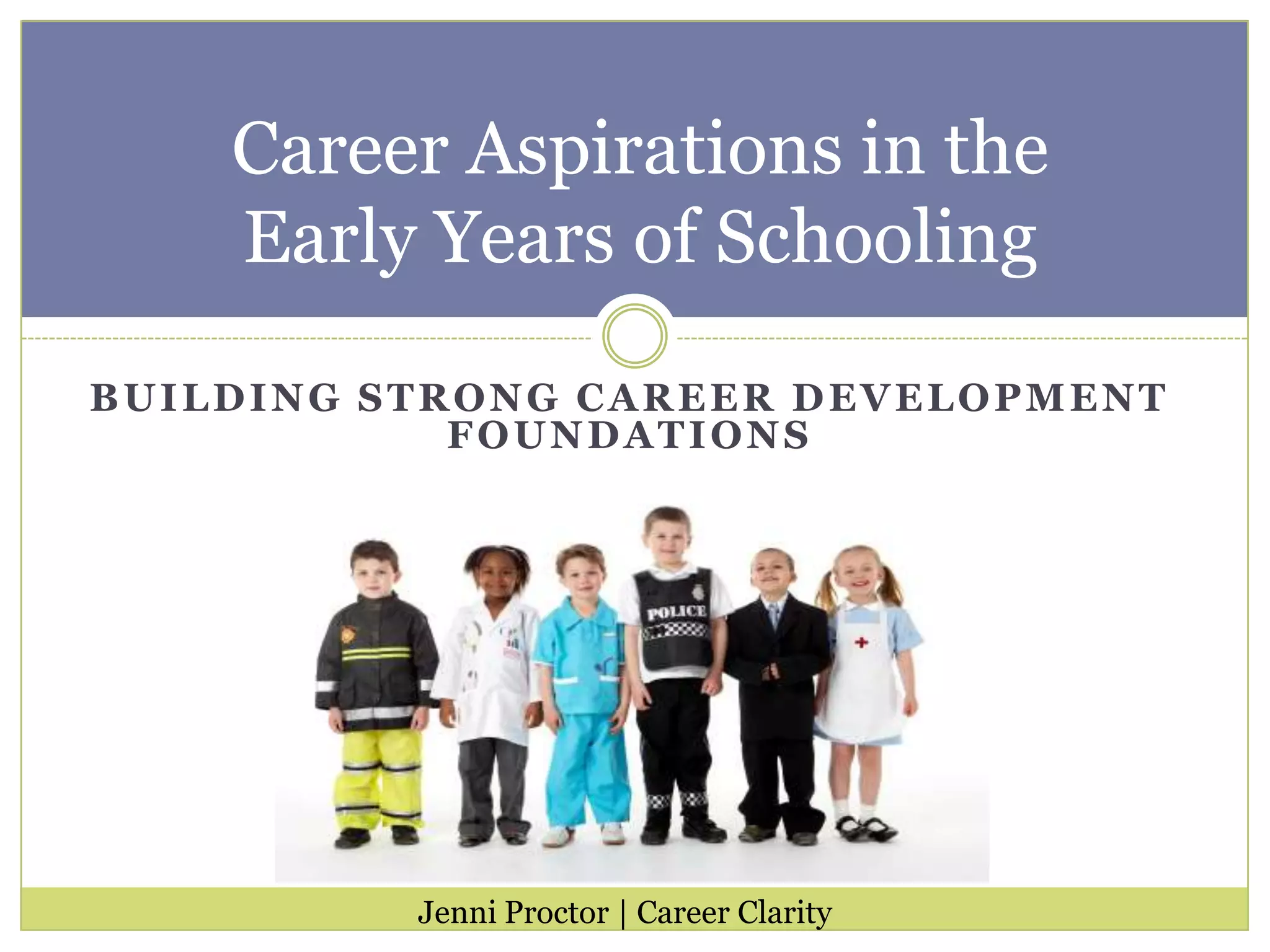
Building Strong Career Development FoundationsCareer Aspirations in the Early Years of SchoolingJenni Proctor | Career Clarity
AspirationsWhen I grow up I want my career to be like……………one of my parents
one of my favourite relatives
a family friend with a cool job
my teacher
someone I have seen working
someone on television
a famous sports star, entertainer, movie star
a cartoon character.When are limits set?“Young people think in quite sophisticated ways about career-related matters”.   Prof. Jim Bright, 2006Aged 5  	Can express their ideas about careersAged 6 – 8	Narrow their occupational alternatives                       Limits tend to last a lifetime
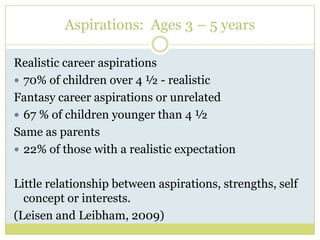
Aspirations:  Ages 3 – 5 yearsRealistic career aspirations70% of children over 4 ½ - realisticFantasy career aspirations or unrelated67 % of children younger than 4 ½Same as parents22% of those with a realistic expectationLittle relationship between aspirations, strengths, self concept or interests.(Leisen and Leibham, 2009)
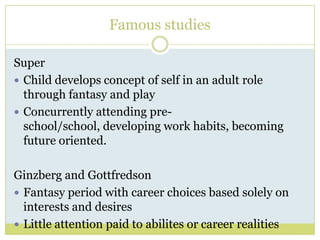
Famous studiesSuperChild develops concept of self in an adult role through fantasy and playConcurrently attending pre-school/school, developing work habits, becoming future oriented.Ginzberg and GottfredsonFantasy period with career choices based solely on interests and desiresLittle attention paid to abilites or career realities
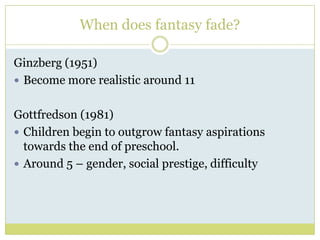
When does fantasy fade?Ginzberg (1951)Become more realistic around 11Gottfredson (1981)Children begin to outgrow fantasy aspirations towards the end of preschool.Around 5 – gender, social prestige, difficulty
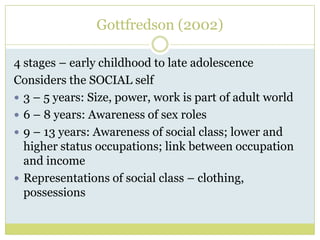
Gottfredson (2002)4 stages – early childhood to late adolescenceConsiders the SOCIAL self3 – 5 years: Size, power, work is part of adult world6 – 8 years: Awareness of sex roles9 – 13 years: Awareness of social class; lower and higher status occupations; link between occupation and incomeRepresentations of social class – clothing, possessions
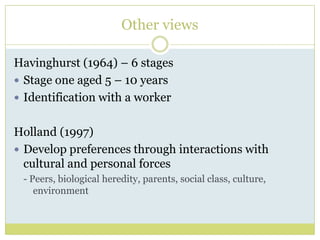
Other viewsHavinghurst (1964) – 6 stagesStage one aged 5 – 10 years Identification with a workerHolland (1997)Develop preferences through interactions with cultural and personal forces- Peers, biological heredity, parents, social class, culture, environment
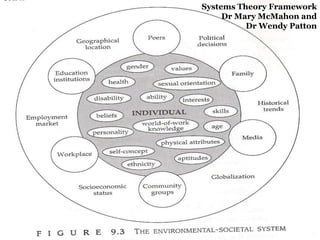
What influences career decisions?Systems Theory Framework Dr Mary McMahon and Dr Wendy Patton
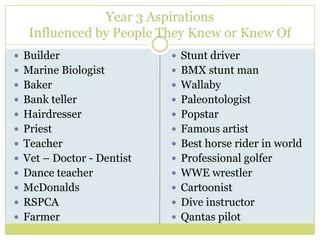
Year 3 Aspirations Influenced by People They Knew or Knew OfBuilderMarine BiologistBakerBank tellerHairdresserPriestTeacherVet – Doctor - DentistDance teacherMcDonaldsRSPCAFarmerStunt driverBMX stunt manWallabyPaleontologistPopstarFamous artistBest horse rider in worldProfessional golferWWE wrestlerCartoonistDive instructorQantas pilot
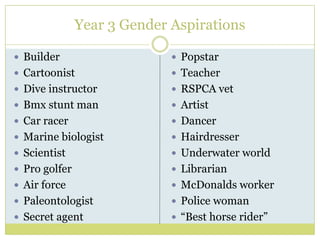
Year 3 Gender AspirationsBuilderCartoonistDive instructorBmx stunt manCar racerMarine biologistScientistPro golferAir forcePaleontologistSecret agentPopstarTeacherRSPCA vetArtistDancerHairdresserUnderwater worldLibrarianMcDonalds workerPolice woman“Best horse rider”
“Australia’s future depends upon each citizen having the necessary knowledge, understanding, skills and values for a productive and rewarding life in an educated, just and open society.”The Adelaide Declaration on National Goals for Schooling the in the Twenty-First Century, Preamble, 1999.
Careers of 21st centuryPreparation to deal with Change, chance and uncertaintyComplex technological changeComplex societal changes
Positive Attitudes ProductiveSuccessfulCapablePositive self imageEffective interpersonal skillsSatisfaction from workValue achievementsAble to learn  LikeableAble to deal with things that happen
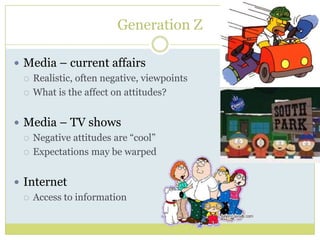
Generation ZMedia – current affairsRealistic, often negative, viewpointsWhat is the affect on attitudes? Media – TV showsNegative attitudes are “cool”Expectations may be warpedInternet Access to information
Foundational Career DevelopmentPurpose:  Develop the knowledge, skills and attitudes so they will be able to make wise subject choices, career choices and life choices.This is NOT about primary school children making career decisions!It’s about building strong foundations.
Our challengesHow can we foster and acknowledge career aspirations?How can we encourage the development of self knowledge? How can we empower students through skill development and the love of learning?How can we faciliate the broadening of occupational understanding?
Australian Blueprint for Career DevelopmentA master can tell youwhat he expects ofyou. A teacher,though, awakens your own expectation.UnknownYou've got to do  your own growing, no matter how tallyour grandfather was.Irish Proverb
Build a positive self imageInteract positively and effectively with othersChange and grow throughout lifeArea A: Personal Management
Area B: Learning and Work ExplorationParticipate in life-long learning supportive of career goalsLocate and effectively use career informationUnderstand the relationship between work, society and the economy.
Area C:  Career BuildingSecure/create and maintain workMake career enhancing decisionsMaintain balanced life and work rolesUnderstand the changing nature of life and work rolesUnderstand, engage in and manage the career building process.
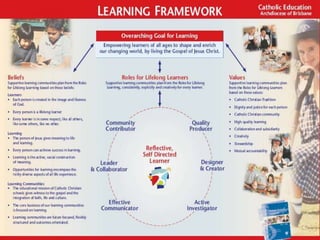
Career Awareness Days3 year cycleBCE Learning FrameworkCo-curricula priorities in Qld Education syllabus documentsYear 1Literacy and NumeracyYear 2Life long learning rolesYear 3Life SkillsFutures perspective
Evolution of the Preschool – Year 2 programTeachers involved in whole school PDCame to opening and closing ceremonyYear 1 and 2 had own activities and Year 2 presented at closing ceremony; Preschool dressupPreschool parental involvement – Activity based, children rotating in groups; dressupsBuilding (including a digger)
Fire truck
Hair salon
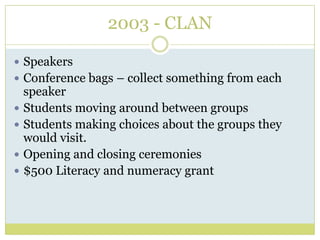
Fashion designer2003 - CLANSpeakersConference bags – collect something from each speakerStudents moving around between groupsStudents making choices about the groups they would visit.Opening and closing ceremonies$500 Literacy and numeracy grant
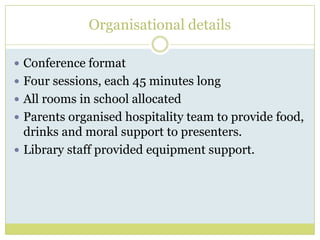
Organisational detailsConference formatFour sessions, each 45 minutes longAll rooms in school allocatedParents organised hospitality team to provide food, drinks and moral support to presenters.Library staff provided equipment support.
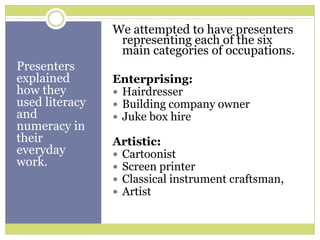
Presenters explained how they used literacy and numeracy in their everyday work.  We attempted to have presenters representing each of the six main categories of occupations. Enterprising: Hairdresser Building company ownerJuke box hire Artistic: CartoonistScreen printer Classical instrument craftsman, Artist
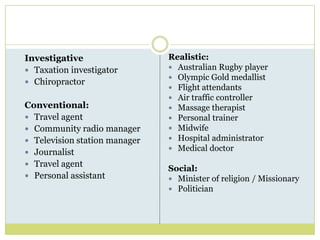
InvestigativeTaxation investigator ChiropractorConventional: Travel agent Community radio manager Television station managerJournalistTravel agent Personal assistantRealistic: Australian Rugby player Olympic Gold medallist Flight attendants Air traffic controllerMassage therapist Personal trainerMidwife Hospital administrator Medical doctor Social: Minister of religion / Missionary Politician
CLAN bagsSample bags were given to all the children from donations we receivedMany presenters gave out extra items for the bags.   All morning one of our presenters screen-printed calico bags with a logo designed by a few of the children as the result of a competition.  Everyone received a CLAN bag at the end of the day.
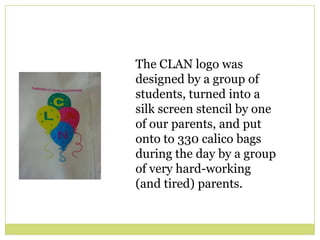
The CLAN logo was designed by a group of students, turned into a silk screen stencil by one of our parents, and put onto to 330 calico bags during the day by a group of very hard-working (and tired) parents.
Year 6 involvementYear 6 used CLAN day as the basis for their media work for next term.They were ourPhotographersVideo camera operatorsReporters for each sessionSpokespeople, introducing and thanking each presenter.
TeachersLoved itSaw the benefit of career education without knowing anything about it.Felt it answered “Why do we have to learn to read and do maths?”PresentersSome said it was a privilege to take partFound the experience very interesting
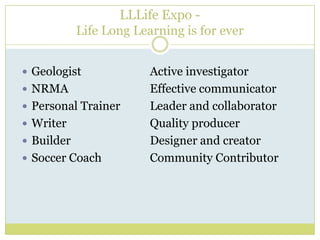
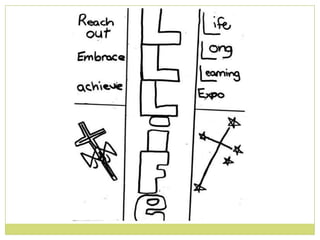
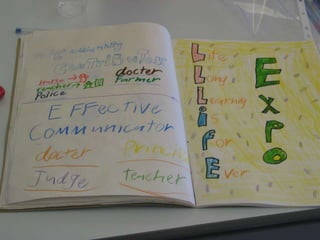
LLLife Expo - Life Long Learning is for everGeologist 			Active investigator NRMA 			Effective communicator Personal Trainer 	Leader and collaborator Writer			Quality producer Builder 			Designer and creator Soccer Coach 		Community Contributor
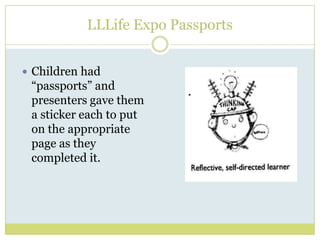
LLLife Expo PassportsChildren had “passports” and presenters gave them a sticker each to put on the appropriate page as they completed it.
Futures FestivalTrying to get people who have a futures perspective in their work.  Life skills – Based on  Program Achieve “You can do it!” Keys to Success
Some of the presentations that were particularly “Futures” focused includedFuture energy sourcesGraphic designerComputer viruses Inventor Marine biologySustainable environment TV editing and producingPersonal Development Natural Medicine Counsellor Graphic Design Merchandising Ecology and biohabitats
Futures FestivalTried to get people who have a futures perspective in their work.  Life skills – Based on  Program Achieve “You can do it!” Education.
Keys to SuccessOpening Ceremony started with a play that demonstrated that the life skills the children are learning at school will be the skills that they will need in their careers.  Presenters mentioned the keys to success that they felt they had most needed in their career.
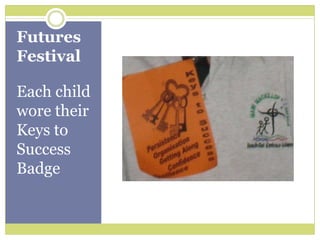
Futures FestivalEach child wore their Keys to Success Badge
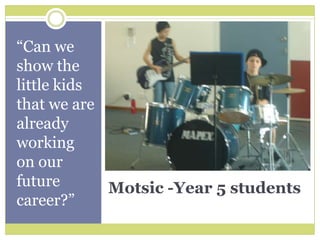
Motsic -Year 5 students“Can we show the little kids that we are already working on our future career?”
teACHERSParentsplanningTimeHOW?
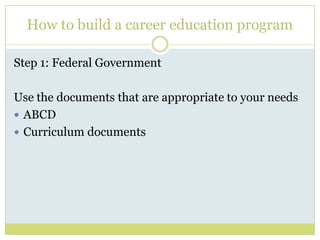
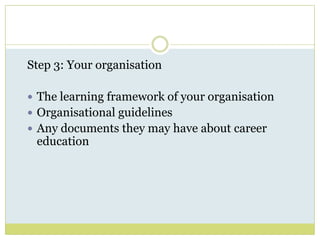
Policy Creation - A Team ProcessStaff meetingCareer Education conceptsDefinitionsGot teachers to work out at grade level what they were already doing that met ABCD competencies.Mapping of what was already happening.
Purpose of MeetingBringing together many aspects of the education we offer at Mary MacKillopDifferent programs e.g. program Achieve, buddies, leadership, sport, dramaA lot going on - Can seem extraneous to our core business of teachingCHALLENGE today To look at what we are doingFeel affirmedBring all these seemingly unrelated programs together to form something quite unique and valuable.
Getting the staff involvedSheets handed out with headingsPersonal developmentLife skillsThinking skillsLearning strategiesReal World experiences – Excursions and visitorsReal world experiences – Curriculum based in classroomWrite what you do quickly and pass onGet around so we get a whole school overview
What is the purpose? Developing life-long learners able to lead productive and fulfilling livesWhat does this really mean to their lives?  Spiritually and emotionally stableAble to sustain relationshipsAble to find fulfillment in their workOverarching concept – Career related learning, career development, career education
Meeting outcomesWhole school mappingMajority of staff supportive and interestedAcceptance of policy being writtenI realised the importance of definitions and introducing change slowly with all stakeholders understanding the purpose.

Career Aspirations

  • 1.
    Building Strong CareerDevelopment FoundationsCareer Aspirations in the Early Years of SchoolingJenni Proctor | Career Clarity
  • 2.
    AspirationsWhen I growup I want my career to be like……………one of my parents
  • 3.
    one of myfavourite relatives
  • 4.
    a family friendwith a cool job
  • 5.
  • 6.
    someone I haveseen working
  • 7.
  • 8.
    a famous sportsstar, entertainer, movie star
  • 9.
    a cartoon character.Whenare limits set?“Young people think in quite sophisticated ways about career-related matters”. Prof. Jim Bright, 2006Aged 5 Can express their ideas about careersAged 6 – 8 Narrow their occupational alternatives Limits tend to last a lifetime
  • 10.
    Aspirations: Ages3 – 5 yearsRealistic career aspirations70% of children over 4 ½ - realisticFantasy career aspirations or unrelated67 % of children younger than 4 ½Same as parents22% of those with a realistic expectationLittle relationship between aspirations, strengths, self concept or interests.(Leisen and Leibham, 2009)
  • 11.
    Famous studiesSuperChild developsconcept of self in an adult role through fantasy and playConcurrently attending pre-school/school, developing work habits, becoming future oriented.Ginzberg and GottfredsonFantasy period with career choices based solely on interests and desiresLittle attention paid to abilites or career realities
  • 12.
    When does fantasyfade?Ginzberg (1951)Become more realistic around 11Gottfredson (1981)Children begin to outgrow fantasy aspirations towards the end of preschool.Around 5 – gender, social prestige, difficulty
  • 13.
    Gottfredson (2002)4 stages– early childhood to late adolescenceConsiders the SOCIAL self3 – 5 years: Size, power, work is part of adult world6 – 8 years: Awareness of sex roles9 – 13 years: Awareness of social class; lower and higher status occupations; link between occupation and incomeRepresentations of social class – clothing, possessions
  • 14.
    Other viewsHavinghurst (1964)– 6 stagesStage one aged 5 – 10 years Identification with a workerHolland (1997)Develop preferences through interactions with cultural and personal forces- Peers, biological heredity, parents, social class, culture, environment
  • 15.
    What influences careerdecisions?Systems Theory Framework Dr Mary McMahon and Dr Wendy Patton
  • 16.
    Year 3 AspirationsInfluenced by People They Knew or Knew OfBuilderMarine BiologistBakerBank tellerHairdresserPriestTeacherVet – Doctor - DentistDance teacherMcDonaldsRSPCAFarmerStunt driverBMX stunt manWallabyPaleontologistPopstarFamous artistBest horse rider in worldProfessional golferWWE wrestlerCartoonistDive instructorQantas pilot
  • 17.
    Year 3 GenderAspirationsBuilderCartoonistDive instructorBmx stunt manCar racerMarine biologistScientistPro golferAir forcePaleontologistSecret agentPopstarTeacherRSPCA vetArtistDancerHairdresserUnderwater worldLibrarianMcDonalds workerPolice woman“Best horse rider”
  • 18.
    “Australia’s future dependsupon each citizen having the necessary knowledge, understanding, skills and values for a productive and rewarding life in an educated, just and open society.”The Adelaide Declaration on National Goals for Schooling the in the Twenty-First Century, Preamble, 1999.
  • 19.
    Careers of 21stcenturyPreparation to deal with Change, chance and uncertaintyComplex technological changeComplex societal changes
  • 20.
    Positive Attitudes ProductiveSuccessfulCapablePositiveself imageEffective interpersonal skillsSatisfaction from workValue achievementsAble to learn LikeableAble to deal with things that happen
  • 21.
    Generation ZMedia –current affairsRealistic, often negative, viewpointsWhat is the affect on attitudes? Media – TV showsNegative attitudes are “cool”Expectations may be warpedInternet Access to information
  • 22.
    Foundational Career DevelopmentPurpose: Develop the knowledge, skills and attitudes so they will be able to make wise subject choices, career choices and life choices.This is NOT about primary school children making career decisions!It’s about building strong foundations.
  • 23.
    Our challengesHow canwe foster and acknowledge career aspirations?How can we encourage the development of self knowledge? How can we empower students through skill development and the love of learning?How can we faciliate the broadening of occupational understanding?
  • 24.
    Australian Blueprint forCareer DevelopmentA master can tell youwhat he expects ofyou. A teacher,though, awakens your own expectation.UnknownYou've got to do your own growing, no matter how tallyour grandfather was.Irish Proverb
  • 25.
    Build a positiveself imageInteract positively and effectively with othersChange and grow throughout lifeArea A: Personal Management
  • 26.
    Area B: Learningand Work ExplorationParticipate in life-long learning supportive of career goalsLocate and effectively use career informationUnderstand the relationship between work, society and the economy.
  • 27.
    Area C: Career BuildingSecure/create and maintain workMake career enhancing decisionsMaintain balanced life and work rolesUnderstand the changing nature of life and work rolesUnderstand, engage in and manage the career building process.
  • 28.
    Career Awareness Days3year cycleBCE Learning FrameworkCo-curricula priorities in Qld Education syllabus documentsYear 1Literacy and NumeracyYear 2Life long learning rolesYear 3Life SkillsFutures perspective
  • 29.
    Evolution of thePreschool – Year 2 programTeachers involved in whole school PDCame to opening and closing ceremonyYear 1 and 2 had own activities and Year 2 presented at closing ceremony; Preschool dressupPreschool parental involvement – Activity based, children rotating in groups; dressupsBuilding (including a digger)
  • 30.
  • 31.
  • 32.
    Fashion designer2003 -CLANSpeakersConference bags – collect something from each speakerStudents moving around between groupsStudents making choices about the groups they would visit.Opening and closing ceremonies$500 Literacy and numeracy grant
  • 33.
    Organisational detailsConference formatFoursessions, each 45 minutes longAll rooms in school allocatedParents organised hospitality team to provide food, drinks and moral support to presenters.Library staff provided equipment support.
  • 34.
    Presenters explained howthey used literacy and numeracy in their everyday work. We attempted to have presenters representing each of the six main categories of occupations. Enterprising: Hairdresser Building company ownerJuke box hire Artistic: CartoonistScreen printer Classical instrument craftsman, Artist
  • 35.
    InvestigativeTaxation investigator ChiropractorConventional:Travel agent Community radio manager Television station managerJournalistTravel agent Personal assistantRealistic: Australian Rugby player Olympic Gold medallist Flight attendants Air traffic controllerMassage therapist Personal trainerMidwife Hospital administrator Medical doctor Social: Minister of religion / Missionary Politician
  • 36.
    CLAN bagsSample bagswere given to all the children from donations we receivedMany presenters gave out extra items for the bags. All morning one of our presenters screen-printed calico bags with a logo designed by a few of the children as the result of a competition. Everyone received a CLAN bag at the end of the day.
  • 37.
    The CLAN logowas designed by a group of students, turned into a silk screen stencil by one of our parents, and put onto to 330 calico bags during the day by a group of very hard-working (and tired) parents.
  • 38.
    Year 6 involvementYear6 used CLAN day as the basis for their media work for next term.They were ourPhotographersVideo camera operatorsReporters for each sessionSpokespeople, introducing and thanking each presenter.
  • 39.
    TeachersLoved itSaw thebenefit of career education without knowing anything about it.Felt it answered “Why do we have to learn to read and do maths?”PresentersSome said it was a privilege to take partFound the experience very interesting
  • 41.
    LLLife Expo -Life Long Learning is for everGeologist Active investigator NRMA Effective communicator Personal Trainer Leader and collaborator Writer Quality producer Builder Designer and creator Soccer Coach Community Contributor
  • 42.
    LLLife Expo PassportsChildrenhad “passports” and presenters gave them a sticker each to put on the appropriate page as they completed it.
  • 45.
    Futures FestivalTrying toget people who have a futures perspective in their work. Life skills – Based on Program Achieve “You can do it!” Keys to Success
  • 46.
    Some of thepresentations that were particularly “Futures” focused includedFuture energy sourcesGraphic designerComputer viruses Inventor Marine biologySustainable environment TV editing and producingPersonal Development Natural Medicine Counsellor Graphic Design Merchandising Ecology and biohabitats
  • 47.
    Futures FestivalTried toget people who have a futures perspective in their work. Life skills – Based on Program Achieve “You can do it!” Education.
  • 48.
    Keys to SuccessOpeningCeremony started with a play that demonstrated that the life skills the children are learning at school will be the skills that they will need in their careers. Presenters mentioned the keys to success that they felt they had most needed in their career.
  • 49.
    Futures FestivalEach childwore their Keys to Success Badge
  • 50.
    Motsic -Year 5students“Can we show the little kids that we are already working on our future career?”
  • 51.
  • 52.
    Policy Creation -A Team ProcessStaff meetingCareer Education conceptsDefinitionsGot teachers to work out at grade level what they were already doing that met ABCD competencies.Mapping of what was already happening.
  • 53.
    Purpose of MeetingBringingtogether many aspects of the education we offer at Mary MacKillopDifferent programs e.g. program Achieve, buddies, leadership, sport, dramaA lot going on - Can seem extraneous to our core business of teachingCHALLENGE today To look at what we are doingFeel affirmedBring all these seemingly unrelated programs together to form something quite unique and valuable.
  • 54.
    Getting the staffinvolvedSheets handed out with headingsPersonal developmentLife skillsThinking skillsLearning strategiesReal World experiences – Excursions and visitorsReal world experiences – Curriculum based in classroomWrite what you do quickly and pass onGet around so we get a whole school overview
  • 55.
    What is thepurpose? Developing life-long learners able to lead productive and fulfilling livesWhat does this really mean to their lives? Spiritually and emotionally stableAble to sustain relationshipsAble to find fulfillment in their workOverarching concept – Career related learning, career development, career education
  • 56.
    Meeting outcomesWhole schoolmappingMajority of staff supportive and interestedAcceptance of policy being writtenI realised the importance of definitions and introducing change slowly with all stakeholders understanding the purpose.