
 Explainthe nature of structured,
 unstructured, stress, group, and virtual
 interviews.
 How to prepare and participate
 effectively in a job interview.
 Prepare   effective answers to questions
 often asked in job interviews, including
 illegal interview questions.

                                     2
The job interview is perhaps the last step
before being hired for a job. Succeeding in an
interview, is to get the job you requested. However,
if that was not the result, learning from these
experiences can help you improve for future
interviews. In this decade, the applicant must be
prepared for a long distance interview, because
cyber o video interviews are now a reality. In a job
interview it’s important for you to demonstrate your
skills and perform you job efficiently ones you have
been selected for the job.

                                             3
   Structured Interviews

   Unstructured Interviews

   Stress Interviews

   Group Interviews

   Virtual Interviews

                              4
 Suggest a preliminary phone conversation
  with the interviewer to establish rapport.
 Arrive early and familiarize yourself with
  the equipment.
 Concentrate on projecting strong
  nonverbal skills: speak clearly, don’t slow
  down, be centered in the camera frame,
  sit straight, look up and use gestures to
  communicate.

                                        5
   The success of any interview depends
    on the communication skills of the
    participants and how strongly each
    wants to practice them.


                                         6
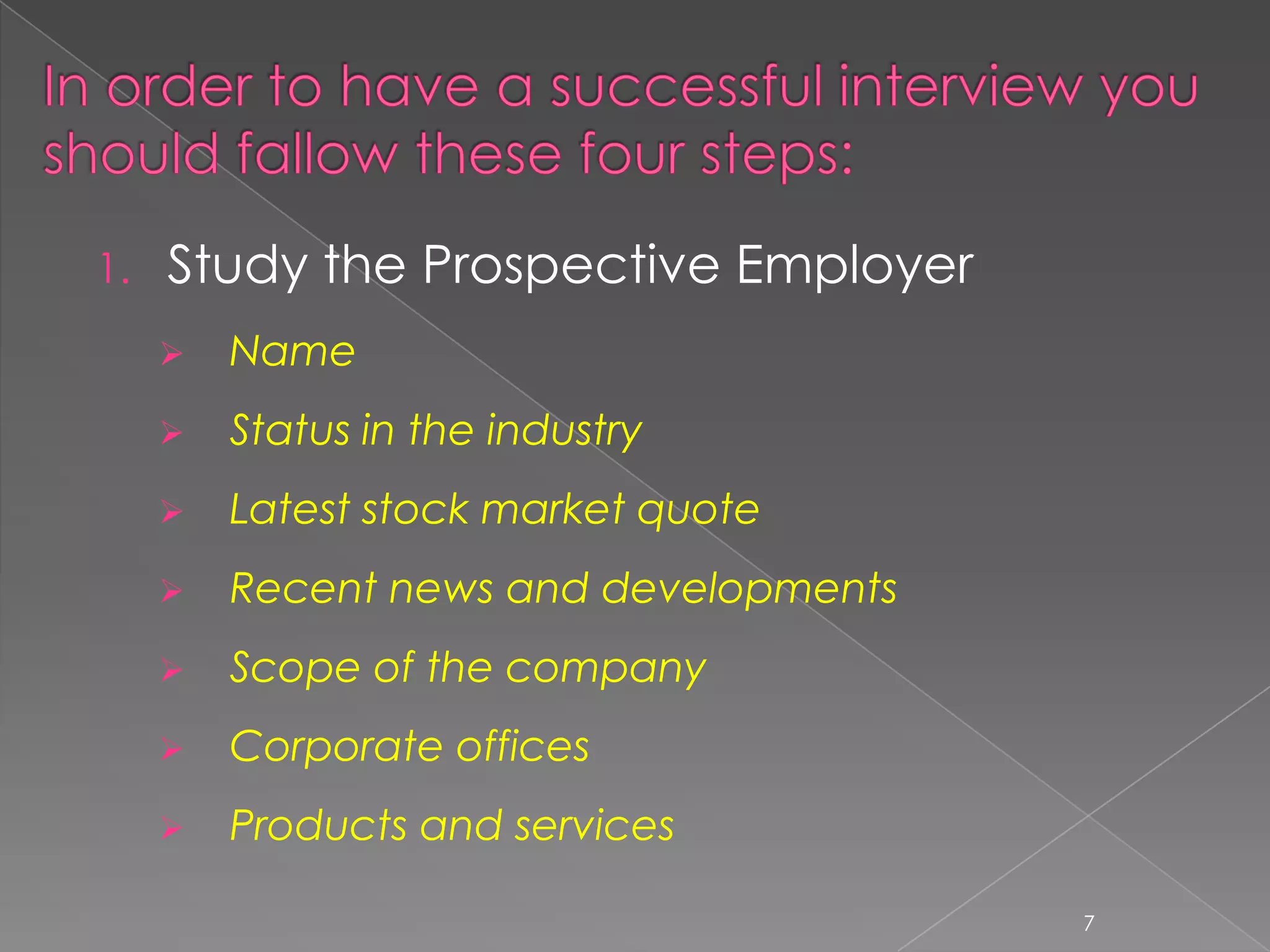
1.   Study the Prospective Employer
        Name
        Status in the industry
        Latest stock market quote
        Recent news and developments
        Scope of the company
        Corporate offices
        Products and services

                                        7
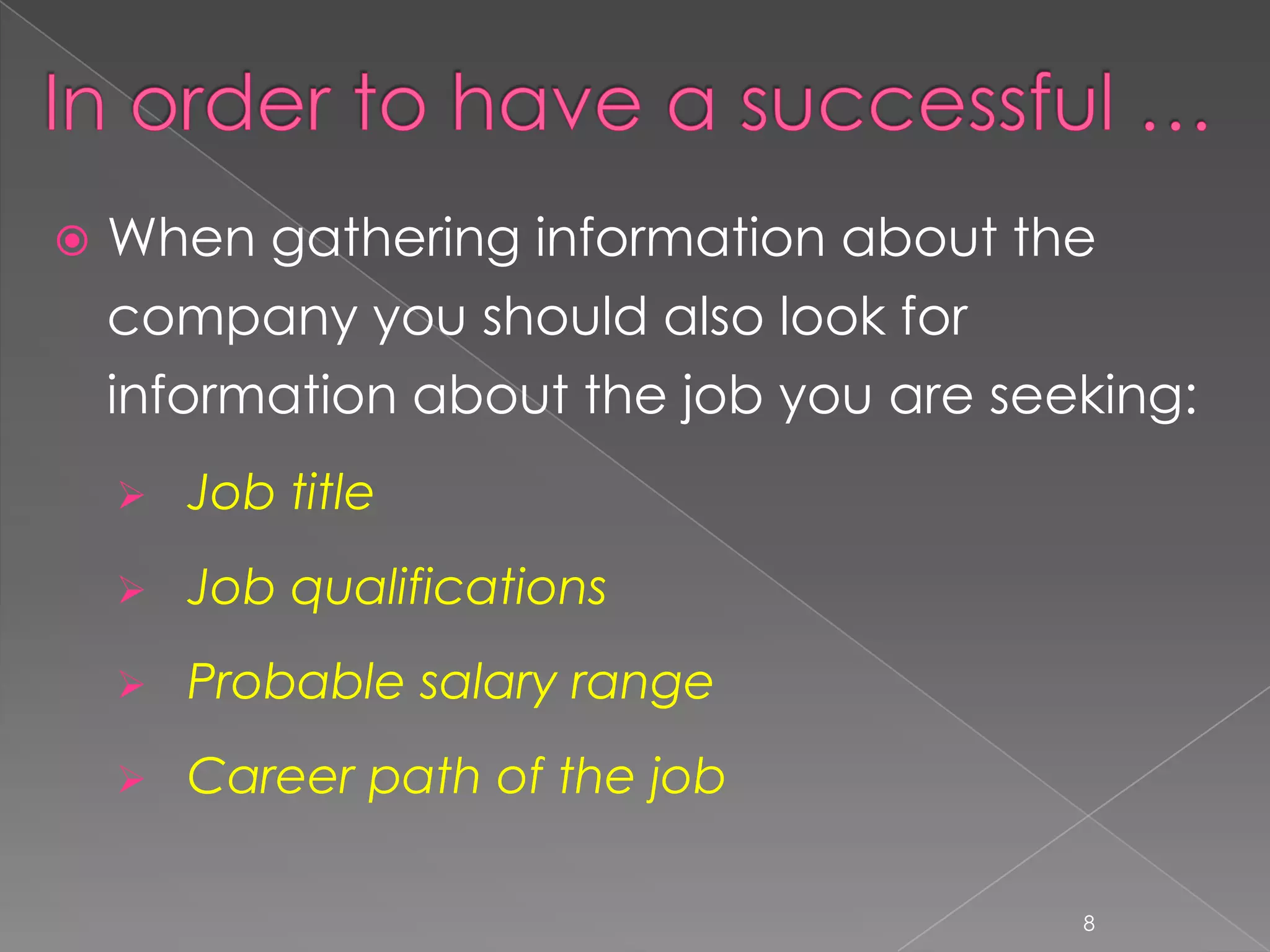
   When gathering information about the
    company you should also look for
    information about the job you are seeking:
       Job title
       Job qualifications
       Probable salary range
       Career path of the job

                                         8
2.   Study Yourself
3.   Plan Your Appearance
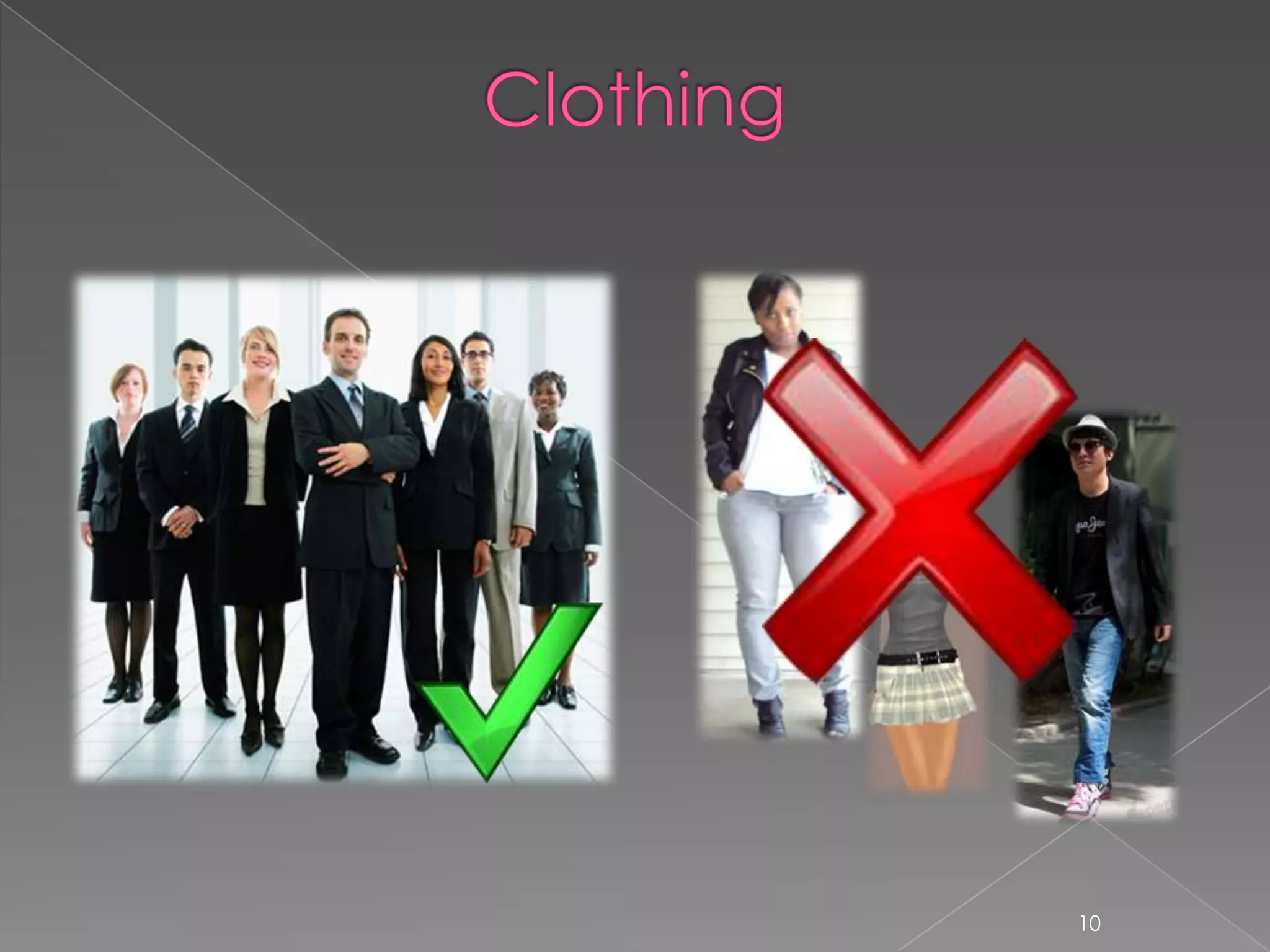
        Your fingernails, shoes, and hair, must be clean
         and well kept.
        Wear appropriate footwear, and select
         appropriate clothing for the interview.
        Females should avoid heavy makeup, and select
         conservative clothes.
        Avoid smoking, drinking, or wearing heavy
         fragrances.


                                                     9
10
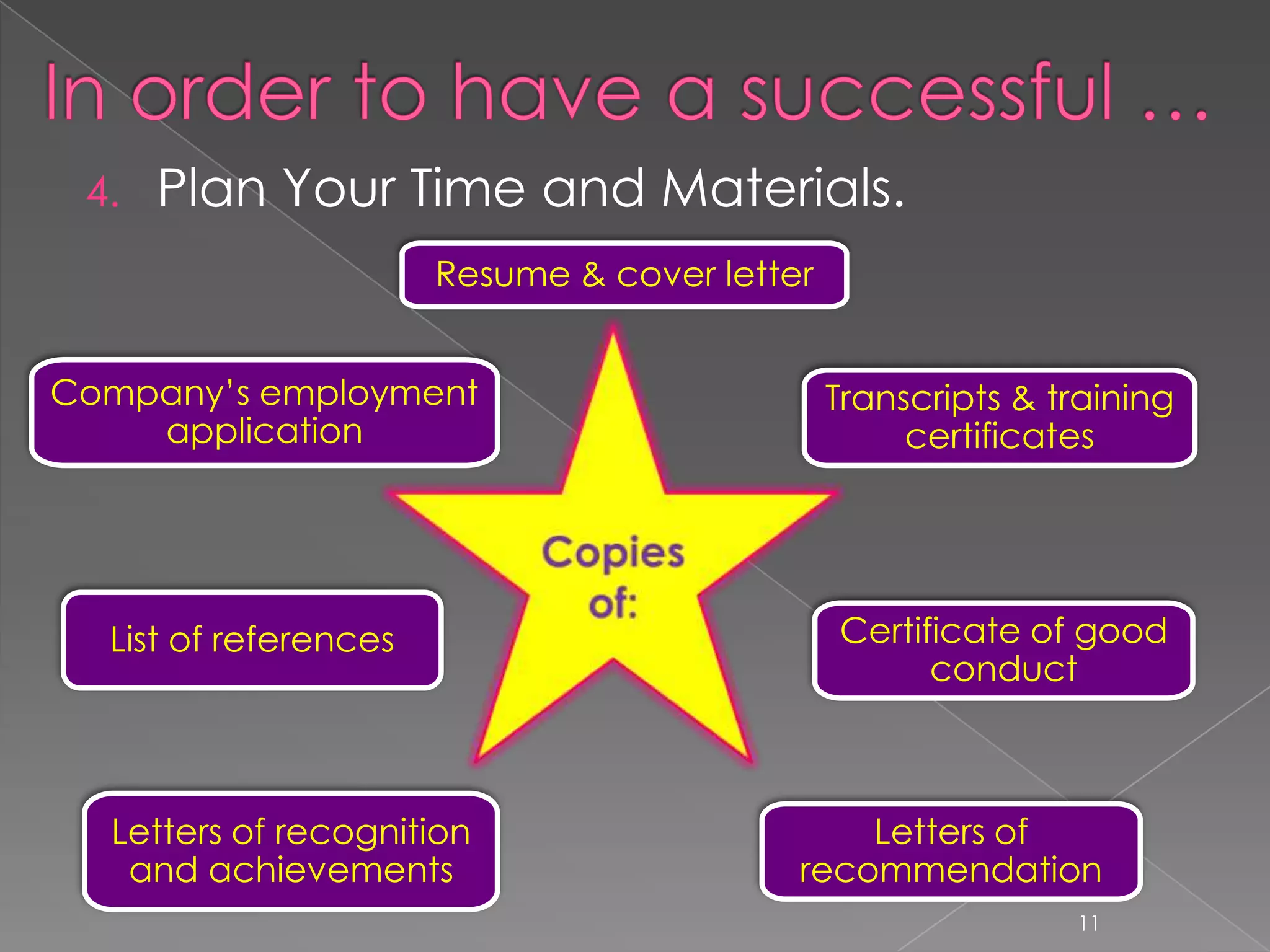
4.   Plan Your Time and Materials.
                       Resume & cover letter


Company’s employment                           Transcripts & training
    application                                     certificates


  List of references                           Certificate of good
                                                     conduct


  Letters of recognition                       Letters of
   and achievements                        recommendation
                                                              11
   A job interview is probably the most
    important face to face interaction you
    could ever have.

   When preparing for an interview, you
    should gather all the question you can
    possible find, and think about how you
    would answer them.
                                           12
   Make a list of key points that you want to
    emphasize on.

   Be prepared to answer standard interview
    questions:
       Why do you want to join our company?

       Why do you think you're the right person for
        the position?

                                                13
   Be prepared to answer behavioral
    questions:
       Describe a time you worked well under
        pressure.
       What was the most difficult problem you had to
        overcome in your last job? How did you cope
        with it?

   Be prepared to demonstrate logical
    thinking and creativity.
                                                14
   Be prepared to discuss salary and benefits.
   Be knowledgeable of interview questions
    that might lead to discriminatory hiring
    practices.
    “The Equal Employment Opportunity Commission
(EEOC) and Fair Employment Practices Guidelines, state
 clearly that an employer cannot discriminate against a
 job applicant on the basis of race, color, gender, age,
           religion, national origin, or disability.”
                                                 15
   National origin and religion:
       “You have an unusual accent; where were you
        born?
       What religious holidays will require you to miss
        work?”

   Age:
       What year did you graduate?
       Could you provide us a copy of your birth
        certificate?
                                                   16
   Disabilities, health conditions, and physical
    characteristics not reasonably related to the
    job.
       Do you have a disability that would interfere with
        your job?
       Have you ever been injured on the job?
       How much alcohol do you consume in the
        week?
       Are you taking any prescription drugs?

                                                   17
   Marital status, spouse’s employment, or
    dependents:
       Are you married?
       Who is going to watch your children?
       Is your spouse employed?
       Do you plan to have children?
   Arrests or criminal convictions that are not
    related to the job:
       Have you ever been arrested other than for traffic
        violations?

                                                  18
   Be prepared to ask the interviewer questions.
     What is a typical day like in this job?
     What type of people would I be working
       with?
     Would you describe the initial training
       program for people in this position?
     When do you expect to make your
       decision about the position?


                                          19
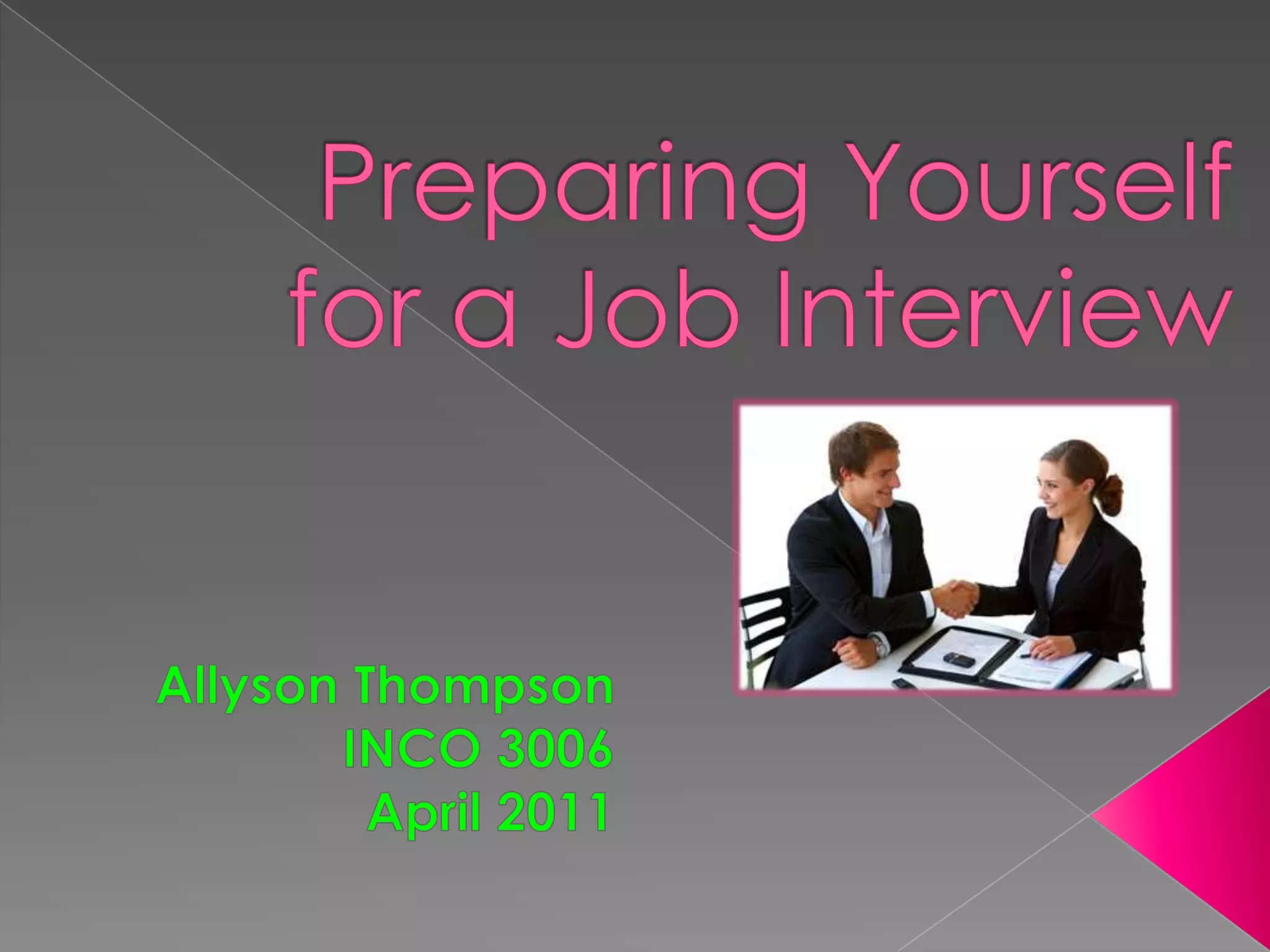
Preparing Yourself for a Job Interview

Preparing Yourself for a Job Interview

  • 2.
     Explainthe natureof structured, unstructured, stress, group, and virtual interviews.  How to prepare and participate effectively in a job interview.  Prepare effective answers to questions often asked in job interviews, including illegal interview questions. 2
  • 3.
    The job interviewis perhaps the last step before being hired for a job. Succeeding in an interview, is to get the job you requested. However, if that was not the result, learning from these experiences can help you improve for future interviews. In this decade, the applicant must be prepared for a long distance interview, because cyber o video interviews are now a reality. In a job interview it’s important for you to demonstrate your skills and perform you job efficiently ones you have been selected for the job. 3
  • 4.
    Structured Interviews  Unstructured Interviews  Stress Interviews  Group Interviews  Virtual Interviews 4
  • 5.
     Suggest apreliminary phone conversation with the interviewer to establish rapport.  Arrive early and familiarize yourself with the equipment.  Concentrate on projecting strong nonverbal skills: speak clearly, don’t slow down, be centered in the camera frame, sit straight, look up and use gestures to communicate. 5
  • 6.
    The success of any interview depends on the communication skills of the participants and how strongly each wants to practice them. 6
  • 7.
    1. Study the Prospective Employer  Name  Status in the industry  Latest stock market quote  Recent news and developments  Scope of the company  Corporate offices  Products and services 7
  • 8.
    When gathering information about the company you should also look for information about the job you are seeking:  Job title  Job qualifications  Probable salary range  Career path of the job 8
  • 9.
    2. Study Yourself 3. Plan Your Appearance  Your fingernails, shoes, and hair, must be clean and well kept.  Wear appropriate footwear, and select appropriate clothing for the interview.  Females should avoid heavy makeup, and select conservative clothes.  Avoid smoking, drinking, or wearing heavy fragrances. 9
  • 10.
  • 11.
    4. Plan Your Time and Materials. Resume & cover letter Company’s employment Transcripts & training application certificates List of references Certificate of good conduct Letters of recognition Letters of and achievements recommendation 11
  • 12.
    A job interview is probably the most important face to face interaction you could ever have.  When preparing for an interview, you should gather all the question you can possible find, and think about how you would answer them. 12
  • 13.
    Make a list of key points that you want to emphasize on.  Be prepared to answer standard interview questions:  Why do you want to join our company?  Why do you think you're the right person for the position? 13
  • 14.
    Be prepared to answer behavioral questions:  Describe a time you worked well under pressure.  What was the most difficult problem you had to overcome in your last job? How did you cope with it?  Be prepared to demonstrate logical thinking and creativity. 14
  • 15.
    Be prepared to discuss salary and benefits.  Be knowledgeable of interview questions that might lead to discriminatory hiring practices. “The Equal Employment Opportunity Commission (EEOC) and Fair Employment Practices Guidelines, state clearly that an employer cannot discriminate against a job applicant on the basis of race, color, gender, age, religion, national origin, or disability.” 15
  • 16.
    National origin and religion:  “You have an unusual accent; where were you born?  What religious holidays will require you to miss work?”  Age:  What year did you graduate?  Could you provide us a copy of your birth certificate? 16
  • 17.
    Disabilities, health conditions, and physical characteristics not reasonably related to the job.  Do you have a disability that would interfere with your job?  Have you ever been injured on the job?  How much alcohol do you consume in the week?  Are you taking any prescription drugs? 17
  • 18.
    Marital status, spouse’s employment, or dependents:  Are you married?  Who is going to watch your children?  Is your spouse employed?  Do you plan to have children?  Arrests or criminal convictions that are not related to the job:  Have you ever been arrested other than for traffic violations? 18
  • 19.
    Be prepared to ask the interviewer questions.  What is a typical day like in this job?  What type of people would I be working with?  Would you describe the initial training program for people in this position?  When do you expect to make your decision about the position? 19

Editor's Notes

  • #8 Knowing a little about the organization can help the candidate in the interview. No knowledge indicates insincerity; the interviewer should not waste time providing the candidate with information that should have been gathered before the interview.Name: why and when was it originated and what does it mean.Status in the industry: how many employees it haves? Study its sales and were does it stand compared to other companies.Latest stock market quote: be familiar with its current statistics and market trends.Recent news and developments: read articles in which the company is featured, its products, etc.Scope of the company: if it’s local, national, or international.Corporate offices: know the names of the people involved in the management of the company, the chairperson, president, executives, etc.Products and services: study what the company offers, what market it targets.
  • #9 Job title: and its entry level position.Job qualifications: the specific knowledge and skills required for the job.Probable salary range: you can compare salaries with other firms and its average pay.Career path of the job: study the type of opportunities it will give you in the future.
  • #10 Study Yourself:Knowing the essentials about the company and the job you’re applying for, will allow you to know what type training programs the company has to offer. This can allow you to compare you qualifications and the ones required for the job, and can help you in the process of updating your résumé.Plan Your Appearance:First impression is the most important quality. A decision is made in the first two minutes whether you are the right candidate or not.
  • #12 Plan Your Time and Materials:You should never be late to a job interview. If something happens and you cannot make it to the interview you should call and apologies. Plan your time so you can arrive early and mentally review the things you plan to accomplish. You should bring a portfolio containing
  • #15 Be prepared to demonstrate logical thinking and creativity: you can be asked to solve brain teasers and riddles, create some kind of art, solve complex business problems, etc.
  • #16 Be prepared to discuss salary and benefits: the interviewer should be the one to initiate this topic. You should know the general range for someone in this position and your qualifications so that your response can be reasonable.