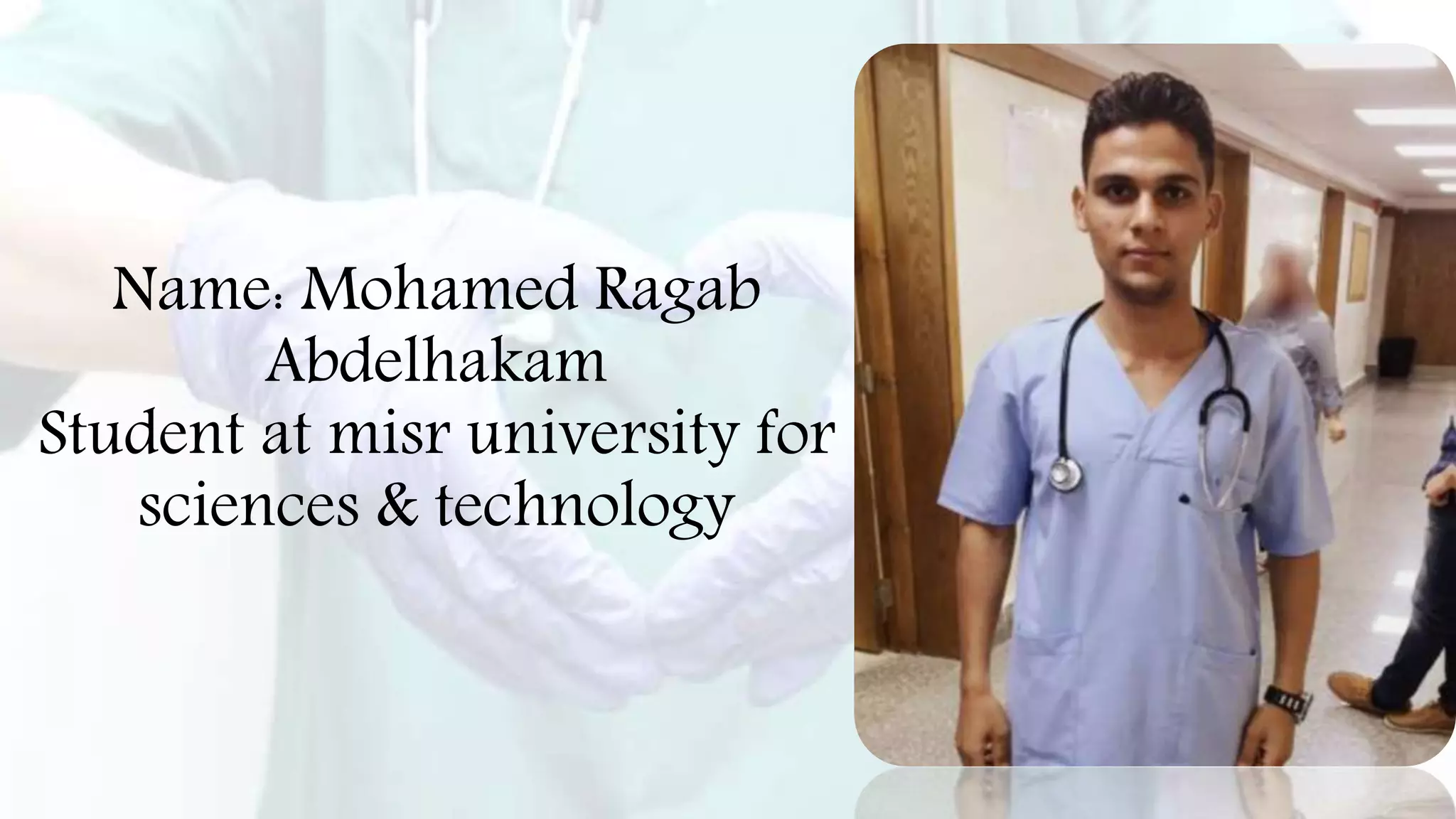


Name: Mohamed Ragab
Abdelhakam
Student at misr university for
sciences & technology
Objectives
• At the end of the unit, the student will be able:
 To indicate three principles of cardiopulmonary bypass (CPB)
To mention indications and contraindications of Coronary Artery
Bypass Grafting (CABG)
To indicate the differences between valve regurgitation and valve
stenosis disorders.
To discuss preoperative nursing care of the patient undergoing
cardiac surgery.
To discuss Nursing management of the patient post cardiac
surgery
Cardiothoracic surgery
Also known as thoracic surgery is the field of medicine
involved in surgical treatment of organs inside the
thorax (the chest)
( Generally treatment of conditions of the heart and lungs )
Cardiopulmonary bypass
• Is a technique that temporarily takes over the function
of the heart and lungs during surgery, maintaining the
circulation of blood and the oxygen content of the
patient's body.
Principles of cardiopulmonary
bypass (CPB)
Anticoagulant
•(heparin) × (protamine sulfate)
Hypothermia
•28-32 (The cooled blood slows the body's basal metabolic
rate, decreasing its demand for oxygen)
Hemodilution
•Viscosity
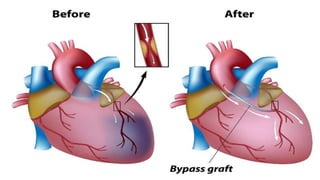
Coronary Artery Bypass
Grafting (CABG)
•Is a surgical procedure to restore normal blood flow
to an obstructed coronary artery.
(A normal coronary artery transports blood to and from
the heart muscle itself, not through the main circulatory
system)
indications of Coronary Artery Bypass
Grafting (CABG)
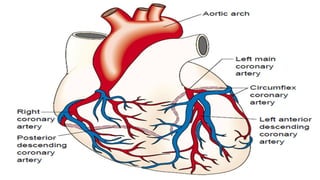
Over 50% left main coronary artery stenosis
Over 70% stenosis of the proximal left anterior descending (LAD) and proximal
circumflex arteries
Three-vessel disease in asymptomatic patients or those with mild or stable
angina
One- or two-Vessel disease and a large area of viable myocardium in high-risk
area in patients with stable angina
Over 70% proximal LAD stenosis with either an ejection fraction (EF) below
50% or demonstrable ischemia on noninvasive testing
Ongoing ischemia in the setting of a non–ST segment elevation myocardial
infarction (MI) that is unresponsive to medical therapy (class I)
Aneurysms
(when artery wall weakens and causes an abnormal large
bulge can cause rupture and internal bleeding)
Valvular diseases
Congenital diseases
Diseases of blood
contraindications of Coronary Artery
Bypass Grafting (CABG)
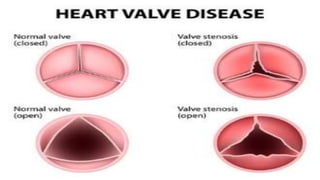
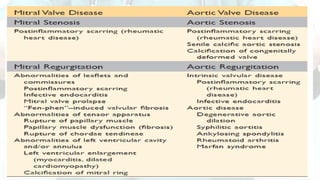
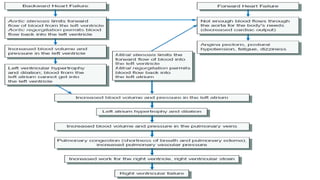
valve disease
•Stenotic Valve
A narrowed or stenotic valve requires the heart to pump harder,
which can strain the heart and reduce blood flow to the body.
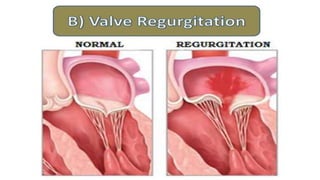
•Regurgitation Valve
A regurgitate (incompetent, insufficient, or leaky) valve does not
close completely, letting blood move backward through the valve.
Valvuloplasty
A commissurotomy
•Closed or open
An annuloplasty
preoperative nursing care of patient
undergoing cardiac surgery
Assessment
Medications
Teaching
Assessment
Systematic assessment
 physiologic assessment
Assessment psychosocial spiritual factors , concerns
Past history of medicine
Lab investigation
Radiographers assess
Medications
Medication history.
Aspirin and non-steroidal anti-inflammatory products must
be discontinued at least 7 to 10 days prior to surgery.
penicillin interfere with platelet function.
Digoxin is withheld 1 to 2 days prior to surgery
(except in patients with atrial fibrillation)
All anti-anginal agents such as nitrates, beta-adrenergic
blocking agents, calcium channel blockers are continued to
prevent exacerbation of ischemic symptoms or myocardial
damage
Teaching
Description of the surgery
The disease process and the risk factors
necessitating surgery.
Expectations about the anticipated events during
the postoperative period.
nursing care of patient post
cardiac surgery
Assessment
Restoration of Cardiac Output
monitor Intake / Output
Adequate Gas Exchange
Airway Clearance
Pain Relief
Reduction of symptoms of Sensory Overload
Nursing Diagnosis
Decrease Cardiac tissue perfusion
Risk for bleeding
Decreased Cardiac Output related to,
Hypothermia, Anesthesia, Myocardial
edema, Electrolyte imbalances.
Cardio-thoracic surgery

Cardio-thoracic surgery

  • 1.
    Name: Mohamed Ragab Abdelhakam Studentat misr university for sciences & technology
  • 5.
    Objectives • At theend of the unit, the student will be able:  To indicate three principles of cardiopulmonary bypass (CPB) To mention indications and contraindications of Coronary Artery Bypass Grafting (CABG) To indicate the differences between valve regurgitation and valve stenosis disorders. To discuss preoperative nursing care of the patient undergoing cardiac surgery. To discuss Nursing management of the patient post cardiac surgery
  • 6.
    Cardiothoracic surgery Also knownas thoracic surgery is the field of medicine involved in surgical treatment of organs inside the thorax (the chest) ( Generally treatment of conditions of the heart and lungs )
  • 7.
    Cardiopulmonary bypass • Isa technique that temporarily takes over the function of the heart and lungs during surgery, maintaining the circulation of blood and the oxygen content of the patient's body.
  • 9.
    Principles of cardiopulmonary bypass(CPB) Anticoagulant •(heparin) × (protamine sulfate) Hypothermia •28-32 (The cooled blood slows the body's basal metabolic rate, decreasing its demand for oxygen) Hemodilution •Viscosity
  • 10.
    Coronary Artery Bypass Grafting(CABG) •Is a surgical procedure to restore normal blood flow to an obstructed coronary artery. (A normal coronary artery transports blood to and from the heart muscle itself, not through the main circulatory system)
  • 11.
    indications of CoronaryArtery Bypass Grafting (CABG) Over 50% left main coronary artery stenosis Over 70% stenosis of the proximal left anterior descending (LAD) and proximal circumflex arteries Three-vessel disease in asymptomatic patients or those with mild or stable angina One- or two-Vessel disease and a large area of viable myocardium in high-risk area in patients with stable angina Over 70% proximal LAD stenosis with either an ejection fraction (EF) below 50% or demonstrable ischemia on noninvasive testing Ongoing ischemia in the setting of a non–ST segment elevation myocardial infarction (MI) that is unresponsive to medical therapy (class I)
  • 12.
    Aneurysms (when artery wallweakens and causes an abnormal large bulge can cause rupture and internal bleeding) Valvular diseases Congenital diseases Diseases of blood contraindications of Coronary Artery Bypass Grafting (CABG)
  • 15.
    valve disease •Stenotic Valve Anarrowed or stenotic valve requires the heart to pump harder, which can strain the heart and reduce blood flow to the body. •Regurgitation Valve A regurgitate (incompetent, insufficient, or leaky) valve does not close completely, letting blood move backward through the valve.
  • 20.
  • 21.
    preoperative nursing careof patient undergoing cardiac surgery Assessment Medications Teaching
  • 22.
    Assessment Systematic assessment  physiologicassessment Assessment psychosocial spiritual factors , concerns Past history of medicine Lab investigation Radiographers assess
  • 23.
    Medications Medication history. Aspirin andnon-steroidal anti-inflammatory products must be discontinued at least 7 to 10 days prior to surgery. penicillin interfere with platelet function. Digoxin is withheld 1 to 2 days prior to surgery (except in patients with atrial fibrillation) All anti-anginal agents such as nitrates, beta-adrenergic blocking agents, calcium channel blockers are continued to prevent exacerbation of ischemic symptoms or myocardial damage
  • 24.
    Teaching Description of thesurgery The disease process and the risk factors necessitating surgery. Expectations about the anticipated events during the postoperative period.
  • 25.
    nursing care ofpatient post cardiac surgery Assessment Restoration of Cardiac Output monitor Intake / Output Adequate Gas Exchange Airway Clearance Pain Relief Reduction of symptoms of Sensory Overload
  • 26.
    Nursing Diagnosis Decrease Cardiactissue perfusion Risk for bleeding Decreased Cardiac Output related to, Hypothermia, Anesthesia, Myocardial edema, Electrolyte imbalances.

Editor's Notes

  • #7 المعروف أيضا باسم جراحة الصدر هو مجال الطب تشارك في العلاج الجراحي للأعضاء داخل الصدر (الصدر) (علاج بشكل عام لظروف القلب والرئتين)
  • #8 هي تقنية تتولى مؤقتًا وظيفة القلب والرئتين أثناء الجراحة ، مما يحافظ على دوران الدم ومحتوى الأكسجين في جسم المريض. Superior / inferior vena cava The cannula is connected to tubing filled with isotonic crystalloid solution. Venous blood which is removed from the body by the cannula is filtered, cooled or warmed, oxygenated, and then returned to the body. The cannula used to return oxygenated blood is usually inserted in the ascending aorta, but it may be inserted in the femoral artery.
  • #10 الدم البارد يبطئ معدل الأيض الأساسي في الجسم ، مما يقلل من الطلب على الأكسجين crystalloid solution علشان لزوجه
  • #11 هو إجراء جراحي لاستعادة تدفق الدم الطبيعي إلى الشريان التاجي المتعسّر. (الشريان التاجي العادي ينقل الدم من وإلى عضلة القلب نفسها ، وليس من خلال الدورة الدموية الرئيسية)
  • #12 أكثر من 50 ٪ ترك تضيق الشريان التاجي الرئيسي تضيق أكثر من 70٪ من الشريان الأمامي الأيسر القريب (LAD) والشرايين المقيسة القريبة مرض ثلاث سفن في المرضى الذين يعانون من أعراض أو الذين يعانون من الذبحة الصدرية المستقرة أو الخفيفة مرض ثلاثي الأوعية مع تضيق LAD قريب في المرضى الذين يعانون من ضعف وظيفة البطين الأيسر (LV) مرض واحد أو اثنين من السفينة ومساحة كبيرة من عضلة القلب قابلة للحياة في منطقة عالية المخاطر في المرضى الذين يعانون من الذبحة المستقرة أكثر من 70٪ من تضيق LAD القريب مع إما جزء طرد (EF) تحت 50٪ أو نقص تروية قابل للإثبات على اختبار noninvasive الإسكيمية المستمرة في حالة حدوث احتشاء عضلة القلب غير المرتبط بقطاع غير ST (MI) الذي لا يستجيب للعلاج الطبي (الفئة الأولى) وظيفة LV ضعيفة ولكن مع وجود عضلة قلبية قابلة للحياة ، غير فعالة فوق العيوب التشريحية التي يمكن إعادة تشكيلها
  • #13 تمدد الأوعية الدموية أمراض الصمامات أمراض خلقية أمراض الدم