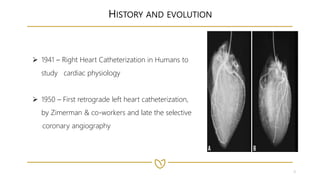
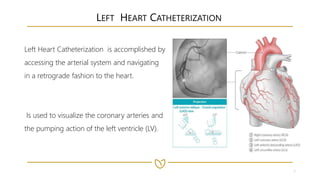
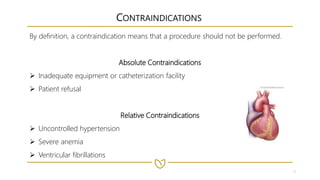
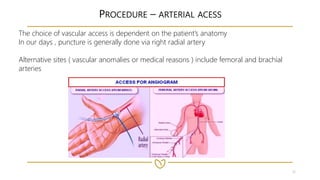
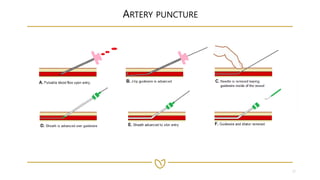
Cardiac catheterization involves inserting thin plastic tubes called catheters into arteries and veins in the heart to take X-ray images and measure pressures. It can be used for diagnostic or therapeutic purposes to evaluate conditions like coronary artery disease. The history of the procedure began in the 1920s and it has evolved with developments like balloon angioplasty. It involves accessing the arteries or veins to pass catheters into the heart chambers and coronary arteries to visualize structures and take measurements. Potential complications include infection, bleeding, reaction to contrast dye, and damage to blood vessels or heart. The procedure ends with removing the catheters and closing the arterial access point.