LEFT HEART CATHETERIZATION
SYED FAISAL AHMED
MSC CARDIAC CATHETERIZATION AND INTERVENTION
• Cardiac catheterization is performed for both diagnostic and
therapeutic purposes.
• Despite significant advancement in non-invasive cardiac imaging, it
remains the standard for the measurement of cardiac
hemodynamics.
• This activity reviews the technique of cardiac catheterization, its
indications, contraindications, and complications.
• Cardiac catheterization is an invasive procedure that has evolved over
the past four centuries. Although the description of circulation by
William Harvey was the cornerstone of cardiac hemodynamics.
• Stephen Hales can be considered the pioneer of cardiac
hemodynamics and cardiac catheterization as he measured the first
arterial pressure in the early 17 century.
• Zimmermann HA performed the first left-sided cardiac
catheterization in the 1950s.
• Cardiac catheterization evolved extensively in the 20th century due to
Andre Cournard and Dickinson Williams and many other researchers'
efforts.
INTRODUCTION
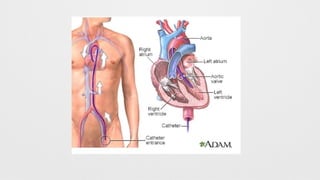
• Left heart catheterization has a diagnostic as well as therapeutic
role. Although it is used for cardiac hemodynamics and assessment
of valvular lesions, its main diagnostic role is the assessment of
coronary artery disease.
• In the contemporary era, left heart catheterization, especially
selective coronary angiogram, is considered the gold standard test
for coronary artery disease diagnosis.
• The therapeutic role of left heart catheterization has evolved
extensively over the last five decades. Apart from percutaneous
coronary intervention, left heart catheterization plays an essential
role in the closure of congenital defects, radiofrequency ablation of
arrhythmias, and valve replacement in the contemporary era.
Diagnostic
• Discrepancy between the symptoms and clinical features of
patient.
• Valve area, cardiac output and resistance.
• Quantification of shunts.
• Pressure gradients.
Therapeutic
• Useful for assessing the pressure gradients before and after,
• Mitral Stenosis - BMV.
• Aortic Stenosis - BAV.
• PDA device closure.
• HOCM-alcohol septal ablation.
• Cooarctation of Aorta.
• Aorto Pulmonary Window closure.
Indications
• Evaluation and treatment of coronary artery disease.
• Assessment and evaluation of coronary artery bypass grafts.
• Evaluation and treatment of coronary artery disease in patients
with chest pain of uncertain origin, when non-invasive tests are not
diagnostic.
• Assessment of the severity of valvular or myocardial disorders such
as aortic stenosis, aortic insufficiency, mitral stenosis, mitral
insufficiency, cardiomyopathies, etc. to determine the need for
surgical correction when there is a discrepancy between signs,
symptoms, and echocardiographic findings.
Indications
• Evaluation and treatment of cardiac arrhythmias.
• Percutaneous closure of congenital cardiac defects such as atrial
septal defect (ASD), ventricular septal defect (VSD), and patent
ductus arteriosus (PDA).
• Treatment of valvular heart diseases such as valvuloplasty or
percutaneous transcatheter valve replacement.
Contraindications
• Severe uncontrolled hypertension.
• Unstable arrhythmias.
• Acute cerebrovascular accidents.
• Active bleeding.
• Allergy to radiographic contrast.
• Renal dysfunction.
Contraindications
• Acute pulmonary edema (patient unable to lie flat).
• Untreated active infection/Sepsis.
• Severe coagulopathy.
• Encephalopathy.
• Significant peripheral vascular disease.
Catheter Selection
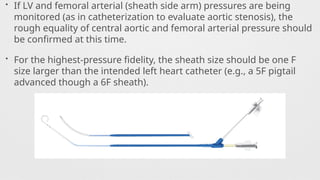
• PIGTAIL CATHETER
• The initial left heart catheter in most cases is a pigtail catheter with
end- and multiple side holes.
• This catheter usually can be flushed in the descending aorta and
then advanced to the ascending aorta without difficulty.
• Dual-lumen pigtail a specially designed pigtail with a separate end-
hole lumen and side-hole lumen in patients with aortic stenosis.
• Straight dual-lumen catheter is used when evaluating
intraventricular gradients (as in the cases o f hypertrophic
cardiomyopathy).
• If LV and femoral arterial (sheath side arm) pressures are being
monitored (as in catheterization to evaluate aortic stenosis), the
rough equality of central aortic and femoral arterial pressure should
be confirmed at this time.
• For the highest-pressure fidelity, the sheath size should be one F
size larger than the intended left heart catheter (e.g., a 5F pigtail
advanced though a 6F sheath).
Other catheters
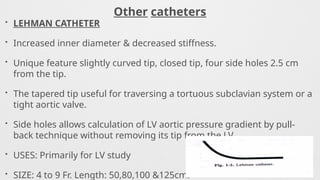
• LEHMAN CATHETER
• Increased inner diameter & decreased stiffness.
• Unique feature slightly curved tip, closed tip, four side holes 2.5 cm
from the tip.
• The tapered tip useful for traversing a tortuous subclavian system or a
tight aortic valve.
• Side holes allows calculation of LV aortic pressure gradient by pull-
back technique without removing its tip from the LV.
• USES: Primarily for LV study
• SIZE: 4 to 9 Fr. Length: 50,80,100 &125cm.
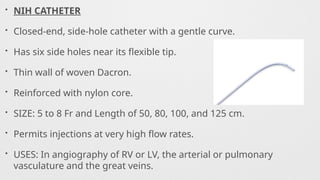
• NIH CATHETER
• Closed-end, side-hole catheter with a gentle curve.
• Has six side holes near its flexible tip.
• Thin wall of woven Dacron.
• Reinforced with nylon core.
• SIZE: 5 to 8 Fr and Length of 50, 80, 100, and 125 cm.
• Permits injections at very high flow rates.
• USES: In angiography of RV or LV, the arterial or pulmonary
vasculature and the great veins.
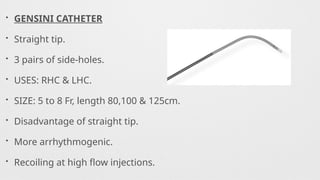
• GENSINI CATHETER
• Straight tip.
• 3 pairs of side-holes.
• USES: RHC & LHC.
• SIZE: 5 to 8 Fr, length 80,100 & 125cm.
• Disadvantage of straight tip.
• More arrhythmogenic.
• Recoiling at high flow injections.
Equipment
• Fluoroscopy machine.
• Hemodynamic monitors.
• Different diagnostic and guide catheters.
• Puncture Needle.
• Introducer Sheath and Dilator.
• Guide wires.
• Manifold for contrast injection.
• Coronary wires, balloons, and stents for percutaneous coronary intervention.
• Pressure Injector.
Pre Procedure
• Patient Evaluation: The cardiologist reviews the patient's medical
history, symptoms (e.g., chest pain, shortness of breath), and
diagnostic tests (e.g., ECG, stress test, 2D Echo or coronary
angiogram).
• Informed Consent: The patient is informed about the procedure,
risks (e.g., bleeding, vessel damage, heart attack), benefits, and
alternatives. Consent is obtained.
• Medications:
• Antiplatelet drugs (e.g., aspirin, clopidogrel) are administered to
reduce the risk of blood clots.
• Sedatives or anti-anxiety medications may be given to help the
patient relax.
• Fasting: The patient is instructed to fast (no food or drink) for 6-8
hours before the procedure.
• Allergy Check: The patient's allergies, particularly to contrast dye or
medications, are noted.
• IV Line: An intravenous line is inserted to deliver fluids and
medications during the procedure.
Setting up in the Cath Lab
• The procedure is performed in a cardiac catheterization laboratory
(cath lab), a specialized room equipped with X-ray imaging
equipment.
• The patient lies on a table, and monitoring devices are attached to
track heart rate, blood pressure, and oxygen levels.
• The procedure is typically performed under local anesthesia, with
the patient awake but sedated for comfort.
Procedure
• Accessing the Blood Vessel
• Select the Puncture site.
• Clean the puncture site using spirit/Betadine.
• Inject local analgesics
• After injecting local analgesics at the puncture site, the radial/femoral
artery is punctured using a cannula by the Seldinger technique. After
the initial blob of blood is seen in the cannula's proximal hub, the
needle is advanced to pierce the posterior wall, and the needle is
removed.
• The cannula is withdrawn gradually while holding the straight tipped
hydrophilic Terumo wire in the right hand. Once the arterial blood
spurts out, the wire is introduced into the radial/femoral artery and the
• An appropriate-sized sheath with a hydrophilic coating is advanced
over the wire, and the dilator is removed.
• Immediately after insertion of the sheath, blood pressures are
monitored, and a combination of nitroglycerine (depending on
systolic blood pressure) and 5000 IU heparin is injected through the
sheath to prevent the spasm and minimize access site
complications.
• Inserting the Catheter
• Guidewire Insertion: A thin, flexible guidewire is inserted through
the sheath and advanced through the artery to the aorta.
• Catheter Placement: A long, hollow tube (catheter) is threaded over
the guidewire and positioned at the aorta and chambers under X-
ray guidance (fluoroscopy).
• Contrast Dye Injection: A contrast dye is injected through the
catheter using a pressure injector to visualize the structures on X-
ray images (angiogram).
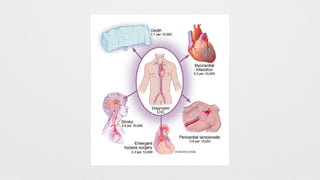
Complications
• Vascular injury/complications involving the access site (hematoma,
pseudoaneurysm, AV fistula, perforation, radial artery occlusion)
• Retroperitoneal bleeding.
• Thrombus/cholesterol embolism.
• Dissection (coronary and great vessels).
• Arrhythmias.
• Stent failure/in-stent thrombosis.
• Vascular closure device associated complications (most commonly
infection and thrombosis).
• MI.
• Infection.
• Allergic reaction secondary to medication or contrast.
• Medication reaction (including HIT).
• Radiation Injury.
• Reaction to anesthesia.
Hemodynamic data
• Hemodynamic data.
• Pressure measurements.
• Measurement of flow (eg: cardiac output, shunt flow, flow across a
stenotic orifice, regurgitant flow, and coronary blood flow).
• Determination of vascular resistance.
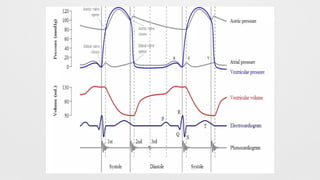
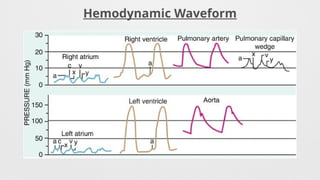
Hemodynamic Waveform
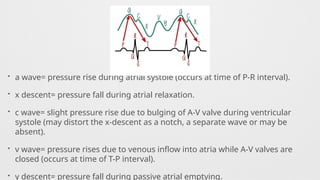
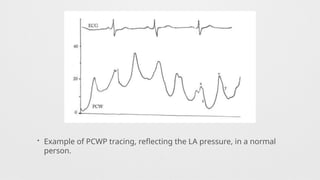
• a wave= pressure rise during atrial systole (occurs at time of P-R interval).
• x descent= pressure fall during atrial relaxation.
• c wave= slight pressure rise due to bulging of A-V valve during ventricular
systole (may distort the x-descent as a notch, a separate wave or may be
absent).
• v wave= pressure rises due to venous inflow into atria while A-V valves are
closed (occurs at time of T-P interval).
• y descent= pressure fall during passive atrial emptying.
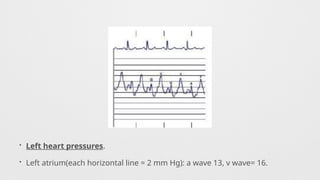
• Left heart pressures.
• Left atrium(each horizontal line = 2 mm Hg): a wave 13, v wave= 16.
• Example of PCWP tracing, reflecting the LA pressure, in a normal
person.
Pulmonary Capillary Wedge and Left Atrium
• The PCWP is an occluded pressure reflecting downstream LA
pressure provided that there is proper positioning, and there are no
intervening anatomic obstructions (e.g. pulmonary venous
obstruction, cor triatriatum).
• There is a time delay between the PCWP and the LA tracings of
about 140 to 200 msec.
• The PCW and LA pressure tracings are again characterized by a, c,
and v waves. However when compared to the RA pressure tracing,
the LA pressure pulse exhibits a normally dominant v wave (<15
mmHg) and a subordinate a wave (<12 mmHg).
• The left atrial v wave is usually higher than the a wave, and neither
is >5 mm Hg above the mean pressure.
• Elevated a wave -
• Left atrial outflow obstruction.
• mitral stenosis,
• supravalvular mitral ring.
• Diseases that impair left ventricular compliance.
• aortic stenosis,
• coarctation of the aorta.
• The a wave may be dominant with an atrial septal defect, as a large
atrial septal defect allows transmission of pressure across the
septum, or with diseases that elevate the right atrial a wave.
• Elevated v waves
• Mitral regurgitation.
• Elevation of the left atrial mean pressure (and both the a and v
waves)
• Large left-to-right shunts at the ventricular or great vessel level.
• Sign of left ventricular failure.
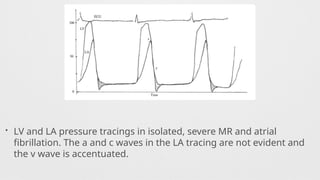
• LV and LA pressure tracings in isolated, severe MR and atrial
fibrillation. The a and c waves in the LA tracing are not evident and
the v wave is accentuated.
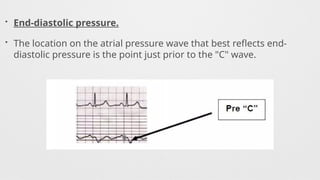
• End-diastolic pressure.
• The location on the atrial pressure wave that best reflects end-
diastolic pressure is the point just prior to the "C" wave.
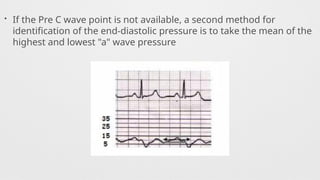
• If the Pre C wave point is not available, a second method for
identification of the end-diastolic pressure is to take the mean of the
highest and lowest "a" wave pressure
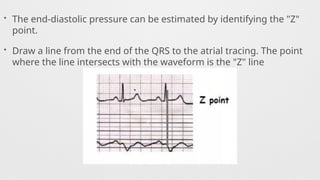
• The end-diastolic pressure can be estimated by identifying the "Z"
point.
• Draw a line from the end of the QRS to the atrial tracing. The point
where the line intersects with the waveform is the "Z" line
• The LVEDP immediately precedes the beginning of isovolumetric
contraction in the LV pressure pulse.
• In general, the mean PCWP, mean LAP, and LVEDP are all near
equivalent in magnitude.
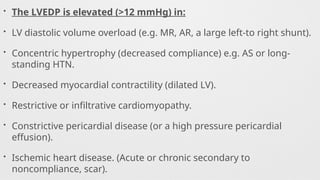
• The LVEDP is elevated (>12 mmHg) in:
• LV diastolic volume overload (e.g. MR, AR, a large left-to right shunt).
• Concentric hypertrophy (decreased compliance) e.g. AS or long-
standing HTN.
• Decreased myocardial contractility (dilated LV).
• Restrictive or infiltrative cardiomyopathy.
• Constrictive pericardial disease (or a high pressure pericardial
effusion).
• Ischemic heart disease. (Acute or chronic secondary to
noncompliance, scar).
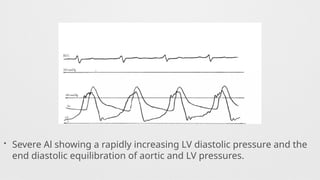
• Severe Al showing a rapidly increasing LV diastolic pressure and the
end diastolic equilibration of aortic and LV pressures.
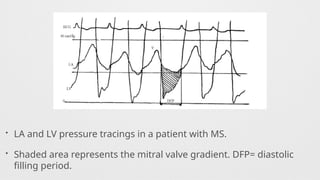
• If the end-diastolic pressures in the left atrium and left ventricle are
not equal, some form of mitral valve obstruction is present.
• Higher gradients (>8 to 10 mm Hg) suggest structural mitral stenosis,
whereas lower gradients suggest physiologic stenosis due to
increased blood flow across the valve, such as from a large
ventricular septal defect.
• LA and LV pressure tracings in a patient with MS.
• Shaded area represents the mitral valve gradient. DFP= diastolic
filling period.
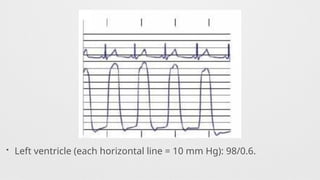
• Left ventricle (each horizontal line = 10 mm Hg): 98/0.6.
• The peak systolic pressure in the left ventricle should be equal to or
up to 5 mm Hg greater than the peak systolic pressure in the
ascending aorta.
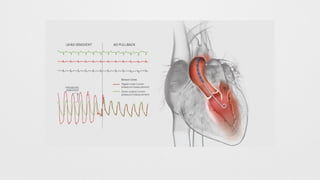
• A gradient between the left ventricle and the aorta is present in
dynamic left ventricular obstruction (as in hypertrophic
cardiomyopathy), subaortic stenosis, or aortic valve stenosis.
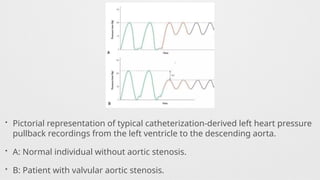
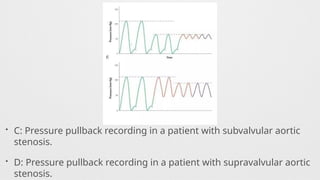
• Pictorial representation of typical catheterization-derived left heart pressure
pullback recordings from the left ventricle to the descending aorta.
• A: Normal individual without aortic stenosis.
• B: Patient with valvular aortic stenosis.
• C: Pressure pullback recording in a patient with subvalvular aortic
stenosis.
• D: Pressure pullback recording in a patient with supravalvular aortic
stenosis.
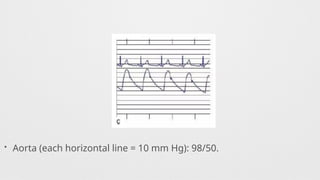
• Aorta (each horizontal line = 10 mm Hg): 98/50.
• Ascending aorta
• During ejection normal pressure in the ascending aorta parallels LV
pressure.
• Once the AV closes the aortic pressure declines somewhat slower
than the LV pressure. This reflects the accumulated pressure waves
from thoracic aorta and its tributaries as well as the capacitance of
the aorta.
• Following the dicrotic notch, there is a brief increase in pressure due
to some retrograde flow from the periphery into the ascending
aorta and the elastic recoil of ascending aorta.
• Then as the blood runs off into the periphery, there is a gradual
decline in the systolic arterial pressure until the next cardiac cycle.
• The rate and magnitude of decline of aortic pressure during diastole
are dependent on:
• Aortic valve integrity (eg aortic insufiiciency).
• Capacitance and resistance of the peripheral circuit.
• Presence or absence of abnormal connection of aorta and the
pulmonary circulation or the right heart (e.g. PDA).
• Presence or the absence of a large arteriovenous fistula.
Combined MS and MR.
• Combined MS and MR is often associated with a heavily calcified valve that
has limited leaflet mobility.
• Because systolic regurgitation augments antegrade flow during the
subsequent diastole, a transvalvular pressure gradient can develop in
patients with a relatively mild compromise of the mitral orifice area
(approximately 2.0 cm2).
• Significant dilatation of LA is seen owing to the combined pressure and
volume overload of the chamber.
• In this setting, the pressure recordings from the left heart reveal an early
and mid-diastolic pressure gradient across the MV, but if the DFP is
sufficiently long, the LA and LV pressures equilibrate during the period of
slow ventricular filling.
• The v wave is often dominant, reflecting the augmented systolic expansion
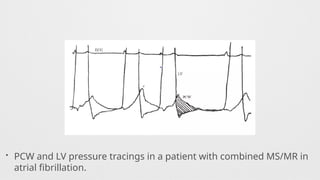
• PCW and LV pressure tracings in a patient with combined MS/MR in
atrial fibrillation.
• Shunt Calculation.
• Normal PBF and SBF are equal.
• With abnormal communication between intracardiac chambers or great
vessels blood flow is shunted from the systemic circulation to the
pulmonary circulation (Left to Right shunt), from pulmonary circulation to
systemic circulation (Right to Left shunt) or Bi-directional shunting.
• Most common method for shunt determination is Oximetry.
• Unexplained pulmonary oxygen saturation more than 80% raise suspicion
for left to right shunt.
• Unexplained arterial desaturation less than 93% indicate right to left
shunt.
• If arterial desaturation persists after the patient takes several deep breaths
or after administration of 100% oxygen, a right to left shunt is likely.
• OXIMETRIC METHOD
• The oximetric method is based on blood sampling from various
cardiac chambers for determination of oxygen saturation.
• Left to Right shunt is detected when significant increase in blood
oxygen saturation is found between two right sided vessels or
chambers.
• Obtain blood samples from all right sided locations.
• A full saturation run obtains samples from the high and low IVC, high
and low SVC, high, middle and low right atrium, RV inflow, outflow
tracks and middle RV cavity, Main pulmonary artery, Left or Right
pulmonary artery, Pulmonary vein and Left atrium, left ventricle and
distal aorta if necessary.
• SHUNT QUANTIFICATION
• To determine left to right shunt, PBF and SBF is required.
• Fick's Principle is used to determine cardiac output.
• PBF = oxygen consumption / difference in oxygen content across
pulmonary bed.
• SBF = oxygen consumption / difference in oxygen content across
systemic bed.
• EBF (effective blood flow) is the fraction of mixed venous return
received by the lungs without contamination by shunt flow.
• In the absence of the shunt, PBF, SBF and EBF are equal.
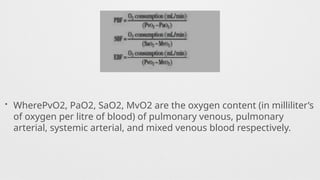
• WherePvO2, PaO2, SaO2, MvO2 are the oxygen content (in milliliter’s
of oxygen per litre of blood) of pulmonary venous, pulmonary
arterial, systemic arterial, and mixed venous blood respectively.
• The mixed venous oxygen content is the average oxygen content of
blood in the chamber proximal to the shunt.
• When assessing a left to right shunt at the level of right atrium one
must calculate the mixed venous oxygen content on the basis of the
contributing blood flow from IVC, SVC and coronary sinus.
• The most commonly used method is the Flamm formula.
• Assuming conservation of mass, the size of a left to right shunt, when
no associated right to left is present is simply L-R shunt = PBF - SBF.
• When there is evidence of a right to left shunt in addition to a left to
right shunt (BD shunt), the approximate size of left to right shunt is L-R
shunt= PBF - EBF.
• Approximate size of right to left shunt is R-L shunt = SBF - EBF.
• Flow ratio PBF/SBF (QP/QS) is used clinically to determine the
significance of the shunt.
• Ratio less than 1.5 indicates a small left to right.
• Ratio of 1.5 to 2.0 moderate sized shunt.
• Ratio of 2.0 or higher indicates a large left to right to left shunt.
• A flow ratio of less than 1.0 indicates a net right to left shunt.
• Qp/Qs = PBF/SBF = SaO2-MvO2/PvO2- PaO2.
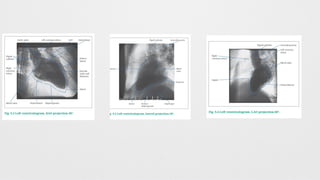
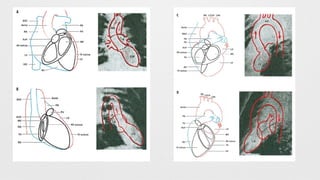
Left Ventriculogram
• The left ventriculogram provides an assessment of left ventricular
systolic function, degree of mitral regurgitation, and the presence of
wall motion abnormality or a ventricular septal defect.
• A side hole (pigtail) catheter is advanced over a 0.035-in J-tipped wire
to a position in the ascending aorta superior to the aortic valve.
• The tip is then pointed toward the orifice of the valve and the
catheter rotated so that the pigtail loop resembles a figure of "6." In
this position, the catheter is gently advanced across the valve orifice
into the ventricle.
• After entering the ventricle, the pigtail's tip is positioned mid-cavity
to avoid contact with the papillary muscles and mitral valve.
• Indications:
• Assessment of left ventricular function including left ventricular ejection fraction,
wall motion abnormalities, ventricular size and mass.
• Identification and assessment of mitral regurgitation.
• Identification and assessment of ventricular septal defects.
• Contraindications:
• Decompensated heart failure
• Extreme elevation of LVEDP
• Critical aortic stenosis
• Left ventricular thrombus
• Iodinated contrast allergy
• Complications:
• Ventricular arrythmias
• Embolization of air or thrombus
• Contrast related complications
• Decompensated heart failure
• Myocardial staining
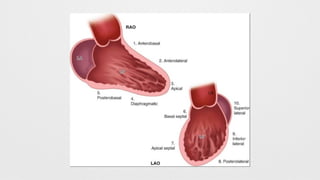
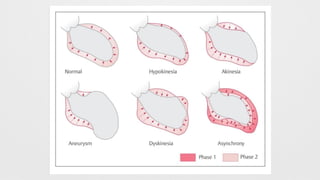
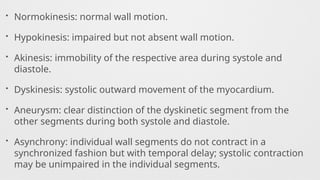
• Normokinesis: normal wall motion.
• Hypokinesis: impaired but not absent wall motion.
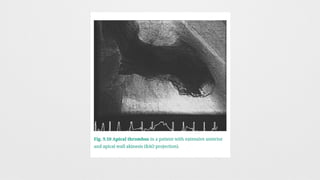
• Akinesis: immobility of the respective area during systole and
diastole.
• Dyskinesis: systolic outward movement of the myocardium.
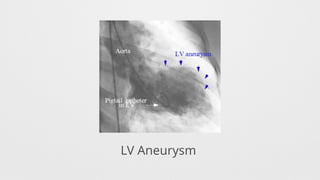
• Aneurysm: clear distinction of the dyskinetic segment from the
other segments during both systole and diastole.
• Asynchrony: individual wall segments do not contract in a
synchronized fashion but with temporal delay; systolic contraction
may be unimpaired in the individual segments.
LV Aneurysm
• Crossing the Aortic Valve
• Crossing the aortic valve in patients without significant aortic
stenosis is fairly straight-forward.
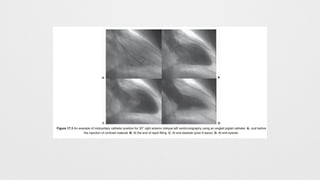
• Ventriculography is best performed with an angled pigtail catheter
which avoids some of the pitfalls such as myocardial staining and
catheter movement which can occur with an end hole catheter.
• The angled pigtail catheter does not allow the measurement of
precise pressure gradients (part of the catheter may lie proximal and
the other part distal to the stenosis or obstruction).
• The aortic valve may be difficult to cross with an angled pigtail
catheter in patients with aortic stenosis.
• Assessment of Aortic Valve
• Pressure gradients across the aortic valve are recorded by using a
double-lumen fluid-filled catheter.Left ventricular and aortic
pressures are measured simultaneously.
• Micro manometer-tipped catheters may be considered when there
are extensive artifacts or when additional precision is necessary.
Pullback gradients are inaccurate for diagnostic purposes.
• The aortic regurgitation severity can be assessed and graded by
doing an aortic angiogram. It is reported to overestimate and does
not assess aortic regurgitation accurately in the presence of left
ventricular systolic dysfunction and other valvular lesions.
• Angiographic grading of aortic regurgitation may include:
• Mild (1+) - A little contrast enters the left ventricle during diastole
and clears with each systole.
• Moderate AR (2+) - Contrast enters the left ventricle with each
diastole, but the left ventricle is less dense than the aorta.
• Moderately severe AR (3+) - The left ventricle has the same density as
the ascending aorta.
• Severe AR (4+) - Dense complete, opacification of the left ventricle
occurs on the first beat; it is more densely opacified than the
ascending aorta.
• Assessment of Mitral Valve
• The gradient across the mitral valve is determined by measuring the
left ventricular and left atrial pressures to assess the mitral stenosis.
• Although the pulmonary artery wedge pressure (PAWP) is usually
taken as a surrogate of the left atrial pressure, the most accurate
method uses the left atrial and left ventricular pressure, requiring a
transseptal catheterization approach.
• The PAWP tracing is realigned with the left ventricular tracing for the
determination of an accurate mean gradient.
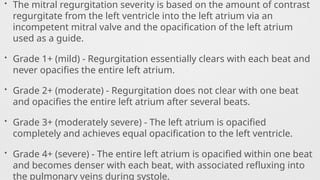
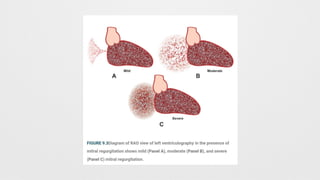
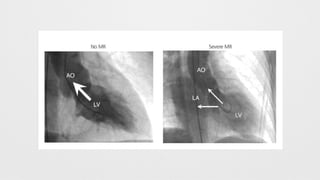
• The mitral regurgitation severity is based on the amount of contrast
regurgitate from the left ventricle into the left atrium via an
incompetent mitral valve and the opacification of the left atrium
used as a guide.
• Grade 1+ (mild) - Regurgitation essentially clears with each beat and
never opacifies the entire left atrium.
• Grade 2+ (moderate) - Regurgitation does not clear with one beat
and opacifies the entire left atrium after several beats.
• Grade 3+ (moderately severe) - The left atrium is opacified
completely and achieves equal opacification to the left ventricle.
• Grade 4+ (severe) - The entire left atrium is opacified within one beat
and becomes denser with each beat, with associated refluxing into
the pulmonary veins during systole.
LEFT HEART CATHETERIZATION (LHC) .  PPTX

LEFT HEART CATHETERIZATION (LHC) . PPTX

  • 1.
    LEFT HEART CATHETERIZATION SYEDFAISAL AHMED MSC CARDIAC CATHETERIZATION AND INTERVENTION
  • 2.
    • Cardiac catheterizationis performed for both diagnostic and therapeutic purposes. • Despite significant advancement in non-invasive cardiac imaging, it remains the standard for the measurement of cardiac hemodynamics. • This activity reviews the technique of cardiac catheterization, its indications, contraindications, and complications.
  • 3.
    • Cardiac catheterizationis an invasive procedure that has evolved over the past four centuries. Although the description of circulation by William Harvey was the cornerstone of cardiac hemodynamics. • Stephen Hales can be considered the pioneer of cardiac hemodynamics and cardiac catheterization as he measured the first arterial pressure in the early 17 century. • Zimmermann HA performed the first left-sided cardiac catheterization in the 1950s. • Cardiac catheterization evolved extensively in the 20th century due to Andre Cournard and Dickinson Williams and many other researchers' efforts.
  • 4.
    INTRODUCTION • Left heartcatheterization has a diagnostic as well as therapeutic role. Although it is used for cardiac hemodynamics and assessment of valvular lesions, its main diagnostic role is the assessment of coronary artery disease. • In the contemporary era, left heart catheterization, especially selective coronary angiogram, is considered the gold standard test for coronary artery disease diagnosis. • The therapeutic role of left heart catheterization has evolved extensively over the last five decades. Apart from percutaneous coronary intervention, left heart catheterization plays an essential role in the closure of congenital defects, radiofrequency ablation of arrhythmias, and valve replacement in the contemporary era.
  • 6.
    Diagnostic • Discrepancy betweenthe symptoms and clinical features of patient. • Valve area, cardiac output and resistance. • Quantification of shunts. • Pressure gradients.
  • 7.
    Therapeutic • Useful forassessing the pressure gradients before and after, • Mitral Stenosis - BMV. • Aortic Stenosis - BAV. • PDA device closure. • HOCM-alcohol septal ablation. • Cooarctation of Aorta. • Aorto Pulmonary Window closure.
  • 8.
    Indications • Evaluation andtreatment of coronary artery disease. • Assessment and evaluation of coronary artery bypass grafts. • Evaluation and treatment of coronary artery disease in patients with chest pain of uncertain origin, when non-invasive tests are not diagnostic. • Assessment of the severity of valvular or myocardial disorders such as aortic stenosis, aortic insufficiency, mitral stenosis, mitral insufficiency, cardiomyopathies, etc. to determine the need for surgical correction when there is a discrepancy between signs, symptoms, and echocardiographic findings.
  • 9.
    Indications • Evaluation andtreatment of cardiac arrhythmias. • Percutaneous closure of congenital cardiac defects such as atrial septal defect (ASD), ventricular septal defect (VSD), and patent ductus arteriosus (PDA). • Treatment of valvular heart diseases such as valvuloplasty or percutaneous transcatheter valve replacement.
  • 10.
    Contraindications • Severe uncontrolledhypertension. • Unstable arrhythmias. • Acute cerebrovascular accidents. • Active bleeding. • Allergy to radiographic contrast. • Renal dysfunction.
  • 11.
    Contraindications • Acute pulmonaryedema (patient unable to lie flat). • Untreated active infection/Sepsis. • Severe coagulopathy. • Encephalopathy. • Significant peripheral vascular disease.
  • 12.
    Catheter Selection • PIGTAILCATHETER • The initial left heart catheter in most cases is a pigtail catheter with end- and multiple side holes. • This catheter usually can be flushed in the descending aorta and then advanced to the ascending aorta without difficulty. • Dual-lumen pigtail a specially designed pigtail with a separate end- hole lumen and side-hole lumen in patients with aortic stenosis. • Straight dual-lumen catheter is used when evaluating intraventricular gradients (as in the cases o f hypertrophic cardiomyopathy).
  • 13.
    • If LVand femoral arterial (sheath side arm) pressures are being monitored (as in catheterization to evaluate aortic stenosis), the rough equality of central aortic and femoral arterial pressure should be confirmed at this time. • For the highest-pressure fidelity, the sheath size should be one F size larger than the intended left heart catheter (e.g., a 5F pigtail advanced though a 6F sheath).
  • 14.
    Other catheters • LEHMANCATHETER • Increased inner diameter & decreased stiffness. • Unique feature slightly curved tip, closed tip, four side holes 2.5 cm from the tip. • The tapered tip useful for traversing a tortuous subclavian system or a tight aortic valve. • Side holes allows calculation of LV aortic pressure gradient by pull- back technique without removing its tip from the LV. • USES: Primarily for LV study • SIZE: 4 to 9 Fr. Length: 50,80,100 &125cm.
  • 15.
    • NIH CATHETER •Closed-end, side-hole catheter with a gentle curve. • Has six side holes near its flexible tip. • Thin wall of woven Dacron. • Reinforced with nylon core. • SIZE: 5 to 8 Fr and Length of 50, 80, 100, and 125 cm. • Permits injections at very high flow rates. • USES: In angiography of RV or LV, the arterial or pulmonary vasculature and the great veins.
  • 16.
    • GENSINI CATHETER •Straight tip. • 3 pairs of side-holes. • USES: RHC & LHC. • SIZE: 5 to 8 Fr, length 80,100 & 125cm. • Disadvantage of straight tip. • More arrhythmogenic. • Recoiling at high flow injections.
  • 17.
    Equipment • Fluoroscopy machine. •Hemodynamic monitors. • Different diagnostic and guide catheters. • Puncture Needle. • Introducer Sheath and Dilator. • Guide wires. • Manifold for contrast injection. • Coronary wires, balloons, and stents for percutaneous coronary intervention. • Pressure Injector.
  • 18.
    Pre Procedure • PatientEvaluation: The cardiologist reviews the patient's medical history, symptoms (e.g., chest pain, shortness of breath), and diagnostic tests (e.g., ECG, stress test, 2D Echo or coronary angiogram). • Informed Consent: The patient is informed about the procedure, risks (e.g., bleeding, vessel damage, heart attack), benefits, and alternatives. Consent is obtained. • Medications: • Antiplatelet drugs (e.g., aspirin, clopidogrel) are administered to reduce the risk of blood clots.
  • 19.
    • Sedatives oranti-anxiety medications may be given to help the patient relax. • Fasting: The patient is instructed to fast (no food or drink) for 6-8 hours before the procedure. • Allergy Check: The patient's allergies, particularly to contrast dye or medications, are noted. • IV Line: An intravenous line is inserted to deliver fluids and medications during the procedure.
  • 20.
    Setting up inthe Cath Lab • The procedure is performed in a cardiac catheterization laboratory (cath lab), a specialized room equipped with X-ray imaging equipment. • The patient lies on a table, and monitoring devices are attached to track heart rate, blood pressure, and oxygen levels. • The procedure is typically performed under local anesthesia, with the patient awake but sedated for comfort.
  • 21.
    Procedure • Accessing theBlood Vessel • Select the Puncture site. • Clean the puncture site using spirit/Betadine. • Inject local analgesics • After injecting local analgesics at the puncture site, the radial/femoral artery is punctured using a cannula by the Seldinger technique. After the initial blob of blood is seen in the cannula's proximal hub, the needle is advanced to pierce the posterior wall, and the needle is removed. • The cannula is withdrawn gradually while holding the straight tipped hydrophilic Terumo wire in the right hand. Once the arterial blood spurts out, the wire is introduced into the radial/femoral artery and the
  • 22.
    • An appropriate-sizedsheath with a hydrophilic coating is advanced over the wire, and the dilator is removed. • Immediately after insertion of the sheath, blood pressures are monitored, and a combination of nitroglycerine (depending on systolic blood pressure) and 5000 IU heparin is injected through the sheath to prevent the spasm and minimize access site complications.
  • 23.
    • Inserting theCatheter • Guidewire Insertion: A thin, flexible guidewire is inserted through the sheath and advanced through the artery to the aorta. • Catheter Placement: A long, hollow tube (catheter) is threaded over the guidewire and positioned at the aorta and chambers under X- ray guidance (fluoroscopy). • Contrast Dye Injection: A contrast dye is injected through the catheter using a pressure injector to visualize the structures on X- ray images (angiogram).
  • 24.
    Complications • Vascular injury/complicationsinvolving the access site (hematoma, pseudoaneurysm, AV fistula, perforation, radial artery occlusion) • Retroperitoneal bleeding. • Thrombus/cholesterol embolism. • Dissection (coronary and great vessels). • Arrhythmias. • Stent failure/in-stent thrombosis.
  • 25.
    • Vascular closuredevice associated complications (most commonly infection and thrombosis). • MI. • Infection. • Allergic reaction secondary to medication or contrast. • Medication reaction (including HIT). • Radiation Injury. • Reaction to anesthesia.
  • 27.
    Hemodynamic data • Hemodynamicdata. • Pressure measurements. • Measurement of flow (eg: cardiac output, shunt flow, flow across a stenotic orifice, regurgitant flow, and coronary blood flow). • Determination of vascular resistance.
  • 28.
  • 29.
    • a wave=pressure rise during atrial systole (occurs at time of P-R interval). • x descent= pressure fall during atrial relaxation. • c wave= slight pressure rise due to bulging of A-V valve during ventricular systole (may distort the x-descent as a notch, a separate wave or may be absent). • v wave= pressure rises due to venous inflow into atria while A-V valves are closed (occurs at time of T-P interval). • y descent= pressure fall during passive atrial emptying.
  • 30.
    • Left heartpressures. • Left atrium(each horizontal line = 2 mm Hg): a wave 13, v wave= 16.
  • 31.
    • Example ofPCWP tracing, reflecting the LA pressure, in a normal person.
  • 32.
    Pulmonary Capillary Wedgeand Left Atrium • The PCWP is an occluded pressure reflecting downstream LA pressure provided that there is proper positioning, and there are no intervening anatomic obstructions (e.g. pulmonary venous obstruction, cor triatriatum). • There is a time delay between the PCWP and the LA tracings of about 140 to 200 msec. • The PCW and LA pressure tracings are again characterized by a, c, and v waves. However when compared to the RA pressure tracing, the LA pressure pulse exhibits a normally dominant v wave (<15 mmHg) and a subordinate a wave (<12 mmHg). • The left atrial v wave is usually higher than the a wave, and neither is >5 mm Hg above the mean pressure.
  • 33.
    • Elevated awave - • Left atrial outflow obstruction. • mitral stenosis, • supravalvular mitral ring. • Diseases that impair left ventricular compliance. • aortic stenosis, • coarctation of the aorta. • The a wave may be dominant with an atrial septal defect, as a large atrial septal defect allows transmission of pressure across the septum, or with diseases that elevate the right atrial a wave.
  • 34.
    • Elevated vwaves • Mitral regurgitation. • Elevation of the left atrial mean pressure (and both the a and v waves) • Large left-to-right shunts at the ventricular or great vessel level. • Sign of left ventricular failure.
  • 35.
    • LV andLA pressure tracings in isolated, severe MR and atrial fibrillation. The a and c waves in the LA tracing are not evident and the v wave is accentuated.
  • 36.
    • End-diastolic pressure. •The location on the atrial pressure wave that best reflects end- diastolic pressure is the point just prior to the "C" wave.
  • 37.
    • If thePre C wave point is not available, a second method for identification of the end-diastolic pressure is to take the mean of the highest and lowest "a" wave pressure
  • 38.
    • The end-diastolicpressure can be estimated by identifying the "Z" point. • Draw a line from the end of the QRS to the atrial tracing. The point where the line intersects with the waveform is the "Z" line
  • 39.
    • The LVEDPimmediately precedes the beginning of isovolumetric contraction in the LV pressure pulse. • In general, the mean PCWP, mean LAP, and LVEDP are all near equivalent in magnitude.
  • 41.
    • The LVEDPis elevated (>12 mmHg) in: • LV diastolic volume overload (e.g. MR, AR, a large left-to right shunt). • Concentric hypertrophy (decreased compliance) e.g. AS or long- standing HTN. • Decreased myocardial contractility (dilated LV). • Restrictive or infiltrative cardiomyopathy. • Constrictive pericardial disease (or a high pressure pericardial effusion). • Ischemic heart disease. (Acute or chronic secondary to noncompliance, scar).
  • 42.
    • Severe Alshowing a rapidly increasing LV diastolic pressure and the end diastolic equilibration of aortic and LV pressures.
  • 43.
    • If theend-diastolic pressures in the left atrium and left ventricle are not equal, some form of mitral valve obstruction is present. • Higher gradients (>8 to 10 mm Hg) suggest structural mitral stenosis, whereas lower gradients suggest physiologic stenosis due to increased blood flow across the valve, such as from a large ventricular septal defect.
  • 44.
    • LA andLV pressure tracings in a patient with MS. • Shaded area represents the mitral valve gradient. DFP= diastolic filling period.
  • 45.
    • Left ventricle(each horizontal line = 10 mm Hg): 98/0.6.
  • 46.
    • The peaksystolic pressure in the left ventricle should be equal to or up to 5 mm Hg greater than the peak systolic pressure in the ascending aorta. • A gradient between the left ventricle and the aorta is present in dynamic left ventricular obstruction (as in hypertrophic cardiomyopathy), subaortic stenosis, or aortic valve stenosis.
  • 47.
    • Pictorial representationof typical catheterization-derived left heart pressure pullback recordings from the left ventricle to the descending aorta. • A: Normal individual without aortic stenosis. • B: Patient with valvular aortic stenosis.
  • 48.
    • C: Pressurepullback recording in a patient with subvalvular aortic stenosis. • D: Pressure pullback recording in a patient with supravalvular aortic stenosis.
  • 50.
    • Aorta (eachhorizontal line = 10 mm Hg): 98/50.
  • 51.
    • Ascending aorta •During ejection normal pressure in the ascending aorta parallels LV pressure. • Once the AV closes the aortic pressure declines somewhat slower than the LV pressure. This reflects the accumulated pressure waves from thoracic aorta and its tributaries as well as the capacitance of the aorta. • Following the dicrotic notch, there is a brief increase in pressure due to some retrograde flow from the periphery into the ascending aorta and the elastic recoil of ascending aorta. • Then as the blood runs off into the periphery, there is a gradual decline in the systolic arterial pressure until the next cardiac cycle.
  • 52.
    • The rateand magnitude of decline of aortic pressure during diastole are dependent on: • Aortic valve integrity (eg aortic insufiiciency). • Capacitance and resistance of the peripheral circuit. • Presence or absence of abnormal connection of aorta and the pulmonary circulation or the right heart (e.g. PDA). • Presence or the absence of a large arteriovenous fistula.
  • 53.
    Combined MS andMR. • Combined MS and MR is often associated with a heavily calcified valve that has limited leaflet mobility. • Because systolic regurgitation augments antegrade flow during the subsequent diastole, a transvalvular pressure gradient can develop in patients with a relatively mild compromise of the mitral orifice area (approximately 2.0 cm2). • Significant dilatation of LA is seen owing to the combined pressure and volume overload of the chamber. • In this setting, the pressure recordings from the left heart reveal an early and mid-diastolic pressure gradient across the MV, but if the DFP is sufficiently long, the LA and LV pressures equilibrate during the period of slow ventricular filling. • The v wave is often dominant, reflecting the augmented systolic expansion
  • 54.
    • PCW andLV pressure tracings in a patient with combined MS/MR in atrial fibrillation.
  • 55.
    • Shunt Calculation. •Normal PBF and SBF are equal. • With abnormal communication between intracardiac chambers or great vessels blood flow is shunted from the systemic circulation to the pulmonary circulation (Left to Right shunt), from pulmonary circulation to systemic circulation (Right to Left shunt) or Bi-directional shunting. • Most common method for shunt determination is Oximetry. • Unexplained pulmonary oxygen saturation more than 80% raise suspicion for left to right shunt. • Unexplained arterial desaturation less than 93% indicate right to left shunt. • If arterial desaturation persists after the patient takes several deep breaths or after administration of 100% oxygen, a right to left shunt is likely.
  • 56.
    • OXIMETRIC METHOD •The oximetric method is based on blood sampling from various cardiac chambers for determination of oxygen saturation. • Left to Right shunt is detected when significant increase in blood oxygen saturation is found between two right sided vessels or chambers. • Obtain blood samples from all right sided locations. • A full saturation run obtains samples from the high and low IVC, high and low SVC, high, middle and low right atrium, RV inflow, outflow tracks and middle RV cavity, Main pulmonary artery, Left or Right pulmonary artery, Pulmonary vein and Left atrium, left ventricle and distal aorta if necessary.
  • 57.
    • SHUNT QUANTIFICATION •To determine left to right shunt, PBF and SBF is required. • Fick's Principle is used to determine cardiac output. • PBF = oxygen consumption / difference in oxygen content across pulmonary bed. • SBF = oxygen consumption / difference in oxygen content across systemic bed. • EBF (effective blood flow) is the fraction of mixed venous return received by the lungs without contamination by shunt flow. • In the absence of the shunt, PBF, SBF and EBF are equal.
  • 58.
    • WherePvO2, PaO2,SaO2, MvO2 are the oxygen content (in milliliter’s of oxygen per litre of blood) of pulmonary venous, pulmonary arterial, systemic arterial, and mixed venous blood respectively.
  • 59.
    • The mixedvenous oxygen content is the average oxygen content of blood in the chamber proximal to the shunt. • When assessing a left to right shunt at the level of right atrium one must calculate the mixed venous oxygen content on the basis of the contributing blood flow from IVC, SVC and coronary sinus. • The most commonly used method is the Flamm formula. • Assuming conservation of mass, the size of a left to right shunt, when no associated right to left is present is simply L-R shunt = PBF - SBF. • When there is evidence of a right to left shunt in addition to a left to right shunt (BD shunt), the approximate size of left to right shunt is L-R shunt= PBF - EBF. • Approximate size of right to left shunt is R-L shunt = SBF - EBF.
  • 60.
    • Flow ratioPBF/SBF (QP/QS) is used clinically to determine the significance of the shunt. • Ratio less than 1.5 indicates a small left to right. • Ratio of 1.5 to 2.0 moderate sized shunt. • Ratio of 2.0 or higher indicates a large left to right to left shunt. • A flow ratio of less than 1.0 indicates a net right to left shunt. • Qp/Qs = PBF/SBF = SaO2-MvO2/PvO2- PaO2.
  • 61.
    Left Ventriculogram • Theleft ventriculogram provides an assessment of left ventricular systolic function, degree of mitral regurgitation, and the presence of wall motion abnormality or a ventricular septal defect. • A side hole (pigtail) catheter is advanced over a 0.035-in J-tipped wire to a position in the ascending aorta superior to the aortic valve. • The tip is then pointed toward the orifice of the valve and the catheter rotated so that the pigtail loop resembles a figure of "6." In this position, the catheter is gently advanced across the valve orifice into the ventricle. • After entering the ventricle, the pigtail's tip is positioned mid-cavity to avoid contact with the papillary muscles and mitral valve.
  • 66.
    • Indications: • Assessmentof left ventricular function including left ventricular ejection fraction, wall motion abnormalities, ventricular size and mass. • Identification and assessment of mitral regurgitation. • Identification and assessment of ventricular septal defects. • Contraindications: • Decompensated heart failure • Extreme elevation of LVEDP • Critical aortic stenosis • Left ventricular thrombus • Iodinated contrast allergy
  • 67.
    • Complications: • Ventriculararrythmias • Embolization of air or thrombus • Contrast related complications • Decompensated heart failure • Myocardial staining
  • 69.
    • Normokinesis: normalwall motion. • Hypokinesis: impaired but not absent wall motion. • Akinesis: immobility of the respective area during systole and diastole. • Dyskinesis: systolic outward movement of the myocardium. • Aneurysm: clear distinction of the dyskinetic segment from the other segments during both systole and diastole. • Asynchrony: individual wall segments do not contract in a synchronized fashion but with temporal delay; systolic contraction may be unimpaired in the individual segments.
  • 71.
  • 72.
    • Crossing theAortic Valve • Crossing the aortic valve in patients without significant aortic stenosis is fairly straight-forward. • Ventriculography is best performed with an angled pigtail catheter which avoids some of the pitfalls such as myocardial staining and catheter movement which can occur with an end hole catheter. • The angled pigtail catheter does not allow the measurement of precise pressure gradients (part of the catheter may lie proximal and the other part distal to the stenosis or obstruction). • The aortic valve may be difficult to cross with an angled pigtail catheter in patients with aortic stenosis.
  • 73.
    • Assessment ofAortic Valve • Pressure gradients across the aortic valve are recorded by using a double-lumen fluid-filled catheter.Left ventricular and aortic pressures are measured simultaneously. • Micro manometer-tipped catheters may be considered when there are extensive artifacts or when additional precision is necessary. Pullback gradients are inaccurate for diagnostic purposes. • The aortic regurgitation severity can be assessed and graded by doing an aortic angiogram. It is reported to overestimate and does not assess aortic regurgitation accurately in the presence of left ventricular systolic dysfunction and other valvular lesions.
  • 74.
    • Angiographic gradingof aortic regurgitation may include: • Mild (1+) - A little contrast enters the left ventricle during diastole and clears with each systole. • Moderate AR (2+) - Contrast enters the left ventricle with each diastole, but the left ventricle is less dense than the aorta. • Moderately severe AR (3+) - The left ventricle has the same density as the ascending aorta. • Severe AR (4+) - Dense complete, opacification of the left ventricle occurs on the first beat; it is more densely opacified than the ascending aorta.
  • 75.
    • Assessment ofMitral Valve • The gradient across the mitral valve is determined by measuring the left ventricular and left atrial pressures to assess the mitral stenosis. • Although the pulmonary artery wedge pressure (PAWP) is usually taken as a surrogate of the left atrial pressure, the most accurate method uses the left atrial and left ventricular pressure, requiring a transseptal catheterization approach. • The PAWP tracing is realigned with the left ventricular tracing for the determination of an accurate mean gradient.
  • 76.
    • The mitralregurgitation severity is based on the amount of contrast regurgitate from the left ventricle into the left atrium via an incompetent mitral valve and the opacification of the left atrium used as a guide. • Grade 1+ (mild) - Regurgitation essentially clears with each beat and never opacifies the entire left atrium. • Grade 2+ (moderate) - Regurgitation does not clear with one beat and opacifies the entire left atrium after several beats. • Grade 3+ (moderately severe) - The left atrium is opacified completely and achieves equal opacification to the left ventricle. • Grade 4+ (severe) - The entire left atrium is opacified within one beat and becomes denser with each beat, with associated refluxing into the pulmonary veins during systole.