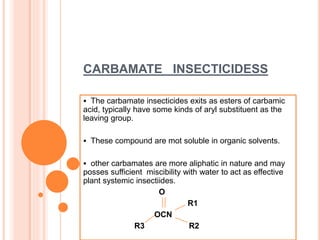
Carbamate insecticides work by inhibiting the acetylcholinesterase enzyme, causing acetylcholine to accumulate in the nervous system. They were developed in the 1940s as synthetic analogues of physostigmine and showed insecticidal properties. Key developments included modifying the structure to increase lipid solubility and insecticidal activity. Commercially successful carbamates like carbaryl were then synthesized. Carbamates react with the acetylcholinesterase active site through carbamylation, inactivating the enzyme. This disruption of nerve function causes hyperactivity, tremors and other symptoms in insects. Atropine can act as an antidote by antagonizing acetylcholine activity.