MODE OF ACTION OF
CARBAMATE
PREPARED BY GROUP NO 9:
AGHA BILALASGHAR
SANA SYED
ROMANAAFZAL KHAN
SUBMITTEDTO:
MISS SARAH
COURSE NO: 511
What is pest?
A destructive insect, animal or microorganism
that attacks crops, food, livestock, etc.
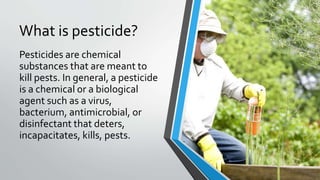
What is pesticide?
Pesticides are chemical
substances that are meant to
kill pests. In general, a pesticide
is a chemical or a biological
agent such as a virus,
bacterium, antimicrobial, or
disinfectant that deters,
incapacitates, kills, pests.
Chemically-
related
pesticides:
Organophosphate
Carbamate:
Organochlorine
Pyrethroid
Biopesticides
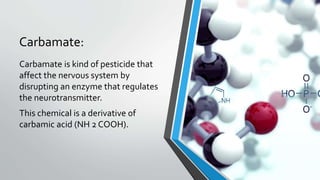
Carbamate:
Carbamate is kind of pesticide that
affect the nervous system by
disrupting an enzyme that regulates
the neurotransmitter.
This chemical is a derivative of
carbamic acid (NH 2 COOH).
HISTORY OF CARBAMATE:
•The first successful carbamate, was
introduced in 1956 namedCarbaryl.
•It has very low mammalian, oral and
dermal toxicity.
•It has a broad spectrum of insect control.
MODE OF ACTION
• Carbamate interact with the enzymes called
acetylcholinesterase and other
cholinesterase, which disrupt the nerve
impulses.
• It causes the insect to be disabled or killed.
• Basically, nerve cells in the brains of humans
or insects send tiny electrical pulses down
tendrils to the end of the cell where the pulse
has to jump across a gap – known as a
synapse – to another nerve cell.
• A chemicals known as ACh moves from one cell
to the other and binds with the new cell, sending
the electrical pulse down the new cell.
• These insecticides – and nerve gas agents that
are closely related – prevent the ACh from
coming loose from the new cell, so it can't
receive any more impulses.The insects can't
function and die.
• Carbamates have similar properties to the
organophosphates, but last in the
environment for a much shorter time
period.
• They are thought to be less toxic.
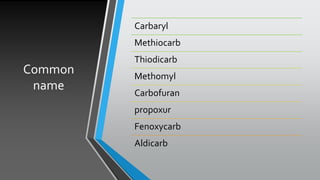
Common
name
Carbaryl
Methiocarb
Thiodicarb
Methomyl
Carbofuran
propoxur
Fenoxycarb
Aldicarb
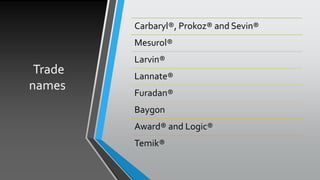
Trade
names
Carbaryl®, Prokoz® and Sevin®
Mesurol®
Larvin®
Lannate®
Furadan®
Baygon
Award® and Logic®
Temik®
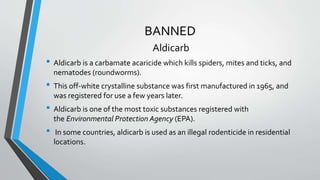
BANNED
Aldicarb
• Aldicarb is a carbamate acaricide which kills spiders, mites and ticks, and
nematodes (roundworms).
• This off-white crystalline substance was first manufactured in 1965, and
was registered for use a few years later.
• Aldicarb is one of the most toxic substances registered with
the Environmental Protection Agency (EPA).
• In some countries, aldicarb is used as an illegal rodenticide in residential
locations.
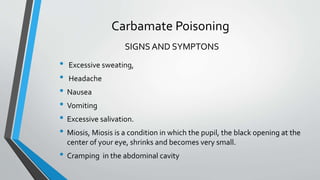
Carbamate Poisoning
• Excessive sweating,
• Headache
• Nausea
• Vomiting
• Excessive salivation.
• Miosis, Miosis is a condition in which the pupil, the black opening at the
center of your eye, shrinks and becomes very small.
• Cramping in the abdominal cavity
SIGNS AND SYMPTONS
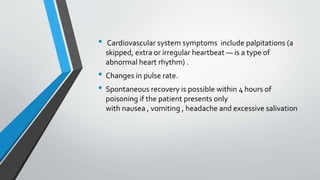
• Cardiovascular system symptoms include palpitations (a
skipped, extra or irregular heartbeat — is a type of
abnormal heart rhythm) .
• Changes in pulse rate.
• Spontaneous recovery is possible within 4 hours of
poisoning if the patient presents only
with nausea , vomiting , headache and excessive salivation
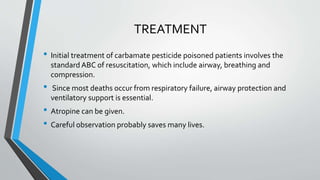
TREATMENT
• Initial treatment of carbamate pesticide poisoned patients involves the
standard ABC of resuscitation, which include airway, breathing and
compression.
• Since most deaths occur from respiratory failure, airway protection and
ventilatory support is essential.
• Atropine can be given.
• Careful observation probably saves many lives.
THANKYOU

Mode of action of carbamate.pptx

  • 1.
    MODE OF ACTIONOF CARBAMATE PREPARED BY GROUP NO 9: AGHA BILALASGHAR SANA SYED ROMANAAFZAL KHAN SUBMITTEDTO: MISS SARAH COURSE NO: 511
  • 2.
    What is pest? Adestructive insect, animal or microorganism that attacks crops, food, livestock, etc.
  • 3.
    What is pesticide? Pesticidesare chemical substances that are meant to kill pests. In general, a pesticide is a chemical or a biological agent such as a virus, bacterium, antimicrobial, or disinfectant that deters, incapacitates, kills, pests.
  • 4.
  • 5.
    Carbamate: Carbamate is kindof pesticide that affect the nervous system by disrupting an enzyme that regulates the neurotransmitter. This chemical is a derivative of carbamic acid (NH 2 COOH).
  • 6.
    HISTORY OF CARBAMATE: •Thefirst successful carbamate, was introduced in 1956 namedCarbaryl. •It has very low mammalian, oral and dermal toxicity. •It has a broad spectrum of insect control.
  • 7.
    MODE OF ACTION •Carbamate interact with the enzymes called acetylcholinesterase and other cholinesterase, which disrupt the nerve impulses. • It causes the insect to be disabled or killed. • Basically, nerve cells in the brains of humans or insects send tiny electrical pulses down tendrils to the end of the cell where the pulse has to jump across a gap – known as a synapse – to another nerve cell.
  • 8.
    • A chemicalsknown as ACh moves from one cell to the other and binds with the new cell, sending the electrical pulse down the new cell. • These insecticides – and nerve gas agents that are closely related – prevent the ACh from coming loose from the new cell, so it can't receive any more impulses.The insects can't function and die.
  • 9.
    • Carbamates havesimilar properties to the organophosphates, but last in the environment for a much shorter time period. • They are thought to be less toxic.
  • 10.
  • 11.
    Trade names Carbaryl®, Prokoz® andSevin® Mesurol® Larvin® Lannate® Furadan® Baygon Award® and Logic® Temik®
  • 12.
    BANNED Aldicarb • Aldicarb isa carbamate acaricide which kills spiders, mites and ticks, and nematodes (roundworms). • This off-white crystalline substance was first manufactured in 1965, and was registered for use a few years later. • Aldicarb is one of the most toxic substances registered with the Environmental Protection Agency (EPA). • In some countries, aldicarb is used as an illegal rodenticide in residential locations.
  • 13.
    Carbamate Poisoning • Excessivesweating, • Headache • Nausea • Vomiting • Excessive salivation. • Miosis, Miosis is a condition in which the pupil, the black opening at the center of your eye, shrinks and becomes very small. • Cramping in the abdominal cavity SIGNS AND SYMPTONS
  • 14.
    • Cardiovascular systemsymptoms include palpitations (a skipped, extra or irregular heartbeat — is a type of abnormal heart rhythm) . • Changes in pulse rate. • Spontaneous recovery is possible within 4 hours of poisoning if the patient presents only with nausea , vomiting , headache and excessive salivation
  • 15.
    TREATMENT • Initial treatmentof carbamate pesticide poisoned patients involves the standard ABC of resuscitation, which include airway, breathing and compression. • Since most deaths occur from respiratory failure, airway protection and ventilatory support is essential. • Atropine can be given. • Careful observation probably saves many lives.
  • 16.