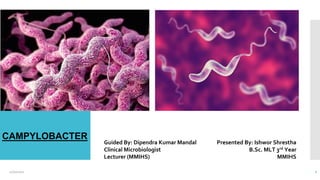
CAMPYLOBACTER
1
12/2/2021
Presented By: Ishwor Shrestha
B.Sc. MLT 3rd Year
MMIHS
Guided By: Dipendra Kumar Mandal
Clinical Microbiologist
Lecturer (MMIHS)
CONTENT
⮚History
⮚Introduction
⮚Taxonomy
⮚Campylobacter species
⮚General characteristics
⮚Habitat
⮚Morphology
⮚Cultural characteristics
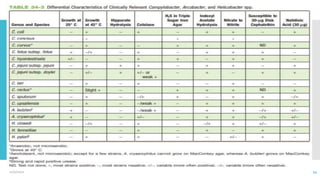
⮚Biochemical reaction
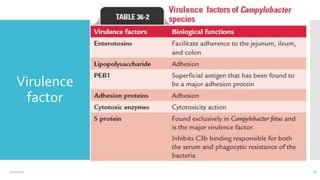
⮚Virulence factor
⮚Epidemiology
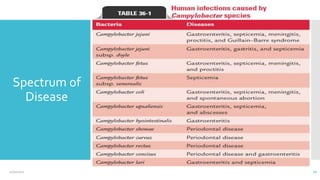
⮚Spectrum of Disease
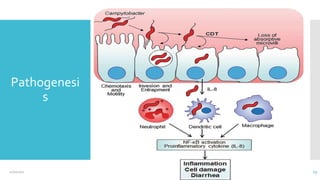
⮚Pathogenesis
⮚Clinical syndrome
⮚Laboratory diagnosis
⮚Antimicrobial susceptibility and therapy
⮚Others campylobacter
2
12/2/2021
History
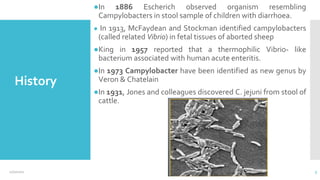
●In 1886 Escherich observed organism resembling
Campylobacters in stool sample of children with diarrhoea.
● In 1913, McFaydean and Stockman identified campylobacters
(called related Vibrio) in fetal tissues of aborted sheep
●King in 1957 reported that a thermophilic Vibrio- like
bacterium associated with human acute enteritis.
●In 1973 Campylobacter have been identified as new genus by
Veron & Chatelain
●In 1931, Jones and colleagues discovered C. jejuni from stool of
cattle.
3
12/2/2021
Campylobacter
⮚Introduction
▪ The organisms are currently divided into three genera:
Campylobacter, Arcobacter and Helicobacter.
▪ The genera Campylobacter and Arcobacter are grouped under
the family Campylobacteriaceae.
▪ The genera belonging to this family are Gram-negative, spiral
bacilli with a low DNA guanosine and cytosine base rate.
▪ Most campylobacter are microaerophilic( i.e. they require
oxygen but at lower concentration than present in air) and 5%
oxygen in the environments optimal for growth.
▪ Many pathogenic species are thermophilic( growing well at 42° C
)therefore they do not grow in media incubated at 37°C used for
isolating E. coli and salmonella.
▪ Lack the capacity to oxidize or ferment sugars.
12/2/2021 4
Campylobacter
▪ Campylobacter infection are one of the most common bacterial
infections in humans.
▪ Causes both diarrheal and other systemic diseases
▪ The generic name campylobacter is derived from the Greek
word Kampylos meaning curved rod.
▪ The genus campylobacter resembles the genus Vibrio in being
motile by means of polar flagella and in being curved Gram-
negative bacilli and oxidase positive.
▪ They, however, differ from vibrio:
a) in being microaerophilic,
b) not fermermenting carbohydrates and
c) having a lower guanosine and cytosine content: guanine-
cytosine (G+C) ratio (29-38 mol %) than vibrio's(39-5 1 mol %)
▪ The genus campylobacter consists of 16species and 6
subspecies, of which 11 species are known to cause infections
12/2/2021 5
Taxonomy
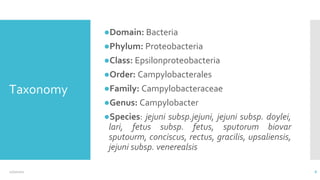
●Domain: Bacteria
●Phylum: Proteobacteria
●Class: Epsilonproteobacteria
●Order: Campylobacterales
●Family: Campylobacteraceae
●Genus: Campylobacter
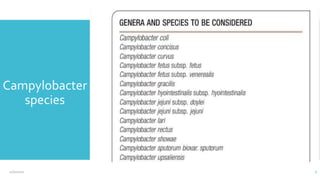
●Species: jejuni subsp.jejuni, jejuni subsp. doylei,
lari, fetus subsp. fetus, sputorum biovar
sputourm, conciscus, rectus, gracilis, upsaliensis,
jejuni subsp. venerealsis
6
12/2/2021
Campylobacter
species
7
12/2/2021
Medically
important
campylobacter
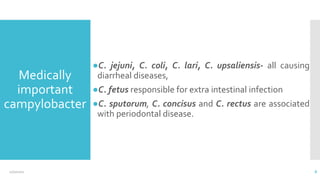
●C. jejuni, C. coli, C. lari, C. upsaliensis- all causing
diarrheal diseases,
●C. fetus responsible for extra intestinal infection
●C. sputorum, C. concisus and C. rectus are associated
with periodontal disease.
8
12/2/2021
General
characteristic
s
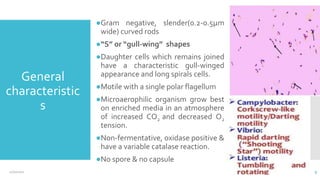
●Gram negative, slender(0.2-0.5µm
wide) curved rods
●“S” or “gull-wing” shapes
●Daughter cells which remains joined
have a characteristic gull-winged
appearance and long spirals cells.
●Motile with a single polar flagellum
●Microaerophilic organism grow best
on enriched media in an atmosphere
of increased CO2 and decreased O2
tension.
●Non-fermentative, oxidase positive &
have a variable catalase reaction.
●No spore & no capsule
9
12/2/2021
Habitat
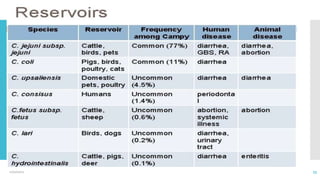
●Campylobacter species are found in the intestinal and genital
tracts of domestic animals and are widely distributed
geographically.
●C.jejuni subsp. jejuni- domestic animals, poultry and birds,
●C. jejuni subsp. doylei- Humans
●C. lari – animals and birds
●C.fetus subsp. fetus – cattle and sheep & C. jejuni subsp.
venerealsis – cattle
●C. sputorum biovar sputourm – Man (mouth), cattle, sheep
●C.conciscus, C. rectus, C. gracilis – Humans
●C. upsaliensis – dogs, cats
10
12/2/2021
Campylobacter
jejuni
●Campylobacter jejuni was discovered by Jones and
colleagues in 1931 from the stool of cattle suffering from
winter dysentery.
●C .jejuni subsp. jejuni is the most important and most
common enteric pathogen causing attacks of diarrhea in
patients worldwide.
●About 90-95% campylobacter infections are caused by C .
jejuni.
●The infection is a zoonotic and the source is food of animal
origin.
12/2/2021 11
Campylobacter
jejuni
Morphology
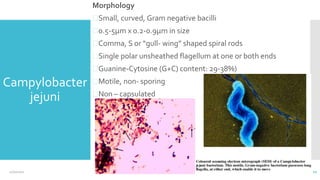
⮚Small, curved, Gram negative bacilli
⮚0.5-5µm x 0.2-0.9µm in size
⮚Comma, S or “gull- wing” shaped spiral rods
⮚Single polar unsheathed flagellum at one or both ends
⮚Guanine-Cytosine (G+C) content: 29-38%)
⮚Motile, non- sporing
⮚Non – capsulated
12
12/2/2021
Cultural
characteristics
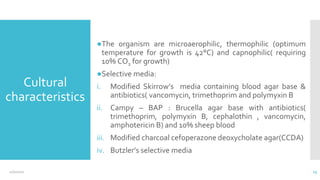
●The organism are microaerophilic, thermophilic (optimum
temperature for growth is 42°C) and capnophilic( requiring
10% CO2 for growth)
●Selective media:
i. Modified Skirrow’s media containing blood agar base &
antibiotics( vancomycin, trimethoprim and polymyxin B
ii. Campy – BAP : Brucella agar base with antibiotics(
trimethoprim, polymyxin B, cephalothin , vancomycin,
amphotericin B) and 10% sheep blood
iii. Modified charcoal cefoperazone deoxycholate agar(CCDA)
iv. Butzler’s selective media
13
12/2/2021
Cultural
characteristics
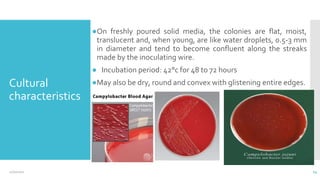
●On freshly poured solid media, the colonies are flat, moist,
translucent and, when young, are like water droplets, 0.5-3 mm
in diameter and tend to become confluent along the streaks
made by the inoculating wire.
● Incubation period: 42°c for 48 to 72 hours
●May also be dry, round and convex with glistening entire edges.
14
12/2/2021
Biochemica
l reaction
15
12/2/2021
Biochemica
l reaction
16
12/2/2021
Virulence
factor
17
12/2/2021
Epidemiology
●Campylobacter is a zoonotic bacterium (bacteria transmitted to
humans from animals or animal products) as a commensal with a
variety of animal reservoir, such as farm animals, especially
poultry ( chickens and turkeys).
●Dogs and cats are also reported to be source of campylobacters.
●Human infections occur via contaminated water or food.
●The incidence is high in summer and early autumn. Highest
among young children followed by a second peak in young adults
20 to 40 years old.
●Outbreaks are associated with improperly cooked food primarily
poultry products contaminated milk and water.
●In developing countries, C. jejuni infections are hyper endemic,
asymptomatic and widespread in humans as well as animals
including poultry. The highest incidence rate is found among
children less than 2 years old.
●Once a person is infected, the organisms can be transmitted from
person to person by the fecal oral route.
12/2/2021 18
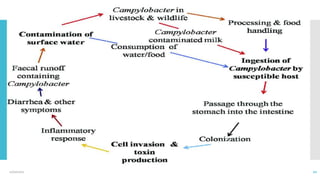
Transmission
●Infection is acquired by ingestion: consumption of
contaminated food, water, unpasteurized milk and
undercooked meat
●Most often carcasses of meat are contaminated by
Campylobacter from feces during slaughtering. In animals,
campylobacter seldom causes disease
⮚ direct contact with infected animals and their products
12/2/2021 19
12/2/2021 20
❑Risk factors of campylobacteriosis
●HIV infection
●Exposure to poultry, cattle, sheep, or other farm animals
●Eating raw or undercooked meat (especially chicken)
●Recent foreign travel
12/2/2021 21
Spectrum of
Disease
22
12/2/2021
Pathogenesi
s
12/2/2021 23
Pathogenesis
●Human infection follows ingestion of 1000- 10,000 bacteria but the
illness is infrequent with a dose of less than 1000 bacteria.
●Most clinical syndromes occur within 2-4 days(incubation period, 1-7
days) of ingestion of contaminated food, milk or water.
●Three mechanisms have been postulated in the pathogenesis of
intestinal disease caused by C. jejuni.
1. Adherence and production of heat- labile enterotoxins:
❑C. jejuni adheres to the jejunum, ileum and colon.
❑Adherence to epithelial cell or mucus at these sites is possibly
facilitated by flagella.
❑LPS or other outer membrane components are also believed to
contribute to adhesion.
❑PEB1 is a superficial antigen that has been found to be a major
adhesion protein.
❑Furthermore , C . jejuni enterotoxin is a heat labile cholera- like toxin
which is responsible for diarrhea
12/2/2021 24
2. Invasion and proliferation of bacteria within the intestinal
epithelium:
❑C. jejuni is invasive.
❑The organism multiply in the small intestine, penetrate the gut
epithelium and produces enterotoxins( resembling enterotoxin of V.
cholera)
❑Causes histologic damage in the mucosal surface of the jejunum, ileum
and colon.
❑The organism produces diffuse, bloody, edematous, and exudative
enteritis.
❑Infiltration of lamina propria occurs with neutrophils, mononuclear
cells and eosinophils.
❑Abscesses in epithelial glands and ulceration of the mucosal
epithelium.
❑Precise role of enterotoxin and cytopathic toxins in causation of
intestinal pathology is not known.
12/2/2021 25
3. Invasion of intestinal mucosa and proliferation:
❑C. jejuni invades intestinal mucosa and multiplies in the
lamina propria and mesenteric lymph nodes.
❑This results in extra-intestinal infections such as
cholecystitis, mesentery adenitis, urinary tract infection and
meningitis.
Host immunity:
❑Acute infection caused by C. jejuni confers immunity with
development of specific IgG, IgM and IgA antibody in the
serum and also IgA antibodies in the intestinal secretions.
❑Both humoral and cell mediated immunity are important in
prevention and termination of C. jejuni infections.
12/2/2021 26
Symptoms
❑Campylobacter infection may cause a variety of symptoms,
including:
▪ Mild to severe diarrhoea
▪ Bloody diarrhoea
▪ Stomach pain
▪ Cramps
▪ Nausea and/or vomiting
▪ Fever
▪ Headache, and
▪ Muscle pain
▪ Persons infected with Campylobacter bacteria may not
exhibit any symptoms. These asymptomatic individuals can
still pass the disease on to others.
12/2/2021 27
Clinical
syndrome
●Campylobacter spp. infection in humans can be broadly classified into
two major groups:
A. Enteric infection
B. Extra- intestinal infections
12/2/2021 28
12/2/2021 29
❑ Enteric infection:
▪ C. jejuni is the most important species associated with
human enteric infections.
▪ The clinical manifestation of enteric infections caused
by all campylobacters species including C. jejuni are
similar.
▪ Watery diarrhea is the main manifestation
(approximately 10% of children)
▪ The illness lasts for days to several weeks and is usually
self - limiting.
▪ Systemic dissemination is rarely seen.
❑Extra- intestinal infections:
▪ Bacteremia:
✔ the most important manifestation
✔ bacteremia caused by C. jejuni is uncommon
✔Occurs in patients with immunodeficiency , chronic disease and in old
individual.
✔Both stream infection and bacteremia by C. fetus is rare.
▪ Septicemia
▪ Meningitis
12/2/2021 30
Complications
●In immunocompromised persons, there may occur
sustained bacteremia
●Guillain- Barre syndrome
●Septic abortion
●Reactive arthritis
●Hemolytic uremic syndrome
●Thrombotic thrombocytopenic purpura
12/2/2021 31
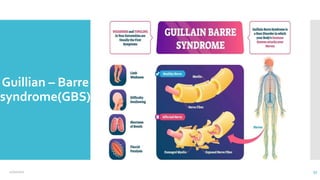
Guillian – Barre
syndrome(GBS)
▪ Autoimmune disease
▪ Due to molecular mimicry of terminal tetra-saccharide of
LPS of C. jejuni and glycolipid present on the surface of
peripheral nerves.
▪ An acute paralytic disease of the peripheral nervous system.
▪ Approximately 20-40% patients of GBS are infected with C.
jejuni which may appear 1-2 weeks after onset of acute
campylobacter illness.
▪ A rare serotype of C. jejuni called Penner ( LPS type O: 19) is
associated with this condition.
12/2/2021 32
Guillian – Barre
syndrome(GBS)
12/2/2021 33
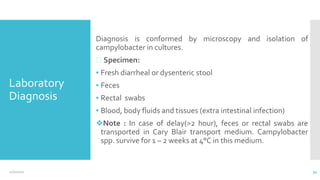
Laboratory
Diagnosis
Diagnosis is conformed by microscopy and isolation of
campylobacter in cultures.
⮚ Specimen:
▪ Fresh diarrheal or dysenteric stool
▪ Feces
▪ Rectal swabs
▪ Blood, body fluids and tissues (extra intestinal infection)
❖Note : In case of delay(>2 hour), feces or rectal swabs are
transported in Cary Blair transport medium. Campylobacter
spp. survive for 1 – 2 weeks at 4°C in this medium.
12/2/2021 34
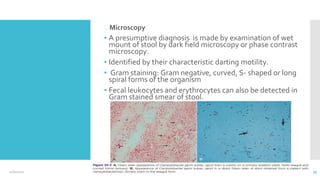
⮚Microscopy
▪ A presumptive diagnosis is made by examination of wet
mount of stool by dark field microscopy or phase contrast
microscopy.
▪ Identified by their characteristic darting motility.
▪ Gram staining: Gram negative, curved, S- shaped or long
spiral forms of the organism
▪ Fecal leukocytes and erythrocytes can also be detected in
Gram stained smear of stool.
12/2/2021 35
Isolation
technique
●Campylobacters can be isolated from fecal specimen
by:
⮚Filtration technique
⮚Selective culture medium
12/2/2021 36
Filtration
technique
●This technique requires the use of a cellulose acetate 0.45
µm porosity, 47 mm diameter membrane filter.
●Procedure :
1) Emulsify about 1 gm of faeces in 10 ml sterile saline. If
available use a vortex mixer. Allow to settle for 2 minutes.
2) Place a filter membrane of 0.45 µm porosity, 47 mm
diameter on a plate of blood agar or chocolate (heated
blood) agar.
3) Add about 10 drops of faecal suspension to the filter,
making sure the suspension does not over run the edge of
the filter.
4) Remove and discard the filter 30-60 minutes after
applying the suspension.
5) Incubate the plate in a microaerophilic environment ,
preferably at 42-43°C for up to 48 h or if this is not
possible at 37°.
12/2/2021 37
Culture
▪ Campylobacter species are strictly microaerophilic,
requiring incubation of reduced O2(7%), CO2 (10%) and
remainder 83% of N2 (inert gas).
▪ C. jejuni, C. coli and C.lari are thermophilic, i.e. they will
grow at 42-43°C and 36-37°C but not at 25°C.
▪ Though they grow at 37°C, incubation at higher
temperature suppresses normal flora.
▪ Rectal swabs or swab of samples of the stool, or 1 or 2
drops of liquid stool specimen are inoculated directly on
the surface of the agar medium.
▪ The inoculated plate is incubated at 42°C for 48-72 hours.
12/2/2021 38
Culture
▪ Selective media:
●Modified Skirrow’s media containing Colombia blood agar
base, 7% horse lysed blood & antibiotics( vancomycin,
trimethoprim and polymyxin B)
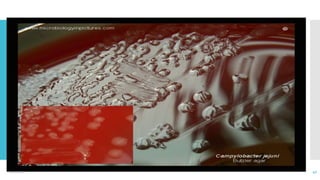
⮚Colonies of C. jejuni will appear as small, mucoid, flat or
slightly raised, non-hemolytic translucent and gray.
●Campy – BAP : Brucella agar base with antibiotics(
trimethoprim, polymyxin B, cephalothin , vancomycin,
amphotericin B) and 10% sheep blood
●Modified charcoal cefoperazone deoxycholate
agar(CCDA)
●Butzler’s selective media: containing defibrinated sheep
blood, cefoparazone, rifampicin, colistin, amphotericin B,
Colombia agar base
⮚Two types colonies:
1. Watery and spreading
12/2/2021 39
12/2/2021 40
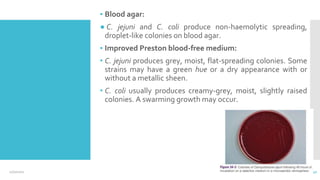
▪ Blood agar:
● C. jejuni and C. coli produce non-haemolytic spreading,
droplet-like colonies on blood agar.
▪ Improved Preston blood-free medium:
• C. jejuni produces grey, moist, flat-spreading colonies. Some
strains may have a green hue or a dry appearance with or
without a metallic sheen.
• C. coli usually produces creamy-grey, moist, slightly raised
colonies. A swarming growth may occur.
12/2/2021 41
Serodiagnosis
▪ Latex agglutination test to identify Campylobacter
●A Dryspot Campylobacter latex agglutination test kit (code
DR 0150) is available from Oxoid for the identification of
enteropathogenic Campylobacter species from solid culture
media.
●The latex reagent is dried on reaction cards. The test kit
includes the antigen extraction reagents required to perform
the test. Each test pack contains 50 tests.
▪ Antigen Detection
• Several commercial antigen detection systems are available
for the direct detection of Campylobacter in stool
specimens.
• The enzyme immunoassays (EIA) can be used to detect
antigens in stool samples for several days if stored at 4° C
12/2/2021 42
▪ ELISA is available for demonstration of specific antibodies in
the serum, and a high titre of antibodies is usually seen after
the symptoms are resolved.
▪ Serology may not be useful for routine diagnosis, but is
useful for epidemiological studies
12/2/2021 43
Molecular
diagnosis
●DNA probes and PCR based amplification of the 16S rRNA
gene
●Direct sequencing of the PCR product
12/2/2021 44
Antimicrobial
Susceptibility
Testing and
Therapy
●Susceptibility tests for campylobacter spp. are not
standardized and therefore testing of isolates is not routinely
performed.
●C. jejuni and C. coli are susceptible to many antimicrobial
agents including: macrolides, tetracyclines, aminoglycosides
and quinolones
●Erythromycin is the drug of choice for patients with severe
gastroenteritis with ciprofloxacin as the alternative
therapeutic option.
●Resistance is being reported from some countries to
ciprofloxacin, tetracyclines, ampicillin and cotrimoxazole.
●Campylobacter infections, however, are often self-limiting
and do not require antimicrobial treatment.
●Parenteral therapy (not taken through alimentary canal but by
an alternate route such as intravenous) is used to treat
systemic infection
12/2/2021 45
Treatment
●Most C. jejuni infections are mild and self-limited. Therefore,
they do not require antibiotic therapy. Supportive treatment
is adequate.
●Treatment is not generally required, except electrolyte
replacement and rehydration
●Treatment with antibiotics is recommended only for
persons:
o with fever, bloody diarrhea,
o with symptoms persisting for more than 7 days, and
o for immunocompromised host.
12/2/2021 46
Prevention
●Potentially contaminated food such as poultry, should be
thoroughly cooked, and milk and milk products should be
pasteurized.
●No vaccines are available for Campylobacter spp.
●Care must be taken during food preparation to prevent
cross- contamination from raw poultry to other food items.
●Wash hands with soap before and after handling raw
foods of animal origin and before touching anything
else.
12/2/2021 47
Other
Campylobacters
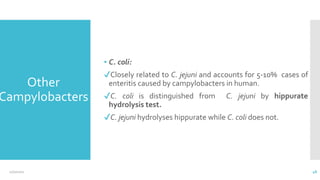
▪ C. coli:
✔Closely related to C. jejuni and accounts for 5-10% cases of
enteritis caused by campylobacters in human.
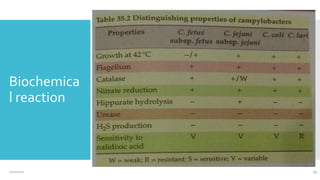
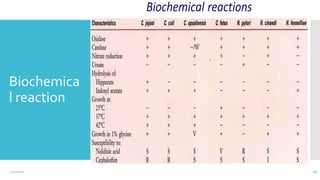
✔C. coli is distinguished from C. jejuni by hippurate
hydrolysis test.
✔C. jejuni hydrolyses hippurate while C. coli does not.
12/2/2021 48
Hippurate
Hydrolysis Test
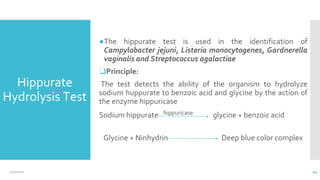
●The hippurate test is used in the identification of
Campylobacter jejuni, Listeria monocytogenes, Gardnerella
vaginalis and Streptococcus agalactiae
❑Principle:
The test detects the ability of the organism to hydrolyze
sodium huppurate to benzoic acid and glycine by the action of
the enzyme hippuricase
Sodium hippurate hippuricase glycine + benzoic acid
Glycine + Ninhydrin Deep blue color complex
12/2/2021 49
Procedure
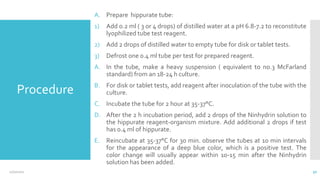
A. Prepare hippurate tube:
1) Add 0.2 ml ( 3 or 4 drops) of distilled water at a pH 6.8-7.2 to reconstitute
lyophilized tube test reagent.
2) Add 2 drops of distilled water to empty tube for disk or tablet tests.
3) Defrost one 0.4 ml tube per test for prepared reagent.
A. In the tube, make a heavy suspension ( equivalent to no.3 McFarland
standard) from an 18-24 h culture.
B. For disk or tablet tests, add reagent after inoculation of the tube with the
culture.
C. Incubate the tube for 2 hour at 35-37°C.
D. After the 2 h incubation period, add 2 drops of the Ninhydrin solution to
the hippurate reagent-organism mixture. Add additional 2 drops if test
has 0.4 ml of hippurate.
E. Reincubate at 35-37°C for 30 min. observe the tubes at 10 min intervals
for the appearance of a deep blue color, which is a positive test. The
color change will usually appear within 10-15 min after the Ninhydrin
solution has been added.
12/2/2021 50
Result
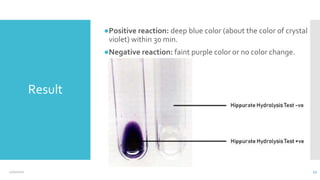
●Positive reaction: deep blue color (about the color of crystal
violet) within 30 min.
●Negative reaction: faint purple color or no color change.
12/2/2021 51
▪ C. lari:
✔Thermophilic, endemic in gulls
✔Infrequently causes enteritis in man, simulating C. jejuni.
Infections
✔Rarely causes bacteraemia especially in
immunocompromised persons
✔Does not hydrolyses hippurate
▪ C. fetus:
✔Theobald Smith isolated the organism in 1918 from
infectious abortion in cattle and named it Vibrio fetus.
✔Veterinary pathogen
✔Human infection- septicemia in debilitated and
immunocompromised individuals.
12/2/2021 52
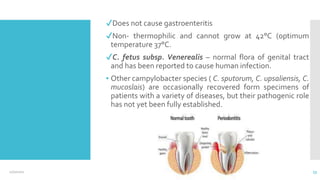
✔Does not cause gastroenteritis
✔Non- thermophilic and cannot grow at 42°C (optimum
temperature 37°C.
✔C. fetus subsp. Venerealis – normal flora of genital tract
and has been reported to cause human infection.
▪ Other campylobacter species ( C. sputorum, C. upsaliensis, C.
mucoslais) are occasionally recovered form specimens of
patients with a variety of diseases, but their pathogenic role
has not yet been fully established.
12/2/2021 53
12/2/2021 54
12/2/2021 55
Reference
●A Textbook of Microbiology- P Chakraborty
●Textbook of Microbiology & Immunology, Second Edition-
Subhash Parija
●Bailey Scott’s Diagnostic Microbiology, 13th edition- PDF--
tahir99- VRG
●District Laboratory Practice in Tropical Countries, Second
Edition- Part 2 –Monica Cheesbrough
●Clinical Microbiology Procedure Handbook, Volume
1,Second Edition- Henry D. Isenberg
12/2/2021 56
Thank you !!!
12/2/2021 57

Campylobacter.pptx

  • 1.
    CAMPYLOBACTER 1 12/2/2021 Presented By: IshworShrestha B.Sc. MLT 3rd Year MMIHS Guided By: Dipendra Kumar Mandal Clinical Microbiologist Lecturer (MMIHS)
  • 2.
    CONTENT ⮚History ⮚Introduction ⮚Taxonomy ⮚Campylobacter species ⮚General characteristics ⮚Habitat ⮚Morphology ⮚Culturalcharacteristics ⮚Biochemical reaction ⮚Virulence factor ⮚Epidemiology ⮚Spectrum of Disease ⮚Pathogenesis ⮚Clinical syndrome ⮚Laboratory diagnosis ⮚Antimicrobial susceptibility and therapy ⮚Others campylobacter 2 12/2/2021
  • 3.
    History ●In 1886 Escherichobserved organism resembling Campylobacters in stool sample of children with diarrhoea. ● In 1913, McFaydean and Stockman identified campylobacters (called related Vibrio) in fetal tissues of aborted sheep ●King in 1957 reported that a thermophilic Vibrio- like bacterium associated with human acute enteritis. ●In 1973 Campylobacter have been identified as new genus by Veron & Chatelain ●In 1931, Jones and colleagues discovered C. jejuni from stool of cattle. 3 12/2/2021
  • 4.
    Campylobacter ⮚Introduction ▪ The organismsare currently divided into three genera: Campylobacter, Arcobacter and Helicobacter. ▪ The genera Campylobacter and Arcobacter are grouped under the family Campylobacteriaceae. ▪ The genera belonging to this family are Gram-negative, spiral bacilli with a low DNA guanosine and cytosine base rate. ▪ Most campylobacter are microaerophilic( i.e. they require oxygen but at lower concentration than present in air) and 5% oxygen in the environments optimal for growth. ▪ Many pathogenic species are thermophilic( growing well at 42° C )therefore they do not grow in media incubated at 37°C used for isolating E. coli and salmonella. ▪ Lack the capacity to oxidize or ferment sugars. 12/2/2021 4
  • 5.
    Campylobacter ▪ Campylobacter infectionare one of the most common bacterial infections in humans. ▪ Causes both diarrheal and other systemic diseases ▪ The generic name campylobacter is derived from the Greek word Kampylos meaning curved rod. ▪ The genus campylobacter resembles the genus Vibrio in being motile by means of polar flagella and in being curved Gram- negative bacilli and oxidase positive. ▪ They, however, differ from vibrio: a) in being microaerophilic, b) not fermermenting carbohydrates and c) having a lower guanosine and cytosine content: guanine- cytosine (G+C) ratio (29-38 mol %) than vibrio's(39-5 1 mol %) ▪ The genus campylobacter consists of 16species and 6 subspecies, of which 11 species are known to cause infections 12/2/2021 5
  • 6.
    Taxonomy ●Domain: Bacteria ●Phylum: Proteobacteria ●Class:Epsilonproteobacteria ●Order: Campylobacterales ●Family: Campylobacteraceae ●Genus: Campylobacter ●Species: jejuni subsp.jejuni, jejuni subsp. doylei, lari, fetus subsp. fetus, sputorum biovar sputourm, conciscus, rectus, gracilis, upsaliensis, jejuni subsp. venerealsis 6 12/2/2021
  • 7.
  • 8.
    Medically important campylobacter ●C. jejuni, C.coli, C. lari, C. upsaliensis- all causing diarrheal diseases, ●C. fetus responsible for extra intestinal infection ●C. sputorum, C. concisus and C. rectus are associated with periodontal disease. 8 12/2/2021
  • 9.
    General characteristic s ●Gram negative, slender(0.2-0.5µm wide)curved rods ●“S” or “gull-wing” shapes ●Daughter cells which remains joined have a characteristic gull-winged appearance and long spirals cells. ●Motile with a single polar flagellum ●Microaerophilic organism grow best on enriched media in an atmosphere of increased CO2 and decreased O2 tension. ●Non-fermentative, oxidase positive & have a variable catalase reaction. ●No spore & no capsule 9 12/2/2021
  • 10.
    Habitat ●Campylobacter species arefound in the intestinal and genital tracts of domestic animals and are widely distributed geographically. ●C.jejuni subsp. jejuni- domestic animals, poultry and birds, ●C. jejuni subsp. doylei- Humans ●C. lari – animals and birds ●C.fetus subsp. fetus – cattle and sheep & C. jejuni subsp. venerealsis – cattle ●C. sputorum biovar sputourm – Man (mouth), cattle, sheep ●C.conciscus, C. rectus, C. gracilis – Humans ●C. upsaliensis – dogs, cats 10 12/2/2021
  • 11.
    Campylobacter jejuni ●Campylobacter jejuni wasdiscovered by Jones and colleagues in 1931 from the stool of cattle suffering from winter dysentery. ●C .jejuni subsp. jejuni is the most important and most common enteric pathogen causing attacks of diarrhea in patients worldwide. ●About 90-95% campylobacter infections are caused by C . jejuni. ●The infection is a zoonotic and the source is food of animal origin. 12/2/2021 11
  • 12.
    Campylobacter jejuni Morphology ⮚Small, curved, Gramnegative bacilli ⮚0.5-5µm x 0.2-0.9µm in size ⮚Comma, S or “gull- wing” shaped spiral rods ⮚Single polar unsheathed flagellum at one or both ends ⮚Guanine-Cytosine (G+C) content: 29-38%) ⮚Motile, non- sporing ⮚Non – capsulated 12 12/2/2021
  • 13.
    Cultural characteristics ●The organism aremicroaerophilic, thermophilic (optimum temperature for growth is 42°C) and capnophilic( requiring 10% CO2 for growth) ●Selective media: i. Modified Skirrow’s media containing blood agar base & antibiotics( vancomycin, trimethoprim and polymyxin B ii. Campy – BAP : Brucella agar base with antibiotics( trimethoprim, polymyxin B, cephalothin , vancomycin, amphotericin B) and 10% sheep blood iii. Modified charcoal cefoperazone deoxycholate agar(CCDA) iv. Butzler’s selective media 13 12/2/2021
  • 14.
    Cultural characteristics ●On freshly pouredsolid media, the colonies are flat, moist, translucent and, when young, are like water droplets, 0.5-3 mm in diameter and tend to become confluent along the streaks made by the inoculating wire. ● Incubation period: 42°c for 48 to 72 hours ●May also be dry, round and convex with glistening entire edges. 14 12/2/2021
  • 15.
  • 16.
  • 17.
  • 18.
    Epidemiology ●Campylobacter is azoonotic bacterium (bacteria transmitted to humans from animals or animal products) as a commensal with a variety of animal reservoir, such as farm animals, especially poultry ( chickens and turkeys). ●Dogs and cats are also reported to be source of campylobacters. ●Human infections occur via contaminated water or food. ●The incidence is high in summer and early autumn. Highest among young children followed by a second peak in young adults 20 to 40 years old. ●Outbreaks are associated with improperly cooked food primarily poultry products contaminated milk and water. ●In developing countries, C. jejuni infections are hyper endemic, asymptomatic and widespread in humans as well as animals including poultry. The highest incidence rate is found among children less than 2 years old. ●Once a person is infected, the organisms can be transmitted from person to person by the fecal oral route. 12/2/2021 18
  • 19.
    Transmission ●Infection is acquiredby ingestion: consumption of contaminated food, water, unpasteurized milk and undercooked meat ●Most often carcasses of meat are contaminated by Campylobacter from feces during slaughtering. In animals, campylobacter seldom causes disease ⮚ direct contact with infected animals and their products 12/2/2021 19
  • 20.
  • 21.
    ❑Risk factors ofcampylobacteriosis ●HIV infection ●Exposure to poultry, cattle, sheep, or other farm animals ●Eating raw or undercooked meat (especially chicken) ●Recent foreign travel 12/2/2021 21
  • 22.
  • 23.
  • 24.
    Pathogenesis ●Human infection followsingestion of 1000- 10,000 bacteria but the illness is infrequent with a dose of less than 1000 bacteria. ●Most clinical syndromes occur within 2-4 days(incubation period, 1-7 days) of ingestion of contaminated food, milk or water. ●Three mechanisms have been postulated in the pathogenesis of intestinal disease caused by C. jejuni. 1. Adherence and production of heat- labile enterotoxins: ❑C. jejuni adheres to the jejunum, ileum and colon. ❑Adherence to epithelial cell or mucus at these sites is possibly facilitated by flagella. ❑LPS or other outer membrane components are also believed to contribute to adhesion. ❑PEB1 is a superficial antigen that has been found to be a major adhesion protein. ❑Furthermore , C . jejuni enterotoxin is a heat labile cholera- like toxin which is responsible for diarrhea 12/2/2021 24
  • 25.
    2. Invasion andproliferation of bacteria within the intestinal epithelium: ❑C. jejuni is invasive. ❑The organism multiply in the small intestine, penetrate the gut epithelium and produces enterotoxins( resembling enterotoxin of V. cholera) ❑Causes histologic damage in the mucosal surface of the jejunum, ileum and colon. ❑The organism produces diffuse, bloody, edematous, and exudative enteritis. ❑Infiltration of lamina propria occurs with neutrophils, mononuclear cells and eosinophils. ❑Abscesses in epithelial glands and ulceration of the mucosal epithelium. ❑Precise role of enterotoxin and cytopathic toxins in causation of intestinal pathology is not known. 12/2/2021 25
  • 26.
    3. Invasion ofintestinal mucosa and proliferation: ❑C. jejuni invades intestinal mucosa and multiplies in the lamina propria and mesenteric lymph nodes. ❑This results in extra-intestinal infections such as cholecystitis, mesentery adenitis, urinary tract infection and meningitis. Host immunity: ❑Acute infection caused by C. jejuni confers immunity with development of specific IgG, IgM and IgA antibody in the serum and also IgA antibodies in the intestinal secretions. ❑Both humoral and cell mediated immunity are important in prevention and termination of C. jejuni infections. 12/2/2021 26
  • 27.
    Symptoms ❑Campylobacter infection maycause a variety of symptoms, including: ▪ Mild to severe diarrhoea ▪ Bloody diarrhoea ▪ Stomach pain ▪ Cramps ▪ Nausea and/or vomiting ▪ Fever ▪ Headache, and ▪ Muscle pain ▪ Persons infected with Campylobacter bacteria may not exhibit any symptoms. These asymptomatic individuals can still pass the disease on to others. 12/2/2021 27
  • 28.
    Clinical syndrome ●Campylobacter spp. infectionin humans can be broadly classified into two major groups: A. Enteric infection B. Extra- intestinal infections 12/2/2021 28
  • 29.
    12/2/2021 29 ❑ Entericinfection: ▪ C. jejuni is the most important species associated with human enteric infections. ▪ The clinical manifestation of enteric infections caused by all campylobacters species including C. jejuni are similar. ▪ Watery diarrhea is the main manifestation (approximately 10% of children) ▪ The illness lasts for days to several weeks and is usually self - limiting. ▪ Systemic dissemination is rarely seen.
  • 30.
    ❑Extra- intestinal infections: ▪Bacteremia: ✔ the most important manifestation ✔ bacteremia caused by C. jejuni is uncommon ✔Occurs in patients with immunodeficiency , chronic disease and in old individual. ✔Both stream infection and bacteremia by C. fetus is rare. ▪ Septicemia ▪ Meningitis 12/2/2021 30
  • 31.
    Complications ●In immunocompromised persons,there may occur sustained bacteremia ●Guillain- Barre syndrome ●Septic abortion ●Reactive arthritis ●Hemolytic uremic syndrome ●Thrombotic thrombocytopenic purpura 12/2/2021 31
  • 32.
    Guillian – Barre syndrome(GBS) ▪Autoimmune disease ▪ Due to molecular mimicry of terminal tetra-saccharide of LPS of C. jejuni and glycolipid present on the surface of peripheral nerves. ▪ An acute paralytic disease of the peripheral nervous system. ▪ Approximately 20-40% patients of GBS are infected with C. jejuni which may appear 1-2 weeks after onset of acute campylobacter illness. ▪ A rare serotype of C. jejuni called Penner ( LPS type O: 19) is associated with this condition. 12/2/2021 32
  • 33.
  • 34.
    Laboratory Diagnosis Diagnosis is conformedby microscopy and isolation of campylobacter in cultures. ⮚ Specimen: ▪ Fresh diarrheal or dysenteric stool ▪ Feces ▪ Rectal swabs ▪ Blood, body fluids and tissues (extra intestinal infection) ❖Note : In case of delay(>2 hour), feces or rectal swabs are transported in Cary Blair transport medium. Campylobacter spp. survive for 1 – 2 weeks at 4°C in this medium. 12/2/2021 34
  • 35.
    ⮚Microscopy ▪ A presumptivediagnosis is made by examination of wet mount of stool by dark field microscopy or phase contrast microscopy. ▪ Identified by their characteristic darting motility. ▪ Gram staining: Gram negative, curved, S- shaped or long spiral forms of the organism ▪ Fecal leukocytes and erythrocytes can also be detected in Gram stained smear of stool. 12/2/2021 35
  • 36.
    Isolation technique ●Campylobacters can beisolated from fecal specimen by: ⮚Filtration technique ⮚Selective culture medium 12/2/2021 36
  • 37.
    Filtration technique ●This technique requiresthe use of a cellulose acetate 0.45 µm porosity, 47 mm diameter membrane filter. ●Procedure : 1) Emulsify about 1 gm of faeces in 10 ml sterile saline. If available use a vortex mixer. Allow to settle for 2 minutes. 2) Place a filter membrane of 0.45 µm porosity, 47 mm diameter on a plate of blood agar or chocolate (heated blood) agar. 3) Add about 10 drops of faecal suspension to the filter, making sure the suspension does not over run the edge of the filter. 4) Remove and discard the filter 30-60 minutes after applying the suspension. 5) Incubate the plate in a microaerophilic environment , preferably at 42-43°C for up to 48 h or if this is not possible at 37°. 12/2/2021 37
  • 38.
    Culture ▪ Campylobacter speciesare strictly microaerophilic, requiring incubation of reduced O2(7%), CO2 (10%) and remainder 83% of N2 (inert gas). ▪ C. jejuni, C. coli and C.lari are thermophilic, i.e. they will grow at 42-43°C and 36-37°C but not at 25°C. ▪ Though they grow at 37°C, incubation at higher temperature suppresses normal flora. ▪ Rectal swabs or swab of samples of the stool, or 1 or 2 drops of liquid stool specimen are inoculated directly on the surface of the agar medium. ▪ The inoculated plate is incubated at 42°C for 48-72 hours. 12/2/2021 38
  • 39.
    Culture ▪ Selective media: ●ModifiedSkirrow’s media containing Colombia blood agar base, 7% horse lysed blood & antibiotics( vancomycin, trimethoprim and polymyxin B) ⮚Colonies of C. jejuni will appear as small, mucoid, flat or slightly raised, non-hemolytic translucent and gray. ●Campy – BAP : Brucella agar base with antibiotics( trimethoprim, polymyxin B, cephalothin , vancomycin, amphotericin B) and 10% sheep blood ●Modified charcoal cefoperazone deoxycholate agar(CCDA) ●Butzler’s selective media: containing defibrinated sheep blood, cefoparazone, rifampicin, colistin, amphotericin B, Colombia agar base ⮚Two types colonies: 1. Watery and spreading 12/2/2021 39
  • 40.
  • 41.
    ▪ Blood agar: ●C. jejuni and C. coli produce non-haemolytic spreading, droplet-like colonies on blood agar. ▪ Improved Preston blood-free medium: • C. jejuni produces grey, moist, flat-spreading colonies. Some strains may have a green hue or a dry appearance with or without a metallic sheen. • C. coli usually produces creamy-grey, moist, slightly raised colonies. A swarming growth may occur. 12/2/2021 41
  • 42.
    Serodiagnosis ▪ Latex agglutinationtest to identify Campylobacter ●A Dryspot Campylobacter latex agglutination test kit (code DR 0150) is available from Oxoid for the identification of enteropathogenic Campylobacter species from solid culture media. ●The latex reagent is dried on reaction cards. The test kit includes the antigen extraction reagents required to perform the test. Each test pack contains 50 tests. ▪ Antigen Detection • Several commercial antigen detection systems are available for the direct detection of Campylobacter in stool specimens. • The enzyme immunoassays (EIA) can be used to detect antigens in stool samples for several days if stored at 4° C 12/2/2021 42
  • 43.
    ▪ ELISA isavailable for demonstration of specific antibodies in the serum, and a high titre of antibodies is usually seen after the symptoms are resolved. ▪ Serology may not be useful for routine diagnosis, but is useful for epidemiological studies 12/2/2021 43
  • 44.
    Molecular diagnosis ●DNA probes andPCR based amplification of the 16S rRNA gene ●Direct sequencing of the PCR product 12/2/2021 44
  • 45.
    Antimicrobial Susceptibility Testing and Therapy ●Susceptibility testsfor campylobacter spp. are not standardized and therefore testing of isolates is not routinely performed. ●C. jejuni and C. coli are susceptible to many antimicrobial agents including: macrolides, tetracyclines, aminoglycosides and quinolones ●Erythromycin is the drug of choice for patients with severe gastroenteritis with ciprofloxacin as the alternative therapeutic option. ●Resistance is being reported from some countries to ciprofloxacin, tetracyclines, ampicillin and cotrimoxazole. ●Campylobacter infections, however, are often self-limiting and do not require antimicrobial treatment. ●Parenteral therapy (not taken through alimentary canal but by an alternate route such as intravenous) is used to treat systemic infection 12/2/2021 45
  • 46.
    Treatment ●Most C. jejuniinfections are mild and self-limited. Therefore, they do not require antibiotic therapy. Supportive treatment is adequate. ●Treatment is not generally required, except electrolyte replacement and rehydration ●Treatment with antibiotics is recommended only for persons: o with fever, bloody diarrhea, o with symptoms persisting for more than 7 days, and o for immunocompromised host. 12/2/2021 46
  • 47.
    Prevention ●Potentially contaminated foodsuch as poultry, should be thoroughly cooked, and milk and milk products should be pasteurized. ●No vaccines are available for Campylobacter spp. ●Care must be taken during food preparation to prevent cross- contamination from raw poultry to other food items. ●Wash hands with soap before and after handling raw foods of animal origin and before touching anything else. 12/2/2021 47
  • 48.
    Other Campylobacters ▪ C. coli: ✔Closelyrelated to C. jejuni and accounts for 5-10% cases of enteritis caused by campylobacters in human. ✔C. coli is distinguished from C. jejuni by hippurate hydrolysis test. ✔C. jejuni hydrolyses hippurate while C. coli does not. 12/2/2021 48
  • 49.
    Hippurate Hydrolysis Test ●The hippuratetest is used in the identification of Campylobacter jejuni, Listeria monocytogenes, Gardnerella vaginalis and Streptococcus agalactiae ❑Principle: The test detects the ability of the organism to hydrolyze sodium huppurate to benzoic acid and glycine by the action of the enzyme hippuricase Sodium hippurate hippuricase glycine + benzoic acid Glycine + Ninhydrin Deep blue color complex 12/2/2021 49
  • 50.
    Procedure A. Prepare hippuratetube: 1) Add 0.2 ml ( 3 or 4 drops) of distilled water at a pH 6.8-7.2 to reconstitute lyophilized tube test reagent. 2) Add 2 drops of distilled water to empty tube for disk or tablet tests. 3) Defrost one 0.4 ml tube per test for prepared reagent. A. In the tube, make a heavy suspension ( equivalent to no.3 McFarland standard) from an 18-24 h culture. B. For disk or tablet tests, add reagent after inoculation of the tube with the culture. C. Incubate the tube for 2 hour at 35-37°C. D. After the 2 h incubation period, add 2 drops of the Ninhydrin solution to the hippurate reagent-organism mixture. Add additional 2 drops if test has 0.4 ml of hippurate. E. Reincubate at 35-37°C for 30 min. observe the tubes at 10 min intervals for the appearance of a deep blue color, which is a positive test. The color change will usually appear within 10-15 min after the Ninhydrin solution has been added. 12/2/2021 50
  • 51.
    Result ●Positive reaction: deepblue color (about the color of crystal violet) within 30 min. ●Negative reaction: faint purple color or no color change. 12/2/2021 51
  • 52.
    ▪ C. lari: ✔Thermophilic,endemic in gulls ✔Infrequently causes enteritis in man, simulating C. jejuni. Infections ✔Rarely causes bacteraemia especially in immunocompromised persons ✔Does not hydrolyses hippurate ▪ C. fetus: ✔Theobald Smith isolated the organism in 1918 from infectious abortion in cattle and named it Vibrio fetus. ✔Veterinary pathogen ✔Human infection- septicemia in debilitated and immunocompromised individuals. 12/2/2021 52
  • 53.
    ✔Does not causegastroenteritis ✔Non- thermophilic and cannot grow at 42°C (optimum temperature 37°C. ✔C. fetus subsp. Venerealis – normal flora of genital tract and has been reported to cause human infection. ▪ Other campylobacter species ( C. sputorum, C. upsaliensis, C. mucoslais) are occasionally recovered form specimens of patients with a variety of diseases, but their pathogenic role has not yet been fully established. 12/2/2021 53
  • 54.
  • 55.
  • 56.
    Reference ●A Textbook ofMicrobiology- P Chakraborty ●Textbook of Microbiology & Immunology, Second Edition- Subhash Parija ●Bailey Scott’s Diagnostic Microbiology, 13th edition- PDF-- tahir99- VRG ●District Laboratory Practice in Tropical Countries, Second Edition- Part 2 –Monica Cheesbrough ●Clinical Microbiology Procedure Handbook, Volume 1,Second Edition- Henry D. Isenberg 12/2/2021 56
  • 57.