By Lucy Billington-Groom
MICRO ELEMENTS
Extreme close-ups create a feeling of intimacy for the audience
and can be used to point out specific features of a character.
They can be used to convey feelings or emotions they are also
very intense so aren't used repeatedly in a scene or in a film in
general. This type of shot can portray intensity in particular and
is good in films that are part of the horror genre.
EXTREME CLOSE-UP
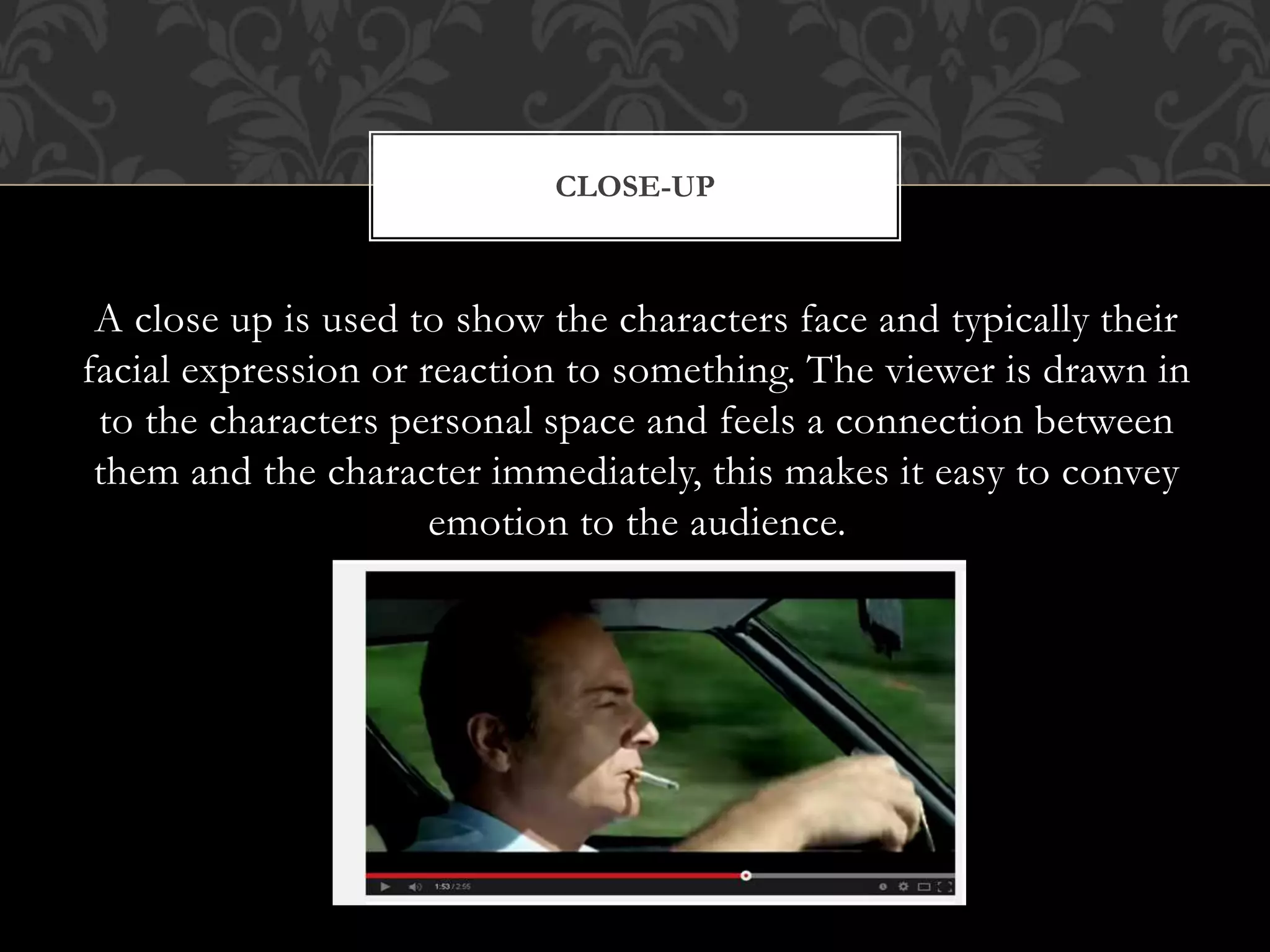
A close up is used to show the characters face and typically their
facial expression or reaction to something. The viewer is drawn in
to the characters personal space and feels a connection between
them and the character immediately, this makes it easy to convey
emotion to the audience.
CLOSE-UP
MEDIUM SHOT
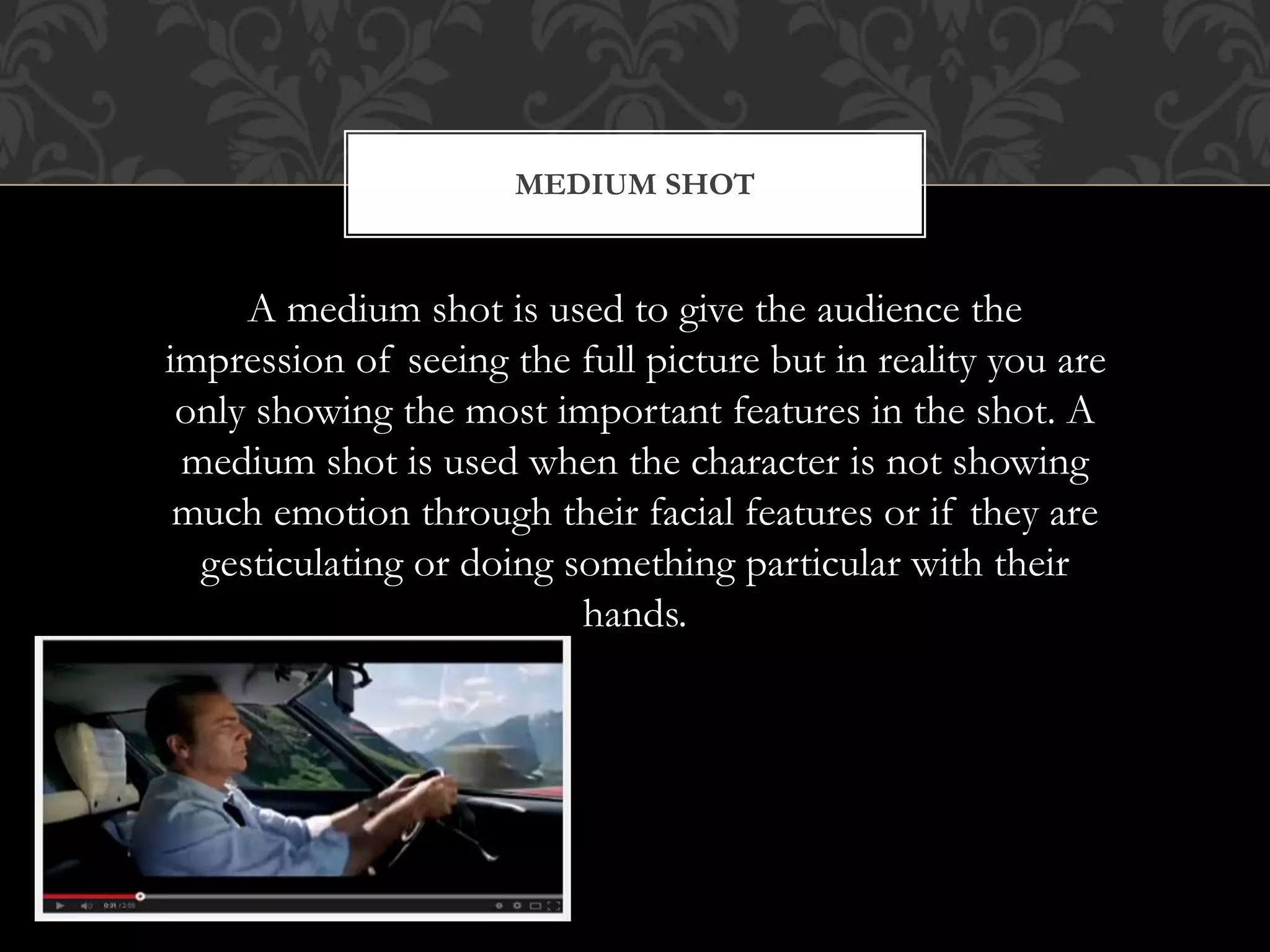
A medium shot is used to give the audience the
impression of seeing the full picture but in reality you are
only showing the most important features in the shot. A
medium shot is used when the character is not showing
much emotion through their facial features or if they are
gesticulating or doing something particular with their
hands.
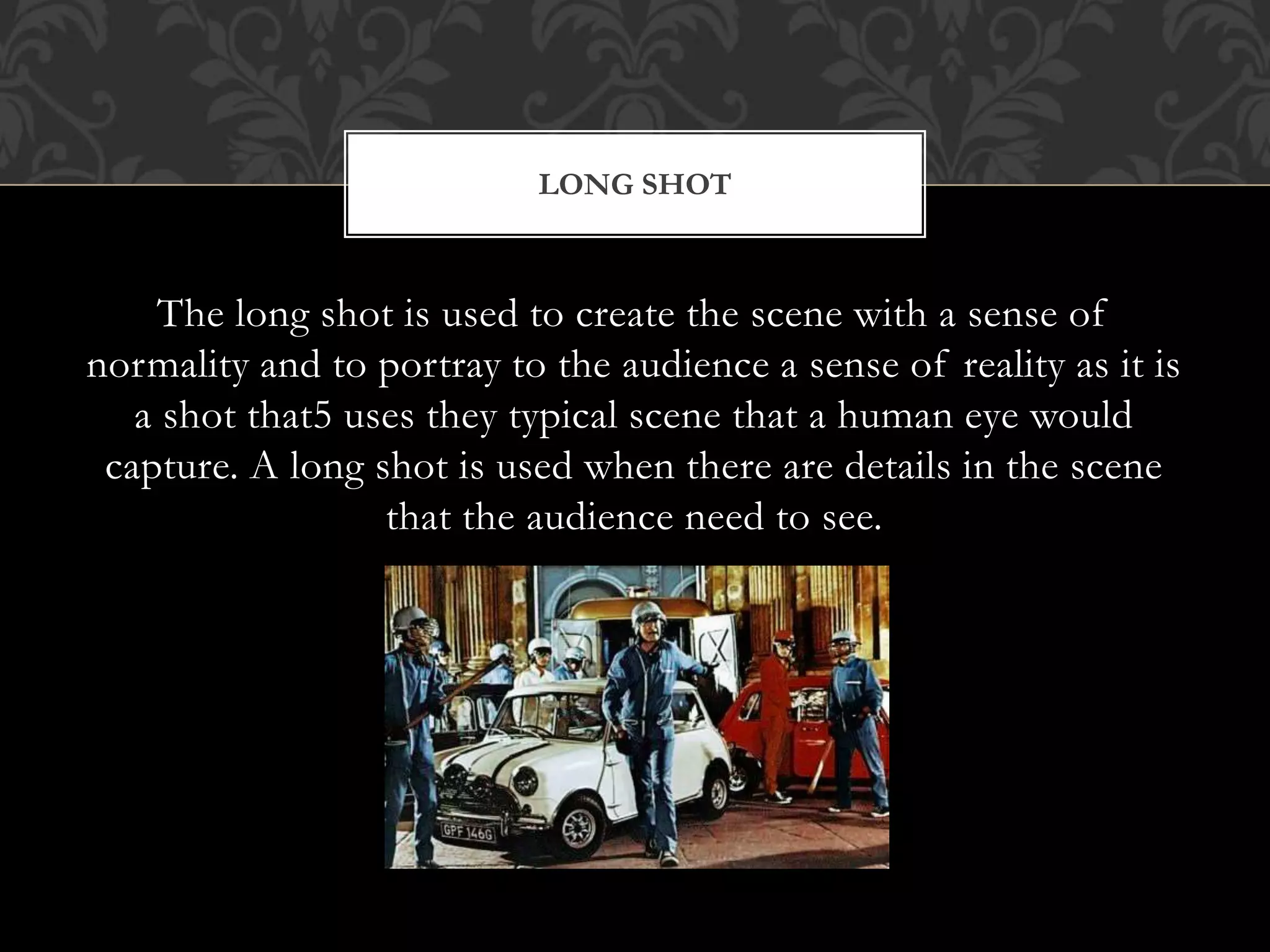
The long shot is used to create the scene with a sense of
normality and to portray to the audience a sense of reality as it is
a shot that5 uses they typical scene that a human eye would
capture. A long shot is used when there are details in the scene
that the audience need to see.
LONG SHOT
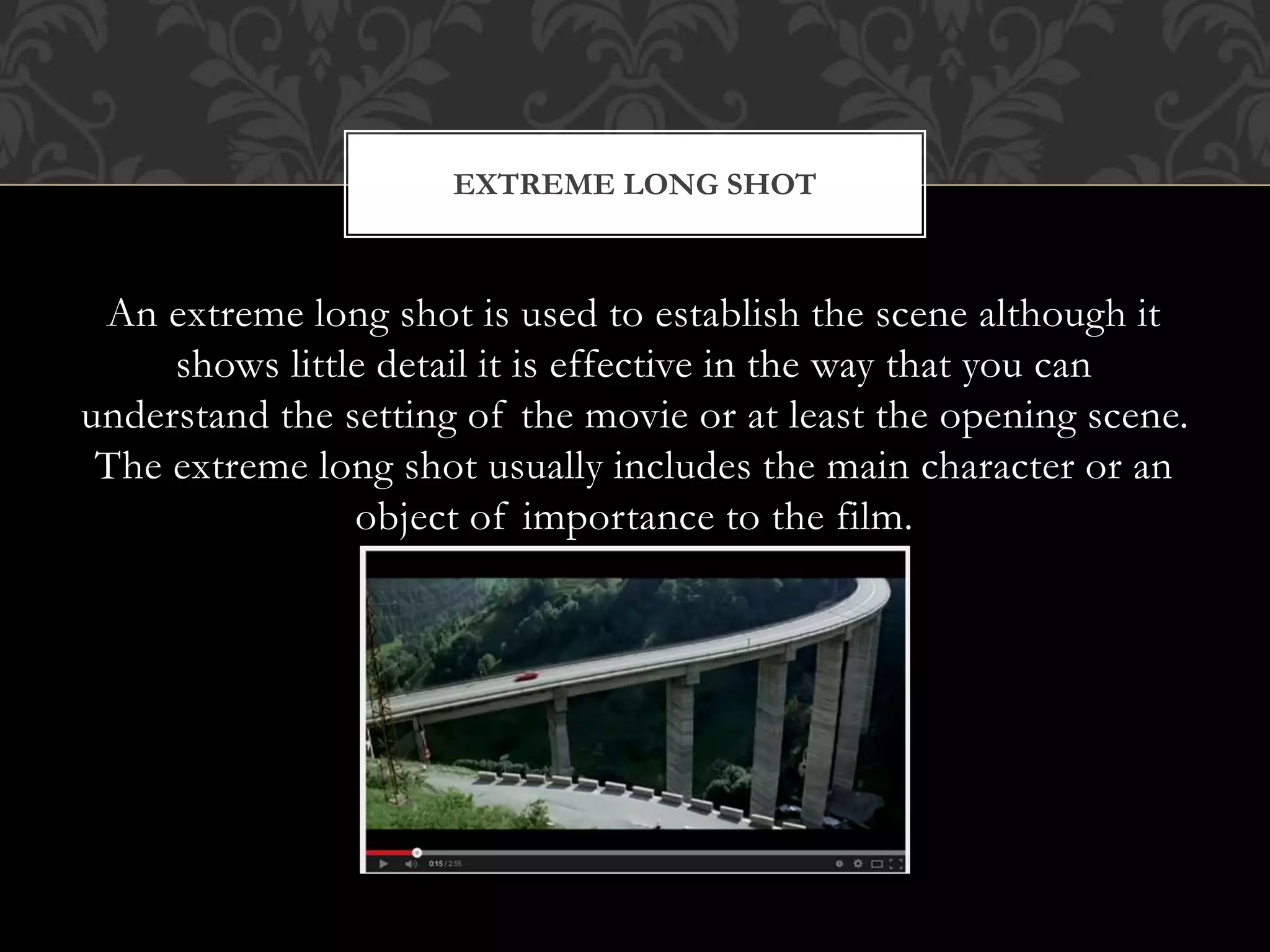
An extreme long shot is used to establish the scene although it
shows little detail it is effective in the way that you can
understand the setting of the movie or at least the opening scene.
The extreme long shot usually includes the main character or an
object of importance to the film.
EXTREME LONG SHOT
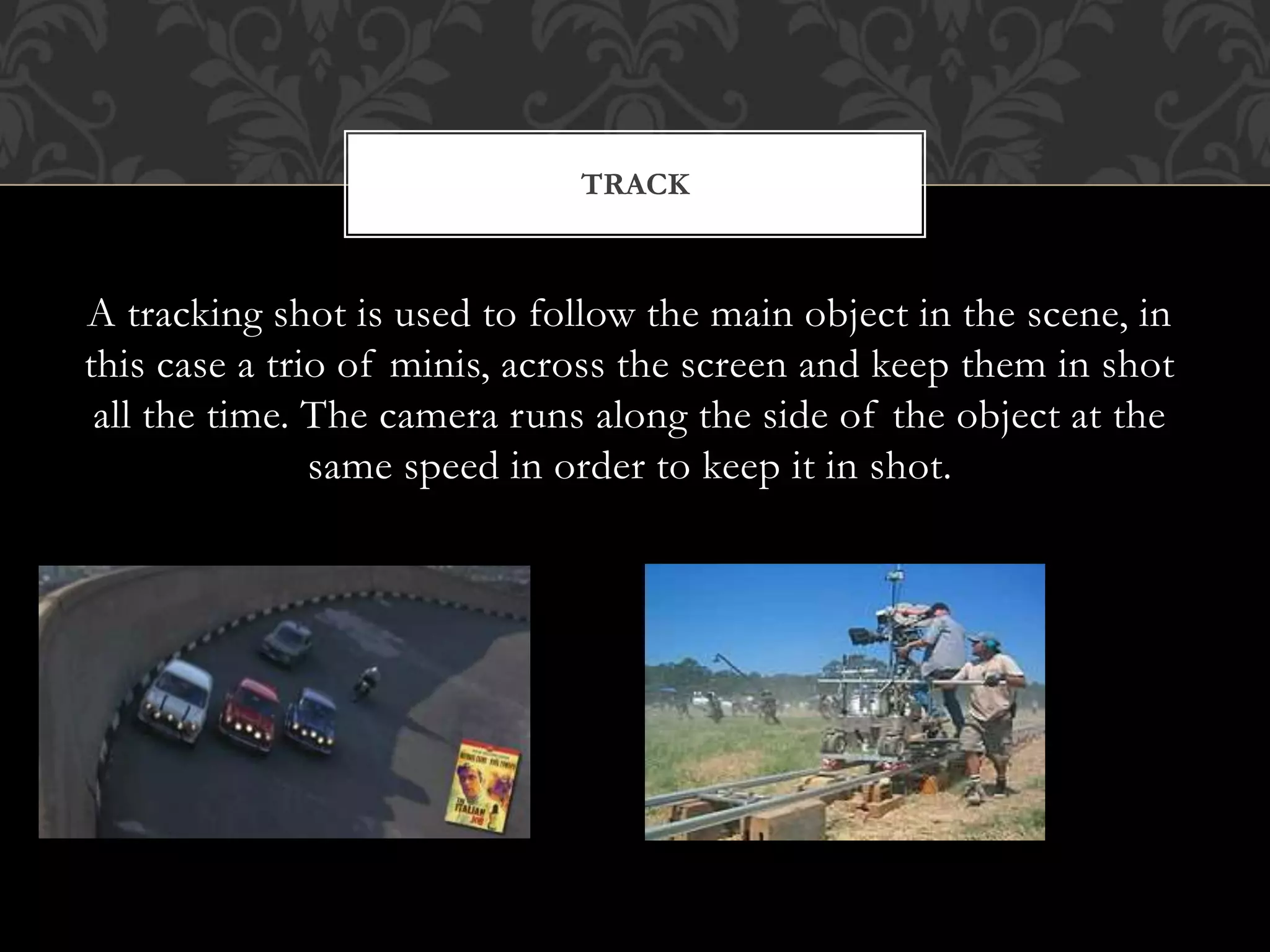
A tracking shot is used to follow the main object in the scene, in
this case a trio of minis, across the screen and keep them in shot
all the time. The camera runs along the side of the object at the
same speed in order to keep it in shot.
TRACK
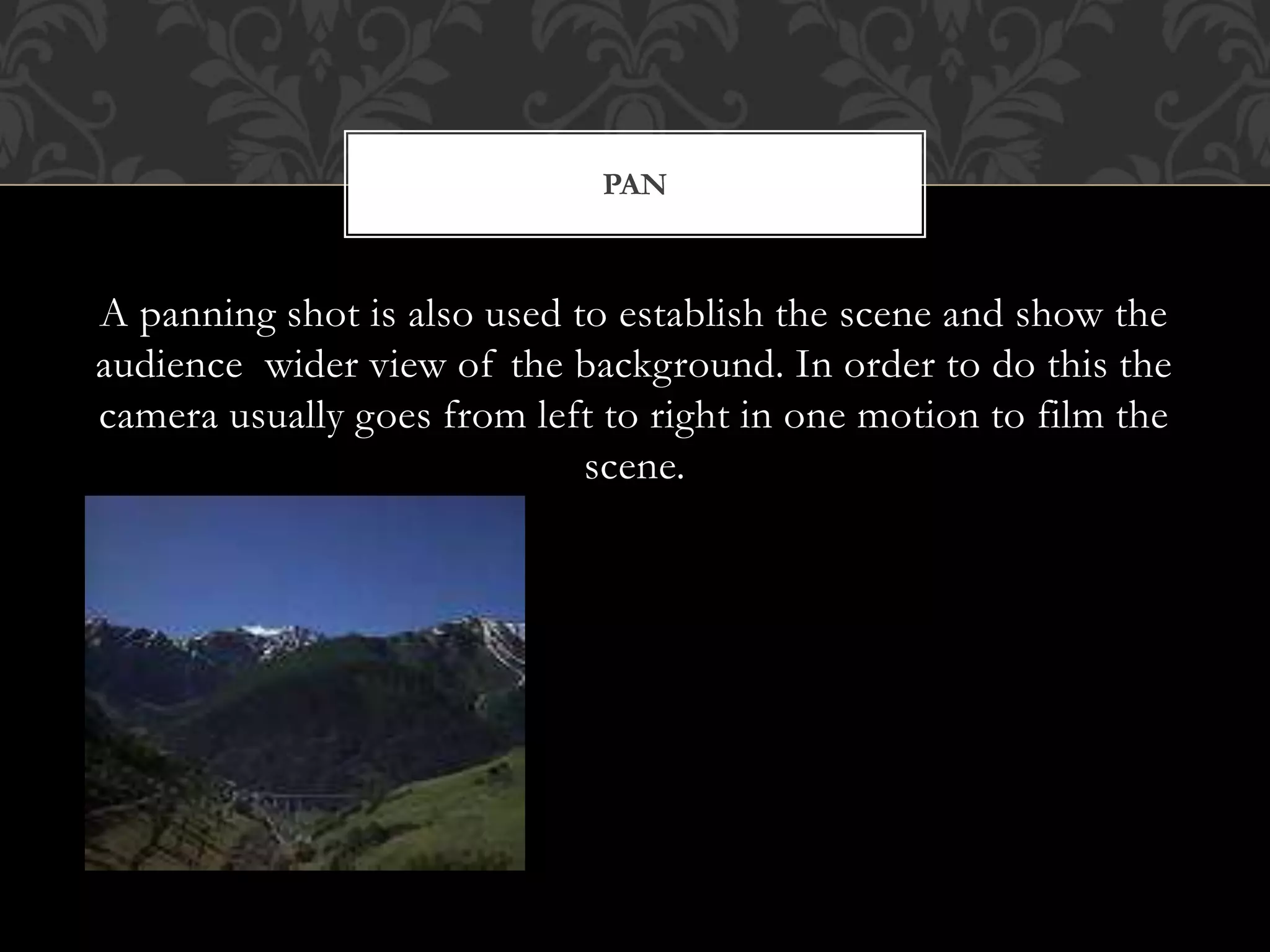
A panning shot is also used to establish the scene and show the
audience wider view of the background. In order to do this the
camera usually goes from left to right in one motion to film the
scene.
PAN
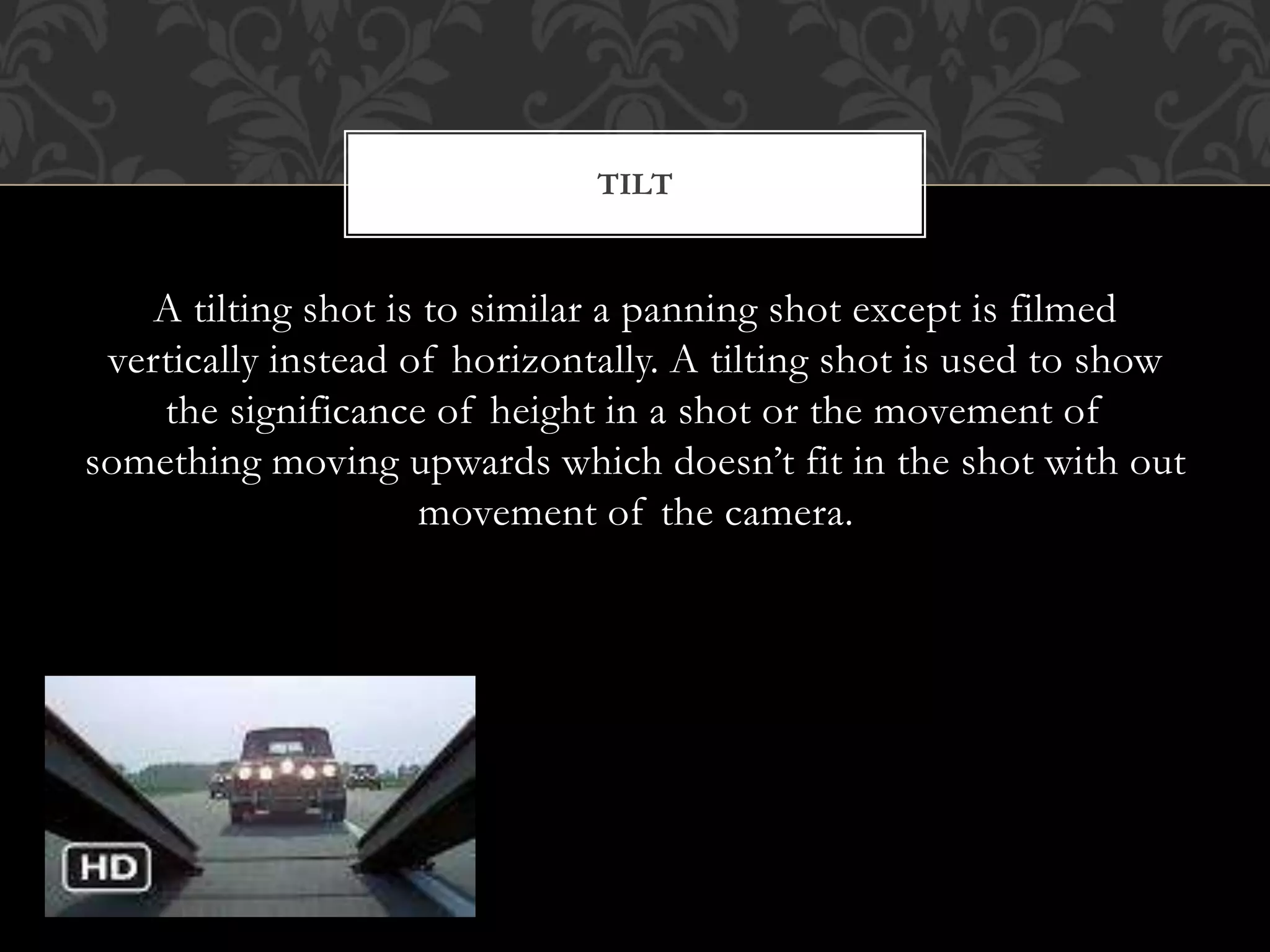
A tilting shot is to similar a panning shot except is filmed
vertically instead of horizontally. A tilting shot is used to show
the significance of height in a shot or the movement of
something moving upwards which doesn’t fit in the shot with out
movement of the camera.
TILT
The zooming motion gives the audience the effect of moving
closer or further away from the character on screen. It doesn’t
usually require the camera to move in anyway but it does put
emphasis on what is on screen if it is moving in to zoom closer.
ZOOM
A cut is a basic form of film transition and is used to move from
one scene to the next. A cut can be used when you need the next
scene to be quickly introduced or if there is no suspense for the
next scene it wont be delayed any longer.
CUT
Pace is created during the editing of the film. It is used to speed
up or slow down the scene or a specific part of the film. The
pace can alter how the audience views the film or scene on its
own. A faster pace can suggest some kind of urgency or
negligence for a task while a slow pace could suggest a disinterest
in a task or an importance at a certain time.
PACE
Performance are the things the actor does that contribute to the
scene for example, facial expressions, body language, deliverance
of lines and interaction with other actors on screen. A
performance allows the audience to sympathise with the main
character if that is the purpose of the film or the actor can
portray whatever the director wishes the character to be.
PERFORMANCE
Diegetic is the “live sound” in the scene. This
means its sound that the audience can hear as
well as what the actor or actress can hear and the
people filming the scene can hear also, for
example this is speech or the sound of a car
driving past that is included in the film.
DIEGETIC
Non Diegetic is sound that is included later in the
editing process. The actors will not be able to
hear this while filming nor will the people filming
at the current time. The sound will be added by
the editors at the request of the director and is
often to increase the effect of a sound or to add
a certain sound effect that would benefit the
scene.
NON DIEGETIC
Mise-en-scene is everything that is in the shot and on screen this
can include, props, actors, make-up, costume, sound, etc. These
things all have an affect on the audience and can alter
interpretations from the audience. If an actor is covered in red
make-up made to look like blood and is wearing dark coloured
clothes they are made to look sinister and will have a negative
influence upon the audience who will take a disliking to the
character.
MISE-EN-SCENE

Camera shots

  • 1.
  • 2.
    Extreme close-ups createa feeling of intimacy for the audience and can be used to point out specific features of a character. They can be used to convey feelings or emotions they are also very intense so aren't used repeatedly in a scene or in a film in general. This type of shot can portray intensity in particular and is good in films that are part of the horror genre. EXTREME CLOSE-UP
  • 3.
    A close upis used to show the characters face and typically their facial expression or reaction to something. The viewer is drawn in to the characters personal space and feels a connection between them and the character immediately, this makes it easy to convey emotion to the audience. CLOSE-UP
  • 4.
    MEDIUM SHOT A mediumshot is used to give the audience the impression of seeing the full picture but in reality you are only showing the most important features in the shot. A medium shot is used when the character is not showing much emotion through their facial features or if they are gesticulating or doing something particular with their hands.
  • 5.
    The long shotis used to create the scene with a sense of normality and to portray to the audience a sense of reality as it is a shot that5 uses they typical scene that a human eye would capture. A long shot is used when there are details in the scene that the audience need to see. LONG SHOT
  • 6.
    An extreme longshot is used to establish the scene although it shows little detail it is effective in the way that you can understand the setting of the movie or at least the opening scene. The extreme long shot usually includes the main character or an object of importance to the film. EXTREME LONG SHOT
  • 7.
    A tracking shotis used to follow the main object in the scene, in this case a trio of minis, across the screen and keep them in shot all the time. The camera runs along the side of the object at the same speed in order to keep it in shot. TRACK
  • 8.
    A panning shotis also used to establish the scene and show the audience wider view of the background. In order to do this the camera usually goes from left to right in one motion to film the scene. PAN
  • 9.
    A tilting shotis to similar a panning shot except is filmed vertically instead of horizontally. A tilting shot is used to show the significance of height in a shot or the movement of something moving upwards which doesn’t fit in the shot with out movement of the camera. TILT
  • 10.
    The zooming motiongives the audience the effect of moving closer or further away from the character on screen. It doesn’t usually require the camera to move in anyway but it does put emphasis on what is on screen if it is moving in to zoom closer. ZOOM
  • 11.
    A cut isa basic form of film transition and is used to move from one scene to the next. A cut can be used when you need the next scene to be quickly introduced or if there is no suspense for the next scene it wont be delayed any longer. CUT
  • 12.
    Pace is createdduring the editing of the film. It is used to speed up or slow down the scene or a specific part of the film. The pace can alter how the audience views the film or scene on its own. A faster pace can suggest some kind of urgency or negligence for a task while a slow pace could suggest a disinterest in a task or an importance at a certain time. PACE
  • 13.
    Performance are thethings the actor does that contribute to the scene for example, facial expressions, body language, deliverance of lines and interaction with other actors on screen. A performance allows the audience to sympathise with the main character if that is the purpose of the film or the actor can portray whatever the director wishes the character to be. PERFORMANCE
  • 14.
    Diegetic is the“live sound” in the scene. This means its sound that the audience can hear as well as what the actor or actress can hear and the people filming the scene can hear also, for example this is speech or the sound of a car driving past that is included in the film. DIEGETIC
  • 15.
    Non Diegetic issound that is included later in the editing process. The actors will not be able to hear this while filming nor will the people filming at the current time. The sound will be added by the editors at the request of the director and is often to increase the effect of a sound or to add a certain sound effect that would benefit the scene. NON DIEGETIC
  • 16.
    Mise-en-scene is everythingthat is in the shot and on screen this can include, props, actors, make-up, costume, sound, etc. These things all have an affect on the audience and can alter interpretations from the audience. If an actor is covered in red make-up made to look like blood and is wearing dark coloured clothes they are made to look sinister and will have a negative influence upon the audience who will take a disliking to the character. MISE-EN-SCENE