CamSAMC 
Jordan, Laurel, Emma & Bridget
CAMERA SHOTS 
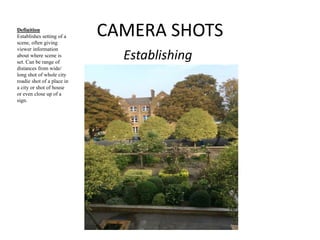
Establishing 
Definition 
Establishes setting of a 
scene, often giving 
viewer information 
about where scene is 
set. Can be range of 
distances from wide/ 
long shot of whole city 
roadie shot of a place in 
a city or shot of house 
or even close up of a 
sign.
CAMERA SHOTS 
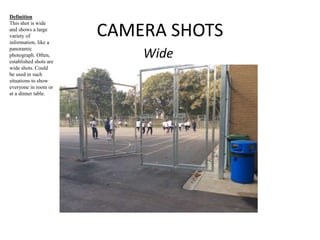
Wide 
Definition 
This shot is wide 
and shows a large 
variety of 
information, like a 
panoramic 
photograph. Often, 
established shots are 
wide shots. Could 
be used in such 
situations to show 
everyone in room or 
at a dinner table.
CAMERA SHOTS 
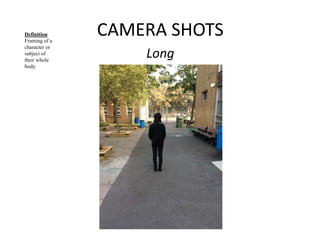
Long 
Definition 
Framing of a 
character or 
subject of 
their whole 
body.
CAMERA SHOTS 
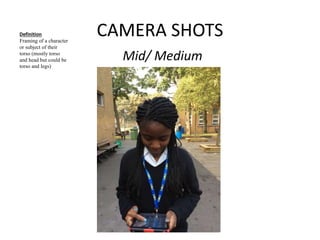
Mid/ Medium 
Definition 
Framing of a character 
or subject of their 
torso (mostly torso 
and head but could be 
torso and legs)
CAMERA SHOTS 
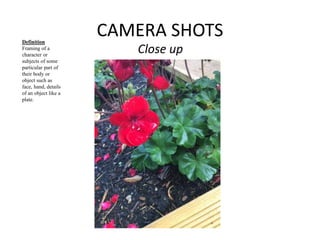
Close up 
Definition 
Framing of a 
character or 
subjects of some 
particular part of 
their body or 
object such as 
face, hand, details 
of an object like a 
plate.
CAMERA SHOTS 
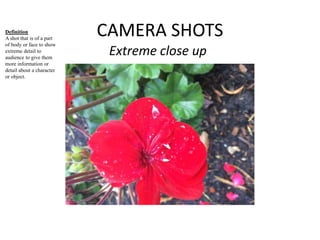
Extreme close up 
Definition 
A shot that is of a part 
of body or face to show 
extreme detail to 
audience to give them 
more information or 
detail about a character 
or object.
CAMERA SHOTS 
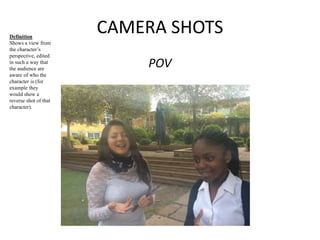
POV 
Definition 
Shows a view from 
the character’s 
perspective, edited 
in such a way that 
the audience are 
aware of who the 
character is (for 
example they 
would show a 
reverse shot of that 
character).
CAMERA SHOTS 
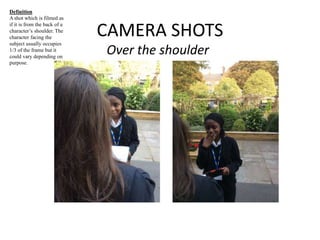
Over the shoulder 
Definition 
A shot which is filmed as 
if it is from the back of a 
character’s shoulder. The 
character facing the 
subject usually occupies 
1/3 of the frame but it 
could vary depending on 
purpose.
CAMERA SHOTS 
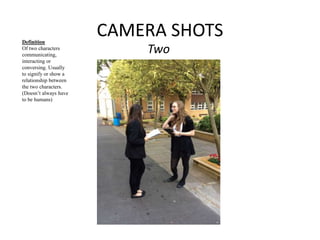
Two 
Definition 
Of two characters 
communicating, 
interacting or 
conversing. Usually 
to signify or show a 
relationship between 
the two characters. 
(Doesn’t always have 
to be humans)
CAMERA SHOTS 
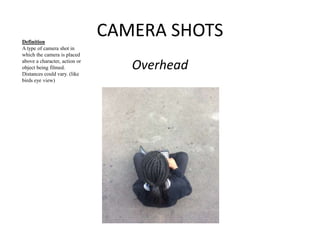
Overhead 
Definition 
A type of camera shot in 
which the camera is placed 
above a character, action or 
object being filmed. 
Distances could vary. (like 
birds eye view)
CAMERA ANGLES 
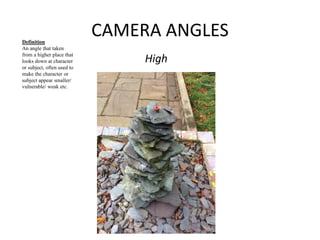
High 
Definition 
An angle that taken 
from a higher place that 
looks down at character 
or subject, often used to 
make the character or 
subject appear smaller/ 
vulnerable/ weak etc.
CAMERA ANGLES 
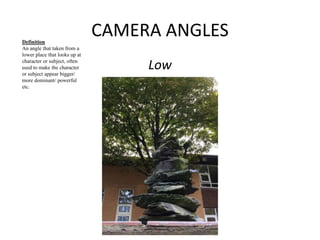
Low 
Definition 
An angle that taken from a 
lower place that looks up at 
character or subject, often 
used to make the character 
or subject appear bigger/ 
more dominant/ powerful 
etc.
CAMERA ANGLES 
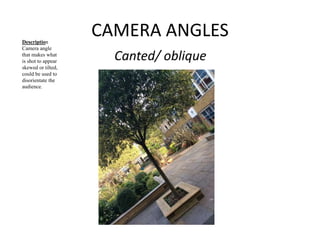
Canted/ oblique 
Description 
Camera angle 
that makes what 
is shot to appear 
skewed or tilted, 
could be used to 
disorientate the 
audience.
CAMERA MOVEMENT 
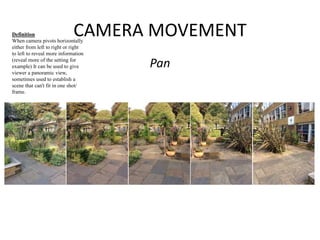
Pan 
Definition 
When camera pivots horizontally 
either from left to right or right 
to left to reveal more information 
(reveal more of the setting for 
example) It can be used to give 
viewer a panoramic view, 
sometimes used to establish a 
scene that can't fit in one shot/ 
frame.
CAMERA MOVEMENT 
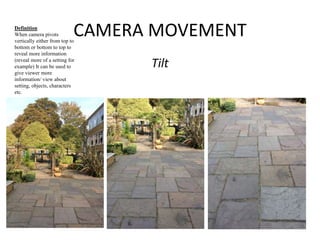
Tilt 
Definition 
When camera pivots 
vertically either from top to 
bottom or bottom to top to 
reveal more information 
(reveal more of a setting for 
example) It can be used to 
give viewer more 
information/ view about 
setting, objects, characters 
etc.
CAMERA MOVEMENT 
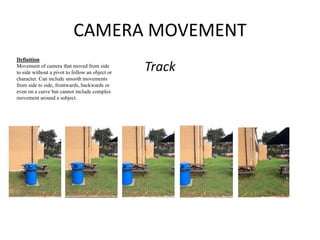
Track 
Definition 
Movement of camera that moved from side 
to side without a pivot to follow an object or 
character. Can include smooth movements 
from side to side, frontwards, backwards or 
even on a curve but cannot include complex 
movement around a subject.
CAMERA MOVEMENT 
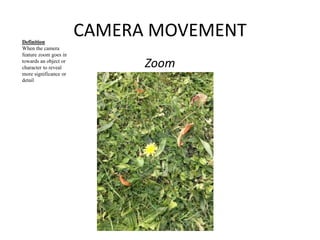
Zoom 
Definition 
When the camera 
feature zoom goes in 
towards an object or 
character to reveal 
more significance or 
detail
CAMERA MOVEMENT 
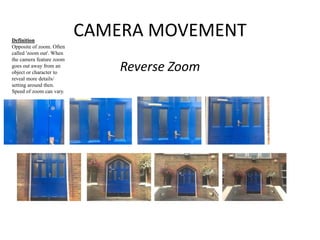
Reverse Zoom 
Definition 
Opposite of zoom. Often 
called 'zoom out'. When 
the camera feature zoom 
goes out away from an 
object or character to 
reveal more details/ 
setting around then. 
Speed of zoom can vary.
CAMERA MOVEMENT 
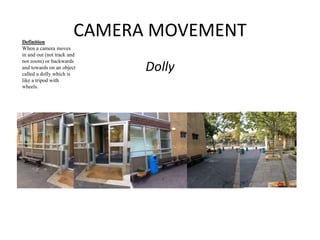
Dolly 
Definition 
When a camera moves 
in and out (not track and 
not zoom) or backwards 
and towards on an object 
called a dolly which is 
like a tripod with 
wheels.
COMPOSITION 
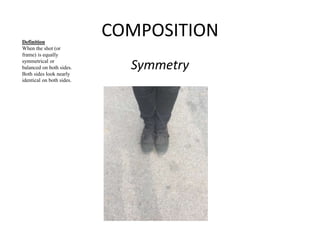
Symmetry 
Definition 
When the shot (or 
frame) is equally 
symmetrical or 
balanced on both sides. 
Both sides look nearly 
identical on both sides.
COMPOSITION 
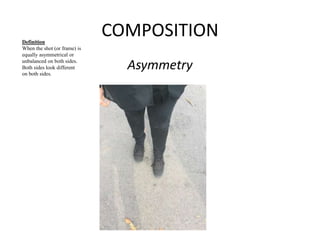
Asymmetry 
Definition 
When the shot (or frame) is 
equally asymmetrical or 
unbalanced on both sides. 
Both sides look different 
on both sides.
COMPOSITION 
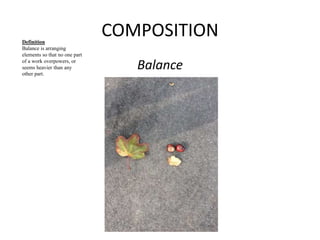
Balance 
Definition 
Balance is arranging 
elements so that no one part 
of a work overpowers, or 
seems heavier than any 
other part.
COMPOSITION 
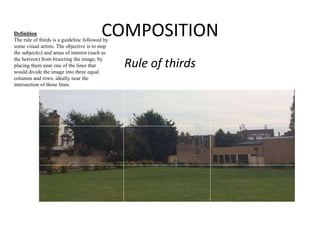
Rule of thirds 
Definition 
The rule of thirds is a guideline followed by 
some visual artists. The objective is to stop 
the subject(s) and areas of interest (such as 
the horizon) from bisecting the image, by 
placing them near one of the lines that 
would divide the image into three equal 
columns and rows, ideally near the 
intersection of those lines.
COMPOSITION 
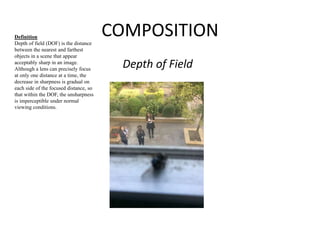
Depth of Field 
Definition 
Depth of field (DOF) is the distance 
between the nearest and farthest 
objects in a scene that appear 
acceptably sharp in an image. 
Although a lens can precisely focus 
at only one distance at a time, the 
decrease in sharpness is gradual on 
each side of the focused distance, so 
that within the DOF, the unsharpness 
is imperceptible under normal 
viewing conditions.
COMPOSITION 
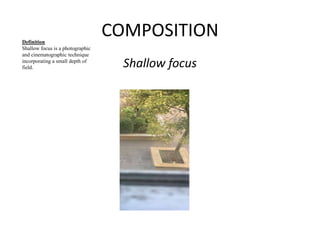
Shallow focus 
Definition 
Shallow focus is a photographic 
and cinematographic technique 
incorporating a small depth of 
field.
COMPOSITION 
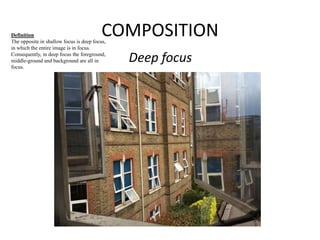
Deep focus 
Definition 
The opposite in shallow focus is deep focus, 
in which the entire image is in focus. 
Consequently, in deep focus the foreground, 
middle-ground and background are all in 
focus.
COMPOSISTION 
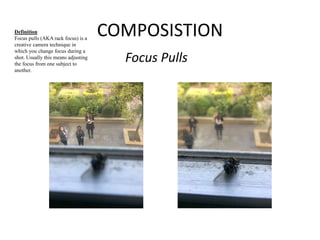
Focus Pulls 
Definition 
Focus pulls (AKA rack focus) is a 
creative camera technique in 
which you change focus during a 
shot. Usually this means adjusting 
the focus from one subject to 
another.

Cam samc AS Media Studies Group Project

  • 1.
  • 2.
    CAMERA SHOTS Establishing Definition Establishes setting of a scene, often giving viewer information about where scene is set. Can be range of distances from wide/ long shot of whole city roadie shot of a place in a city or shot of house or even close up of a sign.
  • 3.
    CAMERA SHOTS Wide Definition This shot is wide and shows a large variety of information, like a panoramic photograph. Often, established shots are wide shots. Could be used in such situations to show everyone in room or at a dinner table.
  • 4.
    CAMERA SHOTS Long Definition Framing of a character or subject of their whole body.
  • 5.
    CAMERA SHOTS Mid/Medium Definition Framing of a character or subject of their torso (mostly torso and head but could be torso and legs)
  • 6.
    CAMERA SHOTS Closeup Definition Framing of a character or subjects of some particular part of their body or object such as face, hand, details of an object like a plate.
  • 7.
    CAMERA SHOTS Extremeclose up Definition A shot that is of a part of body or face to show extreme detail to audience to give them more information or detail about a character or object.
  • 8.
    CAMERA SHOTS POV Definition Shows a view from the character’s perspective, edited in such a way that the audience are aware of who the character is (for example they would show a reverse shot of that character).
  • 9.
    CAMERA SHOTS Overthe shoulder Definition A shot which is filmed as if it is from the back of a character’s shoulder. The character facing the subject usually occupies 1/3 of the frame but it could vary depending on purpose.
  • 10.
    CAMERA SHOTS Two Definition Of two characters communicating, interacting or conversing. Usually to signify or show a relationship between the two characters. (Doesn’t always have to be humans)
  • 11.
    CAMERA SHOTS Overhead Definition A type of camera shot in which the camera is placed above a character, action or object being filmed. Distances could vary. (like birds eye view)
  • 12.
    CAMERA ANGLES High Definition An angle that taken from a higher place that looks down at character or subject, often used to make the character or subject appear smaller/ vulnerable/ weak etc.
  • 13.
    CAMERA ANGLES Low Definition An angle that taken from a lower place that looks up at character or subject, often used to make the character or subject appear bigger/ more dominant/ powerful etc.
  • 14.
    CAMERA ANGLES Canted/oblique Description Camera angle that makes what is shot to appear skewed or tilted, could be used to disorientate the audience.
  • 15.
    CAMERA MOVEMENT Pan Definition When camera pivots horizontally either from left to right or right to left to reveal more information (reveal more of the setting for example) It can be used to give viewer a panoramic view, sometimes used to establish a scene that can't fit in one shot/ frame.
  • 16.
    CAMERA MOVEMENT Tilt Definition When camera pivots vertically either from top to bottom or bottom to top to reveal more information (reveal more of a setting for example) It can be used to give viewer more information/ view about setting, objects, characters etc.
  • 17.
    CAMERA MOVEMENT Track Definition Movement of camera that moved from side to side without a pivot to follow an object or character. Can include smooth movements from side to side, frontwards, backwards or even on a curve but cannot include complex movement around a subject.
  • 18.
    CAMERA MOVEMENT Zoom Definition When the camera feature zoom goes in towards an object or character to reveal more significance or detail
  • 19.
    CAMERA MOVEMENT ReverseZoom Definition Opposite of zoom. Often called 'zoom out'. When the camera feature zoom goes out away from an object or character to reveal more details/ setting around then. Speed of zoom can vary.
  • 20.
    CAMERA MOVEMENT Dolly Definition When a camera moves in and out (not track and not zoom) or backwards and towards on an object called a dolly which is like a tripod with wheels.
  • 21.
    COMPOSITION Symmetry Definition When the shot (or frame) is equally symmetrical or balanced on both sides. Both sides look nearly identical on both sides.
  • 22.
    COMPOSITION Asymmetry Definition When the shot (or frame) is equally asymmetrical or unbalanced on both sides. Both sides look different on both sides.
  • 23.
    COMPOSITION Balance Definition Balance is arranging elements so that no one part of a work overpowers, or seems heavier than any other part.
  • 24.
    COMPOSITION Rule ofthirds Definition The rule of thirds is a guideline followed by some visual artists. The objective is to stop the subject(s) and areas of interest (such as the horizon) from bisecting the image, by placing them near one of the lines that would divide the image into three equal columns and rows, ideally near the intersection of those lines.
  • 25.
    COMPOSITION Depth ofField Definition Depth of field (DOF) is the distance between the nearest and farthest objects in a scene that appear acceptably sharp in an image. Although a lens can precisely focus at only one distance at a time, the decrease in sharpness is gradual on each side of the focused distance, so that within the DOF, the unsharpness is imperceptible under normal viewing conditions.
  • 26.
    COMPOSITION Shallow focus Definition Shallow focus is a photographic and cinematographic technique incorporating a small depth of field.
  • 27.
    COMPOSITION Deep focus Definition The opposite in shallow focus is deep focus, in which the entire image is in focus. Consequently, in deep focus the foreground, middle-ground and background are all in focus.
  • 28.
    COMPOSISTION Focus Pulls Definition Focus pulls (AKA rack focus) is a creative camera technique in which you change focus during a shot. Usually this means adjusting the focus from one subject to another.