CAMERA
Composition
How much can you remember so far?
What is the difference between a track and a pan?
When does a close up become an extreme close up?
When would you use a long shot?
When would you use a mid shot?
What are the connotations associated with high and low
angles?
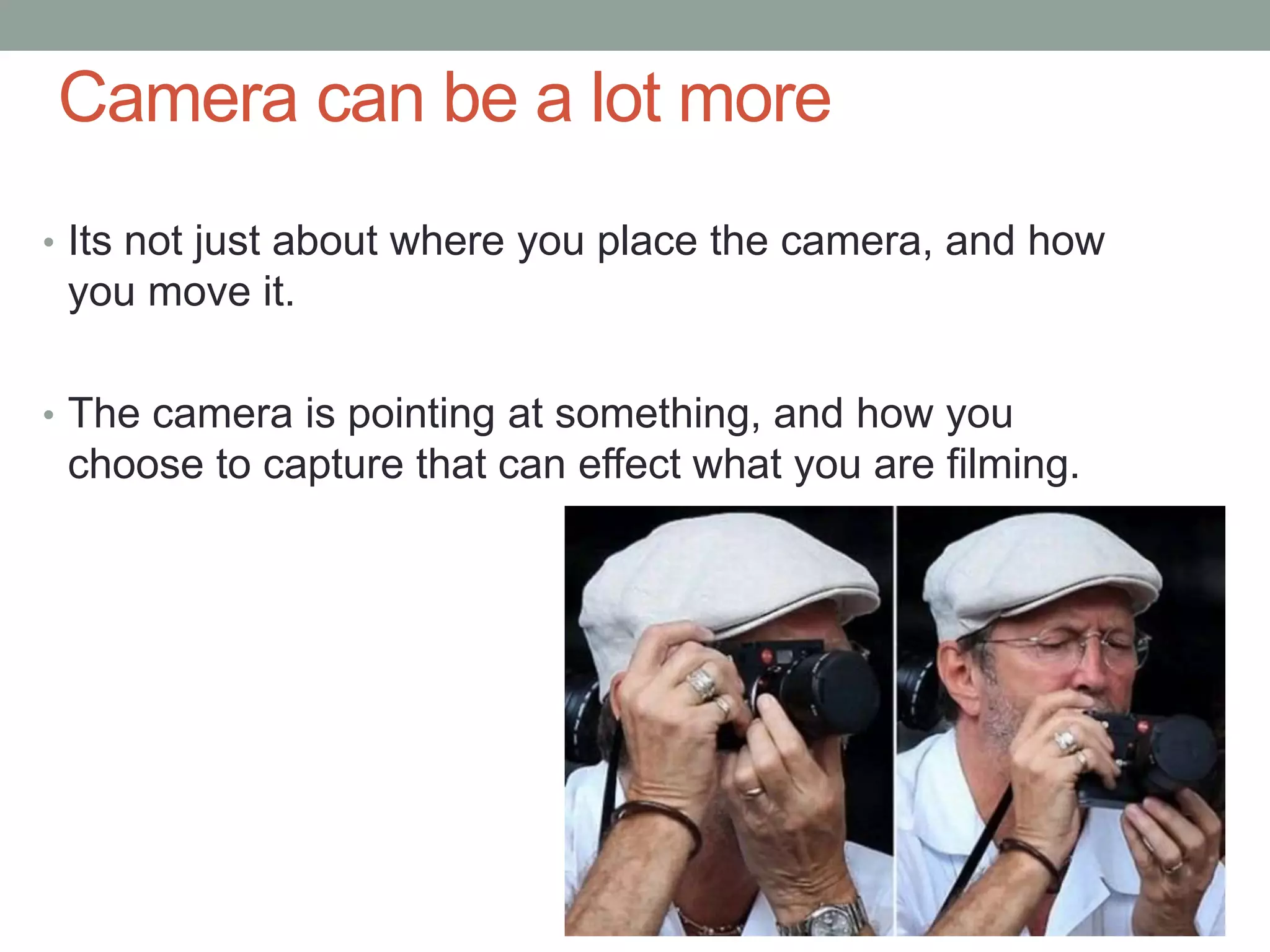
Camera can be a lot more
• Its not just about where you place the camera, and how
you move it.
• The camera is pointing at something, and how you
choose to capture that can effect what you are filming.
Example
• Take your phone out and ask the person next to you to
take a picture of you!
Okay now looking at the picture how many of these apply
to you!
• You’re in focus
• You are in the centre of the picture
• You are in the foreground of the picture
Composition
You can do a lot more with the lens, but also a lot more with
how you position the object within the frame.
Composition is arrangement and structure, and the thought
behind how something has been laid out, arranged and
structured within the frame
It can be separated into 4 sections:
1. Symmetry & asymmetry
2. Rules of thirds
3. Depth of field
4. Fore and back ground
Symmetry
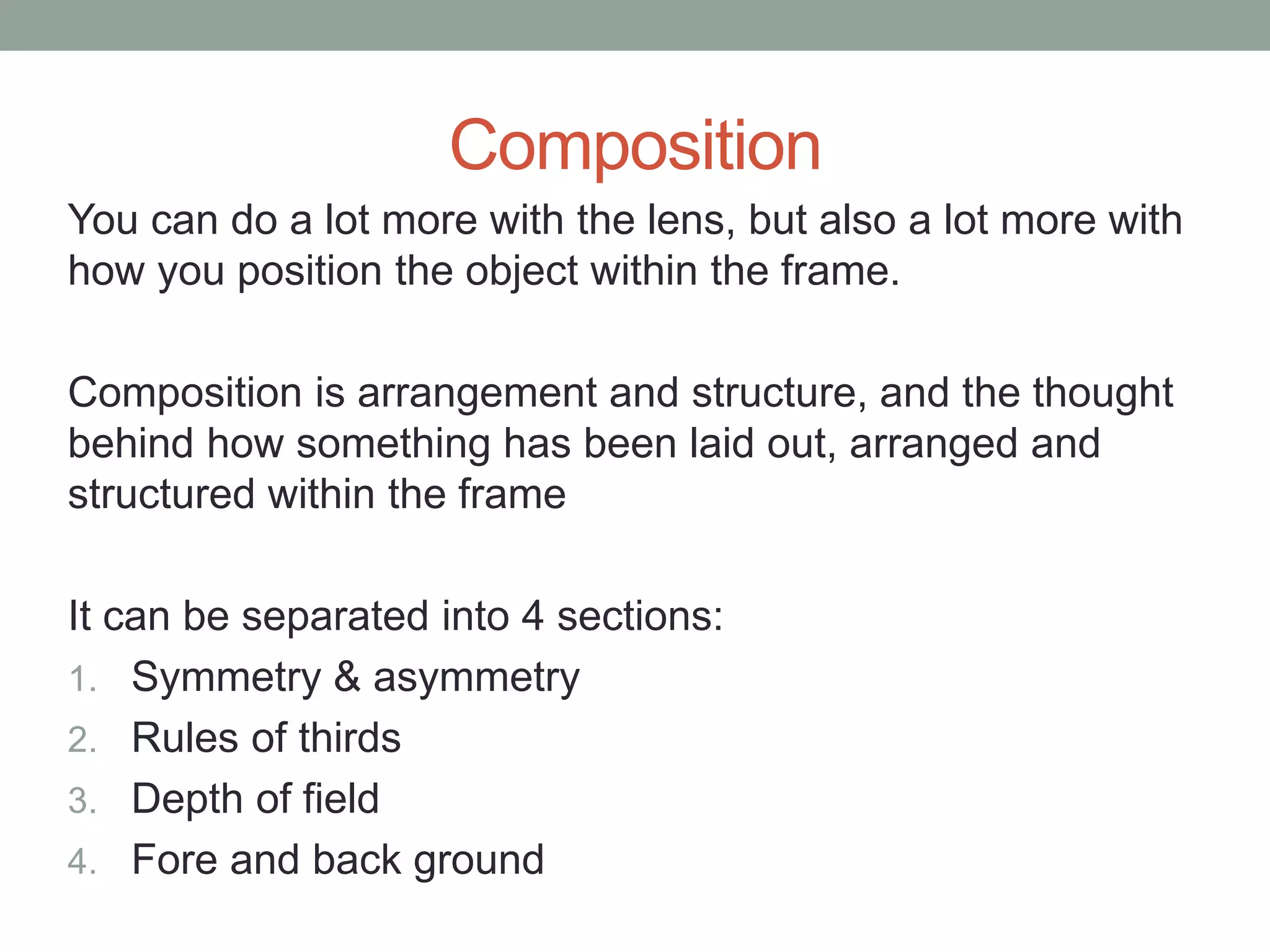
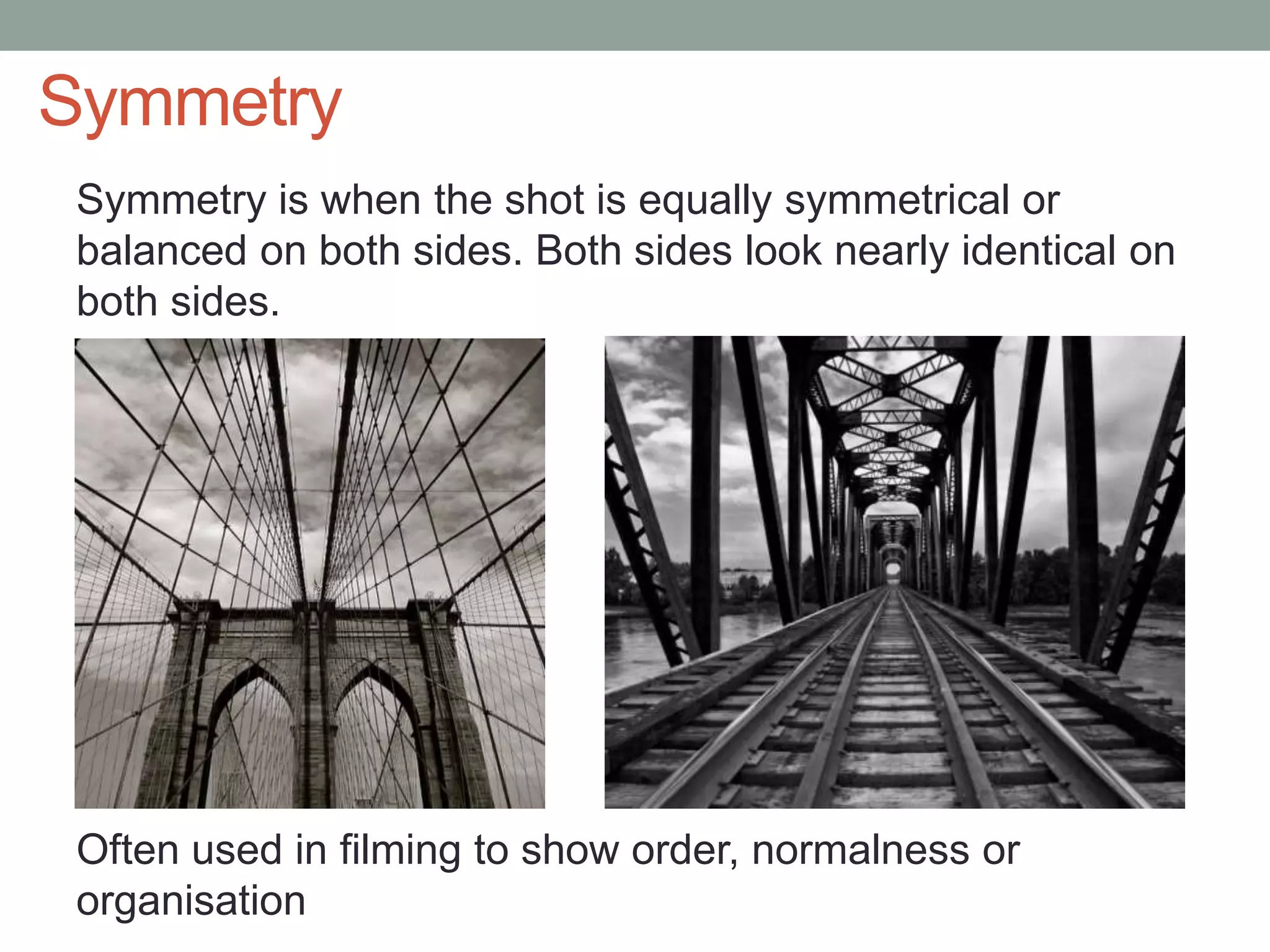
Symmetry is when the shot is equally symmetrical or
balanced on both sides. Both sides look nearly identical on
both sides.
Often used in filming to show order, normalness or
organisation
A style of Wes Andersen
Example:
https://www.youtub
e.com/watch?v=tFI
7_bH7E-M
Asymmetry
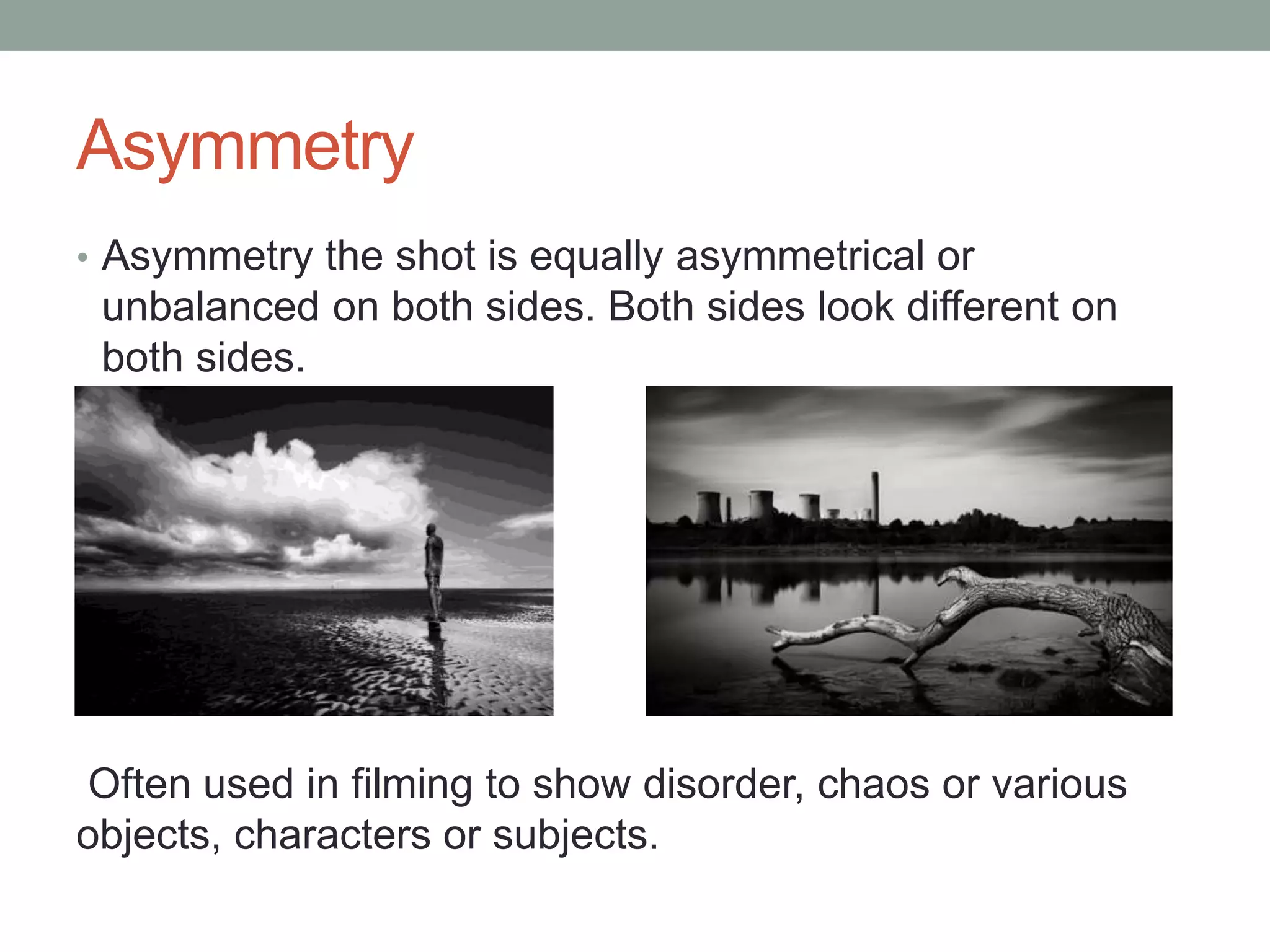
• Asymmetry the shot is equally asymmetrical or
unbalanced on both sides. Both sides look different on
both sides.
Often used in filming to show disorder, chaos or various
objects, characters or subjects.
Rules of third
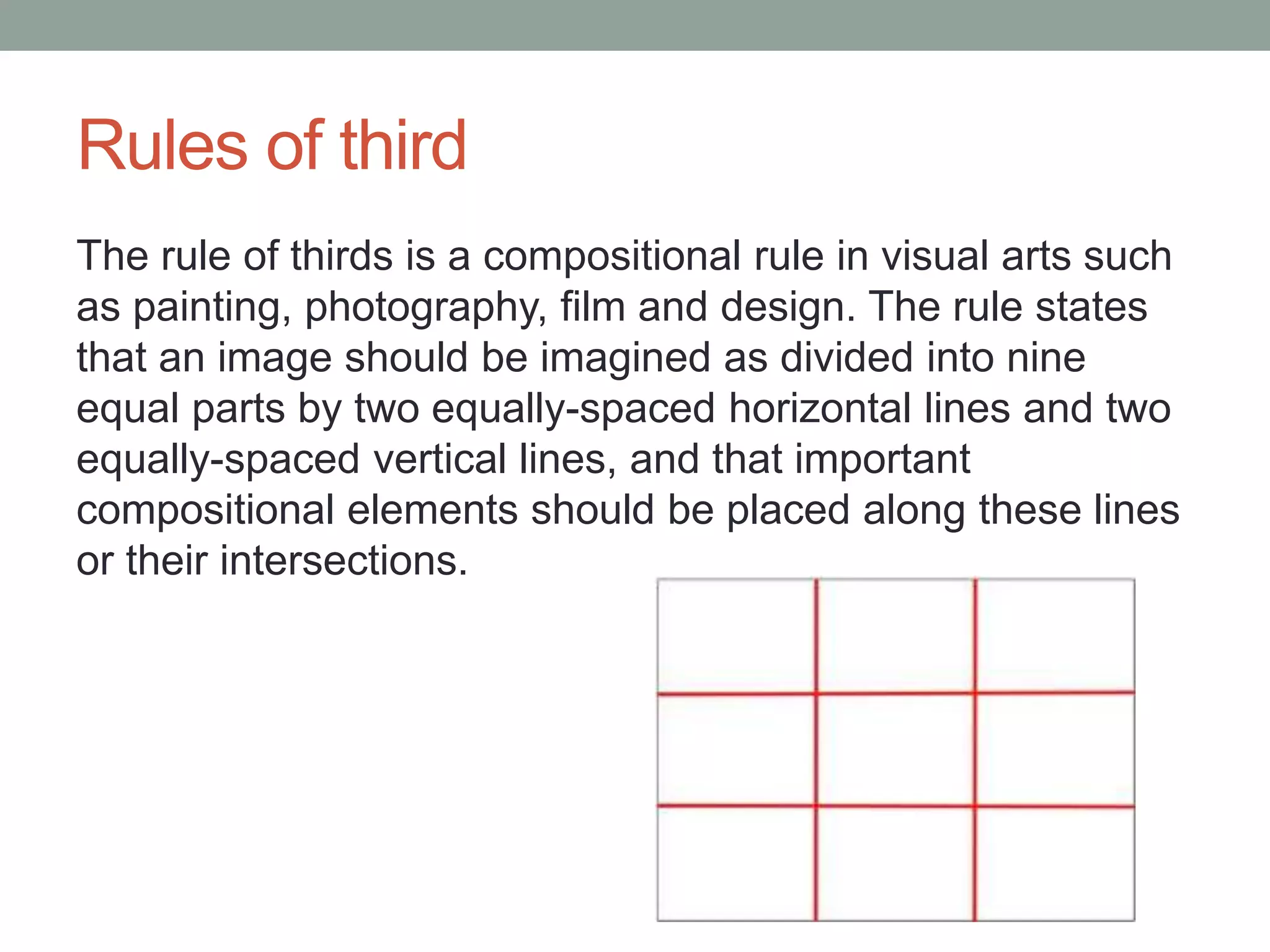
The rule of thirds is a compositional rule in visual arts such
as painting, photography, film and design. The rule states
that an image should be imagined as divided into nine
equal parts by two equally-spaced horizontal lines and two
equally-spaced vertical lines, and that important
compositional elements should be placed along these lines
or their intersections.
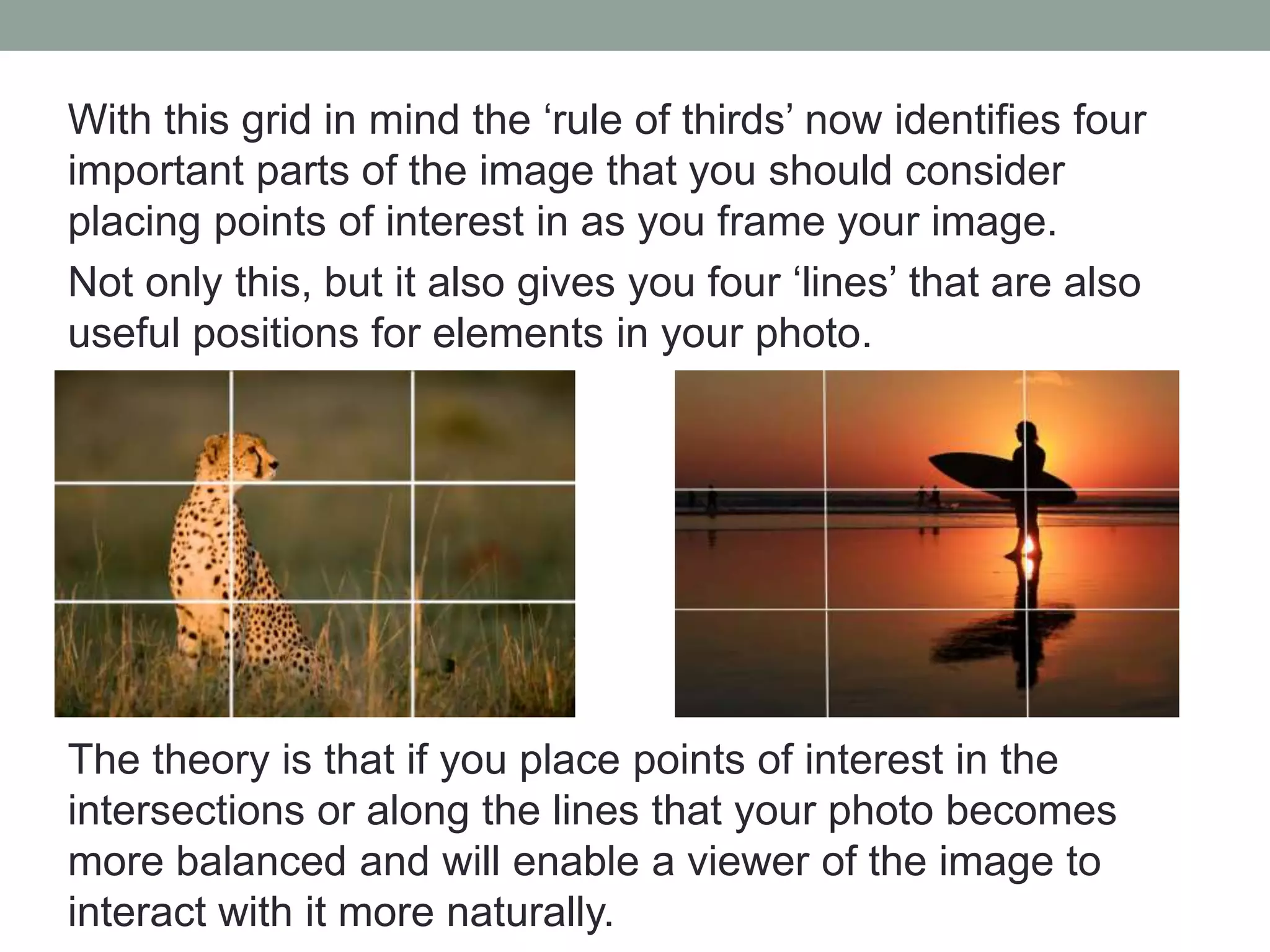
With this grid in mind the ‘rule of thirds’ now identifies four
important parts of the image that you should consider
placing points of interest in as you frame your image.
Not only this, but it also gives you four ‘lines’ that are also
useful positions for elements in your photo.
The theory is that if you place points of interest in the
intersections or along the lines that your photo becomes
more balanced and will enable a viewer of the image to
interact with it more naturally.
Here’s how it can be used in film
https://www.youtube.com/watch?v=wsI8UES59TM
Depth of field
• This is about focus, what is or isn't in focus within the
frame, and the implication this has.
What we ned to look at, or not see
• Shallow focus
a photographic and cinematographic technique
incorporating a small depth of field. In shallow focus one
plane of the image is in focus while the rest is out of focus.
Shallow focus is typically used to emphasize one part of
the image over another.
• Deep focus
The opposite of shallow focus is deep focus, in which the
entire image is in focus. Consequently, in deep focus the
foreground, middle-ground and background are all in focus.
Focus pull
Focus pull is a creative camera technique in which you
change focus during a shot. Usually this means adjusting
the focus from one subject to another. This works well with
foreground and background shots.
Foreground and background
• Thinking about where to position the subject/subjects within the
frame, close or far away from the camera lens.
Like staging a play, there are layers, and this can be used for dramatic
effect and emphasis, creating depth to the shot and scene.

Camera compostion

  • 1.
  • 2.
    How much canyou remember so far? What is the difference between a track and a pan? When does a close up become an extreme close up? When would you use a long shot? When would you use a mid shot? What are the connotations associated with high and low angles?
  • 3.
    Camera can bea lot more • Its not just about where you place the camera, and how you move it. • The camera is pointing at something, and how you choose to capture that can effect what you are filming.
  • 4.
    Example • Take yourphone out and ask the person next to you to take a picture of you! Okay now looking at the picture how many of these apply to you! • You’re in focus • You are in the centre of the picture • You are in the foreground of the picture
  • 5.
    Composition You can doa lot more with the lens, but also a lot more with how you position the object within the frame. Composition is arrangement and structure, and the thought behind how something has been laid out, arranged and structured within the frame It can be separated into 4 sections: 1. Symmetry & asymmetry 2. Rules of thirds 3. Depth of field 4. Fore and back ground
  • 6.
    Symmetry Symmetry is whenthe shot is equally symmetrical or balanced on both sides. Both sides look nearly identical on both sides. Often used in filming to show order, normalness or organisation
  • 7.
    A style ofWes Andersen Example: https://www.youtub e.com/watch?v=tFI 7_bH7E-M
  • 8.
    Asymmetry • Asymmetry theshot is equally asymmetrical or unbalanced on both sides. Both sides look different on both sides. Often used in filming to show disorder, chaos or various objects, characters or subjects.
  • 9.
    Rules of third Therule of thirds is a compositional rule in visual arts such as painting, photography, film and design. The rule states that an image should be imagined as divided into nine equal parts by two equally-spaced horizontal lines and two equally-spaced vertical lines, and that important compositional elements should be placed along these lines or their intersections.
  • 10.
    With this gridin mind the ‘rule of thirds’ now identifies four important parts of the image that you should consider placing points of interest in as you frame your image. Not only this, but it also gives you four ‘lines’ that are also useful positions for elements in your photo. The theory is that if you place points of interest in the intersections or along the lines that your photo becomes more balanced and will enable a viewer of the image to interact with it more naturally.
  • 11.
    Here’s how itcan be used in film https://www.youtube.com/watch?v=wsI8UES59TM
  • 12.
    Depth of field •This is about focus, what is or isn't in focus within the frame, and the implication this has.
  • 13.
    What we nedto look at, or not see
  • 14.
    • Shallow focus aphotographic and cinematographic technique incorporating a small depth of field. In shallow focus one plane of the image is in focus while the rest is out of focus. Shallow focus is typically used to emphasize one part of the image over another. • Deep focus The opposite of shallow focus is deep focus, in which the entire image is in focus. Consequently, in deep focus the foreground, middle-ground and background are all in focus.
  • 15.
    Focus pull Focus pullis a creative camera technique in which you change focus during a shot. Usually this means adjusting the focus from one subject to another. This works well with foreground and background shots.
  • 16.
    Foreground and background •Thinking about where to position the subject/subjects within the frame, close or far away from the camera lens. Like staging a play, there are layers, and this can be used for dramatic effect and emphasis, creating depth to the shot and scene.