Calibration


         Pradeep Kumar. G.T
Definition
Calibration is the set of operations that
 establish, under specified conditions,
 the relationship between values
 indicated by a measuring instrument,
 a measuring system or values
 represented by a material measure,
 and the corresponding known
 values/standard        value     of    a
 measurand.
Steps
1. Identify instruments/glassware
2. Identify sources of calibration
   facility/procedures
3. Calibration procedure
4. Documentation
5. sources of error
6. correction
1. Identify instruments/glassware
 • Instruments /glassware which
   –Directly influence the results
   –Measure physical quantities
   –Detect the residue
   –Used for CRM preparation
   –Used for reconstitution
2. Identify sources of calibration
        facility/procedures
• Calibration procedures
   • IS, ASTM, BS
• Manufacture’s
  instruction
   •GC, GC-MS, LC-MS
• NABL accredited calibration
  laboratories
   •SCTIMST, Poojappura,
    Trivandrum
   •STIC, CUSAT, Cochin
   •FCRI, Palakkad
3. Calibration procedure
• General rules
• One-point calibration
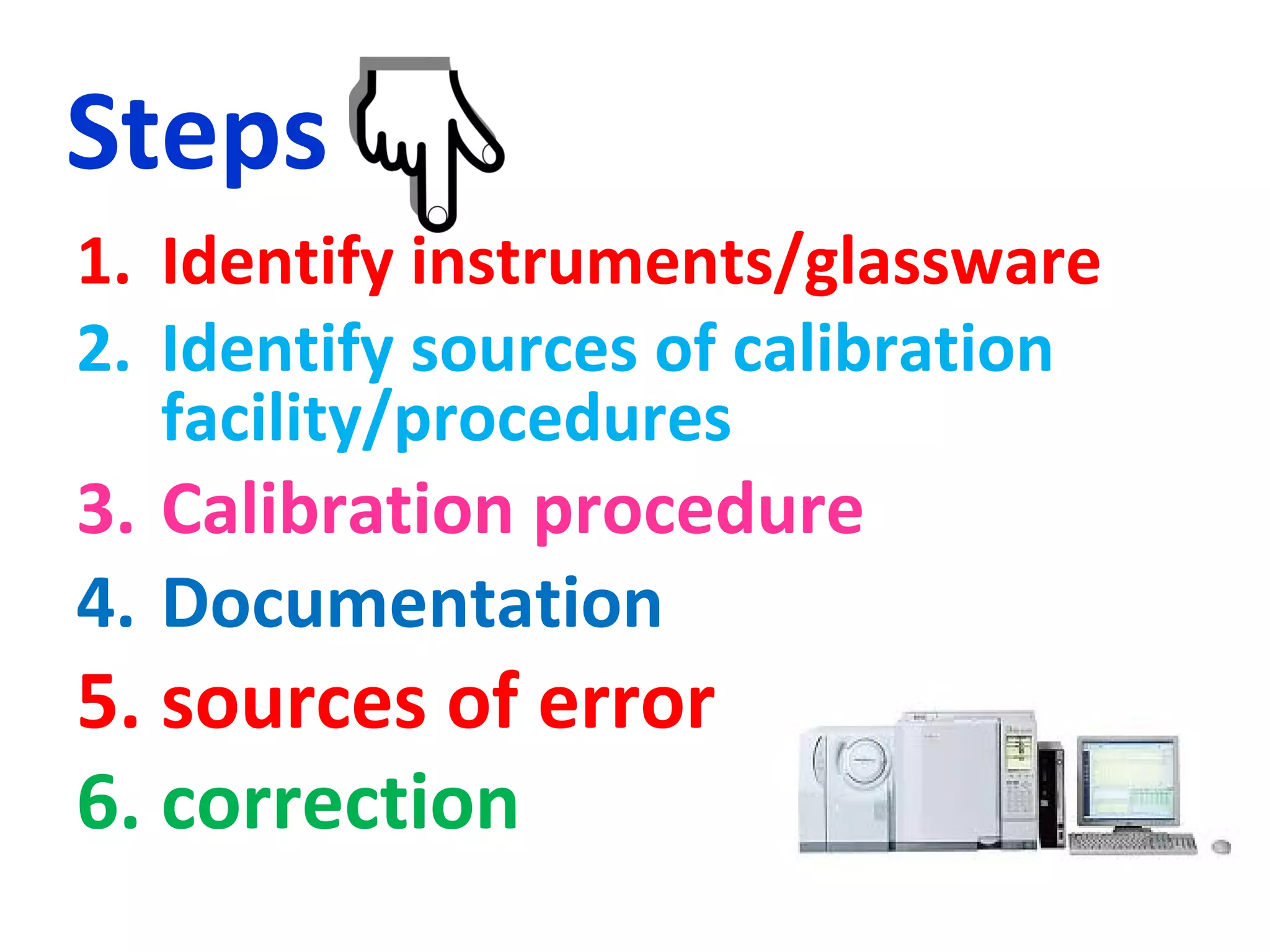
    • Volumetric glassware
• Two-point calibration
    • pH meter
• Multi-point calibration
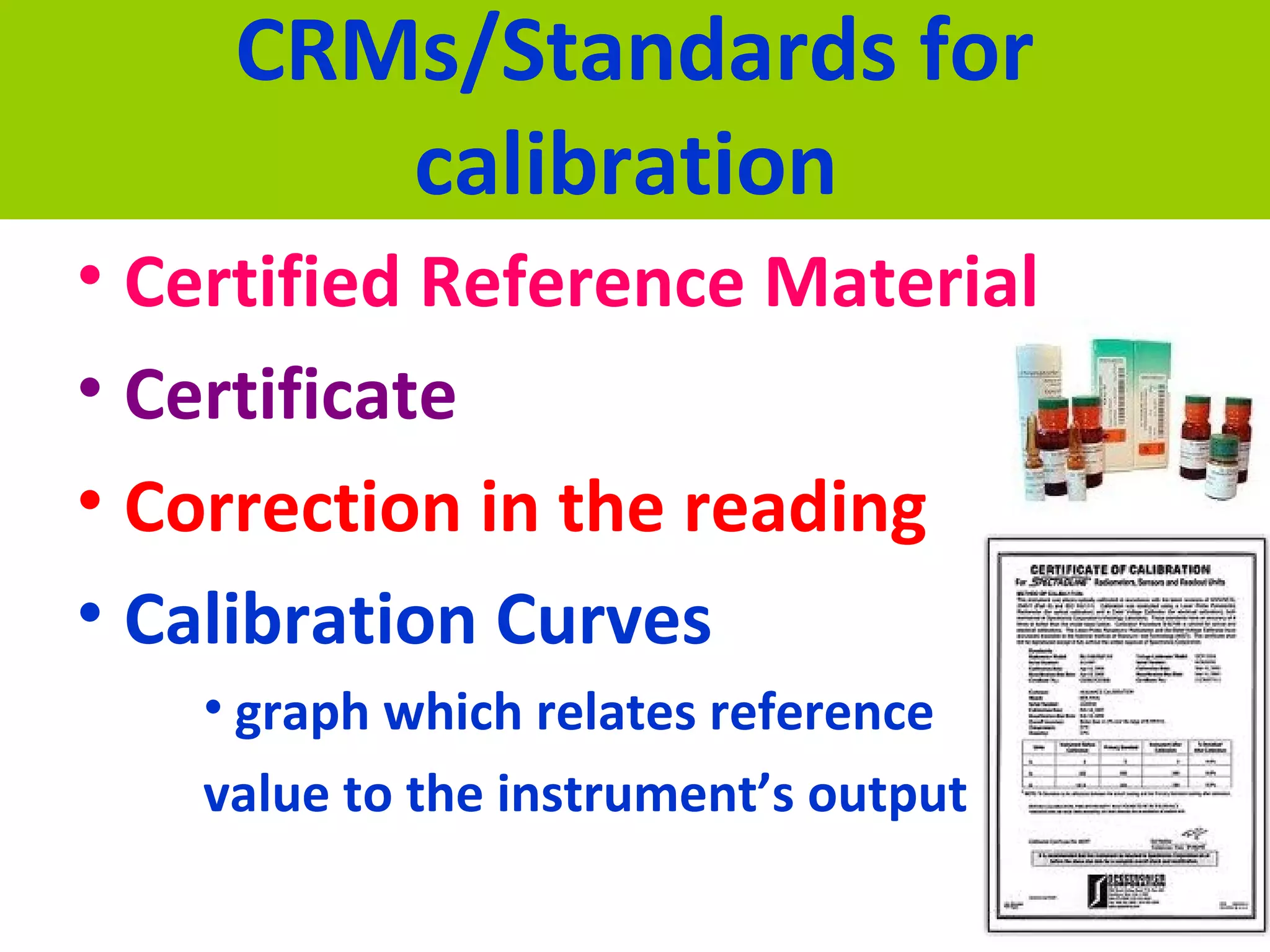
    • GC,GC-MS, LC-MS
CRMs/Standards for
       calibration
• Certified Reference Material
• Certificate
• Correction in the reading
• Calibration Curves
   • graph which relates reference
   value to the instrument’s output
Documentation
• Name of equipment and identification
  number
• Observed reading/value
• Reference value
• Difference between reference value
  and observed value
• Corrective action may include
  servicing, labeling, or disposal
Sources of error
•   Stabilisation
•   Normal position
•   Avoid sources of interference
•   Avoid traces of leftover
•   Calibration accuracy should be 3
    to 10 times the accuracy required
    for the measurement .
Traceability
• Traceable to a national
  standards.
    • In India it is with National
      Physical Laboratories, New Delhi
• SI system
Uncertainty
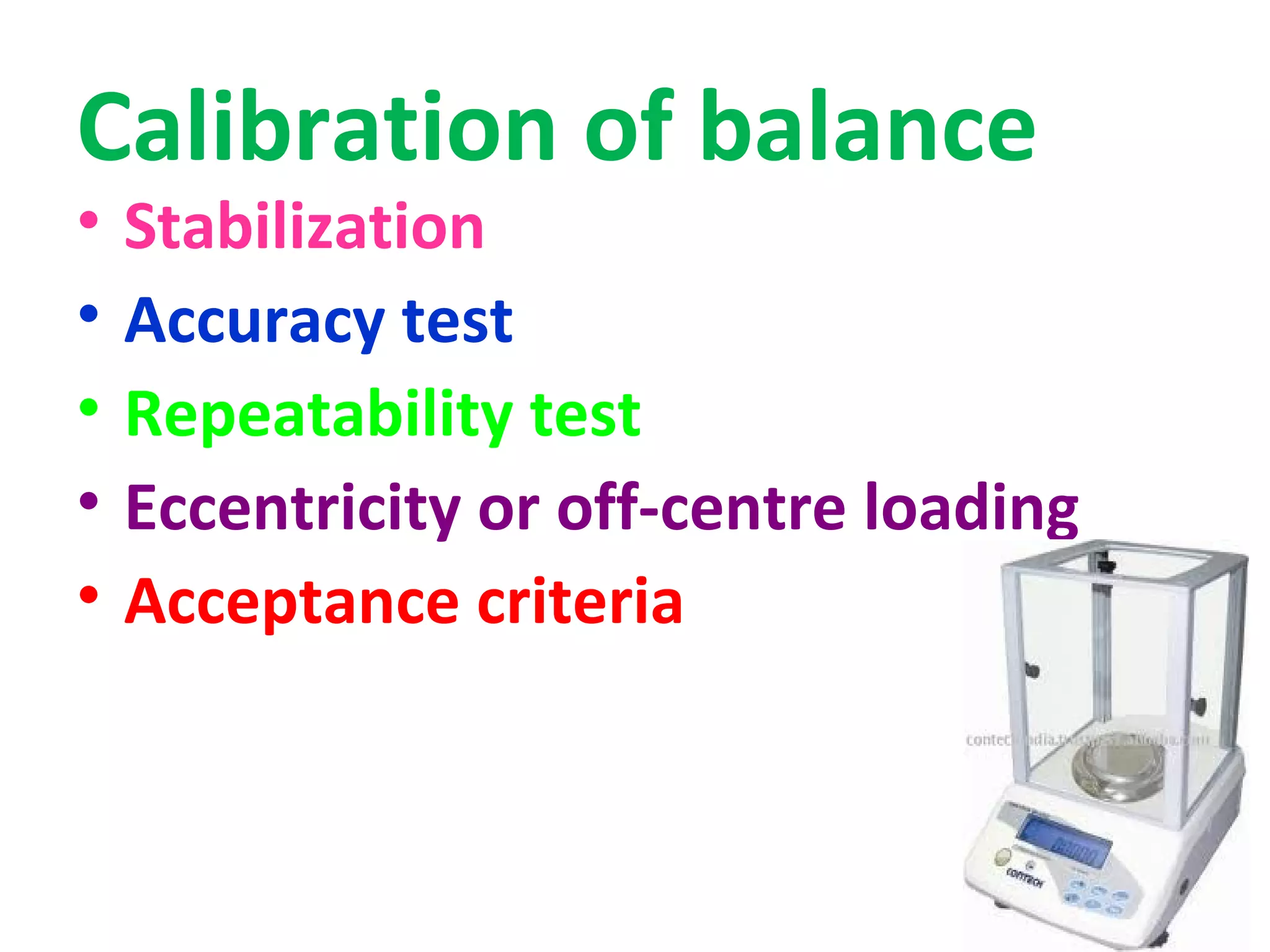
Calibration of balance
•   Stabilization
•   Accuracy test
•   Repeatability test
•   Eccentricity or off-centre loading
•   Acceptance criteria
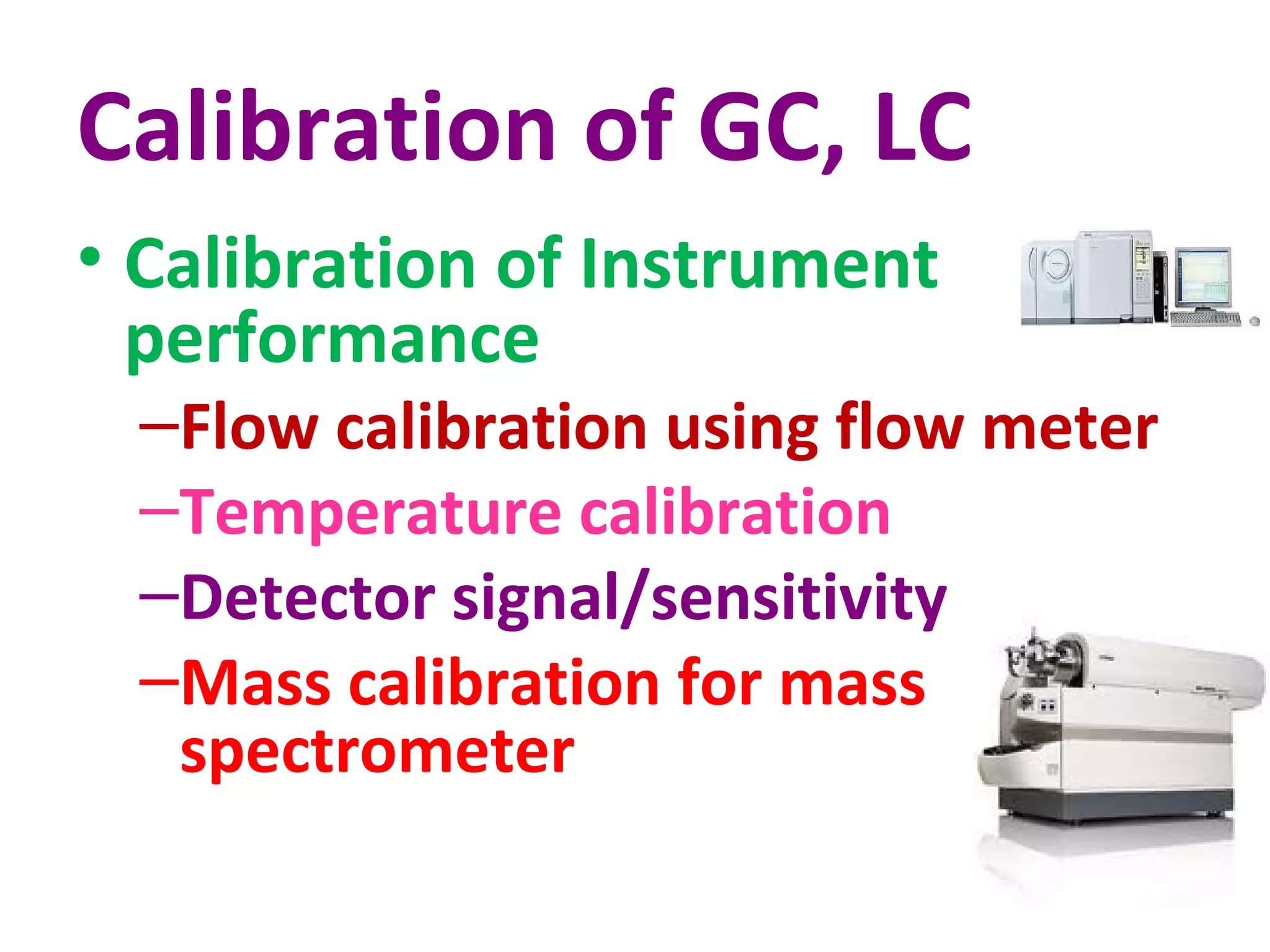
Calibration of GC, LC
• Calibration of Instrument
  performance
 –Flow calibration using flow meter
 –Temperature calibration
 –Detector signal/sensitivity
 –Mass calibration for mass
  spectrometer
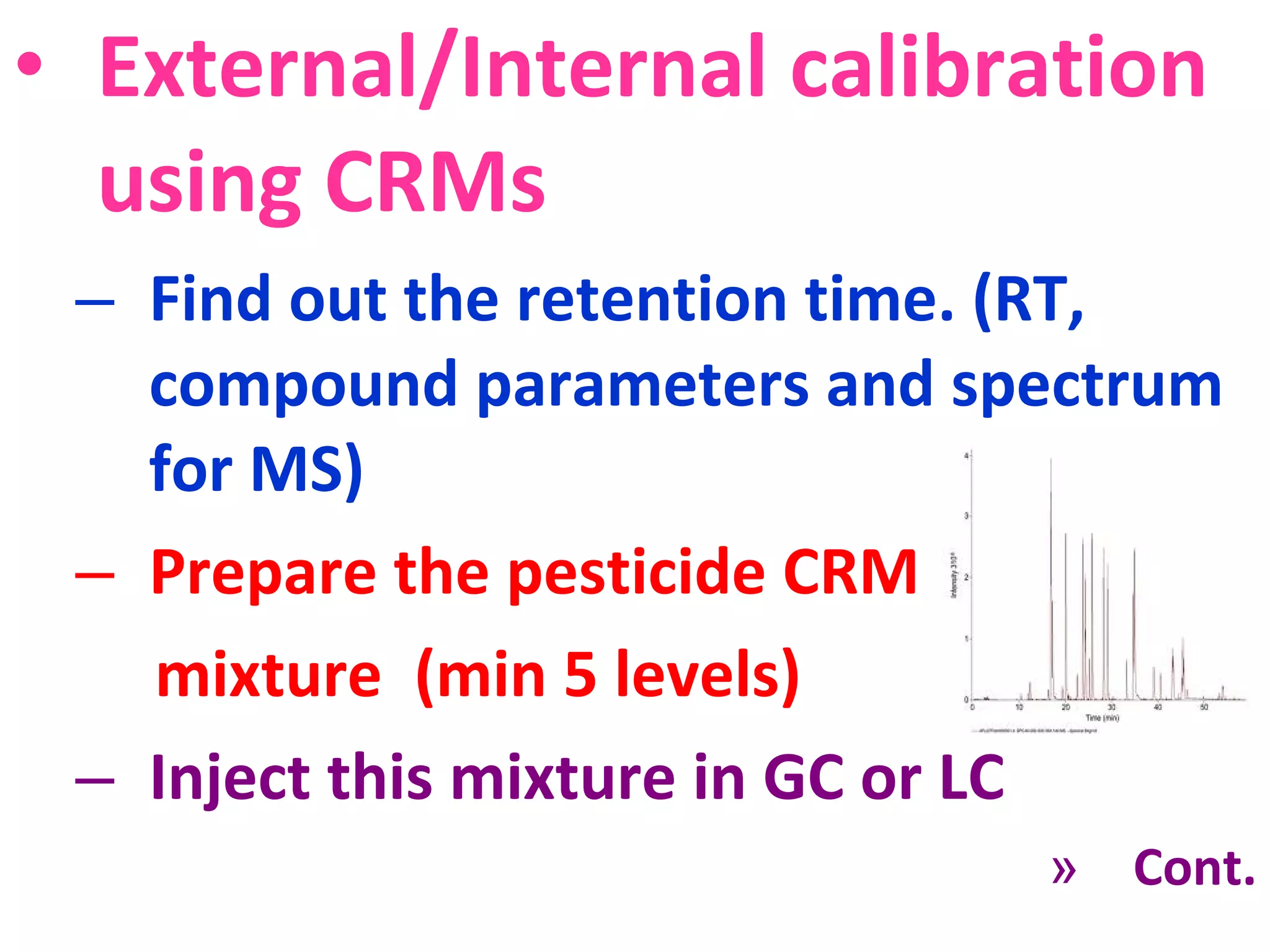
• External/Internal calibration
  using CRMs
 – Find out the retention time. (RT,
   compound parameters and spectrum
   for MS)
 – Prepare the pesticide CRM
   mixture (min 5 levels)
 – Inject this mixture in GC or LC
                              » Cont.
–Give the names, retention
 time, compound parameters
 and concentration
–Draw the calibration curves.
–This calibration curve can be
 used for the quantitation of
 pesticides.
Calibration

Calibration

  • 1.
    Calibration Pradeep Kumar. G.T
  • 2.
    Definition Calibration is theset of operations that establish, under specified conditions, the relationship between values indicated by a measuring instrument, a measuring system or values represented by a material measure, and the corresponding known values/standard value of a measurand.
  • 3.
    Steps 1. Identify instruments/glassware 2.Identify sources of calibration facility/procedures 3. Calibration procedure 4. Documentation 5. sources of error 6. correction
  • 4.
    1. Identify instruments/glassware • Instruments /glassware which –Directly influence the results –Measure physical quantities –Detect the residue –Used for CRM preparation –Used for reconstitution
  • 5.
    2. Identify sourcesof calibration facility/procedures • Calibration procedures • IS, ASTM, BS • Manufacture’s instruction •GC, GC-MS, LC-MS
  • 6.
    • NABL accreditedcalibration laboratories •SCTIMST, Poojappura, Trivandrum •STIC, CUSAT, Cochin •FCRI, Palakkad
  • 7.
    3. Calibration procedure •General rules • One-point calibration • Volumetric glassware • Two-point calibration • pH meter • Multi-point calibration • GC,GC-MS, LC-MS
  • 8.
    CRMs/Standards for calibration • Certified Reference Material • Certificate • Correction in the reading • Calibration Curves • graph which relates reference value to the instrument’s output
  • 9.
    Documentation • Name ofequipment and identification number • Observed reading/value • Reference value • Difference between reference value and observed value • Corrective action may include servicing, labeling, or disposal
  • 10.
    Sources of error • Stabilisation • Normal position • Avoid sources of interference • Avoid traces of leftover • Calibration accuracy should be 3 to 10 times the accuracy required for the measurement .
  • 11.
    Traceability • Traceable toa national standards. • In India it is with National Physical Laboratories, New Delhi • SI system
  • 12.
  • 13.
    Calibration of balance • Stabilization • Accuracy test • Repeatability test • Eccentricity or off-centre loading • Acceptance criteria
  • 14.
    Calibration of GC,LC • Calibration of Instrument performance –Flow calibration using flow meter –Temperature calibration –Detector signal/sensitivity –Mass calibration for mass spectrometer
  • 15.
    • External/Internal calibration using CRMs – Find out the retention time. (RT, compound parameters and spectrum for MS) – Prepare the pesticide CRM mixture (min 5 levels) – Inject this mixture in GC or LC » Cont.
  • 16.
    –Give the names,retention time, compound parameters and concentration –Draw the calibration curves. –This calibration curve can be used for the quantitation of pesticides.