CAESAREAN SECTION
DEFINITION
It is an operative procedure whereby the fetus after
the end of 28th week are delivered through an
incision on the abdominal and uterine walls
FACTORS FOR RISING CESAREAN SECTION
 Identification of at risk fetuses before term (IUGR)
 Identification of at risk mothers
 Wider use of repeat CS
 Rising rates of induction of labour and failure of induction.
 Decline in operative vaginal (forceps, vacum) delivery
 Decline in vaginal breech delivery.
 Increased number of women that age >30 and associated medical
complications
 Wider use of electronic fetal monitoring and fetal distress.
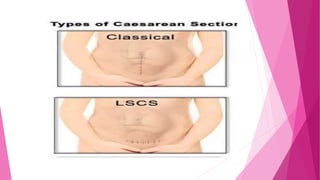
TYPES OF OPERATION
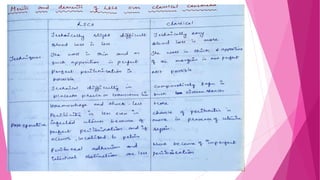
 Classical or upper segment caesarean section
 Lower segmented caesarean section
INDICATIONS FOR CS
 Absolute indications
Cephalo pelvic disproportion
Major degrees of placenta praevia
Multiple pregnancy
Carcinoma of cervix
Fibroids
 Relative indications
Malpresentation
PIH
Medical gynaecological conditions
Previous scar
APH
Bad obstetrical history
TIME OF OPERATION
 Elective caesarean section
 Emergency caesarean section
CONTRAINDICATIONS
 Dead fetus
 Baby, too mature to survive outside the uterus
 Presence of blood coagulation disorders
MANAGEMENT - LSCS
1.Psychological preparation
2.Physical preparation
Intravenous infusion
Abdomen is prepared as for laparotomy.
A non particulate antacid (0.3 molar
sodium citrate 30 ml) is given orally.
If the caesarean section is an elective
procedure, ranitidine (H2 blocker) 150
mg is given orally the night before and
repeated (50 mg IM or IV)
Metodopramide (Reglan) 10 mg IV is given
to increase the tone of the lower
esophageal sphincter as well as to reduce
the stomach contents.
 It is administered after about 3 mt of
pre oxygenation in the operating room.
 Bladder must be emptied by passing
a catheter
Bowel preparation is done the
evening before (two glycerine
suppositories) for elective caesarian
section clients.
Position
The woman is placed in the dorsal position
Antiseptic painting.
The abdomen is painted with
7.5%pavidone iodine solution or
Savlon lotion and draped that
sterile towels.
Incision on the abdomen.
A low transverse incision is made about two
fingers breath above the symphysis pubis.
Some obstetrician make a vertical infra
umbilical or paramedian incision, which
extends from about 2.5 cm below the
umbilicus to the upper border of the
symphysis pubis
The anatomical layers incisioned are
Fat
Rectal sheath
Muscle
Abdominal peritoneum
Uterine Muscle
Delivery of the head
 The uterine cavity is then opened, the membrane are
ruptured and the amniotic fluid is aspirated.
 The head is then delivered by hooking the head is
the fingers which are carefully inserted between the
lower uterine flap and the head until the palm is
placed below the head.
 If the head is drawn to the incision line, the assistant
in to apply pressure on the fundus.
Delivery of the trunk
 As soon as the head is delivered, the mucus
from the mouth, pharynx and nostrils to be
sucked out. When the baby is born, an
oxytocin drug (methergin 0.2 mg) is
administer before the placenta and
membranes are delivered.
 The cord is cut in between two clamps and
the baby is given to the nurse
Removal of the placenta and
membranes
The placenta is extracted by traction on
the cord with simultaneous pushing of the
uterus towards the umbilicus using left
hand (controlled cord traction).
Suturing of the uterine wound
:
 The margins of the wound are picked up by Allis tissue
forceps or Green armitage haemostatic clamps.
 The uterine muscle sutured with continuous running
sutures, the second of which tends to align the cut edges
of the pelvic peritoneum.
 Repair of the rectum sheath brings the rectus abdominin
into the alignment.
POSTOPERATIVE CARE
 Fluid administration
 Oxytocin – injection oxytocin 5 units (IM or IV (slow) or
methergin 0.2 mg IM is given and may be repeated.
 Prophylactic antibiotic – for all caesarian delivery is
given for 2-3 days.
 Analgesic is administered of may be repeated.
 Ambulation –
 Baby is put to the breast for feeding after 1 hour when
mother is stable and relieved of pain.
 Day 1 : Oral feeding in the form of plain or electrolyte water or, raw
tea may be given. Active bowel sounds are delivered by the end of
the day.
 Day 2 : Light solid diet of the patient’s choice is given. Bowel care :
3-4 teaspoon of lactulose is given at bed time, if the bowels do not
more spontaneously.
 Day 5 or Day 6 : The abdominal skin stitches are to be removed on
the 0-5 (in transverse) or0-6 (in longitudinal)
CLASSICAL CAESAREAN SECTION
 Abdominal incision is always logitudinal and
about 15 cm in length, 1/3 of which extends
above the umbilicus.
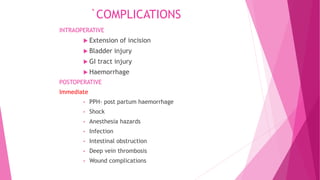
`COMPLICATIONS
INTRAOPERATIVE
 Extension of incision
 Bladder injury
 GI tract injury
 Haemorrhage
POSTOPERATIVE
Immediate
• PPH- post partum haemorrhage
• Shock
• Anesthesia hazards
• Infection
• Intestinal obstruction
• Deep vein thrombosis
• Wound complications
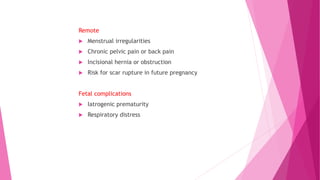
Remote
 Menstrual irregularities
 Chronic pelvic pain or back pain
 Incisional hernia or obstruction
 Risk for scar rupture in future pregnancy
Fetal complications
 Iatrogenic prematurity
 Respiratory distress
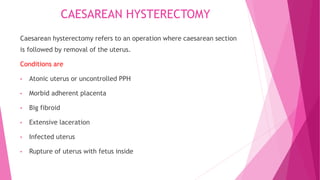
CAESAREAN HYSTERECTOMY
Caesarean hysterectomy refers to an operation where caesarean section
is followed by removal of the uterus.
Conditions are
• Atonic uterus or uncontrolled PPH
• Morbid adherent placenta
• Big fibroid
• Extensive laceration
• Infected uterus
• Rupture of uterus with fetus inside

Caesarean section

  • 1.
  • 2.
    DEFINITION It is anoperative procedure whereby the fetus after the end of 28th week are delivered through an incision on the abdominal and uterine walls
  • 3.
    FACTORS FOR RISINGCESAREAN SECTION  Identification of at risk fetuses before term (IUGR)  Identification of at risk mothers  Wider use of repeat CS  Rising rates of induction of labour and failure of induction.  Decline in operative vaginal (forceps, vacum) delivery  Decline in vaginal breech delivery.  Increased number of women that age >30 and associated medical complications  Wider use of electronic fetal monitoring and fetal distress.
  • 4.
    TYPES OF OPERATION Classical or upper segment caesarean section  Lower segmented caesarean section
  • 6.
    INDICATIONS FOR CS Absolute indications Cephalo pelvic disproportion Major degrees of placenta praevia Multiple pregnancy Carcinoma of cervix Fibroids  Relative indications Malpresentation PIH Medical gynaecological conditions Previous scar APH Bad obstetrical history
  • 7.
    TIME OF OPERATION Elective caesarean section  Emergency caesarean section
  • 8.
    CONTRAINDICATIONS  Dead fetus Baby, too mature to survive outside the uterus  Presence of blood coagulation disorders
  • 9.
  • 10.
  • 11.
    Abdomen is preparedas for laparotomy.
  • 12.
    A non particulateantacid (0.3 molar sodium citrate 30 ml) is given orally.
  • 13.
    If the caesareansection is an elective procedure, ranitidine (H2 blocker) 150 mg is given orally the night before and repeated (50 mg IM or IV)
  • 14.
    Metodopramide (Reglan) 10mg IV is given to increase the tone of the lower esophageal sphincter as well as to reduce the stomach contents.  It is administered after about 3 mt of pre oxygenation in the operating room.
  • 15.
     Bladder mustbe emptied by passing a catheter
  • 16.
    Bowel preparation isdone the evening before (two glycerine suppositories) for elective caesarian section clients.
  • 17.
    Position The woman isplaced in the dorsal position
  • 18.
    Antiseptic painting. The abdomenis painted with 7.5%pavidone iodine solution or Savlon lotion and draped that sterile towels.
  • 19.
    Incision on theabdomen. A low transverse incision is made about two fingers breath above the symphysis pubis. Some obstetrician make a vertical infra umbilical or paramedian incision, which extends from about 2.5 cm below the umbilicus to the upper border of the symphysis pubis
  • 20.
    The anatomical layersincisioned are Fat Rectal sheath Muscle Abdominal peritoneum Uterine Muscle
  • 21.
    Delivery of thehead  The uterine cavity is then opened, the membrane are ruptured and the amniotic fluid is aspirated.  The head is then delivered by hooking the head is the fingers which are carefully inserted between the lower uterine flap and the head until the palm is placed below the head.  If the head is drawn to the incision line, the assistant in to apply pressure on the fundus.
  • 22.
    Delivery of thetrunk  As soon as the head is delivered, the mucus from the mouth, pharynx and nostrils to be sucked out. When the baby is born, an oxytocin drug (methergin 0.2 mg) is administer before the placenta and membranes are delivered.  The cord is cut in between two clamps and the baby is given to the nurse
  • 23.
    Removal of theplacenta and membranes The placenta is extracted by traction on the cord with simultaneous pushing of the uterus towards the umbilicus using left hand (controlled cord traction).
  • 24.
    Suturing of theuterine wound :  The margins of the wound are picked up by Allis tissue forceps or Green armitage haemostatic clamps.  The uterine muscle sutured with continuous running sutures, the second of which tends to align the cut edges of the pelvic peritoneum.  Repair of the rectum sheath brings the rectus abdominin into the alignment.
  • 25.
    POSTOPERATIVE CARE  Fluidadministration  Oxytocin – injection oxytocin 5 units (IM or IV (slow) or methergin 0.2 mg IM is given and may be repeated.  Prophylactic antibiotic – for all caesarian delivery is given for 2-3 days.  Analgesic is administered of may be repeated.  Ambulation –  Baby is put to the breast for feeding after 1 hour when mother is stable and relieved of pain.
  • 26.
     Day 1: Oral feeding in the form of plain or electrolyte water or, raw tea may be given. Active bowel sounds are delivered by the end of the day.  Day 2 : Light solid diet of the patient’s choice is given. Bowel care : 3-4 teaspoon of lactulose is given at bed time, if the bowels do not more spontaneously.  Day 5 or Day 6 : The abdominal skin stitches are to be removed on the 0-5 (in transverse) or0-6 (in longitudinal)
  • 27.
    CLASSICAL CAESAREAN SECTION Abdominal incision is always logitudinal and about 15 cm in length, 1/3 of which extends above the umbilicus.
  • 30.
    `COMPLICATIONS INTRAOPERATIVE  Extension ofincision  Bladder injury  GI tract injury  Haemorrhage POSTOPERATIVE Immediate • PPH- post partum haemorrhage • Shock • Anesthesia hazards • Infection • Intestinal obstruction • Deep vein thrombosis • Wound complications
  • 31.
    Remote  Menstrual irregularities Chronic pelvic pain or back pain  Incisional hernia or obstruction  Risk for scar rupture in future pregnancy Fetal complications  Iatrogenic prematurity  Respiratory distress
  • 32.
    CAESAREAN HYSTERECTOMY Caesarean hysterectomyrefers to an operation where caesarean section is followed by removal of the uterus. Conditions are • Atonic uterus or uncontrolled PPH • Morbid adherent placenta • Big fibroid • Extensive laceration • Infected uterus • Rupture of uterus with fetus inside