Beyond Zero
Carbon Housing
exploring solutions to sustainability issues
     beyond the zero carbon agenda


2 4 th O c t o b e r 2 0 1 2 a t T h e U n i v e r s i t y o f N o t t i n g h a m
Department of Architecture and Built Environment
©
     Copyright Notice
        A l l t h e m a te r i a l i n t h e s e s l i d e s
m ay n o t b e u s e d o r re p ro d u c e d w i t h o u t t h e
     ex p re s s p e r m i s s i o n o f t h e a u t h o rs
Beyond Zero Carbon

 Policy and Practice


Richard Partington
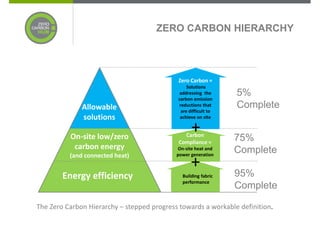
ZERO CARBON HIERARCHY


                                             Zero Carbon =
                                                  Solutions
                                              addressing the
                                             carbon emission
                                                                  5%
              Allowable                       reductions that
                                               are difficult to
                                                                  Complete
              solutions                       achieve on site


          On-site low/zero
                                                   +
                                               Carbon
                                                                  75%
                                             Compliance =
           carbon energy                    On-site heat and
                                                                  Complete
          (and connected heat)              power generation

                                                   +
        Energy efficiency                      Building fabric    95%
                                               performance
                                                                  Complete

The Zero Carbon Hierarchy – stepped progress towards a workable definition.
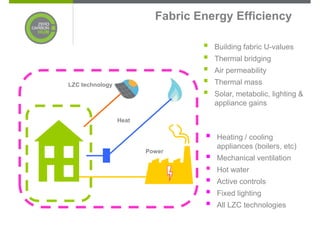
Fabric Energy Efficiency

                                    Building fabric U-values
                                    Thermal bridging
                                    Air permeability
LZC technology                      Thermal mass
                                    Solar, metabolic, lighting &
                                    appliance gains

                 Heat

                                    Heating / cooling
                                    appliances (boilers, etc)
                        Power
                                    Mechanical ventilation
                                    Hot water
                                    Active controls
                                    Fixed lighting
                                    All LZC technologies
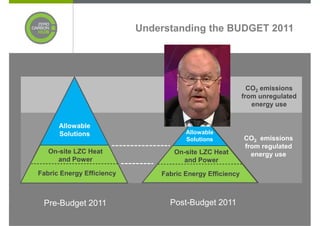
Understanding the BUDGET 2011


                                                            CO2 emissions
                                                          from unregulated
                                                             energy use


      Allowable
      Solutions                       Allowable
                                      Solutions           CO2 emissions
                                                          from regulated
   On-site LZC Heat               On-site LZC Heat          energy use
     and Power                      and Power
Fabric Energy Efficiency       Fabric Energy Efficiency


 Pre-Budget 2011                 Post-Budget 2011
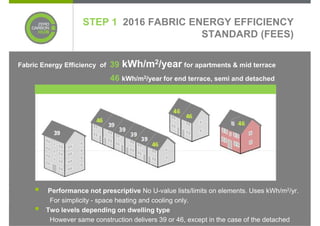
STEP 1 2016 FABRIC ENERGY EFFICIENCY
                                        STANDARD (FEES)

Fabric Energy Efficiency of   39 kWh/m2/year for apartments & mid terrace
                              46 kWh/m2/year for end terrace, semi and detached


        Performance not prescriptive No U-value lists/limits on elements. Uses kWh/m2/yr.
         For simplicity - space heating and cooling only.
        Two levels depending on dwelling type
         However same construction delivers 39 or 46, except in the case of the detached
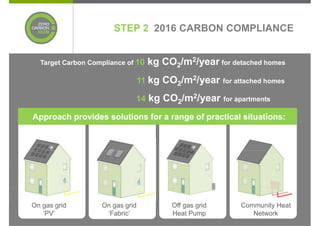
STEP 2 2016 CARBON COMPLIANCE


  Target Carbon Compliance of 10   kg CO2/m2/year for detached homes
                                 11 kg CO2/m2/year     for attached homes

                             14 kg CO2/m2/year         for apartments

Approach provides solutions for a range of practical situations:
      .


On gas grid        On gas grid          Off gas grid        Community Heat
   ‘PV’             ‘Fabric’            Heat Pump              Network
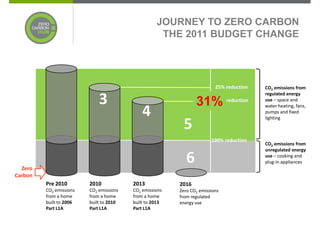
JOURNEY TO ZERO CARBON
                                                    THE 2011 BUDGET CHANGE


                                                                           25% reduction   CO2 emissions from
                                                                                           regulated energy
                             3                                    31% reduction
                                                                     X
                                                                    44%                    use – space and

                                             4
                                                                                           water heating, fans,
                                                                                           pumps and fixed
                                                                                           lighting
                                                            5
                                                                         100% reduction
                                                                                           CO2 emissions from

                                                         66                                unregulated energy
                                                                                           use – cooking and
                                                                                           plug-in appliances
  Zero
Carbon
         Pre 2010        2010            2013            2016
                                                          2016
         CO2 emissions   CO2 emissions   CO2 emissions   CO2 emissions from
                                                           Zero CO2 emissions
         from a home     from a home     from a home     regulated and
                                                           from regulated
         built to 2006   built to 2010   built to 2013   unregulated energy
                                                           energy use
         Part L1A        Part L1A        Part L1A        use to be net zero
Design vs ‘As-built’:

Lessons from TSB Programme
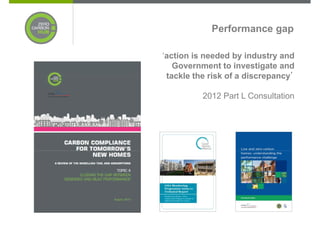
Performance gap

‘action is needed by industry and
   Government to investigate and
 tackle the risk of a discrepancy’

          2012 Part L Consultation
Does it do what it says on the tin?
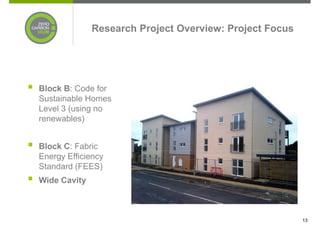
Research Project Overview: Project Focus


Block B: Code for
Sustainable Homes
Level 3 (using no
renewables)


Block C: Fabric
Energy Efficiency
Standard (FEES)
Wide Cavity


                                                         13
Fabric Performance Investigations
         & Observations
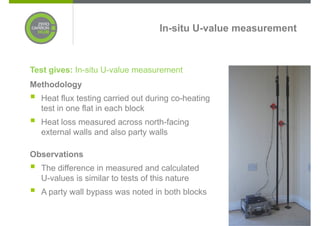
In-situ U-value measurement


Test gives: In-situ U-value measurement
Methodology
  Heat flux testing carried out during co-heating
  test in one flat in each block
  Heat loss measured across north-facing
  external walls and also party walls

Observations
  The difference in measured and calculated
  U-values is similar to tests of this nature
  A party wall bypass was noted in both blocks


                                                                15
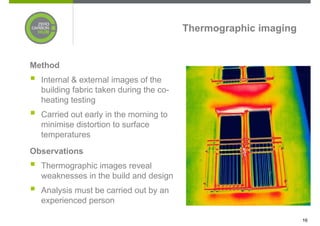
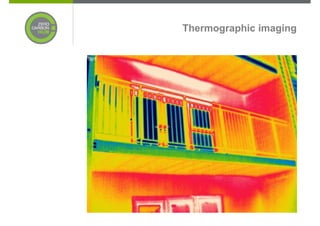
Thermographic imaging


Method
  Internal & external images of the
  building fabric taken during the co-
  heating testing
  Carried out early in the morning to
  minimise distortion to surface
  temperatures
Observations
  Thermographic images reveal
  weaknesses in the build and design
  Analysis must be carried out by an
  experienced person

                                                                 16
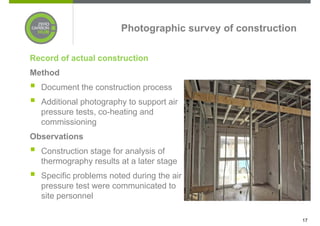
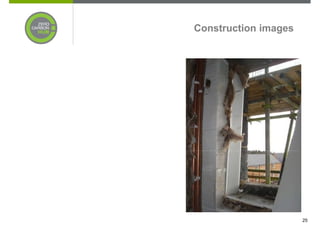
Photographic survey of construction

Record of actual construction
Method
  Document the construction process
  Additional photography to support air
  pressure tests, co-heating and
  commissioning
Observations
  Construction stage for analysis of
  thermography results at a later stage
  Specific problems noted during the air
  pressure test were communicated to
  site personnel

                                                             17
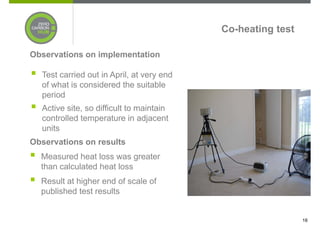
Co-heating test

Observations on implementation

  Test carried out in April, at very end
  of what is considered the suitable
  period
  Active site, so difficult to maintain
  controlled temperature in adjacent
  units
Observations on results
  Measured heat loss was greater
  than calculated heat loss
  Result at higher end of scale of
  published test results


                                                             18
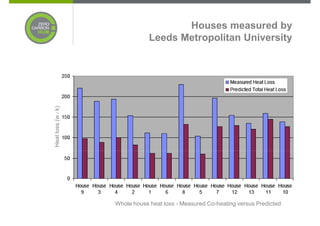
Houses measured by
                                Leeds Metropolitan University
Heat loss (w / k)


                    Whole house heat loss - Measured Co-heating versus Predicted
Drawings and accredited details

Domestic services commissioning
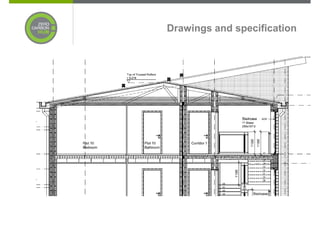
Drawings and specification
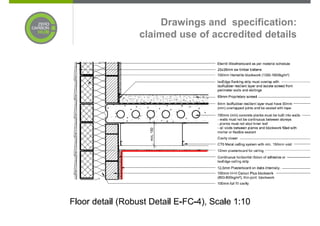
Drawings and specification:
claimed use of accredited details
Thermographic imaging
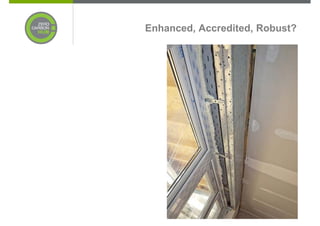
Enhanced, Accredited, Robust?
Construction images


                      25
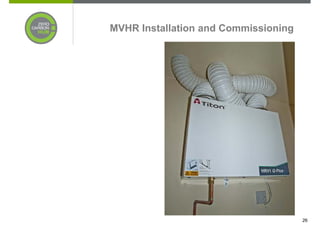
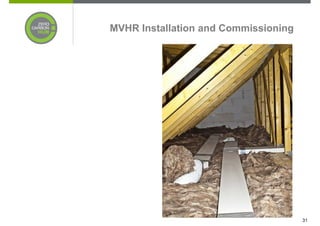
MVHR Installation and Commissioning


                                      26
MVHR Installation and Commissioning


                                      27
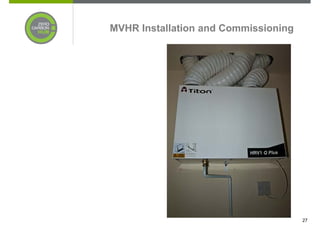
MVHR Installation and Commissioning


                                      28
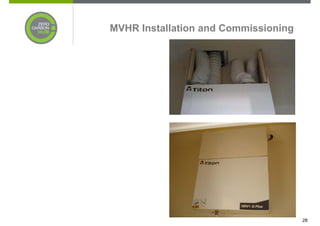
MVHR Installation and Commissioning


                                      29
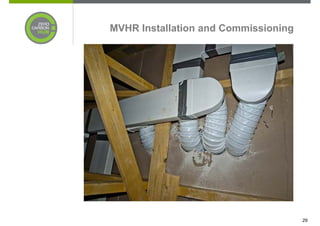
MVHR Installation and Commissioning


                                      30
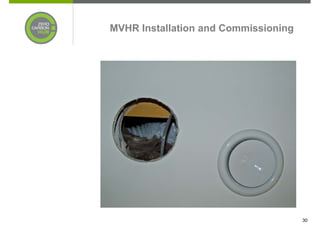
MVHR Installation and Commissioning


                                      31
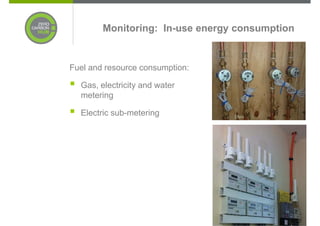
Monitoring: In-use energy consumption


Fuel and resource consumption:

  Gas, electricity and water
  metering

  Electric sub-metering
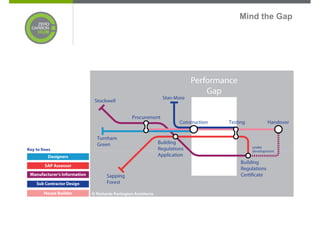
Mind the Gap
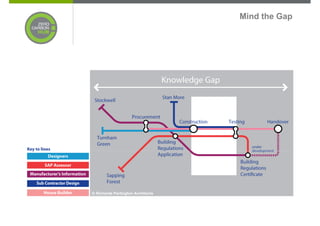
Mind the Gap
Derwenthorpe and Temple Avenue
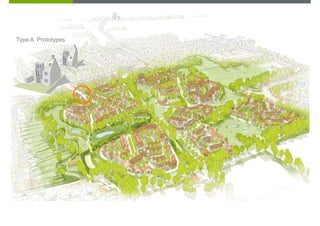
Type A Prototypes
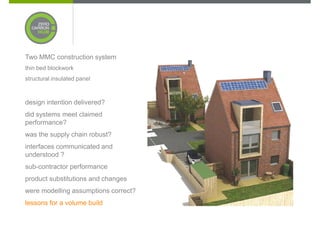
Two MMC construction system
thin bed blockwork
structural insulated panel


design intention delivered?
did systems meet claimed
performance?
was the supply chain robust?
interfaces communicated and
understood ?
sub-contractor performance
product substitutions and changes
were modelling assumptions correct?
lessons for a volume build
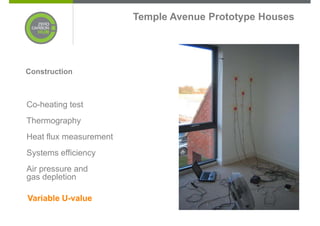
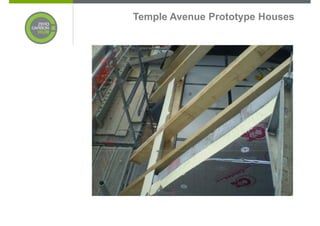
Temple Avenue Prototype Houses


Construction


Co-heating test
Thermography
Heat flux measurement
Systems efficiency
Air pressure and
gas depletion

Variable U-value
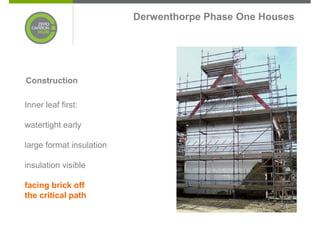
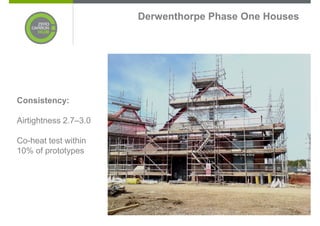
Derwenthorpe Phase One Houses


Construction

Inner leaf first:

watertight early

large format insulation

insulation visible

facing brick off
the critical path
Derwenthorpe Phase One Houses


Consistency:

Airtightness 2.7–3.0

Co-heat test within
10% of prototypes
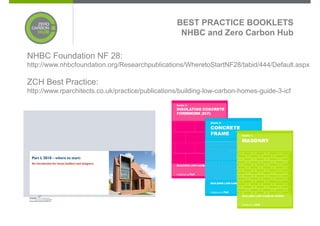
BEST PRACTICE BOOKLETS
                                                   NHBC and Zero Carbon Hub

NHBC Foundation NF 28:
http://www.nhbcfoundation.org/Researchpublications/WheretoStartNF28/tabid/444/Default.aspx

ZCH Best Practice:
http://www.rparchitects.co.uk/practice/publications/building-low-carbon-homes-guide-3-icf
Beyond Zero Carbon Housing - Richard Partington

Beyond Zero Carbon Housing - Richard Partington

  • 1.
    Beyond Zero Carbon Housing exploringsolutions to sustainability issues beyond the zero carbon agenda 2 4 th O c t o b e r 2 0 1 2 a t T h e U n i v e r s i t y o f N o t t i n g h a m Department of Architecture and Built Environment
  • 2.
    © Copyright Notice A l l t h e m a te r i a l i n t h e s e s l i d e s m ay n o t b e u s e d o r re p ro d u c e d w i t h o u t t h e ex p re s s p e r m i s s i o n o f t h e a u t h o rs
  • 3.
    Beyond Zero Carbon Policy and Practice Richard Partington
  • 4.
    ZERO CARBON HIERARCHY Zero Carbon = Solutions addressing the carbon emission 5% Allowable reductions that are difficult to Complete solutions achieve on site On-site low/zero + Carbon 75% Compliance = carbon energy On-site heat and Complete (and connected heat) power generation + Energy efficiency Building fabric 95% performance Complete The Zero Carbon Hierarchy – stepped progress towards a workable definition.
  • 5.
    Fabric Energy Efficiency Building fabric U-values Thermal bridging Air permeability LZC technology Thermal mass Solar, metabolic, lighting & appliance gains Heat Heating / cooling appliances (boilers, etc) Power Mechanical ventilation Hot water Active controls Fixed lighting All LZC technologies
  • 6.
    Understanding the BUDGET2011 CO2 emissions from unregulated energy use Allowable Solutions Allowable Solutions CO2 emissions from regulated On-site LZC Heat On-site LZC Heat energy use and Power and Power Fabric Energy Efficiency Fabric Energy Efficiency Pre-Budget 2011 Post-Budget 2011
  • 7.
    STEP 1 2016FABRIC ENERGY EFFICIENCY STANDARD (FEES) Fabric Energy Efficiency of 39 kWh/m2/year for apartments & mid terrace 46 kWh/m2/year for end terrace, semi and detached Performance not prescriptive No U-value lists/limits on elements. Uses kWh/m2/yr. For simplicity - space heating and cooling only. Two levels depending on dwelling type However same construction delivers 39 or 46, except in the case of the detached
  • 8.
    STEP 2 2016CARBON COMPLIANCE Target Carbon Compliance of 10 kg CO2/m2/year for detached homes 11 kg CO2/m2/year for attached homes 14 kg CO2/m2/year for apartments Approach provides solutions for a range of practical situations: . On gas grid On gas grid Off gas grid Community Heat ‘PV’ ‘Fabric’ Heat Pump Network
  • 9.
    JOURNEY TO ZEROCARBON THE 2011 BUDGET CHANGE 25% reduction CO2 emissions from regulated energy 3 31% reduction X 44% use – space and 4 water heating, fans, pumps and fixed lighting 5 100% reduction CO2 emissions from 66 unregulated energy use – cooking and plug-in appliances Zero Carbon Pre 2010 2010 2013 2016 2016 CO2 emissions CO2 emissions CO2 emissions CO2 emissions from Zero CO2 emissions from a home from a home from a home regulated and from regulated built to 2006 built to 2010 built to 2013 unregulated energy energy use Part L1A Part L1A Part L1A use to be net zero
  • 10.
  • 11.
    Performance gap ‘action isneeded by industry and Government to investigate and tackle the risk of a discrepancy’ 2012 Part L Consultation
  • 12.
    Does it dowhat it says on the tin?
  • 13.
    Research Project Overview:Project Focus Block B: Code for Sustainable Homes Level 3 (using no renewables) Block C: Fabric Energy Efficiency Standard (FEES) Wide Cavity 13
  • 14.
  • 15.
    In-situ U-value measurement Testgives: In-situ U-value measurement Methodology Heat flux testing carried out during co-heating test in one flat in each block Heat loss measured across north-facing external walls and also party walls Observations The difference in measured and calculated U-values is similar to tests of this nature A party wall bypass was noted in both blocks 15
  • 16.
    Thermographic imaging Method Internal & external images of the building fabric taken during the co- heating testing Carried out early in the morning to minimise distortion to surface temperatures Observations Thermographic images reveal weaknesses in the build and design Analysis must be carried out by an experienced person 16
  • 17.
    Photographic survey ofconstruction Record of actual construction Method Document the construction process Additional photography to support air pressure tests, co-heating and commissioning Observations Construction stage for analysis of thermography results at a later stage Specific problems noted during the air pressure test were communicated to site personnel 17
  • 18.
    Co-heating test Observations onimplementation Test carried out in April, at very end of what is considered the suitable period Active site, so difficult to maintain controlled temperature in adjacent units Observations on results Measured heat loss was greater than calculated heat loss Result at higher end of scale of published test results 18
  • 19.
    Houses measured by Leeds Metropolitan University Heat loss (w / k) Whole house heat loss - Measured Co-heating versus Predicted
  • 20.
    Drawings and accrediteddetails Domestic services commissioning
  • 21.
  • 22.
    Drawings and specification: claimeduse of accredited details
  • 23.
  • 24.
  • 25.
  • 26.
    MVHR Installation andCommissioning 26
  • 27.
    MVHR Installation andCommissioning 27
  • 28.
    MVHR Installation andCommissioning 28
  • 29.
    MVHR Installation andCommissioning 29
  • 30.
    MVHR Installation andCommissioning 30
  • 31.
    MVHR Installation andCommissioning 31
  • 32.
    Monitoring: In-use energyconsumption Fuel and resource consumption: Gas, electricity and water metering Electric sub-metering
  • 33.
  • 34.
  • 35.
  • 36.
  • 37.
    Two MMC constructionsystem thin bed blockwork structural insulated panel design intention delivered? did systems meet claimed performance? was the supply chain robust? interfaces communicated and understood ? sub-contractor performance product substitutions and changes were modelling assumptions correct? lessons for a volume build
  • 38.
  • 39.
    Temple Avenue PrototypeHouses Construction Co-heating test Thermography Heat flux measurement Systems efficiency Air pressure and gas depletion Variable U-value
  • 40.
    Derwenthorpe Phase OneHouses Construction Inner leaf first: watertight early large format insulation insulation visible facing brick off the critical path
  • 41.
    Derwenthorpe Phase OneHouses Consistency: Airtightness 2.7–3.0 Co-heat test within 10% of prototypes
  • 43.
    BEST PRACTICE BOOKLETS NHBC and Zero Carbon Hub NHBC Foundation NF 28: http://www.nhbcfoundation.org/Researchpublications/WheretoStartNF28/tabid/444/Default.aspx ZCH Best Practice: http://www.rparchitects.co.uk/practice/publications/building-low-carbon-homes-guide-3-icf