Steven D. Winter
selected work. 3 houses

m. arch. 2009. osu
p : 614.306.4952
e : winter.52@osu.edu
2009 OSU Solar Decathlon House Project
Design Collaborators : Dave Nedrow, Deanna Hinkle

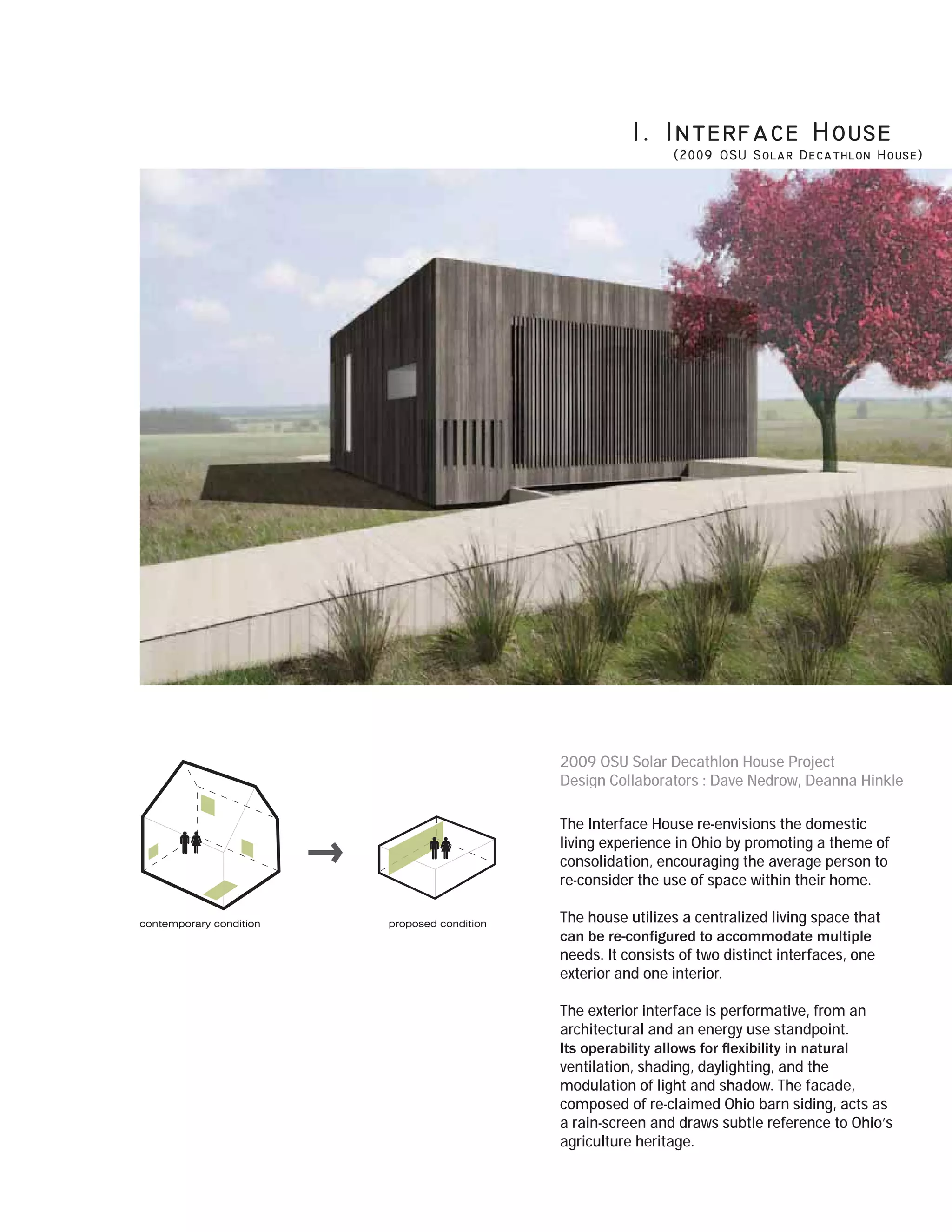
The Interface House re-envisions the domestic
living experience in Ohio by promoting a theme of
consolidation, encouraging the average person to
re-consider the use of space within their home.

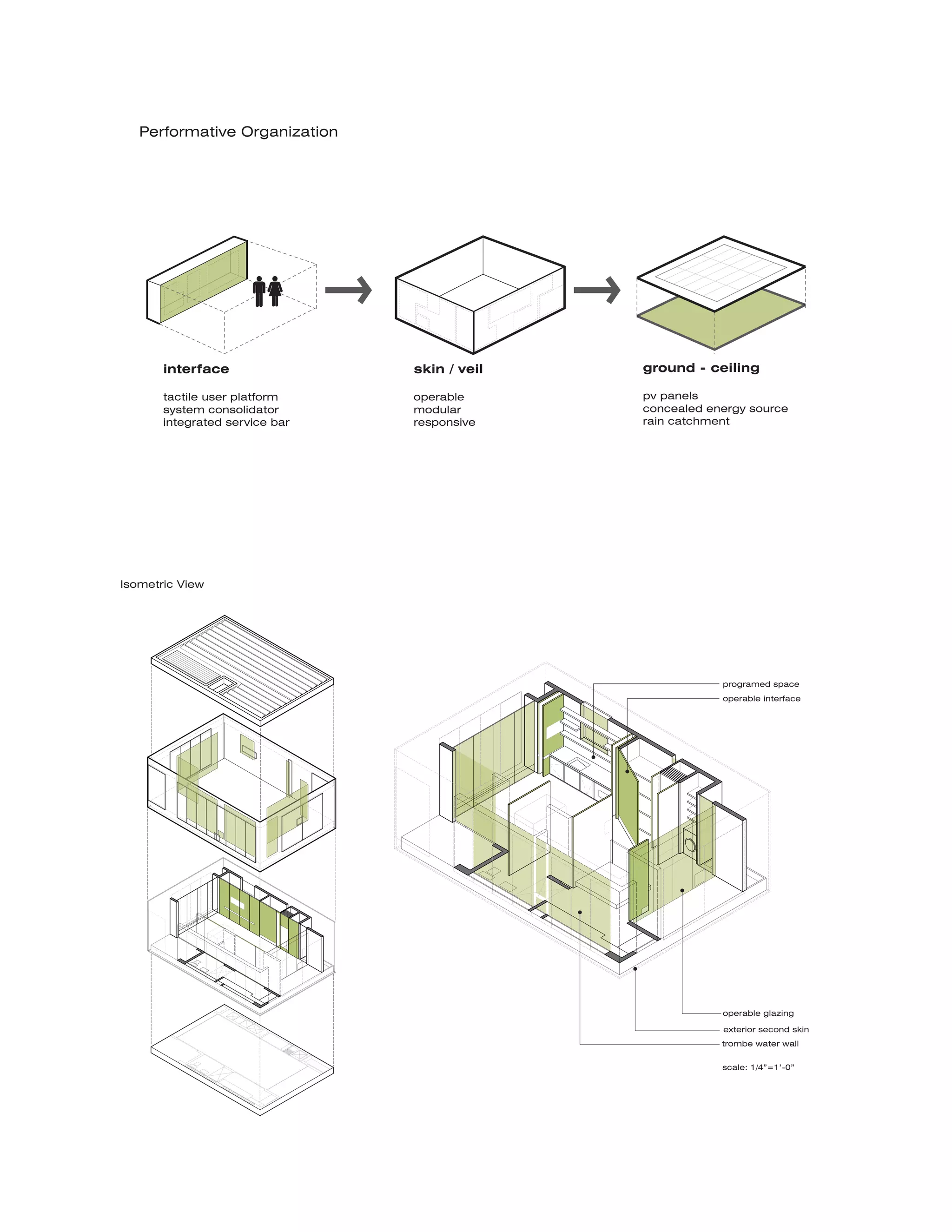
The house utilizes a centralized living space that

needs. It consists of two distinct interfaces, one
exterior and one interior.

The exterior interface is performative, from an
architectural and an energy use standpoint.

ventilation, shading, daylighting, and the
modulation of light and shadow. The facade,
composed of re-claimed Ohio barn siding, acts as
a rain-screen and draws subtle reference to Ohio’s
agriculture heritage.
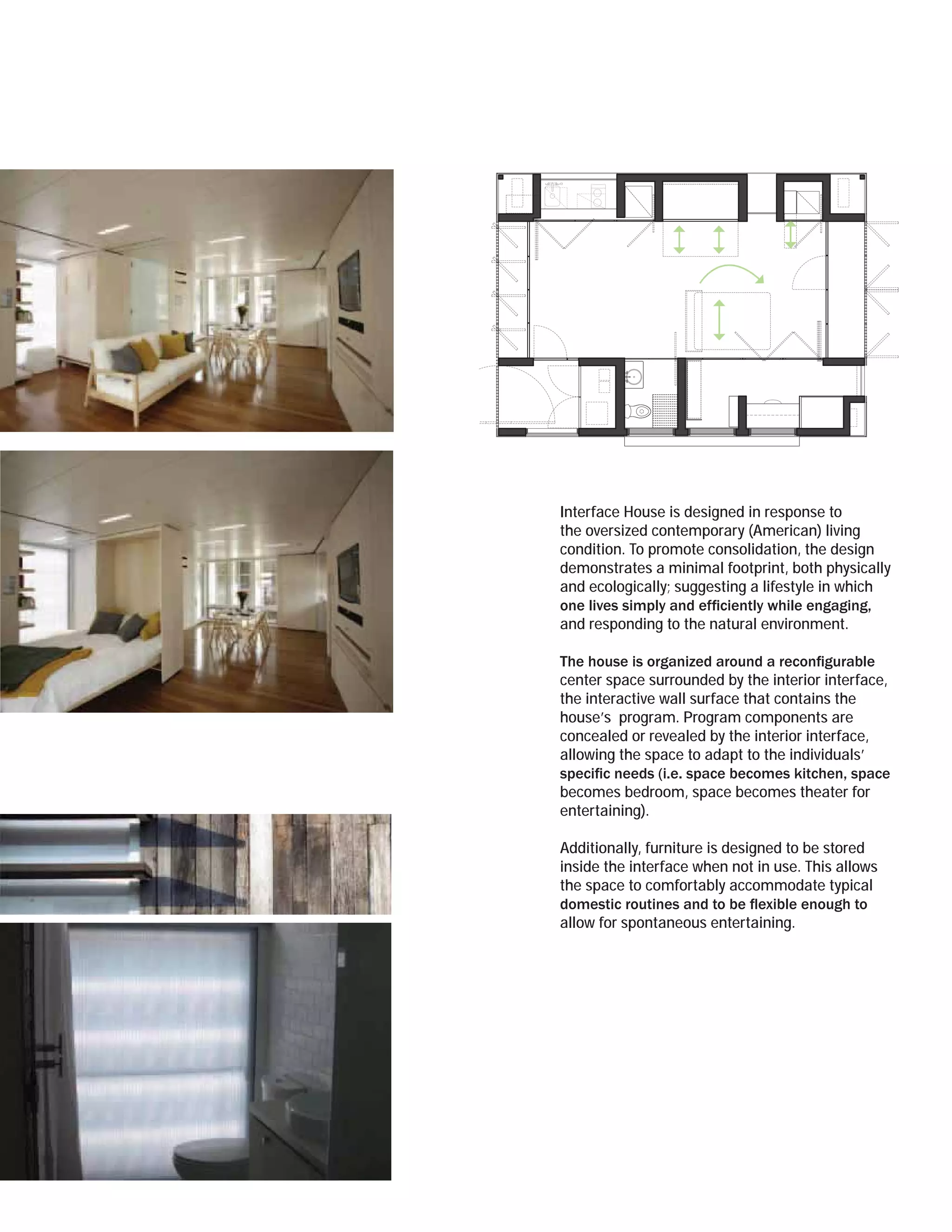
Interface House is designed in response to
the oversized contemporary (American) living
condition. To promote consolidation, the design
demonstrates a minimal footprint, both physically
and ecologically; suggesting a lifestyle in which

and responding to the natural environment.


center space surrounded by the interior interface,
the interactive wall surface that contains the
house’s program. Program components are
concealed or revealed by the interior interface,
allowing the space to adapt to the individuals’

becomes bedroom, space becomes theater for
entertaining).

Additionally, furniture is designed to be stored
inside the interface when not in use. This allows
the space to comfortably accommodate typical

allow for spontaneous entertaining.
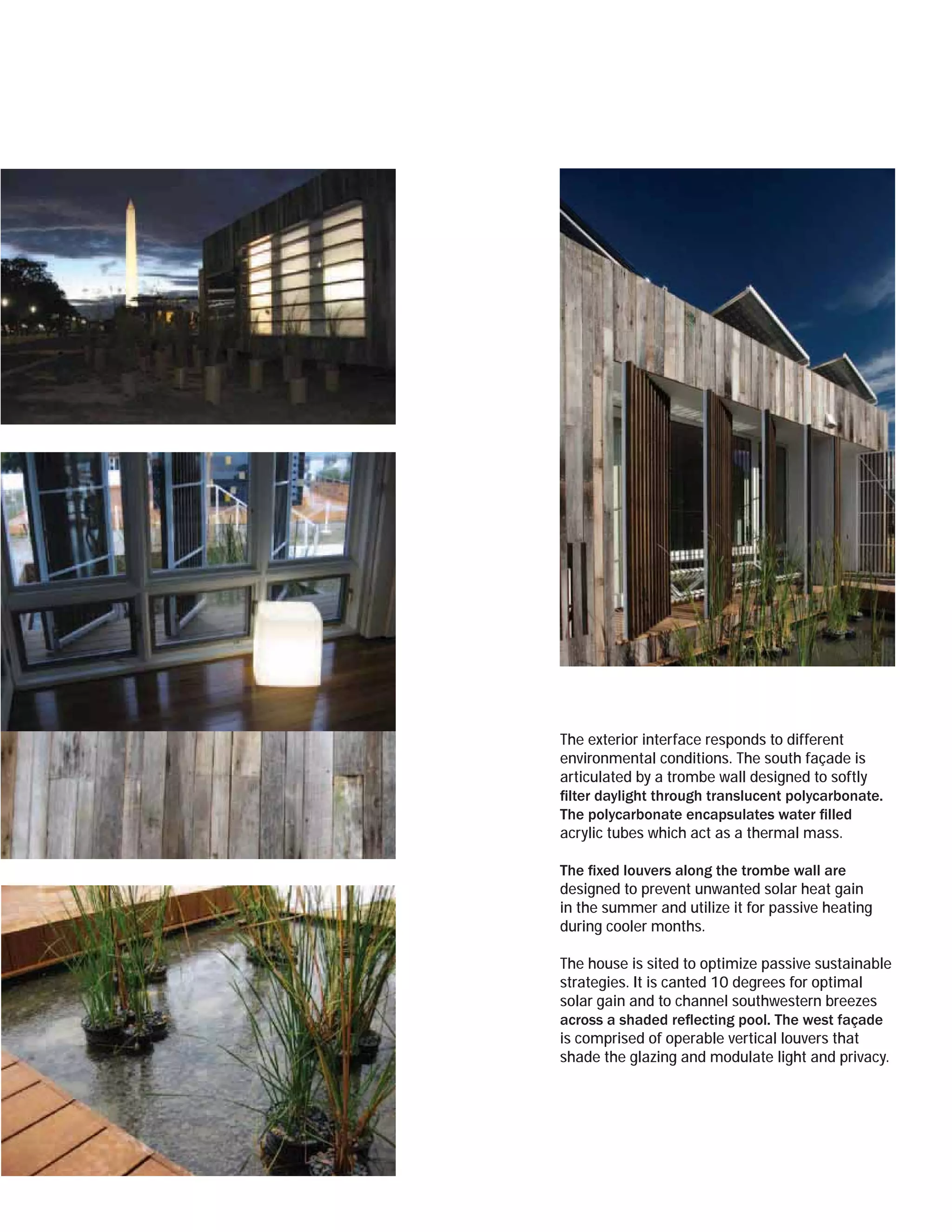
The exterior interface responds to different
environmental conditions. The south façade is
articulated by a trombe wall designed to softly


acrylic tubes which act as a thermal mass.


designed to prevent unwanted solar heat gain
in the summer and utilize it for passive heating
during cooler months.

The house is sited to optimize passive sustainable
strategies. It is canted 10 degrees for optimal
solar gain and to channel southwestern breezes

is comprised of operable vertical louvers that
shade the glazing and modulate light and privacy.
Every aspect of the Interface House was
student lead. The house was designed and
built by six architecture students on The OSU
campus, transported to Washington D.C. for the
International competition and afterwards, to its
current home, The Columbus Zoo and Aquarium.


Out of 20 teams, Ohio State placed 8th in archi-
tecture and 10th overall.
The house’s construction drawings and project
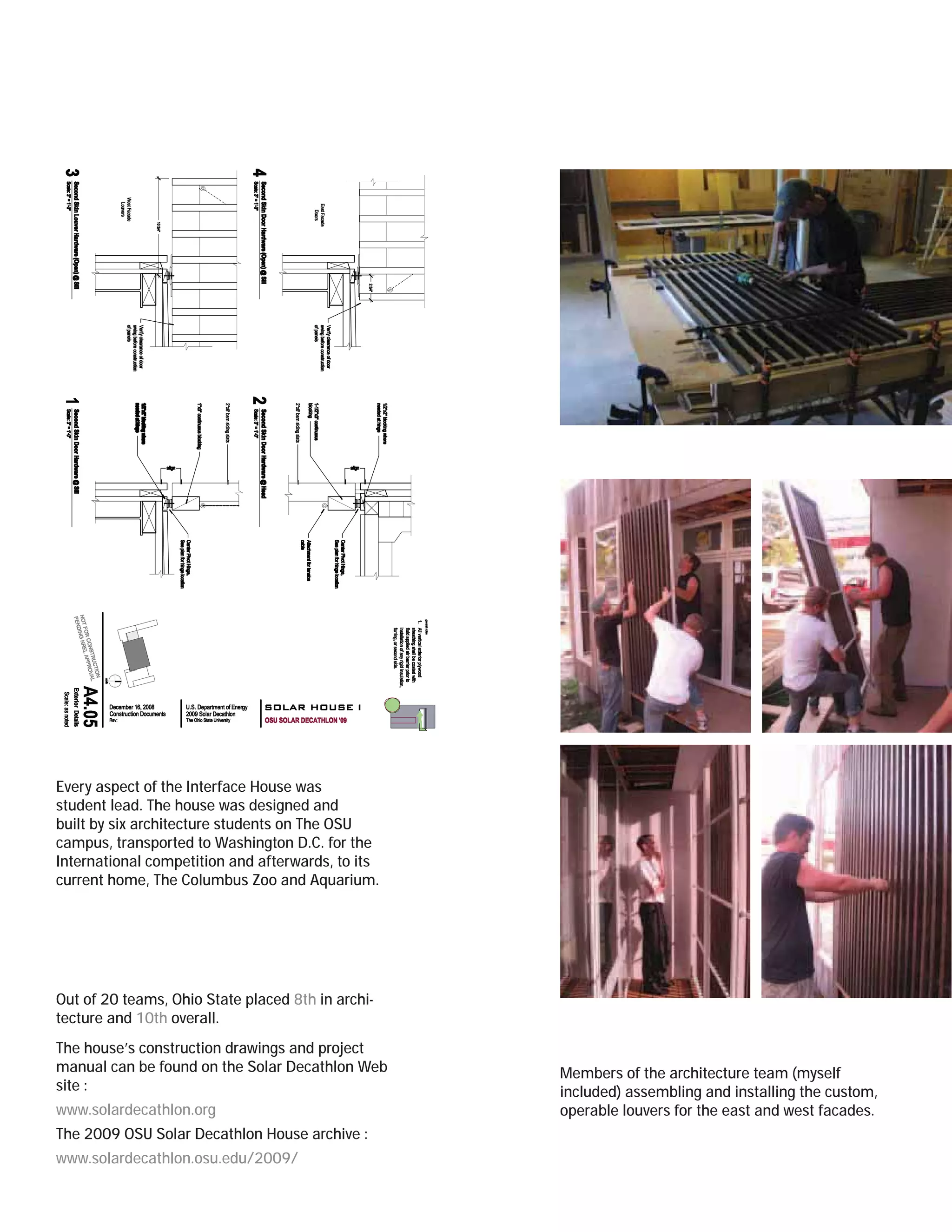
manual can be found on the Solar Decathlon Web     Members of the architecture team (myself
site :                                             included) assembling and installing the custom,
www.solardecathlon.org                             operable louvers for the east and west facades.
The 2009 OSU Solar Decathlon House archive :
www.solardecathlon.osu.edu/2009/
house


                                                                                    2010. Solar Decathlon Design Competition
                                                                                    Design Collaborator : Dave Nedrow

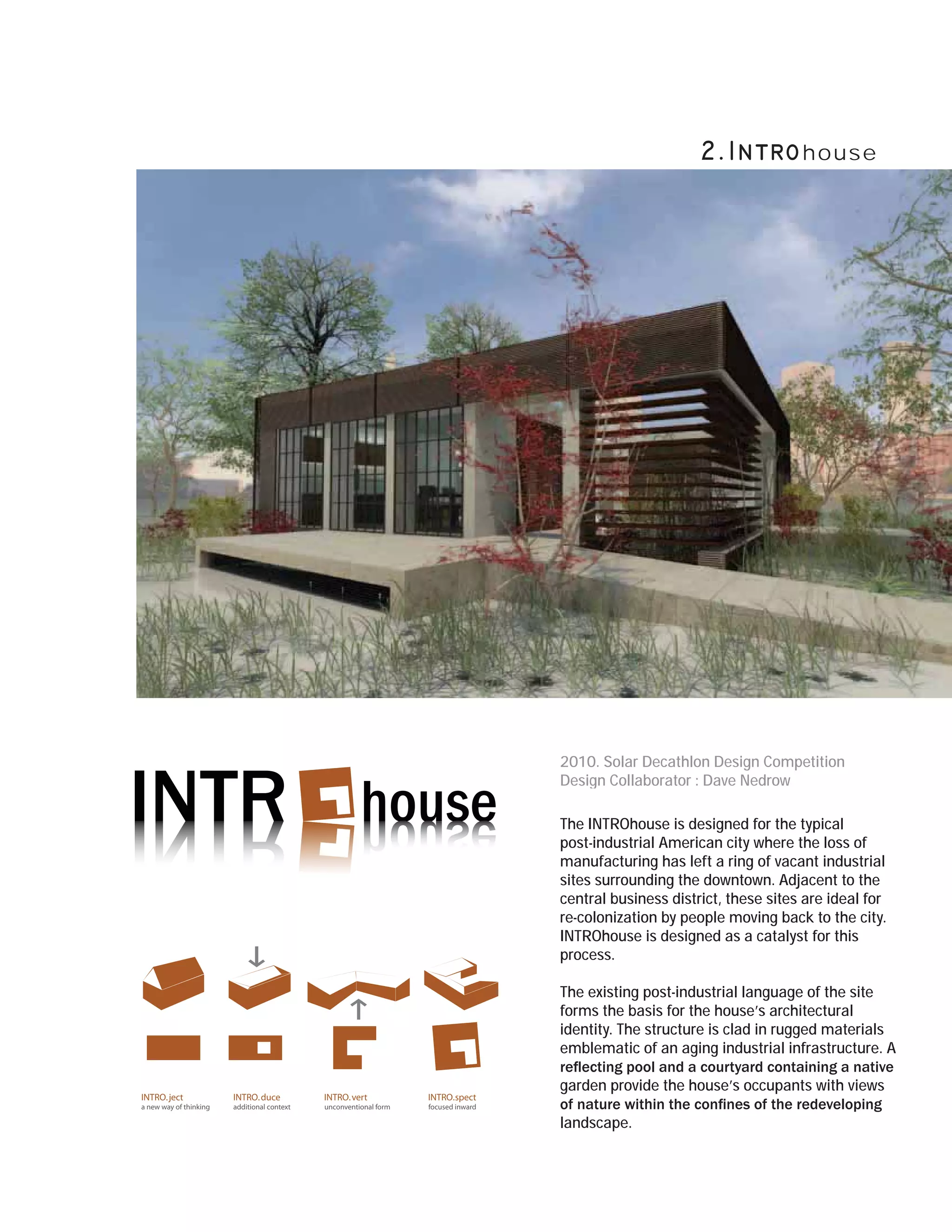
                                                                                    The INTROhouse is designed for the typical
                                                                                    post-industrial American city where the loss of
                                                                                    manufacturing has left a ring of vacant industrial
                                                                                    sites surrounding the downtown. Adjacent to the
                                                                                    central business district, these sites are ideal for
                                                                                    re-colonization by people moving back to the city.
                                                                                    INTROhouse is designed as a catalyst for this
                                                                                    process.

                                                                                    The existing post-industrial language of the site
                                                                                    forms the basis for the house’s architectural
                                                                                    identity. The structure is clad in rugged materials
                                                                                    emblematic of an aging industrial infrastructure. A

                                                                                    garden provide the house’s occupants with views
INTRO. ject             INTRO. duce          INTRO. vert           INTRO.spect
a new way of thinking   additional context   unconventional form   focused inward

                                                                                    landscape.
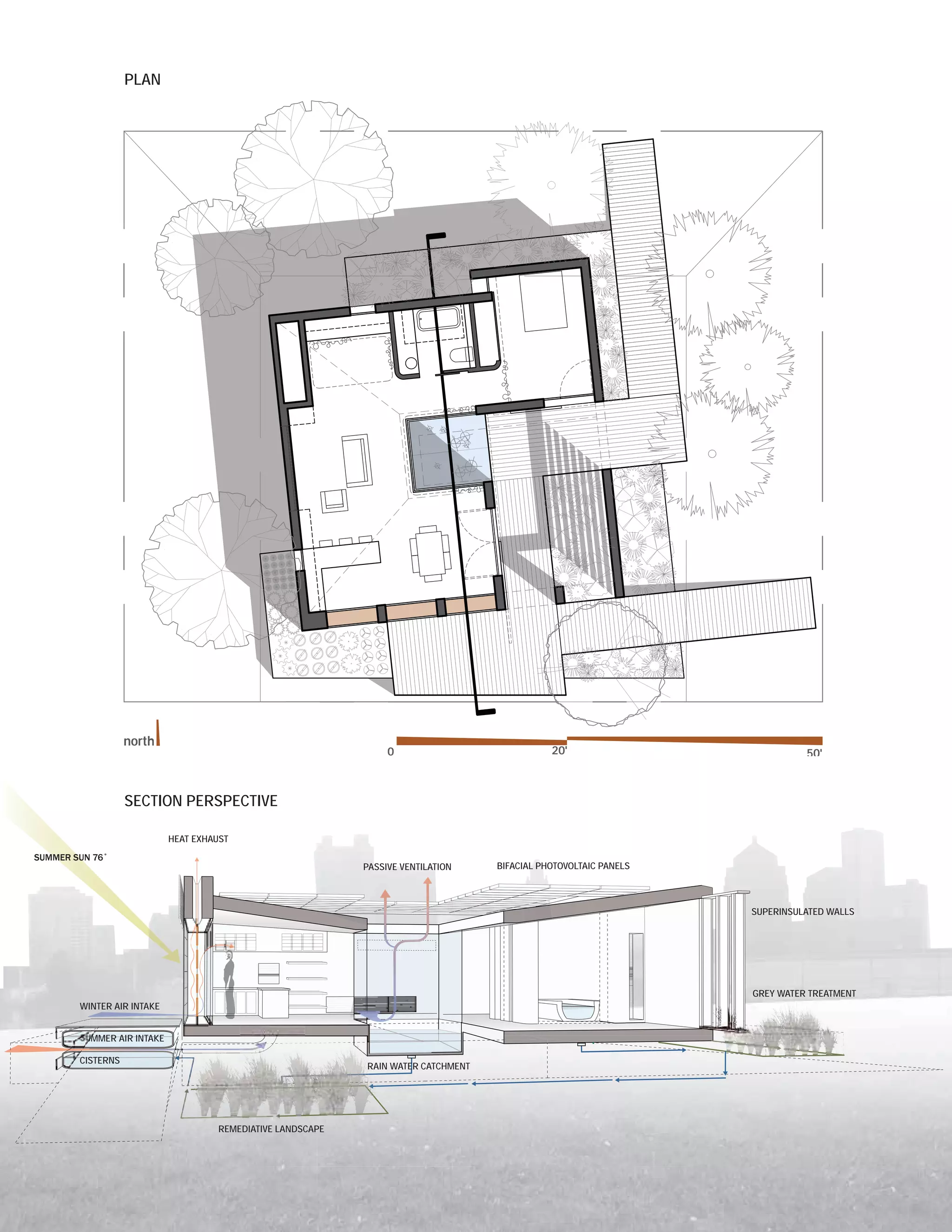
PLAN


           north
                                                          0                            20'                           50'


           SECTION PERSPECTIVE

                    HEAT EXHAUST

                                                     PASSIVE VENTILATION    BIFACIAL PHOTOVOLTAIC PANELS


                                                                                                           SUPERINSULATED WALLS


                                                                                                           GREY WATER TREATMENT
WINTER AIR INTAKE


SUMMER AIR INTAKE

CISTERNS
                                                     RAIN WATER CATCHMENT


                             REMEDIATIVE LANDSCAPE
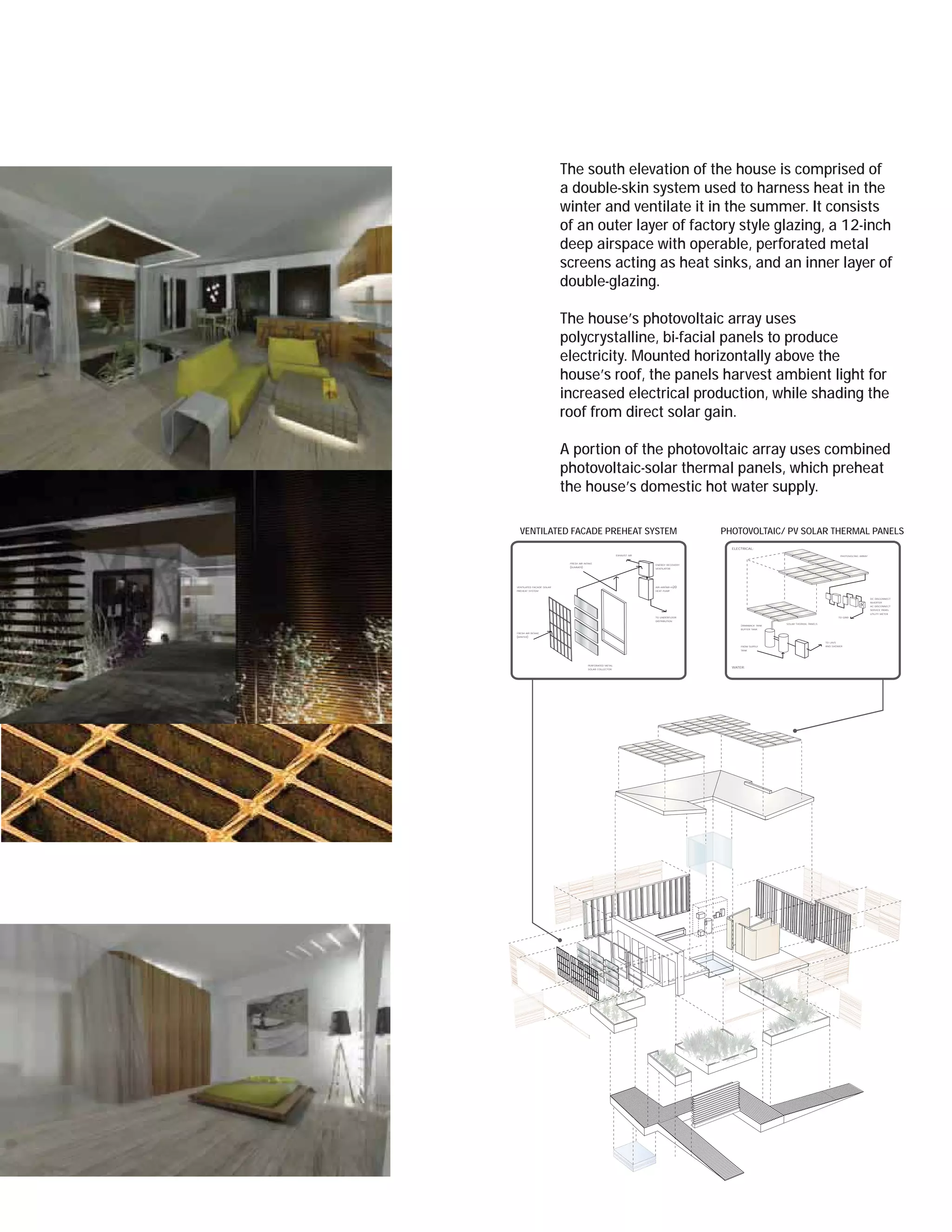
The south elevation of the house is comprised of
                          a double-skin system used to harness heat in the
                          winter and ventilate it in the summer. It consists
                          of an outer layer of factory style glazing, a 12-inch
                          deep airspace with operable, perforated metal
                          screens acting as heat sinks, and an inner layer of
                          double-glazing.

                          The house’s photovoltaic array uses
                          polycrystalline, bi-facial panels to produce
                          electricity. Mounted horizontally above the
                          house’s roof, the panels harvest ambient light for
                          increased electrical production, while shading the
                          roof from direct solar gain.

                          A portion of the photovoltaic array uses combined
                          photovoltaic-solar thermal panels, which preheat
                          the house’s domestic hot water supply.

  VENTILATED FACADE PREHEAT SYSTEM                                                         PHOTOVOLTAIC/ PV SOLAR THERMAL PANELS
                                                                                             ELECTRICAL:

                                                           EXHAUST AIR                                                                              PHOTOVOLTAIC ARRAY


                           FRESH AIR INTAKE
                                                                         ENERGY RECOVERY
                           (SUMMER)                                      VENTILATOR


VENTILATED FACADE SOLAR                                                  AIR-AIR/AIR-H20
PREHEAT SYSTEM                                                           HEAT PUMP


                                                                                                                                                                         DC DISCONNECT
                                                                                                                                                                         INVERTER
                                                                                                                                                                         AC DISCONNECT
                                                                                                                                                                         SERVICE PANEL
                                                                                                                                                                         UTILITY METER
                                                                         TO UNDERFLOOR                                                             TO GRID
                                                                         DISTRIBUTION
                                                                                                                  SOLAR THERMAL PANELS
                                                                                                 DRAINBACK TANK
                                                                                                 BUFFER TANK
FRESH AIR INTAKE
(WINTER)
                                                                                                                                         TO LAVS
                                                                                                 FROM SUPPLY                             AND SHOWER
                                                                                                 TANK


                                        PERFORATED METAL
                                                                                             WATER:
                                        SOLAR COLLECTOR
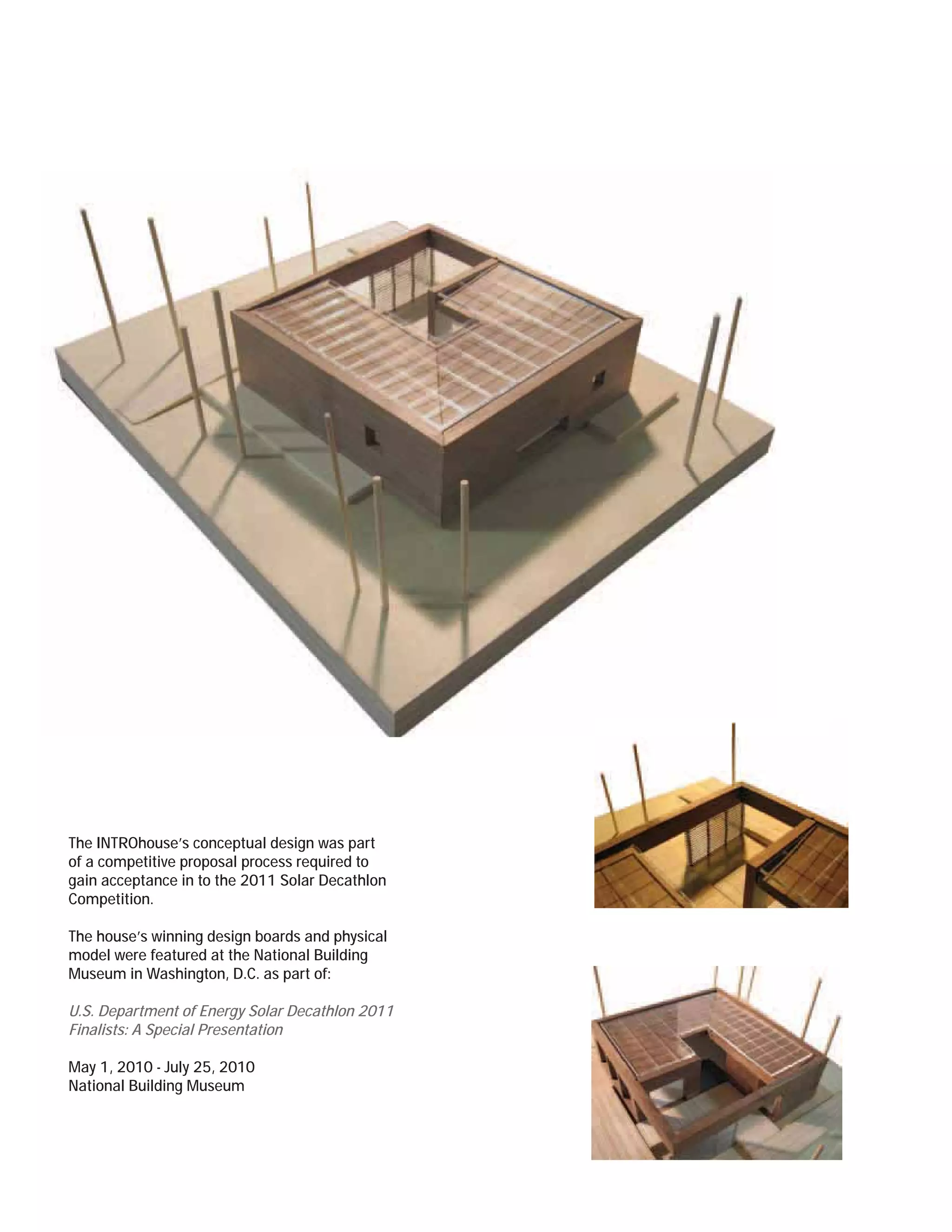
The INTROhouse’s conceptual design was part
of a competitive proposal process required to
gain acceptance in to the 2011 Solar Decathlon
Competition.

The house’s winning design boards and physical
model were featured at the National Building
Museum in Washington, D.C. as part of:

U.S. Department of Energy Solar Decathlon 2011
Finalists: A Special Presentation

May 1, 2010 - July 25, 2010
National Building Museum
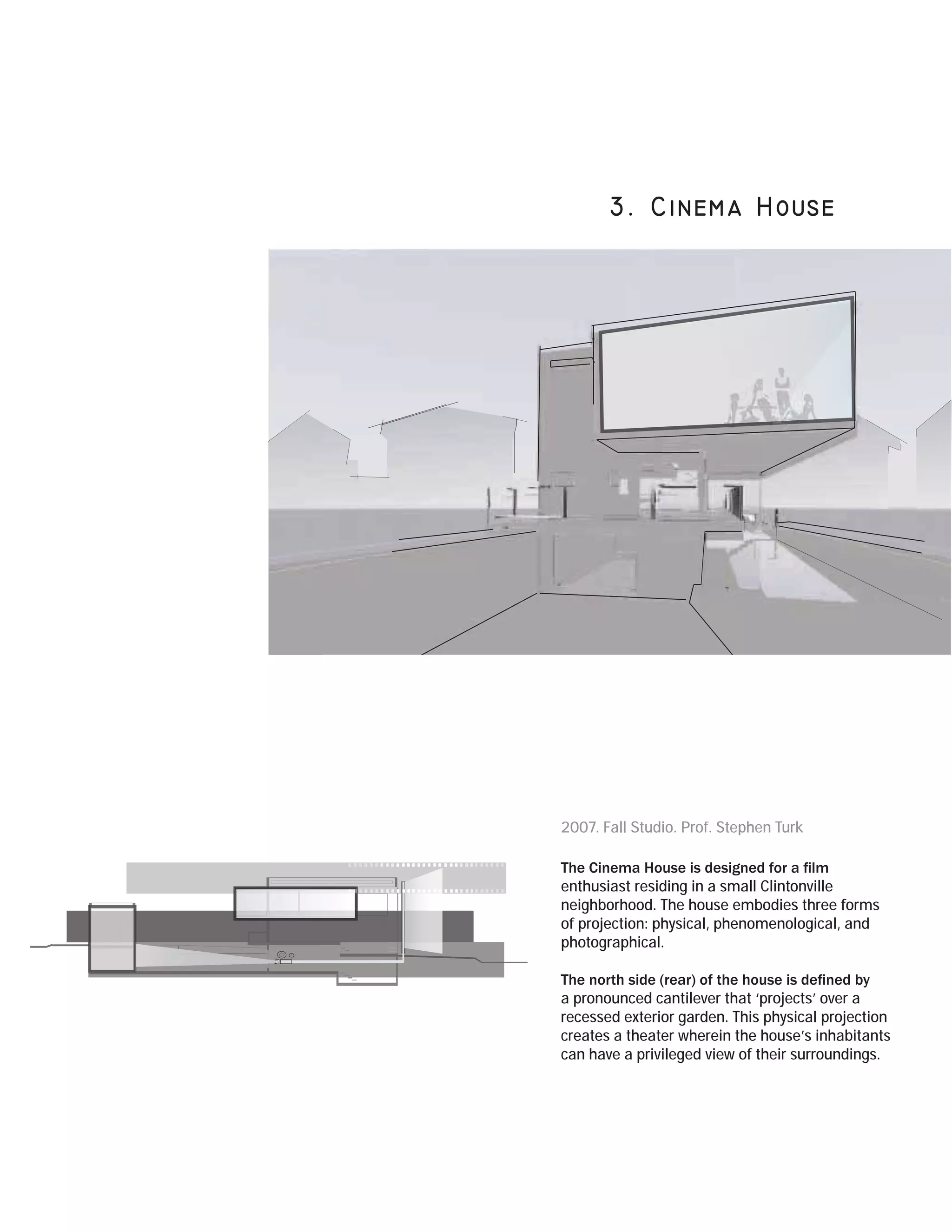
2007. Fall Studio. Prof. Stephen Turk


enthusiast residing in a small Clintonville
neighborhood. The house embodies three forms
of projection: physical, phenomenological, and
photographical.


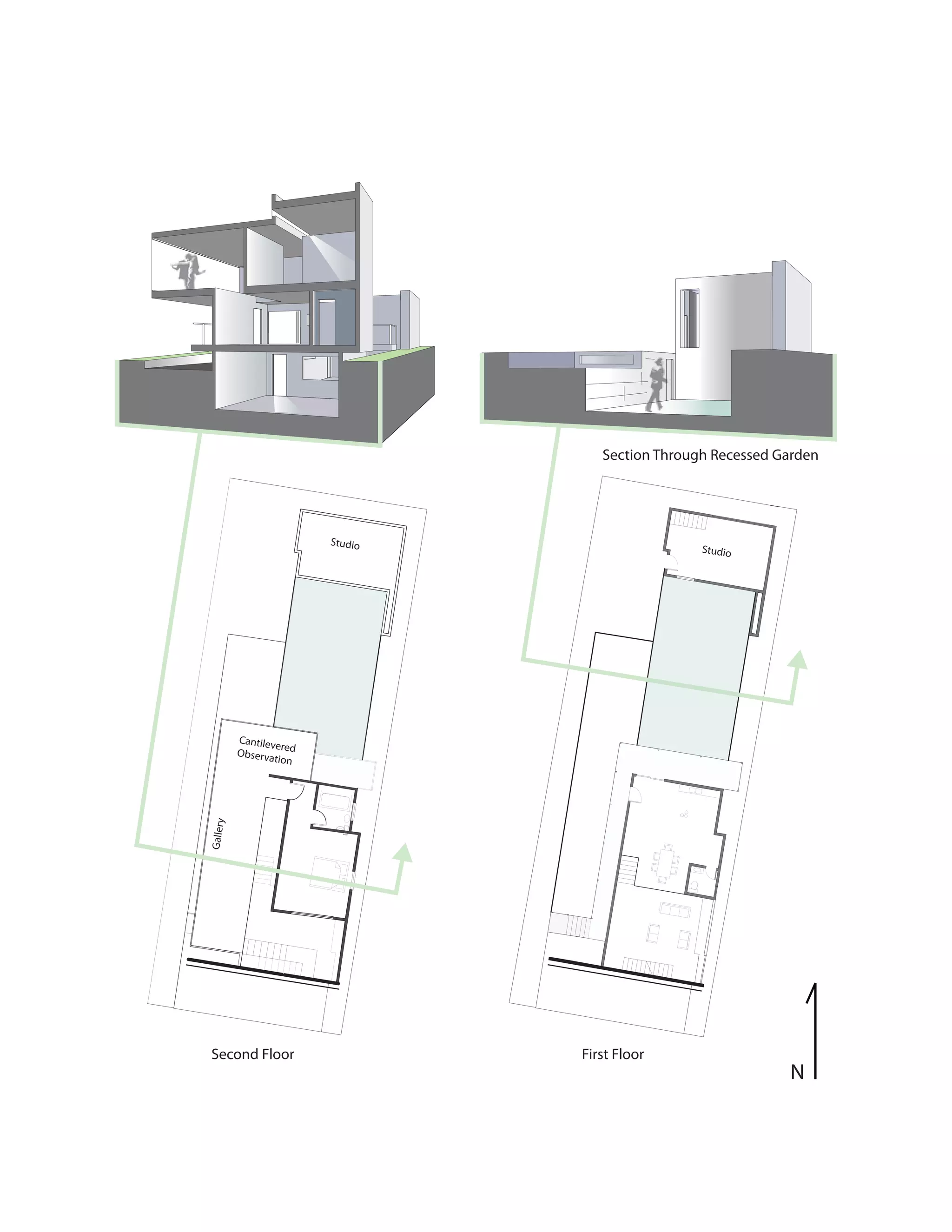
a pronounced cantilever that ‘projects’ over a
recessed exterior garden. This physical projection
creates a theater wherein the house’s inhabitants
can have a privileged view of their surroundings.
Section Through Recessed Garden


                         Studio
                                                   Studio


          Cantilev
                  ere
          Observa d
                  tion
Gallery


Second Floor                      First Floor
                                                               N
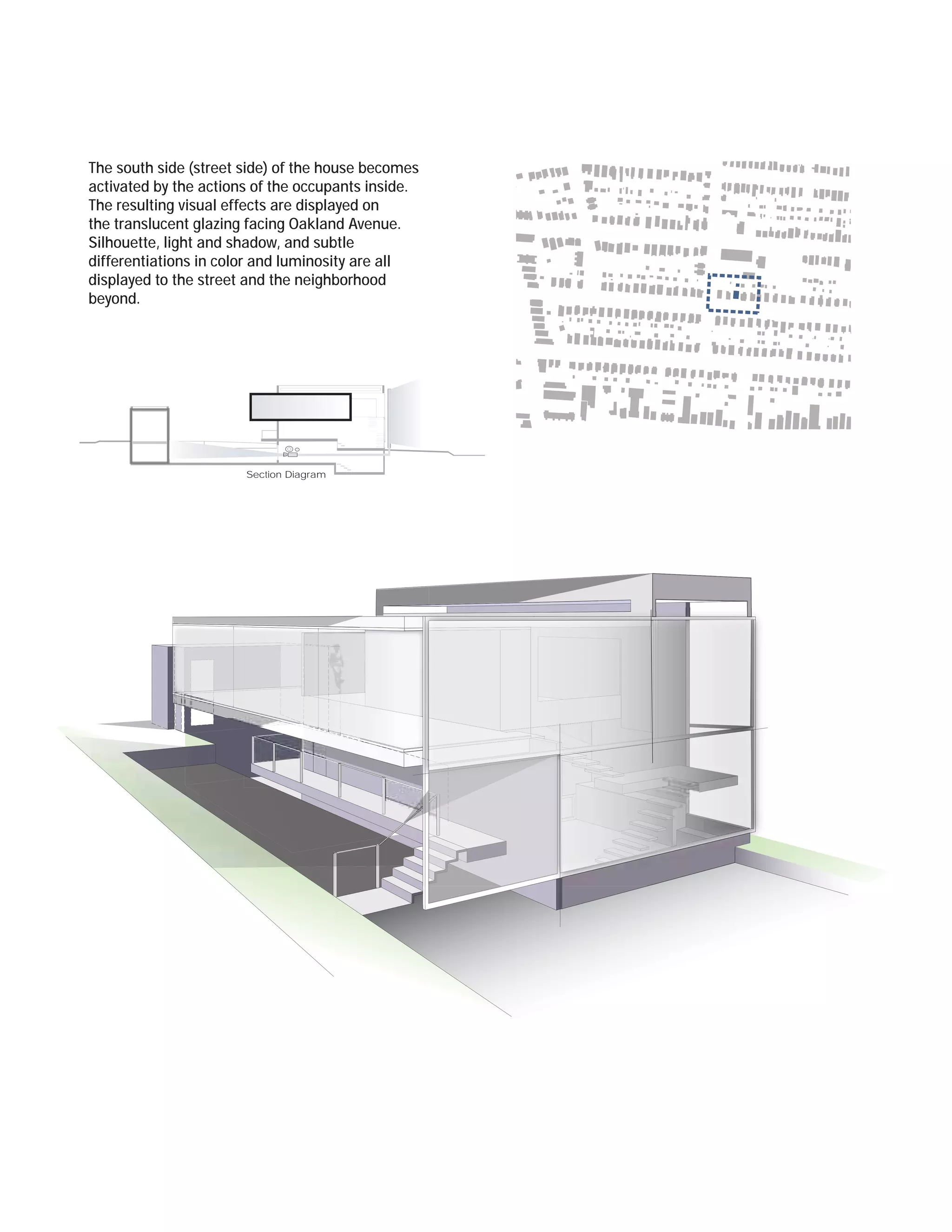
The south side (street side) of the house becomes
activated by the actions of the occupants inside.
The resulting visual effects are displayed on
the translucent glazing facing Oakland Avenue.
Silhouette, light and shadow, and subtle
differentiations in color and luminosity are all
displayed to the street and the neighborhood
beyond.


                       Section Diagram
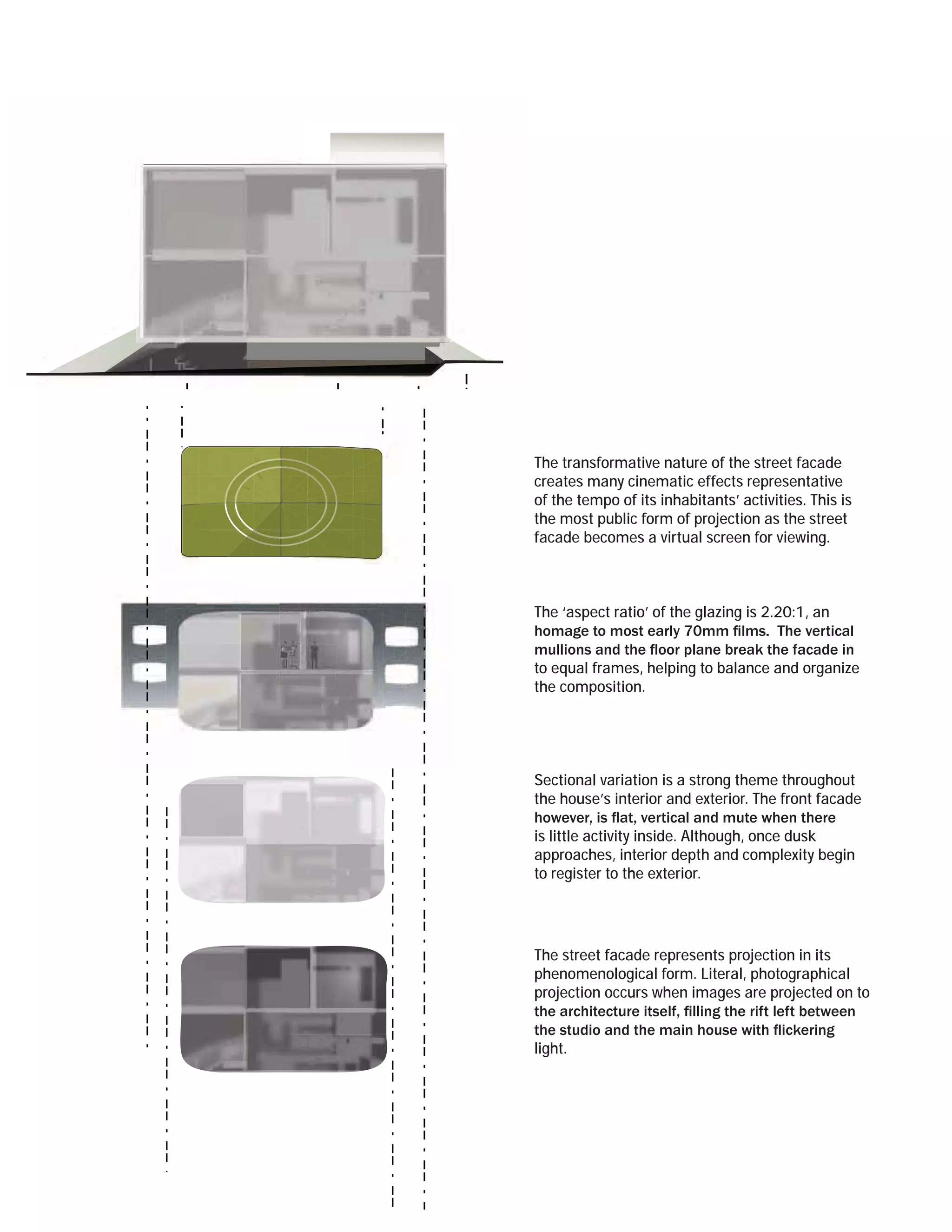
The transformative nature of the street facade
creates many cinematic effects representative
of the tempo of its inhabitants’ activities. This is
the most public form of projection as the street
facade becomes a virtual screen for viewing.


The ‘aspect ratio’ of the glazing is 2.20:1, an


to equal frames, helping to balance and organize
the composition.


Sectional variation is a strong theme throughout
the house’s interior and exterior. The front facade

is little activity inside. Although, once dusk
approaches, interior depth and complexity begin
to register to the exterior.


The street facade represents projection in its
phenomenological form. Literal, photographical
projection occurs when images are projected on to


light.
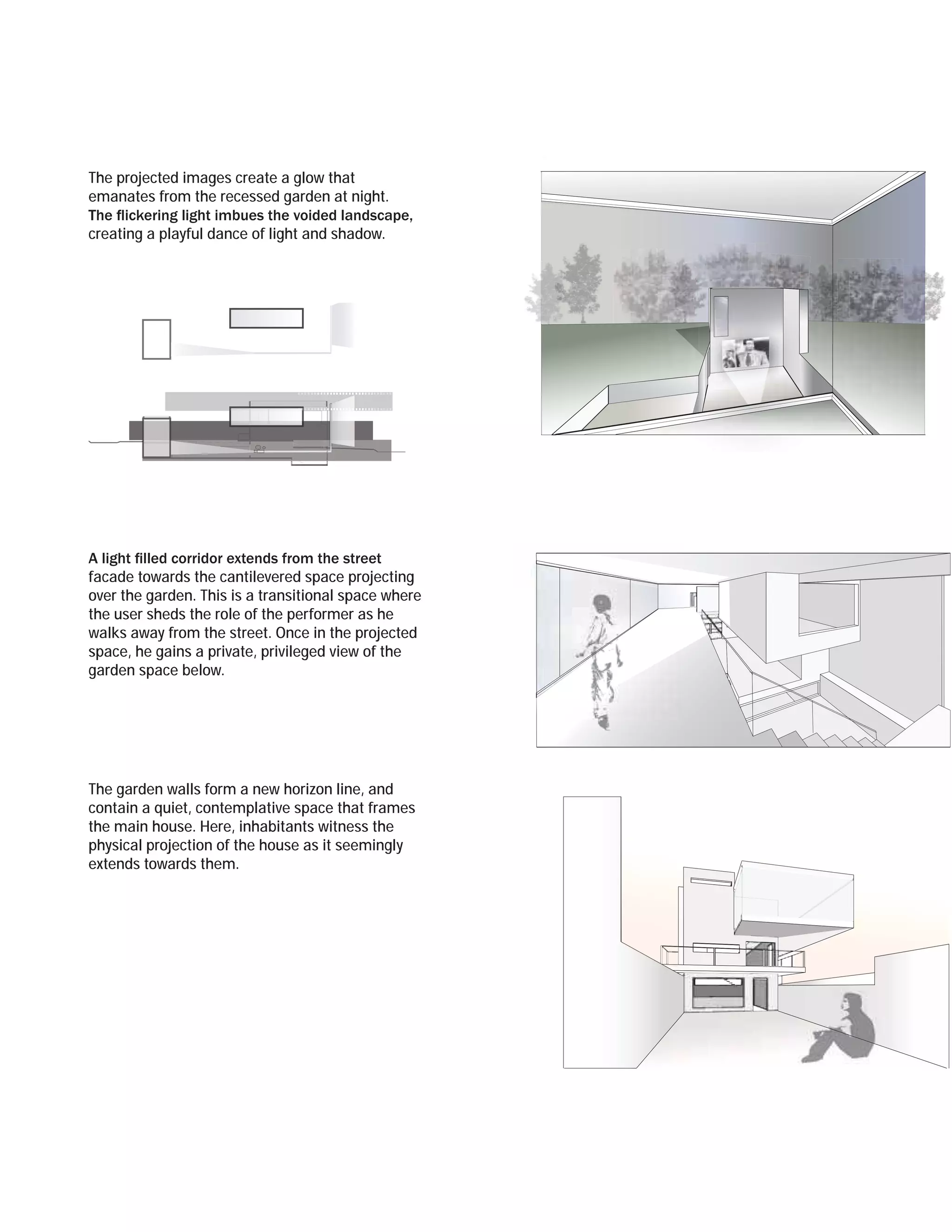
The projected images create a glow that
emanates from the recessed garden at night.

creating a playful dance of light and shadow.


facade towards the cantilevered space projecting
over the garden. This is a transitional space where
the user sheds the role of the performer as he
walks away from the street. Once in the projected
space, he gains a private, privileged view of the
garden space below.


The garden walls form a new horizon line, and
contain a quiet, contemplative space that frames
the main house. Here, inhabitants witness the
physical projection of the house as it seemingly
extends towards them.
Steven D. Winter
a : 1 1 2 2 M t. Pl ea s a n t A v e.
    Columbus, O h i o 4 3 2 0 1
p : 614.306.4952
e : w inter. 5 2 @ o s u . e d u

Work Sample

  • 1.
    Steven D. Winter selectedwork. 3 houses m. arch. 2009. osu p : 614.306.4952 e : winter.52@osu.edu
  • 2.
    2009 OSU SolarDecathlon House Project Design Collaborators : Dave Nedrow, Deanna Hinkle The Interface House re-envisions the domestic living experience in Ohio by promoting a theme of consolidation, encouraging the average person to re-consider the use of space within their home. The house utilizes a centralized living space that needs. It consists of two distinct interfaces, one exterior and one interior. The exterior interface is performative, from an architectural and an energy use standpoint. ventilation, shading, daylighting, and the modulation of light and shadow. The facade, composed of re-claimed Ohio barn siding, acts as a rain-screen and draws subtle reference to Ohio’s agriculture heritage.
  • 4.
    Interface House isdesigned in response to the oversized contemporary (American) living condition. To promote consolidation, the design demonstrates a minimal footprint, both physically and ecologically; suggesting a lifestyle in which and responding to the natural environment. center space surrounded by the interior interface, the interactive wall surface that contains the house’s program. Program components are concealed or revealed by the interior interface, allowing the space to adapt to the individuals’ becomes bedroom, space becomes theater for entertaining). Additionally, furniture is designed to be stored inside the interface when not in use. This allows the space to comfortably accommodate typical allow for spontaneous entertaining.
  • 5.
    The exterior interfaceresponds to different environmental conditions. The south façade is articulated by a trombe wall designed to softly acrylic tubes which act as a thermal mass. designed to prevent unwanted solar heat gain in the summer and utilize it for passive heating during cooler months. The house is sited to optimize passive sustainable strategies. It is canted 10 degrees for optimal solar gain and to channel southwestern breezes is comprised of operable vertical louvers that shade the glazing and modulate light and privacy.
  • 6.
    Every aspect ofthe Interface House was student lead. The house was designed and built by six architecture students on The OSU campus, transported to Washington D.C. for the International competition and afterwards, to its current home, The Columbus Zoo and Aquarium. Out of 20 teams, Ohio State placed 8th in archi- tecture and 10th overall. The house’s construction drawings and project manual can be found on the Solar Decathlon Web Members of the architecture team (myself site : included) assembling and installing the custom, www.solardecathlon.org operable louvers for the east and west facades. The 2009 OSU Solar Decathlon House archive : www.solardecathlon.osu.edu/2009/
  • 7.
    house 2010. Solar Decathlon Design Competition Design Collaborator : Dave Nedrow The INTROhouse is designed for the typical post-industrial American city where the loss of manufacturing has left a ring of vacant industrial sites surrounding the downtown. Adjacent to the central business district, these sites are ideal for re-colonization by people moving back to the city. INTROhouse is designed as a catalyst for this process. The existing post-industrial language of the site forms the basis for the house’s architectural identity. The structure is clad in rugged materials emblematic of an aging industrial infrastructure. A garden provide the house’s occupants with views INTRO. ject INTRO. duce INTRO. vert INTRO.spect a new way of thinking additional context unconventional form focused inward landscape.
  • 8.
    PLAN north 0 20' 50' SECTION PERSPECTIVE HEAT EXHAUST PASSIVE VENTILATION BIFACIAL PHOTOVOLTAIC PANELS SUPERINSULATED WALLS GREY WATER TREATMENT WINTER AIR INTAKE SUMMER AIR INTAKE CISTERNS RAIN WATER CATCHMENT REMEDIATIVE LANDSCAPE
  • 9.
    The south elevationof the house is comprised of a double-skin system used to harness heat in the winter and ventilate it in the summer. It consists of an outer layer of factory style glazing, a 12-inch deep airspace with operable, perforated metal screens acting as heat sinks, and an inner layer of double-glazing. The house’s photovoltaic array uses polycrystalline, bi-facial panels to produce electricity. Mounted horizontally above the house’s roof, the panels harvest ambient light for increased electrical production, while shading the roof from direct solar gain. A portion of the photovoltaic array uses combined photovoltaic-solar thermal panels, which preheat the house’s domestic hot water supply. VENTILATED FACADE PREHEAT SYSTEM PHOTOVOLTAIC/ PV SOLAR THERMAL PANELS ELECTRICAL: EXHAUST AIR PHOTOVOLTAIC ARRAY FRESH AIR INTAKE ENERGY RECOVERY (SUMMER) VENTILATOR VENTILATED FACADE SOLAR AIR-AIR/AIR-H20 PREHEAT SYSTEM HEAT PUMP DC DISCONNECT INVERTER AC DISCONNECT SERVICE PANEL UTILITY METER TO UNDERFLOOR TO GRID DISTRIBUTION SOLAR THERMAL PANELS DRAINBACK TANK BUFFER TANK FRESH AIR INTAKE (WINTER) TO LAVS FROM SUPPLY AND SHOWER TANK PERFORATED METAL WATER: SOLAR COLLECTOR
  • 10.
    The INTROhouse’s conceptualdesign was part of a competitive proposal process required to gain acceptance in to the 2011 Solar Decathlon Competition. The house’s winning design boards and physical model were featured at the National Building Museum in Washington, D.C. as part of: U.S. Department of Energy Solar Decathlon 2011 Finalists: A Special Presentation May 1, 2010 - July 25, 2010 National Building Museum
  • 11.
    2007. Fall Studio.Prof. Stephen Turk enthusiast residing in a small Clintonville neighborhood. The house embodies three forms of projection: physical, phenomenological, and photographical. a pronounced cantilever that ‘projects’ over a recessed exterior garden. This physical projection creates a theater wherein the house’s inhabitants can have a privileged view of their surroundings.
  • 12.
    Section Through RecessedGarden Studio Studio Cantilev ere Observa d tion Gallery Second Floor First Floor N
  • 13.
    The south side(street side) of the house becomes activated by the actions of the occupants inside. The resulting visual effects are displayed on the translucent glazing facing Oakland Avenue. Silhouette, light and shadow, and subtle differentiations in color and luminosity are all displayed to the street and the neighborhood beyond. Section Diagram
  • 14.
    The transformative natureof the street facade creates many cinematic effects representative of the tempo of its inhabitants’ activities. This is the most public form of projection as the street facade becomes a virtual screen for viewing. The ‘aspect ratio’ of the glazing is 2.20:1, an to equal frames, helping to balance and organize the composition. Sectional variation is a strong theme throughout the house’s interior and exterior. The front facade is little activity inside. Although, once dusk approaches, interior depth and complexity begin to register to the exterior. The street facade represents projection in its phenomenological form. Literal, photographical projection occurs when images are projected on to light.
  • 15.
    The projected imagescreate a glow that emanates from the recessed garden at night. creating a playful dance of light and shadow. facade towards the cantilevered space projecting over the garden. This is a transitional space where the user sheds the role of the performer as he walks away from the street. Once in the projected space, he gains a private, privileged view of the garden space below. The garden walls form a new horizon line, and contain a quiet, contemplative space that frames the main house. Here, inhabitants witness the physical projection of the house as it seemingly extends towards them.
  • 16.
    Steven D. Winter a: 1 1 2 2 M t. Pl ea s a n t A v e. Columbus, O h i o 4 3 2 0 1 p : 614.306.4952 e : w inter. 5 2 @ o s u . e d u