Tropical Architecture
4TH QUIZ PRESENTATION
OF 5TH SEMESTER
Afifaturrahmah
050.16001
Tanri Abeng University
Architecture – Batch V
Tropical Architecture
ARCHITECTURAL PLANS
1
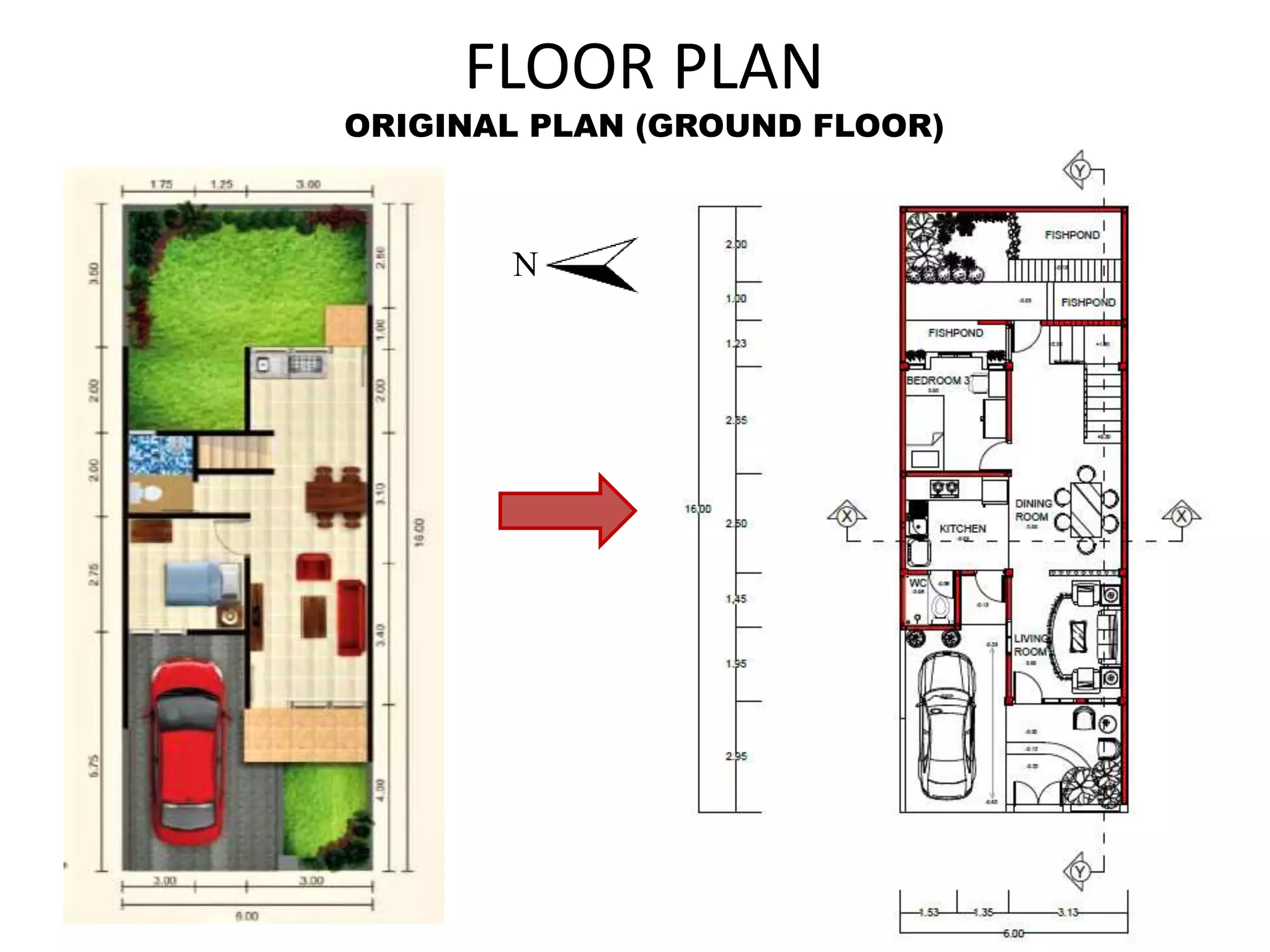
FLOOR PLAN
ORIGINAL PLAN
N
N
FLOOR PLAN
ORIGINAL PLAN (GROUND FLOOR)
N
FLOOR PLAN
ORIGINAL PLAN (2ND FLOOR)
N
ELEVATION
FRONT ELEVATION (WEST SIDE)
N
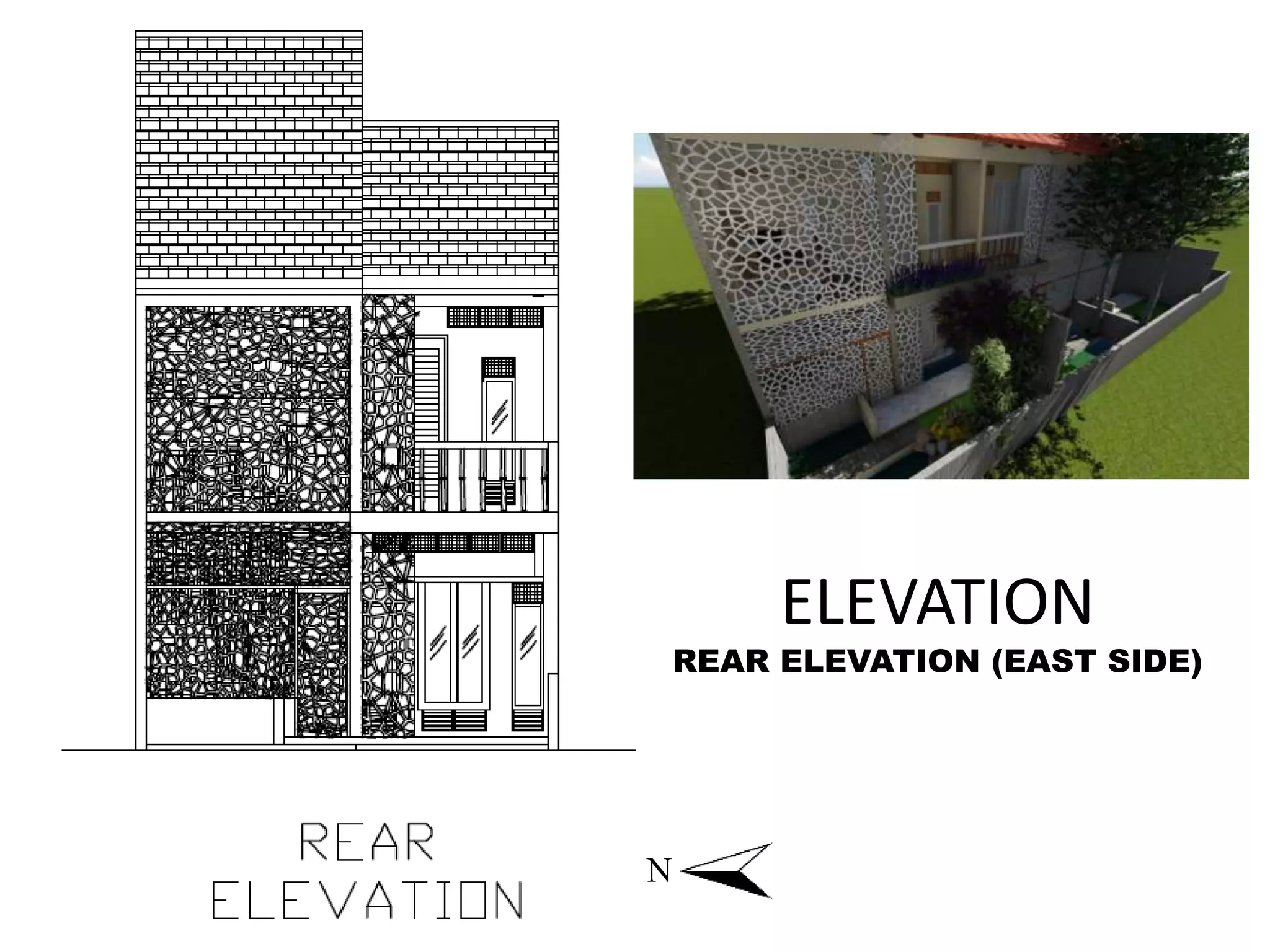
ELEVATION
REAR ELEVATION (EAST SIDE)
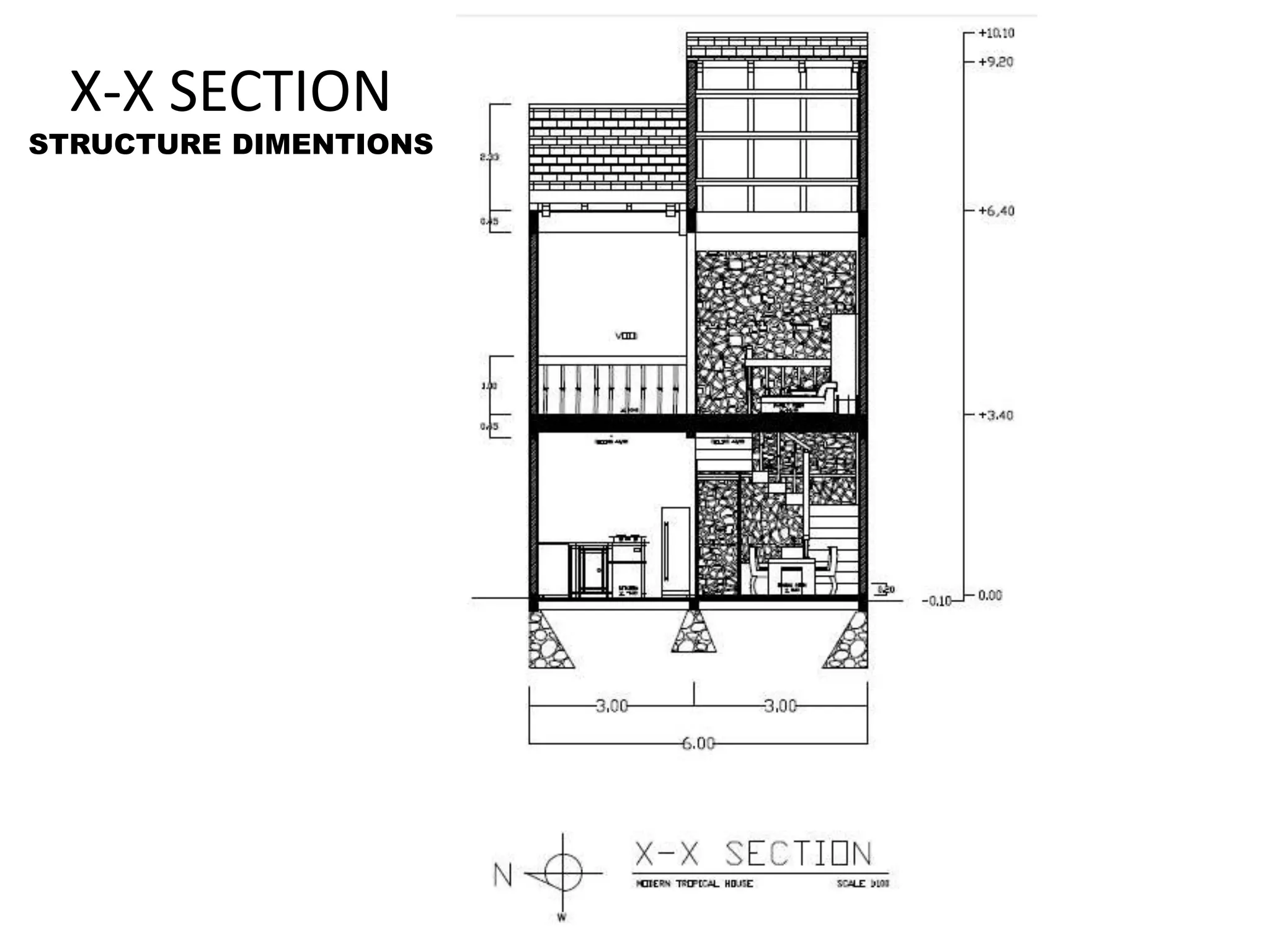
X-X SECTION
STRUCTURE DIMENTIONS
X-X SECTION
MATERIALS
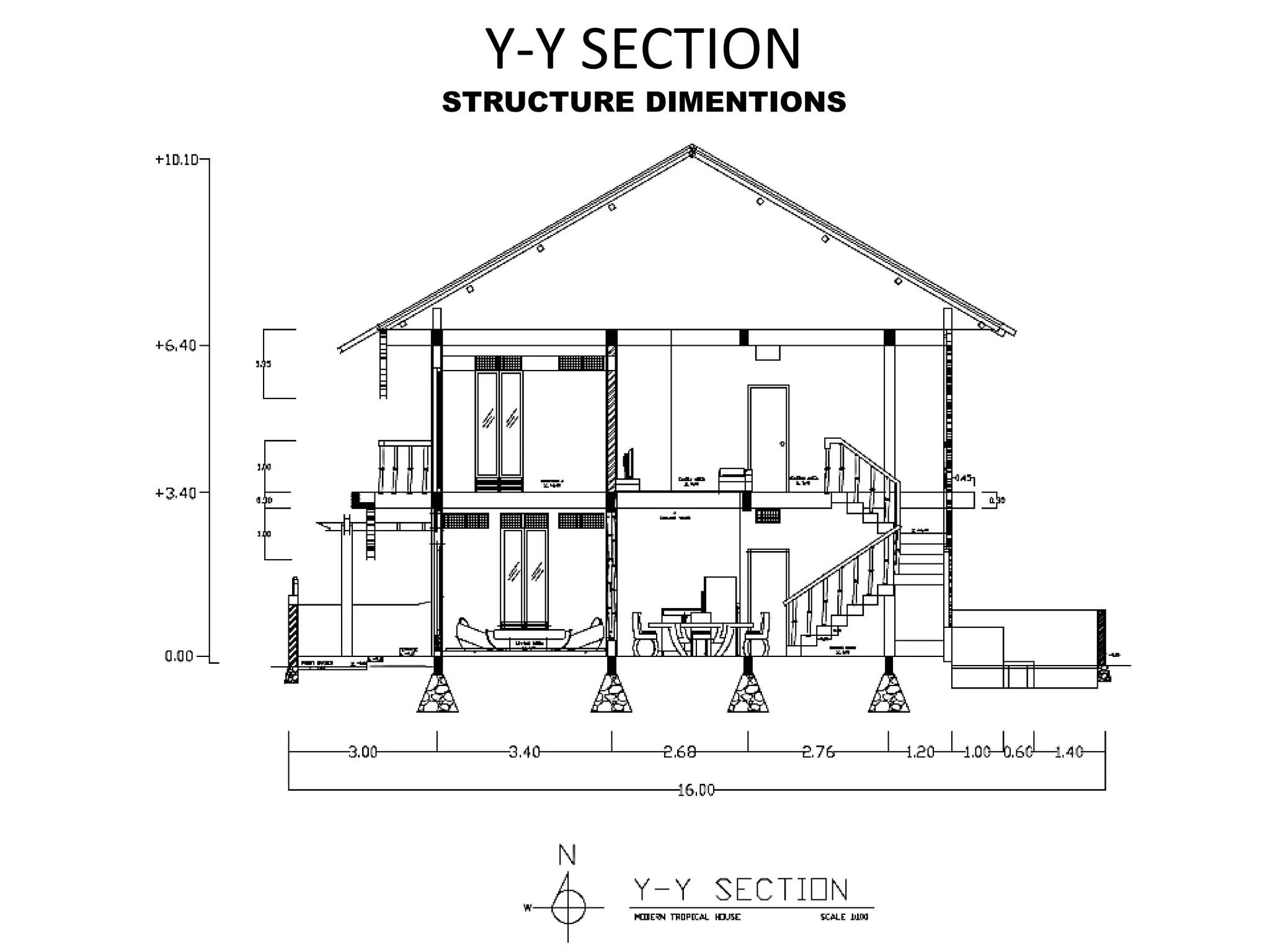
Y-Y SECTION
STRUCTURE DIMENTIONS
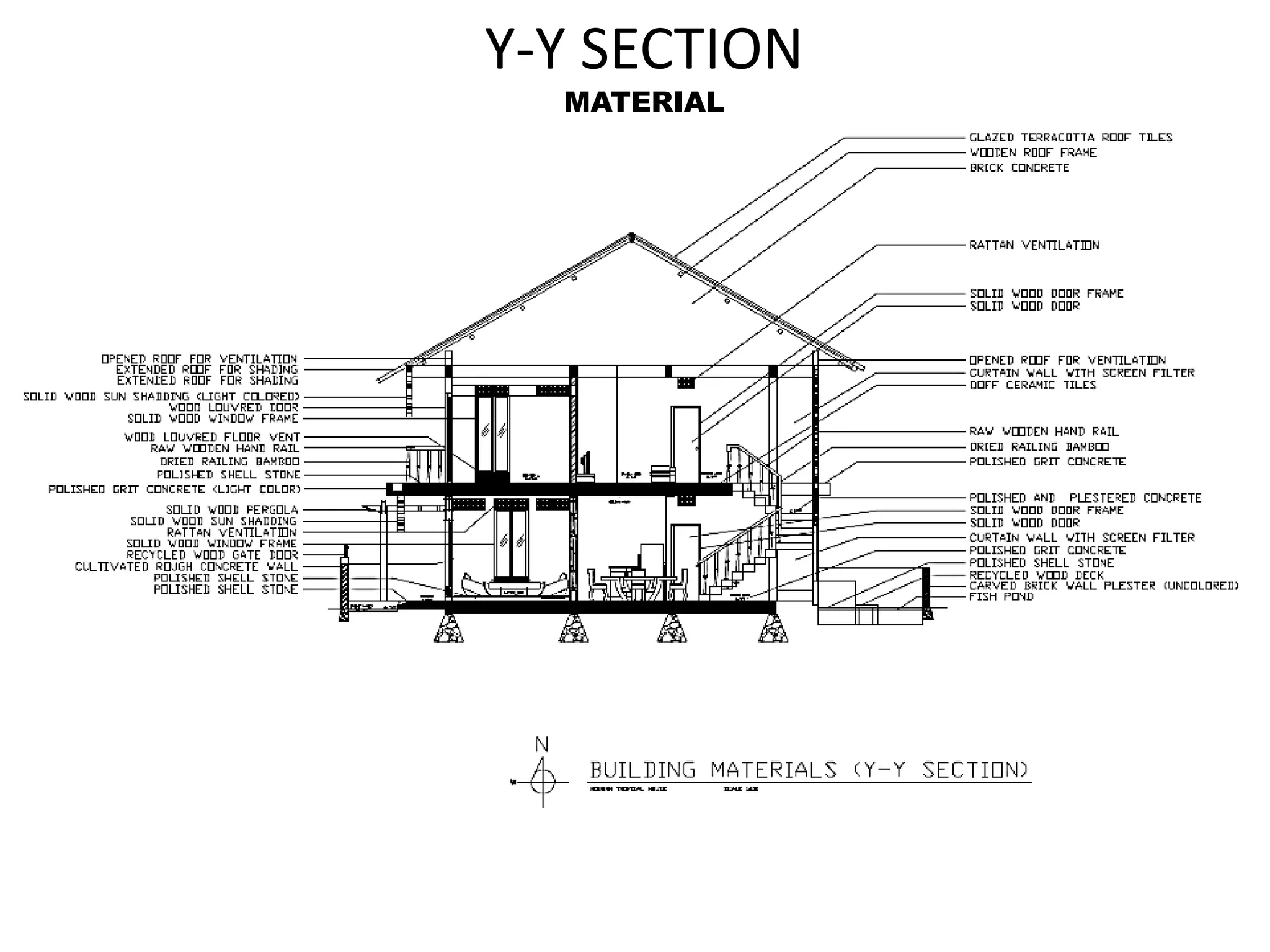
Y-Y SECTION
MATERIAL
Tropical Architecture
ROOMS ORGANIZING
2
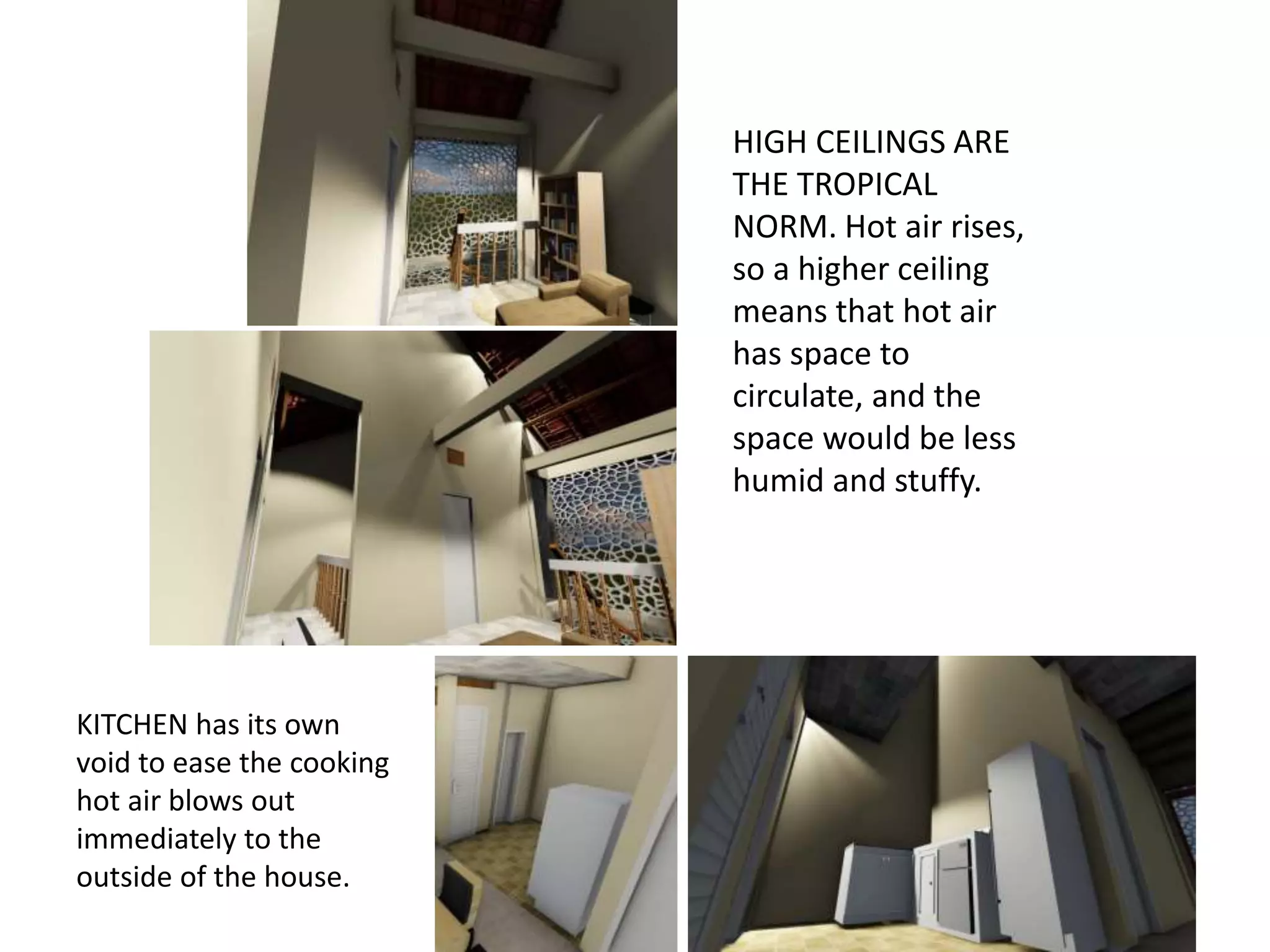
KITCHEN has its own
void to ease the cooking
hot air blows out
immediately to the
outside of the house.
HIGH CEILINGS ARE
THE TROPICAL
NORM. Hot air rises,
so a higher ceiling
means that hot air
has space to
circulate, and the
space would be less
humid and stuffy.
Passive cooling simply means
cooling the house without using
artificial air conditioning. This is
the trademark of a tropical
home, and this means having
wide wall openings. This part of
the house does have huge role
for this house breathing. The
wall is actually opened, the
“entire wall” sun shading protect
the inside from direct sun heat
and rain.
Longer and wider eaves (that
part of the roof that hangs over
the walls of the house) shield
parts of the house from sun and
rain. A steep roof slope allows
rainwater to flow down faster,
and creates a larger void
between roof surface and ceiling.
The air [in this void] circulates,
and cools the home. This house is
applying 30 degrees fot its slope.
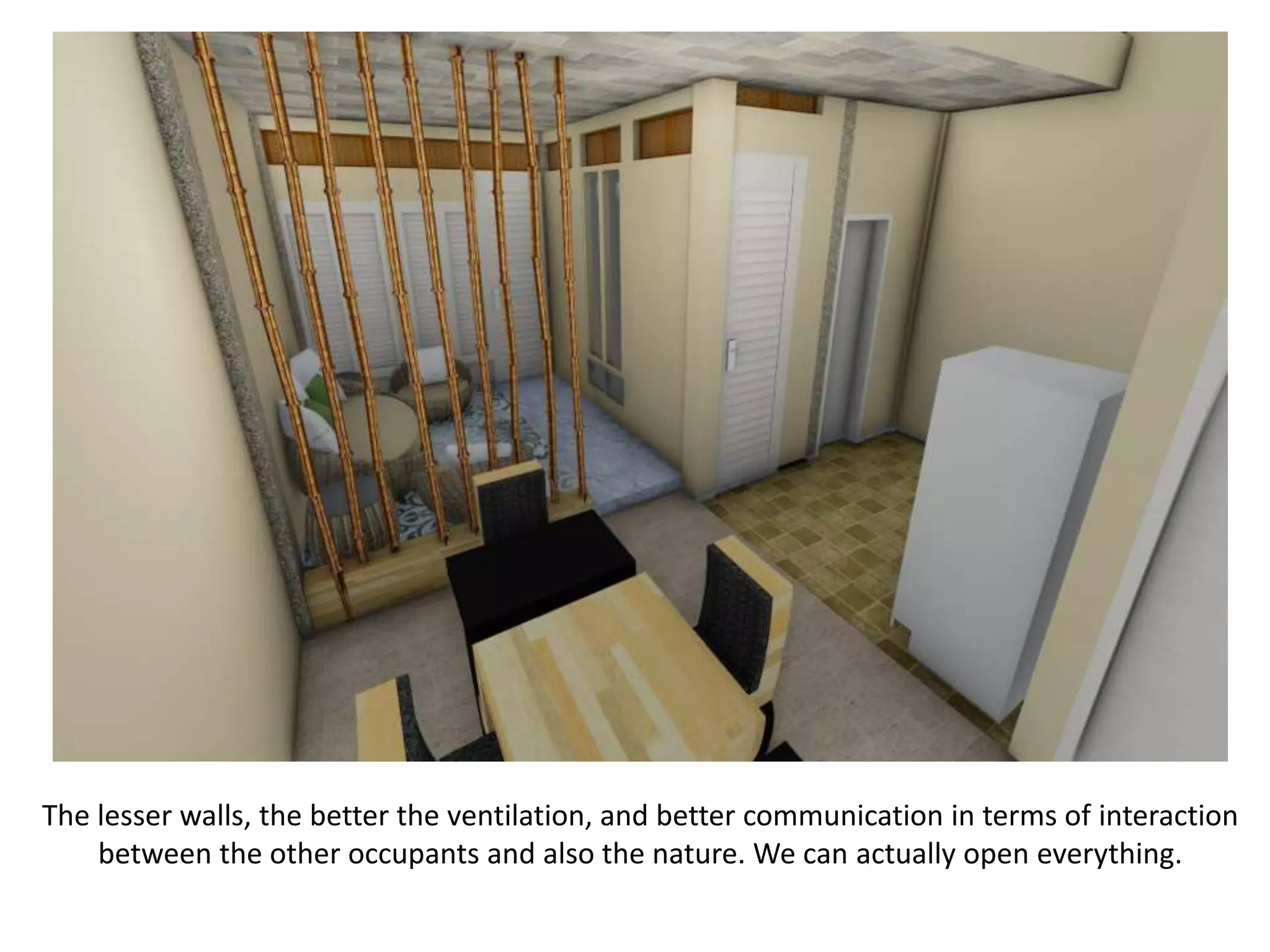
The lesser walls, the better the ventilation, and better communication in terms of interaction
between the other occupants and also the nature. We can actually open everything.
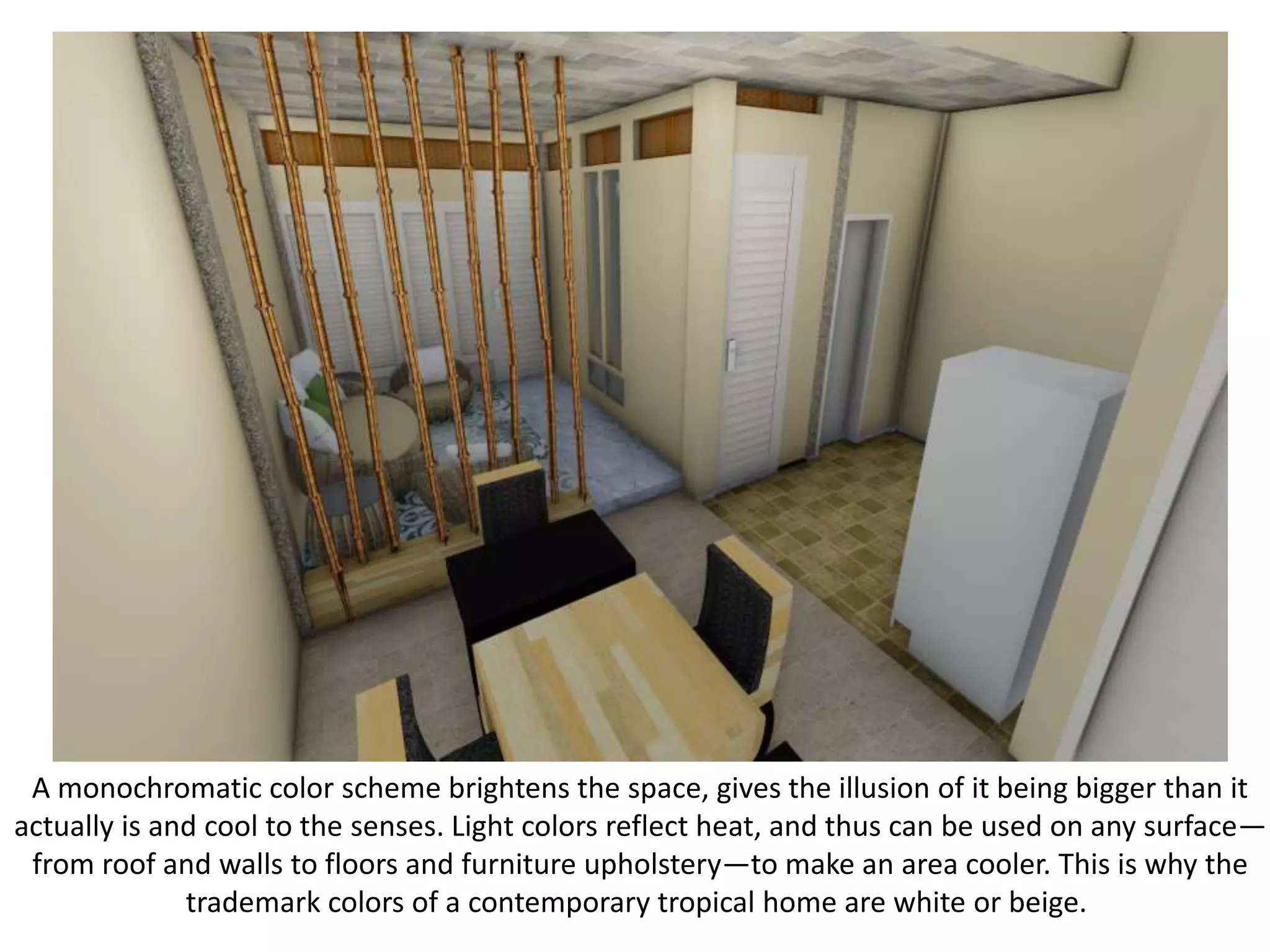
A monochromatic color scheme brightens the space, gives the illusion of it being bigger than it
actually is and cool to the senses. Light colors reflect heat, and thus can be used on any surface—
from roof and walls to floors and furniture upholstery—to make an area cooler. This is why the
trademark colors of a contemporary tropical home are white or beige.
Tropical Architecture
MATERIALS SELECTION
3
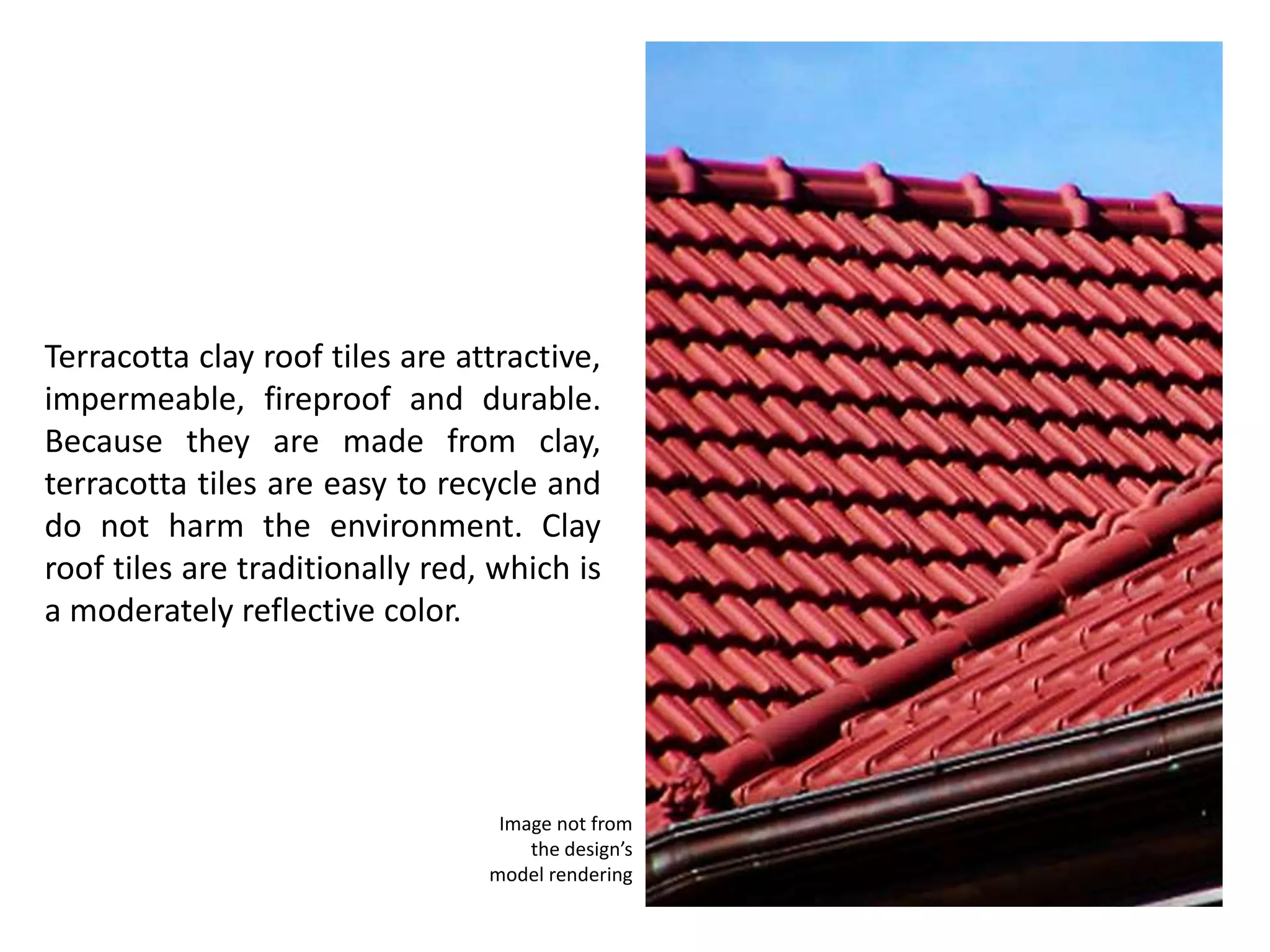
Terracotta clay roof tiles are attractive,
impermeable, fireproof and durable.
Because they are made from clay,
terracotta tiles are easy to recycle and
do not harm the environment. Clay
roof tiles are traditionally red, which is
a moderately reflective color.
Image not from
the design’s
model rendering
Reusing old wood
material for gate door
material, as ecogreen
architecture application.
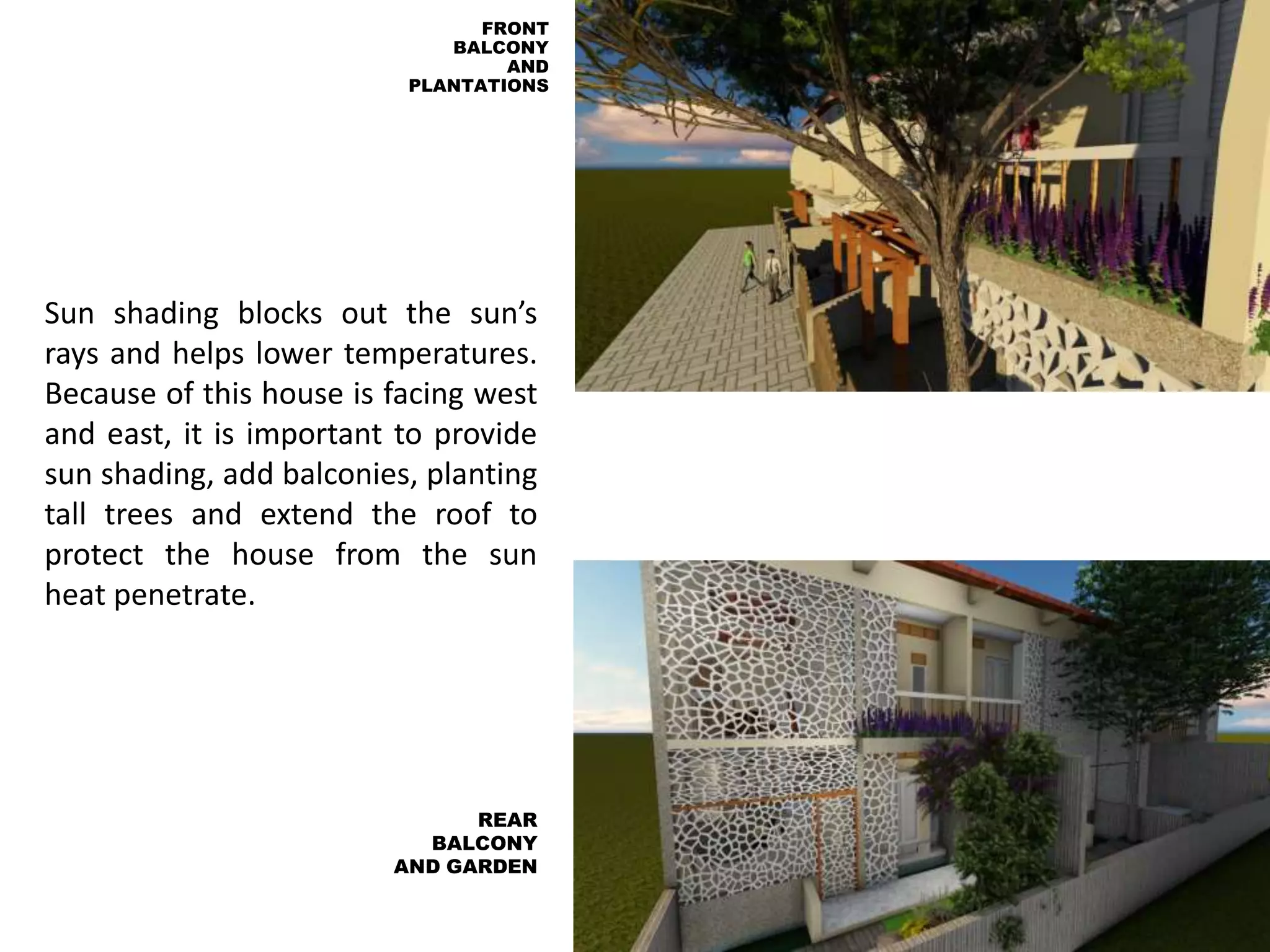
Sun shading blocks out the sun’s
rays and helps lower temperatures.
Because of this house is facing west
and east, it is important to provide
sun shading, add balconies, planting
tall trees and extend the roof to
protect the house from the sun
heat penetrate.
REAR
BALCONY
AND GARDEN
FRONT
BALCONY
AND
PLANTATIONS
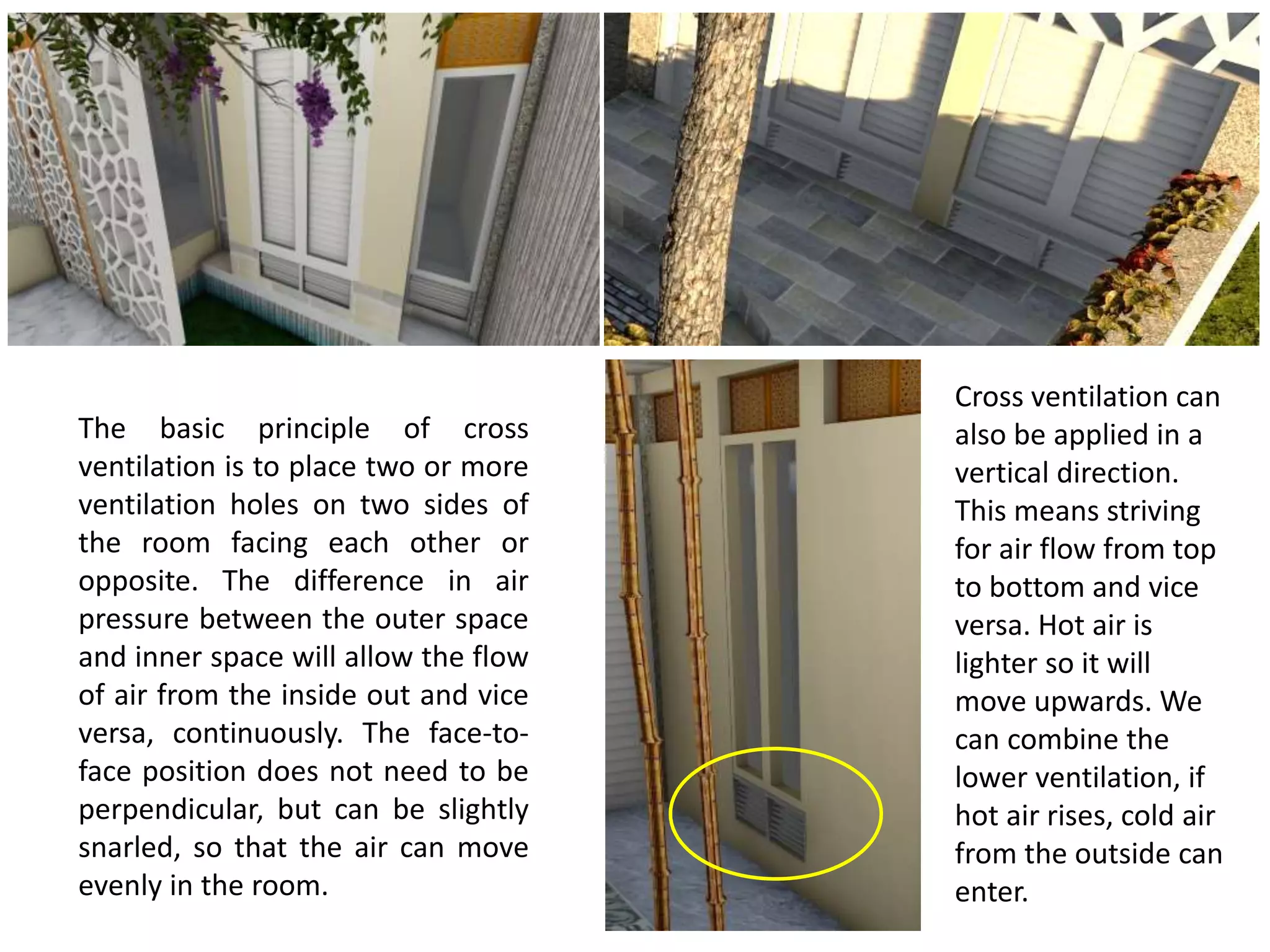
The basic principle of cross
ventilation is to place two or more
ventilation holes on two sides of
the room facing each other or
opposite. The difference in air
pressure between the outer space
and inner space will allow the flow
of air from the inside out and vice
versa, continuously. The face-to-
face position does not need to be
perpendicular, but can be slightly
snarled, so that the air can move
evenly in the room.
Cross ventilation can
also be applied in a
vertical direction.
This means striving
for air flow from top
to bottom and vice
versa. Hot air is
lighter so it will
move upwards. We
can combine the
lower ventilation, if
hot air rises, cold air
from the outside can
enter.
Regarded as one of the
most versatile (and
readily-available) plants in
the tropics, bamboo
serves not only as a
decorative plant, but also
as a sturdy building
material or surface finish.
There are studies that
bamboo is a very resilient
material for building with
an even greater tensile
strength than steel.

Tropical Architecture Presentation (Remodeling House)

  • 1.
    Tropical Architecture 4TH QUIZPRESENTATION OF 5TH SEMESTER Afifaturrahmah 050.16001 Tanri Abeng University Architecture – Batch V
  • 2.
  • 3.
  • 4.
  • 5.
  • 6.
  • 7.
  • 8.
  • 9.
  • 10.
  • 11.
  • 12.
  • 13.
    KITCHEN has itsown void to ease the cooking hot air blows out immediately to the outside of the house. HIGH CEILINGS ARE THE TROPICAL NORM. Hot air rises, so a higher ceiling means that hot air has space to circulate, and the space would be less humid and stuffy.
  • 14.
    Passive cooling simplymeans cooling the house without using artificial air conditioning. This is the trademark of a tropical home, and this means having wide wall openings. This part of the house does have huge role for this house breathing. The wall is actually opened, the “entire wall” sun shading protect the inside from direct sun heat and rain.
  • 15.
    Longer and widereaves (that part of the roof that hangs over the walls of the house) shield parts of the house from sun and rain. A steep roof slope allows rainwater to flow down faster, and creates a larger void between roof surface and ceiling. The air [in this void] circulates, and cools the home. This house is applying 30 degrees fot its slope.
  • 16.
    The lesser walls,the better the ventilation, and better communication in terms of interaction between the other occupants and also the nature. We can actually open everything.
  • 17.
    A monochromatic colorscheme brightens the space, gives the illusion of it being bigger than it actually is and cool to the senses. Light colors reflect heat, and thus can be used on any surface— from roof and walls to floors and furniture upholstery—to make an area cooler. This is why the trademark colors of a contemporary tropical home are white or beige.
  • 18.
  • 19.
    Terracotta clay rooftiles are attractive, impermeable, fireproof and durable. Because they are made from clay, terracotta tiles are easy to recycle and do not harm the environment. Clay roof tiles are traditionally red, which is a moderately reflective color. Image not from the design’s model rendering
  • 20.
    Reusing old wood materialfor gate door material, as ecogreen architecture application.
  • 21.
    Sun shading blocksout the sun’s rays and helps lower temperatures. Because of this house is facing west and east, it is important to provide sun shading, add balconies, planting tall trees and extend the roof to protect the house from the sun heat penetrate. REAR BALCONY AND GARDEN FRONT BALCONY AND PLANTATIONS
  • 22.
    The basic principleof cross ventilation is to place two or more ventilation holes on two sides of the room facing each other or opposite. The difference in air pressure between the outer space and inner space will allow the flow of air from the inside out and vice versa, continuously. The face-to- face position does not need to be perpendicular, but can be slightly snarled, so that the air can move evenly in the room. Cross ventilation can also be applied in a vertical direction. This means striving for air flow from top to bottom and vice versa. Hot air is lighter so it will move upwards. We can combine the lower ventilation, if hot air rises, cold air from the outside can enter.
  • 23.
    Regarded as oneof the most versatile (and readily-available) plants in the tropics, bamboo serves not only as a decorative plant, but also as a sturdy building material or surface finish. There are studies that bamboo is a very resilient material for building with an even greater tensile strength than steel.