Business
Workflow Analysis
Chapter 8
Inspire
Others
Work Smart
Exceptional
Results
What & why ?
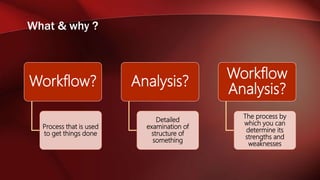
Workflow?
Process that is used
to get things done
Analysis?
Detailed
examination of
structure of
something
Workflow
Analysis?
The process by
which you can
determine its
strengths and
weaknesses
Why ?
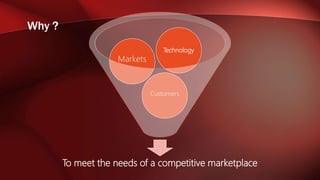
To meet the needs of a competitive marketplace
Customers
Markets
Technology
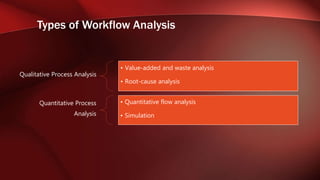
Types of Workflow Analysis
Qualitative Process Analysis
• Value-added and waste analysis
• Root-cause analysis
Quantitative Process
Analysis
• Quantitative flow analysis
• Simulation
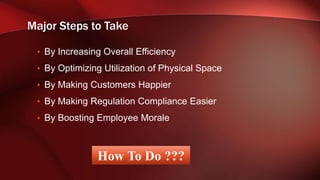
Major Steps to Take
• By Increasing Overall Efficiency
• By Optimizing Utilization of Physical Space
• By Making Customers Happier
• By Making Regulation Compliance Easier
• By Boosting Employee Morale
How To Do ???
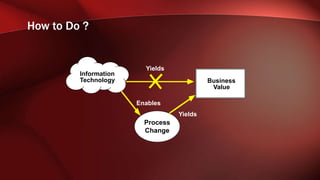
Information
Technology
Process
Change
Yields
Yields
Business
Value
Enables
How to Do ?
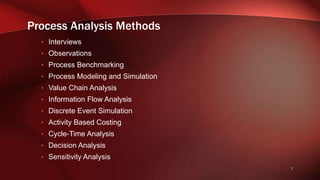
Process Analysis Methods
• Interviews
• Observations
• Process Benchmarking
• Process Modeling and Simulation
• Value Chain Analysis
• Information Flow Analysis
• Discrete Event Simulation
• Activity Based Costing
• Cycle-Time Analysis
• Decision Analysis
• Sensitivity Analysis
7
Business Model should provide information on
 Business Environment
 Business Model
 Business Workflows
 Business Workers and Actors
 Business Entities
1. Business Environment
A clear, declarative statement of the company`s
strategies, goals, market niche, and customer base.
Vision
Statement
Can be defined in terms of customer served and the
services provided by the company.
The Core
Business
Niche
Questions to Understand Company
How?
• Is the company Structured?
• Large is the company?
• Geographically distributed?
Who?
• Are the company competitors?
• Are the business customers?
What?
• Company provide?
• Types of problems they face?
• Regulations are applicable?
10
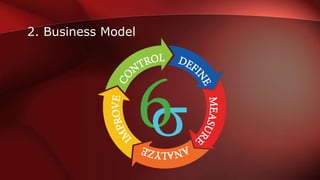
2. Business Model
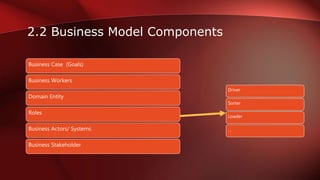
2.2 Business Model Components
Business Case (Goals)
Business Workers
Domain Entity
Roles
Business Actors/ Systems
Business Stakeholder
Driver
Sorter
Loader
…
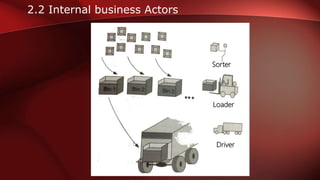
2.2 Internal business Actors
Sorter
Loader
Driver
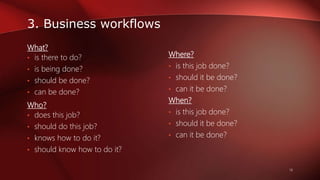
3. Business workflows
What?
• is there to do?
• is being done?
• should be done?
• can be done?
Who?
• does this job?
• should do this job?
• knows how to do it?
• should know how to do it?
Where?
• is this job done?
• should it be done?
• can it be done?
When?
• is this job done?
• should it be done?
• can it be done?
14
15
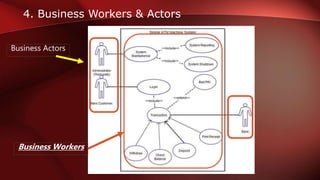
4. Business Workers & Actors
Business Actors
Business Workers
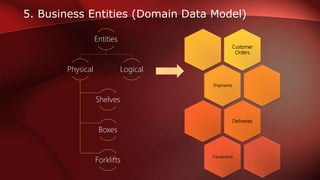
5. Business Entities (Domain Data Model)
Customer
Orders
Shipments
Deliveries
Transections
Entities
Physical
Shelves
Boxes
Forklifts
Logical
Questions ?

Business workflow analysis 1

  • 1.
  • 2.
    What & why? Workflow? Process that is used to get things done Analysis? Detailed examination of structure of something Workflow Analysis? The process by which you can determine its strengths and weaknesses
  • 3.
    Why ? To meetthe needs of a competitive marketplace Customers Markets Technology
  • 4.
    Types of WorkflowAnalysis Qualitative Process Analysis • Value-added and waste analysis • Root-cause analysis Quantitative Process Analysis • Quantitative flow analysis • Simulation
  • 5.
    Major Steps toTake • By Increasing Overall Efficiency • By Optimizing Utilization of Physical Space • By Making Customers Happier • By Making Regulation Compliance Easier • By Boosting Employee Morale How To Do ???
  • 6.
  • 7.
    Process Analysis Methods •Interviews • Observations • Process Benchmarking • Process Modeling and Simulation • Value Chain Analysis • Information Flow Analysis • Discrete Event Simulation • Activity Based Costing • Cycle-Time Analysis • Decision Analysis • Sensitivity Analysis 7
  • 8.
    Business Model shouldprovide information on  Business Environment  Business Model  Business Workflows  Business Workers and Actors  Business Entities
  • 9.
    1. Business Environment Aclear, declarative statement of the company`s strategies, goals, market niche, and customer base. Vision Statement Can be defined in terms of customer served and the services provided by the company. The Core Business Niche
  • 10.
    Questions to UnderstandCompany How? • Is the company Structured? • Large is the company? • Geographically distributed? Who? • Are the company competitors? • Are the business customers? What? • Company provide? • Types of problems they face? • Regulations are applicable? 10
  • 11.
  • 12.
    2.2 Business ModelComponents Business Case (Goals) Business Workers Domain Entity Roles Business Actors/ Systems Business Stakeholder Driver Sorter Loader …
  • 13.
    2.2 Internal businessActors Sorter Loader Driver
  • 14.
    3. Business workflows What? •is there to do? • is being done? • should be done? • can be done? Who? • does this job? • should do this job? • knows how to do it? • should know how to do it? Where? • is this job done? • should it be done? • can it be done? When? • is this job done? • should it be done? • can it be done? 14
  • 15.
  • 16.
    4. Business Workers& Actors Business Actors Business Workers
  • 17.
    5. Business Entities(Domain Data Model) Customer Orders Shipments Deliveries Transections Entities Physical Shelves Boxes Forklifts Logical
  • 18.

Editor's Notes

  • #7 BPM provides a natural ground for bridging IT and business, because many (perhaps most) IT projects in enterprises are ultimately aimed at improving a business process