Your Business Plan is a to your Success
Follow the Road Map To avoid Termination
The Role of Your Business Plan is to give the potential investors: A Description and Analysis of the Business Situation A Proposed Marketing Plan for your business. A Proposed Financial plan for beginning your business.
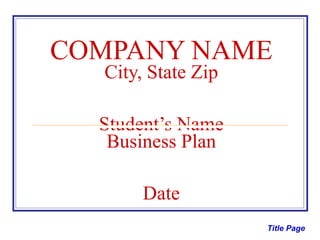
COMPANY NAME City, State Zip Student’s Name Business Plan Date Title Page
STATEMENT OF PURPOSE States the objective of this business plan for your business Keep it simple Should be concise Sample:  This plan will be the operating guide and policy guide for XYZ, Inc. If used as a financial proposal, the objective should be in greater detail. Statement of Purpose
Executive Summary The purpose of the executive summary of the business plan is to provide your readers with an overview of the business plan.  Executive Summary
Executive Summary Therefore, your business plan’s executive summary will include summaries of:  A description of your company, including your products and/or services  Your mission statement  Your business’s management  The market and your customer  Marketing and Sales  Your competition  Your business’s operations  Financial projections and plans  Remember this is a summary.  Keep it as brief as possible.  You will explain in detail later in the plan.
Executive Summary The executive summary should end with a summary statement, a “last kick at the can” sentence designed to persuade the readers of your business plan “ why is this a winning business ?”   Executive Summary
Product/Service Plan What type of business is this? What problem are you solving? How does your product/service solve the problem? How does this create financial value for your company and its investors? Content – Part 1
Management team plan The management team plan presents the qualifications of the entrepreneurs and any partners who may be involved in the business venture.  If there are areas of expertise that may be missing in the business, a plan must be shown for solving that problem.  In addition, this section describes an advisory board that will assist in getting the business started. Content – Part 1
Industry/market analysis An overview of the industry sector that your business will be a part of, including industry trends and major players in the industry. This section of the business plan will also include a summary of your business's place within the industry. Industry Overview What is the size of your industry? Who are the major players in this industry? What national/economic trends have affected this  industry and how? What national/economic trends might affect it in the  future and how? Content – Part 1
Industry/market analysis Analysis of the Business Opportunity.  Where will the business be located? Who will be the customer base? What is your competitive advantage in the market place? How does your customer benefit? Content – Part 1
Market Analysis This is an examination of the primary target market for your product or service, including geographic location, demographics, your target market's needs and how these needs are being met currently. The competitive analysis section can be the most difficult section to compile when writing a business plan. Before you can analyze your competitors, you have to investigate them.  You need to know:  What markets or market segments your competitors serve; What benefits your competition offers; Why customers buy from them; And as much as possible about their products and/or services, pricing, and promotion. Industry/market analysis Content – Part 1
This section includes all processes involved in producing and/or delivering the product or service to the customer.  It may include product development and channels of distribution. Operational Plan Content – Part 1
Organizational Plan Proposed Organization List the CEO and key management by name Content – Part 1
PROPOSED ORGANIZATION Types of ownership Sole proprietorship Partnership Corporation, or limited liability company (LLC).  There's no one choice that fits every business; your job is to pick the form that best meets your needs Content – Part 1 Organizational Plan
PROPOSED ORGANIZATION An Organizational Plan is basically a “to do” list for an organization. It lists out the plan of work, programs, and organizational growth over a period of time - six months, a year or five. The tasks involved, who is responsible for them, and when they’ll be done. People reading your business plan will be looking to see not only who's on your management team but also how the skills of your management and staff will contribute to the bottom line. Content – Part 1 Organizational Plan
This marketing plan section establishes the direction your business is going to take in order to promote your business, attract customers, exploit any identified opportunities and make a profit.  Content – Part 2 Marketing Plan
Proposed Product/Services What are you going to sell? What position you are going to take in the market?  (For example, high quality/high price or low quality low price high volume)  Content – Part 2 Marketing Plan
Pricing Policies What price you are going to set?  How much profit you think you are going to make at the price? Content – Part 2 Marketing Plan
Personal Promotion How  you  and your sales staff are going to promote your business? What level of service you are going to provide? Content – Part 2 Marketing Plan
Non-Personal Promotion How will you appeal to the public? What promotional plans will you use? Content – Part 2 Marketing Plan
Place Decisions Where you will distribute your goods and/services? Where will you obtain the materials or other items needed for your business? What is you channel of distribution? Content – Part 2 Marketing Plan
Basically, the financial plan section of the business plan consists of three financial statements: The income statement The cash flow projection and  The balance sheet and a brief explanation/analysis of these three.  First, you need to gather together some of the financial data you'll need to prepare these financial statements for your business plan by examining your expenses.   Think of your business expenses as broken into two categories:  Your start up expenses   and  Your operating expenses . Content – Part 3 Financial Plan
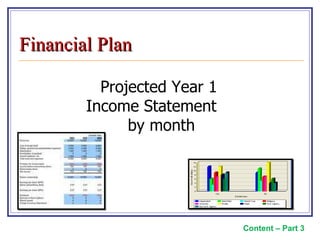
Projected Year 1  Income Statement  by month Content – Part 3 Financial Plan
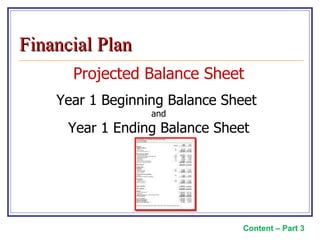
Projected Balance Sheet Year 1 Beginning Balance Sheet  and Year 1 Ending Balance Sheet Content – Part 3 Financial Plan
Projected Cash Flow Statement Projected Year 1  Cash Flow Statement  by month Content – Part 3 Financial Plan
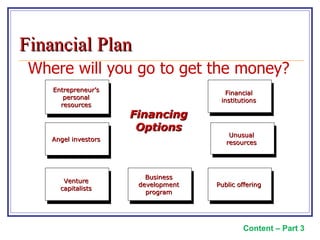
Where will you go to get the money? Financing Options Content – Part 3 Financial Plan Entrepreneur’s personal resources Financial institutions Angel investors Unusual resources Venture capitalists Public offering Business development program
Capital Repayment Plan Where are you getting the money from? What is the interest/loan arrangement? How and when will you retire the debt? Content – Part 3 Financial Plan
The growth plan presents plans for future expansion of the business. Content – Part 3 Growth Plan
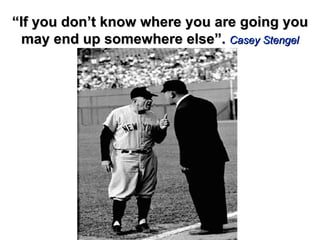
“ If you don’t know where you are going you may end up somewhere else”.  Casey Stengel

Business plan guidellines

  • 1.
    Your Business Planis a to your Success
  • 2.
    Follow the RoadMap To avoid Termination
  • 3.
    The Role ofYour Business Plan is to give the potential investors: A Description and Analysis of the Business Situation A Proposed Marketing Plan for your business. A Proposed Financial plan for beginning your business.
  • 4.
    COMPANY NAME City,State Zip Student’s Name Business Plan Date Title Page
  • 5.
    STATEMENT OF PURPOSEStates the objective of this business plan for your business Keep it simple Should be concise Sample: This plan will be the operating guide and policy guide for XYZ, Inc. If used as a financial proposal, the objective should be in greater detail. Statement of Purpose
  • 6.
    Executive Summary Thepurpose of the executive summary of the business plan is to provide your readers with an overview of the business plan. Executive Summary
  • 7.
    Executive Summary Therefore,your business plan’s executive summary will include summaries of:  A description of your company, including your products and/or services Your mission statement Your business’s management The market and your customer Marketing and Sales Your competition Your business’s operations Financial projections and plans  Remember this is a summary. Keep it as brief as possible. You will explain in detail later in the plan.
  • 8.
    Executive Summary Theexecutive summary should end with a summary statement, a “last kick at the can” sentence designed to persuade the readers of your business plan “ why is this a winning business ?”   Executive Summary
  • 9.
    Product/Service Plan Whattype of business is this? What problem are you solving? How does your product/service solve the problem? How does this create financial value for your company and its investors? Content – Part 1
  • 10.
    Management team planThe management team plan presents the qualifications of the entrepreneurs and any partners who may be involved in the business venture. If there are areas of expertise that may be missing in the business, a plan must be shown for solving that problem. In addition, this section describes an advisory board that will assist in getting the business started. Content – Part 1
  • 11.
    Industry/market analysis Anoverview of the industry sector that your business will be a part of, including industry trends and major players in the industry. This section of the business plan will also include a summary of your business's place within the industry. Industry Overview What is the size of your industry? Who are the major players in this industry? What national/economic trends have affected this industry and how? What national/economic trends might affect it in the future and how? Content – Part 1
  • 12.
    Industry/market analysis Analysisof the Business Opportunity. Where will the business be located? Who will be the customer base? What is your competitive advantage in the market place? How does your customer benefit? Content – Part 1
  • 13.
    Market Analysis Thisis an examination of the primary target market for your product or service, including geographic location, demographics, your target market's needs and how these needs are being met currently. The competitive analysis section can be the most difficult section to compile when writing a business plan. Before you can analyze your competitors, you have to investigate them. You need to know:  What markets or market segments your competitors serve; What benefits your competition offers; Why customers buy from them; And as much as possible about their products and/or services, pricing, and promotion. Industry/market analysis Content – Part 1
  • 14.
    This section includesall processes involved in producing and/or delivering the product or service to the customer. It may include product development and channels of distribution. Operational Plan Content – Part 1
  • 15.
    Organizational Plan ProposedOrganization List the CEO and key management by name Content – Part 1
  • 16.
    PROPOSED ORGANIZATION Typesof ownership Sole proprietorship Partnership Corporation, or limited liability company (LLC). There's no one choice that fits every business; your job is to pick the form that best meets your needs Content – Part 1 Organizational Plan
  • 17.
    PROPOSED ORGANIZATION AnOrganizational Plan is basically a “to do” list for an organization. It lists out the plan of work, programs, and organizational growth over a period of time - six months, a year or five. The tasks involved, who is responsible for them, and when they’ll be done. People reading your business plan will be looking to see not only who's on your management team but also how the skills of your management and staff will contribute to the bottom line. Content – Part 1 Organizational Plan
  • 18.
    This marketing plansection establishes the direction your business is going to take in order to promote your business, attract customers, exploit any identified opportunities and make a profit. Content – Part 2 Marketing Plan
  • 19.
    Proposed Product/Services Whatare you going to sell? What position you are going to take in the market? (For example, high quality/high price or low quality low price high volume) Content – Part 2 Marketing Plan
  • 20.
    Pricing Policies Whatprice you are going to set? How much profit you think you are going to make at the price? Content – Part 2 Marketing Plan
  • 21.
    Personal Promotion How you and your sales staff are going to promote your business? What level of service you are going to provide? Content – Part 2 Marketing Plan
  • 22.
    Non-Personal Promotion Howwill you appeal to the public? What promotional plans will you use? Content – Part 2 Marketing Plan
  • 23.
    Place Decisions Whereyou will distribute your goods and/services? Where will you obtain the materials or other items needed for your business? What is you channel of distribution? Content – Part 2 Marketing Plan
  • 24.
    Basically, the financialplan section of the business plan consists of three financial statements: The income statement The cash flow projection and The balance sheet and a brief explanation/analysis of these three. First, you need to gather together some of the financial data you'll need to prepare these financial statements for your business plan by examining your expenses.   Think of your business expenses as broken into two categories:  Your start up expenses and Your operating expenses . Content – Part 3 Financial Plan
  • 25.
    Projected Year 1 Income Statement by month Content – Part 3 Financial Plan
  • 26.
    Projected Balance SheetYear 1 Beginning Balance Sheet and Year 1 Ending Balance Sheet Content – Part 3 Financial Plan
  • 27.
    Projected Cash FlowStatement Projected Year 1 Cash Flow Statement by month Content – Part 3 Financial Plan
  • 28.
    Where will yougo to get the money? Financing Options Content – Part 3 Financial Plan Entrepreneur’s personal resources Financial institutions Angel investors Unusual resources Venture capitalists Public offering Business development program
  • 29.
    Capital Repayment PlanWhere are you getting the money from? What is the interest/loan arrangement? How and when will you retire the debt? Content – Part 3 Financial Plan
  • 30.
    The growth planpresents plans for future expansion of the business. Content – Part 3 Growth Plan
  • 31.
    “ If youdon’t know where you are going you may end up somewhere else”. Casey Stengel