INTERRUPTING
Interrupting a speaker in a business meeting
CHAIR
INTERRUPTING
• OK Fred, if I could just quickly interrupt you there...
• Nick, sorry to interrupt but I’d like to hear some other views
on this.
• If I could just stop you there for a second.
CHAIR STOPPING
INTERRUPTION
• Just a moment, Dave. I’ll come back to you in a minute.
• One at a time, please.
• Please, let him finish what he was saying.
PARTICIPANTS
INTERRUPTING
• Excuse me, can I just interrupt quickly?
• Come I come in here?
• Can I just briefly comment on that?
• Can I piggyback on what Shelly was saying?
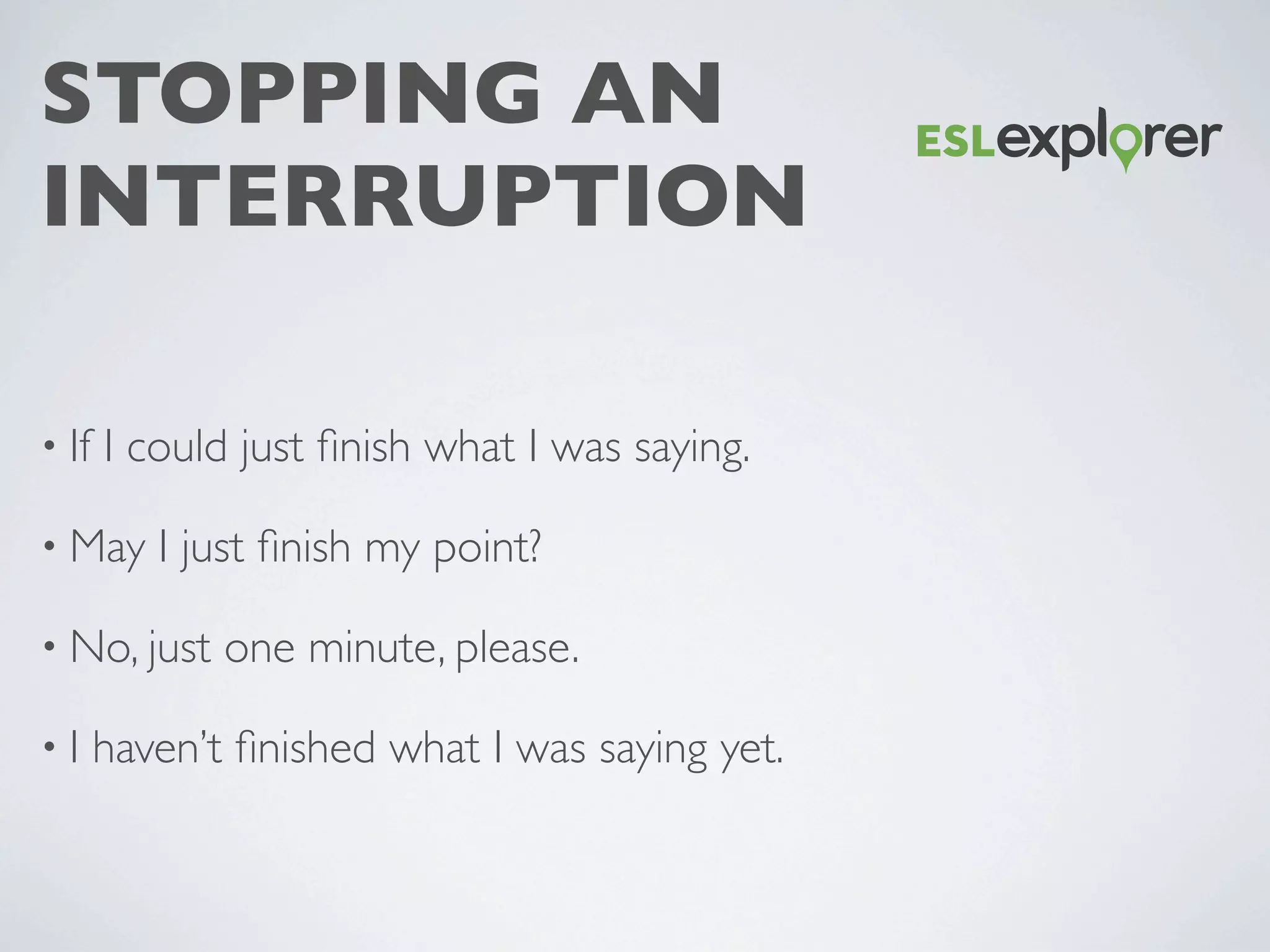
STOPPING AN
INTERRUPTION
• If I could just finish what I was saying.
• May I just finish my point?
• No, just one minute, please.
• I haven’t finished what I was saying yet.
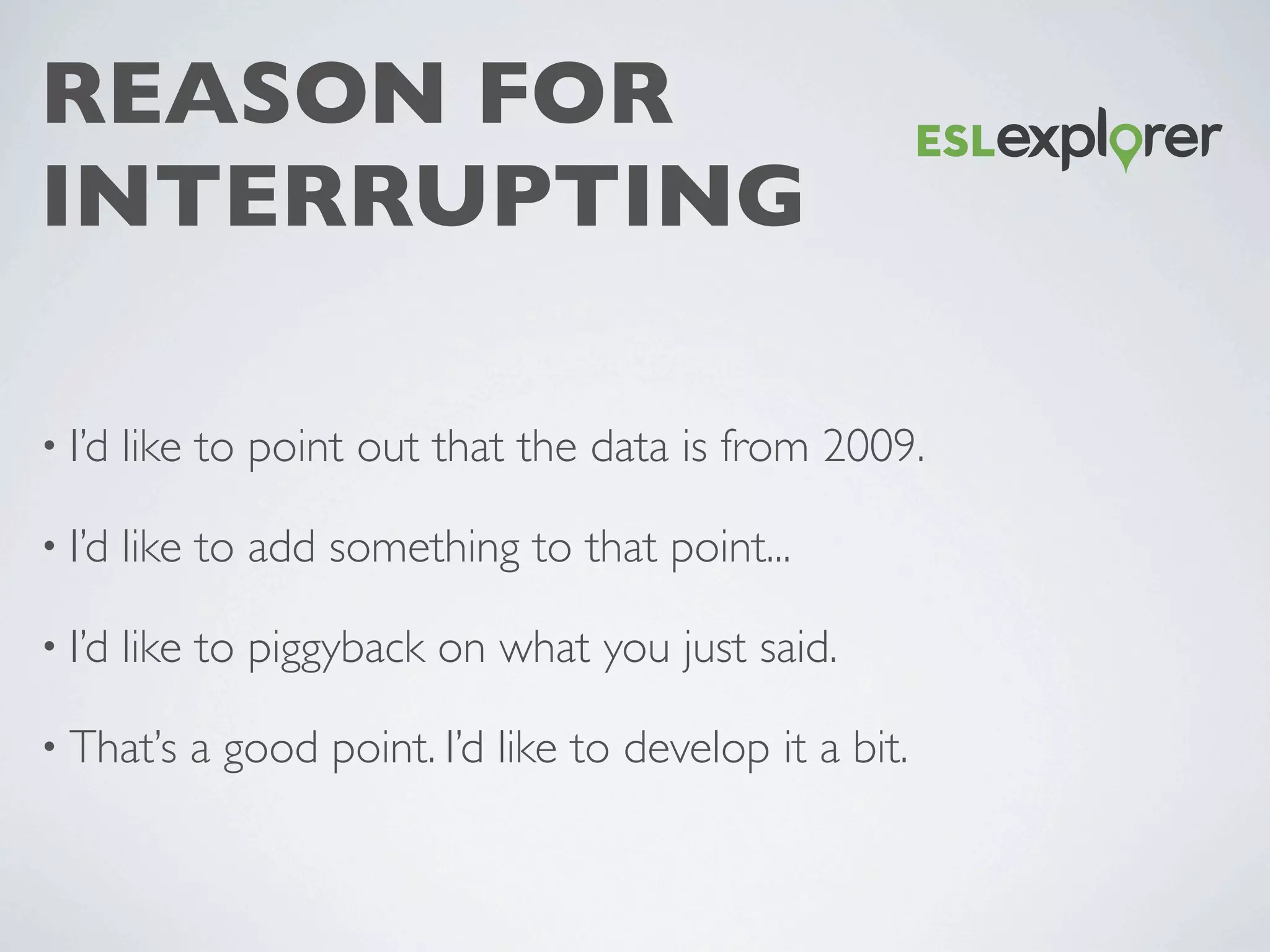
REASON FOR
INTERRUPTING
• I’d like to point out that the data is from 2009.
• I’d like to add something to that point...
• I’d like to piggyback on what you just said.
• That’s a good point. I’d like to develop it a bit.
COMMENTING
• That’s a good point, Mike.
• I see what you saying, Jim.
• Yes, you’re spot-on.
CONTINUING AN
INTERRUPTING
• Thanks for bringing that up. Perhaps we should talk more
about it.
• Let’s talk a bit more about this new point.
DECIDING AND
CLOSING
• I think we need to discuss this further.
• I think we should have some more information on this.
• I would like to take this away and look at it in more detail.
• Let’s put this on next week’s agenda.
• Let’s leave this until next week.
TIME
• We’re running out of time.
• Unfortunately, we don’t have anymore time to spend on this.
• OK, everyone, we’re almost out of time.
• We getting really behind schedule.
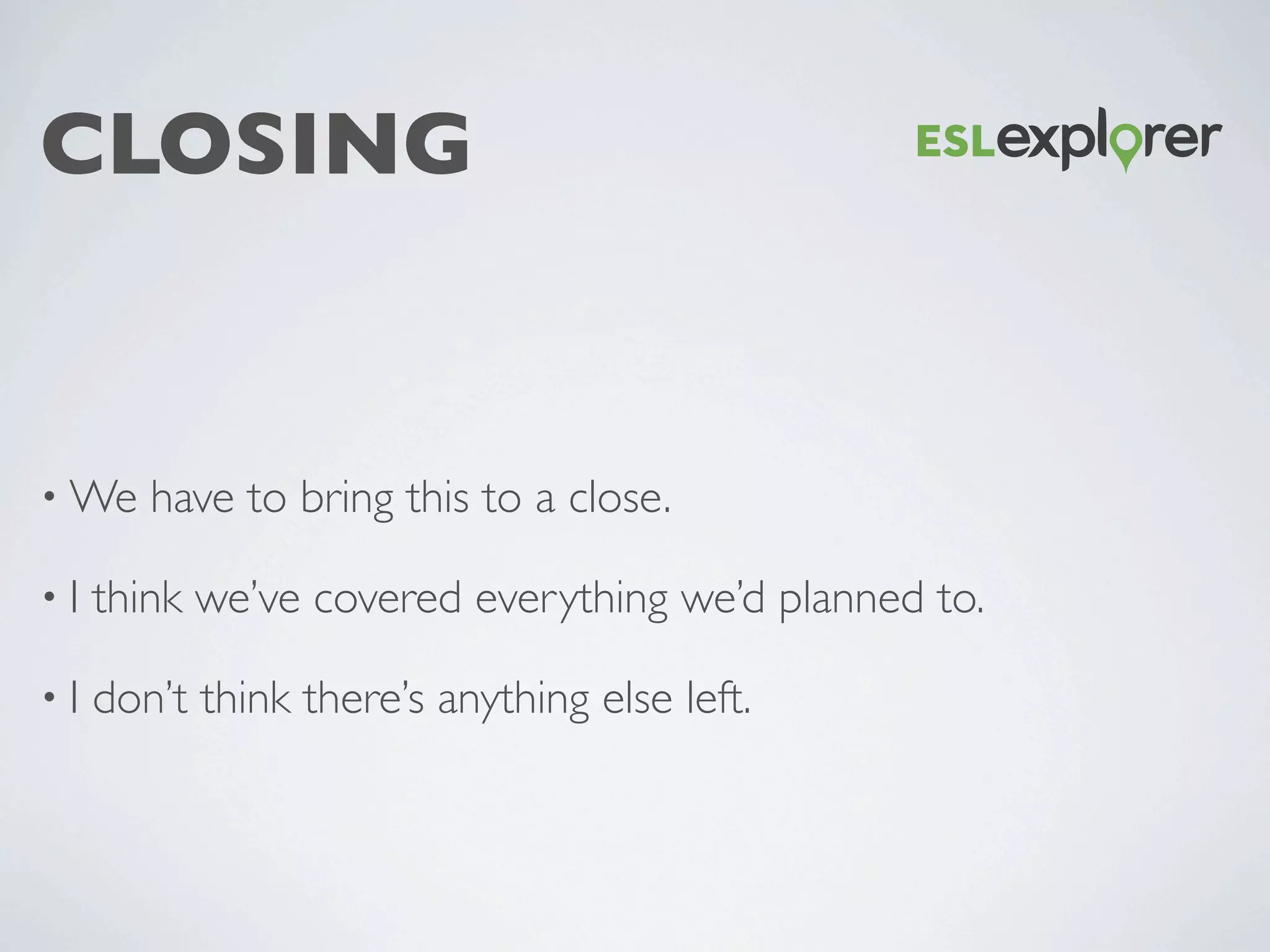
CLOSING
• We have to bring this to a close.
• I think we’ve covered everything we’d planned to.
• I don’t think there’s anything else left.
DECIDING
• I really would like a decision before we close the meeting.
• Can we come to a decision before we leave?
• Are we all ready to make a decision?
COMPLETING
AGENDA
• I think we’ve covered everything.
• OK. That’s everything on the agenda.
• Does anyone have anything else before we finish?
• Is there any other business?
• Are there any final questions before we call it a day?
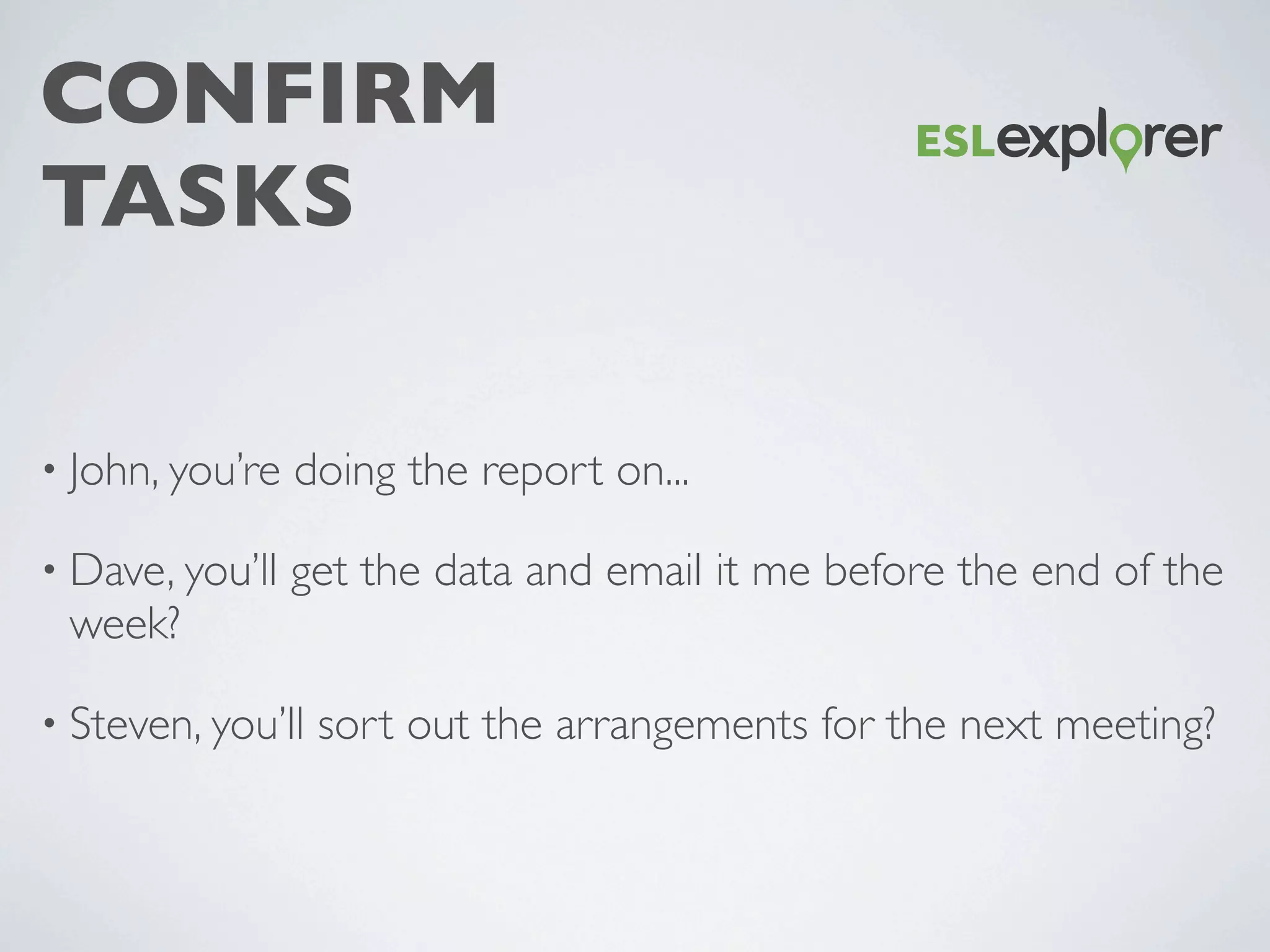
CONFIRM
TASKS
• John, you’re doing the report on...
• Dave, you’ll get the data and email it me before the end of the
week?
• Steven, you’ll sort out the arrangements for the next meeting?
NEXT MEETING
• Let’s set a time for our next meeting.
• Is July 8th a convenient day for our next meeting?
• I’ll confirm the date and location of our next meeting by email.
• I’ll email you the time of our next meeting.
CLOSING THE
MEETING
• OK. Let’s finish there.Thank you all for coming and I’ll see you
again the next week.
• It’s getting late. Let’s call it a day.
ESLExplorer
@ESLExplorer
eslexplorer
esl-explorer
eslexplorer.com

Business Meetings: Interrupting

  • 1.
  • 2.
    CHAIR INTERRUPTING • OK Fred,if I could just quickly interrupt you there... • Nick, sorry to interrupt but I’d like to hear some other views on this. • If I could just stop you there for a second.
  • 3.
    CHAIR STOPPING INTERRUPTION • Justa moment, Dave. I’ll come back to you in a minute. • One at a time, please. • Please, let him finish what he was saying.
  • 4.
    PARTICIPANTS INTERRUPTING • Excuse me,can I just interrupt quickly? • Come I come in here? • Can I just briefly comment on that? • Can I piggyback on what Shelly was saying?
  • 5.
    STOPPING AN INTERRUPTION • IfI could just finish what I was saying. • May I just finish my point? • No, just one minute, please. • I haven’t finished what I was saying yet.
  • 6.
    REASON FOR INTERRUPTING • I’dlike to point out that the data is from 2009. • I’d like to add something to that point... • I’d like to piggyback on what you just said. • That’s a good point. I’d like to develop it a bit.
  • 7.
    COMMENTING • That’s agood point, Mike. • I see what you saying, Jim. • Yes, you’re spot-on.
  • 8.
    CONTINUING AN INTERRUPTING • Thanksfor bringing that up. Perhaps we should talk more about it. • Let’s talk a bit more about this new point.
  • 9.
    DECIDING AND CLOSING • Ithink we need to discuss this further. • I think we should have some more information on this. • I would like to take this away and look at it in more detail. • Let’s put this on next week’s agenda. • Let’s leave this until next week.
  • 10.
    TIME • We’re runningout of time. • Unfortunately, we don’t have anymore time to spend on this. • OK, everyone, we’re almost out of time. • We getting really behind schedule.
  • 11.
    CLOSING • We haveto bring this to a close. • I think we’ve covered everything we’d planned to. • I don’t think there’s anything else left.
  • 12.
    DECIDING • I reallywould like a decision before we close the meeting. • Can we come to a decision before we leave? • Are we all ready to make a decision?
  • 13.
    COMPLETING AGENDA • I thinkwe’ve covered everything. • OK. That’s everything on the agenda. • Does anyone have anything else before we finish? • Is there any other business? • Are there any final questions before we call it a day?
  • 14.
    CONFIRM TASKS • John, you’redoing the report on... • Dave, you’ll get the data and email it me before the end of the week? • Steven, you’ll sort out the arrangements for the next meeting?
  • 15.
    NEXT MEETING • Let’sset a time for our next meeting. • Is July 8th a convenient day for our next meeting? • I’ll confirm the date and location of our next meeting by email. • I’ll email you the time of our next meeting.
  • 16.
    CLOSING THE MEETING • OK.Let’s finish there.Thank you all for coming and I’ll see you again the next week. • It’s getting late. Let’s call it a day.
  • 17.