BUSINESS
GLOSSARY
GROUP # 2 – 1001 JM
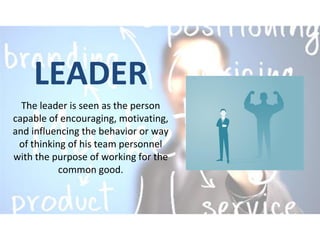
LEADER
The leader is seen as the person
capable of encouraging, motivating,
and influencing the behavior or way
of thinking of his team personnel
with the purpose of working for the
common good.
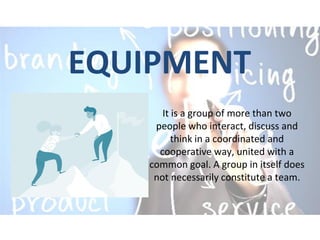
EQUIPMENT
It is a group of more than two
people who interact, discuss and
think in a coordinated and
cooperative way, united with a
common goal. A group in itself does
not necessarily constitute a team.
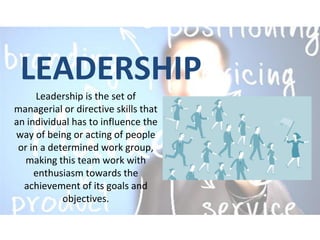
LEADERSHIP
Leadership is the set of
managerial or directive skills that
an individual has to influence the
way of being or acting of people
or in a determined work group,
making this team work with
enthusiasm towards the
achievement of its goals and
objectives.
INPUT
The term "contribution" from what I
have been able to observe on the
Internet, is widely used in South
America. However, in Spanish we
use the "contribution" form more.
In fact if you see the dictionary of
the RAE, "contribution" is indicated
as a synonym for "contribution",
and not the other way around.
REPORT
The report is a document
written in informational prose
for the purpose of
communicating information of
the highest level in an
organization. Therefore, it
refers to facts obtained or
verified by the author.
COMMERCIAL
ADDRESS
Reporting directly to the General
Director of the company, the
Commercial Director is responsible
for meeting the company's sales
objectives. Two main areas report
to the Commercial Director.
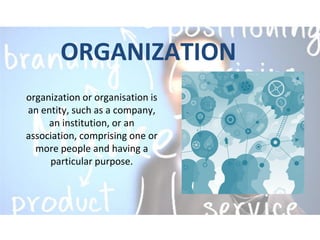
ORGANIZATION
organization or organisation is
an entity, such as a company,
an institution, or an
association, comprising one or
more people and having a
particular purpose.
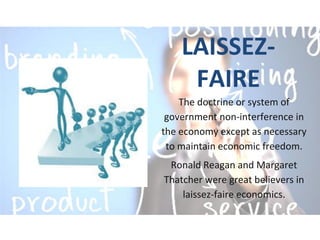
LAISSEZ-
FAIRE
The doctrine or system of
government non-interference in
the economy except as necessary
to maintain economic freedom.
Ronald Reagan and Margaret
Thatcher were great believers in
laissez-faire economics.
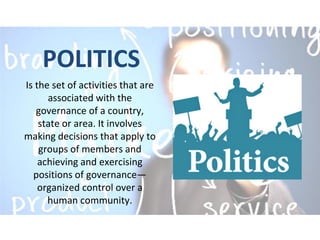
POLITICS
Is the set of activities that are
associated with the
governance of a country,
state or area. It involves
making decisions that apply to
groups of members and
achieving and exercising
positions of governance—
organized control over a
human community.
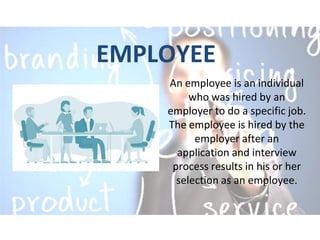
EMPLOYEE
An employee is an individual
who was hired by an
employer to do a specific job.
The employee is hired by the
employer after an
application and interview
process results in his or her
selection as an employee.
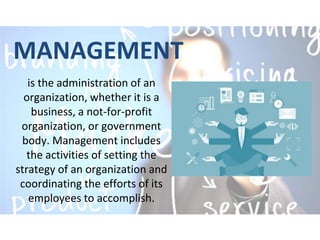
MANAGEMENT
is the administration of an
organization, whether it is a
business, a not-for-profit
organization, or government
body. Management includes
the activities of setting the
strategy of an organization and
coordinating the efforts of its
employees to accomplish.
COACHING
It is a process that pursues as
the main objective the
maximum professional and
personal development of the
person who receives it, where
performed optimally and
appropriately, can result in a
great transformation.
STRATEGIST
A strategist is a person with
responsibility for the
formulation and
implementation of a
strategy. Strategy generally
involves setting goals,
determining actions to
achieve the goals, and
mobilizing resources to
execute the actions.
PROFESSIONAL OF
VELOPMENT
It is a way for people to
assess their skills and
qualities, consider their
aims in life and set goals in
order to realise and
maximise their potential.
SELF
CONFIDENCE
Is defined as a feeling of
trust in one’s abilities,
qualities, and judgment.
Self-confidence is
important to your health
and psychological well-
being.
NEWS
LETTER
It is a publication that
companies regularly send to
their affiliates to inform them
about their new products, their
best promotions and the latest
news of interest. In short: an
effective tool for digital
marketing
CONFORME
Is the degree to which members of a
social group change their behavior,
opinions, and attitudes to fit the
group’s opinions. A group can
influence its members by means of
subconscious processes or through
a manifest peer pressure on
individuals.
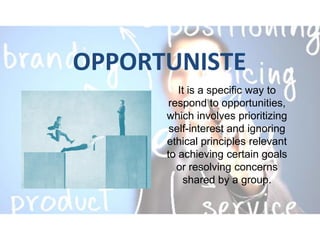
OPPORTUNISTE
It is a specific way to
respond to opportunities,
which involves prioritizing
self-interest and ignoring
ethical principles relevant
to achieving certain goals
or resolving concerns
shared by a group.
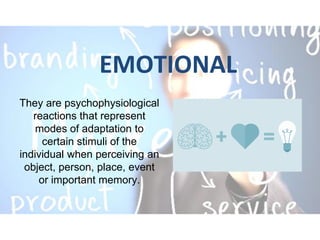
EMOTIONAL
They are psychophysiological
reactions that represent
modes of adaptation to
certain stimuli of the
individual when perceiving an
object, person, place, event
or important memory.
INTELLIGENCE
It has been defined in many
ways, including: the ability
to logic, understanding,
self-awareness, learning,
emotional knowledge,
reasoning, planning,
creativity, critical thinking
and problem solving.
COMPANY
It is an organization or
institution dedicated to
activities or pursuit of
economic or commercial
purposes to meet the needs
of the goods and/or services
of society.
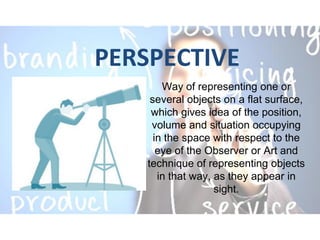
PERSPECTIVE
Way of representing one or
several objects on a flat surface,
which gives idea of the position,
volume and situation occupying
in the space with respect to the
eye of the Observer or Art and
technique of representing objects
in that way, as they appear in
sight.
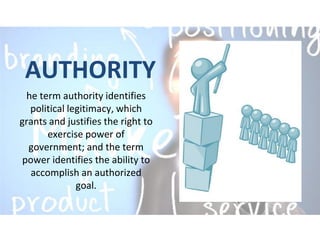
AUTHORITY
he term authority identifies
political legitimacy, which
grants and justifies the right to
exercise power of
government; and the term
power identifies the ability to
accomplish an authorized
goal.

Business glossary

  • 1.
  • 2.
    LEADER The leader isseen as the person capable of encouraging, motivating, and influencing the behavior or way of thinking of his team personnel with the purpose of working for the common good.
  • 3.
    EQUIPMENT It is agroup of more than two people who interact, discuss and think in a coordinated and cooperative way, united with a common goal. A group in itself does not necessarily constitute a team.
  • 4.
    LEADERSHIP Leadership is theset of managerial or directive skills that an individual has to influence the way of being or acting of people or in a determined work group, making this team work with enthusiasm towards the achievement of its goals and objectives.
  • 5.
    INPUT The term "contribution"from what I have been able to observe on the Internet, is widely used in South America. However, in Spanish we use the "contribution" form more. In fact if you see the dictionary of the RAE, "contribution" is indicated as a synonym for "contribution", and not the other way around.
  • 6.
    REPORT The report isa document written in informational prose for the purpose of communicating information of the highest level in an organization. Therefore, it refers to facts obtained or verified by the author.
  • 7.
    COMMERCIAL ADDRESS Reporting directly tothe General Director of the company, the Commercial Director is responsible for meeting the company's sales objectives. Two main areas report to the Commercial Director.
  • 8.
    ORGANIZATION organization or organisationis an entity, such as a company, an institution, or an association, comprising one or more people and having a particular purpose.
  • 9.
    LAISSEZ- FAIRE The doctrine orsystem of government non-interference in the economy except as necessary to maintain economic freedom. Ronald Reagan and Margaret Thatcher were great believers in laissez-faire economics.
  • 10.
    POLITICS Is the setof activities that are associated with the governance of a country, state or area. It involves making decisions that apply to groups of members and achieving and exercising positions of governance— organized control over a human community.
  • 11.
    EMPLOYEE An employee isan individual who was hired by an employer to do a specific job. The employee is hired by the employer after an application and interview process results in his or her selection as an employee.
  • 12.
    MANAGEMENT is the administrationof an organization, whether it is a business, a not-for-profit organization, or government body. Management includes the activities of setting the strategy of an organization and coordinating the efforts of its employees to accomplish.
  • 13.
    COACHING It is aprocess that pursues as the main objective the maximum professional and personal development of the person who receives it, where performed optimally and appropriately, can result in a great transformation.
  • 14.
    STRATEGIST A strategist isa person with responsibility for the formulation and implementation of a strategy. Strategy generally involves setting goals, determining actions to achieve the goals, and mobilizing resources to execute the actions.
  • 15.
    PROFESSIONAL OF VELOPMENT It isa way for people to assess their skills and qualities, consider their aims in life and set goals in order to realise and maximise their potential.
  • 16.
    SELF CONFIDENCE Is defined asa feeling of trust in one’s abilities, qualities, and judgment. Self-confidence is important to your health and psychological well- being.
  • 17.
    NEWS LETTER It is apublication that companies regularly send to their affiliates to inform them about their new products, their best promotions and the latest news of interest. In short: an effective tool for digital marketing
  • 18.
    CONFORME Is the degreeto which members of a social group change their behavior, opinions, and attitudes to fit the group’s opinions. A group can influence its members by means of subconscious processes or through a manifest peer pressure on individuals.
  • 19.
    OPPORTUNISTE It is aspecific way to respond to opportunities, which involves prioritizing self-interest and ignoring ethical principles relevant to achieving certain goals or resolving concerns shared by a group.
  • 20.
    EMOTIONAL They are psychophysiological reactionsthat represent modes of adaptation to certain stimuli of the individual when perceiving an object, person, place, event or important memory.
  • 21.
    INTELLIGENCE It has beendefined in many ways, including: the ability to logic, understanding, self-awareness, learning, emotional knowledge, reasoning, planning, creativity, critical thinking and problem solving.
  • 22.
    COMPANY It is anorganization or institution dedicated to activities or pursuit of economic or commercial purposes to meet the needs of the goods and/or services of society.
  • 23.
    PERSPECTIVE Way of representingone or several objects on a flat surface, which gives idea of the position, volume and situation occupying in the space with respect to the eye of the Observer or Art and technique of representing objects in that way, as they appear in sight.
  • 24.
    AUTHORITY he term authorityidentifies political legitimacy, which grants and justifies the right to exercise power of government; and the term power identifies the ability to accomplish an authorized goal.