Business-Driven EA at Eskom 
The Open Group 
June 2014 
Sean Maritz: Senior Manager - Strategy Execution and Architecture 
Dawid Lok: Chief Architect – Enterprise Architecture
State of EA globally 
“More than 25% of EA groups have been disbanded or demoted in the past 18 months due to complex demands to which EA has struggled to respond. EA groups need to fundamentally reevaluate their value proposition within the enterprise or risk a diminished EA future state”
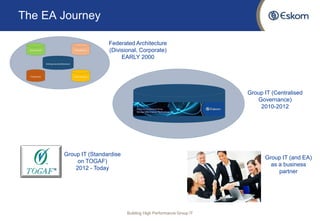
The EA Journey 
Building High Performance Group IT 
Federated Architecture (Divisional, Corporate) 
EARLY 2000 
Group IT (Centralised Governance) 
2010-2012 
Group IT (Standardise on TOGAF) 2012 - Today 
Group IT (and EA) as a business partner
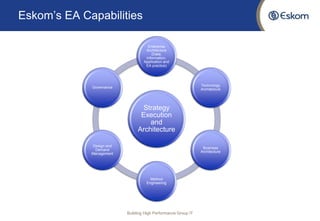
Eskom’s EA Capabilities 
Building High Performance Group IT 
Strategy Execution and Architecture 
Enterprise Architecture (Data, Information, Application and EA practice) 
Technology Architecture 
Business Architecture 
Method Engineering 
Design and Demand Management 
Governance
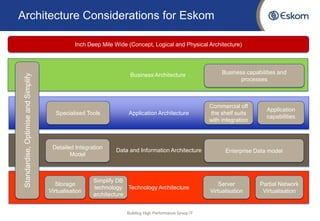
Architecture Considerations for Eskom 
Building High Performance Group IT 
Technology Architecture 
Data and Information Architecture 
Application Architecture 
Business Architecture 
Standardise, Optimise and Simplify 
Commercial off the shelf suits with integration 
Specialised Tools 
Business capabilities and processes 
Application capabilities 
Enterprise Data model 
Detailed Integration Model 
Partial Network Virtualisation 
Storage 
Virtualisation 
Server 
Virtualisation 
Inch Deep Mile Wide (Concept, Logical and Physical Architecture) 
Simplify DB technology architecture
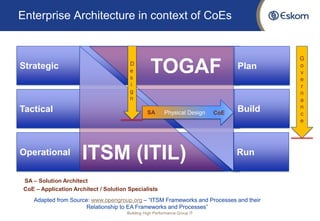
Enterprise Architecture in context of CoEs 
Building High Performance Group IT 
Strategic 
Tactical 
Operational 
TOGAF 
ITSM (ITIL) 
Adapted from Source: www.opengroup.org – “ITSM Frameworks and Processes and their Relationship to EA Frameworks and Processes” 
Plan 
Build 
Run 
Governance 
Physical Design 
SA 
CoE 
SA – Solution Architect 
CoE – Application Architect / Solution Specialists 
Design
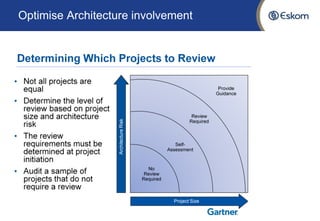
Optimise Architecture involvement 
Building High Performance Group IT
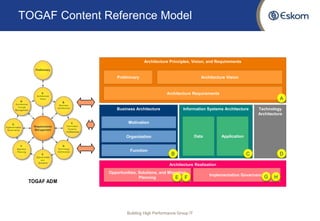
TOGAF Content Reference Model 
Building High Performance Group IT 
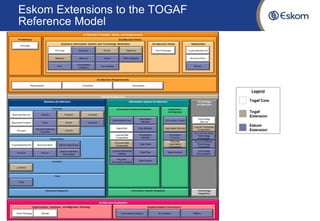
Architecture Principles, Vision, and Requirements 
Business Architecture 
Information Systems Architecture 
Architecture Realization 
Technology Architecture 
Preliminary 
Architecture Vision 
Architecture Requirements 
Motivation 
Organization 
Function 
Opportunities, Solutions, and Migration Planning 
Implementation Governance 
Data 
Application 
A 
B 
C 
D 
F 
G 
E 
H
Eskom Extensions to the TOGAF Reference Model 
Building High Performance Group IT 
Legend 
Eskom 
Extension 
Togaf Core 
Togaf 
Extension
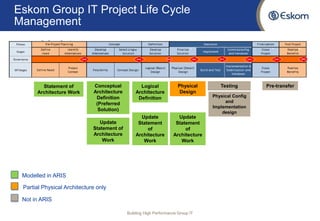
Eskom Group IT Project Life Cycle Management 
Building High Performance Group IT 
Statement of Architecture Work 
Conceptual Architecture Definition (Preferred Solution) 
Logical Architecture Definition 
Physical Design 
Update 
Statement of Architecture Work 
Update 
Statement of Architecture Work 
Update Statement of Architecture Work 
Testing 
Pre-transfer 
Modelled in ARIS 
Partial Physical Architecture only 
Not in ARIS 
Physical Config and Implementation design
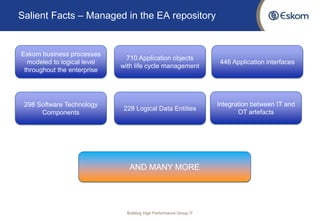
Salient Facts – Managed in the EA repository 
Building High Performance Group IT 
Eskom business processes modeled to logical level throughout the enterprise 
710 Application objects 
with life cycle management 
446 Application interfaces 
298 Software Technology Components 
228 Logical Data Entities 
Integration between IT and OT artefacts 
AND MANY MORE
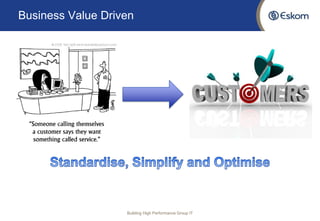
Business Value Driven 
Building High Performance Group IT
Change in EA required 
•Focus the skills and competencies (such as creating guidance, road maps, principles, standards and best practices) of your experienced enterprise architects, first and foremost, on delivering actionable and diagnostic deliverables that address disruptive trends and deliver business outcomes. 
•Proactively look for opportunities to hire and augment your EA teams with people who understand the major industry disruptions (nexus, digital business, regulatory, industry changes) that can impact the business. 
•Budget time, energy and money in 2014 to appropriately invest in information and business architecture resources, skills, communication and tools, as well as in solution and technology architecture. 
Building High Performance Group IT
The EA Future? 
Building High Performance Group IT
Building High Performance Group IT 
“Innovation distinguishes between a leader and a follower.”

Business-Driven EA at Eskom

  • 1.
    Business-Driven EA atEskom The Open Group June 2014 Sean Maritz: Senior Manager - Strategy Execution and Architecture Dawid Lok: Chief Architect – Enterprise Architecture
  • 2.
    State of EAglobally “More than 25% of EA groups have been disbanded or demoted in the past 18 months due to complex demands to which EA has struggled to respond. EA groups need to fundamentally reevaluate their value proposition within the enterprise or risk a diminished EA future state”
  • 3.
    The EA Journey Building High Performance Group IT Federated Architecture (Divisional, Corporate) EARLY 2000 Group IT (Centralised Governance) 2010-2012 Group IT (Standardise on TOGAF) 2012 - Today Group IT (and EA) as a business partner
  • 4.
    Eskom’s EA Capabilities Building High Performance Group IT Strategy Execution and Architecture Enterprise Architecture (Data, Information, Application and EA practice) Technology Architecture Business Architecture Method Engineering Design and Demand Management Governance
  • 5.
    Architecture Considerations forEskom Building High Performance Group IT Technology Architecture Data and Information Architecture Application Architecture Business Architecture Standardise, Optimise and Simplify Commercial off the shelf suits with integration Specialised Tools Business capabilities and processes Application capabilities Enterprise Data model Detailed Integration Model Partial Network Virtualisation Storage Virtualisation Server Virtualisation Inch Deep Mile Wide (Concept, Logical and Physical Architecture) Simplify DB technology architecture
  • 6.
    Enterprise Architecture incontext of CoEs Building High Performance Group IT Strategic Tactical Operational TOGAF ITSM (ITIL) Adapted from Source: www.opengroup.org – “ITSM Frameworks and Processes and their Relationship to EA Frameworks and Processes” Plan Build Run Governance Physical Design SA CoE SA – Solution Architect CoE – Application Architect / Solution Specialists Design
  • 7.
    Optimise Architecture involvement Building High Performance Group IT
  • 8.
    TOGAF Content ReferenceModel Building High Performance Group IT Architecture Principles, Vision, and Requirements Business Architecture Information Systems Architecture Architecture Realization Technology Architecture Preliminary Architecture Vision Architecture Requirements Motivation Organization Function Opportunities, Solutions, and Migration Planning Implementation Governance Data Application A B C D F G E H
  • 9.
    Eskom Extensions tothe TOGAF Reference Model Building High Performance Group IT Legend Eskom Extension Togaf Core Togaf Extension
  • 10.
    Eskom Group ITProject Life Cycle Management Building High Performance Group IT Statement of Architecture Work Conceptual Architecture Definition (Preferred Solution) Logical Architecture Definition Physical Design Update Statement of Architecture Work Update Statement of Architecture Work Update Statement of Architecture Work Testing Pre-transfer Modelled in ARIS Partial Physical Architecture only Not in ARIS Physical Config and Implementation design
  • 11.
    Salient Facts –Managed in the EA repository Building High Performance Group IT Eskom business processes modeled to logical level throughout the enterprise 710 Application objects with life cycle management 446 Application interfaces 298 Software Technology Components 228 Logical Data Entities Integration between IT and OT artefacts AND MANY MORE
  • 12.
    Business Value Driven Building High Performance Group IT
  • 13.
    Change in EArequired •Focus the skills and competencies (such as creating guidance, road maps, principles, standards and best practices) of your experienced enterprise architects, first and foremost, on delivering actionable and diagnostic deliverables that address disruptive trends and deliver business outcomes. •Proactively look for opportunities to hire and augment your EA teams with people who understand the major industry disruptions (nexus, digital business, regulatory, industry changes) that can impact the business. •Budget time, energy and money in 2014 to appropriately invest in information and business architecture resources, skills, communication and tools, as well as in solution and technology architecture. Building High Performance Group IT
  • 14.
    The EA Future? Building High Performance Group IT
  • 15.
    Building High PerformanceGroup IT “Innovation distinguishes between a leader and a follower.”