WHAT IS WRITTEN COMMUNICATION
Written communication is the practice of sending messages, orders, or
instructions in writing via letters, circulars, manuals, reports, telegrams, office
memos, bulletins, and other means.
It is a more formal and less flexible mode of communication. A well-kept written
document becomes a permanent record for future reference. It is useful in
making business operations well documented, accountable, confusion-free, and
result-driven.
It is the most essential element for key promotional materials for business
development. Effective written communication skills incorporate the careful
choices of words as well as their organization in proper order in meaningful
sentences with the cohesive composition of sentences to deliver your point or
message.
Writing is a mode of communicating a message for a purpose. Writing reveals
one’s ability to think clearly and to use language effectively.
A manager is responsible for a variety of written communications such as
replies to clients, enquires, memos, recording, agreements, proposals for
contracts, formal or informal reports to initiate action, and so on.
Definition:
Written communication is defined as communication that
conveys a message, information, or idea through written words
or symbols.
Importance of Written Communication Skills
Written communication is more valid and reliable in comparison to verbal
communication. Communicating through writing is inevitable in the contemporary
world of the information age.
It is the most essential form of business communication. It is essential for small
business owners, managers, leaders, and professionals to develop good written
communication skills.
In recent years, electronic mail has become a prevalent corporate communication
tool. Indeed, its ability to quickly and inexpensively deliver critical corporate
information has turned it into a communications workhorse for businesses of all
kinds and orientations.
Written business communication is useful in addressing clients, customers,
suppliers, business partners, colleagues, and other stakeholders.
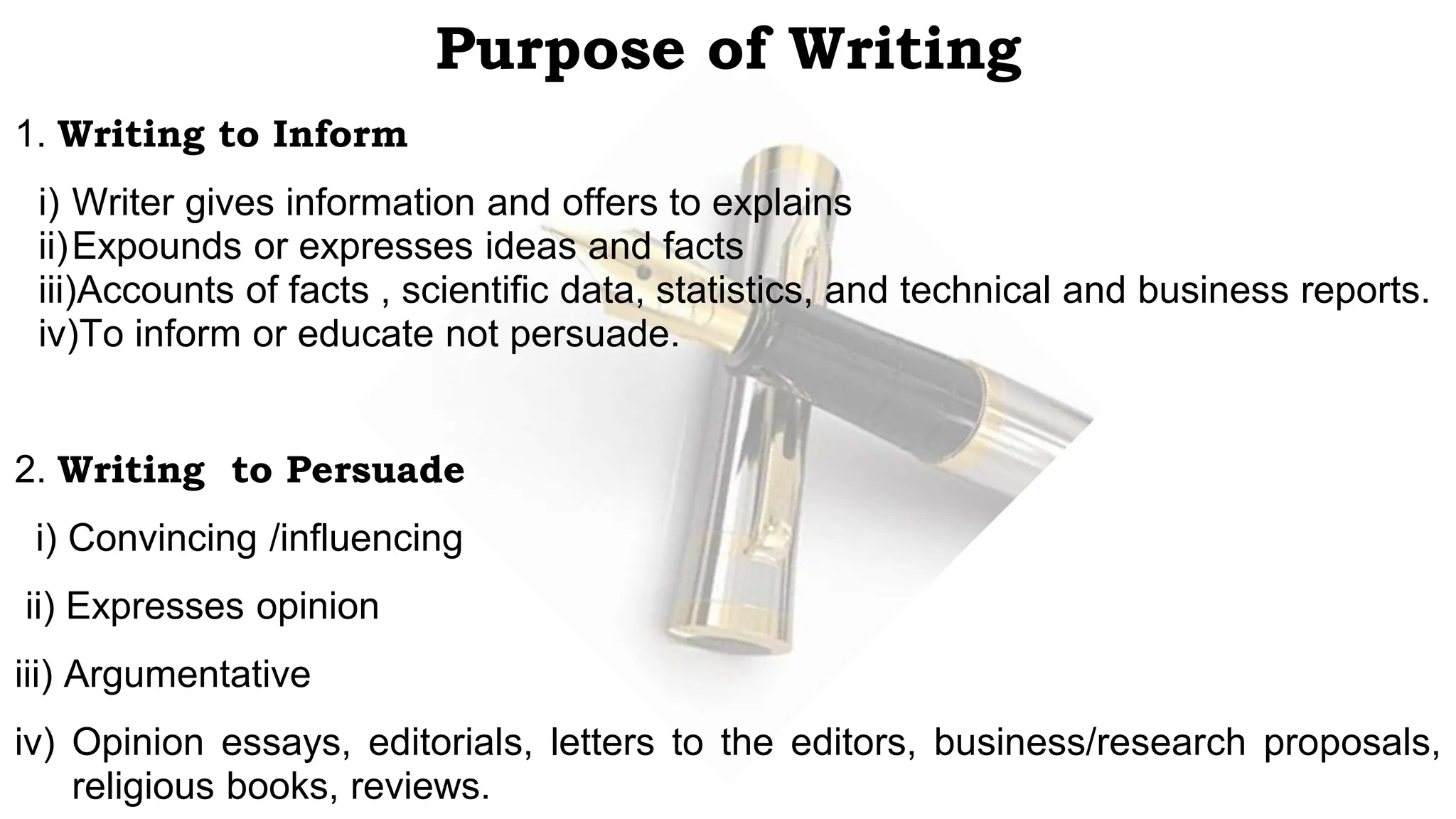
Purpose of Writing
1. Writing to Inform
i) Writer gives information and offers to explains
ii)Expounds or expresses ideas and facts
iii)Accounts of facts , scientific data, statistics, and technical and business reports.
iv)To inform or educate not persuade.
2. Writing to Persuade
i) Convincing /influencing
ii) Expresses opinion
iii) Argumentative
iv) Opinion essays, editorials, letters to the editors, business/research proposals,
religious books, reviews.
Examples of Written Communication in
Corporate Operations
The following are some examples of written communications that are commonly
used with clients or other businesses:
Websites Letters
Proposals Telegrams
Faxes Postcards
Contracts Advertisements
Brochures Publications
Memos Reports
Bulletins Descriptions of
jobs
Employee handbooks
Emails Messages, etc
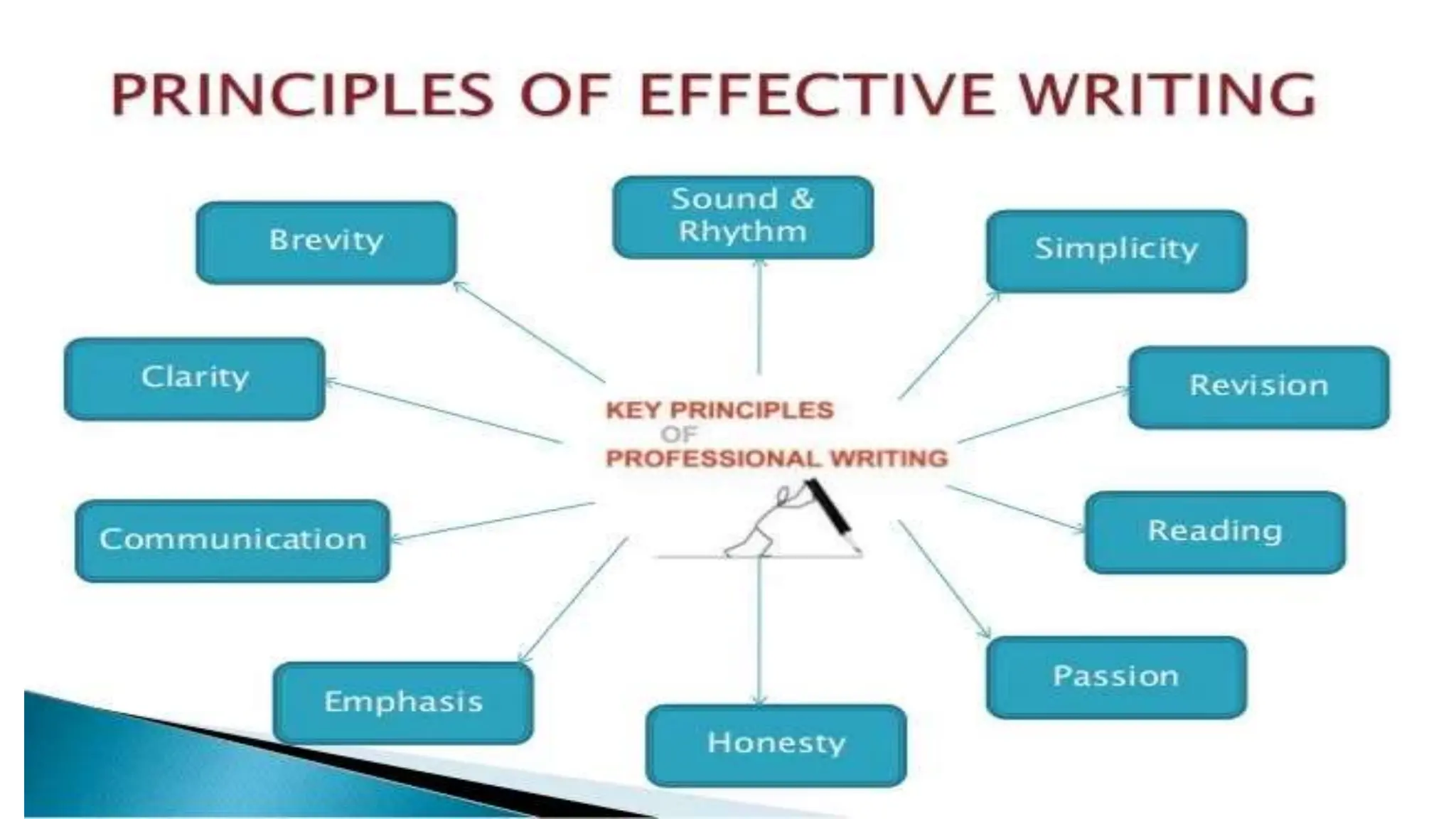
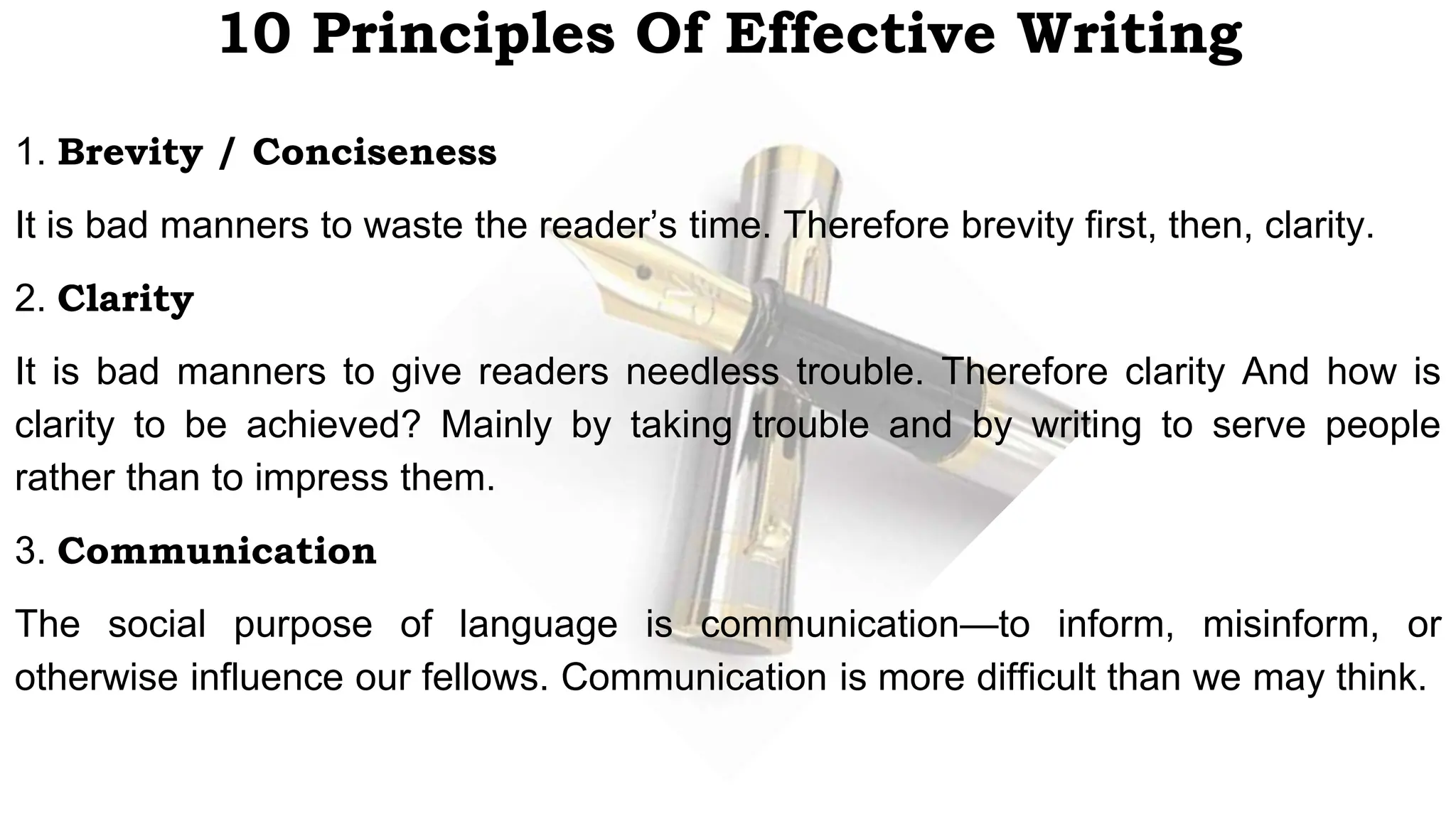
10 Principles Of Effective Writing
1. Brevity / Conciseness
It is bad manners to waste the reader’s time. Therefore brevity first, then, clarity.
2. Clarity
It is bad manners to give readers needless trouble. Therefore clarity And how is
clarity to be achieved? Mainly by taking trouble and by writing to serve people
rather than to impress them.
3. Communication
The social purpose of language is communication—to inform, misinform, or
otherwise influence our fellows. Communication is more difficult than we may think.
10 Principles Of Effective Writing
4. Emphasis
Just as the art of war largely consists of deploying the strongest forces at the most
important points, so the art of writing depends a good deal on putting the strongest
words in the most important places.
The most emphatic place in a clause or sentence is the end. This is the climax; and,
during the momentary pause that follows, that last word continues, as it were, to
reverberate in the reader’s mind.
5. Honesty
As the police put it, anything you say may be used as evidence against you. Most style
is not honest enough. Easy to say, but hard to practice. A writer may take to long words,
to impress. But long words, are often the badge of charlatans (Con-man). Or a writer
may cultivate the obscure, to seem profound. But even carefully muddied puddles are
soon fathomed. Or he may cultivate eccentricity, to seem original.
10 Principles Of Effective Writing
6. Passion and Control
This, indeed, is one of the eternal paradoxes of both life and literature—that without
passion little gets done; yet, without control of that passion, its effects are largely ill or
null.
7. Reading
One learns to write by reading good books, as one learns to talk by hearing good
talkers.
8. Revision
Every author’s fairy godmother should provide him not only with a pen but also with a
blue pencil.
10 Principles Of Effective Writing
9. Sophistication and Simplicity
The point is merely that the sophisticated (ready though they may be to suppose so) do
not necessarily express themselves better than the simple—in fact, may often have
much to learn from them.
10. Sound and Rhythm
Apart from a few simple principles, the sound and rhythm of English prose seem to
matters where both writers and readers should trust not so much to rules as to their
ears.
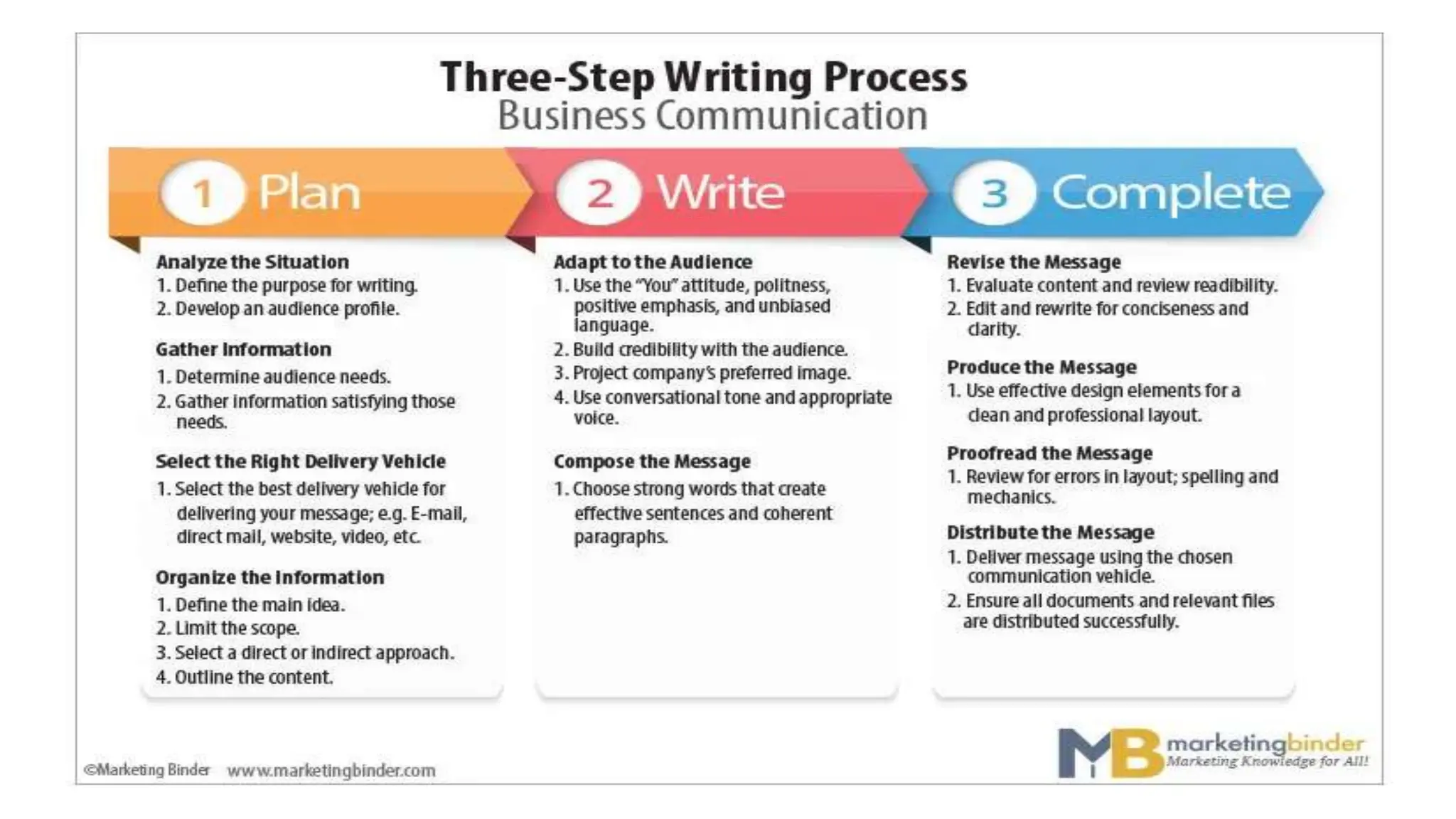
The 3X3 Writing
Process for Business
Communication
1. Prewriting (Planning)
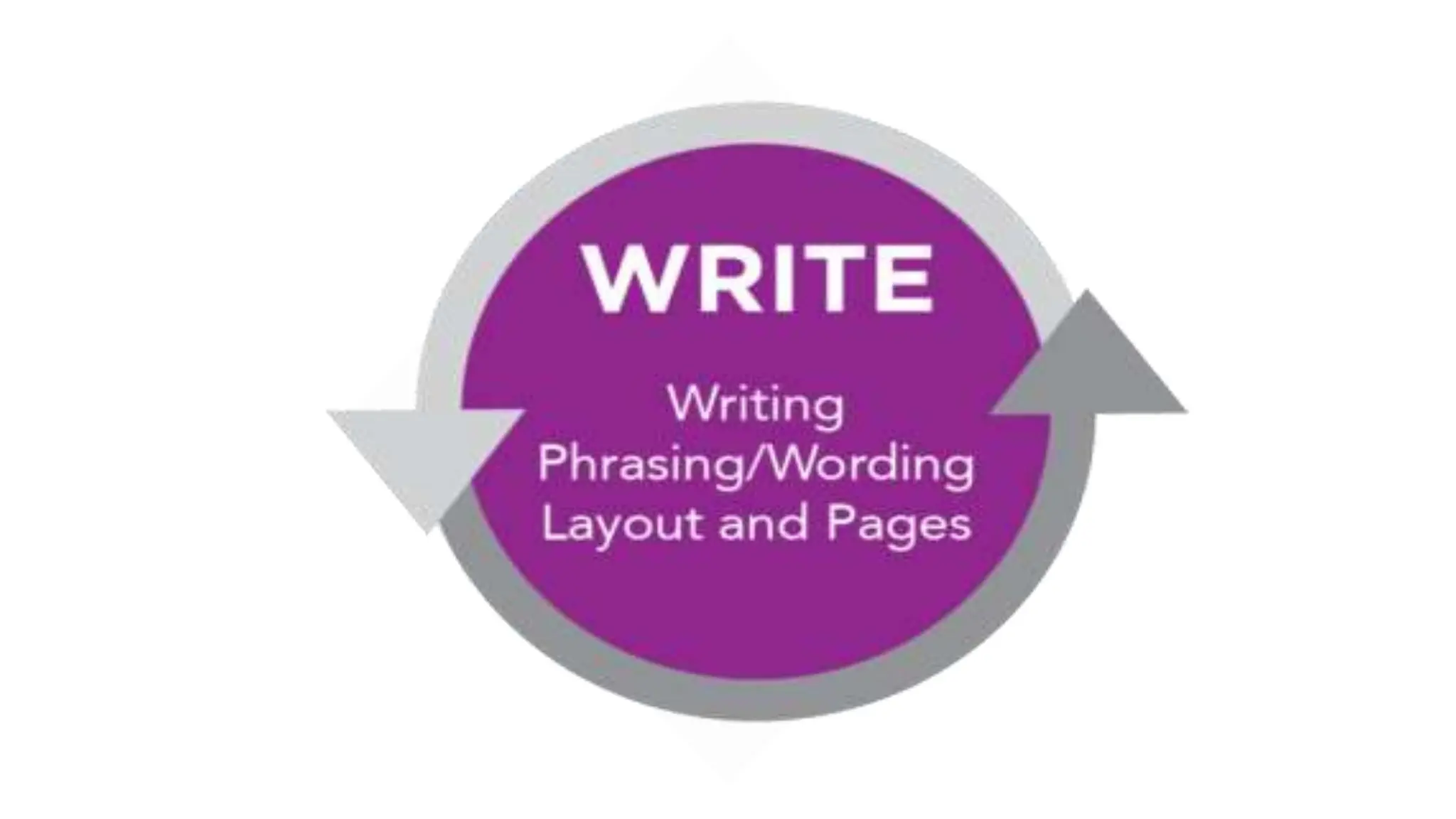
2. Writing
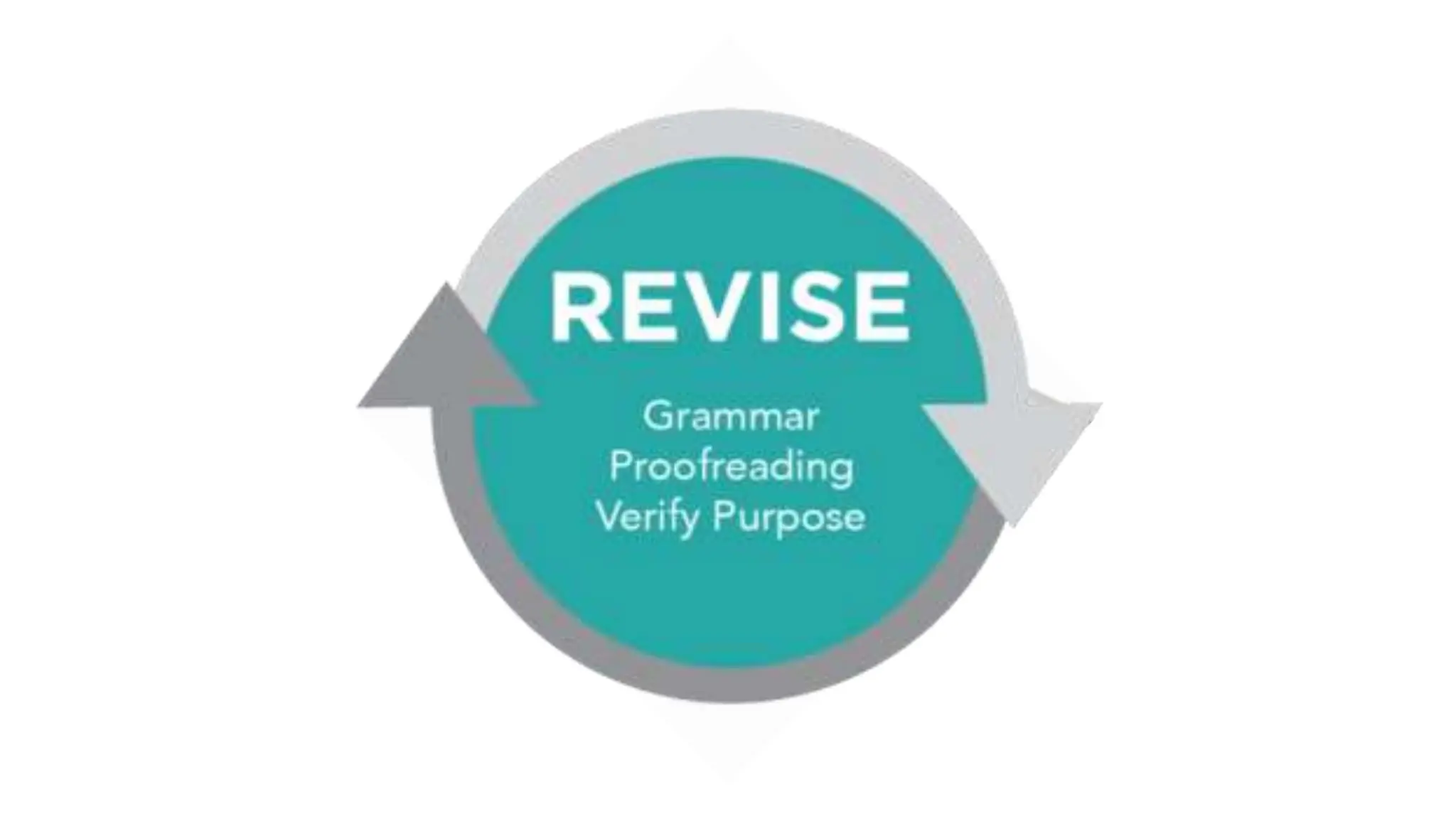
3. Revising (Completing)
THE 3X3 WRITING PROCESS
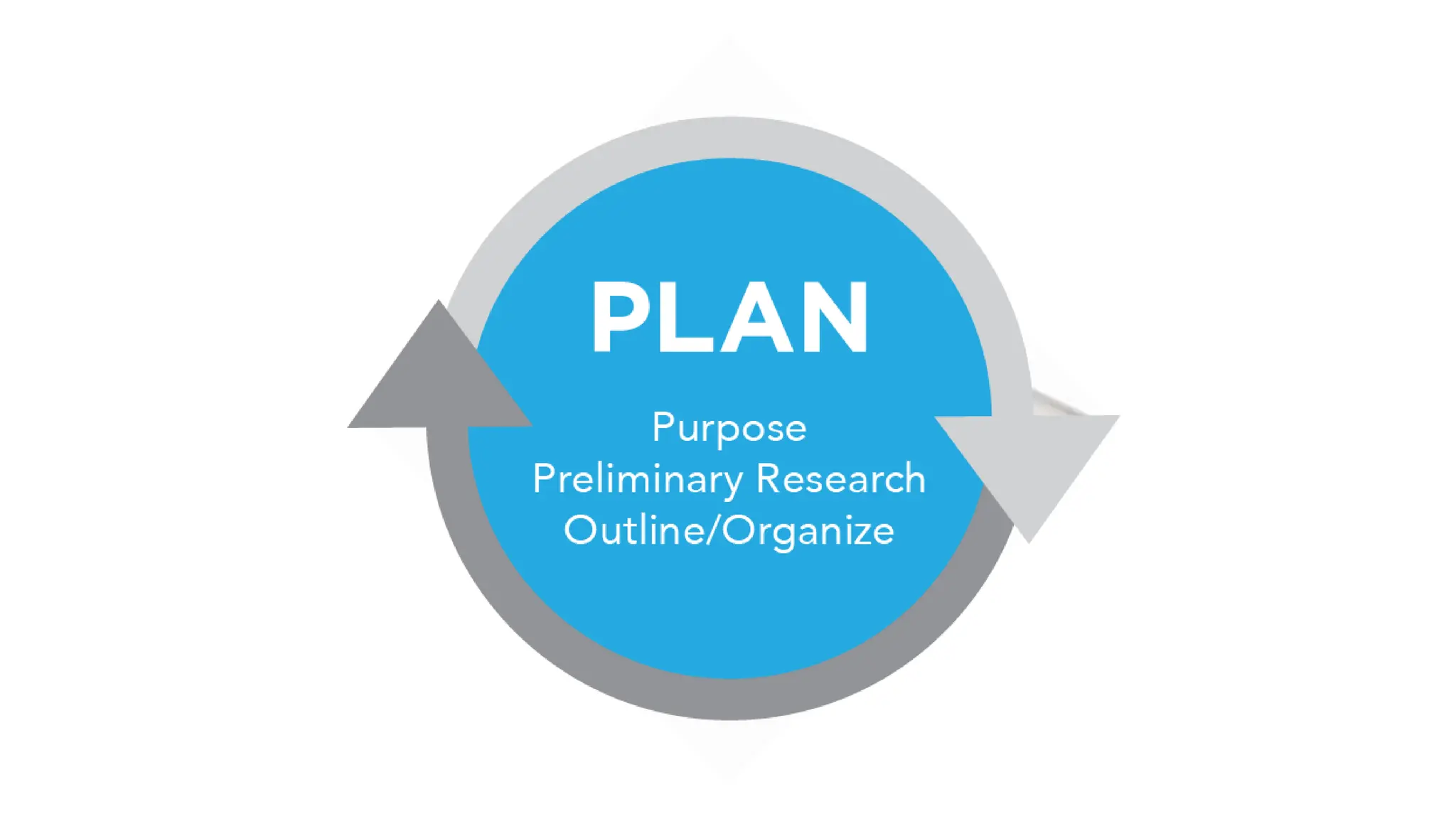
Planning Business Messages
While this whole module is about writing, most of the thinking about what you are
going to write happens before you compose a single sentence. Planning and
outlining is where your analysis and organization get done, so that when you’re
ready to write, all you have to worry about is sentence structure, word choice, and
tone—which is more than enough!
First, determine how the receiver of this communication likely feels about the
communication: positive, neutral or negative. Focus on what the receiver feels
based on the receiver’s situation. Do not factor in “How I’d like to hear this news.”
The receiver has not researched this message, might not have heard parts of the
topic before, or has the background you have. The receiver may have a different
work responsibility and may need background to fully appreciate the
communication. Factor all of that into the audience analysis. This is you-view
planning. You-view thinks about what the receiver wants and needs to understand.
Do not factor in your own feelings.
Planning Business Messages
Planning is the key first step in the writing process because it enables the writer
to begin thinking about how the final product will be created and evaluated. It is
the first step in establishing your accountability and reliability as a writer.
Remember that when you are writing for a corporation or organization, your
writing lives on as legal documentation and reference. Writers are no less
responsible for accountability for their work than are lawyers and medical
personnel. Solid planning leads to reliable final documents.
Planning Business Messages
Planning starts with audience reaction, which maps to an organizational structure for the
document.
There are three audience types : positive, neutral, and negative. These audiences may
receive positive, negative, or persuasive messages:
● Positive messages are routine or good news. The receiver is likely to react
positively or neutrally.
● Negative messages are bad news. The receiver is likely to react negatively.
● The overlapping category is Persuasive messages. The audience is expected to
need encouragement to act as the sender desires. In some cases, the receiver is
more like a positive audience. In other cases, the receiver is more like a negative
audience.
Planning Business Messages
All messages contain three or four blocks:
1. News: Whether good news or bad news, the message states its point clearly. There
receiver should clearly understand the news unambiguously.
2. Reasons: The reasons section supports or explains the news. This is the needed detail
to aid the receiver’s understanding or action.
3. Goodwill and Action: This is the closing paragraph where the sender provides a brief,
sincere remark designed to continue the working relationship. The closing paragraph is
not finished without some detail or reminder related to the purpose of the
communication, or call to action.
4. Buffer. This is usually only found in negative and some persuasive messages. A buffer
starts a message where the reader is likely be to the negative side of the continuum by
warming the reader to the topic, but not laying out the entire outcome of the message.
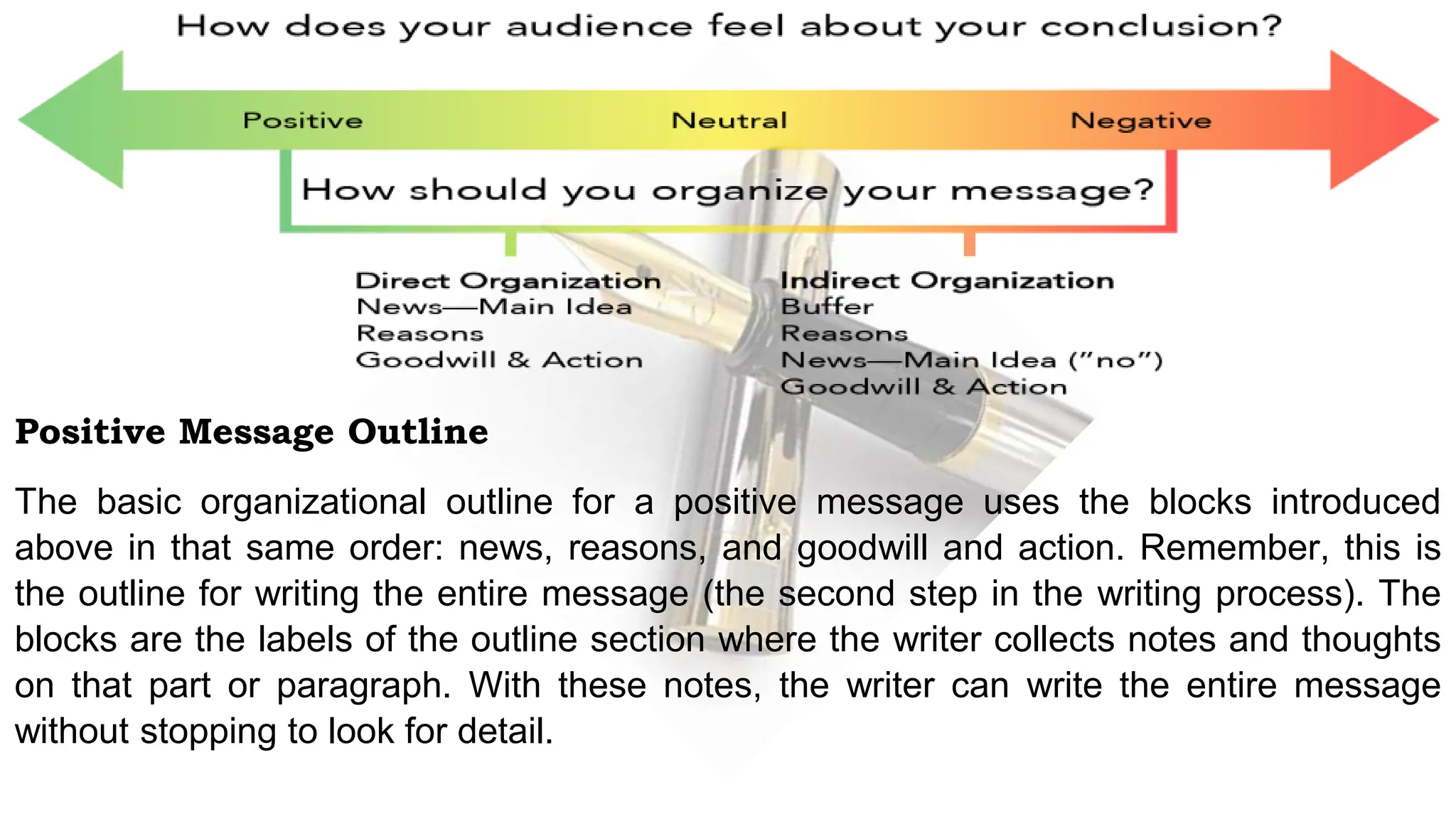
Depending on your audience reaction, you will place these blocks in a different order:
Positive Message Outline
The basic organizational outline for a positive message uses the blocks introduced
above in that same order: news, reasons, and goodwill and action. Remember, this is
the outline for writing the entire message (the second step in the writing process). The
blocks are the labels of the outline section where the writer collects notes and thoughts
on that part or paragraph. With these notes, the writer can write the entire message
without stopping to look for detail.
Negative Message Outline
The generic organizational outline for a negative message uses the three blocks news, reasons, and
goodwill and action. It uses these organizational blocks in a different order and also adds the buffer block.
Remember this is the outline for writing the entire message (step 2 in the writing process). With these
notes, the writer can write the entire message without stopping to look for detail.
Persuasive Message Outline
The simplest understanding and approach to persuasive messages is to determine how likely the receiver
is to comply with the sender’s wishes. If the audience is positive, then follow that outline. For negative
audiences you need to use a different approach.
It is helpful to overlay these structures with the marketing concept of Awareness, Interest, Desire, and
Action (AIDA).
This strategy starts with the opening of a positive or negative message. The opening should include an
attention grabbing opening, such as a fact, question, or something to catch the receiver’s interest. Next,
direct your writing to discuss more details to interest the receiver in this situation. The desire is about how
the receiver’s help or action matters. Finally, the closing includes the specific action requested of the
receiver.
Writing Business Messages
From Planning to Writing
At this stage of the process, the purpose and organization of your
message is already decided. Now you need to craft the words and
phrasing for each part of the message.
Whichever outline you’ve started with, it can seamlessly morph
into a first draft simply by choosing an area to attack. Start
fleshing it out with full sentences, complete thoughts, and relevant
sources.
Writing Skills
Subject Line
The subject line is surprisingly important in business communications. It is found in both
email and memo formats. Subject lines are a mini introduction to the message.
However, they do not replace the need for subject to be addressed in the first
paragraph of the communication.
Check to see if your subject lines pass a simple list of questions:
● Is the main idea apparent from the subject line?
● Is it more a phrase than full sentence?
● Can the receiver judge the urgency with respect to whether they must read the
message now or can leave it for later?
● Will the receiver be able to find this message again easily based on your subject
line?
Writing Skills
Constructing Buffers
Buffers are a specific component of negative messages. They allow the writer to start
the message without fully disclosing the bad news that is coming. Buffers must be more
than an unrelated hello such as “How about those Broncos?” They must lead in to the
topic while avoiding negative overtones. At the same time, a buffer shouldn’t promote
an untruth or raise the recipient’s hopes only to dash them. For example, in writing to a
job applicant, the subject line, “You are our best candidate” only to follow in the body
with “but unfortunately, we needed to hire from within the company, so you didn’t get
the job” is needlessly cruel. On the other hand, “You are one of many impressive
candidates,” is both honest and appropriately complimentary while serving as a buffer.
Writing Skills
Negative Words and Tone
Business relationships are like all relationships. There are ups and downs. At times
employees, customers, and others must hear news that is not to their choosing. Two
important skills save the relationship while delivering the bad news. In all situations, the
sender works to avoid negative words and tones. These words and tone can overshadow
even the best message.
With negative messages there comes a time where the bad news must be stated. A skilled
writer who plans the message well has this part of the message contained to a single area
of the communication. Yet, when saying “no,” the meaning must be clear. Sometimes the
most diplomatic form of clarity is achieved with a skilled “implied no.”
You-View
In defining positive messages, both good news and expected news fit the category.
However, some expected news may not please the receiver. The you-view in writing helps
the sender keep an overall good relationship to the receiver.
Revising Business Messages
Once you’ve written your message beginning to end, you may be feeling pretty
proud of yourself and ready to move on to your next task. Well, not quite. It’s time to
clarify, refine, and reorganize to make sure your message is exactly what you want
it to be.
The Art of Re-Seeing
Revising is the rearrangement and fine tuning of a fully developed—if not totally
completed—draft so that the thesis or hypothesis is aligned with the writer’s
purpose, the audience’s needs and characteristics, the development of the
argument, and the persuasive conclusion.
A Critical Step
Revising, for many writers and teachers of writing, is the most critical step in any writing
process. It is also the step that often frustrates many writers because it can be hard to
maintain objectivity and focus when looking so closely at your own work.
Many writers find it beneficial at this stage to have someone else read the document they
have been working on, since it is too close to the writer’s thoughts and emotions. Remember
that when you ask someone for a critique of your work, you are not asking for praise for your
brilliance but rather asking to have your work made even better and more effective for its
purpose. Also keep in mind that just because someone makes a suggestion doesn’t mean
you have to accept it. Unless that person is your boss, of course.
The need to revise acknowledges the likely scenario that no one’s writing is perfect as
presented in the latest draft. Willingness to revise means that the writer recognizes the
dynamic nature of communication and that revisions are required in order to clearly articulate
ideas and meet the expectations of the audience. Effective written expression is the result of
careful revisions.
Revising Business Messages
Revision Skills
A Two-Step Revision Process
In the revising process the writer does two things:
1. Ensures the final messages accomplishes the goal identified in the
planning step. This is content evaluation.
2. Ensures the grammar and proofreading step has corrected any errors.
This makes sure the wording is easy to read for the receiver and that
the writer’s reputation is well-served by a professional document.
Revising Business Messages
Proofreading Skills
Fragments
As the final readings of the message, short or long, completes, make sure there
are whole sentences.
Run-Ons
On the other side of fragments are sentences that go on and on and on.
Beware the run-on sentence.
Revising Business Messages
Types of Written
Communication in Business
Business Letters
Business Letter is a letter which is used by organizations to communicate in a
professional way with customers, other companies, clients, shareholders, investors, etc.
Business letter uses formal language and a specific format.
Companies use it to convey important information and messages. An individual can also
use it while writing an application for a job, cover letters, or any formal document.
Business Letter Definition
A letter written for business purpose is a business letter. Inquiry letter, offer letter, order
letter, cover letter, notices, termination of employment are some of the business letters.
Suppose a person wants to write any of these business letters. The main question is to
how to write a business letter?
There is a pre-specified format for writing a business letter. There are some parts of a
business letter and rules associated with them. Let us start to know how to write a
business letter by knowing the parts of a business letter.
Parts of Business Letter
A business letter will be more impressive if proper attention is given to each and
every part of the business letter.
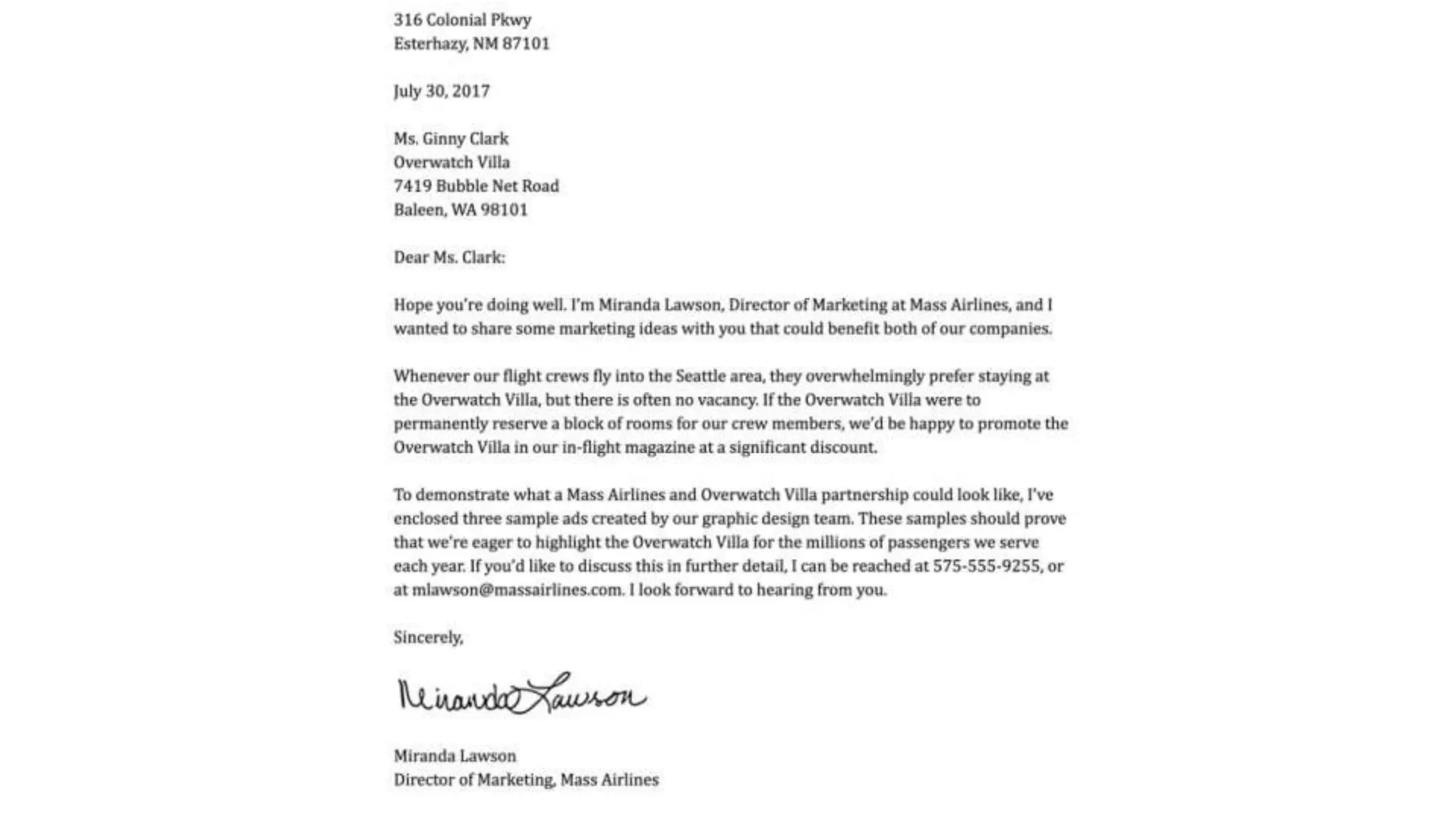
There are 12 Parts of Business Letter
1. The Heading or Letterhead
It usually contains the name and the address of the business or an organization. It
can also have an email address, contact number, fax number, trademark or logo of
the business.
2. Date
We write the date on the right-hand side corner of the letter below the heading.
Parts of Business Letter
3. Reference
It shows the department of the organization sending the letter. The letter-number
can also be used as a reference
4. The Inside Address
It includes the name, address, postal code, and job title of the recipient. It must be
mentioned after the reference. One must write inside address on the left-hand side
of the sheet.
5. Subject
It is a brief statement mentioning the reason for writing the letter. It should be clear,
eye catchy, short, simple, and easily understandable.
Parts of Business Letter
6. The Greeting
It contains the words to greet the recipient. It is also known as the salutation.
The type of salutation depends upon the relationship with the recipient.
It generally includes words like Dear, Respected, or just Sir/Madam. A comma
(,) usually follow the salutation.
Parts of Business Letter
7. The Body Paragraphs
This is the main part of the letter. It contains the actual message of the sender. The
main body of the mail must be clear and simple to understand. The body of the
letter is basically divided into three main categories.
● Opening Part: The first paragraph of the mail writing must state the
introduction of the writer. It also contains the previous correspondence if any.
● Main Part: This paragraph states the main idea or the reason for writing. It
must be clear, concise, complete, and to the point.
● Concluding Part: It is the conclusion of the business letter. It shows the
suggestions or the need of the action. The closing of the letter shows the
expectation of the sender from the recipient. Always end your mail by
courteous words like thanking you, warm regards, look forward to hearing from
your side etc.
Parts of Business Letter
8. The Complimentary Close
It is a humble way of ending a letter. It is written in accordance with the salutation. The
most generally used complimentary close are Yours faithfully, Yours sincerely, and
Thanks & Regards.
9. Signature and Writer’s Identification
It includes the signature, name, and designation of the sender. It can also include other
details like contact number, address, etc. The signature is handwritten just above the
name of the sender.
10. Enclosures
Enclosures show the documents attached to the letter. The documents can be anything
like cheque, draft, bills, receipts, invoices, etc. It is listed one by one.
Parts of Business Letter
11. Copy Circulation
It is needed when the copies of the letter are sent to other persons. It is
denoted as C.C.
12. PostScript
The sender can mention it when he wants to add something other than the
message in the body of the letter. It is written as P.S.
GOOD, BAD & NEUTRAL NEWS LETTERS
Letters can also be classified based on their content or message. Letters that
contain good news or a good message or favourable information are good-news
letters. Letters that contain a bad news or a bad message or an unfavourable
information are bad-news letters.
A letter sanctioning a loan to a customer or an overdraft facility to a concern, a
letter of appointment or promotion or a letter acceding to the request of a client are
good-news letters.
Unfortunately, in business, one has to undertake the unenviable job of
communicating bad news as well. It may be the rejection of a loan application, the
denial of a due promotion or rejection of a client’s request.
Business organizations have also got to write letters that contain neither good or
bad news from the standpoint of the receiver. It may be the announcement of a
change of office hours or premises, or an announcement of a new product, such
letters contain neutral messages and can be called “neutral – news letters”.
GOOD, BAD & NEUTRAL NEWS LETTERS
A good news letter is easy to write because of its content. A bad news letter
has to be written unoffendingly. Neutral letters usually are unsolicited letters.
The receiver may treat it as junk mail. So care should be taken to write them
well so that customers / recipient’s interest is aroused and he responds to them
as desired by the sender.
These classifications of letters as official/and personal, formal or informal as
good news letters, bad-news letters and neutral message letters are
classifications based on general criteria and are broad classifications based on
content. Business letters can be classified on the basis of the nature of
business they transact or take care of.
Writing Routine and Persuasive Letters
A routine claim is a demand or request for something which the claimant has a right
to have. For example, fund, payment for damages, replacement, exchange, and so
on. A claim letter is, thus, a request for adjustment.
All such requests can be divided into to two kinds- routine claims and persuasive
claims. When a writer thinks that because of guarantees or other specified terms
and conditions, the request for adjustment will be automatically granted without
delay or without persuasion, he writes the letter in the routine form. When the
writers believes that a direct statement of the desired action will get a positive
response without arguments, he can use the following sequence/pattern of ideas-
1. Request action in the opening sentence
2. Give reasons supporting the request/action
3. End with an appreciation for taking the action requested.
Writing a Persuasive Letter
Persuasion is used when we suspect that the reader will not be ordinarily
interested in the message and the action to be taken. Most probably, the letter
will be ignored. In such situation, writer uses the device of startling the reader
by informing him about something unexpected or unknown.
The reader is, in this way, at the very opening made to see why he/she should
accept the proposal. The letters shows how the reader will be greatly benefited
by taking the suggested action. Such letters that arouse readers‘ interest and
induce them to act as directed are essentially letters that sell ideas to others.
They are called persuasive letters.
The persuasive pattern, also known as persuasive organization, involves the
following sequence of ideas-
1. The opening sentence in the persuasive organization of business letters
catches the reader‘s attention by saying one of these things . A starting
statement of facts- Eg., Every second, 6 children die of malnutrition in our
country.
2. The middle section of the persuasive letters gives details of the product;
scheme or whatever is being promoted. This section mainly describes the
benefits to the reader. It explains why the reader should accept the proposal.
3. After arousing the reader‘s interest in the proposal, request action, such as a
― yes response to the proposed request.
4. The last paragraph acts as a reminder to the reader of the special benefits
he/she should gain by accepting to act as urged, and request action within the
given deadlines.
Positive and Negative Messages
Guidelines for Writing “No” to a request Indirect organization:
A negative response letter in a business situation, such as a request for
replacement or credit or adjustment or return of product, is bound to create
unpleasant feeling of disappointment in the reader.
Our purpose is to write about the ―no information while producing the
minimum disappointment. To achieve the objective, we should pattern the
information as given below-
1. Begin the letter with a paragraph that brings out the general situation as a
context in which the reader‘s request was considered. Indicate in a neutral or
friendly tone the reasons that would lead to a negative information or refusal.
Some of the possible methods-
i) Assure the receiver that his/her matter is considered with great
understanding and care.
ii) Make the reader believe that it is the circumstances or situation, and not
the merit of his /her request that is responsible for the ―no response.
iii) Agree with the reader in some way (You are right that the guarantee
period is one year.
iv) Give a sincere compliment
2. Give facts, reasons and factors for refusal.
3. In the same paragraph, mention the refusal .it is important not to highlight the
refusal.
4. The end seeks to maintain good business relations with the reader by
suggesting to her/ him an alternative course of action or better deal in future.
Employee Reviews
An employee review form is a formal document with questions and discussion
points that examine employee efficiency and productivity. Companies may also
use an employee review form to commend on outstanding work. Occasionally,
organizations will use review forms with a team to outline how they are
performing.
Recommendation Letters
A recommendation letter, is usually written to testify to a person's skills,
character, experience, achievements. When a candidate applies for a job, he or
she will submit recommendation letter to support his or her application.
A letter of recommendation is a letter written by someone who can recommend
an individual's work or academic performance. It's typically sent to a hiring
manager or admissions officer who is deciding whether to employ or admit a
candidate.
Thank You Letters
A thank-you letter is a letter that is used when one person/party wishes to
express appreciation to another. Thank-you letters are also sometimes referred
to as letters of gratitude. These types of thank-you letters are usually written as
formal business letters.
Memo
A memo is a short official note that is sent by one person to another within the same
company or organization.
A memorandum, often referred to as a memo, is a form used by a person known to the
receiver personally.
Press Release
A press release is an official statement delivered to members of the news
media for the purpose of providing information, creating an official statement or
making an announcement directed for public release.
Press releases are also considered a primary source, meaning they are original
informants for information. A press release is traditionally composed of nine
structural elements, including a headline, dateline, introduction, body and other
components.
Proactive Media Writing
A form of written communication similar to a press release that emphasizes an
organization’s commitment to safety and compliance.
Using written communication as a proactive media strategy helps the
organisation prepare for negative news that could tarnish the organisation’s
reputation at the local, state, national and perhaps even global levels.
E-mail
Electronic Mail (E-mail) is a method of exchanging messages between people
using electronic devices. Email first entered substantial use in the 1960s and by
the mid-1970s had taken the form now recognized as email. Email operates
across computer networks, which today is primarily the Internet.
E-mail, short for electronic mail and often abbreviated to e-mail, email or simply
mail, is a store and forward method of composing, sending, storing, and
receiving messages over electronic communication systems
Advantages
1. Eliminates ―telephone tag.
2. Saves time.
3. Facilitates fast decisions.
4. Is cheap.
5. Provides a written Record.
Benefits of Email
1. Business and organizational use
2. Facilitating logistics
3. It reduces cost.
4. It increases speed.
5. It creates a written record.
FOR MORE INFORMATION CLICK …
1. Written Communication - Definition, Advantages and Disadvantages - Digiaide.com
2. 10 Principles Of Effective Writing - Writers Write
3. Principles of effective Writing (theintactone.com)
4. The Three-Part Writing Process | Business Communication Skills for Managers
(lumenlearning.com)
5. Lindsey Chausse - Positive, Negative and Persuasive Messages (weebly.com)
6. Positive and Negative Persuasive Messages (careertrend.com)
7. Business Letter Format: How to Write a Business Letter? (toppr.com)

business communication module number three

  • 2.
    WHAT IS WRITTENCOMMUNICATION Written communication is the practice of sending messages, orders, or instructions in writing via letters, circulars, manuals, reports, telegrams, office memos, bulletins, and other means. It is a more formal and less flexible mode of communication. A well-kept written document becomes a permanent record for future reference. It is useful in making business operations well documented, accountable, confusion-free, and result-driven. It is the most essential element for key promotional materials for business development. Effective written communication skills incorporate the careful choices of words as well as their organization in proper order in meaningful sentences with the cohesive composition of sentences to deliver your point or message.
  • 3.
    Writing is amode of communicating a message for a purpose. Writing reveals one’s ability to think clearly and to use language effectively. A manager is responsible for a variety of written communications such as replies to clients, enquires, memos, recording, agreements, proposals for contracts, formal or informal reports to initiate action, and so on. Definition: Written communication is defined as communication that conveys a message, information, or idea through written words or symbols.
  • 4.
    Importance of WrittenCommunication Skills Written communication is more valid and reliable in comparison to verbal communication. Communicating through writing is inevitable in the contemporary world of the information age. It is the most essential form of business communication. It is essential for small business owners, managers, leaders, and professionals to develop good written communication skills. In recent years, electronic mail has become a prevalent corporate communication tool. Indeed, its ability to quickly and inexpensively deliver critical corporate information has turned it into a communications workhorse for businesses of all kinds and orientations. Written business communication is useful in addressing clients, customers, suppliers, business partners, colleagues, and other stakeholders.
  • 5.
    Purpose of Writing 1.Writing to Inform i) Writer gives information and offers to explains ii)Expounds or expresses ideas and facts iii)Accounts of facts , scientific data, statistics, and technical and business reports. iv)To inform or educate not persuade. 2. Writing to Persuade i) Convincing /influencing ii) Expresses opinion iii) Argumentative iv) Opinion essays, editorials, letters to the editors, business/research proposals, religious books, reviews.
  • 6.
    Examples of WrittenCommunication in Corporate Operations The following are some examples of written communications that are commonly used with clients or other businesses: Websites Letters Proposals Telegrams Faxes Postcards Contracts Advertisements Brochures Publications Memos Reports Bulletins Descriptions of jobs Employee handbooks Emails Messages, etc
  • 9.
    10 Principles OfEffective Writing 1. Brevity / Conciseness It is bad manners to waste the reader’s time. Therefore brevity first, then, clarity. 2. Clarity It is bad manners to give readers needless trouble. Therefore clarity And how is clarity to be achieved? Mainly by taking trouble and by writing to serve people rather than to impress them. 3. Communication The social purpose of language is communication—to inform, misinform, or otherwise influence our fellows. Communication is more difficult than we may think.
  • 10.
    10 Principles OfEffective Writing 4. Emphasis Just as the art of war largely consists of deploying the strongest forces at the most important points, so the art of writing depends a good deal on putting the strongest words in the most important places. The most emphatic place in a clause or sentence is the end. This is the climax; and, during the momentary pause that follows, that last word continues, as it were, to reverberate in the reader’s mind. 5. Honesty As the police put it, anything you say may be used as evidence against you. Most style is not honest enough. Easy to say, but hard to practice. A writer may take to long words, to impress. But long words, are often the badge of charlatans (Con-man). Or a writer may cultivate the obscure, to seem profound. But even carefully muddied puddles are soon fathomed. Or he may cultivate eccentricity, to seem original.
  • 11.
    10 Principles OfEffective Writing 6. Passion and Control This, indeed, is one of the eternal paradoxes of both life and literature—that without passion little gets done; yet, without control of that passion, its effects are largely ill or null. 7. Reading One learns to write by reading good books, as one learns to talk by hearing good talkers. 8. Revision Every author’s fairy godmother should provide him not only with a pen but also with a blue pencil.
  • 12.
    10 Principles OfEffective Writing 9. Sophistication and Simplicity The point is merely that the sophisticated (ready though they may be to suppose so) do not necessarily express themselves better than the simple—in fact, may often have much to learn from them. 10. Sound and Rhythm Apart from a few simple principles, the sound and rhythm of English prose seem to matters where both writers and readers should trust not so much to rules as to their ears.
  • 13.
    The 3X3 Writing Processfor Business Communication
  • 14.
    1. Prewriting (Planning) 2.Writing 3. Revising (Completing) THE 3X3 WRITING PROCESS
  • 17.
    Planning Business Messages Whilethis whole module is about writing, most of the thinking about what you are going to write happens before you compose a single sentence. Planning and outlining is where your analysis and organization get done, so that when you’re ready to write, all you have to worry about is sentence structure, word choice, and tone—which is more than enough! First, determine how the receiver of this communication likely feels about the communication: positive, neutral or negative. Focus on what the receiver feels based on the receiver’s situation. Do not factor in “How I’d like to hear this news.” The receiver has not researched this message, might not have heard parts of the topic before, or has the background you have. The receiver may have a different work responsibility and may need background to fully appreciate the communication. Factor all of that into the audience analysis. This is you-view planning. You-view thinks about what the receiver wants and needs to understand. Do not factor in your own feelings.
  • 18.
    Planning Business Messages Planningis the key first step in the writing process because it enables the writer to begin thinking about how the final product will be created and evaluated. It is the first step in establishing your accountability and reliability as a writer. Remember that when you are writing for a corporation or organization, your writing lives on as legal documentation and reference. Writers are no less responsible for accountability for their work than are lawyers and medical personnel. Solid planning leads to reliable final documents.
  • 19.
    Planning Business Messages Planningstarts with audience reaction, which maps to an organizational structure for the document. There are three audience types : positive, neutral, and negative. These audiences may receive positive, negative, or persuasive messages: ● Positive messages are routine or good news. The receiver is likely to react positively or neutrally. ● Negative messages are bad news. The receiver is likely to react negatively. ● The overlapping category is Persuasive messages. The audience is expected to need encouragement to act as the sender desires. In some cases, the receiver is more like a positive audience. In other cases, the receiver is more like a negative audience.
  • 20.
    Planning Business Messages Allmessages contain three or four blocks: 1. News: Whether good news or bad news, the message states its point clearly. There receiver should clearly understand the news unambiguously. 2. Reasons: The reasons section supports or explains the news. This is the needed detail to aid the receiver’s understanding or action. 3. Goodwill and Action: This is the closing paragraph where the sender provides a brief, sincere remark designed to continue the working relationship. The closing paragraph is not finished without some detail or reminder related to the purpose of the communication, or call to action. 4. Buffer. This is usually only found in negative and some persuasive messages. A buffer starts a message where the reader is likely be to the negative side of the continuum by warming the reader to the topic, but not laying out the entire outcome of the message. Depending on your audience reaction, you will place these blocks in a different order:
  • 21.
    Positive Message Outline Thebasic organizational outline for a positive message uses the blocks introduced above in that same order: news, reasons, and goodwill and action. Remember, this is the outline for writing the entire message (the second step in the writing process). The blocks are the labels of the outline section where the writer collects notes and thoughts on that part or paragraph. With these notes, the writer can write the entire message without stopping to look for detail.
  • 22.
    Negative Message Outline Thegeneric organizational outline for a negative message uses the three blocks news, reasons, and goodwill and action. It uses these organizational blocks in a different order and also adds the buffer block. Remember this is the outline for writing the entire message (step 2 in the writing process). With these notes, the writer can write the entire message without stopping to look for detail. Persuasive Message Outline The simplest understanding and approach to persuasive messages is to determine how likely the receiver is to comply with the sender’s wishes. If the audience is positive, then follow that outline. For negative audiences you need to use a different approach. It is helpful to overlay these structures with the marketing concept of Awareness, Interest, Desire, and Action (AIDA). This strategy starts with the opening of a positive or negative message. The opening should include an attention grabbing opening, such as a fact, question, or something to catch the receiver’s interest. Next, direct your writing to discuss more details to interest the receiver in this situation. The desire is about how the receiver’s help or action matters. Finally, the closing includes the specific action requested of the receiver.
  • 24.
    Writing Business Messages FromPlanning to Writing At this stage of the process, the purpose and organization of your message is already decided. Now you need to craft the words and phrasing for each part of the message. Whichever outline you’ve started with, it can seamlessly morph into a first draft simply by choosing an area to attack. Start fleshing it out with full sentences, complete thoughts, and relevant sources.
  • 25.
    Writing Skills Subject Line Thesubject line is surprisingly important in business communications. It is found in both email and memo formats. Subject lines are a mini introduction to the message. However, they do not replace the need for subject to be addressed in the first paragraph of the communication. Check to see if your subject lines pass a simple list of questions: ● Is the main idea apparent from the subject line? ● Is it more a phrase than full sentence? ● Can the receiver judge the urgency with respect to whether they must read the message now or can leave it for later? ● Will the receiver be able to find this message again easily based on your subject line?
  • 26.
    Writing Skills Constructing Buffers Buffersare a specific component of negative messages. They allow the writer to start the message without fully disclosing the bad news that is coming. Buffers must be more than an unrelated hello such as “How about those Broncos?” They must lead in to the topic while avoiding negative overtones. At the same time, a buffer shouldn’t promote an untruth or raise the recipient’s hopes only to dash them. For example, in writing to a job applicant, the subject line, “You are our best candidate” only to follow in the body with “but unfortunately, we needed to hire from within the company, so you didn’t get the job” is needlessly cruel. On the other hand, “You are one of many impressive candidates,” is both honest and appropriately complimentary while serving as a buffer.
  • 27.
    Writing Skills Negative Wordsand Tone Business relationships are like all relationships. There are ups and downs. At times employees, customers, and others must hear news that is not to their choosing. Two important skills save the relationship while delivering the bad news. In all situations, the sender works to avoid negative words and tones. These words and tone can overshadow even the best message. With negative messages there comes a time where the bad news must be stated. A skilled writer who plans the message well has this part of the message contained to a single area of the communication. Yet, when saying “no,” the meaning must be clear. Sometimes the most diplomatic form of clarity is achieved with a skilled “implied no.” You-View In defining positive messages, both good news and expected news fit the category. However, some expected news may not please the receiver. The you-view in writing helps the sender keep an overall good relationship to the receiver.
  • 29.
    Revising Business Messages Onceyou’ve written your message beginning to end, you may be feeling pretty proud of yourself and ready to move on to your next task. Well, not quite. It’s time to clarify, refine, and reorganize to make sure your message is exactly what you want it to be. The Art of Re-Seeing Revising is the rearrangement and fine tuning of a fully developed—if not totally completed—draft so that the thesis or hypothesis is aligned with the writer’s purpose, the audience’s needs and characteristics, the development of the argument, and the persuasive conclusion.
  • 30.
    A Critical Step Revising,for many writers and teachers of writing, is the most critical step in any writing process. It is also the step that often frustrates many writers because it can be hard to maintain objectivity and focus when looking so closely at your own work. Many writers find it beneficial at this stage to have someone else read the document they have been working on, since it is too close to the writer’s thoughts and emotions. Remember that when you ask someone for a critique of your work, you are not asking for praise for your brilliance but rather asking to have your work made even better and more effective for its purpose. Also keep in mind that just because someone makes a suggestion doesn’t mean you have to accept it. Unless that person is your boss, of course. The need to revise acknowledges the likely scenario that no one’s writing is perfect as presented in the latest draft. Willingness to revise means that the writer recognizes the dynamic nature of communication and that revisions are required in order to clearly articulate ideas and meet the expectations of the audience. Effective written expression is the result of careful revisions. Revising Business Messages
  • 31.
    Revision Skills A Two-StepRevision Process In the revising process the writer does two things: 1. Ensures the final messages accomplishes the goal identified in the planning step. This is content evaluation. 2. Ensures the grammar and proofreading step has corrected any errors. This makes sure the wording is easy to read for the receiver and that the writer’s reputation is well-served by a professional document. Revising Business Messages
  • 32.
    Proofreading Skills Fragments As thefinal readings of the message, short or long, completes, make sure there are whole sentences. Run-Ons On the other side of fragments are sentences that go on and on and on. Beware the run-on sentence. Revising Business Messages
  • 33.
    Types of Written Communicationin Business Business Letters
  • 35.
    Business Letter isa letter which is used by organizations to communicate in a professional way with customers, other companies, clients, shareholders, investors, etc. Business letter uses formal language and a specific format. Companies use it to convey important information and messages. An individual can also use it while writing an application for a job, cover letters, or any formal document. Business Letter Definition A letter written for business purpose is a business letter. Inquiry letter, offer letter, order letter, cover letter, notices, termination of employment are some of the business letters. Suppose a person wants to write any of these business letters. The main question is to how to write a business letter? There is a pre-specified format for writing a business letter. There are some parts of a business letter and rules associated with them. Let us start to know how to write a business letter by knowing the parts of a business letter.
  • 36.
    Parts of BusinessLetter A business letter will be more impressive if proper attention is given to each and every part of the business letter. There are 12 Parts of Business Letter 1. The Heading or Letterhead It usually contains the name and the address of the business or an organization. It can also have an email address, contact number, fax number, trademark or logo of the business. 2. Date We write the date on the right-hand side corner of the letter below the heading.
  • 37.
    Parts of BusinessLetter 3. Reference It shows the department of the organization sending the letter. The letter-number can also be used as a reference 4. The Inside Address It includes the name, address, postal code, and job title of the recipient. It must be mentioned after the reference. One must write inside address on the left-hand side of the sheet. 5. Subject It is a brief statement mentioning the reason for writing the letter. It should be clear, eye catchy, short, simple, and easily understandable.
  • 38.
    Parts of BusinessLetter 6. The Greeting It contains the words to greet the recipient. It is also known as the salutation. The type of salutation depends upon the relationship with the recipient. It generally includes words like Dear, Respected, or just Sir/Madam. A comma (,) usually follow the salutation.
  • 39.
    Parts of BusinessLetter 7. The Body Paragraphs This is the main part of the letter. It contains the actual message of the sender. The main body of the mail must be clear and simple to understand. The body of the letter is basically divided into three main categories. ● Opening Part: The first paragraph of the mail writing must state the introduction of the writer. It also contains the previous correspondence if any. ● Main Part: This paragraph states the main idea or the reason for writing. It must be clear, concise, complete, and to the point. ● Concluding Part: It is the conclusion of the business letter. It shows the suggestions or the need of the action. The closing of the letter shows the expectation of the sender from the recipient. Always end your mail by courteous words like thanking you, warm regards, look forward to hearing from your side etc.
  • 40.
    Parts of BusinessLetter 8. The Complimentary Close It is a humble way of ending a letter. It is written in accordance with the salutation. The most generally used complimentary close are Yours faithfully, Yours sincerely, and Thanks & Regards. 9. Signature and Writer’s Identification It includes the signature, name, and designation of the sender. It can also include other details like contact number, address, etc. The signature is handwritten just above the name of the sender. 10. Enclosures Enclosures show the documents attached to the letter. The documents can be anything like cheque, draft, bills, receipts, invoices, etc. It is listed one by one.
  • 41.
    Parts of BusinessLetter 11. Copy Circulation It is needed when the copies of the letter are sent to other persons. It is denoted as C.C. 12. PostScript The sender can mention it when he wants to add something other than the message in the body of the letter. It is written as P.S.
  • 42.
    GOOD, BAD &NEUTRAL NEWS LETTERS Letters can also be classified based on their content or message. Letters that contain good news or a good message or favourable information are good-news letters. Letters that contain a bad news or a bad message or an unfavourable information are bad-news letters. A letter sanctioning a loan to a customer or an overdraft facility to a concern, a letter of appointment or promotion or a letter acceding to the request of a client are good-news letters. Unfortunately, in business, one has to undertake the unenviable job of communicating bad news as well. It may be the rejection of a loan application, the denial of a due promotion or rejection of a client’s request. Business organizations have also got to write letters that contain neither good or bad news from the standpoint of the receiver. It may be the announcement of a change of office hours or premises, or an announcement of a new product, such letters contain neutral messages and can be called “neutral – news letters”.
  • 43.
    GOOD, BAD &NEUTRAL NEWS LETTERS A good news letter is easy to write because of its content. A bad news letter has to be written unoffendingly. Neutral letters usually are unsolicited letters. The receiver may treat it as junk mail. So care should be taken to write them well so that customers / recipient’s interest is aroused and he responds to them as desired by the sender. These classifications of letters as official/and personal, formal or informal as good news letters, bad-news letters and neutral message letters are classifications based on general criteria and are broad classifications based on content. Business letters can be classified on the basis of the nature of business they transact or take care of.
  • 44.
    Writing Routine andPersuasive Letters A routine claim is a demand or request for something which the claimant has a right to have. For example, fund, payment for damages, replacement, exchange, and so on. A claim letter is, thus, a request for adjustment. All such requests can be divided into to two kinds- routine claims and persuasive claims. When a writer thinks that because of guarantees or other specified terms and conditions, the request for adjustment will be automatically granted without delay or without persuasion, he writes the letter in the routine form. When the writers believes that a direct statement of the desired action will get a positive response without arguments, he can use the following sequence/pattern of ideas- 1. Request action in the opening sentence 2. Give reasons supporting the request/action 3. End with an appreciation for taking the action requested.
  • 45.
    Writing a PersuasiveLetter Persuasion is used when we suspect that the reader will not be ordinarily interested in the message and the action to be taken. Most probably, the letter will be ignored. In such situation, writer uses the device of startling the reader by informing him about something unexpected or unknown. The reader is, in this way, at the very opening made to see why he/she should accept the proposal. The letters shows how the reader will be greatly benefited by taking the suggested action. Such letters that arouse readers‘ interest and induce them to act as directed are essentially letters that sell ideas to others. They are called persuasive letters.
  • 46.
    The persuasive pattern,also known as persuasive organization, involves the following sequence of ideas- 1. The opening sentence in the persuasive organization of business letters catches the reader‘s attention by saying one of these things . A starting statement of facts- Eg., Every second, 6 children die of malnutrition in our country. 2. The middle section of the persuasive letters gives details of the product; scheme or whatever is being promoted. This section mainly describes the benefits to the reader. It explains why the reader should accept the proposal. 3. After arousing the reader‘s interest in the proposal, request action, such as a ― yes response to the proposed request. 4. The last paragraph acts as a reminder to the reader of the special benefits he/she should gain by accepting to act as urged, and request action within the given deadlines.
  • 47.
    Positive and NegativeMessages Guidelines for Writing “No” to a request Indirect organization: A negative response letter in a business situation, such as a request for replacement or credit or adjustment or return of product, is bound to create unpleasant feeling of disappointment in the reader. Our purpose is to write about the ―no information while producing the minimum disappointment. To achieve the objective, we should pattern the information as given below- 1. Begin the letter with a paragraph that brings out the general situation as a context in which the reader‘s request was considered. Indicate in a neutral or friendly tone the reasons that would lead to a negative information or refusal.
  • 48.
    Some of thepossible methods- i) Assure the receiver that his/her matter is considered with great understanding and care. ii) Make the reader believe that it is the circumstances or situation, and not the merit of his /her request that is responsible for the ―no response. iii) Agree with the reader in some way (You are right that the guarantee period is one year. iv) Give a sincere compliment 2. Give facts, reasons and factors for refusal. 3. In the same paragraph, mention the refusal .it is important not to highlight the refusal. 4. The end seeks to maintain good business relations with the reader by suggesting to her/ him an alternative course of action or better deal in future.
  • 49.
    Employee Reviews An employeereview form is a formal document with questions and discussion points that examine employee efficiency and productivity. Companies may also use an employee review form to commend on outstanding work. Occasionally, organizations will use review forms with a team to outline how they are performing.
  • 50.
    Recommendation Letters A recommendationletter, is usually written to testify to a person's skills, character, experience, achievements. When a candidate applies for a job, he or she will submit recommendation letter to support his or her application. A letter of recommendation is a letter written by someone who can recommend an individual's work or academic performance. It's typically sent to a hiring manager or admissions officer who is deciding whether to employ or admit a candidate.
  • 51.
    Thank You Letters Athank-you letter is a letter that is used when one person/party wishes to express appreciation to another. Thank-you letters are also sometimes referred to as letters of gratitude. These types of thank-you letters are usually written as formal business letters.
  • 52.
    Memo A memo isa short official note that is sent by one person to another within the same company or organization. A memorandum, often referred to as a memo, is a form used by a person known to the receiver personally.
  • 53.
    Press Release A pressrelease is an official statement delivered to members of the news media for the purpose of providing information, creating an official statement or making an announcement directed for public release. Press releases are also considered a primary source, meaning they are original informants for information. A press release is traditionally composed of nine structural elements, including a headline, dateline, introduction, body and other components.
  • 54.
    Proactive Media Writing Aform of written communication similar to a press release that emphasizes an organization’s commitment to safety and compliance. Using written communication as a proactive media strategy helps the organisation prepare for negative news that could tarnish the organisation’s reputation at the local, state, national and perhaps even global levels.
  • 55.
    E-mail Electronic Mail (E-mail)is a method of exchanging messages between people using electronic devices. Email first entered substantial use in the 1960s and by the mid-1970s had taken the form now recognized as email. Email operates across computer networks, which today is primarily the Internet. E-mail, short for electronic mail and often abbreviated to e-mail, email or simply mail, is a store and forward method of composing, sending, storing, and receiving messages over electronic communication systems
  • 56.
    Advantages 1. Eliminates ―telephonetag. 2. Saves time. 3. Facilitates fast decisions. 4. Is cheap. 5. Provides a written Record.
  • 57.
    Benefits of Email 1.Business and organizational use 2. Facilitating logistics 3. It reduces cost. 4. It increases speed. 5. It creates a written record.
  • 58.
    FOR MORE INFORMATIONCLICK … 1. Written Communication - Definition, Advantages and Disadvantages - Digiaide.com 2. 10 Principles Of Effective Writing - Writers Write 3. Principles of effective Writing (theintactone.com) 4. The Three-Part Writing Process | Business Communication Skills for Managers (lumenlearning.com) 5. Lindsey Chausse - Positive, Negative and Persuasive Messages (weebly.com) 6. Positive and Negative Persuasive Messages (careertrend.com) 7. Business Letter Format: How to Write a Business Letter? (toppr.com)