Module - 4
Business Reports
Writing Reports
Report is an assigned communication for a purpose and for a
specific reader or /receiver to give information.
A report can be defined as a communication in which the
writer gives information to some individual or organization because it is
his or her responsibility to do so. It is an assigned communication for a
purpose and for a specific receiver/reader.
The common elements in all the reports, as a distinct form of writing, are
the element of responsibility. The writer is obliged to communicate what
he/she knows to one who needs, it, as a part his/her assigned, clearly
defined and time-bound task.
The word ‘report’ is derived from the French word ‘repportes’ which
means “combination of some related sentences”. In simple language, the report
is a statement of facts relating to a particular subject or event. The report is a
self-explanatory statement of facts relating to a specific subject and serves the
purpose of providing information for decision making and follow up actions. It
is generally prepared by inquiring and analyzing any specific past event.
Thus, a report is a statement that contains information obtained by proper
inquiry, examination and evaluation of any past event. The report may be oral or
written. However, written reports are widely used.
Some definitions of reports given by renowned authors are cited below:
According to G. R. Terry, “A report is a formal presentation of summary
information dealing with the utilization of resources or status of operations
useful in evaluating progress, making decisions and directing activities.”
Ricks and Gow defined, “A report is a written or oral message
presenting information that will help a decision maker to solve a
business problem.”
C.A. Brown said, “A report is a communication from someone who
has some information to someone who wants to use that information.”
In conclusion, we can say that report is an objective and factual
presentation of information on any specific past event. It is a basic
management tool used in decision making. The basic ingredient of a
report is factual information- events, records and the various forms of
data.
BUSINESS REPORT
Some important definitions on business reports are quoted below:
In the words of Lesikar and Pettit, “A business report is an
orderly, objective communication of factual information that serves
some business purpose.”
Louis E. Boone and others defined, “A business report is a
document that organizes information on a specific topic for a
specific business purposes.”
In the opinion of Murphy and Hildebrandt, “A business report is
an impartial, objective, planned presentation of facts to one or
more persons for a specific, significant business purpose.”
From the above discussion and definitions, it can be said that
business report is an orderly and objective presentation of accurate
and organized information on any event related to business
Purpose of a Report
1. To make sound decisions and find effective solutions
2. To provide a formal, verifiable link between people, places, and
times
3. To serve as permanent records
4. To solve immediate problems
5. To provide complete, accurate, objective information
6. Information about company‘s activities, progress, plans, problems
7. Specific Action
8. Justify and Persuade
9. Present fact
OBJECTIVES OF BUSINESS
REPORTS
In large-scale organizations, there is no alternative to use reports. Reports also play an
important role in small-scale organizations. Some points highlighting the purposes /
objectives / importance of business report are presented below:
Transmitting Information: Business report is very important for transmitting
information from one person to another or from one level to another. Although a
manager can personally collect required information in a small-scale enterprise, it is
not possible in the context of a large-scale organization. In the latter case, the managers
rely on reports for obtaining necessary information
Interpretation and explanation of event: Report provides interpretation and
explanation of information. As a result, readers can easily understand it.
Making Decisions: A report is the basic management tool for making decisions. The
job of a manager is nothing but making decisions. Reports supply necessary
information to managers to solve problems.
OBJECTIVES OF BUSINESS
REPORTS
Developing labor-management relationship:
Reports also help to improve labor management relationships particularly, in large
organizations. In a large organization, there is little opportunity of direct
communication between top-level management and employees. In this case, report is
used as a mechanism of keeping both sides informed about each other and improving
their relationships.
Controlling: Controlling is the final function of management. It ensures
whether the actual performance meets the standard. In order to perform the
managerial function of controlling, report sent as a yardstick. It supplies necessary
information to impose controlling mechanism.
Recommending actions: Reports may only supply information but
also recommend neutral actions or solutions to problem. When someone is given the
charge of investigating a complex problems and suggesting appropriately remedy, the
investigator usually submits a report to the concerned manner.
Objectives of Reports
The purpose of the report is to help the management
identify the reasons underlying a situation that the management
already knows.
The alternatives available for solving it and the best course
of action that emerges from the study of all relevant facts and
factors, leading to specific conclusions regarding the problem‘s
existence and solution.
Guidelines for defining report objectives :-
1. For whom is the report written?
2. Their level of information and education
3. The reason for report
4. The final results
Different Kinds of Report
Reports are of two kinds:-
i) Formal reports that contain all essential elements of a report.
ii) Semi-formal /informal reports.
Reports are usually identified as:-
i) Reports made by filling in a printed form
ii) Reports in the form of letters
iii) Reports in the forms of memos
iv) Reports on the progress and status of a project
v) Periodic Reports
vi) Laboratory reports
vii) Short informal reports
ix) Formal reports
Organization & Preparing
reports
A report presents facts, conclusions, and recommendations in
simple and clear words, in a logical and well-defined structure. The
elements of full report, in the order of their sequence are
Elements or contents involved
in preparing reports
1. Cover
2. Title page
3. Acknowledgements
4. Table of Contents
5. Executive Summary
6. Introduction
7. Discussion/Description
8. Conclusions
9. Recommendations
10. Appendix (supplementary material at the end of a book)
11. List of references
12. Bibliography (a list of the books referred to in a scholarly work)
Short and long reports Writing
Proposals: Structure &
preparation
A Short Report:-
A short report is usually written either in the form of
memorandum or a letter. Usually, report meant for persons outside the
company or clients are written in letter form. The short report- consists
of the title page or just the report‘s title as the heading or subject.
Usually, it is in direct order beginning with a summary or a
statement summarizing the whole content. Presents findings, analysis,
conclusions and recommendations.
A short report and a long report are two main forms of report
categorization based on the length and procedure of the report. The
mean of any report, whether long or short is to be clear so that the
information that is projected to be accepted on is easily understood.
Difference between Short and long reports
A short report is generally called an informal report while a long report is
usually referred to as a formal report. Long reports present a range and
an in-depth view of a problem or idea. It also requires lots of studies and
is much more widespread. For a short report, it is suitable to write it in a
letter or memo format, but for a long report, it must be written in a very
prearranged style.
Long Formal Report
Elements of long term Report:-
1. The Title Page:-
Name and status of author
Department and date of issue
The heading should be short, clear and unambiguous
2. Acknowledgements
Should thank everyone associated with the assignment and
preparation of the report. Should be generous in expressing gratitude.
3. Cover Letter
A cover letter is usually written by top management/or project
guide as a preface or foreword to a report, reflecting the management‘s
policy and interpretation of the report‘s findings, conclusions and
recommendations.
4. Letter of Transmittal:-
Many times, a formal report is a accompanied by a letter to
outside readers. Although the letter of transmittal is usually placed after
the title page, it functions as a greeting to the reader.
5. Table of Contents:-
Long reports must have a Table of Contents placed after
acknowledgements and before the summary. It is an important element
in a long formal report. It identifies the topics and their page numbers in
the report for the reader.
6. Abstract and Executive Summary
7. Introduction
8. Findings
9. Conclusions
10. Recommendations
Executive Summary
An executive summary is a short document or section
of a document produced for business purposes. It summarizes a longer
report or proposal or a group of related reports in such a way that
readers can rapidly become acquainted with a large body of material
without having to read it all.
Writing memos
Memo is a form used by a person known to the receiver
personally. Therefore, it is less formal in tone and without formal
elements such as situation, subscription‘, greetings.
How to Write a Memo
A memo begins straight with the subject. It is short and written
in a friendly tone. All business message and information solicit a friendly,
cooperative and positive response from the employees, clients, senior or
junior colleagues.
Principles of writing memos:-
1. Give necessary and sufficient information.
2. Do not assume that everyone knows everything related to the issue
discussed in the memo.
3. Explain the causes of problems or reasons for changes being
suggested.
4.being pleasant rather than order.
5.Giving feedback or suggestions.
Media Management
Media management is a term used for several related tasks
throughout post-production. In general, any task that relates to
processing your media is considered to be media management, such as
capturing, compressing, copying, moving, or deleting media files.
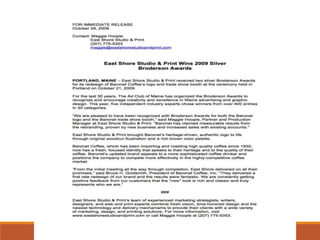
The Press Release
An official statement issued to newspapers giving information
on a particular matter.
A press release is a written communication that reports specific
but brief information about an event, circumstance or other happening.
It's typically tied to a business or organization and is provided to media
through a variety of means.
Elements of Press release
1. FOR IMMEDIATE RELEASE: These words should appear in the upper
left-hand margin, just under your letterhead. You should capitalize every
letter.
2. Contact Information: Skip a line or two after release statement and list
the name, title, telephone and fax numbers of your company
spokesperson (the person with the most information).
3.Headline: Skip two lines after your contact information and use a
boldface type.
4. Dateline: This should be the city your press release is issued from and
the date you are mailing your release.
5. Introduction.
The first paragraph needs to grasp the reader’s attention and
should contain the relevant information to your message
W’s: (who, what, when, where, why)
6.Text & Content:
The main body of your press release where your message
should fully develop. The content of the press release, beginning with
the date and city of origin, should be typed in a clear, basic font (Times
New Roman, Arial, etc.) and double-spaced.
If your press release exceeds one page, the second page should
indicate ‘ Page Two’ in the upper right hand corner.
Press conference
Meaning:-
An interview given to journalists by a prominent person in order
to make an announcement or answer questions.
A press conference is a meeting organized for the purposes of
distributing information to the media and answering questions from
reporters.
Press conferences can also be issued in response to addressing
public relations issues.
Why press conference is used
1. Launching a new product or service
2. Improvement in old product
3.New use of Old product
4.Appointments and Promotion
5.Opening new branch
6.Giving awards
7.Important dates
8.Contract won
9.Charitable event
Media Interviews
A recorded conversation, usually conducted by a reporter, in
which an individual provides information and expertise on a certain
subject for use in the reporter‘s article
Keys to a Good Interview
1. Talking in lay terms, using as little professional or technical jargon as
possible.
2. Keeping the answers short.
3. Thinking about what he/she wants to say before speaking.
4. Defining two to three main points he/she would like to make about
their subject.
5. Gathering facts, figures to support the points.
6. Anticipating questions the reporter might ask and having responses
ready.
7. Speaking in complete thoughts.
8. The reporter‘s question may be edited out and interviewee response
should stand on its own.
Group Communication
Group Communication is among small or large groups, like an
organization, club, or classroom, in which all individuals retain their
identity
Meetings
Meetings An act or process of coming together as an assembly
for a common purpose. A meeting is a gathering of two or more people
that has been convened for the purpose of achieving a common goal
through verbal interaction, such as sharing information or reaching
agreement. Meetings may occur face to face or virtually, as
mediated by communications technology, such as a telephone
conference call, a Skype conference call or a videoconference
Planning Meetings
1. Identifying the purpose of the meeting.
2. Determining whether it in necessary.
3. Preparing an agenda – what topics and in which order meeting should
conduct.
4. Deciding who should attend the meeting
-who are related to the purpose?
-who will make the decision?
-who will implement the decision?
-who can provide needed background information?
5. Determining the logistics of the meeting – timing, location, seating
arrangements & any equipment needed.
6. Assigning someone the task of taking notes during the meeting. These
notes should be accurate, objective & complete.
Objectives of Meeting
1. To solve the problem.
2. To understand the situation.
3. To inform and explain.
4. To get feedback
5. To collect ideas.
6. To learn and train
Participants
Every participant has the stake in the meeting. Participants are
those who are directly related to the purpose of the meeting. The
meeting become effective and successful only by the effective
participation of the participants.
suggestions for effective
participation
Study the every item of the agenda, collect & gather points of view for
each item.
Keep an open mind – be prepare to learn and correct any mistake in
thinking.
Do not disturb other participants or talking or thinking about unrelated
matter.
Show interest in what other says.
Never personalize a difference of opinion.
Speak up if you have something to contribute and share, however keep
the comments short and precise.
Be a good listener.
Time and Venue of Meeting
To get the participants to the meeting they need to be invited,
or if an appointment was made at a previous meeting or via telephone
they still need to receive an agenda and supplementary documents.
For small and/or well defined groups invitation, agenda and all
other documents should be sent at least a week in advance of the
meeting to all participants.
If the group is very small, the meeting takes place at a fixed
time and the participants agree to it but in all other situations a week is
an absolute minimum. Of course if the meeting takes place every week,
there is no other option but sending the agenda and documents at
shorter notice.
Meeting Documentation
Notice
Meeting must be called in advance, according to the common
rules. The idea of sending a notice of meeting is to ensure that all
participants are informed of the meeting well in advance.
Meeting Notice should contain
1. Association calling the meeting
2. Meeting type: a general or a board meeting
3. meeting time
4. Place of meeting
5. reference to the purpose of the meeting – such as changing the
association's rules or other issues
6.Person calling the meeting
7. Preferably the matters that will be discussed in the meeting
Agenda
An agenda is a list of meeting activities in the order in which they are to
be taken up.
It usually includes one or more specific items of business to be
considered. It may, but is not required to, include specific times for one
or more activities.
Resolution & Minutes
A resolution is a written document that describes the actions
taken by the board of directors of a corporation.
The minutes are written document that describes actions taken
and resolutions passed by the directors during a regular board meeting.
Contents involved in minutes
1. The nature of the meeting – regular or special (if special, state the
purpose)
2. The name of the body - associated office, department or organization
holding the meeting
3. Date, time and location of the meeting
4. The list of those invited - attendees
5. Names of the meeting Chair and Secretary
6. Record of motion to call the meeting to order
7. A record of all motions that were presented and discussed
8. What was decided, what action will be taken and who will do it
9. Date and place of the next meeting.

Module - 4 - Managerial Communication (2).pptx

  • 1.
  • 2.
    Writing Reports Report isan assigned communication for a purpose and for a specific reader or /receiver to give information. A report can be defined as a communication in which the writer gives information to some individual or organization because it is his or her responsibility to do so. It is an assigned communication for a purpose and for a specific receiver/reader. The common elements in all the reports, as a distinct form of writing, are the element of responsibility. The writer is obliged to communicate what he/she knows to one who needs, it, as a part his/her assigned, clearly defined and time-bound task.
  • 3.
    The word ‘report’is derived from the French word ‘repportes’ which means “combination of some related sentences”. In simple language, the report is a statement of facts relating to a particular subject or event. The report is a self-explanatory statement of facts relating to a specific subject and serves the purpose of providing information for decision making and follow up actions. It is generally prepared by inquiring and analyzing any specific past event. Thus, a report is a statement that contains information obtained by proper inquiry, examination and evaluation of any past event. The report may be oral or written. However, written reports are widely used. Some definitions of reports given by renowned authors are cited below: According to G. R. Terry, “A report is a formal presentation of summary information dealing with the utilization of resources or status of operations useful in evaluating progress, making decisions and directing activities.”
  • 4.
    Ricks and Gowdefined, “A report is a written or oral message presenting information that will help a decision maker to solve a business problem.” C.A. Brown said, “A report is a communication from someone who has some information to someone who wants to use that information.” In conclusion, we can say that report is an objective and factual presentation of information on any specific past event. It is a basic management tool used in decision making. The basic ingredient of a report is factual information- events, records and the various forms of data.
  • 5.
    BUSINESS REPORT Some importantdefinitions on business reports are quoted below: In the words of Lesikar and Pettit, “A business report is an orderly, objective communication of factual information that serves some business purpose.” Louis E. Boone and others defined, “A business report is a document that organizes information on a specific topic for a specific business purposes.” In the opinion of Murphy and Hildebrandt, “A business report is an impartial, objective, planned presentation of facts to one or more persons for a specific, significant business purpose.” From the above discussion and definitions, it can be said that business report is an orderly and objective presentation of accurate and organized information on any event related to business
  • 6.
    Purpose of aReport 1. To make sound decisions and find effective solutions 2. To provide a formal, verifiable link between people, places, and times 3. To serve as permanent records 4. To solve immediate problems 5. To provide complete, accurate, objective information 6. Information about company‘s activities, progress, plans, problems 7. Specific Action 8. Justify and Persuade 9. Present fact
  • 7.
    OBJECTIVES OF BUSINESS REPORTS Inlarge-scale organizations, there is no alternative to use reports. Reports also play an important role in small-scale organizations. Some points highlighting the purposes / objectives / importance of business report are presented below: Transmitting Information: Business report is very important for transmitting information from one person to another or from one level to another. Although a manager can personally collect required information in a small-scale enterprise, it is not possible in the context of a large-scale organization. In the latter case, the managers rely on reports for obtaining necessary information Interpretation and explanation of event: Report provides interpretation and explanation of information. As a result, readers can easily understand it. Making Decisions: A report is the basic management tool for making decisions. The job of a manager is nothing but making decisions. Reports supply necessary information to managers to solve problems.
  • 8.
    OBJECTIVES OF BUSINESS REPORTS Developinglabor-management relationship: Reports also help to improve labor management relationships particularly, in large organizations. In a large organization, there is little opportunity of direct communication between top-level management and employees. In this case, report is used as a mechanism of keeping both sides informed about each other and improving their relationships. Controlling: Controlling is the final function of management. It ensures whether the actual performance meets the standard. In order to perform the managerial function of controlling, report sent as a yardstick. It supplies necessary information to impose controlling mechanism. Recommending actions: Reports may only supply information but also recommend neutral actions or solutions to problem. When someone is given the charge of investigating a complex problems and suggesting appropriately remedy, the investigator usually submits a report to the concerned manner.
  • 9.
    Objectives of Reports Thepurpose of the report is to help the management identify the reasons underlying a situation that the management already knows. The alternatives available for solving it and the best course of action that emerges from the study of all relevant facts and factors, leading to specific conclusions regarding the problem‘s existence and solution. Guidelines for defining report objectives :- 1. For whom is the report written? 2. Their level of information and education 3. The reason for report 4. The final results
  • 10.
    Different Kinds ofReport Reports are of two kinds:- i) Formal reports that contain all essential elements of a report. ii) Semi-formal /informal reports.
  • 11.
    Reports are usuallyidentified as:- i) Reports made by filling in a printed form ii) Reports in the form of letters iii) Reports in the forms of memos iv) Reports on the progress and status of a project v) Periodic Reports vi) Laboratory reports vii) Short informal reports ix) Formal reports
  • 12.
    Organization & Preparing reports Areport presents facts, conclusions, and recommendations in simple and clear words, in a logical and well-defined structure. The elements of full report, in the order of their sequence are
  • 13.
    Elements or contentsinvolved in preparing reports 1. Cover 2. Title page 3. Acknowledgements 4. Table of Contents 5. Executive Summary 6. Introduction 7. Discussion/Description 8. Conclusions 9. Recommendations 10. Appendix (supplementary material at the end of a book) 11. List of references 12. Bibliography (a list of the books referred to in a scholarly work)
  • 14.
    Short and longreports Writing Proposals: Structure & preparation A Short Report:- A short report is usually written either in the form of memorandum or a letter. Usually, report meant for persons outside the company or clients are written in letter form. The short report- consists of the title page or just the report‘s title as the heading or subject. Usually, it is in direct order beginning with a summary or a statement summarizing the whole content. Presents findings, analysis, conclusions and recommendations.
  • 15.
    A short reportand a long report are two main forms of report categorization based on the length and procedure of the report. The mean of any report, whether long or short is to be clear so that the information that is projected to be accepted on is easily understood. Difference between Short and long reports A short report is generally called an informal report while a long report is usually referred to as a formal report. Long reports present a range and an in-depth view of a problem or idea. It also requires lots of studies and is much more widespread. For a short report, it is suitable to write it in a letter or memo format, but for a long report, it must be written in a very prearranged style.
  • 16.
    Long Formal Report Elementsof long term Report:- 1. The Title Page:- Name and status of author Department and date of issue The heading should be short, clear and unambiguous
  • 17.
    2. Acknowledgements Should thankeveryone associated with the assignment and preparation of the report. Should be generous in expressing gratitude. 3. Cover Letter A cover letter is usually written by top management/or project guide as a preface or foreword to a report, reflecting the management‘s policy and interpretation of the report‘s findings, conclusions and recommendations.
  • 18.
    4. Letter ofTransmittal:- Many times, a formal report is a accompanied by a letter to outside readers. Although the letter of transmittal is usually placed after the title page, it functions as a greeting to the reader.
  • 19.
    5. Table ofContents:- Long reports must have a Table of Contents placed after acknowledgements and before the summary. It is an important element in a long formal report. It identifies the topics and their page numbers in the report for the reader.
  • 20.
    6. Abstract andExecutive Summary 7. Introduction 8. Findings 9. Conclusions 10. Recommendations
  • 21.
    Executive Summary An executivesummary is a short document or section of a document produced for business purposes. It summarizes a longer report or proposal or a group of related reports in such a way that readers can rapidly become acquainted with a large body of material without having to read it all.
  • 22.
    Writing memos Memo isa form used by a person known to the receiver personally. Therefore, it is less formal in tone and without formal elements such as situation, subscription‘, greetings.
  • 23.
    How to Writea Memo A memo begins straight with the subject. It is short and written in a friendly tone. All business message and information solicit a friendly, cooperative and positive response from the employees, clients, senior or junior colleagues.
  • 24.
    Principles of writingmemos:- 1. Give necessary and sufficient information. 2. Do not assume that everyone knows everything related to the issue discussed in the memo. 3. Explain the causes of problems or reasons for changes being suggested. 4.being pleasant rather than order. 5.Giving feedback or suggestions.
  • 25.
    Media Management Media managementis a term used for several related tasks throughout post-production. In general, any task that relates to processing your media is considered to be media management, such as capturing, compressing, copying, moving, or deleting media files.
  • 26.
    The Press Release Anofficial statement issued to newspapers giving information on a particular matter. A press release is a written communication that reports specific but brief information about an event, circumstance or other happening. It's typically tied to a business or organization and is provided to media through a variety of means.
  • 28.
    Elements of Pressrelease 1. FOR IMMEDIATE RELEASE: These words should appear in the upper left-hand margin, just under your letterhead. You should capitalize every letter. 2. Contact Information: Skip a line or two after release statement and list the name, title, telephone and fax numbers of your company spokesperson (the person with the most information).
  • 29.
    3.Headline: Skip twolines after your contact information and use a boldface type. 4. Dateline: This should be the city your press release is issued from and the date you are mailing your release.
  • 30.
    5. Introduction. The firstparagraph needs to grasp the reader’s attention and should contain the relevant information to your message W’s: (who, what, when, where, why)
  • 31.
    6.Text & Content: Themain body of your press release where your message should fully develop. The content of the press release, beginning with the date and city of origin, should be typed in a clear, basic font (Times New Roman, Arial, etc.) and double-spaced. If your press release exceeds one page, the second page should indicate ‘ Page Two’ in the upper right hand corner.
  • 32.
    Press conference Meaning:- An interviewgiven to journalists by a prominent person in order to make an announcement or answer questions. A press conference is a meeting organized for the purposes of distributing information to the media and answering questions from reporters. Press conferences can also be issued in response to addressing public relations issues.
  • 33.
    Why press conferenceis used 1. Launching a new product or service 2. Improvement in old product 3.New use of Old product 4.Appointments and Promotion 5.Opening new branch 6.Giving awards 7.Important dates 8.Contract won 9.Charitable event
  • 34.
    Media Interviews A recordedconversation, usually conducted by a reporter, in which an individual provides information and expertise on a certain subject for use in the reporter‘s article
  • 35.
    Keys to aGood Interview 1. Talking in lay terms, using as little professional or technical jargon as possible. 2. Keeping the answers short. 3. Thinking about what he/she wants to say before speaking. 4. Defining two to three main points he/she would like to make about their subject. 5. Gathering facts, figures to support the points. 6. Anticipating questions the reporter might ask and having responses ready. 7. Speaking in complete thoughts. 8. The reporter‘s question may be edited out and interviewee response should stand on its own.
  • 36.
    Group Communication Group Communicationis among small or large groups, like an organization, club, or classroom, in which all individuals retain their identity
  • 37.
    Meetings Meetings An actor process of coming together as an assembly for a common purpose. A meeting is a gathering of two or more people that has been convened for the purpose of achieving a common goal through verbal interaction, such as sharing information or reaching agreement. Meetings may occur face to face or virtually, as mediated by communications technology, such as a telephone conference call, a Skype conference call or a videoconference
  • 38.
    Planning Meetings 1. Identifyingthe purpose of the meeting. 2. Determining whether it in necessary. 3. Preparing an agenda – what topics and in which order meeting should conduct. 4. Deciding who should attend the meeting -who are related to the purpose? -who will make the decision? -who will implement the decision? -who can provide needed background information?
  • 39.
    5. Determining thelogistics of the meeting – timing, location, seating arrangements & any equipment needed. 6. Assigning someone the task of taking notes during the meeting. These notes should be accurate, objective & complete.
  • 40.
    Objectives of Meeting 1.To solve the problem. 2. To understand the situation. 3. To inform and explain. 4. To get feedback 5. To collect ideas. 6. To learn and train
  • 41.
    Participants Every participant hasthe stake in the meeting. Participants are those who are directly related to the purpose of the meeting. The meeting become effective and successful only by the effective participation of the participants.
  • 42.
    suggestions for effective participation Studythe every item of the agenda, collect & gather points of view for each item. Keep an open mind – be prepare to learn and correct any mistake in thinking. Do not disturb other participants or talking or thinking about unrelated matter. Show interest in what other says. Never personalize a difference of opinion.
  • 43.
    Speak up ifyou have something to contribute and share, however keep the comments short and precise. Be a good listener.
  • 44.
    Time and Venueof Meeting To get the participants to the meeting they need to be invited, or if an appointment was made at a previous meeting or via telephone they still need to receive an agenda and supplementary documents. For small and/or well defined groups invitation, agenda and all other documents should be sent at least a week in advance of the meeting to all participants. If the group is very small, the meeting takes place at a fixed time and the participants agree to it but in all other situations a week is an absolute minimum. Of course if the meeting takes place every week, there is no other option but sending the agenda and documents at shorter notice.
  • 45.
    Meeting Documentation Notice Meeting mustbe called in advance, according to the common rules. The idea of sending a notice of meeting is to ensure that all participants are informed of the meeting well in advance.
  • 46.
    Meeting Notice shouldcontain 1. Association calling the meeting 2. Meeting type: a general or a board meeting 3. meeting time 4. Place of meeting 5. reference to the purpose of the meeting – such as changing the association's rules or other issues 6.Person calling the meeting 7. Preferably the matters that will be discussed in the meeting
  • 47.
    Agenda An agenda isa list of meeting activities in the order in which they are to be taken up. It usually includes one or more specific items of business to be considered. It may, but is not required to, include specific times for one or more activities.
  • 48.
    Resolution & Minutes Aresolution is a written document that describes the actions taken by the board of directors of a corporation. The minutes are written document that describes actions taken and resolutions passed by the directors during a regular board meeting.
  • 49.
    Contents involved inminutes 1. The nature of the meeting – regular or special (if special, state the purpose) 2. The name of the body - associated office, department or organization holding the meeting 3. Date, time and location of the meeting 4. The list of those invited - attendees 5. Names of the meeting Chair and Secretary 6. Record of motion to call the meeting to order 7. A record of all motions that were presented and discussed 8. What was decided, what action will be taken and who will do it 9. Date and place of the next meeting.