
Culture
of Reading
Mohamad Aliff bin Mt Nawi
Nur Ilya binti Che Nasir
Safia Aqila binti Azhar
Culture of Reading
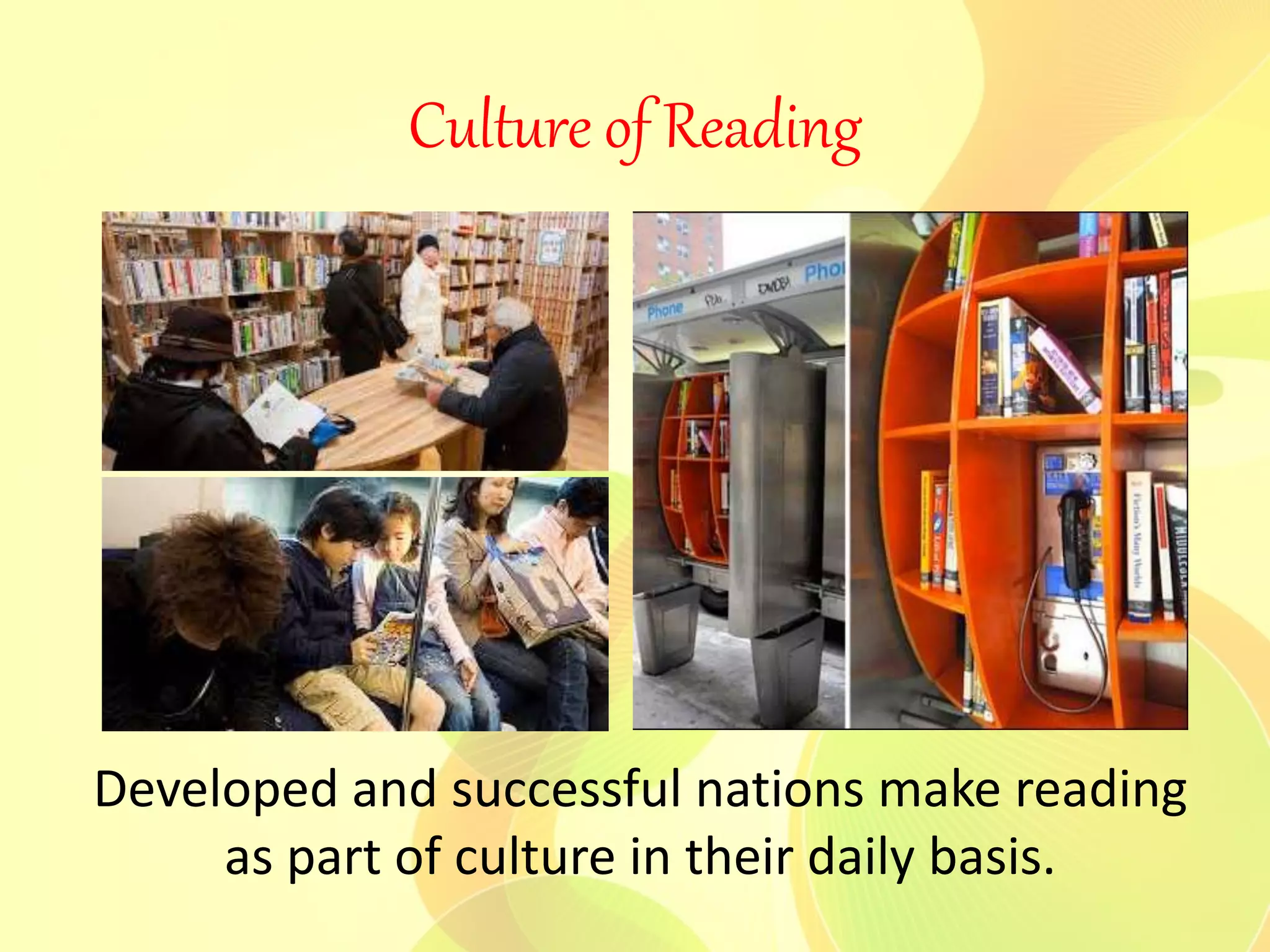
Developed and successful nations make reading
as part of culture in their daily basis.
READING Guides
Spare your time at least 10
minutes a day to read.
Always bring reading
material(s) with you.
Fill the time with beneficial
activities like reading.
Find a suitable and quiet
space when reading.
READING Guides
Prepare a list of the reading
materials and try to find it.
Visit the book fair and book
stores to foster interest in
reading
Determine your goals in
reading – to reflect the
purposes of reading.
Researching Culture
Researching Culture
Research is one of the very effective
activity of Long-life Learning ; we
began to think, plan, conduct
surveys with reading a variety of
materials, prepare items in the
questionnaire, analyse and write
reports.
To discover new things
Critical thinking process
Action Research (AR)
Introduced by Kurt Lewin
Suitable for teachers
Enable teachers to identify issues
and problems associated with
T&L management, discipline and
attitude, leadership and
management of the school and
other things about the education
system.
AR Definitions
AR is a round (spiral) process
consisted of planning, action,
evaluation of the action (Kurt
Lewin)
To understand and change a
practice in community, the
researcher should involve the
practitioner who is directly involved
in the issue in the research process.
AR Definitions
Elliot (1981) - the study of the social situation to
improve the quality and increase the
effectiveness of an action
Kemmis(1988) - a form of self-reflective inquiry
undertaken by participants like teachers, students
or principals in a social situation like education, to
improve social practices and enhance their
understanding of the practice.
The importance OF aR
Improving T & L practices of teachers or lecturers
who are directly involved in T & L environment -
identify issues and problems, come out with
improvement plan/solution.
Focus on one specific aspect of teaching-depends
on the researcher.
Create collaborative work.
The importance OF aR
You as a teacher personally involved as
participants in the study, conducted the study
individually, colleagues and pupils as source of
information.
Collaborative partner is called critical friend.
Encouraging sharing and helping each other.
The importance OF aR
Documentation and evidence of a statement can be
made through AR
Can be proved
Data analysis is done qualitatively or quantitatively.
Encourage a culture of self-reflective, open minded,
able to receive and admit weaknesses and willing to
improve and change practice.
Provide opportunities to add the value in
increasing the teaching professionalism.

Reading Culture

  • 1.
    Culture of Reading Mohamad Aliffbin Mt Nawi Nur Ilya binti Che Nasir Safia Aqila binti Azhar
  • 2.
    Culture of Reading Developedand successful nations make reading as part of culture in their daily basis.
  • 3.
    READING Guides Spare yourtime at least 10 minutes a day to read. Always bring reading material(s) with you. Fill the time with beneficial activities like reading. Find a suitable and quiet space when reading.
  • 4.
    READING Guides Prepare alist of the reading materials and try to find it. Visit the book fair and book stores to foster interest in reading Determine your goals in reading – to reflect the purposes of reading.
  • 5.
  • 6.
    Researching Culture Research isone of the very effective activity of Long-life Learning ; we began to think, plan, conduct surveys with reading a variety of materials, prepare items in the questionnaire, analyse and write reports. To discover new things Critical thinking process
  • 7.
    Action Research (AR) Introducedby Kurt Lewin Suitable for teachers Enable teachers to identify issues and problems associated with T&L management, discipline and attitude, leadership and management of the school and other things about the education system.
  • 8.
    AR Definitions AR isa round (spiral) process consisted of planning, action, evaluation of the action (Kurt Lewin) To understand and change a practice in community, the researcher should involve the practitioner who is directly involved in the issue in the research process.
  • 9.
    AR Definitions Elliot (1981)- the study of the social situation to improve the quality and increase the effectiveness of an action Kemmis(1988) - a form of self-reflective inquiry undertaken by participants like teachers, students or principals in a social situation like education, to improve social practices and enhance their understanding of the practice.
  • 10.
    The importance OFaR Improving T & L practices of teachers or lecturers who are directly involved in T & L environment - identify issues and problems, come out with improvement plan/solution. Focus on one specific aspect of teaching-depends on the researcher. Create collaborative work.
  • 11.
    The importance OFaR You as a teacher personally involved as participants in the study, conducted the study individually, colleagues and pupils as source of information. Collaborative partner is called critical friend. Encouraging sharing and helping each other.
  • 12.
    The importance OFaR Documentation and evidence of a statement can be made through AR Can be proved Data analysis is done qualitatively or quantitatively. Encourage a culture of self-reflective, open minded, able to receive and admit weaknesses and willing to improve and change practice. Provide opportunities to add the value in increasing the teaching professionalism.