INDIRA GANDHI UNIVERSITY
MEERPUR, REWARI (HARYANA)
Submitted To:-
Dr. Pinki
Assistant Professor
M. Phil, Ph. D.
M.Com, MBA,
UGC-NET(Commerce)
UGC- SET(Commerce)
UGC-NET (Personnel Mgt and Labour
Relations)
Submitted By:-
Ankit (1700104047061)
Pankaj (1700104047062)
Yogesh (1700104047063)
Class:- M.Com(Hons.) 6th Sem
HR CHALLENGES ON
MANAGING
TECHNOLOGICAL
CHANGES
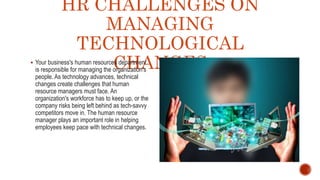
ď‚§ Your business's human resources department
is responsible for managing the organization's
people. As technology advances, technical
changes create challenges that human
resource managers must face. An
organization's workforce has to keep up, or the
company risks being left behind as tech-savvy
competitors move in. The human resource
manager plays an important role in helping
employees keep pace with technical changes.
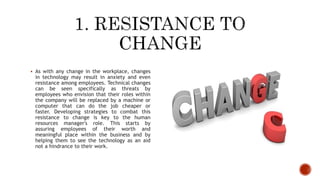
ď‚§ As with any change in the workplace, changes
in technology may result in anxiety and even
resistance among employees. Technical changes
can be seen specifically as threats by
employees who envision that their roles within
the company will be replaced by a machine or
computer that can do the job cheaper or
faster. Developing strategies to combat this
resistance to change is key to the human
resources manager's role. This starts by
assuring employees of their worth and
meaningful place within the business and by
helping them to see the technology as an aid
not a hindrance to their work.
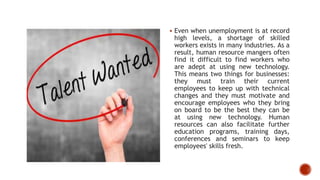
ď‚§ Even when unemployment is at record
high levels, a shortage of skilled
workers exists in many industries. As a
result, human resource mangers often
find it difficult to find workers who
are adept at using new technology.
This means two things for businesses:
they must train their current
employees to keep up with technical
changes and they must motivate and
encourage employees who they bring
on board to be the best they can be
at using new technology. Human
resources can also facilitate further
education programs, training days,
conferences and seminars to keep
employees' skills fresh.
ď‚§Providing training and support to employees who
wish to keep up with technical changes not only
benefits the company but also helps the
employees who take this route to feel like they
are a vital part of the business. The human
resources manager can face this challenge head
on by identifying the core areas of the business
where training is needed and by offering either
on-site programs or by facilitating training
opportunities for employees off-site.
ď‚§ Human resource managers have a vital
role to play in managing information and
securing the privacy of information. As the
technology within an organization
advances, so too do the privacy and
security concerns connected with those
technical changes. Providing employee
training on how to secure data and
prevent privacy breaches to keep business
information secure are challenges human
resources faces in this area.
Communicating with technology vendors
and keeping up-to-date with the technical
aspects of the company are key ways for
human resources managers to recognize
and confront this challenge.
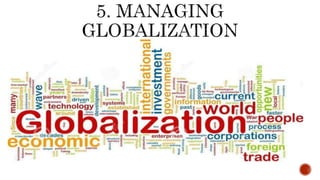
ď‚§It is important for an HR manager to study
people management practices before
implementing new practices which are global
in nature. It has become a challenge for the
HR to educate its workforce on how
globalization can be leveraged and how an
individual employee benefits or is affected by
it. Instead of thrusting new peactices upon
them, it is ideal to study the existing practices
which are in place.
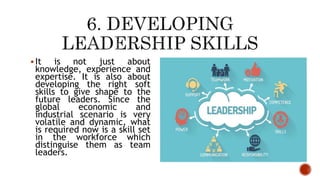
ď‚§ It is not just about
knowledge, experience and
expertise. It is also about
developing the right soft
skills to give shape to the
future leaders. Since the
global economic and
industrial scenario is very
volatile and dynamic, what
is required now is a skill set
in the workforce which
distinguise them as team
leaders.
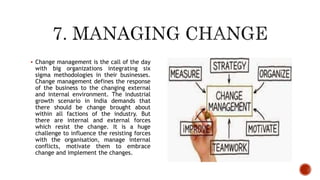
ď‚§ Change management is the call of the day
with big organizations integrating six
sigma methodologies in their businesses.
Change management defines the response
of the business to the changing external
and internal environment. The industrial
growth scenario in India demands that
there should be change brought about
within all factions of the industry. But
there are internal and external forces
which resist the change. It is a huge
challenge to influence the resisting forces
with the organisation, manage internal
conflicts, motivate them to embrace
change and implement the changes.
ď‚§ With back to back slumps in
the global economy, India has
not remained unscathed.
Employee morals and loyalty
are being tested in a business’s
day to the day functioning. It
has become very important to
re-install cultural values,
loyalty, respect for the weak
and elderly, and infuse
qualities like empathy, charity,
austerity, team spirits, ethics
and bonding in the workforce.
ď‚§ This is one of the major challenges
which HRM faces today. Poaching
and cut-throat competition has given
an impetus to high remuneration to
the deserving. People have gained
exposure and their yearning to rise is
sees them changing loyalty and
organzations very frequently. This is
especially observed in the IT and
ITES sector. To manage low attrition
rates and retain talent has become a
mammoth hurdle which all
organizations want to cross in order
to reach their goals.
ď‚§Most large and medium scale organizations
today prefer to be technologically oriented.
The technological trends in today’s global
scenario are fast changing. Educating the
human resource about these changes,
upgrading their knowledge and motivating
them to learn, absorb and come out of their
comfort zone is a great challenge faced by
many organizations.
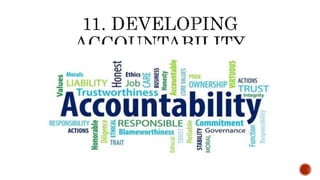
Accountability is
• answerability,
• blameworthiness,
• liability, and
• the expectation of
giving.
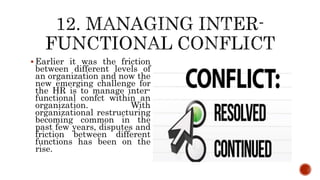
ď‚§ Earlier it was the friction
between different levels of
an organization and now the
new emerging challenge for
the HR is to manage inter-
functional confct within an
organization. With
organizational restructuring
becoming common in the
past few years, disputes and
friction between different
functions has been on the
rise.
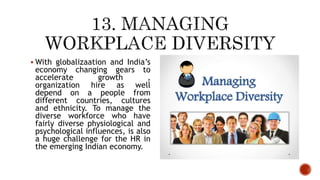
 With globalizaation and India’s
economy changing gears to
accelerate growth ,
organization hire as well
depend on a people from
different countries, cultures
and ethnicity. To manage the
diverse workforce who have
fairly diverse physiological and
psychological influences, is also
a huge challenge for the HR in
the emerging Indian economy.
Presented By :-
- Ankit Khatri
(1700104047061)
- Pankaj
(1700104047062)
- Yogesh Kumar
(1700104047063)

HR Challenges in Managing Technological Changes

  • 1.
  • 2.
    Submitted To:- Dr. Pinki AssistantProfessor M. Phil, Ph. D. M.Com, MBA, UGC-NET(Commerce) UGC- SET(Commerce) UGC-NET (Personnel Mgt and Labour Relations) Submitted By:- Ankit (1700104047061) Pankaj (1700104047062) Yogesh (1700104047063) Class:- M.Com(Hons.) 6th Sem
  • 3.
    HR CHALLENGES ON MANAGING TECHNOLOGICAL CHANGES ď‚§Your business's human resources department is responsible for managing the organization's people. As technology advances, technical changes create challenges that human resource managers must face. An organization's workforce has to keep up, or the company risks being left behind as tech-savvy competitors move in. The human resource manager plays an important role in helping employees keep pace with technical changes.
  • 4.
    ď‚§ As withany change in the workplace, changes in technology may result in anxiety and even resistance among employees. Technical changes can be seen specifically as threats by employees who envision that their roles within the company will be replaced by a machine or computer that can do the job cheaper or faster. Developing strategies to combat this resistance to change is key to the human resources manager's role. This starts by assuring employees of their worth and meaningful place within the business and by helping them to see the technology as an aid not a hindrance to their work.
  • 6.
    ď‚§ Even whenunemployment is at record high levels, a shortage of skilled workers exists in many industries. As a result, human resource mangers often find it difficult to find workers who are adept at using new technology. This means two things for businesses: they must train their current employees to keep up with technical changes and they must motivate and encourage employees who they bring on board to be the best they can be at using new technology. Human resources can also facilitate further education programs, training days, conferences and seminars to keep employees' skills fresh.
  • 8.
    ď‚§Providing training andsupport to employees who wish to keep up with technical changes not only benefits the company but also helps the employees who take this route to feel like they are a vital part of the business. The human resources manager can face this challenge head on by identifying the core areas of the business where training is needed and by offering either on-site programs or by facilitating training opportunities for employees off-site.
  • 9.
    ď‚§ Human resourcemanagers have a vital role to play in managing information and securing the privacy of information. As the technology within an organization advances, so too do the privacy and security concerns connected with those technical changes. Providing employee training on how to secure data and prevent privacy breaches to keep business information secure are challenges human resources faces in this area. Communicating with technology vendors and keeping up-to-date with the technical aspects of the company are key ways for human resources managers to recognize and confront this challenge.
  • 11.
    ď‚§It is importantfor an HR manager to study people management practices before implementing new practices which are global in nature. It has become a challenge for the HR to educate its workforce on how globalization can be leveraged and how an individual employee benefits or is affected by it. Instead of thrusting new peactices upon them, it is ideal to study the existing practices which are in place.
  • 12.
    ď‚§ It isnot just about knowledge, experience and expertise. It is also about developing the right soft skills to give shape to the future leaders. Since the global economic and industrial scenario is very volatile and dynamic, what is required now is a skill set in the workforce which distinguise them as team leaders.
  • 13.
    ď‚§ Change managementis the call of the day with big organizations integrating six sigma methodologies in their businesses. Change management defines the response of the business to the changing external and internal environment. The industrial growth scenario in India demands that there should be change brought about within all factions of the industry. But there are internal and external forces which resist the change. It is a huge challenge to influence the resisting forces with the organisation, manage internal conflicts, motivate them to embrace change and implement the changes.
  • 15.
     With backto back slumps in the global economy, India has not remained unscathed. Employee morals and loyalty are being tested in a business’s day to the day functioning. It has become very important to re-install cultural values, loyalty, respect for the weak and elderly, and infuse qualities like empathy, charity, austerity, team spirits, ethics and bonding in the workforce.
  • 16.
    ď‚§ This isone of the major challenges which HRM faces today. Poaching and cut-throat competition has given an impetus to high remuneration to the deserving. People have gained exposure and their yearning to rise is sees them changing loyalty and organzations very frequently. This is especially observed in the IT and ITES sector. To manage low attrition rates and retain talent has become a mammoth hurdle which all organizations want to cross in order to reach their goals.
  • 18.
    Most large andmedium scale organizations today prefer to be technologically oriented. The technological trends in today’s global scenario are fast changing. Educating the human resource about these changes, upgrading their knowledge and motivating them to learn, absorb and come out of their comfort zone is a great challenge faced by many organizations.
  • 20.
    Accountability is • answerability, •blameworthiness, • liability, and • the expectation of giving.
  • 21.
    ď‚§ Earlier itwas the friction between different levels of an organization and now the new emerging challenge for the HR is to manage inter- functional confct within an organization. With organizational restructuring becoming common in the past few years, disputes and friction between different functions has been on the rise.
  • 22.
     With globalizaationand India’s economy changing gears to accelerate growth , organization hire as well depend on a people from different countries, cultures and ethnicity. To manage the diverse workforce who have fairly diverse physiological and psychological influences, is also a huge challenge for the HR in the emerging Indian economy.
  • 23.
    Presented By :- -Ankit Khatri (1700104047061) - Pankaj (1700104047062) - Yogesh Kumar (1700104047063)