1
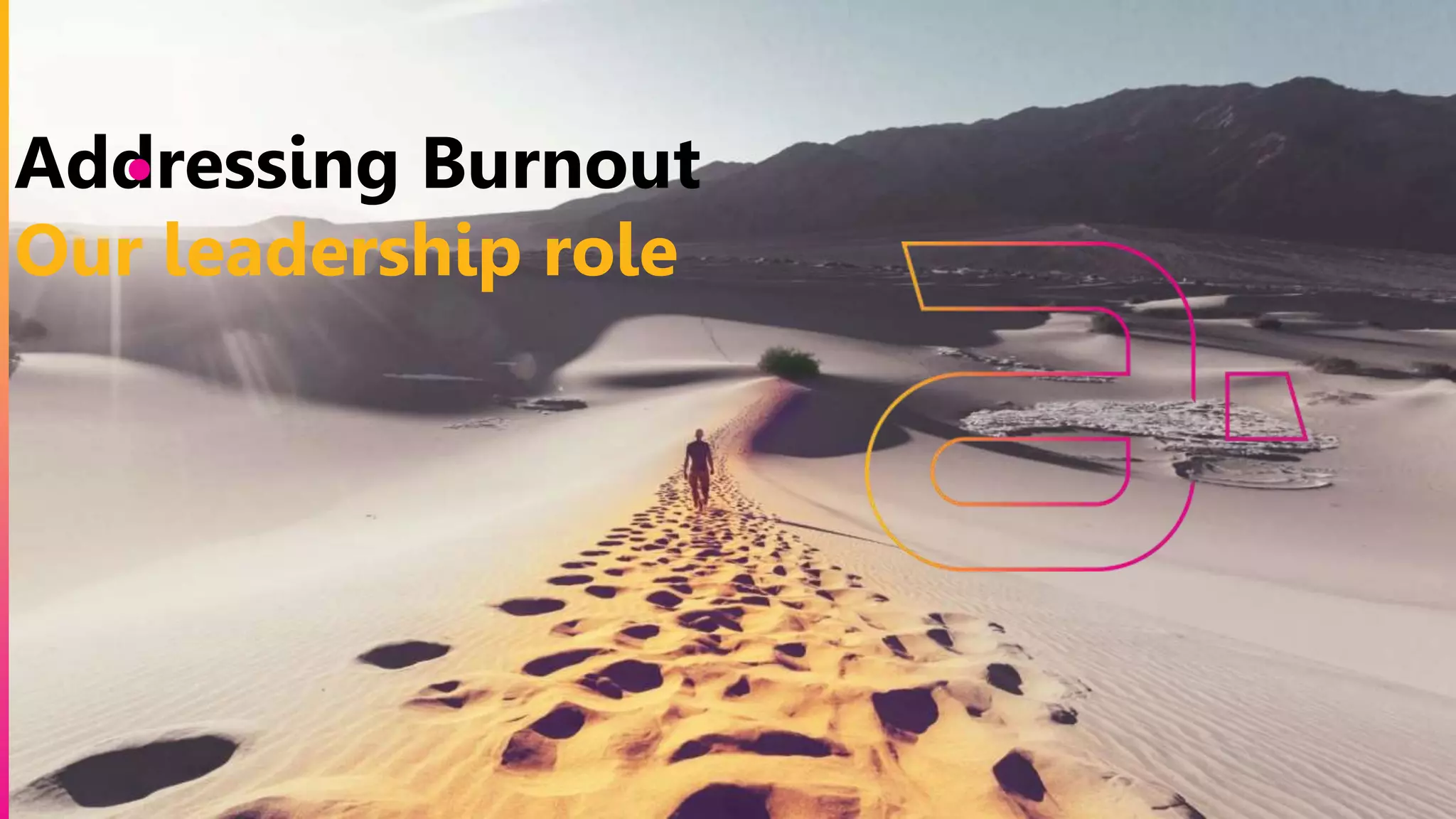
Addressing Burnout
Our leadership role
2
Background
With COVID-19 and the reality of working from home full time
or in hybrid mode, we see more and more signs of burnout
and fatigue due to lack of boundaries between work and
personal time, zoom fatigue, various worries & anxieties about
health-related issues and the fear of the unknown.
3
Our leadership role
The most important tip for you as a manager:
be a role model and practice recovery
Often, those employees who invest the most in their work, are
those who face burnout. Think of a race car, fast and robust,
functioning in the face of all types of obstacles. If it doesn’t
make pit stops from time to time, to fix what needs fixing and
change tires, its tires will explode on the next run and the car
will break down.
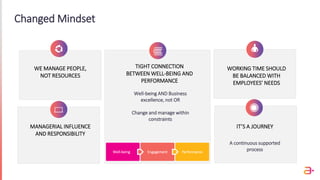
Well-being AND Business
excellence, not OR
Change and manage within
constraints
IT’S A JOURNEY
TIGHT CONNECTION
BETWEEN WELL-BEING AND
PERFORMANCE
Performance
Well-being Engagement
WORKING TIME SHOULD
BE BALANCED WITH
EMPLOYEES’ NEEDS
MANAGERIAL INFLUENCE
AND RESPONSIBILITY
WE MANAGE PEOPLE,
NOT RESOURCES
A continuous supported
process
Changed Mindset
5
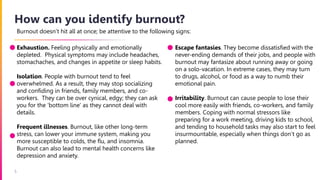
How can you identify burnout?
Exhaustion. Feeling physically and emotionally
depleted. Physical symptoms may include headaches,
stomachaches, and changes in appetite or sleep habits.
Isolation. People with burnout tend to feel
overwhelmed. As a result, they may stop socializing
and confiding in friends, family members, and co-
workers. They can be over cynical, edgy; they can ask
you for the ‘bottom line’ as they cannot deal with
details.
Frequent illnesses. Burnout, like other long-term
stress, can lower your immune system, making you
more susceptible to colds, the flu, and insomnia.
Burnout can also lead to mental health concerns like
depression and anxiety.
Escape fantasies. They become dissatisfied with the
never-ending demands of their jobs, and people with
burnout may fantasize about running away or going
on a solo-vacation. In extreme cases, they may turn
to drugs, alcohol, or food as a way to numb their
emotional pain.
Irritability. Burnout can cause people to lose their
cool more easily with friends, co-workers, and family
members. Coping with normal stressors like
preparing for a work meeting, driving kids to school,
and tending to household tasks may also start to feel
insurmountable, especially when things don’t go as
planned.
Burnout doesn’t hit all at once; be attentive to the following signs:
Thank you

addressing-burnout

  • 1.
  • 2.
    2 Background With COVID-19 andthe reality of working from home full time or in hybrid mode, we see more and more signs of burnout and fatigue due to lack of boundaries between work and personal time, zoom fatigue, various worries & anxieties about health-related issues and the fear of the unknown.
  • 3.
    3 Our leadership role Themost important tip for you as a manager: be a role model and practice recovery Often, those employees who invest the most in their work, are those who face burnout. Think of a race car, fast and robust, functioning in the face of all types of obstacles. If it doesn’t make pit stops from time to time, to fix what needs fixing and change tires, its tires will explode on the next run and the car will break down.
  • 4.
    Well-being AND Business excellence,not OR Change and manage within constraints IT’S A JOURNEY TIGHT CONNECTION BETWEEN WELL-BEING AND PERFORMANCE Performance Well-being Engagement WORKING TIME SHOULD BE BALANCED WITH EMPLOYEES’ NEEDS MANAGERIAL INFLUENCE AND RESPONSIBILITY WE MANAGE PEOPLE, NOT RESOURCES A continuous supported process Changed Mindset
  • 5.
    5 How can youidentify burnout? Exhaustion. Feeling physically and emotionally depleted. Physical symptoms may include headaches, stomachaches, and changes in appetite or sleep habits. Isolation. People with burnout tend to feel overwhelmed. As a result, they may stop socializing and confiding in friends, family members, and co- workers. They can be over cynical, edgy; they can ask you for the ‘bottom line’ as they cannot deal with details. Frequent illnesses. Burnout, like other long-term stress, can lower your immune system, making you more susceptible to colds, the flu, and insomnia. Burnout can also lead to mental health concerns like depression and anxiety. Escape fantasies. They become dissatisfied with the never-ending demands of their jobs, and people with burnout may fantasize about running away or going on a solo-vacation. In extreme cases, they may turn to drugs, alcohol, or food as a way to numb their emotional pain. Irritability. Burnout can cause people to lose their cool more easily with friends, co-workers, and family members. Coping with normal stressors like preparing for a work meeting, driving kids to school, and tending to household tasks may also start to feel insurmountable, especially when things don’t go as planned. Burnout doesn’t hit all at once; be attentive to the following signs:
  • 6.

Editor's Notes

  • #5  Gradual implementation (unit by unit): According to burnout indicators Take best practices from each implementation to the next one